
Experts Matter. Find Yours.
Connect for media, speaking, professional opportunities & more.

Predicting the post-pandemic desires for the Latin music industry
Coachella, identified as a mega-festival universe, decided on a diverse 2023 roster with artists like Becky G, Kali Uchis, and Rosalía. Bad Bunny, last year’s most-streamed global artist, made history as the festival’s first Spanish-language headliner. It also marked the first year since Coachella’s founding in 1999 that none of the headliners were white. José Valentino Ruiz-Resto, an assistant professor in the School of Music at the University of Florida, co-authored a paper for the Journal of Arts Entrepreneurship Education, which focused on how the music industry would evolutionarily change after the pandemic and ultimately predicted the 2023 Coachella trend. “The rise of Latin artists/headliners at festivals like Coachella is really a reflection of what has been happening in the music industry for the past two decades,” said José Valentino Ruiz-Resto who is also the program coordinator of Music Business & Entrepreneurship at UF. Ruiz-Resto’s research showed that the post-Covid era music industry would encourage more people to stay home and listen to music digitally, but the traditional Latin music experience is an outlier to this. The world-renowned multi-instrumentalist explains, "In order for concerts and festivals to maintain success, they needed to branch out to other markets to bring in those people who were still very much passionate about experiencing music in a live context.” Although this shift was initiated by the pandemic, it has been patiently anticipated by Ruiz-Resto for over 23 years, starting with the founding of the Latin Grammys in 2000. “Because the amount of production within the Latin recording academy is almost equivocal to that of all of the other genres in the American market combined. Latin music is the No. 1 meta genre in the music industry in terms of sales and fan support,” Ruiz-Resto, now a four-time Latin Grammy Award winner, said. Ruiz-Resto's data predicted the need for a stronger focus on the Latin music enthusiasts who still actively go to concerts like Coachella, “In order for Coachella to ultimately succeed in the post-Covid era and attract people, they needed to bring in artists like Bad Bunny.” This historic Coachella moment followed an announcement from the Recording Industry Association of America, stating that Latin music revenues in the United States were at an all-time high, exceeding over $1 billion in 2022. All of this was no surprise to Ruiz-Resto, who observes, researches and directly participates in the Latin music industry. “Now bigger shows are catching up to what has been the largest-selling music market for years. It’s a testament to how positively Latin American cultures are inspiring listeners across the U.S.” By Halle Burton


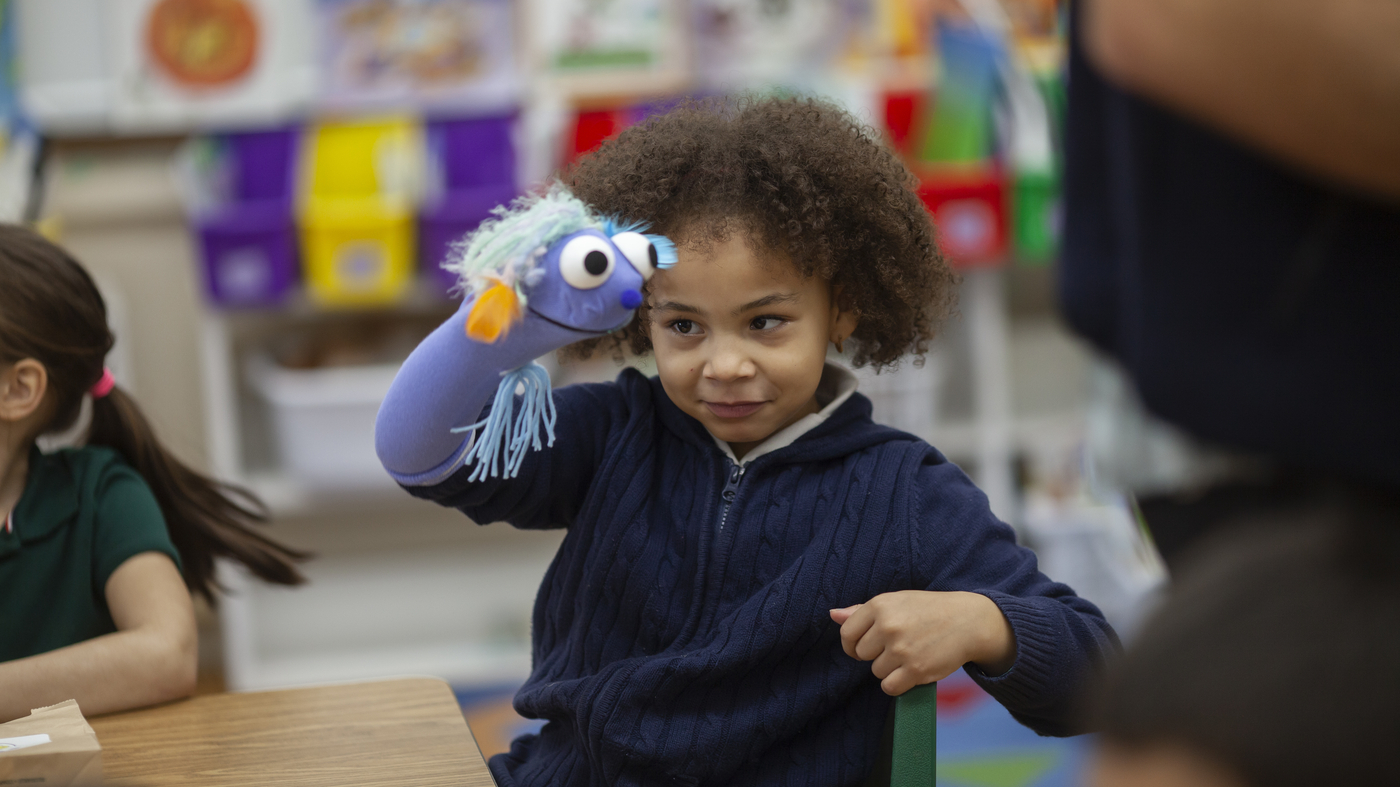
The COVID-19 pandemic took a toll on America's children -- parents lost jobs, kids weren't able to go to school, and they were told it was dangerous to see their friends. From a child's point of view, they seemed to have a lot, if not nearly everything, taken away, and many are still struggling today. Recently, NPR took a deeper look at the challenges kids are facing and found one creative solution that's helping elementary school children to change negative thinking patterns, better understand others' motivations, and face fears that may fuel unhealthy avoidance behaviors. UConn expert Sandra Chafouleas, a professor and school psychologist, is a co-creator of the new program -- called Feel Your Best Self -- which uses puppets to help children develop their social-emotional skills and well-being. During the pandemic, Wicks sent emails to researchers at the University of Connecticut's Neag School of Education, fishing for collaborators. She'd been wanting to put more of their work online. Her pitch: You want to help kids right now, and we have puppets. One of those emails went to Sandy Chafouleas, a UConn professor and trained school psychologist. Chafouleas was worried about all that extra stress on kids returning from the pandemic and that schools wouldn't be able to help them. "Teachers were stressed. Systems were stressed. Nobody had time to do professional learning to do something complex. That's just ridiculous to think that they could've," Chafouleas says. Denoya, the first-grade teacher at Natchaug Elementary, has seen it firsthand: Kids returned from the pandemic with missing or rusty social and emotional skills. They had trouble sharing, learning how to take turns and dealing with disappointment. "There's just things that they missed out on with not having that socialization, and so we need to find a place to teach it at school too," Denoya says. Anticipating this need, Chafouleas and Wicks cooked up Feel Your Best Self. The idea was, these scripted puppet videos would be easy — and free — for schools to use, even if they don't have a trained mental health specialist on-hand. Which many don't. Or they have one, spread across hundreds and hundreds of kids. That includes Natchaug, where Principal Eben Jones has been unable to fill a vacant school psychologist position for the past two years. Jones says that hasn't stopped him and his staff from prioritizing this kind of emotional and social skill-building. "It is embedded daily," Jones says. "Every teacher has time in the morning to have a morning meeting. And in that morning meeting they build community, share a morning message, you know, play a team-building game and make sure kids are connected to each other." This school year, Denoya and her students are doing one FYBS lesson each week. The FYBS program has exploded over the past year, thanks in part to a flood of grant funding. What began last year at Natchaug with a small team performing virtually – and live, not recorded – in one classroom at a time, became a Herculean effort to script, cast and shoot not one but 12 unique videos, with multiple puppets and performers, that teachers and caregivers can access anytime online, at no cost – in both English and Spanish. "Emily and I often feel like we're hanging on to the end of the caboose right now. This has scaled in ways that are unimaginable," says Chafouleas. Sandra Chafouleas is a UConn Board of Trustees Distinguished Professor of Educational Psychology and an expert on social-emotional well-being. She's available to speak with the media today -- just click her icon to arrange an interview.


988: What is it and who will it help?
Starting July 16, anyone experiencing substance use issues, a suicidal crisis, or mental health-related distress and seeking support can now simply dial “988” and connect directly with the National Suicide Prevention Lifeline. 988’s implementation will strengthen and expand the current lifeline call-center infrastructure and capacity to ensure that trained crisis counselors are available via call, text, and chat 24 hours a day. CARF proudly joins the National Action Alliance for Suicide Prevention and more than 250 partner organizations collaborating as promoters of the 988 Messaging Framework. About 988 988 is confidential, free, and available 24/7/365, connecting those experiencing a crisis with a network of trained crisis counselors located throughout the U.S. Access is available through every landline, cell phone, and voice-over-internet device in the nation. 988 call services are available in Spanish, along with interpretation services in multiple languages. Text and chat are currently available in English only. A long-term goal of 988 is building a robust nationwide crisis response system that links callers to community-based providers that can deliver a full range of crisis care services (e.g., mobile crisis teams or stabilization centers), if needed. And if you're a reporter looking to know more about the new 988 call services, or the role CARF and other organizations are playing in this nationwide effort, let us help with your questions and coverage. Michael Johnson is Senior Managing Director of Behavioral Health at CARF and is an expert in treatment strategies for mental health and substance use disorders. Michael is available to speak with media regarding this topic; simply click on his expert icon to arrange an interview today.


Georgia Southern students expand communication disorder awareness amidst Deaf Culture Renaissance
At Georgia Southern, a group of students is taking courses to grow the number of interpreters in their communities and their fields. Each student comes to class with their own motivations to learn ASL. “Most of the deaf people, myself included, feel kind of depressed,” signed Angellia Burnett, a volunteer assistant in Georgia Southern University’s American Sign Language (ASL) course. “We miss a lot of things in life, because it has always been a struggle with communication.” Burnett grew up deaf, and is the only person in her family who is deaf. Members of her family speak ASL, but she said many in the Deaf community continue to be left out of family conversations because not everyone will sign all of the time. This leaves Deaf family members feeling isolated even within their own homes. “Not everyone accepts my deafness,” Burnett signed. “They need to know Deaf culture. They need to accept that.” One of the most effective ways of accepting someone is by understanding the challenges they face. Over the past few years, the world has experienced a Deaf culture renaissance, where the inclusion of people who are deaf becomes more mainstream. Recently, the film “CODA,” which stands for “children of deaf adults,” won the 2022 Academy Award for Best Picture. This brought Deaf culture further into the spotlight, opening many eyes into the lives of those with hearing impairments. “What that means is it embraces the entire community,” said Dana Taylor, Ph.D., Georgia Southern adjunct professor and sign language interpreter. “It’s not isolating one group as being different. Individuals get to see the struggles and challenges and the triumphs that people experience.” At Georgia Southern, a group of students is taking courses to grow the number of interpreters in their communities and their fields. Each student comes to class with their own motivations to learn ASL. Some are learning sign language because they have people in their lives with hearing impairments or other communication disorders where sign can be advantageous. Others are there to develop their Sign skills as a professional tool. “If I had a client who spoke ASL, I’d be able to communicate with them better or make them feel more comfortable,” said Ricki Botsford, speech pathology student. “I’ve learned a lot about how broad communication can be, because there are so many ways to communicate outside of the verbal option.” When the students were asked if they had tried learning other languages like Spanish or French, every hand was raised. When asked if they stuck to learning them, all but a few went down. So what makes Sign different? “It’s a lot easier to integrate into every day,” said Adia Greer who’s studying to be an athletic trainer for Deaf athletes. “I can speak it verbally, but I can also sign it. I’ve picked up signing to my cat a lot. She doesn’t understand it, but it allows me to practice.” While the students practice Sign with their pets and favorite TV shows, Burnett continues to come to class to help show her students the world they share, but not the one they see. Georgia Southern has a network of Student Accessibility Resource Centers on the Statesboro and Savannah campuses providing interpreters for students who want to attend classes and interact with their environment, as well as many other resources for students who are hard of hearing. “The whole world needs to learn Sign,” Burnett signed. “I want to see people motivated to learn. I see a lot of Hearing people who are motivated to learn, and a lot of Deaf people that want to help make them successful. I’m really proud that I can help in that.” If you're a reporter looking to know more about this important topic - then let us help with your coverage and stories. Dana Taylor, Ph.D., is available to answer your questions - simply reach out to Georgia Southern Director of Communications Jennifer Wise at jwise@georgiasouthern.edu to arrange an interview today.


Squid Game: why you shouldn’t be too hard on translators
By David Orrego-Carmona Squid Game has recently become Netflix’s biggest debut ever, but the show has sparked controversy due to its English subtitles. This occurred after a Korean-speaking viewer took to Twitter and TikTok to criticise the subtitles for providing a “botched” translation, claiming: “If you don’t understand Korean you didn’t really watch the same show.” Only this year, Squid Game, Lupin, and Money Heist – all non-English originals – have consistently been at the top of Netflix’s most-watched shows globally. This growing popularity of productions in languages other than English and streaming platforms investing more in them has led to an increase in the visibility of the work of translators. When it comes to translating films and series, subtitling and dubbing are the most common forms of translation. Subtitles show the dialogue translated into text displayed at the bottom of the screen; while in dubbing, the original voices of the characters are replaced with voices in a new language. Translation is not new to viewers, but the instant, almost frictionless access to different language versions of the same film or show definitely is. Streaming platforms allow viewers to swiftly change from watching a film with subtitles to listening to the dubbed version or the original. This creates an opportunity for viewers to compare the different versions. Why do originals and translations differ? Just because the translation doesn’t say exactly the same as the original, it doesn’t mean it’s wrong. Films and TV series are packed with cultural references, wordplay and jokes that require changes and adaptation to make sure what’s said and seen on screen makes sense across languages. Making allowances and adapting what’s said are common practices in translation because, otherwise, the translators would need to include detailed notes to explain cultural differences. Consider the representations of washoku (traditional Japanese cuisine) which are so beautifully embedded in Studio Ghibli films. While additional explanations about the significance of harmony, kinship and care represented in the bowls of ramen in Ponyo or the soft steaming red bean buns in Spirited Away could be interesting, they might get in the way of a viewer who just wants to enjoy the production. Professional translators analyse the source content, understand the context, and consider the needs of the variety of viewers who will be watching. They then look for translation solutions that create an immersive experience for viewers who cannot fully access the original. Translators, similarly to screenwriters and filmmakers, need to make sure they provide good, engaging storytelling; sometimes that implies compromises. For instance, some original dialogue from season two of Money Heist uses the expression “somanta de hostias”. Literally, “hostia” means host – as in the sacramental bread which is taken during communion at a church service. But it is also Spanish religious slang used as an expletive. Original: Alberto, como baje del coche, te voy a dar una somanta de hostias que no te vas ni a mantener en pie. Literal translation: Alberto, if I get out the car, I’m going to give you such a hell (hostia) of a beating that you won’t be able to stay on your feet. Dubbed version: If I have to get out of the car, I’m gonna beat you so hard you don’t know what day it is. Subtitles: Alberto, if I get out of the car, I’ll beat you senseless. The dubbed version of the dialogue adopts the English expression “to beat someone”. The subtitled version uses the same expression but offers a shorter sentence. The difference between the two renderings reflects the constraints of each form of translation. In dubbing, if the lip movements don’t match the sound, viewers often feel disconnected from the content. Equally, if subtitles are too wordy or poorly timed, viewers could become frustrated when reading them. Dubbing needs to match the duration of the original dialogue, follow the same delivery to fit the gesticulations of the characters, and adjust to the lip movements of the actors on the screen. Subtitles, on the other hand, need to be read quickly to keep up with the pace of the film. We talk faster than we can read, so subtitles rarely include all the spoken words. The longer the subtitle, the longer the viewer will take to read it and the less time they will have to watch. According to Netflix policies, for example, subtitles can’t have more than two lines and 42 characters, and shouldn’t stay on the screen for longer than seven seconds. Additionally, in the above example, the translations do not reflect the reference to religious slang, typical of Spanish culture. Rather than fixating on this reference and assuming it is an essential part of the dialogue, a good translator would consider what an English-speaking character would say in this context and find a suitable alternative that will sound natural and make sense to the viewer. New rules of engagement It is encouraging to see that some viewers are so devoted to the content they watch: foreign films and TV shows help promote cultural understanding and empathy. But not all viewers act in the same way and the solutions provided by the translators need to cater to everyone who decides to watch the show. This leads to different viewing experiences, but it only reflects the reality of watching any culturally charged product, even in our own languages. In English, for instance, consider all the references and nuances that a British viewer could miss when watching an English-language film produced in South Africa, Jamaica or Pakistan. Translators do not blindly look for literal translations. On the contrary, in the translation profession, hints of literal translation often signal low-quality work. Translators focus on meaning and, in the case of films and series, will endeavour to provide viewers with a product that will create a similar experience to the original. The case of Squid Game has been instrumental in bringing discussions about translation to the fore. Of course there are good and bad translations, but the main gain here is the opportunity to debate what determines this. Through such discussions, viewers are becoming more aware of the role and complexities of translation.


It is in the news daily the awareness campaigns are everywhere – but for Spanish-speaking Americans, a lot of the information on COVID-19 and vaccination efforts against the disease weren’t reaching home. That was leaving a large swath of the population unprotected against the virus. Pastor Angel Maestre takes to the airwaves for his radio show, 97 Oasis, each week, speaking about faith to his Spanish-speaking audience. When COVID-19 vaccines rolled out, he began including teachings about health and science. “It was my duty as a leader,” Maestre says. Vaccination rates among the Hispanic population were extremely low at the time. In Richmond County, less than 10 percent of this community was vaccinated. Maestre partnered with Dr. Jose Vaszquez, an infectious diseases physician at Augusta University Health. Vazquez began appearing on Maestre’s radio show. He also spoke and answered questions at Maestre’s church, Centro Cristiano Oasis de Bendicion. “The Hispanic community has been one of the toughest communities to get vaccinated,” Vasquez says. “They’re not anti-vaxxers. But, most of the education put out there is in English. A lot of it is not in Spanish. So, they didn’t understand.” According to Vazquez, the top three concerns among the Hispanic community were that the COVID-19 vaccine contained fetal tissue, caused infertility and could result in undocumented immigrants encountering problems with immigration authorities. “They thought if we took their name and number, that ICE or immigration would come and take them, which is not true.” Vazquez eased concerns, and vaccination rates increased quickly. “I’m proud to say because of our outreach programs with some of our partners, specifically going through the churches, that it has actually increased to 30 to 35 percent.” Are you a journalist looking to know more about how COVID-19 is impacting Hispanic communities and what else can be done to ensure every person in America has access to vaccines? That’s where Augusta University can help. Dr. Jose Vazquez, division chief and professor of medicine in the Medical College of Georgia, is an expert in the realm of infectious diseases. He studies and treats infectious diseases, including antibiotic-resistant superbugs and fungal infections. He has been a reliable source for local, statewide and national media regarding the coronavirus outbreak. Dr. Vazquez is available to speak with media regarding this topic – simply click on his icon to arrange an interview.



If you thought today’s walk-up and drive-thru clinics to get vaccinated for COVID-19 were a lot of work, imagine how vaccines were safely transported across the Atlantic, without deep freezers or jets? Recently, UMW Professor of History and American Studies Allyson Poska was asked by 'With Good Reason' Radio - and the Centers for Disease Control and Prevention - to lend her expert opinion on the history of vaccines and the challenges the world has had trying to keep the public healthy and inoculated. Over two centuries ago, as the Spanish Empire embarked on the first-ever vaccination campaign against smallpox, "getting shots into arms" had an entirely different meaning. And government authorities back then faced as many challenges with promoting vaccinations as they do today. The First Vaccine Allyson Poska (University of Mary Washington) There’s been a lot of coverage about the challenges of distributing the Covid-19 vaccine. How do we get it to distant areas? How do we use a whole vial before it expires? What about the special refrigerators needed to keep it cold enough? But these problems seem minor compared to the very first vaccine distribution in the early 1800s. Historian Allyson Poska shares the story of 29 orphan boys who crossed the Atlantic Ocean as live incubators for the smallpox vaccine and what lessons we can learn from this early campaign. July 21 - With Good Reason This is a fascinating topic, and if you are a journalist looking to cover this topic, then let us help. Dr. Allyson Poska is available to speak with media regarding this subject - simply click on her icon now to arrange an interview today.

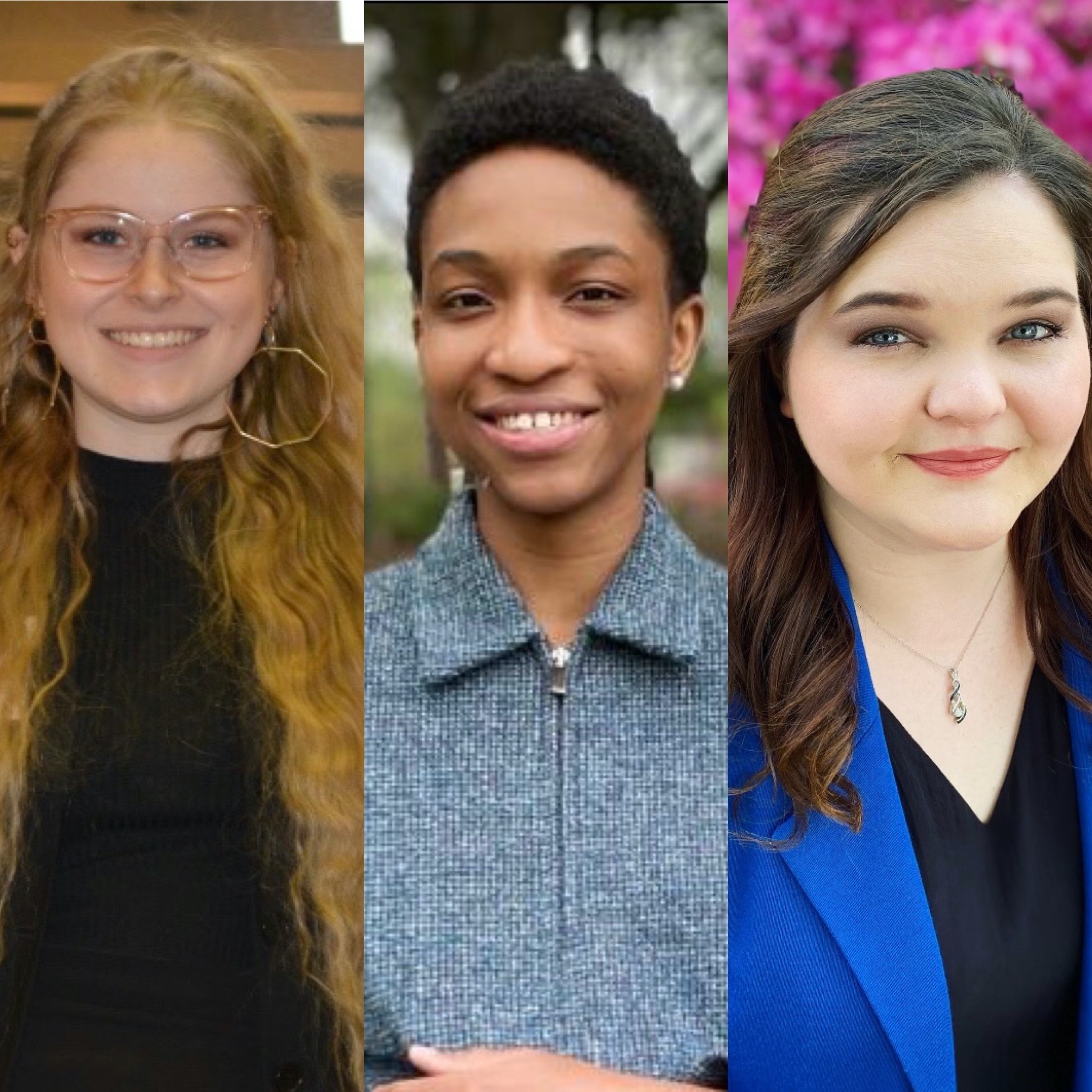
Ambitious student research collaborations with faculty members often lead to much more than good grades. The mentorships encourage professional growth, confidence and creativity, even in the midst of a pandemic. Georgia Southern University’s Spring 2021 Honors Research Symposium, which is being held virtually April 26 through April 30, will showcase faculty-student partnerships through a broad range of scholarly and creative research projects produced by more than 100 honors students across multiple disciplines on the Statesboro and Armstrong campuses. A few of the presenters include: Chelsea Riley, a triple major in international studies, political science and Spanish, worked with political science and international studies professor Srobana Bhattacharya, Ph.D., on her thesis, “The Culture Gap: The Role of Culture in Successful Refugee Settlement.” History and English major Jacey Thomas, mentored by associate professor of history Alan Downs, Ph.D., will present, “Irish Rock Music amid a Time of Troubles: Thin Lizzy and U2 as a Bridge During a Time of Division.” Biology major Susan Ihejirika’s presentation, “A Forward Genetic Screen to Identify Human Genes of Interest and Their Roles in Ovarian Cancer,” was guided by biology assistant professor Dongyu Jia, Ph.D. The Honors College, as the university-wide center for excellence in undergraduate education, plays a crucial role with undergraduate research at Georgia Southern. Since the beginning of the College, students have been required to complete honors theses or capstone projects. The faculty-mentored projects have spanned traditional research models, applied research and creative activities in all academic colleges and majors. “Through faculty-mentored research and scholarly activities, honors students create new knowledge and the Honors Research Symposium is the venue where we share it with the broader scholarly community,” said Honors College Dean Steven Engel, Ph.D. “ I am proud of the fact that they have been able to complete these projects despite the challenges of the past year.” Presentations will be posted on YouTube and the comments section will be open for audience engagement with presenters. If you're a journalist looking to learn more about this year’s Honors Research Symposium — simply reach out to Georgia Southern Director of Communications Jennifer Wise at jwise@georgiasouthern.edu.

COVID-19 has raised the stakes for boards, argues Brunswick’s Paddy McGuinness, former UK Deputy National Security Adviser. We now live with COVID-19. Fewer business leaders are making the mistake of talking about “post-COVID” or “when this is over.” The better of them have factored in COVID-19 related constraints to their medium-term plans and are even thinking about how the world may change in the long-term. They are building capacity to take advantage of an early recovery within months, yet they are modeling and encouraging grit for current and indeed harder conditions to last much longer. In the past, when health emergencies—say the Spanish Flu pandemic of a century ago—subsided, there was a greater return to economic normality than had been expected during the crisis. Extreme events often heighten or even distort our perception of wider risks. That old journalistic cliché “one thing is certain, nothing will be the same again” is rarely true. But the pandemic has created the expectation that businesses will be resilient—that they will be able to respond to an event and recover to the state prior to the event, incorporating the lessons learned into business practice. Many business leaders feel they have not done too badly responding to a once-in-a-hundred-years event. Business Continuity Plans (BCPs), which were understandably sketchy for pandemics, were pulled out of second-line risk management and owned and improved in real-time by executive committees. The transition to remote working and, at least in Asia and some of Europe, the gradual return to offices again, has been managed. Services and even vital production have been maintained. Leaders have absorbed the personal and collective strain of this. Good reason then for some satisfaction as they delegate certain COVID-19 responses and focus on the economic tsunami that follows the pandemic. The public seems to largely agree with business leaders’ assessments. While many national and scientific leaders find themselves beset by “blamestorming,” corporate executives have been given more slack. They weren’t expected to have foreseen a pandemic. Their sometimes scrabbling responses are understood. However, behind this lucky pass lurks an expectation that businesses will now be more prepared for crises and foreseeable risks. Resilience cannot be relegated to BCPs and traditional risk-management structures. It is categorically a board issue—regulators, lawyers, politicians and the public say so. The reputations of individual board members and the collective are at stake. Think how fast leaders have been expected to respond to the issues raised by the Black Lives Matter movement. Alacrity will be required. The speed and scale of decisions in response to the pandemic leaves board committees playing catch up to assure themselves that risks have been managed. The move to working from home has been rapid, so too the digitization of the business. Some see these as new, streamlined ways of working, yet the negative consequences are not yet fully apparent. Working from home, for instance, is attractive to some employees as well as chief financial officers, who may relish the chance to reduce fixed costs. Concerns about the impact on the coherence of the business’s culture, its productivity and innovation, the security of data held at home, hardships for those in difficult home conditions, and, indeed, the needs of the younger demographic who seem to favor a return to the office, need to be given due consideration. It may be a case of “decide in haste, repent at leisure.” Resilience is categorically a board issue—regulators, lawyers, politicians and the public say so. The reputations of individual board members and the collective are at stake. Boards also need assurance that the business has regained its balance and can manage parallel or interrelated crises. In recent weeks we have been helping several clients respond to major cyber events unrelated to the COVID-19 outbreak. They have probably needed more external support than otherwise because their leadership capacity was inevitably denuded by pandemic response. And they have benefitted from us already knowing each other and having experience of how to work together in crisis. After the Great Financial Crash there was a heavy focus on balance-sheet resilience and having the requisite finance skills on boards. Business leaders are now beset by advice on the heightened obligation to be resilient in much a broader sense of the word. Regulators, lawyers and risk consultants are sharing checklists of factors for executive committees to take into account when managing risks and for boards to oversee. The challenge here is defining what changes your specific business needs and how to actually bring those about. Shareholders will be expecting a judicious move away from “just in time” systems to ones that can endure foreseeable risks. This isn’t just about potential legal liability or reputational risk. This is about setting your business culture for success. Undermanage risks and the business is wide open to damage from foreseeable shocks with all the loss of confidence and capability that follows. Overmanage and the business losses its competitive edge just when there is opportunity in the recovery. In order to track broader resilience, boards and their committees will need access to a wider set of skills and insight. Board membership emerges as an obvious area of focus. Yet each board will take more time and belonging to too many—“over boarding”—may well be unacceptable. Risk methodology and information flows will also have to be reviewed, alongside how to strengthen board members’ awareness and skills. Before the pandemic, chairs and CEOs were already wrestling with this for their difficult-to-price risks, such as data, technology risks and cyber. Individual experts on boards created siloed responsibility for what should have been a shared risk. A focus on process and method often led to a focus on the management, rather than genuine oversight of, risks. External advice didn’t always help (as we have learned from the plethora of competing advice around COVID-19). No single intervention will meet the new standard for resilience. Nor will simple prescription. A broader and more articulated approach is required if governance is to maintain stakeholder confidence and corporate reputation.



Scapegoating During Pandemics Has Always "Plagued" Humanity
Though it was widely known that the first known cases of coronavirus could be traced back to Wuhan in China, many Americans were shocked and saddened to hear President Donald Trump repeatedly calling the illness the "Chinese virus" during a news conference in March. Though President Trump has insisted it's "not racist at all," Asian-Americans have reported incidents of slurs and physical abuse over the perception that China caused COVID-19. Rev. Joseph Ryan, OSA, PhD, teaches a course on the history of disease, with a focus on the bubonic plague, and notes that this type of xenophobic hysteria is not new when it comes to pandemics. “A theme that we can see with these epidemics is hysteria and the scapegoating of people who are liminal and have no defenders,” says Fr. Ryan. “We also see nativism and xenophobia evident in people's response to epidemic illness. Pandemics test the humanity of human populations and sometimes we are inhumane in the face of the fear of death from such diseases.” Here are a few examples from history of how humanity shifts blame during times of great pandemic-related stress: 1348: The Bubonic Plague A third of Europe's population was eliminated by this epidemic, which spread along trade routes. The event caused different expressions of hysteria among Europeans, including the persecution of the Jewish community. 1832: Cholera Like the bubonic plague, cholera traveled along trade routes. In the United States, Irish immigrants were scapegoated. 1918: Spanish Influenza It gained its name because the first journalists to talk about the disease were from Spain. Influenza came from Kansas and spread through the transport of American soldiers to Europe to fight in the First World War. Later, it traveled to British colonies in India and Africa via the transport of British troops, and the result was the rise of independence movements in these countries. 1980s: HIV/AIDS The HIV/AIDS crisis caused hysteria surrounding gay men. 2014: Ebola Another event that sparked hysteria was the recent outbreak of Ebola in West Africa. The governors of New York and New Jersey threatened to close their airports, though there was little chance of the virus breaking out in the United States. (To the best of Fr. Ryan's knowledge, only two Americans developed the disease.)
