
Experts Matter. Find Yours.
Connect for media, speaking, professional opportunities & more.

IU Kelley School finance expert available to discuss GameStop, Robinhood
Charles Trzcinka, the James and Virginia Cozad Chair of Finance at the Indiana University Kelley School of Business and an expert on financial markets and investments, is closely following developments involving individual investors and Game Stop and available to talk with reporters. He can discuss the impact of retail investors using the popular Robinhood brokerage and Reddit’s “Wall Street Bets” page on the stock of low priced companies like Gamestop, AMC and stocks such as BlackBerry, Bed Bath and Beyond and Nokia. Several brokerages halt buying of those and other stocks on Thursday. Trzcinka teaches behavioral finance and is familiar with Robinhood's model is to use game technology to trade stock and how it makes money by selling the right to trade against the orders to hedge funds and high frequency traders. In order to schedule an interview, contact George Vlahakis, associate director of communications and media relations at the Kelley School, at vlahakis@iu.edu or 812-855-0846.


Want to save on home loans? Just talk to your peers!
For most of us, finance is complex. Yet making financial decisions is part of day-to-day life. Take mortgages. Around 60 percent of U.S. households have a home mortgage, but how many actually understand its real value? Calculating things like interest rate trade-offs or closing costs is not easy, and research finds that a majority of families make financial mistakes because they fail to understand benefits or savings that might be open to them in refinancing. There are ways to overcome this kind of “information friction”—the obstacles to understanding that make it hard for people to process complex financial ideas and concepts. One of these is education. Ensuring that people have direct access to clear information can help inform household decisions. That seems pretty basic. Another, perhaps less understood, mechanism is the “peer effect”—the way we learn from and are influenced by what our peers or colleagues say or do. A new paper published in the Review of Financial Studies by Gonzalo Maturana, associate professor of finance, takes a fresh look at how the peer effect can help households make better decisions about their mortgages. And he finds that work colleagues and associates can actually have a far greater positive impact on our financial outcomes than we might expect. Together with Jordan Nickerson from MIT’s Sloan School of Management, Maturana ran a large-scale study of a particular U.S. peer group: public school teachers employed by the state of Texas. Here’s what the study found: Where there was a lot of mortgage refinancing going on among teachers in a particular school, individuals were a stunning 20.7 percent more likely to refinance their own mortgage. In other words, they were far more disposed to investigate alternatives and take advantage of the better deals on offer. The peer effect was also a critical factor in their subsequent choice of mortgage lender. Maturana and Nickerson also found that the more savings a particular peer group was making in mortgage repayments, the more refinancing activity there was in that school or teacher network. It is clear. With financial decisions, the network effect can create a positive feedback loop, said Maturana. Household finance and mortgages are top of mind and play a part in most American families – and if you are a journalist looking to cover this topic – then let our experts help. Gonzalo Maturana is an Associate Professor of Finance at the Goizueta Business School. He is an expert in the areas of corporate, household and real estate finance. Gonzalo is available to speak to media regarding this topic – simply click on his icon now to arrange an interview today.



Researchers urge: Learn from (someone else’s) experience
Measuring your performance as a business is critical. If you want to grow and be successful, you need to understand what you do well—and not so well. To paraphrase a couple of old adages, we all learn from our mistakes and our experience. But in today’s bumpy and fast-changing business landscape, measuring performance can be tough; tougher still if yours is a complex organization or industry. Whatever you’re looking at to gauge your firm’s performance—whether it’s customer satisfaction, say, or repeat purchases—your measures might well be less than perfect. And that’s because of noise—abstruse or unreliable data that makes it hard to unpack key metrics accurately and to learn from them. How successful a firm is in negotiating this performance measure noise depends on how that firm learns, said Kristy Towry, John and Lucy Cook Chair and professor of accounting at Goizueta Business School. She has led a study that looks at the way organizations and the people in them manage their learning. And she finds that we’re way more adept at cutting through the noise when we learn from each other, rather than basing our learning on our own firsthand experience. What the study found: What Towry and her colleagues found was that when there’s a lot of noise in the data we’re working with, our strategic learning is considerably improved when our learning is vicarious—that’s to say, when we learn from each other. This is down to how much of the big picture we see, said Towry. And experiential learning can make us myopic. “We know from psychology and from the results of this study that experiential learning—basing what we learn mainly off our own firsthand experience—can limit us. Experience tends to make us over-focus on what is happening in the here and now or what has just happened. We forget what happened before and don’t build that into our decision-making.” Vicarious learning, on the other hand, helps us to see the bigger picture. “When we’re learning from each other, it’s also experiential, but the learning is augmented by other people’s experience, meaning that we have a broadened perspective," said Towry. "We’re better able to see the big-picture patterns and trends.” When there’s a lot of noise and complexity to negotiate, vicarious learning helps us make better decisions. And this has huge implications for businesses operating in today’s environment. “Our world is not cut and dried at the best of times. Right now we are dealing with the COVID-19 crisis and the fallout on world economies and trade. The business context for most firms operating in this context is very far from stable, so we can assume there’s a lot of complexity and noise affecting our performance indicators. And with so much change afoot, the experiences we are all having in the workplace are what I would call fairly idiosyncratic,” said Towry. “Business leaders should be very aware of this.” To optimize strategic learning and thrive in complexity, firms need to find ways to allow vicarious learning to happen, she said. That means thinking about how to break down barriers to knowledge sharing, be they organizational silos or emerging challenges associated with things like remote working. Sharing information, insight, and understanding is essential. Kristy L. Towry is John and Lucy Cook Chair and Professor of Accounting at Emory University's Goizueta Business School. To learn more about this research or to talk with Kristy – simply click on her icon now to arrange an interview today.


Continuing to Learn and Explore American History
In the United States, students take several American history courses throughout their K-12 experience. So, why should students bother to continue taking American history courses in college? For Southern Utah University's Dr. Mark Miller, the answer is simple. “When I teach a history course, I am always looking for ways to point out how an issue or event in the past is relevant to something going on in today's world,” said Dr. Miller. “With this year's presidential election going on there have been plenty of examples to tie into regarding past politics and past political crises we have lived through as Americans.” Dr. Miller has conducted some exciting research that will be published in 2021. His upcoming articles includes: “Polygamy under the Red Cliffs: Women’s Voices and Historical Memory at Centennial Park” in Utah Historical Quarterly, “A River Again: Fossil Creek, Desert Fishes, and Dam Removal in the American Southwest” in Pacific Historical Review, and “‘One Territory, Many Peoples:” Racial and Ethnic Groups and the Development of Arizona Territory” in The Smoke Signal. “I think my work on plural marriage and environmental history shows that history is never dead,” said Dr. Miller. “It reveals that in current debates history is quite important. What happened in the past still informs the present. Since both of these topics are quite controversial today, I think historians provide a valuable service by exposing the history behind debates over allowing polygamy in modern America or whether we should make trade offs in development and water use to preserve unique species. Knowledge of people who practice plural marriage and their religious history as well as the history of preservation efforts toward endangered species is vital to all participants in the debates.” Dr. Mark Miller is a professor of history and the department chair of History, Sociology, & Anthropology at Southern Utah University. His research and teaching specialties include United States History, American West, Borderlands, Indigenous Culture and History, World Civilization, and Latin America. He has published articles and books on modern American Indian History, most recently Forgotten Tribes (2006) and Claiming Tribal Identity (2013). He has published articles on race and ethnicity, on indigenous identity and politics in several journals. Dr. Miller is familiar with the media and available for an interview. Simply visit his profile.


With an economy on life support – is inflation inevitable?
As countries around the globe are flooding their respective economies with enough cash to hold back the financial tsunami that could be felt by COVID-19 … will all that cash inevitably come with an unfortunate consequence like inflation? Those who work the markets and do their best to see into the future … think so. With the world economy forecast to shrink 6% this year, it may seem like a strange time to fret about inflation. And sure enough, market-based gauges suggest an uptrend in prices may not trouble investors for years. U.S. and euro zone inflation gauges indicate that annual price growth will be running at barely over 1% even a decade from now. So if inflation really is, as the IMF put it in 2013, “the dog that didn’t bark”, failing to respond to all the central bank money-printing unleashed in the wake of the 2008-9 crisis, why should investors prepare for it now, especially as demographics and technology are also conspiring to tamp down inflation across the developed world? The answer is that some think the dog really will bark this time, partly because - unlike in the post-2008 years - governments around the world have also been rolling out massive spending packages, in a bid to limit the impact of the coronavirus pandemic. “We will be pushing, pushing, pushing on the string and dropping our guard, then 3-5 years from now...that’s when the (inflation) dog will start barking,” said PineBridge Investments’ head of multi-asset Mike Kelly, who has been buying gold on that view. “Gold worries about such things long in advance. It has risen through this coronavirus with that down-the-road-risk top of mind,” he added. June 22 - Reuters It’s a daunting and stressful scenario. How much inflation could America expect and what would it mean to household incomes and spending? What industries would be further devastated by this? Is there any way to reverse inflation or is there an upside to it for some? If you are a reporter covering this topic – then let our experts help. Jeff Haymond, Ph.D. is Dean, School of Business Administration and a Professor of Economics at Cedarville and is an expert in finance and trade. Dr. Haymond is available to speak with media regarding this topic – simply click on his icon to arrange an interview.


TORONTO, ON., May 29, 2020 — International Data Corporation (IDC) Canada announced today the release of 20 new research reports to help vendors understand the impact of COVID-19 on the Canadian ICT market, including five new forecast documents. In addition, most analysts have created an additional report analyzing the impact of COVID-19 on their specific technology patch, providing our clients with additional details on the impact and guidance for vendors in that market. IDC Market Forecasts help technology suppliers identify market drivers and size, measure current performance, analyze leading market indicators, as well as plan for future opportunities and growth. The five forecast reports are listed below: Canadian Communications Services Forecast, 2020–2024: COVID-19 Turns Telecom Inside Out (IDC# CA45063520 ). This IDC study presents IDC Canada's five-year forecasts for communications services spending by market and customer segments, company size, industry sector, and region for 2020–2024 based on the annual update of IDC Canada's Communications Market Model and replaces our previous comprehensive spring and fall 2019 forecasts. "Communications providers are largely recession proof and fortunately investments in next-gen network technologies and architectures are allowing communications service providers to cope with unrivalled demand," says study coauthor Lawrence Surtees, vice president of Communications Research and principal analyst at IDC Canada. "But the duration of the COVID-19 pandemic is still a great unknown and its associated economic shocks could dramatically impact the current forecast." Canadian IT Professional Services Forecast, 2020–2024 (IDC# CA45064220 ). This IDC study provides the spring 2020 market size and forecasts for the Canadian IT professional services market. The professional services market is made up of four submarkets: Custom application development, IS consulting, Network consulting & integration, and Systems integration. "The Canadian IT professional services market relies on discretionary capital spending budgets, which are typically suspended or curtailed in times of economic uncertainty. 2020 will be a challenging year for professional services firms due to the COVID-19 pandemic, but the market is expected to recover as the Canadian and global economies recover and businesses reinstate capital spending for IT projects," says Jim Westcott, research manager, Professional Services, IDC Canada. Canadian Infrastructure Outsourcing Services Forecast, 2020–2024 (IDC#CA45058420). This IDC study provides IDC's forecast for the Canadian infrastructure outsourcing services market for 2020–2024. It is an update of the previous forecast published in Canadian Infrastructure Outsourcing Services Forecast, 2019–2023 (IDC #CA43804019, May 2019). "The infrastructure outsourcing market continues to change, and COVID-19 will likely accelerate change. The decline in 1st and 2nd Platform technologies is leading to slow outsourcing spending on these areas, while the growth in 3rd Platform technologies to support digital transformation are increasingly incorporated into outsourcing and managed service engagements," says Jason Bremner, research vice president, Industry and Business Solutions. Canadian Consumer Wireless, Internet, and Wireline Voice Services Forecast, 2020–2024 (IDC# CA45059520). "In an already-competitive consumer market in the middle of great technological change, the global Coronavirus pandemic and the precautionary restrictions it has placed on Canadians has not only caused drastic socioeconomic changes but has forced consumers to weigh out the value proposition of each consumer service," says coauthor Manish Nargas, senior analyst for Consumer Services and Mobility. "Survival of the fittest is the call of the hour, and it seems that some consumer services will fare better than others after the dust has settled. While easier said than done, service providers need to think beyond the today's losses in order to plan for tomorrow's win." Canadian Consumer TV Services Forecast, 2020-2024 (IDC#CA45059620). This IDC study examines the forecast for Canadian consumer TV services subscribers and revenue. It also addresses the factors shaping the market as well as the key drivers and inhibitors underlying the forecast. "TV service providers will have to bring out their A game as they look to harness their next-gen TV service capabilities and create symbiotic, seemingly 'complementary' partnerships with OTT video providers to keep consumer eyeballs on their TV service platforms all the while combating economic ill effects of COVID-19 restrictions in the short term," says coauthor Manish Nargas, senior analyst, Consumer Services and Mobility at IDC Canada. "Based on our forecasts from May 1, 2020, we’re looking at an unprecedented 5.4 per cent decline for the year for the combination of telecom and IT spending in Canada. The cumulative impact of trade restrictions, supply chain impairments, commodity price declines, significant lay-offs and freefalling consumer and business confidence has led to a more dramatic impact on the overall ICT market than we had predicted in early April," says Nigel Wallis, vice president, IoT & Industries at IDC Canada. IDC develops detailed forecasting reports and analysis for major technology markets in Canada, which are published annually during the month of May. IDC's Forecast Scenario Assumptions for the Canadian ICT Market, 2020 and Beyond (IDC# CA46217620 , May 20 20 ) supports the underlying macroeconomic assumptions for each of the ICT market forecast reports. We also recently released a new interactive Canadian COVID-19 IT Impact Dashboard tool to help our clients visualize the impacts, in partnership with Rel8ed.to, which is available for everyone to use. For our clients that need to know the impact of the pandemic on ICT Spending beyond Canada’s borders, IDC created our global COVID-19 Resources microsite which contains more research reports, webinars, press releases and blog posts from around the world. We’ve also done a series of free webcasts for our clients with the first one on April 2 and the second one on May 6. Our third webcast in this series will occur on June 4th. Register today for COVID-19 Impact: Preparing for Recovery in the Canadian Tech Market. Here’s the list of our recently published Canadian-based COVID-19 research reports to help our clients meet the challenges from the pandemic, anticipate market changes and keep business moving: COVID-19 Impact on the Canadian ICT Market (IDC#CA46134820) Canadian Datacenter Infrastructure Action Item, Q2 2020: The Impact of COVID-19 (IDC#CA45057420) Impact of COVID-19: Canadian IT Services Market (IDC#CA46166120) All Priorities Aside: The Canadian Government's Singular Response to COVID-19 (IDC#CA46166920) The Impact of COVID-19: Canadian Security Solutions Market (IDC#CA46166520) Canadian Communications Service Provider Capex Spending, 2019–2020 (IDC#CA45063820) Canadian Government Wireless Price Policy - Ill-conceived and Horribly Timed (IDC# CA45663920) COVID-19 Business Impact: Hierarchy of Needs; Moving from Pandemic Risk Management to Organizational Agility (IDC# CA46228420) How is the Pandemic Crisis Impacting Digital Transformation in Canada? (IDC# CA46235620) Impact of COVID-19: Canadian Software as a Service Market (IDC# CA46166620) COVID-19 Impact: What’s Next for the Canadian Tech Market (IDC# CA46281820) COVID-19 Impact: Canadian Retail & Wholesale Market (IDC# CA45674020) COVID-19 Leadership: Canadian CIOs Strategize on Responses to COVID-19 (forthcoming) Critical Networks Provide Critical Care: Role of Communication Networks to Treat and Prevent COVID-19 (forthcoming) COVID-19 Impact: Canadian Vertical Markets Overview (forthcoming) For more information about the market forecast reports, the COVID-19 related reports, or to arrange a one on one interview with any of the report authors, please contact Cristina Santander at AskIDC@IDCcanada.com.


Are China and America set to face off in a warmed-up version of the cold war?
Tensions and temperatures are rising between the United Stated and China. The straws on the camel’s back have been adding up in recent years, and the recent rhetoric about the origins of COVID-19 and the reaction to China’s further pursuit of the ‘One-China’ policy may be seeing both countries crossing the political Rubicon and headed toward a stand-off. The first shot fired may be China sending two air raft carriers to the Yellow Sea. This will be the first time China's new aircraft carriers deploy together for the first time and the move has sparked fears in Taiwan of a possible invasion of its Pratas islands - which could then be used as a staging point for an attack on the mainland. It comes after Beijing threatened to "reunify" Taiwan in response to Donald Trump saying he could "cut off the whole relationship" with China. Tensions have been growing between the US and China over the origins of Covid-19. The US said on Friday it is set to ban trade with 33 Chinese companies. But China's foreign minister Wang Yi said yesterday this would risk "a new Cold War" as he rejected Washington's "lies" over its handling of coronavirus while saying Beijing was open to an international effort to find its source. Wang said the United States had been infected by a "political virus" compelling figures there to continually attack China. He said: “It has come to our attention that some political forces in the US are taking China-US relations hostage and pushing our two countries to the brink of a new Cold War." May 25 – The Sun It is a concerning development given the current state of global affairs. And there are a lot of questions to be asked: What will it take to de-escalate the issue? What would a 21st Century cold war look like? And at what cost will this come to both countries who are dealing with serious economic pressures at home? If you are a journalist covering this topic – then let our experts help. Dr. Glen Duerr's research interests include comparative politics and international relations theory. Glen is an expert on this subject and is available to speak to media regarding this topic– simply click on his icon to arrange an interview.

The road back – how long will it take for America’s economy to recover?
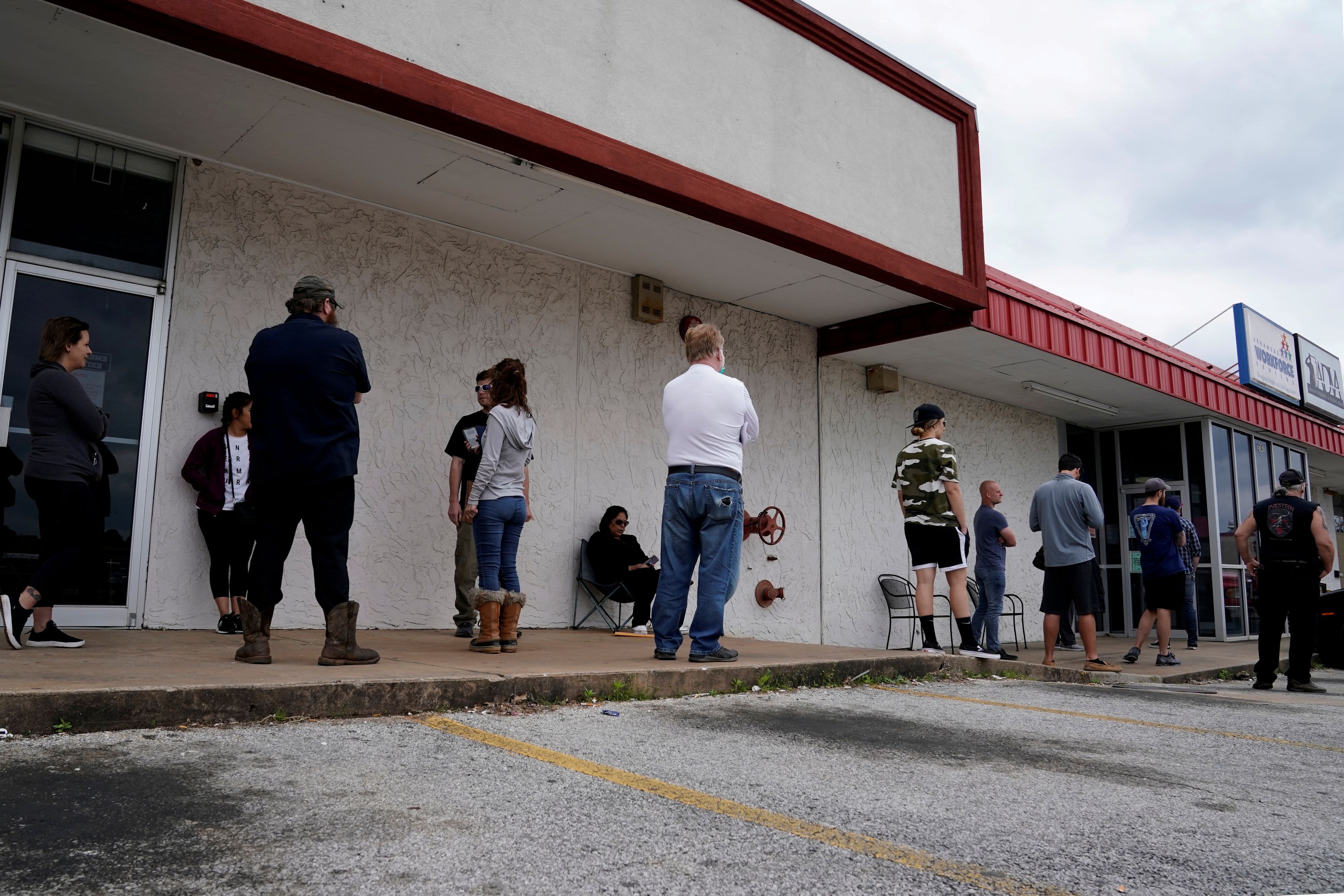
With unemployment at a staggering 14 percent, America’s economy looks as if it is in freefall. With COVID-19 forcing factories to shut down, small businesses to shutter and restaurants to close their doors, there is anxiety at every level of government about when the country’s economy will get back in motion. Economists surveyed by Dow Jones had been expecting payrolls to shed 21.5 million and the unemployment rate to go to 16%. April’s unemployment rate topped the post-war record 10.8% but was short of the Great Depression high estimated at 24.9%. The financial crisis peak was 10% in October 2009. The bleak numbers paint a “pretty dismal picture, but April may be it for job losses going forward with the country starting to reopen,” said Chris Rupkey, chief financial economist at MUFG Union Bank. “If there is a silver-lining in today’s dismal jobs report, it is in the realization that the economy cannot possibly get any worse than it is right now.” CNBC – May 08 Bleak indeed, but there are still many questions to be answered. How long will it take until people are back to work? What industries and businesses are impacted or lost forever? Is there a safe way to get back to work? Are there worries of inflation? And who is paying for all this stimulus funding and bailouts. If you are a journalist covering the economy, let one of our experts help. Jeff Haymond, Ph.D. is Dean, School of Business Administration and a Professor of Economics at Cedarville and is an expert in finance and trade. Dr. Haymond is available to speak with media regarding this topic – simply click on his icon to arrange an interview.

Scapegoating During Pandemics Has Always "Plagued" Humanity
Though it was widely known that the first known cases of coronavirus could be traced back to Wuhan in China, many Americans were shocked and saddened to hear President Donald Trump repeatedly calling the illness the "Chinese virus" during a news conference in March. Though President Trump has insisted it's "not racist at all," Asian-Americans have reported incidents of slurs and physical abuse over the perception that China caused COVID-19. Rev. Joseph Ryan, OSA, PhD, teaches a course on the history of disease, with a focus on the bubonic plague, and notes that this type of xenophobic hysteria is not new when it comes to pandemics. “A theme that we can see with these epidemics is hysteria and the scapegoating of people who are liminal and have no defenders,” says Fr. Ryan. “We also see nativism and xenophobia evident in people's response to epidemic illness. Pandemics test the humanity of human populations and sometimes we are inhumane in the face of the fear of death from such diseases.” Here are a few examples from history of how humanity shifts blame during times of great pandemic-related stress: 1348: The Bubonic Plague A third of Europe's population was eliminated by this epidemic, which spread along trade routes. The event caused different expressions of hysteria among Europeans, including the persecution of the Jewish community. 1832: Cholera Like the bubonic plague, cholera traveled along trade routes. In the United States, Irish immigrants were scapegoated. 1918: Spanish Influenza It gained its name because the first journalists to talk about the disease were from Spain. Influenza came from Kansas and spread through the transport of American soldiers to Europe to fight in the First World War. Later, it traveled to British colonies in India and Africa via the transport of British troops, and the result was the rise of independence movements in these countries. 1980s: HIV/AIDS The HIV/AIDS crisis caused hysteria surrounding gay men. 2014: Ebola Another event that sparked hysteria was the recent outbreak of Ebola in West Africa. The governors of New York and New Jersey threatened to close their airports, though there was little chance of the virus breaking out in the United States. (To the best of Fr. Ryan's knowledge, only two Americans developed the disease.)


As the world still isolates, social distances and stays at home – the concerns about the economy are always top of mind. Jobs, investments and paying bills are a daily topic at home and in the media. The initial spin that there’s nothing to worry about as whatever was lost is bound to bounce back once we’re back to normal is starting to fade. No one knows when that bounce back will start and the idea of back to normal, what it will look like and when is at best a guess for anyone. Public health experts are beginning to make predictions about when coronavirus infection rates will peak. Economists are calculating when the cost of continuing to shutter restaurants, shopping malls and other businesses — a move that has already pushed some 10 million Americans into unemployment, with millions more on the way — will outweigh the savings from further efforts to slow the virus once the infection curve has flattened out. Government officials are setting competing targets. President Trump has pushed his expected date of reopening the economy to the end of April. “We have to get back to work,” he said in a briefing on Saturday. “We have to open our country again. We don’t want to be doing this for months and months and months. We’re going to open our country again. This country wasn’t meant for this.” Some governors have set much more conservative targets, like Ralph Northam of Virginia, who canceled the remainder of the school year and imposed a shelter-at-home order through June 10. Other states, like Florida, only recently agreed to shut activity down but have set more aggressive targets — April 30, in the case of the Sunshine State — to restart it. April 06 – New York Times So when will it be back, what’s lost forever and how long to recover are the million-dollar questions. And if you are a journalist covering America’s economy through the COVID-19 pandemic – then let us help with your stories. Jeff Haymond, Ph.D. is Dean, School of Business Administration and a Professor of Economics at Cedarville and is an expert in finance and trade. Dr. Haymond is available to speak with media regarding this topic – simply click on his icon to arrange an interview.