
Experts Matter. Find Yours.
Connect for media, speaking, professional opportunities & more.

Supply chain disruptions cost organizations an estimated $184 billion annually, according to Swiss Re. A recent survey of 2,000 European shipping customers by logistics giant Maersk revealed that 76% experienced supply chain disruptions that delayed their business operations in the past year, with 22% reporting more than 20 disruptive incidents in the same period. These figures underscore the growing businesses’ growing vulnerabilities, as detailed in the 2025 J.S. Held Global Risk Report, which outlines how companies worldwide must adapt to an increasingly complex and volatile supply chain landscape. As highlighted in the 2025 Global Risk Report, modern supply chain disruptions stem from a range of factors, including climate change, natural disasters, cyberattacks, fraud, and geopolitical instability. Conflicts such as the Russia-Ukraine war and tensions in the Middle East continue to exacerbate these challenges. Gone are the days when companies could shift blame to suppliers without accountability. The globalization of supply chains has made them increasingly susceptible to cyber incidents, material shortages, and regulatory scrutiny. Consumers and governments alike are demanding greater transparency, pushing companies to disclose where products come from, how they are sourced, and whether their manufacturing processes harm people or the environment. The 2025 Global Risk Report notes that in response, governments worldwide have introduced stricter regulations, particularly in the European Union, where new and existing legislation is enforcing greater oversight and compliance. “As consumers, governments, and corporations acknowledge the effects of supply chain risks, transparency and due diligence will become more critical to the internal compliance structure of global businesses,” said Vice President of Sustainability Andrea Korney. “The enactment and greater enforcement of laws focused on sustainability issues have increased the obligations on companies to examine the sources and actions of their suppliers and how it all impacts the entire value chain.” In the 2025 J.S. Held Global Risk Report, multidimensional experts who combine scientific, technical, financial, and risk management expertise identify and explore key business risks shaping the future of supply chain resilience, including: Geopolitical instability Natural disasters and climate science Maritime route disruptions Regulatory fragmentation Cybersecurity threats Trade and tariff threats Critical minerals dependency Financial risks and fraud J.S. Held environmental risk and compliance expert John Peiserich, Esq., observes, “These risks are no longer hypothetical—they are actively reshaping the business landscape. Organizations that fail to anticipate and mitigate these challenges risk operational disruptions, financial losses, and reputational damage.” For businesses seeking to build resilient supply chains, the 2025 J.S. Held Global Risk Report serves as an important guide, providing expert insights and data-driven analysis to help companies navigate the evolving risk landscape. J.S. Held experts serve as trusted advisors to global clients on these and other risks, crafting business strategies, leveraging technology seeking to mitigate risk, and optimizing business opportunities to build resilience in an era of uncertainty. Supply chain risk is just one of the five key areas analyzed in the J.S. Held 2025 Global Risk Report. Other topics include sustainability, the rise of crypto and digital assets, AI and data regulations, and managing cyber risk. If you have any questions or would like to further discuss the risks and opportunities outlined in the report, please email GlobalRiskReport@jsheld.com. To connect with Andrea Korney or John Peiserich simply click on either expert's icon now. For any other media inquiries - simply contact : Kristi L. Stathis, J.S. Held +1 786 833 4864 Kristi.Stathis@JSHeld.com


ExpertSpotlight: Tariffs and Trade Wars
Tariffs and trade wars have long been powerful tools in international relations, influencing everything from consumer prices to global supply chains. As nations impose duties on imports and retaliate with countermeasures, economies can experience ripple effects that impact businesses, jobs, and everyday consumers. Understanding how tariffs work and why trade wars escalate is essential for grasping the complexities of global commerce and national economic policies. With ongoing disputes between major economies, this topic remains highly relevant to the public. Key story angles include: What Are Tariffs and How Do They Work? A breakdown of tariffs, their purpose, and their impact on industries and consumers. Historical Trade Wars and Their Consequences: Examining past trade disputes, their economic fallout, and lessons learned. U.S.-China Trade Relations: Analyzing the impact of tariffs between the world’s two largest economies and their influence on global markets. The Role of Tariffs in Domestic Job Creation: Investigating whether tariffs protect local industries or lead to unintended economic consequences. How Trade Wars Affect Everyday Consumers: Exploring how tariffs on goods like electronics, food, and automobiles translate to higher prices. The Future of Global Trade Agreements: Discussing potential shifts in international trade policies and their implications for businesses and governments. As countries navigate economic policies in an increasingly interconnected world, tariffs and trade wars remain central to discussions on financial stability, political strategy, and economic growth. Connect with an expert about trade and tariffs: To search our full list of experts visit www.expertfile.com


Expansion Plans? What's Behind Donald Trump's Approach to Canada, Greenland and Panama?
With the inauguration of President Donald Trump just days away, there are many people in America and abroad who are watching and waiting on the first moves of the incoming Trump administration. President Trump has been giving some bold suggestions about the importance of places like Greenland, Canada and Panama to America's national and economic security. Some are explaining Trump's approach as a negotiating tactic to spur on deeper conversations. Others are concerned there's some seriousness to his plans for expansion. Either way, it's getting a lot of coverage as the countdown is on to his resumption of the country's leadership. Last week, Trump waded boldly into global affairs — but he barely touched on those purported priorities. Instead, at a news conference at Mar-a-Lago, he focused on a list of obscure, arguably eccentric goals: acquiring Greenland from Denmark, absorbing Canada as a very large 51st state, and retaking control of the Panama Canal. The president-elect said he would bring all three territories under U.S. control through economic coercion, but did not rule out using force to seize Greenland and the canal. January 13 - Los Angeles Times “That would really be something,” Trump said of the United States' taking control of Canada. “You get rid of that artificially drawn line, and you take a look at what that looks like. And it would also be much better for national security,” Trump said. “They’re great, but we’re spending hundreds of billions here to protect it.” Trump said that the subsidies include substantial military support and that the United States loses out through trade deficits. January 07 - NBC News President-elect Donald Trump has reiterated his desire for the US to acquire Greenland and the Panama Canal, calling both critical to American national security. Asked if he would rule out using military or economic force in order to take over the autonomous Danish territory or the Canal, he responded: "No, I can't assure you on either of those two. "But I can say this, we need them for economic security," he told reporters during a wide-ranging news conference at his Mar-a-Lago estate in Florida. Both Denmark and Panama have rejected any suggestion that they would give up territory. January 08 - BBC The coverage has been intense, but there are still some questions to be asked: How would the world and America's allies react if President Trump applies pressure or force to make any of these countries comply? How might relations between Trump and the U.S. military and intelligence community change in his second term? And, is this just a tactic or could President Trump possibly be serious about his plans? Looking to know more? Professor Peter Campbell studies international security, civil-military relations, international relations and policy relevance. Peter is available to speak with media about this ongoing topic - simply click on is icon now to arrange an interview today.


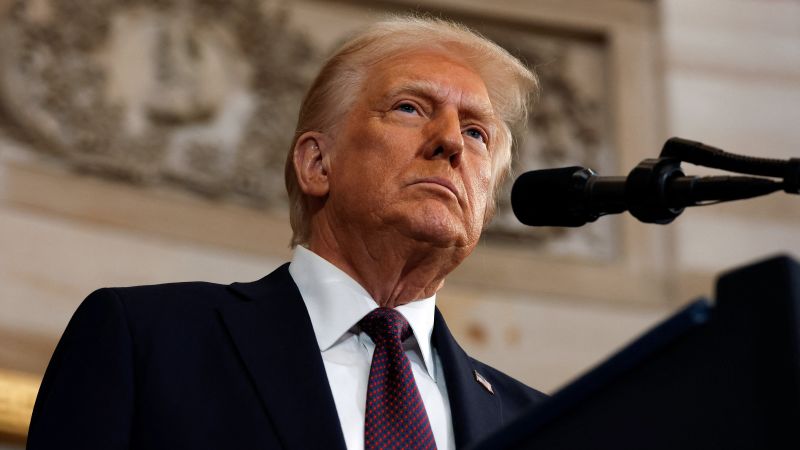
Trump, Trade and Tariffs What to Expect, Will They Work and Who Benefits?
The threat of 25 % tariffs on Canada and Mexico had newsrooms buzzing, politicians scrambling and economists calculating who wins and who loses when trade wars break out among usually amicable neighbors. Factor in Greenland and China - and the story went global. It was a topic that headlined the news as many have watched and waited since the election for President Trump's first days in office to see what the country can expect with incoming policy changes. President Donald Trump said in an Oval Office signing ceremony Monday evening that his administration will impose 25% tariffs on Mexico and Canada on February 1, an extraordinary change in North American trade policy that could raise prices for American consumers. Trump still outlined his broader trade policy for his second term in an executive action Monday. But that action — described by sources as a “placeholder” — doesn’t institute new global tariffs that Trump promised on Day One. As a candidate, Trump proposed sweeping and across-the-board tariffs: up to 20% on imports from all countries, with a 25% tax on goods from Mexico and Canada, plus a punishing 60% levy on goods from China. He also pledged to use tariffs as a negotiating tool on other countries, including, for example, Denmark — putting pressure on the European nation to give control of Greenland to the United States. Asked Monday at an Oval Office signing ceremony about tariffs on China, Trump noted extensive tariffs he imposed during his first administration were still in effect after former President Joe Biden largely left them in place. And on universal tariffs, Trump punted, saying, “We may, but we’re not ready for that just yet.” The executive action signed Monday directed the secretaries of Commerce and Treasury and the United States Trade Representative to investigate the causes of America’s trade deficits with foreign nations, to determine how to build an “External Revenue Service” to collect tariffs, to identify unfair trade practices and to review existing trade agreements for potential improvements. It also directs the government agencies to analyze how the US-Mexico-Canada trade agreement (the USMCA) signed by Trump in his first term is affecting American workers and businesses — and whether America should remain in the free trade agreement. January 21 - CNN As business and political leaders in many countries, especially North America wait for what's ahead, there are questions to be asked: What industries will be targeted? Will tariffs cause higher prices for consumers and increased inflation? Who wins if an all-out trade war happens? How will interwoven sectors like the auto industry and agriculture be impacted? If you're a journalist covering this ongoing story - then let us help. William J. Luther, Ph.D., is an associate professor of economics at Florida Atlantic University, director of the American Institute for Economic Research’s Sound Money Project, and an adjunct scholar with the Cato Institute’s Center for Monetary and Financial Alternatives William is available to speak with media. Simply click on his icon now to arrange an interview today.


Are Trump's Economic Reforms Obsolete After Biden Administration
President-elect Donald Trump campaigns were filled with promises of economic reform including strict import tariffs, strict immigration curbs, and deregulation. However, reports reveal the current economic state of the US may not be needing the president's aggressive reform. Trends reflect a strong economy with low unemployment rate; prompting concerns that Trumps policies could disrupt the economic growth. Trump will be taking office next week with a much different economic circumstances compared to his first term in 2017. Does the economic changes since Trump's first term make his reforms obsolete or even dangerous? Economics expert, Dr. Jared Pincin weighs in on the discussion of the economy during the Biden administration in a recent interview. There has been an increase of individuals getting second jobs or "side hustles" especially in the Gen Z generation. As the need for an extra income source increased the unemployment rate has decreased. Are the lowered unemployment rates just a reflection of an economy that won't allow citizens to live on one paycheck? Although the economy that Trump will be inheriting show positive changes since his first term in 2017, there are concerns that can not be ignored. Trumps expansionary policies can incite inflation if the economy is not calling for his aggressive reforms. How will Trump's administration reap the benefits of the Biden administration while preventing an economic crisis? The economy appears to be performing well, especially over the past year. These reports come in during Trump's promises of reform. Are these reforms going to strengthen the economy or are they proof of Trumps disconnect with the current economic health? If you are covering the the U.S. economy during the Trump administration and need to know more, let us help with your questions and stories. Dr. Jared Pincin is an expert on economics and is available to speak to media regarding the Trump administration and the economy – simply click on his icon or email mweinstein@cedarville.edu to arrange an interview. Jeff Haymond, Ph.D. is Dean, Robert W. Plaster School of Business Administration and a Professor of Economics at Cedarville and is an expert in finance and trade. Dr. Haymond is available to speak with media regarding this topic – simply click on his icon to arrange an interview.


As global health systems continue to contend with emerging infectious diseases, bird flu, or avian influenza, remains a topic of critical importance due to its potential to affect both animal populations and human health. Originating from wild birds, this highly contagious virus has led to significant outbreaks among domestic poultry and occasionally crosses over to humans, raising concerns about public health and pandemic preparedness. Understanding the origins, symptoms, prevention strategies, and treatment options for bird flu is vital for mitigating its impact and safeguarding global health. Key story angles include: Origins and Spread of Avian Influenza: Investigating how the virus originates and spreads through wild bird migration and poultry farming practices. Human Health Risks and Symptoms: Exploring how bird flu affects humans, the symptoms of infection, and the conditions that facilitate zoonotic transmission. Economic and Agricultural Impacts: Examining how bird flu outbreaks impact poultry industries, trade, and food security worldwide. Prevention and Biosecurity Measures: Highlighting strategies to prevent bird flu outbreaks, including vaccination efforts, monitoring programs, and farming regulations. Treatment and Research Advances: Reviewing current treatment options, antiviral drugs, and ongoing research to develop vaccines and better therapeutic approaches. Pandemic Preparedness: Discussing the role of global health organizations in monitoring and responding to potential bird flu pandemics, including lessons learned from past outbreaks. The ongoing threat of avian influenza underscores the interconnectedness of human, animal, and environmental health, offering journalists a multifaceted issue to explore with broad public relevance. Connect with an expert about Bird Flu (Avian Influenza) and understanding Its origins, impact, and prevention: To search our full list of experts visit www.expertfile.com

The History and Significance of Taiwan
Taiwan’s history is a rich and complex tapestry of indigenous cultures, colonial influences, and evolving sovereignty, making it a critical subject for understanding regional and global geopolitics. From its indigenous roots to its modern status as a thriving democracy and global tech leader, Taiwan plays a pivotal role in shaping international conversations about identity, governance, and economic innovation. This topic matters to the public because of Taiwan's strategic importance in global trade, its cultural vibrancy, and its position in ongoing geopolitical tensions. Key story angles that may interest a broad audience include: The indigenous heritage of Taiwan: Exploring the rich traditions, languages, and contributions of Taiwan’s indigenous communities. Colonial and post-colonial history: Examining Taiwan’s transformation under Dutch, Spanish, Chinese, and Japanese rule and its modern implications. Taiwan’s role in global technology: Highlighting its leadership in semiconductor manufacturing and contributions to the global tech supply chain. Geopolitical significance: Analyzing Taiwan’s relationship with China, the United States, and the international community in the context of cross-strait relations. Taiwan as a democratic model in Asia: Discussing its political evolution, vibrant civil society, and significance in promoting human rights. Cultural preservation and innovation: Showcasing how Taiwan balances its traditional arts, cuisine, and festivals with contemporary innovation and creativity. Connect with an expert about Taiwan: To search our full list of experts visit www.expertfile.com

Georgia Southern welcomes Georgia state leaders on Wexford Campus in Ireland
Georgia Southern University’s Wexford Campus in Ireland has been invigorating educational, civic, business and trade opportunities between Ireland’s southeast region and the state of Georgia since its establishment in 2022. The bicultural partnership has drawn the attention of state leaders in Georgia, prompting a recent visit to the international campus where Georgia Southern and its Irish partners welcomed the delegation. “We hosted legislators and leaders of industrial development and enterprise organizations,” said Howard Keeley, Ph.D., director of Georgia Southern’s Center for Irish Research and Teaching (CIRT). “These Georgia stakeholders believe that what Georgia Southern is doing in Ireland is important. One of the major concepts behind the Wexford Campus is that it’s a true campus, not just a study-abroad venue. So we’re pursuing several streams of activity. One is teaching and another is research. Another one is economic development, which includes internships and community engagement. We want to be in the community; therefore, to have leading constituents from a variety of industries in Georgia was very gratifying.” Among the attendees were U.S. Congressman Earl L. “Buddy” Carter; Georgia Department of Economic Development Commissioner Pat Wilson and five members of his senior staff, as well senior officials from electrical utilities, including Georgia Power; Trip Tollison, CEO of Savannah Economic Development Authority; Teresa MacCartney, chief operating officer for the University System of Georgia; and Georgia Rep. James Burchett (‘04), along with 10 additional members of the Georgia House of Representatives. “The main thing we wanted to do is show them what the student experience is like,” said Keeley. “We care about our students, and, using philanthropic funds, we’ve invested in a beautiful set of buildings, including one, built in 1886, that will house 50 students at a time. Each year, our goal is full capacity over six minimesters for a total of 300 Georgia Southern students. Historically a religious convent, that structure should open in spring 2026, after extensive remodeling. Many Georgia Southern students, including construction management and interior design majors, are gaining valuable professional skills by contributing to the endeavor.” The Wexford Campus already features the Learning Center, a historic administrative complex constructed in 1812 that has been transformed into a contemporary, high-tech educational space where students learn from local and international experts. They also present their research to peers and visiting Georgia Southern alumni while participating in high-impact experiential learning within the region. Visiting delegates were pleased to learn about the Honors College Global Scholars Program, which hosts 24 Honors College students who, taking an interdisciplinary approach, explore two themes for six weeks each spring in Ireland. This year, a prominent topic of study was sustainability in agriculture. One of Georgia Southern’s European research partners, South East Technological University Ireland, helped guide the students as they compared sustainability challenges along the coasts of Georgia and southeastern Ireland. The students drew on various research efforts, including important knowledge generated by Georgia Southern’s Institute for Water and Health. Similar integrated concepts also inform the summer and fall offerings. In 2024, they included two undergraduate global business courses, as well as the first Europe-based course from the MBA program at Georgia Southern’s Parker College of Business. One focus for the MBA students was Rosslare Europort, just south of Georgia Southern’s Wexford Campus, which has become Ireland’s fastest-growing port as multiple new direct routes to continental Europe have opened in response to Brexit. At a workshop facilitated by a top Rosslare Europort official, the MBA students explored international trade, logistics and supply chain management and the European regulatory environment. Spanning undergraduate, graduate and doctoral levels, the Wexford Campus has also provided courses in accounting, philosophy, sociology, geography, environmental biology, tourism and public health, among other disciplines. Shadowing Irish experts, population health science students from the Waters College of Health Professions focused on designing and delivering preventative-health programs, a critical matter in both Ireland and Georgia. “One of the metrics we use to measure success in Ireland is asking what makes it worthwhile for students to complete the course in Ireland as opposed to staying in the United States,” posed Keeley. “The bottom line is that we’re trying to provide a range of courses that look like Georgia Southern and that meet the degree needs, but also the employment needs in the state of Georgia. We’re always looking at how we can make our students more competitive, deepen their knowledge and give them as much hands-on experience as possible. This is really one of the things that we hope is a differentiator for us.” Notably, annual scholarships are available for the Honors College Global Scholars Program, Department of Political Science and International Studies students and Irish Studies students thanks to generous donations from alumni. In addition, philanthropic support has provided $1,000 to each participating student to offset the cost of transatlantic air travel. “The Wexford Campus’ directives exemplify Georgia Southern’s mission of providing holistic educational opportunities for our students to excel and grow,” said Annalee Ashley, Ed.D., Georgia Southern Vice President for External Affairs, Communications, and Strategic Initiatives, who participated in the trip. “Employers value global consciousness and intercultural skills when hiring, and our students who study abroad can enhance their skills, intellect and hireability in the marketplace. We are proud to serve Georgia and the entire southeastern region in this unique way, and to be supported by the state of Georgia as the University moves toward an R1 designation.” Beyond the campus, the group explored Johnstown Castle, an environmental and agricultural research center and heritage venue, as well as the Dunbrody Emigration Experience Center, whose newest permanent exhibition, Savannah Landing, is based on research by Georgia Southern students. The work highlights more than 170 years of historical ties that connect Savannah and Wexford, where hundreds boarded ships and crossed the Atlantic Ocean to arrive in Georgia’s coastal city in the mid-19th century. The centerpiece project, which was celebrated by the Irish prime minister at a ribbon-cutting in August, was made possible by $832,000 in research-grant funding, secured by the Dunbrody Center and Georgia Southern’s Center for Irish Research and Teaching. “Our guests got to experience history and understand the unique story that connects County Wexford to Savannah and, by extension, the state of Georgia,” noted Keeley. “Furthermore, they were able to see more than three-quarters of a million dollars of investment in Georgia Southern student work. That was super exciting.” The legislative group also met with Georgia Southern’s Irish partners, who shared what this relationship means to the people of Wexford and its hinterland, Southeast Ireland. “We invited all the players onto the field to strategically advance themes of education, economic development, and civic and cultural engagement,” said Keeley. “I believe they concluded that Ireland is a fit. It boasts a thriving economy that is modern, global and innovative. It’s the youngest economy in Europe in terms of workforce, and Ireland is one of the biggest investors in the U.S. economy.” Georgia Southern leadership and local Irish legislators, including four members of the Irish House of Representatives, Senator Malcolm Byrne and members of Wexford County Council, hosted Georgia’s VIPs with open arms. “They wanted to rally around us in the way that a family will rally around you,” said Keeley. “They couldn’t have done more. They totally rolled up their sleeves. It was a complete partnership hosting, and we were able to demonstrate that our network is so solid.” Wexford County Council leader Pip Breen shared opportunities for deeper connections with the Georgia delegation through the Irish nonprofit TradeBridge. Established in 2018, the entity facilitates trade and investment between the southeastern regions of Ireland and Georgia by developing new export markets and job creation opportunities. The trade corridor opens doors for southeastern Irish companies to establish a supportive base in southeastern Georgia, while also creating similar coordinates for companies based in southeastern Georgia to enter the European Union marketplace. Keeley, who was awarded the Presidential Distinguished Service Award for the Irish Abroad from the Government of Ireland in 2023, is a board member. “Georgia Southern’s footprint in southeastern Ireland is an important one for students and for the state of Georgia,” said Ga. Rep. Burchett. “The strides they are making not only allow students to participate in research in engineering, coastal sustainability, history and other important areas of study, but they also directly drive trade and investment opportunities between the southeastern regions of Georgia and Ireland. This was an amazing visit and we value our friendships within the Irish community.” Following the event, Burchett returned the hospitality with an invitation for Wexford County Council members to be recognized in person on the floor of the Georgia General Assembly in March 2025. “They very enthusiastically accepted the invitation,” Keeley shared. “I think when you’re involved in education, when you’re doing business and when you’re building out opportunities, the most important single thing is friendship and like-mindedness. You cannot achieve anything otherwise. There has to be this human-to-human connection. There has to be genuine mutual respect and mutual affection, and that was just in spades.” Georgia Southern’s Wexford Campus was featured on the national Irish TV program, “Nationwide.” You can see it here: Looking to know more, then let us help. Howard Keeley, director of Georgia Southern’s Center for Irish Research and Teaching, is available to speak with media. Simply click on his icon now to arrange an interview today.


Does Donald Trump Like Seniors?
At 78, Donald J. Trump already has 13 years of experience as a senior citizen. During his previous presidency, he occasionally referenced his senior status, particularly when discussing issues affecting older Americans. For example, in the 2020 election campaign, he acknowledged his age and addressed fellow seniors directly in his messaging, sometimes referring to himself as part of the senior community. Looking at his record, Trump appears to have a complex relationship with seniors. While expressing support for essential programs such as Social Security and Medicare, he often weaves the needs of seniors into his rhetoric. Yet some of his policy decisions have created mixed feelings among older Americans and advocacy groups. While pledging to protect these programs, he’s considered budget-cut proposals to reduce the funding of both these programs. Plus, his administration attempted to repeal the Affordable Care Act. While even the smartest of experts have learned it’s difficult to predict what Donald Trump will do on key policy decisions, there are some clues as to how his move back into the Oval Office will impact Canada and, more specifically, seniors. This topic got me wondering. Does Trump (a senior himself), like seniors? Let’s look closer at this demographic. Everyone knows that older people are the most reliable voters. The stats are compelling. According to Elections Canada - 75% of Canadians aged 65-74 voted compared to 48% of those aged 18-24. - The statistics for our US neighbours are similar, with 70% of Americans aged 65+ voting and 50% of Americans aged 18-29 voting. Knowing this voting power of the senior demographic, did Trump pander to this voting cohort? Yes, he most certainly did. He knew that as people age, their concerns narrow to a smaller list of critical topics such as Financial Security, Health, and Safety. During his 2024 presidential campaign, Donald Trump focused heavily on appealing to older voters, who historically make up a significant portion of the electorate and are more likely to vote. His campaign emphasized economic stability, protecting Social Security and Medicare, and national security—particularly relevant to older demographics. Let’s take a closer look at how the Trump administration could impact Canada's senior demographic in the following areas: Inflation Background: Inflation has a direct correlation to the cost of living. As the prices of goods and services rise over time, the purchasing power of money decreases – a challenge for many seniors. Critical expenses like housing, healthcare, food, and utilities could increase noticeably, putting pressure on limited retirement incomes and pensions. All this is stressful. According to a 2024 national survey of over 2,000 Canadians (conducted by Leger on behalf of FP Canada), money remains the top stressor for Canadians, with 44 percent citing money as their primary concern; That's up from 40 percent in 2023 and 38 percent in both 2022 and 2021. What This Means: Two of Trump’s biggest promises in his campaign (mass deportation of undocumented immigrants and more restrictive trade regulations) would have a "significant impact," according to an article by Ellen Cushing in the Atlantic. A domestic labour shortage plus double-digit import taxes would raise food prices on both sides of the border. Cushing goes on to say that “deporting undocumented immigrants would reduce the number of workers who pick crops by 40-50%.” While this rhetoric may have played well during the campaign, you can't fake the simple math here. Fewer workers means higher wages. That means higher prices. And the senior demographic will be hit hard because of their fixed incomes. Many will eat less of the expensive grocery store items like fresh meat, fruits and vegetables to make ends meet. Food prices will inevitably climb with these policies. The only question is when. According to a new poll conducted for CIBC and Financial Planning Canada on November 27, 2023, approximately 75% of working Canadians still need a formal financial plan for retirement. And many retirees face economic difficulties. A whopping 25% are still carrying debt into retirement. Many also report they have a substantial portion of debt and report that their retirement lifestyle isn't as comfortable as expected. The impact of inflation could be dire with few solutions; it is different for these older Canadians because they cannot re-enter the workforce. The only saving grace is that many of the hardest-hit Canadians are homeowners with equity options. Interest Rates Prediction: According to Beata Caranci, SVP & Chief Economist of TD Bank, the US is likely to raise interest rates to control growth. Canada is also expected to increase its rates, mainly to keep the Canadian dollar stable against the U.S. dollar. The Bank of Canada could be forced to rescind the projected planned interest rate reductions or at least reduce them. However, it's a delicate balancing act. Our economy could suffer if we don’t mirror the US increases in interest rates. Impact: Increasing Canadian interest rates will impact seniors by increasing mortgage carrying costs. At the same time, older Canadians with investment savings could see increased returns on these savings. A rise in interest rates would also impact housing prices and foreign exchange rates. House Prices Background: Economic, demographic, and policy-related factors influence home prices in Canada. The new Trump administration will undoubtedly impact these factors. To understand this area, let's examine some significant variables affecting housing costs. 1. Supply and Demand When housing supply is limited, and demand is high, prices rise. Conversely, when supply exceeds demand, prices stagnate or fall. Should the new administration adopt more restrictive immigration policies in the US, Canada might see an increased influx of skilled workers and families seeking an alternative place to live. Housing demand will likely increase in major Canadian cities—Toronto, Vancouver, and Calgary- resulting in price increases. 2. Population Growth An increase in population or immigration boosts housing demand, particularly in urban centers, consequently increasing home prices. Canada welcomed 485,000 immigrants in 2024, many of whom settled in cities like Toronto and Vancouver. This influx has driven up demand for housing, contributing to price increases. The Canadian government has recently reduced the number of immigrants we allow into our country, dropping the number from 500,000 to 395,000 in 2025. Current immigration numbers plus any overflow from the US should keep demand buoyant and we could see home prices continue to rise. However, Canada needs more housing, especially in high-demand urban areas. In addition to immigration, slow construction timelines and zoning restrictions are contributing factors. Canada's ongoing housing shortage and the potential impacts of Donald Trump's election win in the U.S. could exert upward pressure on home prices, particularly in major cities like Toronto and Vancouver. These cities, already grappling with limited housing and high prices, will likely see further price increases due to increased demand. Without robust policy interventions to increase the housing supply, Canada’s housing prices, particularly in major centers, will likely continue rising. And there will be winners and losers here. This is great news for seniors wishing to sell and exit the market by finding other living arrangements, such as renting, moving in with family, or entering retirement homes. It is even better news for seniors wishing to age in place as they will have more equity to fund their retirement. But it’s disappointing news for those wishing to downsize and stay in the same communities. They may be able to sell high, but they could also be forced to buy high. 3. Foreign Currency Trump's policies, such as tax cuts and protectionist trade measures, have historically strengthened the U.S. dollar. If similar policies are reintroduced, the U.S. dollar could become more robust due to increased investor confidence and perceived economic growth in the U.S. That’s bad for Canadians traveling or living in the U.S. Trump's potential trade disputes, particularly with China, and his aggressive geopolitical stance could also create uncertainty in global markets. While this might temporarily strengthen the U.S. dollar as a haven, long-term concerns about trade wars and deficits could cause fluctuations, impacting the Canadian dollar's stability against the U.S. dollar. This volatility directly impacts Canadians, especially those with significant financial exposure to the U.S. dollar. A second Trump presidency will likely impact the exchange rate between Canadian and U.S. dollars, which is especially relevant for 85% of Canadian Snowbirds, who, according to Snowbird Advisor, spend winters in the United States. This number was estimated to be 900,000 in 2023. These seniors may face increased expenses for property taxes, utilities, and other daily living costs in the U.S. If exchange rate volatility persists, locking in more favourable rates or using specialized currency exchange services, US credit/debit cards with lower transaction fees, and using US dollar accounts might be wise - especially for more significant financial transactions. The Bottom Line One thing is certain. Trump's second term has the potential to impact many Canadian seniors if he implements the policies he discussed during his election campaign. While some could benefit financially from higher home equity and investment returns, many may need help with increased living costs, especially food and foreign exchange challenges, particularly Snowbirds and those on fixed incomes. While we are all watching this situation unfold, one thing is sure. It's difficult to predict if Trump’s second term will make Canadian or US seniors "great again."


NATO, Russia and a New Approach to Foreign Policy
The election of Donald Trump for a second time as the President of the United States may have come as a surprise to many, for world leaders it means an immediate shift when it comes to global issues. Trump campaigned on dealing with the war between Russia and Ukraine and the wars Israel is fighting on multiple fronts himself, and resolving these delicate and complex conflicts with little regard to those at NATO or other leaders around the world. Trump has also indicated that serious changes will be coming to how America handles trade -which will also put how his administration deals with President Xi Jinping in China and the newly elected President of Mexico, Claudia Sheinbaum in the spotlight on center stage. There is already a lot of speculation an even a few glimpses at what lies ahead for US foreign policy, and if you're a reporter covering the lead up to this much hyped event - then let our experts help with your coverage. Louis DeSipio examines how democratic nations incorporate new members, including policymaking in the areas of immigration. Jeffrey Wasserstrom specializes in modern Chinese cultural history & world history, who has written on many contemporary as well as historical issues. Eric Swanson is an expert on inflation, recessions and what changes in interest rates mean for the economy. Heidi Hardt is an expert on NATO, defense, security, foreign policy, organizations, the EU, UN, operations, gender, climate and change. Tony, Jeffrey, Eric and Heidi are available to speak with media - simply click on either expert's icon now to arrange an interview today.


