
Experts Matter. Find Yours.
Connect for media, speaking, professional opportunities & more.

Training champions: University of Delaware experts prepares students Olympic success
University of Delaware students, alumni and experts are very involved with this year's Olympics. The following are available for interview. Alumni Attending Olympic Games Shannon Colleton is a 2022 graduate of UD's Physical Therapy Sports Residency Program heading to the Winter Olympics with the U.S. Ski and Snowboard Team. She's specifically working as a PT for the women's speed skiing team (Super G and the downhill competitions). Students Covering Olympics Cris Granada, a senior communication major and member of UD's soccer team, has parlayed a summer internship with NBC Sports into a position as a production assistant with the network at the Winter Olympics. Professors with Olympic Expertise Matthew Robinson, professor of sport management in Lerner, is an all-around Olympics expert. He can talk about the host city, Milan, and the IOC's evolving model of hosting games in multiple locations. He can also talk about the idea of sport as a unifier despite what's going on in the world around us. Robinson can also talk about the burden the NHL faces, having to pause its season so players can compete on the world stage. While it's an honor to have an athlete represent their country on the world stage, it's also a risk to the professional team if they get hurt. The NBA feels similarly about the Summer Games. Soccer also pauses for the World Cup. Jeffrey Schneider, clinical instructor of kinesiology and applied physiology, has worked with Olympic figure skaters in the past and can speak as an expert on this sport. Thomas Buckley, professor of kinesiology and applied physiology, is an expert in ice hockey and bobsledding. He can talk about common injuries, risks/benefits. He noted that bobsledding has a surprisingly high rate of concussion and repetitive head trauma due to the speed of the sport. To contact Robinson and Buckley directly, visit their profile pages and click the "contact" button. Interviews for all the experts featured here can also be arranged by contacting mediarelations@udel.edu.


Violence alters human genomes for generations, researchers discover
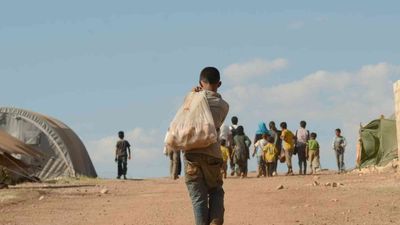
In February of 1982, the Syrian government besieged the city of Hama, killing tens of thousands of its own citizens in sectarian violence. Four decades later, rebels used the memory of the massacre to help inspire the toppling of the Assad family that had overseen the operation. But there is another lasting effect of the attack, hidden deep in the genes of Syrian families. The grandchildren of women who were pregnant during the siege — grandchildren who never experienced such violence themselves — nonetheless bear marks of it in their genomes. Passed down through their mothers, this genetic imprint offers the first human evidence of a phenomenon previously documented only in animal models. The genetic transmission of stress across multiple generations. “The idea that trauma and violence can have repercussions into future generations should help people be more empathetic, help policymakers pay more attention to the problem of violence,” said Connie Mulligan, Ph.D., a professor of Anthropology and the Genetics Institute at the University of Florida and co-senior author of the new study. “It could even help explain some of the seemingly unbreakable intergenerational cycles of abuse and poverty and trauma that we see around the world, including in the U.S.” While our genes are not changed by life experiences, they can be tuned through a system known as epigenetics. In response to stress or other events, our cells can add small chemical flags to genes that may quiet them down or alter their behavior. These changes may help us adapt to stressful environments, although the effects aren’t well understood. It is these tell-tale chemical flags that Mulligan and her team were looking for in the genes of Syrian families. While lab experiments have shown that animals can pass along epigenetic signatures of stress to future generations, proving the same in people has been nearly impossible. “Resilience and perseverance is quite possibly a uniquely human trait.” —Connie Mulligan Mulligan worked with Rana Dajani, Ph.D., a molecular biologist at Hashemite University in Jordan and co-senior author, as well as anthropologist Catherine Panter-Brick, Ph.D., of Yale University, to conduct the unique study. Dajani envisioned the research project; because of her intimate knowledge of the Syrian population and its tragic history, she designed the study to cover three generations of Syrian refugees to Jordan. Some families had lived through the Hama attack before fleeing to Jordan. Other families avoided Hama, but lived through the recent civil war against the Assad regime. The team collected samples from grandmothers and mothers who were pregnant during the two conflicts, as well as from their children. This study design meant there were grandmothers, mothers and children who had each experienced violence at different stages of development. A third group of families had immigrated to Jordan before 1980, avoiding the decades of violence in Syria. These early immigrants served as a crucial control to compare to the families who had experienced the stress of civil war. Study coauthor Dima Hamadmad, a Syrian researcher and the daughter of refugees, led the search for families that met the study criteria and collected cheek swabs from 138 people across 48 families. "The participants took part in the research out of love for their children and concern for future generations,” she said. “But more than that, they wanted their stories of trauma to be heard and acknowledged.” Back in Florida, Mulligan’s lab scanned the DNA for epigenetic modifications and looked for any relationship with the families’ experience of violence. In the grandchildren of Hama survivors, the researchers discovered 14 areas in the genome that had been modified in response to the violence their grandmothers experienced. These 14 modifications demonstrate that stress-induced epigenetic changes may indeed appear in future generations in humans, just as they can in animals. The study also uncovered 21 epigenetic sites in the genomes of people who had directly experienced violence in Syria. In a third finding, the researchers reported that people exposed to violence while in their mothers’ wombs showed evidence of accelerated epigenetic aging, a type of biological aging that may be associated with susceptibility to age-related diseases. Most of these epigenetic changes showed the same pattern after exposure to violence, suggesting a kind of common epigenetic response to stress – one that can not only affect people directly exposed to stress, but also future generations. “We think our work is relevant to many forms of violence, not just refugees. Domestic violence, sexual violence, gun violence: all the different kinds of violence we have in the U.S,” said Mulligan. “We should study the effects of violence. We should take it more seriously.” It’s not clear what, if any, effect these epigenetic changes have in the lives of people carrying them inside their genomes. But some studies have found a link between stress-induced epigenetic changes and diseases like diabetes. One famous study of Dutch survivors of famine during World War II suggested that their offspring carried epigenetic changes that increased their odds of being overweight later in life. While many of these modifications likely have no effect, It’s possible that some have functional effects that can affect our health, Mulligan said. The researchers published their findings, which were supported by the National Science Foundation, Feb. 27 in the journal Scientific Reports. While carefully searching for evidence of the lasting effects of war and trauma stamped into our genomes, Mulligan and her collaborators were also struck by the perseverance of the families they worked with. Their story was much bigger than merely surviving war, Mulligan said. “In the midst of all this violence we can still celebrate their extraordinary resilience. They have persevered,” Mulligan said. “That resilience and perseverance is quite possibly a uniquely human trait.”


“See a gap, fill a gap.” That’s how Jeffrey Klibert, Ph.D., associate director of clinical training in Georgia Southern University’s Doctor of Psychology (PsyD), described the inspiration behind a project designed to extend behavioral health services in rural areas. Filling gaps is something Klibert said has always been a challenge in behavioral health care. This challenge became steeper in the aftermath of the COVID-19 pandemic. “When COVID hit, we saw some really alarming rates of people seeking services, and there just weren’t enough providers to meet that need,” Klibert said. “We saw waitlists that were six months, eight months, sometimes a year long.” Waitlists of this length are a common occurrence in Georgia’s rural areas, where resources are scarce and reported health outcomes are among the worst in the state. Klibert, along with colleagues Lindsey Stone, Ph.D., and Thresha Yancey, Ph.D., and students, is working to improve the situation across 14 rural counties in Georgia, thanks to the renewal of a research and training grant from the Health Resources and Services Administration. Stone and Yancey will supervise the trainees, while Klibert will oversee the entire program. The grant enables quantitative and qualitative research to increase access to behavioral health care in rural areas, while also providing Georgia Southern’s fourth-year PsyD students with hands-on training through local care providers. The ultimate goal is to develop more efficient and effective models for interprofessional, team-based care in areas of the state where it is most needed. “Everybody sees the need. We just need the glue to link everybody together,” Klibert said. “That’s what the program is trying to be. It’s trying to build those bridges to create a more comprehensive system of care.” Students will provide a range of services in collaboration with local care providers, including psychological assessments and therapy for individuals and families. Alex Cudd, a fourth-year PsyD student who joined the program in August, calls the experience “invaluable” and hopes to join the 94% of program alumni who currently provide care in rural settings. “In just a few months, I’ve learned so much about providing well-rounded care,” Cudd said. “I know I’ll carry this training into my career.” CarePartners of Georgia (CPGA), a resiliency- and recovery-based behavioral health agency serving Bulloch, Candler and Emanuel counties, is among the local providers partnering with Georgia Southern. “All the interns we’ve had from Georgia Southern understand the concept of recovery, are trauma-informed and very effective at delivering services,” said CPGA CEO David Crooke. “It’s been mutually beneficial. We are helping them further their education, and they quickly become important members of our team due to the breadth and depth of their knowledge.” Klibert notes that the grant’s initial four-year term brought significant improvements in local healthcare networks and enhanced communication between providers, something he sees as an investment in lasting success. “We’re doing some exciting stuff, but at the end of the day, we are very aware of making sure what we’re doing sticks and that we have the resources to continue care after the grant ends,” Klibert said. Looking to know more about Georgia Southern University's Doctor of Psychology Program or arrange an interview with Jeffrey Klibert — simply contact Georgia Southern's Director of Communications Jennifer Wise at jwise@georgiasouthern.edu to arrange an interview today.


Motor vehicle crashes remain one of the leading causes of death among teenagers. For the youngest drivers, getting behind the wheel marks freedom but also comes with measurable risk. At the University of California, Irvine, Dr. Federico Vaca, professor and executive vice chair of emergency medicine, is determined to change that trajectory. “Driving licensure among our youngest drivers remains a major life milestone, and it allows for newfound freedom and opportunity for not only youth but their parents as well. At the same time, learning to drive and licensure come at a time when youth are rapidly moving through life with new transitions in school, with friends, and likely exposure to alcohol and drugs,” he says. “Our priority … is to examine the complexities of young driver behavior and to thoroughly understand crash injury risk and crash prevention among this special group of drivers.” Vaca’s work is at the intersection of health, transportation science and policy. A fellow of the Association for the Advancement of Automotive Medicine and a researcher at UC Irvine’s Institute of Transportation Studies, he previously served as a medical fellow at the U.S. Department of Transportation’s National Highway Traffic Safety Administration in Washington, D.C. His long-standing goal is to prevent the injuries he has seen and treated in emergency departments and trauma centers through rigorous research, using the findings to inform and advance evidence-based programs and policies that save lives on the road. Innovating safety science UC Irvine is home to a new hub for understanding and preventing crash injuries among young drivers, the Brain, Body & Behavior Driving Simulation Lab, founded by Vaca and his interdisciplinary team. At the heart of the B3DrivSim Lab is a high-fidelity, half-cab driving simulator capable of replicating real-world conditions with precision. It uses advanced software to design customized driving scenarios – from complex roadway environments to the inclusion of such human elements as distraction and fatigue – all while capturing real-time video and driving behavior as well as vehicle control metrics. This integration of medicine, behavioral science and engineering enables researchers to measure how developmental and socioecological factors shape driver decisions in unique and consequential ways. The B3DrivSim Lab also represents a growing mentorship ecosystem at UC Irvine. In mid-June, the facility welcomed Siwei Hu, a postdoctoral scholar who earned a Ph.D. in civil and environmental engineering, with a focus on transportation studies, at UC Irvine. Hu works closely with Vaca to combine engineering and modeling analytics with behavioral and crash risk insights. The half-cab driving simulator uses advanced software to replicate real-world conditions and design customized driving scenarios – from complex roadway environments to the inclusion of such human elements as distraction and fatigue – all while capturing real-time video and driving behavior as well as vehicle control metrics. Steve Zylius / UC Irvine From the lab to policy Beyond simulation, Vaca’s latest National Institutes of Health-funded study, separate from his lab’s work, takes this philosophy to the national level. His project, “Modeling a National Graduated-BAC Policy for 21- to 24-Year-Old Drivers,” explores whether lowering the legal blood alcohol limit for young adults could reduce alcohol-related crashes and deaths. “When you turn 21, at that very moment, the application of several alcohol-related prevention laws changes in the blink of an eye,” Vaca says. “Before that, the minimum legal drinking age and zero-tolerance laws are in place to protect young drivers from alcohol-impaired driving. Effectively, the second you turn 21, those prevention policies don’t apply, and you’re suddenly allowed to have a much higher blood alcohol concentration in your body that’s intimately tied to serious and fatal crash risk. It’s a very dangerous disconnect.” The study will use national crash data, behavioral surveys and system dynamics modeling to examine how a “graduated BAC policy” might bridge that gap, giving young adult drivers a safer transition into full legal responsibility and saving many more lives. Bridging science, education and prevention Earlier this year, Vaca and his B3DrivSim team joined prevention program educators, policymakers, engineers and law enforcement professionals in Anaheim at a Ford Driving Skills for Life event, part of a Ford Philanthropy-sponsored national effort teaching teens hands-on safe driving techniques – from hazard recognition to impaired-driving awareness. Speaking to more than 130 high school students and their parents from local and distant communities, Vaca emphasized the connection among driving, independence, opportunity and responsibility. That message aligns with his broader initiative, Youth Thriving in Life Transitions with Transportation, which introduces high school students to traffic safety and transportation science and their role in promoting health, education and employment in early adulthood. By linking research and real-world experience, the project empowers youth to see mobility as a foundation for opportunity with safety as its cornerstone. With overall young driver crash fatalities rising 25 percent nationally over the last decade and a 46 percent increase in fatal crashes where a young driver had a BAC of ≥ .01/dL, Vaca’s work represents a crucial step toward reversing that trend. Through a combination of clinical insight and prevention, transportation and data science underscored by community collaboration, he and his team are redefining how researchers and policymakers think about youth driver safety.

Michael McClure, Ph.D., associate professor from the Department of Biomedical Engineering and affiliate faculty in the Department of Orthopaedic Surgery and in the Institute for Engineering and Medicine, has been named chair of the Orthopaedic Research Society’s (ORS) newly launched Skeletal Muscle Section. The section began in August 2025, building on research interest groups and symposia to create a dedicated home for skeletal muscle studies within ORS. Its mission is to advance collaboration, innovation, education and translation in this field. Skeletal muscle disorders cause disability, chronic pain and high health care costs. Severe injuries and degenerative diseases, such as muscular dystrophies, remain difficult to treat. The section will strengthen research in muscle development, aging, trauma, disuse and disease. This work will expand the basic understanding of and identify therapeutic targets to restore function. In its first year, the section will measure success through increased skeletal muscle abstracts at the 2027 ORS Annual Meeting, growth in ORS membership and active participation in section programs. “We are thrilled to launch the Skeletal Muscle Section,” McClure said. “This home for translational muscle research will build on ORS progress over the past 10 years, help recruit new members and foster an environment that connects multiple areas of orthopaedic science.” McClure’s commitment to this work is shaped by his family’s experience with neuromuscular diseases, witnessing the impact of war-related injuries on patients’ quality of life from the Richmond Veterans Affairs Medical Center, and the momentum of translational discovery. Learn more about the ORS Skeletal Muscle Section.



Delaware INBRE Summer Scholars Complete Biomedical Research Projects at ChristianaCare
Eight undergraduate scholars recently completed a 10-week immersion in biomedical research through the Delaware IDeA Network of Biomedical Research Excellence (INBRE) Summer Scholars Program at ChristianaCare. Their projects, spanning oncology, emergency medicine and community health, culminated in a capstone presentation and celebration on August 13 at Christiana Hospital. This year’s cohort included students from University of Delaware, Delaware State University and Delaware Technical Community College, as well as Delaware residents attending college out of state. Each student was paired with expert mentors from across ChristianaCare, contributing to research designed to improve patient care and outcomes. In addition to their primary projects, the scholars explored ChristianaCare’s advanced facilities such as the Gene Editing Institute Learning Lab, gaining hands-on exposure to cutting-edge methods in biomedical research. “This year’s DE-INBRE program at ChristianaCare was a one-of-a-kind experience,” said Susan Smith, Ph.D., RN, program director of Technology Research & Education at ChristianaCare and the INBRE site principal investigator. “We brought together undergraduates from various academic backgrounds and immersed them in real, hands-on biomedical research with some of our most accomplished investigators. “Watching these students go from a little unsure on day one to confidently presenting their own findings by the end of the summer was inspiring, and proof that programs like this are building the next generation of biomedical researchers in Delaware.” Delaware INBRE is a statewide initiative funded by the National Institutes of Health to strengthen Delaware’s biomedical research infrastructure. It supports undergraduate research training, faculty development and core facility investments across partner institutions. At ChristianaCare, the program offers students immersive, hands-on research experiences guided by seasoned investigators, equipping them with the skills, mentorship and exposure essential for careers in science and medicine. Madeline Rowland, a Delaware resident and rising senior at Williams College in Massachusetts, collaborated with Hank Chen, senior medical physicist at the Helen F. Graham Cancer Center & Research Institute, to evaluate tattoo-free, surface-guided radiation therapy for breast cancer patients. She also worked with leaders of ChristianaCare’s Center for Virtual Health to explore how different patient populations experience virtual primary care. Rowland praised the program for the research skills and knowledge she gained as well as the meaningful relationships she built with mentors, health care professionals and fellow scholars she might not have otherwise met. “Dr. Chen and the whole Radiation team really adopted me into the department,” Rowland said. “From sitting on the CT simulation table in my first week to working on my project, I felt fully welcomed. I’ve learned so much, and the people I’ve met made this summer unforgettable.” Chen was recognized as the program’s inaugural “Mentor of the Summer” for his exceptional dedication and thoughtful approach to teaching. Having now mentored INBRE scholars for three years, Chen has a personal connection to the program. His own daughter participated as an undergraduate and recently began her general surgery residency after graduating from Sidney Kimmel Medical College at Thomas Jefferson University in Philadelphia. For Chen, mentoring represents an investment in health care’s future. “The greatest asset of any institution is its talent,” he explained. “When you welcome students into your environment, you draw good people to your field, and patients ultimately benefit from that.” Naana Twusami, a rising senior at Delaware State University, spent her summer with the Oral & Maxillofacial Surgery and Hospital Dentistry Department. She examined social determinants of health in facial trauma patients, analyzing how factors like income, education, transportation and insurance status influence recovery. “Being here showed me that things like income or transportation can matter just as much as the medical care itself,” she said. “The INBRE Summer Scholars Program gave me a real look at how health care works, and how places like ChristianaCare are helping shape where it’s headed.” Amy Minsker, continuing medical education manager, Academic Affairs, served as manager of the summer scholars program. Read more on news.christianacare.org.



Dr. Sameer Hinduja is one of the world’s foremost experts on cyberbullying, adolescent mental health, and digital safety. A Professor at Florida Atlantic University’s School of Criminology and Criminal Justice and Co-Director of the Cyberbullying Research Center, he has advised the White House, testified before federal agencies, and worked with schools and tech companies worldwide to protect young people online. View Full Profile→ Amid the U.S. youth mental health crisis, his latest peer-reviewed study, published through FAU Newsdesk, reveals that hope not only boosts well-being and academic achievement but also acts as a powerful shield against bullying and cyberbullying in adolescents. Results, published in the journal Frontiers in Sociology, show that students with less hope were 56% more likely to cyberbully others than their peers over their lifetime, and 57% more likely over the last 30 days. Those with more hope were 36% less likely to cyberbully others over their lifetime and over the last 30 days when compared to their peers with lower levels of hope. The key takeaway? Hope matters. It buffers against the urge to aggress against others online and off. “Hope acts as a powerful protective factor against both school bullying and cyberbullying among youth,” said Sameer Hinduja, Ph.D., lead author, a professor in the School of Criminology and Criminal Justice within FAU’s College of Social Work and Criminal Justice, co-director of the Cyberbullying Research Center, and a faculty associate at the Berkman Klein Center at Harvard University. “When young people believe in their ability to set meaningful goals and stay motivated to reach them, they are far less likely to lash out or harm others. Hope gives them a sense of direction – and that can make all the difference.” Hinduja's previous research has been featured in The Washington Post, where he emphasized that cyberbullying is not just emotionally distressing—it can cause trauma responses in teens that mirror clinical Post-Traumatic Stress Disorder. “As our research clearly shows, cyberbullying in any form — whether it’s exclusion from a group chat or direct threats — can lead to significant trauma in youth,” Sameer Hinduja, a professor in Florida Atlantic University’s School of Criminology and Criminal Justice and the paper’s lead author, said in a news release. “We were surprised to find that no single type of cyberbullying caused more harm than others; all carried a similar risk of traumatic outcomes. This means we can’t afford to dismiss or trivialize certain behaviors as ‘less serious’ — being left out or targeted by rumors can be just as detrimental as more overt attacks.” Why This Matters Now As students return to school this fall, Hinduja’s research offers a clear reminder: digital harm is real harm. Emotional safety in online environments deserves the same urgency as physical safety in school buildings. His work calls for: • Preventive education over punitive responses • Trauma-informed approaches in schools • Support systems that validate and protect victims • Tech accountability and policy reform ⸻ Dr. Hinduja is available for media interviews on topics such as: Adolescent Mental Health • Cyberbullying • PTSD • Digital Safety • School Culture Click on the icon below to connect.



Taming "The Bear": Villanova Professor Examines Workplace Toxicity in FX's Acclaimed Series
In the latest season of FX’s award-winning series “The Bear,” lead character and chef Carmen “Carmy” Berzatto finds himself at a crossroads. A culinary genius, Carmy has successfully overseen the reinvention of his family’s Italian beef shop as a high-end restaurant—shepherding a dedicated, if unpolished, crew of sandwich makers into a world of haute cuisine, fine wine and elevated service. However, over the course of this transition, his exacting standards have contributed to a culture of anxiety, dysfunction and resentment in the workplace. Despite staff members’ professional and personal growth, tempers still flare like burners on a range, with Carmy’s obsessive attention to detail and single-minded pursuit of perfection spurring conflict. By season’s end, grappling with the fallout from a mixed review seemingly influenced by the back-of-house “chaos,” the chef is forced to confront a complicated and thorny question: Am I getting in the way of my own restaurant’s success? Carmy’s dilemma, while fictional, reflects the very real challenges many modern businesses face when excellence is prioritized at the expense of psychological safety and workplace harmony. Per Manuela Priesemuth, PhD, who researches toxic work climates, aggression on the job and organizational fairness, the warning signs are all too frequently overlooked in high-pressure environments like restaurants. “Some high-stakes industries have a characteristic of having toxic behavior more accepted,” says Dr. Priesemuth. “When it’s more accepted or normed, it’s a real problem.” As she explains, workers in the food service industry, much like medical professionals in an operating room or military personnel in a combat zone, have a tendency to view measured communication and thoughtful interaction as a luxury or even, in some cases, a hindrance. Essentially, there’s a common misconception that working with an edge—yelling orders, avoiding dialogue and berating “underperformers”—gets the job done. “In all of these high-stakes environments where it’s thought there’s leeway to talk negatively or disparagingly, people are mistaken in the productivity result,” Dr. Priesemuth says. “It actually changes for the better in positive climates, because people who are treated with dignity and respect are better performers than those who are mistreated.” To Dr. Priesemuth’s point, research increasingly shows that workplace culture, not just talent or technical ability, is an essential driver of organizational success. In an environment like Carmy’s kitchen, where pride and passion often give way to personal attacks and shouting matches, the on-the-job dynamic can effectively undermine productivity. What may begin as an intended push for excellence can instead result in burnout, high turnover and weakened trust—outcomes that are especially problematic in collaborative, fast-paced industries like hospitality. “There’s even evidence that abusive behavior in restaurant settings can lead to food loss,” shares Dr. Priesemuth. “So, there is a sort of retaliation from the employees who are going through this experience, whether it’s measured [in profit margins] or impact on the customer.” In order to prevent these less-than-ideal outcomes, businesses should take steps proactively, says Dr. Priesemuth. More specifically, they should clearly articulate their values and expectations, considerately engage with their staff’s opinions and concerns and consistently invest in their employees’ growth and development. In the world of “The Bear,” a few of Carmy’s managerial decisions in the second season could be seen as moves in the right direction. At that juncture, he was leveraging his industry connections to provide his restaurant’s staff with the tools and training necessary to thrive in Chicago’s fine dining scene, building skills, confidence and goodwill. “If you give people voice—such as input on the menu, for example, or more autonomy in completing a certain task—it boosts morale,” says Dr. Priesemuth. “It helps people feel that they have input and that they are valued members of the team; it’s this sort of collaborative, positive relationship that increases commitment and performance.” Establishing this type of work culture, grounded in open communication, mutual respect and a shared sense of mission, takes concerted effort and constant maintenance. In situations in which toxicity has already become an issue, as it has in Carmy’s kitchen, the task becomes decidedly more difficult. Typically, it demands a long-term commitment to organizational change at the business’ highest levels. “Adjusting the tone at the top really matters,” says Dr. Priesemuth. “So, if the owner were to treat their chefs and waiters with the dignity and respect that they deserve as workers, that also trickles down to, for example, the customer.” A leader’s influence on workplace morale, she contends, is nuanced and far-reaching. When those in charge model a lack of empathy or emotional distance, for instance, a sort of toxicity can take root. Likewise, when they repeatedly show anger, animosity or frustration, those same feelings and attitudes can have an ingrained effect—regardless of a staff’s talent or ability. Given the outsized role owners, supervisors and managers play in shaping organizational culture, Dr. Priesemuth further notes, “Leaders must also feel that they’re being supported. You can’t have someone who’s exhausted, works 80 hours a week and has relationship and money issues and expect them to say, ‘What are your problems? What do you need?’” In many ways, her insights speak directly to the struggles Carmy faces and prompts throughout “The Bear’s” run. At every turn, he’s dogged by family and relationship troubles, mounting financial pressures and unresolved trauma from a past role. Ultimately, as would happen in real life, his difficulty in healthily processing and addressing these issues doesn’t just harm him; it affects his staff, manifesting itself as a need for control and a crusade for perfection. “There are spillover effects from your own personal life into your job role. In the management field, that has become increasingly clear,” says Dr. Priesemuth. “Whatever you’re going through, whether it’s from an old job or something personal, it will automatically spill over into your current work life and your interactions. And, vice versa, what’s happening to you at work will [impact you off the clock].” In dramatic fashion, the fourth season of “The Bear” concludes with Carmy acknowledging as much. Determining that there are other aspects of his life desperately in need of attention, he surrenders the reins of his business to chef de cuisine Sydney “Syd” Adamu and maître d’hôtel Richard “Richie” Jerimovich, appointing them part-owners. While the soundness of this decision remains a subject for the show’s next season, Carmy justifies the move with a blunt admission: “It’s the best thing for the restaurant. We have to put the restaurant first… I don’t have anything to pull from.” In the end, in both “The Bear” and management studies, there’s an understanding that building healthy and productive work environments requires active engagement and positive reinforcement on the part of leadership. In a sense, creating a strong work culture is shown to be a lot like preparing a phenomenal meal; it’s a matter of attentiveness, patience and care. Without those ingredients, the result could very well be a recipe for disaster.


ChristianaCare Appoints Jennifer Moberg, DNP, Vice President of Emergency Services
Jennifer Moberg, DNP, MPA, RN, CPPS, NEA-BC, has been appointed vice president of Emergency Services at ChristianaCare. In this role, she will oversee the delivery of safe, high-quality, patient-centered care across ChristianaCare’s emergency departments and support prehospital services and trauma programs. Jennifer Moberg, DNP, has been appointed vice president of Emergency Services at ChristianaCare. Moberg has a strong track record of improving care quality, safety and caregiver engagement in complex health care settings. She has helped build more diverse teams, reduce staff turnover and lead major emergency department renovation projects. She has also worked to make patient care more efficient and improve safety for caregivers by strengthening security practices. Prior to joining ChristianaCare, Moberg served as director of Emergency Services at HealthPartners in Bloomington, Minnesota. She also worked as a senior advisor assessing and standardizing security protocols across hospitals and clinics. Earlier in her career, she spent more than 20 years at Abbott Northwestern, where she served as a critical care nurse and later as a patient care manager. Moberg earned a Doctor of Nursing Practice in executive leadership from Baylor University. She holds a Master of Public Affairs in nonprofit leadership from the University of Minnesota and a Bachelor of Science in nursing from Bethel University. She reports to Chief Nurse Executive Danielle Weber, DNP, MSM, RN-BC, NEA-BC.

Do We Need to Worry About Safety at the United States' Busiest Airports?
For the second time in two weeks, air traffic controllers directing planes into the Newark, New Jersey, airport briefly lost their radar. The outages have sparked travel chaos, with hundreds of flight delays and cancellations after the FAA slowed air traffic to ensure safety. The country's aging air traffic control system is in the spotlight. Media, politicians and the public are demanding both solutions for the system and answers on how safe traveling is at the moment. To provide insight, Florida Tech's Margaret Wallace is lending her expert opinion and perspective on the issue. Margaret Wallace is Assistant Professor of Aviation Management at Florida Institute of Technology, where she teaches Air Traffic Control and Airport Management courses. She spent over 15 years in the industry prior to teaching as an Airport Manager (4 years) at Ramstein Air Base in Germany and an Air Traffic Controller (10+ years) in the U.S. Air Force. “The recent communication failure at Newark Liberty International Airport has raised serious concerns about the safety and dependability of air traffic control systems in the United States. On April 28, 2025, the Newark air traffic facilities lost all radio communication with approximately 20 airplanes for up to 90 seconds due to an equipment breakdown. During the outage, pilots and controllers were unable to communicate. Controllers were unable to maintain aircraft separation during crucial flight phases, and pilots were unable to receive air traffic clearances and instructions. Situations like this, as well as aircraft incidents, bring stress and trauma to the controller's mental state. Most people cannot fathom how much mental stress the controller experiences in everyday job settings. Situations with defective equipment, combined with lengthy work hours due to a scarcity of controllers, appear to have taken their toll based on the fact that several controllers have taken leave for mental stress. This situation posed a safety risk to all planes and passengers. Fortunately, there were no incidents, and everyone remained safe. However, this demonstrated some of the flaws in the outdated air traffic system equipment. Sean Duffy, the new Transportation Secretary, has acknowledged the critical need to improve our current technology. While air travel is generally safe, our current administration must continue to prioritize the upgrade of air traffic systems and increasing the staffing in air traffic facilities. To ensure safety, I believe we should consider having airlines restrict the number of flights available and the Air Route Traffic Command Center to introduce delays to avoid overloading the system.” Margaret Wallace If you're interested in connecting with Margaret Wallace about the ongoing issues at airports across the country, let us help. Contact Adam Lowenstein, Director of Media Communications at Florida Institute of Technology, at adam@fit.edu to arrange an interview today.
