
Experts Matter. Find Yours.
Connect for media, speaking, professional opportunities & more.

Is there a link between CTE and mass shootings? Let our expert explain
This spring news of mass shootings has dominated the headlines almost weekly with stories of tragedy in Michigan, Tennessee, Kentucky and Alabama. To date, there have been an estimated 160 mass-shootings in America this year. In the wake of each tragedy, Americans are left asking 'How this could happen?' and 'Why did this happen?' In the case of the April 10 shooting in Louisville, the parents of the gunman are also seeking answers as they claim prior trauma and CTE may have played some part in the shooter's actions and motivation. It's a theory that's getting a lot of attention from doctors and journalists. The family of Connor Sturgeon – who was killed after he fatally shot five people Monday morning at the Old National Bank in Louisville, Kentucky – plans to have his brain tested for chronic traumatic encephalopathy, commonly known as CTE, his father and a spokesperson for the family told CNN on Thursday. “Yes, Connor is being tested for CTE. Probably will take a while to get results,” Todd Sturgeon, Connor Sturgeon’s father, texted to CNN. Pete Palmer, a family friend who is speaking for the Sturgeons, said the family and the state medical examiner are looking to have Connor Sturgeon’s brain tested. April 14 - CNN There's a lot to know when reporting on CTE, especially when it involves the potential links to tragedy and a mass shooting. And that's where clinical experts can help and make sure reporters have the details, terminology and facts correct when covering such important topics. With over 40 years of clinical practice, Wayne Hulon is an American Board Certified Psychotherapist, and is also recognized by the State of Georgia as a Licensed Professional Counselor. In addition to his private practice, Wayne serves as a member of the American College of Psychotherapy and is currently serving as its Executive Director. Wayne is available to speak with media regarding this subject - simply click on his icon now to arrange an interview today.


Choreographing Love: Pulling Back the Curtain on Staged Intimacy
Picture this... You're watching your favorite romantic comedy. It's reached the best part; the leads go in for that famous relationship-affirming kiss and bam, happy ending. Everything on screen feels so natural and easy. Well, not quite. The intimate moments we see depicted in movies, on television and in theatre are carefully discussed and staged before and during production, with intimacy professionals leading the way. To unpack all the romantic details, we turned to Bess Rowen, PhD, an assistant professor in the Department of Theatre at Villanova University and trained intimacy choreographer. On set, intimacy choreographers (theatre) and intimacy coordinators (film and television) make sure that the intimate contact viewers see is agreed upon beforehand with actors and the director. "In other words, we don't want to surprise an actor," says Dr. Rowen. The cast and crew work hard to make the romantic moments feel real and spontaneous within the predetermined and agreed-upon guidelines. While intimacy coordination is a relatively new field, it has really grown in the last several years. "In 2020, SAG-AFTRA (the largest professional union for screen actors and radio actors) laid out guidelines for the use of intimacy coordinators for all union productions," says Dr. Rowen. And there are many organizations that train and produce qualified intimacy professionals, ensuring that they are engaging with new practices as the field continues to grow and evolve. And, akin to real-world encounters, consent is the backbone of intimacy on stage and screen. "Instead of feeling forced, possibly by a power imbalance in the room to simply agree to the director's vision, intimacy coordinators empower actors to identify their boundaries," Dr. Rowen says. "Actors can feel pressured to seem 'easy to work with,' thus creating situations where their consent may get lost. To keep everyone accountable, intimacy coordinators will introduce self-care cues, boundary practice and other consent-based practices to create a space that foregrounds an actor's boundaries for any and all physical contact." As an intimacy choreographer, Dr. Rowen understands the importance of the role. "This job is essential because it adds an advocate to set. An actor might hesitate to tell a director they're uncomfortable doing something, but if I'm there and can directly ask an actor about something, then the individual can end up feeling a lot more in control of the situation," she says. "That consent-based, trauma-informed practice leads, in my experience both as a professional and as an audience member, to more fully integrated scenes of intimacy." An actor's comfort translates to the viewer, creating a more enjoyable experience for everyone. This type of oversight is exciting. "For years we have trained actors to expect the unexpected and be ready for anything, so it takes a minute for them to realize that this training is the opposite of that," says Dr. Rowen. "There aren't surprises or jump-scares in this work. It's about transparency. And once that's made clear, you tend to see people relax in their bodies. It's really powerful."


What Are Cardiac Arrest and Heart Attack?
Fast Action Saves Lives. When Buffalo Bills safety Damar Hamlin collapsed during an NFL game against the Cincinnati Bengals, it brought urgency to knowing signs of a cardiac arrest and what to do in case of a medical emergency involving the heart. It’s a common misunderstanding that cardiac arrest and heart attack are the same. They are different, but both are very serious heart problems and require fast action to save lives. "I think the very best bit of news for Mr. Hamlin is that the emergency medical technicians got to him very quickly." Heart attack and other conditions, including a rare type of trauma called commotio cordis, may disrupt the heart’s rhythm and lead to cardiac arrest. Commotio cordis can occur from a severe blow to the chest as in a sports injury. What is cardiac arrest? Cardiac arrest happens when the heart malfunctions and stops beating unexpectedly. Cardiac arrest is triggered by an electrical malfunction in the heart that causes an irregular heartbeat known as arrhythmia. The heart’s cardiac conduction system – or “electrical” system – is a specialized network of heart cells that keeps it beating regularly and effectively. With the heart’s pumping action disrupted, it cannot pump blood to the brain, lungs or other organs. Cardiac arrest often happens to people who didn’t know they had a heart problem. Symptoms of cardiac arrest Seconds after a cardiac arrest, a person becomes unresponsive, is not breathing or is only gasping. Death can occur within minutes if the victim does not receive treatment. Causes of cardiac arrest Cardiac arrest can run in families. People who have a family history of sudden cardiac death have a higher risk for sudden cardiac death. Other health problems can increase the chance of a deadly heart rhythm including: Heart disease (coronary artery disease). A heart attack. Heart failure. Hypertrophic cardiomyopathy. This makes the heart thicker and larger than normal. Blow to the chest that disrupts the heart rhythm as in commotio cordis. Speak with your health care provider to learn if you have a health problem that raises your risk of cardiac arrest; treatment of that problem may help lower your risk. Medicine often can control the heart rhythm. Helping someone having a cardiac arrest Cardiac arrest can be reversible in some victims if treated within a few minutes. Health professionals, family or friends and even strangers may be able to help a person right away who has cardiac arrest. First, call 911 and start CPR right away. Click here for CPR basics, including videos. Then, if an Automated External Defibrillator (AED) is available, use it as soon as possible. AEDs are often available in airports, malls, and other public places. Click here for how to use an AED. If two people are available to help, one should begin CPR immediately while the other calls 911 and finds an AED. In the ambulance and hospital, the person will receive emergency care. This care keeps the heart and lungs working to prevent damage to the body due to lack of oxygen. Doctors will try to find the cause of the cardiac arrest to prevent another one. AEDs are portable, life-saving devices designed to treat people experiencing sudden cardiac arrest, a medical condition in which the heart stops beating suddenly and unexpectedly. What is a heart attack? A heart attack occurs when blood flow to the heart is blocked. A heart attack is a circulation problem with the heart. A heart attack occurs when part of the heart muscle does not get enough blood and oxygen. This part of the heart starts to die. Symptoms of a heart attack The most common symptom of a heart attack is chest pain or pressure. Some people describe it as discomfort, squeezing, or heaviness in the chest. Other symptoms may be immediate and may include intense discomfort in the chest or other areas of the upper body, shortness of breath, cold sweats, nausea or vomiting. Some people feel symptoms in other parts of their upper body such as: Pain or discomfort in your back, jaw, throat, upper belly or arm. Sweat, feeling sick to your stomach or vomiting. Trouble breathing. Feeling lightheaded or suddenly weak. A racing or fluttering heartbeat. More often, though, heart attack symptoms start slowly and persist for hours, days or weeks before a heart attack. Unlike with cardiac arrest, the heart usually does not stop beating during a heart attack. The longer the person goes without treatment, the greater the damage. Heart attack symptoms in women can be different than men (shortness of breath, nausea/vomiting, and back or jaw pain). Address heart attack symptoms immediately Even if you’re not sure it’s a heart attack, call 911 if you have symptoms. Every minute matters. Emergency medical services staff can begin treatment when they arrive — up to an hour sooner than if someone gets to the hospital by car. These professionals also are trained to revive someone whose heart has stopped. Patients with chest pain who arrive by ambulance usually receive faster treatment at the hospital, too. Click here for CPR training classes held by the American Heart Association in your area.



ExpertFile-powered “Our Experts” site makes health experts findable and accessible to media at a click of a button ChristianaCare and its collaborative partner ExpertFile have been recognized with a 2022 Silver Quill Award from the International Association of Business Communicators (IABC) for its "Our Experts" media database. Designed to easily and quickly connect journalists to subject-matter experts, this online resource has been recognized with the top prize – an “Award of Excellence” in the Communications Management, Media Relations category. The IABC Silver Quill Awards showcase business communication excellence and are acknowledged as among the most prestigious awards programs in the communications industry. “I’m proud to accept the Silver Quill Award on behalf of our organization and our incredible Communications team, including our ExpertFile partners,” said Shane Hoffman, communications director at ChristianaCare. “The ‘Our Experts’ platform has given us next-level ways to engage our experts and share our knowledge as a trusted source of health care information. It has also helped us re-imagine the traditional online news room experience and turn it into a truly new and innovative way to serve the needs of both journalists and our community.” IABC’s Silver Quill awards honor the dedication, innovation and passion of communicators on a global scale. Each entry is scored independently by evaluators who judge the award submission on factors that include: stakeholder analysis, strategic and tactical planning, quality of execution and measurable results. Since launching in March 2021, the "Our Experts" media database has received more than 20,000 online visits and has resulted in more than 200 news stories. “We are honored to earn this Silver Quill Award with our client, ChristianaCare,” said Peter Evans, CEO of ExpertFile. “Despite the pressures of the pandemic, their team collaborated closely with us to create a world-class program that continues to help a variety of audiences discover and connect every day with credible medical experts and groundbreaking research.” Powered by the ExpertFile software platform, the ChristianaCare “Our Experts” site provides a digital media toolkit with advanced search/digital content features to help journalists discover experts and access resources that make it easier for them to complete stories and meet their deadlines. Awarding top honors “with distinction,” the IABC judging panel provided a number of detailed comments on the “ChristianaCare Experts Program”: “Very well-done website. Nice content that is well organized and searchable. From planning and implementation to measurement afterward the program shows great work.” “Great work in the time of COVID. Your knowledge of journalists and their challenges. during COVID was spot-on.” “I liked the media advisories. Having been on both sides of the reporter/media relations thing, I like clear and simple. You achieved this!” “If I were a reporter, the advisory would be invaluable when I needed an expert.” “Very specific and focused on business-results. Great work here.” “Very comprehensive! You thought of everything without getting bogged down in unnecessary details.” Nearly 100 ChristianaCare experts are featured in the database today, and that number continues to grow. “As communicators in health care, it has always been important for us to provide timely, accurate, easy-to-understand information to the communities we serve so that people can make informed decisions about their health,” said Karen Browne, vice president of marketing and communications at ChristianaCare. “The COVID-19 pandemic added an entirely new level of urgency to our role as communicators, and it made it even more important for us to build strong relationships with our partners in the news media so that they can deliver compelling, actionable health information to the community—from experts they can trust.” The pandemic also highlighted the need to do more with less. ChristianaCare’s innovation was driven out of a desire to improve the reach, impact and efficiency of its media relations efforts—amid rapidly increasing demand—without the need to add additional resources. “With our partners at ExpertFile, we leveraged ExpertFile’s outstanding technology platform to create a database of our experts that helps reporters and news producers find the sources they need quickly, and it enables our team to nimbly manage their requests and facilitate interviews in a way that makes the absolute best use of our resources,” Hoffman said. “The ExpertFile team worked as our strategic thought partners throughout this process, and they’ve really embraced our desire for innovation that drives results. They’ve helped us to work smarter and do more without adding a lot of additional resources. Together, we’ve built a system and process that is helping us to communicate in new and better ways—and we’re just getting started.” About ChristianaCare Headquartered in Wilmington, Delaware, ChristianaCare is one of the country’s most dynamic health care organizations, centered on improving health outcomes, making high-quality care more accessible and lowering health care costs. ChristianaCare includes an extensive network of primary care and outpatient services, home health care, urgent care centers, three hospitals (1,299 beds), a freestanding emergency department, a Level I trauma center and a Level III neonatal intensive care unit, a comprehensive stroke center and regional centers of excellence in heart and vascular care, cancer care and women’s health. It also includes the pioneering Gene Editing Institute. ChristianaCare is nationally recognized as a great place to work, rated by Forbes as the 2nd best health system for diversity and inclusion, and the 29th best health system to work for in the United States, and by IDG Computerworld as one of the nation’s Best Places to Work in IT. ChristianaCare is rated by Healthgrades as one of America’s 50 Best Hospitals and continually ranked among the nation’s best by U.S. News & World Report, Newsweek and other national quality ratings. ChristianaCare is a nonprofit teaching health system with more than 260 residents and fellows. With its groundbreaking Center for Virtual Health and a focus on population health and value-based care, ChristianaCare is shaping the future of health care.

ChristianaCare Rated a High Performing Hospital for Maternity by U.S. News & World Report
ChristianaCare is the only health system in Delaware to earn the High Performing designation from U.S. News ChristianaCare has earned the highest award for maternity care that a hospital can achieve from U.S. News & World Report in its 2022-23 ratings for Best Hospitals for Maternity Care. Rated as a High Performing Hospital, ChristianaCare was the only health system in Delaware to earn this esteemed honor. Christiana Hospital at ChristianaCare’s Newark Campus is the only high-risk delivering hospital in the First State offering Level III neonatal intensive care. More than 6,100 babies are born at Christiana Hospital each year. The U.S. News Best Hospitals for Maternity Care methodology is based entirely on objective measures of quality, such as C-section rates in lower-risk pregnancies, newborn complication rates, exclusive breast milk feeding rates, early elective delivery rates and vaginal birth after cesarean (VBAC) rates, among other measures. “When we announced plans seven years ago to build the ChristianaCare Center for Women’s & Children’s Health, we affirmed our commitment to provide superior-quality care for women and infants in our region,” said Matthew Hoffman, M.D., MPH, FACOG, Marie E. Pinizzotto, M.D., Endowed Chair of Obstetrics and Gynecology at ChristianaCare. “This prestigious recognition is an affirmation that patients who choose to give birth at ChristianaCare will have access to the very best services and expertise to ensure a safe delivery and a healthy baby.” Just two years ago ChristianaCare opened the Center for Women’s & Children’s Health, an eight-story, approximately 400,000-square-foot tower at Christiana Hospital. The center uses the most up-to-date, evidence-based models of care, with improved integration of services and the space to offer innovative patient-centered care for mothers, babies and families. One of the most significant features of the new center is a state-of-the-art neonatal intensive care unit (NICU), featuring private rooms with sleep-in space for families. Christiana Hospital is one of the only hospitals in the United States to provide “couplet care” in the NICU, keeping the mother and baby together even if they both require medical care. This is based on a European model demonstrating that moms are more likely to breastfeed in this environment, which is particularly important in the early development of children. “We best achieve optimal health and flourish when we are able to begin our lives as healthy newborns,” said David Paul, M.D., chair of ChristianaCare’s Department of Pediatrics. “Building this transformative women’s and children’s hospital was a way to invest in the future of our community’s children. In addition to our outstanding caregivers and the care we provide within the walls of the hospital, this facility is a monumental step forward in enabling us to care for moms and babies, and we are delighted that U.S. News has recognized what a special place it is.” Other innovative features at the center include: Expanded labor and delivery suites. Private rooms for mothers and families after delivery. A spacious, multi-level Ronald McDonald Family Room to support families with infants who are in intensive care. Expanded OB/GYN emergency services area and new labor lounge. Separate admitting and discharge areas for the convenience of our patients. A tranquil family rooftop garden that provides spaces for play and relaxation. Vibrant sibling play spaces with interactive displays and artwork, and open community spaces for health education and programs. U.S. News’ annual evaluation is designed to assist expectant parents and their doctors in making informed decisions about where to receive maternity care. U.S. News evaluated nearly 650 hospitals that provide high-quality labor and delivery services for uncomplicated pregnancies for its 2022-2023 Best Hospitals for Maternity Care. Fewer than half of all hospitals that offer maternity care and participated in the survey received a High Performing designation. “When expectant parents are considering their options for welcoming a baby to the world, the Best Hospitals for Maternity Care are designed to help them identify hospitals that excel in delivering babies for uncomplicated pregnancies,” said Ben Harder, chief of health analysis and managing editor at U.S. News & World Report. “A hospital that has earned a High Performing designation may be a good option for parents, in consultation with their medical provider, to consider.” Excellence in Maternity Care Built on Experience and Research ChristianaCare’s Center for Women’s & Children’s Health includes Delaware’s most experienced maternity team, and it is also a significant research institution. Since opening, the Center for Women’s & Children’s Health participated in a significant study that found that treating mild chronic hypertension with medications is beneficial and safe for mother and baby. Published in The New England Journal of Medicine, the world’s foremost medical journal, the study has the potential to change the standard of care for some pregnant women, as it represented the first time that comprehensive, evidence-based data showed the benefits of treating mild forms of chronic hypertension during pregnancy. “Our commitment to research is a path to better caring for our community,” said Dr. Hoffman, a co-author in the study. About ChristianaCare Headquartered in Wilmington, Delaware, ChristianaCare is one of the country’s most dynamic health care organizations, centered on improving health outcomes, making high-quality care more accessible and lowering health care costs. ChristianaCare includes an extensive network of primary care and outpatient services, home health care, urgent care centers, three hospitals (1,299 beds), a freestanding emergency department, a Level I trauma center and a Level III neonatal intensive care unit, a comprehensive stroke center and regional centers of excellence in heart and vascular care, cancer care and women’s health. It also includes the pioneering Gene Editing Institute. ChristianaCare is nationally recognized as a great place to work, rated by Forbes as the 2nd best health system for diversity and inclusion, and the 29th best health system to work for in the United States, and by IDG Computerworld as one of the nation’s Best Places to Work in IT. ChristianaCare is rated by Healthgrades as one of America’s 50 Best Hospitals and continually ranked among the nation’s best by U.S. News & World Report, Newsweek and other national quality ratings. ChristianaCare is a nonprofit teaching health system with more than 260 residents and fellows. With its groundbreaking Center for Virtual Health and a focus on population health and value-based care, ChristianaCare is shaping the future of health care.

New center helps meet growing need for pediatric care in our community Families in northern Delaware and surrounding areas have a new option for pediatric care. Today ChristianaCare opened a new 14-bed Pediatric Care Center that provides 24/7 combined short-stay inpatient and emergency care for children and teens. The new center is located on the first floor of the Center for Women’s & Children’s Health on ChristianaCare’s Newark Campus. “This new facility is an exciting step in our continued journey to create the absolute best care for children and families in our community,” said David Paul, M.D., chair of the Department of Pediatrics. “The Pediatric Care Center will significantly improve access to care for children, enhance the patient experience and address the needs of families who want high-quality care in a child-friendly environment.” The 24-hour Pediatric Care Center will be able to evaluate and manage 90% of the pediatric cases currently seen in the Christiana Hospital Emergency Department. The center expects to care for an estimated 6,300 patients the first year, with volume projected to grow 5% each year. The Pediatric Care Center also provides expert care to children and adolescents with behavioral health emergency needs and appropriate referral sources for follow-up care. “Our new Pediatric Care Center makes it easier than ever for families and children to receive excellent care when they need it, in a special space designed just for them,” said Sharon Kurfuerst, Ed.D., OTR/L, FACHE, system chief operating officer at ChristianaCare and President, Union Hospital. “The center will care for the special needs of pediatric patients, making it convenient for them to receive dedicated, expert resources for hospital-based, non-trauma emergency and inpatient care all in one location.” The 8,400 square-foot facility provides 14 beds for emergency and short-stay inpatient and observation care. “We offer 24/7 pediatric emergency care 365 days a year,” said Megan Mickley, M.D., MBA, FAAP, FACEP, medical director, who is board certified in Pediatrics and Pediatric Emergency Medicine and fellowship-trained in Pediatric Emergency Medicine and Emergency Ultrasound. “The Pediatric Care Center team is a diverse, multidisciplinary group led by pediatric physicians trained in a variety of backgrounds, including emergency medicine and hospital medicine,” she said. “Our goals are not only to provide exceptional quality of care for children, but also to improve access to and expand pediatric care services for our neighbors. We look forward to being a trusted partner for pediatric care in our community.” About the Center for Women’s & Children’s Health The Center for Women’s & Children’s Health, which opened in a state-of-the-art facility in 2020 on ChristianaCare’s Newark campus, represents a new standard of care for our community. It is the region’s only National Community Center of Excellence in Women’s Health and offers innovative, patient-centered care for mothers, babies and families. The center provides private rooms for mothers and families after delivery and is one of the only hospitals in the United States to provide couplet care in the Neonatal Intensive Care Unit, keeping mother and baby together even if they both require medical care.

On July 4, 2022 when people across America were expecting to enjoy a day off and celebrating the country's 245th birthday - another mass shooting occurred. This time it was in Highland Park, Illinois and so far this year, a week has not passed in America without a mass shooting. In the aftermath of the July 4th tragedy - media were clamoring to cover and looking for answers, motives and reasons. UMW's Laura Wilson, a go-to expert on the topic was contacted immediately by media. Even with Crimo's history, it's not as if Absler or anyone else could have predicted that one day he'd be accused of mass murder, experts say. "We don't really know much about how to predict mass shootings, and we don't really have a profile of a shooter, what the characteristics are. They are shared by millions of people," says Laura Wilson, an associate professor of psychology at the University of Mary Washington in Virginia. "There aren't any clear-cut characteristics that we can definitively say, this is the mold." July 11 - ABC News Dr. Laura Wilson is a clinical psychologist whose expertise focuses on post-trauma functioning, particularly in survivors of sexual violence or mass trauma (e.g., terrorism, mass shootings, combat). Her research interests extend to predictors of violence and aggression, including psychophysiological and personality factors, as well as indicators of PTSD following mass trauma, long-term functioning among first responders, outcomes among survivors of sexual violence and the influence of media on mental illness stigma. Dr. Wilson is available to speak with media, simply click on her icon to arrange an interview today.



Up to four scholarships are being offered to students who have sought refuge in the UK The donor, Matthew Crummack, is CEO of Domestic & General, former CEO of GoCompare and lastminute.com and an alumnus of Aston University The Scholarships are named after the donor’s grandfather, Ernest Edward, who left school at 12 to work in a coal mine. Aston University is launching a new sanctuary scholarship scheme for students who have sought refuge in the UK. Up to four sanctuary scholarships are on offer, due to a generous donation by prominent businessperson Matthew Crummack, currently chief executive of Domestic & General. They will be known as The Ernest Edward Scholarships in memory of the donor’s grandfather, Ernest Edward Crummack, who left school aged 12 to work in a coal mine. Matthew graduated with a BSc in International Business and French at Aston University in 1993. His career to date has taken him into well-known companies such as GoCompare, lastminute.com, Expedia, Nestlé and Procter & Gamble. He was awarded an honorary doctorate by Aston University in 2016, in recognition of his professional achievements and service to the University. Ernest Edward Scholars will receive a full tuition fee waiver and up to £25,000 throughout their course to help with living costs. Language assistance will also be offered if required, as well as support from Aston University Students’ Union and professional mentoring support. To be eligible for an Ernest Edward Scholarship, applicants must be an asylum seeker, the partner or dependant of an asylum seeker or an asylum seeker/refugee/partner/dependant who has been granted Discretionary Leave to Remain (DLR) or some other form of temporary status. Applicants need to apply for an eligible Aston University course - any three-year undergraduate or one-year postgraduate programme - before applying for a scholarship. Applications will close on 12 June for the 2022 round. Speaking about his motivation for funding the scholarships, Matthew said: “My grandfather, whom I sadly never met, had little choice but to leave school at 12 to work in a coal mine. “100 years on, so many young people and especially young refugees, still find themselves challenged to grow and fulfil their potential. I hope that these scholarships will create that opportunity and pave the way for some of tomorrow’s leaders. “I strongly value my Aston University education and believe that business and individuals can take a leadership role in giving back to those facing challenge.” Saskia Loer Hansen, Interim Vice-Chancellor of Aston University, said: “Young people seeking asylum in the UK are likely to have experienced trauma and will have lost much which cannot be replaced. The Ernest Edward Scholarship can contribute to a brighter future, made possible by education. It offers hope and an opportunity for respite. “On behalf of Aston University, I would like to express my deep gratitude to Matthew for his generous and compassionate support in helping to make Aston University a safe haven. It is an act of kindness which will have a profound effect on those young lives.” More information about The Ernest Edward Scholarships is available here.

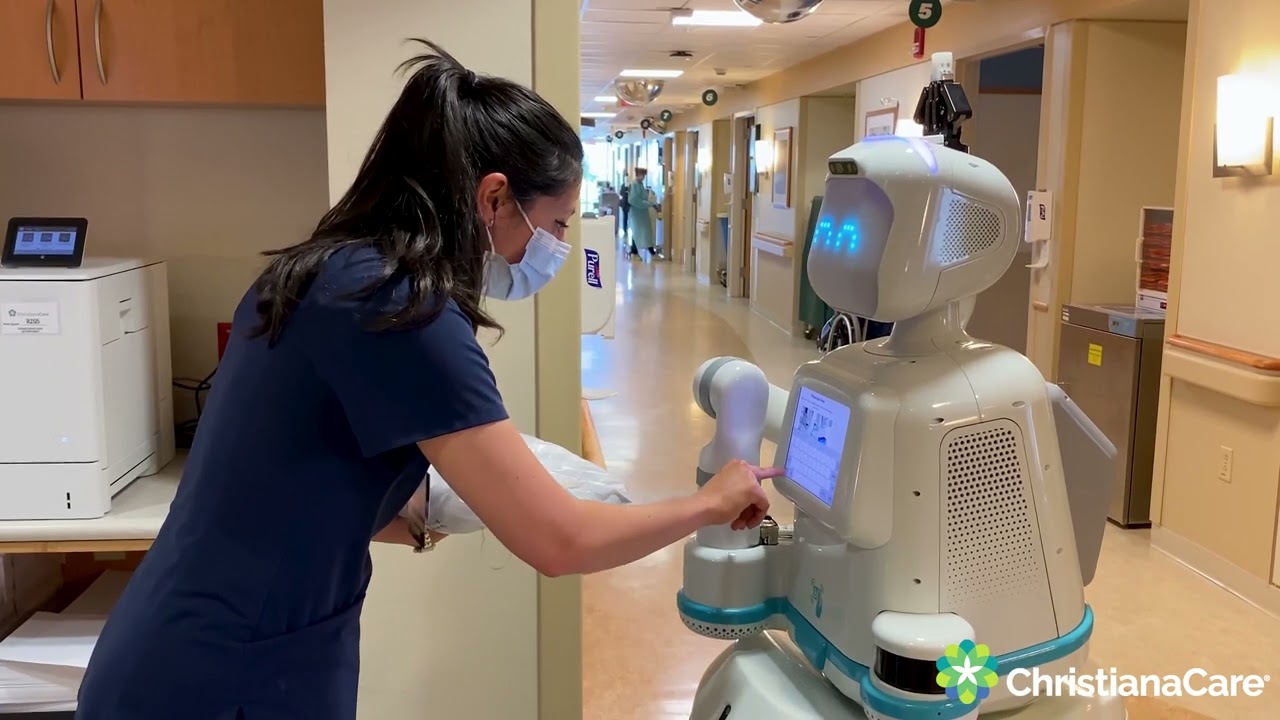
ChristianaCare is the first health system in the Philadelphia region piloting an innovative tool called Moxi, a collaborative robot — or “cobot”— that can assist in the hospital by making deliveries and performing other non-clinical tasks so that nurses and other clinical staff can spend more time focused on what they do best—caring for patients. With a landmark $1.5 million grant from the American Nurses Foundation, ChristianaCare will deploy a total of five Moxi cobots at Christiana Hospital. It is the largest single grant in the history of Nursing at ChristianaCare. Research published in the Journal of Nursing Management shows that nurses spend a significant amount of time — up to 33% of their shifts — on time-consuming but simple tasks such as dropping off lab specimens, collecting supplies or picking up medications from the pharmacy. By taking over these time-consuming but simple tasks, Moxi enables nurses to focus on patient care, where their skills are most needed. “Nurses need the time and space to deliver care and patient education at the top of their license,” said Ric Cuming, Ed.D., MSN, RN, NEA-BC, FAAN, chief nurse executive and president, ChristianaCare HomeHealth. “Moxi will be doing those hunting and gathering tasks such as getting equipment and supplies, which nurses are doing today but don’t need to be doing.” Cobots are designed to share workspace and interact directly with people. In ChristianaCare’s initiative, the Moxi cobots will be integrated with the Cerner Corporation electronic health record (EHR) platform and use artificial intelligence to proactively identify when nurses will need equipment, supplies, medications and lab tests. The Moxi cobots will be deployed to 11 inpatient units, partnering with more than 400 nurses. The American Nurses Foundation grant will enable ChristianaCare to evaluate the impact of cobots on nursing practice with the goal of scaling the technology if successful. “Moxi is not a replacement for a nurse or nursing position — or any position,” Cuming said. “It is an additional resource for nurses and their teams. “With robotic technology, we are using resources wisely and effectively, creating more efficient workflows, reducing repetitive tasks and freeing up nurses’ time for the complex clinical work that they excel at doing.” Reimagining Nursing ChristianaCare is one of 10 grant recipients from the American Nurses Foundation Reimagining Nursing (RN) Initiative. “We are proud that the American Nurses Foundation has the confidence in bold nurse-led ideas that will lead to large-scale, replicable change,” said Katherine Collard, MS, RN-BC, chief nursing informatics officer at ChristianaCare. “This grant will support nurses at ChristianaCare and our nursing colleagues across the nation in realizing their full potential, giving them the tools, resources and power to improve health care now and in the future.” With the American Nurses Foundation grant, ChristianaCare will conduct research on driving nursing outcomes through robotics. “We have a transformative opportunity to generate new knowledge and to move the science forward around robotics in nursing and in health care,” said Susan Birkhoff, Ph.D., RN, nurse scientist at ChristianaCare. “Through research, we will study Moxi’s impact to nursing caregivers that will have broad implications for nursing practice, workforce and education,” she said. ChristianaCare began exploring the potential of robotics to support Nursing with two Moxi cobots acquired in February, funded through the generosity of donors including Good Samaritan, Inc. and E.J. “Woody” Rice. With the grant, said Birkhoff, ChristianaCare will take Moxi to the next “bold frontier,” adding three more cobots with the goal of automating and optimizing nurses’ workflow without interrupting care. With five total cobots, ChristianaCare will be home to the largest number of Moxi robots in health care. The Little Bot That Can Before Moxi can become fully part of the care team, it must learn to navigate the hospital and respond to the nurses’ needs. Using artificial intelligence, Moxi is mapping out Christiana Hospital through sensors and other machine-learning technology so that the cobots can ultimately navigate and work autonomously. “When the Moxi cobots are fully integrated, we anticipate that they will complete up to 200 delivery tasks a day,” Collard said. “By making point-to-point deliveries, Moxi can save nurses hours of time and thousands of steps.” Designed to be compatible with the busy environments of hospitals, Moxi’s features include: Social intelligence: Moxi won’t bump into people or objects in hallways, waves when it sees someone new and happily poses for selfies. Mobile manipulation: Moxi can learn to use its robotic arm to operate existing automatic doors and elevator panels. Human-guided learning: The more Moxi is used, the more Moxi learns and adapts to the environment and specific ways of doing things. Friendly and safe design: With heart-shaped eyes and a friendly appearance, Moxi is designed to navigate safely and get the job done so nurses can focus on patient care. “What Moxi is doing in health systems like ChristianaCare is really transforming the way we think about health care and allowing staff to focus on the people in the hospital as opposed to the tasks,” said Dr. Andrea Thomaz, CEO and co-founder of Diligent Robotics, which created Moxi. “Robots are not something way in the future. Our robots work side-by-side with humans to ease the stress and workload of one of the most demanding jobs in society, nursing. The partnership between Diligent and ChristianaCare shows that the future is now.” Hospital Helper Directly from the Cerner EHR, Moxi will be able to anticipate clinician and patient needs and perform tasks without human involvement. Examples could include: Delivering items to patients based on nurses’ order requests. Making rounds across units to deliver lab samples on collections completed in the electronic health record. Making just-in-time deliveries of pharmaceuticals not stocked on the floor. Prioritizing tasks based on the nursing workload in a unit, so that the busiest nurses will get help first. “Connecting Moxi to the existing technology that clinicians use on a daily basis is key to making it easier to anticipate needs so clinicians can spend more time on patient care,” says Eva Karp, DHA, MBA, RN-BC, senior vice president, chief clinical and patient safety, Cerner. “Moxi could make a real difference in a nurse’s day — alleviating burnout and staffing shortages, which have become especially prevalent since the pandemic.” Incorporating the electronic health record into Moxi is part of the study funded by the American Nurses Foundation. “It’s absolutely in the best interest of our patients that Moxi can work alongside nurses so we can spend more time working directly with our patients to do what we do best,” said Pam Owen, MSN, RN-BC, nurse manager on 7E, one of the pilot units. “And Moxi brings a smile to people’s faces.” Fast Facts About Moxi Works in 22-hour shifts. Needs only two hours of charging time. Weighs about 300 pounds. Can carry a total weight of 70 pounds. Gender-neutral. Pronouns are “it” for a single Moxi cobot and “they” for more than one. Named one of America’s Greatest Disruptors in 2021 by Newsweek and one of the Best Inventions of 2019 by Time Magazine. About ChristianaCare Headquartered in Wilmington, Delaware, ChristianaCare is one of the country’s most dynamic health care organizations, centered on improving health outcomes, making high-quality care more accessible and lowering health care costs. ChristianaCare includes an extensive network of primary care and outpatient services, home health care, urgent care centers, three hospitals (1,299 beds), a freestanding emergency department, a Level I trauma center and a Level III neonatal intensive care unit, a comprehensive stroke center and regional centers of excellence in heart and vascular care, cancer care and women’s health. It also includes the pioneering Gene Editing Institute. ChristianaCare is nationally recognized as a great place to work, rated by Forbes as the 2nd best health system for diversity and inclusion, and the 29th best health system to work for in the United States, and by IDG Computerworld as one of the nation’s Best Places to Work in IT. ChristianaCare is rated by Healthgrades as one of America’s 50 Best Hospitals and continually ranked among the nation’s best by U.S. News & World Report, Newsweek and other national quality ratings. ChristianaCare is a nonprofit teaching health system with more than 260 residents and fellows. With its groundbreaking Center for Virtual Health and a focus on population health and value-based care, ChristianaCare is shaping the future of health care.


UMW Psychological Trauma Expert Laura Wilson can help with your coverage
It was a typical spring weekend in Buffalo that was shattered by another mass-shooting. The incident was the 198th to be classified a 'mass shooting' in America so far this year. The 18-year-old man who allegedly shot and killed 10 people at a Buffalo supermarket Saturday afternoon was motivated by hate, authorities said. The Tops Friendly Market where the shooting took place is located in the heart of Buffalo’s Black community and 11 of the 13 people shot by the White suspect were Black, officials said. “This was pure evil,” Erie County Sheriff John C. Garcia said at a Saturday news conference, calling the shooting a “straight up racially motivated hate crime from somebody outside of our community.” The US Department of Justice is investigating the shooting “as a hate crime and an act of racially-motivated violent extremism,” according to a statement from US Attorney General Merrick Garland. May 16 - CNN Once the news coverage fades, there will still be so many co-workers, first responders and families left to grapple with incidents with this level of trauma and horror. If you are a reporter looking to cover the issues survivors of mass-shooting events might face, then let us help. Dr. Laura Wilson is a clinical psychologist whose expertise focuses on post-trauma functioning, particularly in survivors of sexual violence or mass trauma (e.g., terrorism, mass shootings, combat). Her research interests extend to predictors of violence and aggression, including psychophysiological and personality factors, as well as indicators of PTSD following mass trauma, long-term functioning among first responders, outcomes among survivors of sexual violence and the influence of media on mental illness stigma. Dr. Wilson is available to speak with media, simply click on her icon to arrange an interview today.