
Experts Matter. Find Yours.
Connect for media, speaking, professional opportunities & more.

Tales of Christmas Past: Preserving Your Family History During the Holidays
Baylor’s Institute for Oral History shares seven simple best practices to get the conversation started (Credit: FG Trade Latin/Getty Images Collection E+) During past family Christmas gatherings, many of us remember when older relatives regaled everyone with tales about their fascinating life stories, firsthand experiences as an eyewitness to history or simply sharing how favorite family traditions started. So how do you preserve those precious family memories during the holidays? Baylor University oral historians Stephen Sloan and Adrienne Cain Darough have recorded and preserved the oral history memoirs of thousands of individuals through their work with Baylor’s renowned Institute for Oral History, home of the national Oral History Association. Together, the historians share seven simple best practices to help family members begin oral history conversations that enrich recollections of the past and capture your family memories. “The holiday season brings about the opportunity to spend time with family members, especially those you may not be able to see on a frequent basis,” Cain Darough said. “This presents the perfect opportunity to conduct oral histories to capture the stories and experiences of your family and loved ones, to learn more about them, the history of your family, traditions that have been passed down from generation to generation and more.” Seven best practices for preserving your family’s oral history 1. Ask first! Make sure your family member wants their story to be documented or recorded. That is the first – and most important – question to ask, said Adrienne Cain Darough, M.L.S., assistant director and senior lecturer with the Institute for Oral History. Ask first. “Many oral historians have run into the spot where someone says, ‘Oh, my grandpa would be great for that topic,’ and you get there and it's, ‘Grandpa does not want to talk to you.’ So first, make sure they want their story recorded,” she said. 2. Determine the type of recording equipment you want to use. Decide if you want to record your interview with an audio recorder or use a video recording device. It all depends on your needs and comfort level with the technology. For family members who are unable to travel this holiday season, you can include them by capturing their stories using a remote recording platform like Zoom, which became a vital tool for oral historians when COVID struck in 2020. Helpful resources from Baylor’s Institute for Oral History include: How to choose the right digital recorder Oral History at a Distance webinar on the dynamics of conducting remote oral history interviews Remote Interviewing Resources guide (Oral History Association) 3. Research your family member’s life and their timeline to help you formulate your questions. Recording a family member’s oral history is more than just putting down a recorder in front of them and saying, “Talk.” If you’re recording an oral history over Christmas with a family member, are there specific things that you want to know that are related to the holiday? For example, what was Christmas morning like for them as a child? How did your favorite family traditions start? What is their favorite holiday dish? (Maybe they could even share the recipe. “You can finally learn why Nana’s banana pudding doesn’t even have bananas in it,” Cain Darough said.) “Doing your research to try to form those questions will help you get around the reluctance to talk sometimes,” Cain Darough added. “The favorite thing that I love to hear is, ‘Oh, I don't have much to say,’ or ‘I'm not that important.’ And then you sit down with them, and you listen to their stories, and your mind is just blown by the things that they've seen and experienced.” 4. Start with the basics: “Where are you from?” When Baylor oral historians conduct an interview, they generally begin with some life history of the subject, providing important context for historians. “Ask questions early on that are easy for them to answer: a little bit of the backstory, a little bit of where they're from, where they grew up,” said Stephen Sloan, Ph.D., director of the Institute for Oral History, executive director of Oral History Association and professor of history at Baylor. “I want to understand the lens through which they experienced events, and the only way I can do that is, who was this? What was formative in their life growing up? Who spoke into who they were? What did they learn? Where did they go? What did they do? Those are the sorts of things that I would be exploring early in the interview.” One of the questions Cain Darough enjoys asking is, “What did you want to be when you grew up?” “You want to give them something that's very easy and comfortable to talk about,” Cain Darough said. “What was your favorite subject in school, just to see if that was something that continued on in their life. If there's a certain hobby or something that you know that they're affiliated with, when did you learn about that? Tell me more. What's your interest with this? And then they'll get to talking.” 5. Ask open-ended questions – without making any assumptions. With oral history, it is important that you don’t go into the interview with a specific agenda or try to lead anyone to a certain conclusion. “We can do this very subtly by assuming information, but you can't assume anything about their experience with the topic,’” Sloan said. “If we assume information, it could be very far from how they encountered whatever event that may have been. Allow them to relate the ways in which they lived these experiences.” 6. Listen closely. Listening is an important facet of gathering oral history. But historians say you are not only listening for what they're saying, you're also listening for what they're not saying. “Are there things that are being skipped around?” Cain Darough said. “For example, sometimes when you're talking to veterans about their combat experience, it may be the first time that they're reliving or retelling these stories. They need time, and you just have to be prepared for that.” 7. Be patient. It might take your subject some time to warm up to the conversation. “If you're talking to someone who is 80, 90 or even 100, that's a lot of memories that they have to go through, so patience is important,” Cain Darough said.


Employers who don’t step up to help with workplace supports may make informal caregiving ‘an even tougher role,’ Baylor University researcher says (Image credit: iStockphoto) People who care for their parents outside of their full-time jobs — and are unpaid for their help — experience considerable disruption of their workplace routines. Many are not getting employer support because it is not offered or because they do not feel able to use it, even if it is available, according to a Baylor University researcher. “A big and overwhelming consequence of America’s aging population is that so-called sandwiched caregivers, typically middle-aged, are caring for ailing parents while trying to work full-time and raise their own children,” said Matthew A. Andersson, Ph.D., assistant professor of sociology in Baylor University’s College of Arts & Sciences. “It’s no wonder we see such high rates of work interruption among caregivers. “But what’s particularly troubling — and what’s new in this study — is that employees who are experiencing work interruption are much more likely to say they have unmet need for workplace support than those who manage to keep working at the same pace,” he said. “This tells us that employers may not be stepping up to connect informal caregivers with workplace supports they need. That makes informal caregiving an even tougher role.” About three fourths of informal (unpaid) caregivers have at least a mild interference, such as working partial rather than full days, and about one quarter express an unmet need for workplace support, Andersson said. “That means they need help from one of six potentially useful workplace programs we looked into — such as eldercare referral or financial counseling. Yet they’re still not getting that help, even if their employer provides access to it.” The study — “Strapped for Time or Stressed Out? Predictors of Work Interruption and Unmet Need for Workplace Support Among Informal Elder Caregivers” — is published in the Journal of Aging and Health. About one in four employed U.S. adults provides informal care for a parent, in-law or other family member older than 65, according to the United States Census Bureau. This number is projected to grow as the population continues to age and as many continue to live into their 80s or beyond. Researchers from Baylor, Louisiana State University and the University of Iowa analyzed data from 642 individuals at a large public university who were informal caregivers for anyone 65 or older, often parents, spouses or friends. Unmet needs for caregiving support are about twice as common among employees whose work is interrupted, suggesting a strong link between unmet needs and lapsed work performance, researchers said. Those interruptions ranged from mild ones, such as adjusting work hours, to more severe ones, such as moving from a full- to a part-time job position to taking a leave of absence or even early retirement. While the study focused on the association between unmet needs for workplace support and work disruption among informal elder caregivers, researchers also examined how much unmet needs and work interruptions are linked to such factors as caregivers’ personal or job characteristics; their physical and psychological well-being; and the caregiving particular situations, including time weekly, necessary travel, number of individuals assisted and their health conditions — among them physical limitations, independence issues, chronic conditions and mental illness or cognitive impairment. Among their findings: Nearly three-fourths of the informal caregivers experience mild or severe work interruption. More than half of those who serve as caregivers 10 or more hours weekly reported severe interruption of work. More than 40 percent of caregivers reported being involved in caregiving 10 or more hours weekly; most care-providing (60 percent) took place within the household or less than 30 minutes away. While caring for one family member was most common (68 percent), a sizeable number oversaw two or three. Most (70 percent) assisted individuals with chronic health conditions; 80 percent cared for people with physical limitations. Caregivers with several work interruptions were especially likely to care for those with mental illness or cognitive impairment. “We know that informal caregiving is becoming more common and more complicated due to the multiple health conditions of care recipients and the all-too-familiar work-family conflict,” Andersson said. “First, we need to do more research not just on individual caregivers but on caregiving networks,” he said. “Because informal caregiving can be so difficult and time-consuming, it’s usually too much to ask of one person. It’s not uncommon for multiple family members to get involved. “Second, we need to get employers more involved in the reality of this pressing situation. This study examined the unmet needs of caregivers in a large workplace where these supports are, in theory, available to everyone. Yet, caregivers weren’t taking advantage — even when they thought they should be.” To combat that, “supervisors should see their power for what it is: they shape culture more than they realize,” Andersson said. “Work teams should be structured so that absences can be taken in stride when family duties are pressing. This places a burden on supervisors to model how long-term success involves, first and foremost, taking care of yourself and your family.” Employee training should involve clarity and communication about available supports and how to use them. “Using them should not be a source of guilt,” Andersson said. “And it definitely does not mean an employee is not valuable or productive.” Previous research has found that workers who care for the elderly have more stress, decreased health, more work-family conflict, greater financial burdens, strained relations with co-workers and diminished self-esteem. Additional duties may lead to lost productivity as well as missed training opportunities or diminished job skills. All those issues are concerns for employers wanting to retain and invest in employees. *The study was supported by the TIAA-CREF Institute. The University of Iowa, Iowa Center on Aging and Iowa Social Science Research Center provided additional support. Program on Aging seminar participants at Yale School of Medicine provided feedback. Co-researchers were Mark H. Walker, Ph.D., Louisiana State University; and Brian P. Kaskie, Ph.D., The University of Iowa College of Public Health.*


Is South Florida soon to be the next Las Vegas? Our expert can tell you if it's a good a bet or not?
There's a lot of buzz in Florida around gambling right now. Legal sports betting, live roulette and live craps might soon become a reality in the Sunshine State, adding to the economic bonanza and possible social consequences that comes with allowing these activities to expand. Expectations are high, and it's an idea getting a lot of coverage. In less than a month, in-person sports betting, craps and roulette will, presumably, begin at all South Florida casinos and elsewhere in the state, though that anticipated launch may hinge on a favorable ruling from the Florida Supreme Court. The launch is expected to drive tourists and businesses to South Florida and elsewhere in the state, create jobs, and bring in billions of dollars in revenue. Though investors and hotel owners might not want to push all their chips in just yet. There are serious legal issues that still need to be overcome as well as opposition from the Seminole Tribe and the anti-casino group No Casino. The idea though, has media contacting local experts like Florida Atlantic's Peter Ricci for perspective and insight. Peter Ricci, a Florida Atlantic University professor who specializes in hospitality and tourism industry trends, thinks that South Florida will see an uptick heading into the Super Bowl, but most of what he hears from local businesses and hospitality employees is uncertainty rather than excitement. “What I’ve heard is questions about ‘when is it starting?'” he said. ” … ‘Are they hiring for blackjack dealers? What does this mean? Will they expand the hotel?’ All these questions but nothing specifically pro or con about actual sports betting itself.” November 13 - Sun Sentinel Whether Florida can become the next Las Vegas is up to the courts, but if you are a reporter following this ongoing story - we're here to help. Peter Ricci is the Director of the Hospitality and Tourism Management program in Florida Atlantic University’s College of Business. He is a hospitality industry veteran with more than 20 years of managerial experience in segments including food service, lodging, incentive travel and destination marketing. Peter is available to speak with the media about tourism in Florida and the potential for gambling. Simply click on his icon to arrange an interview.



Holiday Season is Almost Here and Goizueta Business School has Holiday Experts Ready to Help
The holidays are the difference between operating in the red and operating in the black for many retail businesses. The Goizueta Business School has experts who can provide insight and expertise on a wide range of stories. Economics of the Holiday Season - Economist Tom Smith can discuss seasonal hiring, retail expectations, and the importance of the holiday season to retailers. Black Friday - Doug Bowman can discuss retail expectations and the importance of the holiday season to retailers. He expects this year shoppers will go to fewer stores and not travel long distances, delivery capacity will be an issue, and work from home/school purchases will be hot. AI Changing How We Shop - David Schweidel can discuss how new AI tools are changing how we shop and how brands are using AI to reach prospective customers. Product Reviews See Huge Increases: How Reviews Impact Holiday Shopping - What do reviews mean for the shopping experience and do reviews impact purchase? Reshma Shah can discuss the impact reviews have on the point of purchase. Product Returns - Marat Ibragimov can discuss the retail strategy and impact of holiday gift returns, comparing online returns to brick and mortar. Food and Travel Pricing - Saloni Firasta Vastani can discuss the cost of this year’s holiday dinners. What’s gone up and what’s gone down? She can also discuss the cost of travel this holiday season and what consumers can do to get a better deal. Avoiding Holiday Overspend - Rohan Ganduri can discuss how holiday shopping can expose consumers to credit products like store credit cards that offer various incentives to take up the credit card, often resulting in overspending. Ganduri can discuss his latest research paper on how taking up store credit cards can impact consumers’ future credit outcomes. Social Media & Advertising - David Schweidel can discuss how micro influencers work, how using product placement can cut through the advertising clutter, and the power of product reviews. The Constantly Changing Online Retail Experience - Styling videos, personal shoppers, messaging, and even Augmented Reality (AR) are being used to generate purchases. Doug Bowman can discuss how stores are reimagining the shopping experience to attract customers in person and online. Influencers Influencing Our Purchases - How are creators impacting the economy and are influencers impacting our purchasing decisions? Marina Cooley looks at the creator economy and how TikTok and Instagram are impacting our holiday wish lists and what it takes for a product to go from unknown to trending. She can also discuss how this holiday season will help normalize in-app TikTok shopping (something Instagram has struggled to execute on). How to Attract Customers to the Store this Holiday: Merging Online and In-person Experiences May be the Answer - Shopping looks different and it is up to retailers to stand out not just in the brick and mortar world but also online. The success of a business can balance on the customer experience. Reshma Shah can discuss the policies brick and mortar retailers need to have in place to successfully merge online shopping and the in-person shopping experience. To book your expert interview, call Kim Speece at (404) 849-6579 or email her at kim@leffassociates.com or simply click on the icon available. To find an expert on a specific topic, click the “Search” feature at https://goizueta.emory.edu/faculty/profiles. To check out other recent research, visit https://www.emorybusiness.com/faculty-research/.







It's a fabulous fall - and our expert can explain why all those colors come out this time of year
Autumn has arrived. And as we all take time to welcome this wonderous palette that nature delivers year after year, those who are curious about all those colors are looking for answers. Why there are so many different shades, tints, and tones? What causes the colors to change? And where's the best place to find one of nature's finest displays of leaves? It's a topic that comes up every year, and recently Connecticut Public Radio connected with UConn's Bob Fahey to get some of the answers about autumn in New England. I ventured into a forest in northeastern Connecticut with two UConn tree experts. We met up at Horsebarn Hill, one of the best viewpoints in the state, surveying a rolling river valley showing off with fall colors. We see oaks just starting to turn red. Nearby hickories provide a dash of yellow – and, of course, the maples are already stealing the show, even on a cloudy day. Here’s what I found out: Our trees are diverse One reason the foliage is so good is simply due to the number of species we have. “We have a very diverse hardwood forest in this part of New England,” said Bob Fahey, an associate professor and forest ecologist at UConn. “We have both species that are more southern species and also some of the more northern species.” “In comparison to say, the Mid-Atlantic or other places that have lots of deciduous species, we have maples, which are just the best,” he said. “We also have a number of species that have nice yellow foliage,” he said. “Birches and beech. If you go a little bit farther south from here, mostly what you have is oaks. And oaks can have good fall foliage colors, but there are a lot of times they don't and they don't last for as long.” We have lots and lots of trees The diversity of species provides a diversity of color, said Tom Worthley, an associate extension professor and a forester at UConn. He asked me to remember the last time I flew over Connecticut. What did you see, he asked. Lots of trees, right? “Most of the ground is covered by a tree canopy,” Worthley said, noting that some estimates put that tree canopy cover at around 75% of the land area of the whole state. “Back where we were standing a few minutes ago, we had some cherry trees,” Worthley said, his eyes scanning the trees enveloping us. “There's a few remnant ash, there's some walnut around the edges here. And let's see, some hickory.” A walnut tree towers over us – and there are even some white pines. It’s that varied bioscape that sets New England forests apart. “Even in my two-acre forest behind my house, I have 22 different species of tree, which is more than some regions of the northern part of the U.S.,” Fahey said. Travel to the west, and what you’re likely to see are lots of evergreens and aspen trees. “Not that there aren't others, there are plenty of others, but not in the same abundance and not in the same kind of mix that we have around here,” Worthley said. Climate plays a role Across New England are rolling hills with microclimates that can contribute to vibrant fall colors. “You’ll see ... highly different color in different parts of the landscape, which has to do with temperature differences,” Fahey said. Combine that with Connecticut’s mix of southern and northern species and the colors here might not be as exciting and bright as what you would see in Vermont and New Hampshire, Fahey said. But our foliage season can sometimes last a little bit longer. One reason? Oaks. “We have so much more of that oak component,” Fahey said. “The oaks will hold their leaves until the end of October.” Moisture, temperature and the amount of daylight all contribute to how long it takes for a tree to shed its leaves. And, for each species, the calculation is different. “A tree makes an economic decision,” Worthley said. “It decides, ‘Well, it's costing more in energy to keep these leaves going than what they're producing for me and so it's time to shut them off.’” Why do leaves fall anyway? It’s when leaves are green that the most important work is happening, pulling carbon out of the atmosphere and giving us oxygen. And for that green color, we can thank the pigment chlorophyll. “The color that's in the leaves – is always there from the time the leaf is grown,” Worthley said. “As the growing season fades, the chlorophyll disappears,” he said. Then the other colors in the leaf can begin to show off. Pigments like anthocyanins (reds and purples) and carotenoids (yellows and oranges) peek out, tiny threads in an autumnal blanket transforming New England’s green forests into a richly colored landscape. The colors are out - but only for a limited time. If you're a journalist looking to know more about this topic before all the leaves fall, then let us help. Dr. Fahey is an Associate Professor in the Department of Natural Resources and the Environment and Center for Environmental Sciences and Engineering at the University of Connecticut. He is also the George F. Cloutier Professor in Forestry, director of the UConn Forest, and associate director of the UConn Eversource Energy Center. Simply click on his icon now to arrange a time to talk today.


The Role of Artificial Intelligence in Customer Experience
Gaurav Jain, assistant professor of marketing at the Rensselaer Lally School of Management, examines how individuals make judgments, estimates, and decisions in the absence of complete information. Previously, Jain served as the chief marketing advisor at multiple firms. Below are his thoughts on the impact of artificial intelligence (AI) on customer experience. Voice of the Customer In today's hyper-connected world, the voice of the customer (VoC) is louder and clearer than ever. But how do we sift through this cacophony to understand what our customers are really saying? Enter AI. It's revolutionizing the way customer experience teams handle VoC programs, and as a marketing leader, I find this incredibly exciting. Take direct customer feedback, for example. We're no longer just collecting survey responses and storing them in a database for quarterly review. AI algorithms, particularly those using natural language processing, are helping us instantly categorize and prioritize this feedback. Imagine an e-commerce platform that can immediately flag a customer's mention of "late delivery" in a post-purchase survey. That's not just efficient; it's customer-centric. But what about the things customers are saying when they're not directly talking to us? That's where AI-driven sentiment analysis comes in. These tools can scan social media, forums, and review sites to gauge the sentiment behind a customer's words. I've seen hotel chains use this technology to monitor travel forums and review sites. If a guest mentions "noisy rooms," even without lodging a direct complaint, the brand can proactively look into soundproofing solutions. Then there's inferred feedback, the kind you get by reading between the lines. AI can analyze customer behavior, like frequent page visits without conversion or cart abandonment, to suggest what might be going wrong. For instance, an online fashion retailer could use AI to figure out why a particular dress gets a lot of views but few purchases. Maybe it's the sizing, maybe it's the price, but the point is, you get to know without having to ask. And it doesn't stop at gathering feedback. AI is helping us turn this raw data into actionable insights. We can predict future behavior, like churn rates, based on past feedback. This allows us to be proactive rather than reactive, which is a game-changer in customer experience management. Finally, let's talk about what happens after we've gathered all this feedback. AI is ensuring that every customer who takes the time to share their thoughts receives an immediate and appropriate response. Chatbots can handle common queries or concerns, making the customer feel heard and valued right away. So, from the perspective of a marketing leader, it's not just about the efficiency that AI brings to VoC programs. It's about the opportunity to deepen our connection with customers. By truly understanding their words, their sentiments, and even their behaviors, we can craft experiences that resonate on a human level. And in a world that's increasingly digital, that human touch is what sets a brand apart. Customer Service It's truly intriguing to observe how AI is weaving its way into the customers’ experience. Online, chatbots are making waves. Chatbots are not just digital tools; they're our first point of contact, bridging the gap between brands and consumers. However, there was always the question of accuracy versus efficiency while managing these chatbots – AI has answered that question. AI chatbots provide real-time yet accurate assistance, making the digital shopping journey feel more interactive. Companies can reduce customer dropout while avoiding the expense of managing a large human customer service team. AI is revolutionizing phone-based customer service as well. Voice recognition allows natural language processing for easier navigation, while predictive analysis anticipates caller needs based on their history. Enhanced personalization means customers no longer repetitively provide account details, and emotion detection aids in gauging caller mood. The result? Reduced wait times, more efficient interactions, and a significantly improved telephonic customer experience. In essence, AI is bridging the gap between technology and human touch in the retail world, making our interactions with brands more meaningful and personalized. Again, companies can do this in a cost-effective manner. Jain is available to speak with media - - simply click on his icon now to arrange an interview today.


It's only been since January, but the cannabis industry in Connecticut is already a hit among consumers. There was initial worry that the quick expansion of stores and dispensaries could potentially blunt the long-term success of the retail aspect of the product in the state, but according to UConn's Fred Carstensen concerns about the oversupply seen in neighboring states is not a worry. “It’ll take three to four years to see how the market develops,” said Carstensen, a professor at University of Connecticut and the director of the Connecticut Center for Economic Analysis. In an article that goes into great detail, Carsten told the Stamford Advocate about the many factors and influences that can impact what has been a volatile market in some states since legalization became the trend. And as the state government checks the expansion of Connecticut’s adult-use cannabis market, Carstensen said local governments do the same. He said it wouldn’t matter if Connecticut’s retail cannabis scene was over-licensed, under-licensed, or just right. “Every municipality has the right to say yea or nay (to retailers),” Carstensen said. But he said an estimated 69 cannabis retailers in the Nutmeg State’s pipeline will make the bigger picture clearer. “(Then) it's pretty much available to everybody on a relatively short-travel basis,” Carstensen said. “Then we'll actually know what the market is.” Regulation and observation will be key to measure the success or failure of the market. Carstensen said that as the Nutmeg State’s market matures, retailers will “pull that business back into Connecticut when we become more competitively priced.” Peake agreed that “as (more Connecticut retailers) open up, we can probably expect the vast majority of those folks to be buying cannabis in Connecticut.” And Carstensen said that as much as interstate cannabis purchases skew understanding Connecticut’s market, it also serves as a check on oversaturating the Nutmeg State’s cannabis economy... And, Carstensen said, if there were too many cannabis dispensaries, "the market will tell us." "They’ll close,” the economics professor said. If you're a journalist looking to know more about this emerging industry in Connecticut and beyond, let us help. Fred Carstensen is a University of Connecticut professor and director of the Connecticut Center for Economic Analysis. He is a renowned an expert in the areas of public policy, economic history, and economics. Simply click on his icon now to arrange a time to talk today.

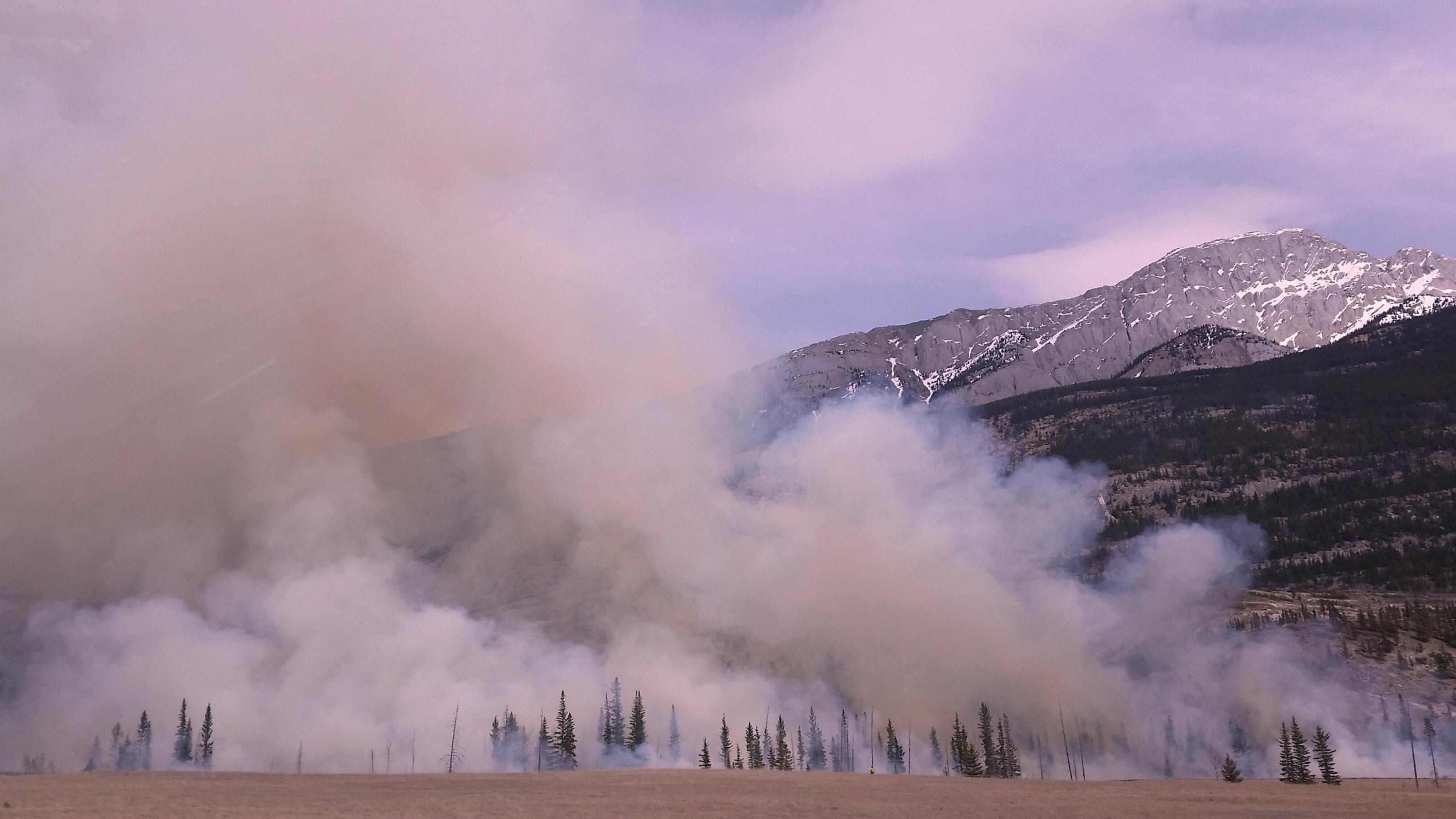
#Expert Q&A: Amid the Wildfire Haze, NJIT's Alexei Khalizov Explains What's in the Air
The soot that permeated the air in New Jersey and New York this summer — courtesy of massive wildfires in Canada — is exactly what a New Jersey Institute of Technology professor is studying to determine its impact on climate change. Alexei Khalizov, an associate professor of chemistry and environmental science, is partnering with Associate Professor Gennady Gor on the three-year project, which began last year and is supported by a $620,000 grant from the National Science Foundation. Specifically, they’re examining the soot created by wildfires and the burning of fossil fuels in hopes of better predicting its impact on climate. Khalizov, who’s been at NJIT since 2013, took time out from his research to explain what millions of residents of N.J. and N.Y. are experiencing as a result of the wildfires hundreds of miles to the north. Q: What’s in the smoke? Small particles and some gas chemicals. These particles and chemicals were released by wildfires and they were picked up by the air mass and carried all the way to New Jersey from Canada. Those particles are extremely small: you can stack maybe a hundred of such particles across single human hair thickness. Q: Is breathing it the equivalent of smoking a pack of cigarettes? That would be a reasonable comparison. A cigarette is made of plant material. When it smolders and burns it releases particles that are very much like those particles from wildfires. Maybe the only difference is that the wildfires have no nicotine. But they have lots of other chemicals. Q: What factors contribute to the density of the smoke? Well, it's a major wildfire. It covers a huge territory in Canada. And the meteorology is such that this smoke is carried all the way from Canada to the U.S. without significant dilution. And due to that, the concentration of those particles is very high. Q: When did we last experienced something of this magnitude? We had some Canadian and Alaskan wildfires a few years ago. And air mass transport brought the smoke all the way to New Jersey, but it wasn't as bad as what we are observing today. Q: What about in terms of EPA standards? The Environmental Protection Agency has a list of criteria pollutants. One of those pollutants is particles smaller than 2.5 microns. And typically, if the concentration of those particles exceeds 35 micrograms per cubic meter, the air is considered unhealthy. When I looked at the map of pollution today (June 7, 2023), it showed that throughout the majority of New Jersey, the concentration is around 90 micrograms, which is two to three times higher than this unhealthy threshold. And actually, there is a location, I believe it's around Paterson, where the concentration is 140 micrograms, which is four to five times above the threshold. Q: Can the wildfires in South Jersey be contributing to this? It's possible, but probably it's not a major contribution. Also, if you look at the wind pattern, it's probably not a major factor at all. Q: Why is wind unable to disperse the smoke? For the wind to disperse the smoke, one needs to mix clean air with all this contaminated air and the amount of contaminated air is so high that there’s no clean air around to actually produce any dilution. Q: Why is there so much haze? It’s because of the continuous inflow of air, which is contaminated by emissions from the wildfires. The haze itself has a relatively short lifespan. Q: How does temperature change affect the smoke? If the temperature increases that may accelerate the rate of some chemical reactions that will also be accelerated by the sunlight. And that's one reason why the smoke that was released in Canada is not exactly the same smoke that we experience in New Jersey. As this haze is traveling over three to six hundred miles, it undergoes a number of chemical reactions and even the smell changes. You know how freshly released wood smoke smells — it's actually pretty pleasant. What we're smelling now, it's not pleasant at all. That's the result of those chemical reactions, which makes this even more unhealthy. Q: Will rain immediately clear the smoke? Yes, it will. If we could have rain, then the rain would remove the majority of these particles. And in fact, I believe we've been experiencing the smoke for several days, almost a week now. It would go up and decrease. And we’ve had several rains and those rains did really clear out some smoke. Q: What can we do individually and collectively to protect ourselves? We can help ourselves by staying indoors and wearing masks if you have to go outside. Certainly, exercising outside is not a good idea even while wearing a mask. Also, if you have a central air conditioning system, you can turn on the fan to run the air through the filter, which will remove some of these particles. It depends on what kind of filter you have — high efficiency or regular. Q: What kind of mask? Make sure that it's an N-95 mask, not a surgical mask. A surgical mask is not is not going to help you at all. Q: How does what we’re experiencing relate to your research? My collaborator and I received a major grant from the National Science Foundation to study the particles released by combustion. As they travel through the air, they change both in shape and in composition. And these changes affect their toxicity and they affect their impact on climate. These particles actually are one of the warming agents. So, we hope that within about three years of working on this project, we’ll be able to explain better what happens and then modelers will be able to predict the impacts of such events with better accuracy. Looking to know more - we can help. Alexei Khalizov is available to discuss this important topic with media - simply click on his icon now to arrange an interview.


A recent survey conducted on behalf of CAA South Central Ontario (CAA SCO) found that 82 per cent of parents in Ontario have witnessed dangerous driving behaviours in school zones – that’s a four per cent increase compared to last year. More than half (55 per cent) consider the roads around their child’s school to be unsafe. “Our children deserve to travel to and from school safely,” says Tracy Marshall, manager of community relations at CAA SCO. “As another school year begins, drivers should prepare for higher traffic periods in school zones and drive with extra vigilance.” According to the survey, some of the most common dangerous driving behaviours parents have witnessed include speeding, double parking and stopping in undesignated areas. Of those surveyed, the car remains the primary mode of transportation to and from school. Because of this, more than 80 per cent of parents report experiencing congestion around their child’s school. In fact, survey respondents believe that parents in a hurry (38 per cent), too much congestion (33 per cent) and parents not following the drop off or pick up procedures contribute the most to unsafe driving behaviours in school zones. Majority of parents say more can be done to help drivers slow down in school zones. Ninety-one per cent of parents in Ontario support lowering the speed limit in school zones with 83 per cent that say speed limits should be 30km/h or lower. When it comes to Automated Speed Enforcement (ASE): Seventy-seven per cent – an 11 per cent jump compared to last year – strongly support the use of it in school zones. Eighty-one per cent believe its presence would deter speeding around schools. Seventy-five per cent say that it should remain permanent in school zones. Drivers reminded to follow the rules of the road in school zones, especially near school buses. “It is dangerous and illegal to pass a stopped school bus with its red lights flashing and stop arm extended,” says Marshall. According to the survey, 11 per cent of parents report having ever been charged with failure to stop for a school bus. “Not only do you risk facing a fine of up to $2,000 and six demerit points for a first offense, but you are also putting the lives of others at risk,” adds Marshall. How drivers can help keep school zones safe. Drivers can also use the following CAA tips to ensure they are staying safe in school zones: Help reduce traffic with active school travel: Encourage your kids to walk or wheel to school to ease traffic congestion. If your school is a further distance, CAA encourages parents and guardians to park a block away and walk to school to reduce traffic and make school zones safer. Slow down: Know the speed limit in your neighbourhood’s school zones and respect them. Ensure you give yourself plenty of time to drop off your kids at school to avoid rushing. Choose a safe spot to drop off and pick up your children from school: Follow your school’s rules and avoid double parking or stopping on crosswalks, dropping off or picking up your kids on the opposite side of the street, and stopping in moving traffic as kids rush out. Instead, use the designated drop off areas or consider a spot a bit farther away from school that is easily accessible and safe. Make eye contact with pedestrians: With the excitement of going back to school, anticipate that children may not easily see or hear your moving vehicle, so ensure to make eye contact with pedestrians crossing the road. Watch for CAA School Safety Patrollers: When travelling to and from school, watch for CAA School Safety Patrollers in their lime green safety vests, as they play an important role in ensuring the roadway is safe before kids cross on their own. CAA supports safety in school zones through the CAA School Safety Patrol® program, developed to protect and educate elementary school children on safe road-crossing practices. CAA’s Ontario Road Safety Resource is a toolkit with valuable lesson plans for teachers to help educate students about road safety. To learn more please visit www.caasco.com/schoolzone. About the survey. The study, commissioned by CCG conducted by Dig Insights in May 2023 surveyed 1,560 Ontario parents/guardians between the ages of 18 and 74 with children attending school from kindergarten to grade 8. The margin of error for a sample of this size is plus or minus 2% at the 95% confidence level.



Georgia Southern sets fundraising record for third year in a row
Total cash, pledges and in-kind gifts to Georgia Southern University amounted to $23,831,604 during Fiscal Year 2023, which ended on June 30, 2023. That surpasses the total from the previous year, which was also a record at $22.3 million. For the third straight year, Georgia Southern supporters have propelled the University to a record-breaking year of private fundraising. Total cash, pledges and in-kind gifts to Georgia Southern University amounted to $23,831,604 during Fiscal Year 2023, which ended on June 30, 2023. That surpasses the total from the previous year, which was also a record at $22.3 million. The record total was buoyed by another record-breaking fundraising year for the Georgia Southern Athletic Foundation, Inc., which raised a record $11.06 million in new pledges and outright gifts. “As we soar into a very bright future for this University, record-breaking fundraising is a sign that Georgia Southern is not only strong now, but poised for even greater heights,” said Georgia Southern President Kyle Marrero. “We are endlessly thankful for the supporters, friends, alumni and donors who endorse our path forward and are stepping up to ensure our success.” Donors helped with various projects and programs this past year, including: $1 million from Betty Foy Sanders for the Betty Foy Sanders School of Art with scholarships, travel and programmatic needs $750,000 deferred gift for the Department of Biology to be used for student scholarships 23 newly created endowments Anthony P. Tippins Family Training Facility for athletics “Through unwavering dedication and the overwhelming generosity of our community, we have demonstrated the boundless potential of Eagle Nation in support of our students’ dreams and the University’s future,” said Georgia Southern Foundation Chair Mike Sanders. Last year’s Athletic Foundation Chair Leonard Bevill added, “The impact of this achievement will ripple through generations, leaving an indelible mark on the trajectory of higher education and Georgia Southern. I am humbled and inspired by the collective spirit that has made this three-year milestone possible.” The Erk Russell Fund, the Athletic Foundation’s annual fund, continues to grow and saw donations of $3.2 million this fiscal year. Additionally, the Athletic Foundation received 58 major gift commitments this year, which are gift commitments of $25,000 or greater to support Eagle Athletics. Over the past three fiscal years, the Athletic Foundation has raised more than $27 million in support of Georgia Southern Athletics. This total is the largest three-year fundraising window in department history. “It’s clear that Georgia Southern University’s power to transform lives and communities is making a positive impression with our private supporters,” said Trip Addison, Vice President of Advancement, noting that more than 3,600 alumni were among the supporters this past year. “I am grateful for the welcome reception we are receiving when we ask people to join in our effort to help support our students and the work they and our faculty are doing.” Interested in knowing more about fundraising or to speak with Georgia Southern Foundation Chair Mike Sanders? To arrange an interview simply connect with Georgia Southern's Director of Communications Jennifer Wise at jwise@georgiasouthern.edu to arrange an interview today.
