
Experts Matter. Find Yours.
Connect for media, speaking, professional opportunities & more.

Optical research illuminates a possible future for computing technology
Nathaniel Kinsey, Ph.D., Engineering Foundation Professor in the Department of Electrical and Computer Engineering (ECE), is leading a group to bring new relevance to a decades-old computing concept called a perceptron. Emulating biological neuron functions of the messenger cells within the body’s central nervous system, perceptrons are an algorithmic model for classifying binary input. When combined within a neural network, perceptrons become a powerful component for machine learning. However, instead of using traditional digital processing, Kinsey seeks to create this system using light with funding from the Air Force Office of Scientific Research. This “nonlinear optical perceptron” is an ambitious undertaking that blends advanced optics, machine learning and nanotechnology. “If you put a black sheet outside on a sunny day, it heats up, causing properties such as its refractive index to change,” Kinsey said. “That’s because the object is absorbing various wavelengths of light. Now, if you design a material that is orders of magnitude more complex than a sheet of black plastic, we can use this change in refractive index to modify the reflection or transmission of individual colors – controlling the flow of light with light.” Refractive index is an expression of a material’s ability to bend light. Researchers can harness those refractive qualities to create a switch similar to the binary 1-0 base of digital silicon chip computing. Kinsey and collaborators from the U.S. National Institute of Standards and Technology, including his former VCU Ph.D. student Dhruv Fomra, are currently working to design a new kind of optically sensitive material. Their goal is to engineer and produce a device combining a unique nonlinear material, called epsilon-near-zero, and a nanostructured surface to offer improved control over transmission and reflection of light. Kinsey’s prior research has demonstrated that epsilon-near-zero materials combine unique features that allow their refractive index to be modified quite radically – from 0.3 to 1.3 under optical illumination – which is roughly equivalent to the difference between a reflective metal and transparent water. While an effective binary switch, the large change in index requires a lot of energy (~1 milli-Joules per square centimeter). By combining epsilon-near-zero with a specifically designed nanostructure exhibiting surface lattice resonance, Kinsey hopes to achieve a reduction in the required energy to activate the response. The unique response of a nanostructure exhibiting surface lattice resonance allows light to effectively be bent 90 degrees, arriving perpendicular to the surface while being split into two waves that travel along the surface. When a large area of the nanostructure is illuminated, the waves traveling along the surface mix, where they interfere constructively or destructively with each other. This interference can produce strong modification to reflection and transmission that is very sensitive to the geometry of the nanostructure, the wavelength of the incident light and the refractive index of the surrounding materials. The mixing of optical signals along the surface can also selectively switch regions of the epsilon-near-zero material thereby performing processing operations. A key aspect of Kinsey’s work is to build nonlinear components, like diodes and transistors, that use optical signals instead of electrical ones. Transistors and other traditional electronic components are nonlinear by default because electrical charges strongly interact with each other (for example, two electrons will tend to repel each other). Creating optical nonlinear components is challenging because photons do not strongly interact, they just pass through each other. To correct for this, Kinsey employs materials whose properties change in response to incident light, but the interaction is weak and thus requires large energies to utilize. Kinsey’s device aims to reduce that energy requirement while simultaneously shaping light to perform useful operations through the use of the nanostructured surface and lightwave interference. The United States Department of Defense sees optical computing as the next step in military imaging. Kinsey’s work, while challenging, has potential to yield an enormous payoff. “Let’s say you want to find a tank within an image,” Kinsey said, “Using a camera to capture the scene, translate that image into an electrical signal and run it through a traditional, silicon-circuit-based computer processor takes a lot of processing power. Especially when you try to detect, transfer, and process higher pixel resolutions. With the nonlinear optical perceptron, we’re trying to discover if we can perform the same kinds of operations purely in the optical domain without having to translate anything into electrical signals.” Linear optical systems, like metasurfaces and photonic integrated circuits, can already process information using only a fraction of the power of traditional tools. Building nonlinear optical systems would expand the functionality of these existing linear systems, making them ideal for remote sensing platforms on drones and satellites. Initially, the resolution would not be as sharp as traditional cameras, but optical processing built into the device would translate an image into a notification of tanks, troops on the move, for example. Kinsey suggests optical-computing surveillance would make an ideal early warning system to supplement traditional technology. “Elimination or minimization of electronics has been a kind of engineering holy grail for a number of years,” Kinsey said, “For situations where information naturally exists in the form of light, why not have an optical-in and optical-out system without electronics in the middle?” Linear optical computing uses minimal power, but is not capable of complex image processing. Kinsey’s research seeks to answer if the additional power requirement of nonlinear optical computing is worthwhile given its ability to handle more complex processing tasks. Nonlinear optical computing could be applied to a number of non-military applications. In driverless cars, optical computing could make better light detection and ranging equipment (better known as LIDAR). Dark field microscopy already uses related optical processing techniques for ‘edge detection’ that allows researchers to directly view details without the electronic processing of an image. Telecommunications could also benefit from optical processing, using optical neural networks to read address labels and send data packets without having to do an optical to electrical conversion. The concept of optical computing is not new, but interest (and funding) in theory and development waned in the 1980s and 1990s when silicon chip processing proved to be more cost effective. Recent years have seen many advancements in computing, but the more recent slowdown in scaling of silicon-based technologies have opened the door to new data processing technologies. “Optical computing could be the next big thing in computing technology,” Kinsey said. “But there are plenty of other contenders — such as quantum computing — for the next new presence in the computational ecosystem. Whatever comes up, I think that photonics and optics are going to be more and more prevalent in these new ways of computation, even if it doesn’t look like a processor that does optical computing.” Kinsey and other researchers working in the field are in the early stages of scientific exploration into these optical computing devices. Consumer applications are still decades away, but with silicon-based systems reaching the limit of their potential, the future for this light-based technology is bright.

Florida Tech Scientist to Study Deep-Space Agriculture After Planetary Society Grant Award
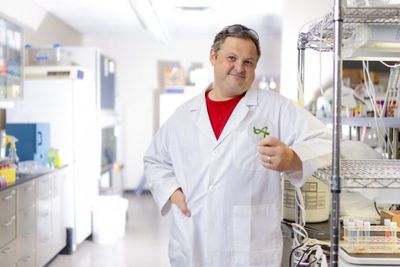
No matter where humans travel, sustenance remains a necessity. Finding a bite to eat during a visit to New York, for example, is no problem. When the destination is a bit farther away, such as Mars, the options are not as plentiful there or on the long journey to get there. That’s where Florida Tech’s Andrew Palmer comes in. He and other scientists are exploring ways to feed our explorers, and a new competitive grant from the Planetary Society will fund work that examines the two most likely ways to produce food during travel to these far-flung spots: in soil or something like soil, or in water. Palmer and his team were awarded a $50,000 Science and Technology Empowered by the Public (STEP) grant, the Planetary Society recently announced. Their project: “Evaluation of food production systems for lunar and Martian agriculture.” For the next year, they will grow radish microgreens, lettuce and tomatoes in identical environmental conditions with one major exception: one batch will be grown hydroponically, and another will be grown in regolith – like lunar or Martian soil. The aim of the experiment is to characterize and compare the two methods, both of which have merits and shortcomings. “It may be that a combination of these approaches, tailored to the diverse needs of different crops, is the best way to provide sustainable and productive agriculture,” Palmer said. “Until now, there have been no direct comparison studies between hydroponic and regolith-based systems for any crop targeted for space applications. We are excited to address this knowledge gap.” The team, which includes experts in plant physiology and biochemistry as well as space agriculture and systems efficiency analysis, will test their hypothesis that faster growing crops like microgreens will be better suited for hydroponic systems even in the long term, while slower-growing crops like tomatoes may favor a regolith-based production system. Palmer and his co-investigator, Rafael Loureiro from Winston-Salem University, are joined by collaborators J. Travis Hunsucker and Thiara Bento from Florida Tech, Laura E. Fackrell at the Jet Propulsion Laboratory and Jéssica Carneiro Oliveira at Universidade Federal do Estado do Rio de Janeiro, Brazil. Care to delve a little deeper? Palmer and a second STEP grant recipient, Dartmouth College professor Jacob Buffo, spoke to the Planetary Society senior communications advisor Mat Kaplan about their respective projects. The segment with Palmer begins at the 23:57 mark and the piece is linked above. Looking to know more about what it will take to feed our deep-space explorers? Then let us help with your questions and coverage. Dr. Andrew Palmer is an associate professor of biological sciences at Florida Tech and a go-to expert in the field of Martian farming. He is available to speak with media regarding this and related topics. Simply click on his icon now to arrange an interview.


As technology continues to advance, so do the methods that hackers use to steal personal information. One such method that even the FBI has taken notice of is juice jacking, a technique where hackers use public charging stations to install malware onto your device or steal your personal information. The specific danger is very real, experts say. Steve Weldon, director of the Cyber Institute at Augusta University’s School of Computer and Cyber Sciences, said people need to understand there is risk when plugging a phone into a USB port at a public charging station. “USB uses pins for data and power. When we plug devices in to charge, the data pins are also connected,” said Weldon. “No big deal if we’re in an environment we trust. However, do we trust the public charging stations to have access to our data pins and being able to make data transfers? Probably not and that’s the gist of the recent warning.” There are ways to avoid the risk. “The best advice is to bring your own cables and adaptors. Then we can plug directly into power outlets,” Weldon said. If you must use a public charging station, he suggests using a data blocking USB cable. These cables only allow power to flow through, preventing any data transfer between the charging station and your device. Also, be aware if you are using your phone while charging it. “When using public charging stations we should, at a minimum, watch for strange behaviors, weird popups, and being asked questions about trusting the device or drive we’re connected to. Those are danger signs, and we’d want to disconnect quickly,” added Weldon. Another option to protect your phone from juice jacking is to use a wireless charger. These chargers do not require a physical connection between your device and the charging station. While wireless charging is typically slower than using a cable, it is a safe alternative when you’re on the go and need to charge your device. Keeping your personal information safe is crucial in today’s digital age. Protecting your phone from juice jacking is just one way to prevent hackers from accessing your sensitive data. Looking to know more? Connect with our expert today. Steven Weldon is the Director of Cyber Institute at the School of Computer and Cyber Sciences at Augusta University and is an expert in the areas of cellular and mobile technology, ethics in computer science, scripting and scripting and automation. Steve is available to speak with media - simply click on his icon now to arrange an interview today.


Aston University and asbestos consultancy to use AI to improve social housing maintenance
• Aston University and Thames Laboratories enter 30-month Knowledge Transfer Partnership • Will use machine-learning and AI to create a maintenance prioritisation system • Collaboration will reduce costs, emissions, enhance productivity and improve residents' satisfaction. Aston University is teaming up with asbestos consultancy, Thames Laboratories (TL) to improve efficiency of social housing repairs. There are over 1,600 registered social housing providers in England, managing in excess of 4.4 million homes. Each of these properties requires statutory inspections to check gas, asbestos and water hygiene, in addition to general upkeep. However, there is not currently a scheduling system available that offers integration between key maintenance and safety contractors, resulting in additional site visits and increased travel costs and re-work. Aston University computer scientists will use machine-learning and AI to create a maintenance prioritisation system that will centralise job requests and automatically allocate them to the relevant contractors. The collaboration is through a Knowledge Transfer Partnership (KTP) - a collaboration between a business, an academic partner and a highly-qualified researcher, known as a KTP associate. This partnership builds on the outcomes of TL’s first collaboration with Aston University, by expanding the system developed for the company’s in-house use - which directs its field staff to jobs. The project team will improve the system developed during the current KTP to enable it to interact with client and contractor systems, by combining an input data processing unit, enhanced optimisation algorithms, customer enhancements and third-party add-ons into a single dynamic system. The Aston University team will be led by Aniko Ekart, professor of artificial intelligence. She said: “It is a privilege to be involved in the creation of this system, which will select the best contractor for each job based on their skill set, availability and location and be reactive to changing priorities of jobs." TL, based in Fenstanton, just outside Cambridge, provides asbestos consultancy, project management and training to businesses, local authorities, social housing and education facilities, using a fleet of mobile engineers across the UK. John Richards, managing director at Thames Laboratories, said: “This partnership will allow us to adopt the latest research and expertise from a world-leading academic institute to develop an original solution to improving the efficiency of social housing repairs, maintenance and improvements to better meet the needs of social housing residents.” Professor Ekart will be joined by Dr Alina Patelli as academic supervisor. Dr Patelli brings experience of software development in the commercial sector as well as expertise in applying optimisation techniques with focus on urban systems. She said: “This is a great opportunity to enhance state-of-the-art optimisation and machine learning in order to fit the needs of the commercial sector and deliver meaningful impact to Thames Laboratories.”


MEDIA RELEASE: Five ways to cut costs on travel; plus, the one thing you should never skip
Manitobans love to travel, but with costs rising due to inflation, it has become more important than ever to find ways to save money, while still crossing off destinations on your bucket list. “This year, more and more people across the province are eager to embark on their next adventure, whether that means disconnecting in a tropical paradise or exploring the history of an ancient city,” says Susan Postma, regional manager, CAA Manitoba. “While we are seeing a renewed interest in travel, we know the costs associated with it will be factor for many people.” With the help of our travel professionals, CAA Manitoba (CAA MB) has compiled a few tips to help save you money. Plan ahead. Start planning your trip well in advance of your departure date. Determine what your budget will allow and book flights, hotels, and rental cars early to get the best deals and rates possible. With the higher demand for travel, last-minute planning will result in higher airfares, hotel rates and even disappointment from no availability. Redeem your loyalty points or member benefits. Use frequent flyer miles or credit card points to pay for flights or hotels. Take advantage of CAA member benefits and discounts at hotels and attractions, or tap into hotel loyalty programs. Now is your time to finally redeem all those accumulated rewards points from a member program or credit card. Also, don’t forget to check the expiration date on unused vouchers or credits. Look for hotels that include breakfast or allow self-catering. Food costs continue to rise and will quickly eat into your budget when you’re paying for three meals (+ snacks) each day. A free breakfast, offered by many hotels, or a hotel room with a kitchenette or fridge will help reduce food costs and give you more money to put towards excursions and other experiences while you’re away. Travel during off-peak times. There are both days of the week and times of the year that are cheaper to travel. Consider travelling during these off-peak times or leaving for your trip during the week versus on a weekend. Partner with a travel agent to get the best deal. A travel agent will know when there are active sales. Travel promotions happen several times throughout the year, and a trusted travel agent will know the best time to book your next getaway. While everyone likes a great deal, the one thing you should never skip is travel insurance says Postma. “You may be in good health before your departure, but unexpected medical emergencies can still happen while you are away from home. If you get sick or injured, travel insurance is important to ensure your medical treatment is covered, along with any related out-of-pocket expenses.” If you're uncertain what coverage you need, CAA encourages you to talk to your travel insurance expert who can help you find the most suitable coverage for your trip and your needs.



MEDIA RELEASE: Five ways to cut costs on travel; plus, the one thing you should never skip
Ontarians love to travel, but with costs rising due to inflation, it has become more important than ever to find ways to save money, while still crossing off destinations on your bucket list. “This year, more and more people across the province are eager to embark on their next adventure, whether that means disconnecting in a tropical paradise or exploring the history of an ancient city,” says Susan Postma, regional manager, CAA Club Group. “While we are seeing a renewed interest in travel, we know the costs associated with it will be factor for many people.” With the help of our travel professionals, CAA South Central Ontario (CAA SCO) has compiled a few tips to help save you money. Plan ahead. Start planning your trip well in advance of your departure date. Determine what your budget will allow and book flights, hotels, and rental cars early to get the best deals and rates possible. With the higher demand for travel, last-minute planning will result in higher airfares, hotel rates and even disappointment from no availability. Redeem your loyalty points or member benefits. Use frequent flyer miles or credit card points to pay for flights or hotels. Take advantage of CAA member benefits and discounts at hotels and attractions, or tap into hotel loyalty programs. Now is your time to finally redeem all those accumulated rewards points from a member program or credit card. Also, don’t forget to check the expiration date on unused vouchers or credits. Look for hotels that include breakfast or allow self-catering. Food costs continue to rise and will quickly eat into your budget when you’re paying for three meals (+ snacks) each day. A free breakfast, offered by many hotels, or a hotel room with a kitchenette or fridge will help reduce food costs and give you more money to put towards excursions and other experiences while you’re away. Travel during off-peak times. There are both days of the week and times of the year that are cheaper to travel. Consider travelling during these off-peak times or leaving for your trip during the week versus on a weekend. Partner with a travel agent to get the best deal. A travel agent will know when there are active sales. Travel promotions happen several times throughout the year, and a trusted travel agent will know the best time to book your next getaway. While everyone likes a great deal, the one thing you should never skip is travel insurance says Postma. “You may be in good health before your departure, but unexpected medical emergencies can still happen while you are away from home. If you get sick or injured, travel insurance is important to ensure your medical treatment is covered, along with any related out-of-pocket expenses.” If you're uncertain what coverage you need, CAA encourages you to talk to your travel insurance expert who can help you find the most suitable coverage for your trip and your needs.
:quality(70)/d1hfln2sfez66z.cloudfront.net/11-12-2020/t_153988229cf34ae380f9746b321a82db_name_WDW_RESERVATIONS_OPEN_430pm_frame_3082.jpg)
Is the sun set to shine again on a rebounding Florida tourism economy?
It was a tough couple of years for the Florida tourism industry. With flights restricted, travel discouraged and theme parks closed or limiting the number of guests, Florida felt the full economic brunt of the pandemic when the tourists stopped coming. To put it in perspective: In 2020, Walt Disney World took a $7 billion loss. But with COVID all but a memory, the rebound already is in full swing with visitors and their disposable income returning to the Sunshine State. Florida tourism exploded to record numbers as the state has welcomed 104.5 million visitors so far this year, a 15.3 percent increase over the same time period in 2021, according to the offices of Gov. Ron DeSantis and Visit Florida. In the third quarter alone, Florida welcomed 35.1 million tourists – a 6.9 increase from the same period in 2021 and the fifth quarter in a row that saw overall visitation surpassing pre-pandemic levels. About 32.6 million domestic visitors traveled to Florida in the third quarter period of 2022. Islander News - December 2022 But still after such a slowdown, should we be cautious? What can tourism operators, hoteliers and the rest of the hospitality industry expect for 2023? With COVID no longer a deterrent, will a shaky economy be the next shoe to drop? Or, after being stuck at home for so long, will visitors help places such as Disney, Universal and LEGOLAND become recession-proof? These are great questions, and if you are a journalist covering the 2023 tourism season in Florida, let us help. Peter Ricci, Ph.D., is a clinical associate professor and director of the Hospitality and Tourism Management program in Florida Atlantic University’s College of Business. He is a hospitality industry veteran with more than 20 years of managerial experience in segments including food service, lodging, incentive travel and destination marketing. Peter is available to speak with the media about space-travel tourism as well as other topics, including the labor shortage in hospitality and tourism. Simply click on his icon to arrange an interview.



Researcher to build fuel database to improve nuclear reactor sustainability
Braden Goddard, Ph.D., assistant professor in the Department of Mechanical and Nuclear Engineering, has received a grant from the U.S. Department of Energy’s Nuclear Energy University Program (NEUP) to create a database for use in nuclear material control of pebble bed reactors (PBR). Advances in material science and technology have revitalized the nuclear energy industry, allowing for the design and construction of advanced nuclear reactors. New high-temperature materials developed by researchers allow ideas from as early as 1970, like pebble bed reactors, to be re-explored and make nuclear power more efficient and sustainable. Pebble bed reactors are one of many ideas from as early as 1970 that researchers are once again exploring to make nuclear power more efficient and sustainable now that science has developed new high-temperature materials. “Imagine a gumball machine,” said Goddard, “A pebble bed reactor functions similarly. The pebbles are the gumballs, which are fed into a reservoir. As they make their way through the reactor, heat generated from the radiation is removed by a gas which then spins an electrical turbine to generate electricity. The pebbles then exit from the bottom of the reservoir and those that can be reused are returned to the top of the reservoir.” Each pebble contains thousands of microscopic uranium particles encased in silicon-carbide cladding. As the pebble passes through the PBR, the path it follows affects how much fissioning occurs within the uranium. This means pebbles deplete at different rates based on how they travel through the reactor. Goddard’s database seeks to characterize the state of a pebble after it leaves the PBR by determining precisely how much plutonium and uranium remains in the pebble. This informs PBR operators if the pebble can be reused or if it needs to be sent off as waste. Better characterizing these pebbles improves the sustainability and security of PBRs while reducing the amount of waste generated. Measuring gamma radiation from the radioactive isotope cesium-137 created from the fission of uranium is the traditional method of determining how much nuclear fuel is still viable. However, this system does not work for PBRs because the correlation between the uranium fuel and the gamma radiation it emits is not consistent between pebbles. To remedy this, Goddard will measure both gamma and neutron radiation emitted by all radioactive isotopes in the pebble, which varies depending on the route the pebble takes through the reactor. Partners like Brookhaven National Laboratory and similar institutions within the United States will assist in the research by applying machine learning techniques to the gamma and neutron radiation signature. “Nuclear reactor operators have instruments that tell them what’s going on inside the reactor, but it’s not the same as knowing how much uranium mass you have in fuel going into or coming out of the reactor,” said Goddard. Goddard and his colleague, Zeyun Wu, Ph.D., will use computer modeling to run countless simulations and map every possible course a pebble can take through a PBR. The resulting catalog of data will allow PBR operators to characterize the state of any pebble leaving the PBR and assess if it can be reused or if it is ready to be stored at a nuclear waste facility. The catalog also serves as a material inventory, allowing nuclear facilities to better track waste material.


MEDIA RELEASE: Ten travel tips Manitobans should consider before flying this summer
Winnipeg MB, July 13, 2022 – CAA Manitoba (CAA MB) has compiled a list of ten things that Manitobans should be aware of if they are considering travelling this summer – both inside and outside the country. “Those who are considering booking a trip should make sure they understand the scope of what travel looks like at the moment,” said Susan Postma, regional manager, CAA Manitoba. “The checklist for planning a trip has changed and we want to help people navigate this new environment. “Airports are experiencing delays with varying degrees of impact, and Manitobans should be prepared.” Through consultation with its top travel agents, CAA MB has identified ten key considerations that potential travelers may not be aware of. Anyone who is considering travel in the current environment should remember that travel requirements and regulations are continually changing. Expect itinerary changes. CAA Manitoba travel agents say our Members are experiencing schedule changes for flights. Subscribe to the airline’s text message service to be immediately notified of any changes, and book connecting flights with more time in between than you normally would if available. A travel agent is also a valuable resource if this happens. Consider packing a carryon instead of checking luggage. Potential baggage delays mean that your luggage may not arrive with you, or take extra time to be unloaded off the plane. If you bring a carryon, make sure it fits the size requirements for all the airlines you are flying on, and with any tour operators. When using a carryon to travel, you still need to follow the 3-1-1 rule: three ounces of liquid, gel, aerosol, cream or paste that fit in one quart-sized resealable bag. If you are checking luggage, make sure your carryon has your hygiene essentials, any medications and perhaps a change of clothing. It will take longer to get through airport security. The old standby of being at the airport one hour before takeoff for domestic flights and two hours before international flights no longer apply. CAA Manitoba currently recommends a minimum of two hours before domestic flight departures and three hours for international flights. While waiting in line, take off your jacket, belt, and empty your pockets so you’re ready to quickly place your belongings in the scanner. Make sure all your documentation is in order before you book. Your passport should still be valid six months after your travel date, as this is required in several countries. Passports themselves are taking longer than usual to renew, so it should be done several months before you travel. Each destination has varying documentation requirements, so make sure you fully understand what information you need to have ready and in what format. Buy travel insurance and understand what is covered. Make sure you have $5 million in coverage for emergency medical situations and that illness related to COVID-19 is included. Understand your entitlements for situations like denied boarding in the event of a positive test, trip cancellation or delays, what luggage is covered and what isn’t. Car rentals need to be booked months in advance. High demand as well as a shortage of vehicles means a shortage of rental cars. Some rental agencies, particularly on the east and west coasts, are not allowing vehicles to be rented in one city and left in another. A travel agent can help you navigate this. Be patient, be kind. Around the globe, airlines are dealing with staff shortages and luggage handling back-ups. Keep in mind that the staff at the airports are there to help you, and that things may take longer than usual. COVID-19 is still a major consideration. Confirm the COVID-19 situation at destination prior to booking. Understand the risk level associated with travel to a particular destination by checking the Government of Canada Travel Advice and Advisories website. Individual travel advisories remain on a country-by-country basis. It is important that Manitobans understand the ongoing uncertainty associated with international travel, whether that be related to the continued community transmission of COVID-19, or state of health care systems in destinations hit hard by the pandemic. Stay connected. It is important to have access to trusted, up-to-date information while travelling so you can monitor changing conditions and requirements and adapt accordingly. Bookmark the Global Affairs Canada website prior to departure and check it regularly while abroad. It is also a good idea to sign up for Registration of Canadians Abroad and stay in touch with a family or friend that has knowledge of your travel plans. Find these and more information at caamanitoba.com/travel. Confirm change and cancellation flexibility with your travel service provider. Many airlines and hotels have been providing more flexibility when it comes to refunds and changes to bookings. Make sure you understand any key dates related to cancellation and changes and whether you are entitled to a refund or a future travel voucher or credit at the time of booking.

Winnipeg, MB, March 16, 2022 - Longing for your next adventure? Look no further because CAA Manitoba has unveiled a new set of luxurious travel packages designed for travellers who are ready to embark on an iconic Canadian adventure. As part of each package, travellers will be flying on a CAA chartered jet with all business class seating, offered in partnership with Air Canada. They will be joined only by those travelling on a Premier Collection tour. Itineraries are curated with affordable luxury in mind. “Our research has shown us that Canadians are looking to experience travel in a more intimate setting and at this time, many are still looking to stay closer to home,” said Susan Postma, regional manager, CAA Manitoba. “By coupling the best of Canadian culture, food and heritage, with the safety and luxury of travelling on a CAA chartered plane, we are confident that these packages will give travellers a delightful option to start exploring again.” Travellers will rediscover the nation’s greatest sights, sounds and smells on one of five journeys showcasing Canada’s unforgettable wonders and hidden gems. “For many of us, travelling again for the first time is a momentous occasion and we wanted to make that extra special by cultivating a premium experience with the utmost attention to health and safety,” said Postma. “Each destination encourages travellers to immerse themselves in every moment and create lasting memories.” Packages feature everything from stargazing to whale watching; enjoying a pancake brunch on a maple farm to World Famous “Digby Scallops” in Nova Scotia; witnessing the highest tides in the world in New Brunswick to taking in Quebec’s most breathtaking waterfall and many more unique experiences in between. “We are very pleased that CAA is recognizing our superior customer service in choosing Air Canada for its unique, luxury travel packages. Our private charter service, Air Canada Jetz, is specially designed for ultra-premium customers, such as pro athletes, celebrities and music stars, ensuring CAA’s explorers will travel in extraordinary style wherever their adventure takes them,” said Eric Bordeleau, senior director, Network Scheduling and Charters at Air Canada. Tours and dates include: Glorious Lakes and Glaciers: Banff, Jasper and Beyond (August 13-20, 2022) – 8 Days Savour Quebec: A Culinary Journey Through Quebec City, Charlevoix and Montreal (August 15 – 24, 2022) – 10 Days Rich and Enticing Quebec: Explore the Spectacular Gaspé Peninsula (August 15 – 24, 2022) – 10 Days Magical Maritimes: Acadian Culture, Delicious Flavours and Historic Charms (September 10-19, 2022) – 10 Days Platinum Journey - Mountains and Memories: Wonders of the West and Rocky Mountaineer (September 13-21, 2022) – 9 Days CAA Travel has over 50 years of experience in helping members plan and book unforgettable travel excursions around the world. CAA’s new Premier Tours Collection packages are part of CAA’s Extraordinary Explorations collection and range in price starting at $6,300 CDN. Extraordinary Explorations is CAA’s collection of unique travel adventures designed for adventurous travellers looking to embark on a luxe vacation for an affordable price. Experience one-of-a-kind destinations, intriguing itineraries and exceptional excursions. Available as escorted and hosted packages, every exploration is guaranteed to create lasting memories. The 2022 Premier Collection packages can be purchased at all CAA stores or by phone at 1-844- 202-8045. Click here for more information.