
Experts Matter. Find Yours.
Connect for media, speaking, professional opportunities & more.
COVID expert: Prof Lawrence Young, UK
Professor Lawrence Young of the University of Warwick is one of the go-to experts in the UK on COVID-19. A Professor of Molecular Oncology at Warwick Medical School, he can comment on many aspects of the pandemic -- from the nature of the virus itself and its effects in patients, to its impacts on hospitals and wider society. He regularly features on TV, radio, and newspapers in the UK and worldwide, including: If you would like to book an interview with Prof. Young, contact press@warwick.ac.uk or L.Walton.1@warwick.ac.uk


News of the newly proposed European Super League has left a storm of concern, criticism, threats and even political intervention in its wake. The announcement of a mid-week league consisting of a dozen of the top-tiered clubs from across Britain and Europe would rival the popular UEFA Champions League. No doubt, more football to watch is good for fans, and for club owners – but the backlash has been harsh from other stakeholders and teams left on the sidelines. The media coverage has been intense. Meanwhile, UK Prime Minister Boris Johnson met with the Football Association, Premier League officials and fans' representatives on Tuesday, after which the government said it will take "whatever action necessary", including legislative options, to ensure the proposals were stopped. Downing Street added: "No action is off the table." In other developments: Uefa president Aleksander Ceferin called on the English clubs to "come to your senses" Everton criticised the "preposterous arrogance" of the clubs involved Real Madrid president Florentino Perez said that the new league was needed to "save football" The proposed tournament would see teams play one another in midweek games in an attempt to have more matches between the big-name clubs. The other clubs involved are AC Milan, Atletico Madrid, Barcelona, Inter Milan, Juventus and Real Madrid. The plans have been heavily criticised by fans, pundits, football's governing bodies and members of the UK government. "It is our task to protect the European sport model. If some elect to go their own way, they must live with the consequences of their choices," said Infantino, the president of world football's governing body. "They are responsible for their choice completely. This means you are either in or you are out. You cannot be half in and half out." April 20 – BBC If you are a journalist covering this emerging story – then let us help with your questions by providing expert opinion, perspective, and analysis. Peter Dawson from the University of East Anglia is a Professor of Economics and an expert in sports economics. Peter is available to speak with media about this topic – simply click on his icon now to arrange an interview today.


Much like the cherry blossoms that are reaching peak in DC and are just starting to bloom here in NYC, U.S.-Japan relations seem set to hit their peak with Prime Minister Yoshihide Suga set to become the first world leader to meet with President Biden at the White House this week. This marks the first time a Japanese leader—or any Asian leader—is the first to meet with a U.S. president, since traditionally this honor has been reserved for a neighboring country like Canada or Mexico, or a European ally such as the UK. What does this mean for geopolitics? How does this shift our relationship with Japan and other allies? What does this mean for the balance of global power in a world of ever-shifting alliances? According to Joshua Walker, President & CEO of Japan Society, this historic visit indicates the following: This visit highlights the shift from a Western Transatlantic to an Eastern Transpacific Asian century, where Japan plays a critical role as a frontline security ally of the United States against China as this competition dominates geopolitics. It emphasizes the importance of democratic allies like Japan, specifically the Quad formation of Australia, India, Japan, and the U.S. as a new multilateral framing of America’s engagement in Asia. Japanese leadership inaugurated this concept in the last decade, which has now been embraced by the Biden administration. Brings into focus the 70 years of security treaty alliance between the United States and Japan, where Biden and Suga have been key players for the last half century—since the opening to China that changed the character of U.S.-Japan relations. Represents a key bilateral opportunity for both new administrations to get to know each other on the world stage in advance of the G7 summit in England this summer, and a time to coordinate strategies between the first and third largest economies, from domestic COVID responses and infrastructure investment to global responses to climate change and authoritarian regimes from North Korea and Myanmar to Iran. As host of the Summer Olympics in Tokyo, Japan elevates global aspirations and hopes for a successful, albeit different, competition of the human spirit that, through its resiliency, can overcome COVID. America represents the largest Olympic delegation and TV market, while Japan is the only Asian country to host two Summer Olympics even as China plans for its own Winter Games in 2022.


COVID-19 has raised the stakes for boards, argues Brunswick’s Paddy McGuinness, former UK Deputy National Security Adviser. We now live with COVID-19. Fewer business leaders are making the mistake of talking about “post-COVID” or “when this is over.” The better of them have factored in COVID-19 related constraints to their medium-term plans and are even thinking about how the world may change in the long-term. They are building capacity to take advantage of an early recovery within months, yet they are modeling and encouraging grit for current and indeed harder conditions to last much longer. In the past, when health emergencies—say the Spanish Flu pandemic of a century ago—subsided, there was a greater return to economic normality than had been expected during the crisis. Extreme events often heighten or even distort our perception of wider risks. That old journalistic cliché “one thing is certain, nothing will be the same again” is rarely true. But the pandemic has created the expectation that businesses will be resilient—that they will be able to respond to an event and recover to the state prior to the event, incorporating the lessons learned into business practice. Many business leaders feel they have not done too badly responding to a once-in-a-hundred-years event. Business Continuity Plans (BCPs), which were understandably sketchy for pandemics, were pulled out of second-line risk management and owned and improved in real-time by executive committees. The transition to remote working and, at least in Asia and some of Europe, the gradual return to offices again, has been managed. Services and even vital production have been maintained. Leaders have absorbed the personal and collective strain of this. Good reason then for some satisfaction as they delegate certain COVID-19 responses and focus on the economic tsunami that follows the pandemic. The public seems to largely agree with business leaders’ assessments. While many national and scientific leaders find themselves beset by “blamestorming,” corporate executives have been given more slack. They weren’t expected to have foreseen a pandemic. Their sometimes scrabbling responses are understood. However, behind this lucky pass lurks an expectation that businesses will now be more prepared for crises and foreseeable risks. Resilience cannot be relegated to BCPs and traditional risk-management structures. It is categorically a board issue—regulators, lawyers, politicians and the public say so. The reputations of individual board members and the collective are at stake. Think how fast leaders have been expected to respond to the issues raised by the Black Lives Matter movement. Alacrity will be required. The speed and scale of decisions in response to the pandemic leaves board committees playing catch up to assure themselves that risks have been managed. The move to working from home has been rapid, so too the digitization of the business. Some see these as new, streamlined ways of working, yet the negative consequences are not yet fully apparent. Working from home, for instance, is attractive to some employees as well as chief financial officers, who may relish the chance to reduce fixed costs. Concerns about the impact on the coherence of the business’s culture, its productivity and innovation, the security of data held at home, hardships for those in difficult home conditions, and, indeed, the needs of the younger demographic who seem to favor a return to the office, need to be given due consideration. It may be a case of “decide in haste, repent at leisure.” Resilience is categorically a board issue—regulators, lawyers, politicians and the public say so. The reputations of individual board members and the collective are at stake. Boards also need assurance that the business has regained its balance and can manage parallel or interrelated crises. In recent weeks we have been helping several clients respond to major cyber events unrelated to the COVID-19 outbreak. They have probably needed more external support than otherwise because their leadership capacity was inevitably denuded by pandemic response. And they have benefitted from us already knowing each other and having experience of how to work together in crisis. After the Great Financial Crash there was a heavy focus on balance-sheet resilience and having the requisite finance skills on boards. Business leaders are now beset by advice on the heightened obligation to be resilient in much a broader sense of the word. Regulators, lawyers and risk consultants are sharing checklists of factors for executive committees to take into account when managing risks and for boards to oversee. The challenge here is defining what changes your specific business needs and how to actually bring those about. Shareholders will be expecting a judicious move away from “just in time” systems to ones that can endure foreseeable risks. This isn’t just about potential legal liability or reputational risk. This is about setting your business culture for success. Undermanage risks and the business is wide open to damage from foreseeable shocks with all the loss of confidence and capability that follows. Overmanage and the business losses its competitive edge just when there is opportunity in the recovery. In order to track broader resilience, boards and their committees will need access to a wider set of skills and insight. Board membership emerges as an obvious area of focus. Yet each board will take more time and belonging to too many—“over boarding”—may well be unacceptable. Risk methodology and information flows will also have to be reviewed, alongside how to strengthen board members’ awareness and skills. Before the pandemic, chairs and CEOs were already wrestling with this for their difficult-to-price risks, such as data, technology risks and cyber. Individual experts on boards created siloed responsibility for what should have been a shared risk. A focus on process and method often led to a focus on the management, rather than genuine oversight of, risks. External advice didn’t always help (as we have learned from the plethora of competing advice around COVID-19). No single intervention will meet the new standard for resilience. Nor will simple prescription. A broader and more articulated approach is required if governance is to maintain stakeholder confidence and corporate reputation.



Resilience in the Face of COVID-19
Brunswick Senior Advisor Paddy McGuinness, former UK Deputy National Security Adviser, on how businesses can chart a course amid the fear and uncertainty. We are all becoming more familiar with this disease than we care to be—and may become yet more so. Still uncertainty remains. It began even with the terminology. Coronavirus is a descriptor, a general term. Under the microscope, the virus has crown-like spikes, hence corona. The common cold and variances of it are coronaviruses. COVID-19 (as in Corona Virus Disease 2019) is the effect that this particular coronavirus has on the human being—that’s the disease the world’s grappling with. That’s the distinction between the two terms. We’ve now spoken to more than 150 clients about their situation. That has given us a broad view of the corporate response across affected geographies from Asia, through the Middle East and Europe to the Americas, a window into how those responses have played out and the challenges continually unfolding. Here’s what we’ve been advising our clients: First, develop a single view that’s grounded in professional, well-sourced information. In government we called this “a commonly recognized information picture.” That view has to be based on the responsible medical experts: the World Health Organization, the Center for Disease Control, Public Health England and similar bodies. You do not get it from the newspapers, from social media, from friends, or even your local medic. You operate on the basis of informed medical and public health advice. The current vocal challenge to that advice in Europe and the US is not reason to depart from it as your foundation for the actions you take. A leadership team needs to develop the discipline to clarify that generic narrative into a specific frame for their business context and then operate within it. It’s dangerous for leaders to start pretending they’re epidemiologists. Have a single view and stick to it. I’ve been on calls with leadership teams where there’s agreement on that view and then someone says, “But I read that the disease ...” Don’t go there. Don’t work on that basis. The uncertainty is difficult enough to deal with. Don’t add to it. You will be focused first on the safety—the human consequences—of your course of action and then on the resilience of your business. That may cause you to anticipate some of the “Non Pharmaceutical Interventions” that government makes. Brunswick has. Having established your position, think through how you’re going to communicate it to employees, customers, and investors. What about your suppliers and regulators? How might you engage with local public health officials and local authorities? Exaggeration and understatement are equally unhelpful. These engagements need to be tailored, yet aligned within your broader narrative. Leaders also need to plan for reasonable worst-case scenarios. Covid-19 has already spread in a way that we hoped wouldn’t happen, and in a way that standard business continuity planning doesn’t cover. Now, many in the workforce have to work from home. Among other considerations, that produces additional cyber and data vulnerability. What if schools close and your employees have children at home they have to look after? What will your IT capabilities be if 20 to 40 percent of your team is incapacitated at any one time during the peak period? Are your HR teams prepared to deal with the most unfortunate case, where employees or their close relatives pass away? In extreme times, it can be tempting to take extreme positions. A lesson of crises is never to enter into something without knowing how you’re going to get out of it, how to reverse it. If companies are going to start shutting down their operations, how are they going to open again? On what justification? Taking fixed positions amid great uncertainty can prove restrictive—or counterproductive—when circumstances change. Resilience is the ability to respond and recover to the state prior to the event, having learned the lessons of the event. Respond and recover—that’s the long-term goal here. Covid-19 will pass. We know from other pandemics that recovery does come. How can you position yourself to take advantage of that recovery, to get back with speed and strength? Because some companies will. Now more than ever senior leaders need to talk about how things will be the other side of the crisis and to describe signs of recovery. This is easiest for enterprises with transnational reach. They recount what is happening in Asia as the disease passes so that European and US stakeholders can see beyond the immediate demands of emergency response. On a personal level, stick close to the medical experts and the people who know what they’re talking about. I may well get Covid-19 here in the United Kingdom. I assume that, like the vast majority of healthy people who get it, I will experience mild to moderate symptoms and recover just fine. If I don’t, I want health services to be available. I want the spread to be managed at sustainable levels, so I am doing what Government asks of me and avoiding all but essential contact with others and unnecessary travel. I expect that more will be asked of me, my family and colleagues before we are through this. I wouldn’t let Covid-19 overwhelm you in your daily life, given what we know. That’s certainly my intention: carry on with as much normality as possible, support others and use the unexpected circumstances to prepare for the recovery phase which will come.

Criminals are opportunists, and the COVID-19 global onslaught has brought with it not just health threats but cybersecurity risks, too. Within weeks of the COVID-19 outbreak, hackers have already commandeered the virus to unleash cyberattacks, sending emails purporting to provide coronavirus guidance laced with cyberattack software. In one more alarming case, they appear to have attacked a hospital and forced it to cancel operations and take key systems offline. As the outbreak continues to intensify, the UK National Cyber Security Centre (NCSC) warned that the volume of these attacks will likely increase, pointing to the increased registration of coronavirus-related webpages. Criminals are opportunists, and the COVID-19 global onslaught has brought with it not just health threats but cybersecurity risks, too. As companies move to protect the health of their workforce, it’s also important to protect the systems they’re using to run their businesses. It’s especially important for hospitals to shore-up their cyber defenses. If they don’t, just as they are racing to respond to COVID-19, they could face situations like University Hospital Brno in the Czech Republic, which earlier this month was forced to divert patients and cancel planned operations while it worked to address an attack. The most likely cyber threats are email “phishing” campaigns that use the coronavirus as a lure to get the recipient to open an attachment that contains malware. According to the NCSC, such “phishing” attempts are happening on a global scale in multiple countries, which has led to both a theft of money and sensitive data. Similarly, known hacker groups have been launching websites purporting to sell masks or other safety-related measures for coronavirus, possibly to use them as another vector for cyberattacks. The NCSC has also cautioned that these attacks are “versatile and can be conducted through various media, adapted to different sectors and monetized via multiple means, including ransomware, credential theft, bitcoin or fraud.” The cybersecurity firm ProofPoint has seen a rise in these cyberattack emails with COVID-19 themes since January. Both ProofPoint and IBM’s X-Force cybersecurity unit identified a campaign that targeted users in Japan with an email masquerading as a coronavirus information email that carries with it a potent type of cybercrime software. In the US, the Secret Service recently warned of scams from online criminals posing as sellers of high-demand medical supplies to prevent coronavirus. They’ll require payment upfront and not send the products. Cyber criminals have also been posing as the World Health Organization and the US Centers for Disease Control and Prevention (CDC), sending fraudulent emails from the former and “creating domain names similar to the CDC’s web address to request passwords and even bitcoin donations to fund a vaccine” for the latter. In addition to the use of the coronavirus as a cyberattack vector, the growing need for working remotely to mitigate the spread of COVID-19 has increased companies’ exposure to cyber threats. The increase in remote work creates more opportunities for hackers to make inroads from less secure locations. Companies should also ensure they can provide adequate security when their whole workforce is remote. They should quickly work through the security implications of workers choosing to switch to insecure personal devices. With national-level pressures on home broadband, staff will also resort to mobile hotspots, which are often less secure. And enabling remote connectivity at scale, with the right security configurations, can be a challenge even with months of preparation time. A recent US Department of Homeland Security COVID-19 cybersecurity notice pointed to the importance of making sure that security measures are up to date for companies’ remote access systems. Additional measures to consider include enabling multifactor authentication—which can require two or more steps to verify a user’s identity before granting access to corporate networks. The NCSC is also working to identify malicious sites responsible for phishing and cyberattack software. A final looming cyberthreat related to Covid-19 is disinformation. The World Health Organization and other agencies have for months been combatting disinformation campaigns spreading false information about the origins of and treatments for COVID-19—reports that seed more confusion and increase risks to society. All of that means that computer virus risks are emerging as the biological virus spreads—and both are a threat to business. Cyber risk mitigation efforts should account for the different ways that a company can be affected, including impacts on the technical, operational, legal and reputational aspects of a business. Often, the reputational effects of a cyberattack are more significant than direct the business or technical impact. To mitigate all of the potential impacts of cyberattacks taking advantage of the Covid-19 outbreak, companies should: Review and update crisis and cybersecurity response plans, and ensure internal and external communications response plans are robust. Confirm that members of the crisis management team understand their roles and responsibilities. Make sure all communications channels have the latest security patches. Review and update access controls, particularly when remote access is used heavily, to make sure that only those who require access to sensitive systems to do their jobs have it. Take extra care when handling medical information. For companies managing employees who have contracted Covid-19, it’s important that personal health information is handled with strong security measures, including encryption. Educate employees about the cyber risks that may attempt to capitalize on fear of the Covid-19 virus—whether it be phishing email or disinformation. Covid-19 poses a number of short- and long-term challenges to business resilience, and the virus’s trajectory is quick and unpredictable. But it’s possible to anticipate and mitigate a number of the cyber threats that will try to ride the virus’s coattails. The companies that do will be more resilient and better positioned to withstand the direct health and operational effects of the virus.


Expert comment: Joe Biden formally nominated at US Democratic Convention
Dr Trevor McCrisken, expert in US politics at the University of Warwick (UK), comments: The Democratic Party brought out its heavy hitters to formally nominate its presidential candidate Joe Biden last night, with two former US Presidents, Jimmy Carter and Bill Clinton. The Virtual Convention may not have all the excitement and hoopla of the usual pre-election showcase, but the Party is doing its best to unite progressives and moderates in the party behind the Biden-Harris ticket. What's more they're reaching out to disgruntled Republicans with endorsements for Biden from key figures including none other than former Secretary of State Colin Powell, who has served in three Republican presidencies.
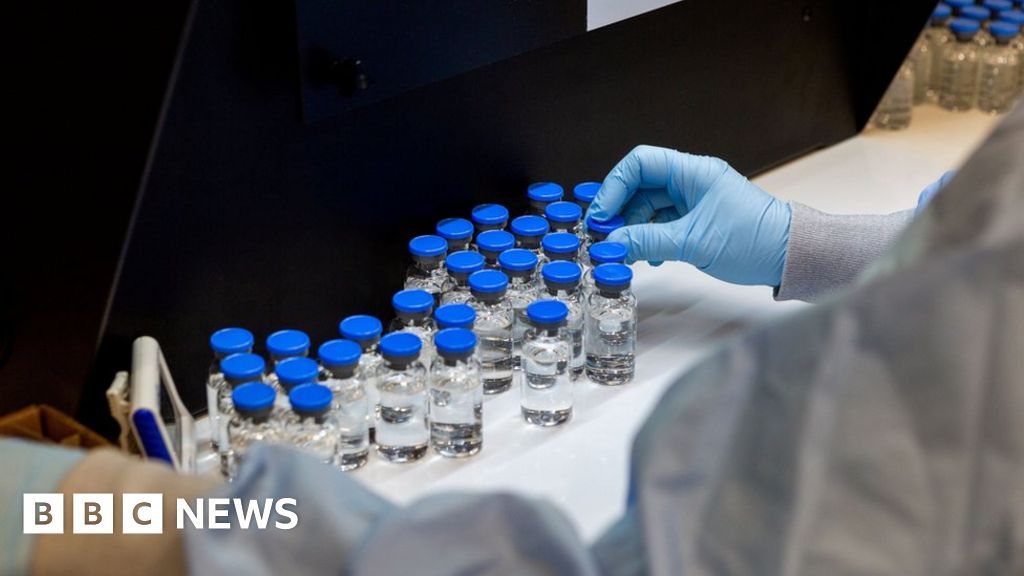
Covering Remdesivir – Contact an expert from Cedarville first
There has been a lot of talk about treatment, vaccinations and drugs that are being used during the CVOID-19 pandemic. The latest is Remdesivir – and it is getting a lot of attention. The US's Food and Drug Administration (FDA) has authorised emergency use of the Ebola drug remdesivir for treating the coronavirus. The authorisation means the anti-viral drug can now be used on people who are hospitalised with severe Covid-19. A recent clinical trial showed the drug helped shorten the recovery time for people who were seriously ill. However, it did not significantly improve survival rates. Experts have warned the drug - which was originally developed to treat Ebola, and is produced by Gilead pharmaceutical company in California - should not be seen as a "magic bullet" for coronavirus. What do we know about remdesivir? The drug did not cure Ebola, and Gilead says on its website: "Remdesivir is an experimental medicine that does not have established safety or efficacy for the treatment of any condition." Gilead also warns of possible serious side-effects. However, President Trump has been a vocal supporter of remdesivir as a potential treatment for the coronavirus. In its clinical trial, whose full results are yet to be released, the US National Institute of Allergy and Infectious Diseases (NIAID) found that remdesivir cut the duration of symptoms from 15 days down to 11. The trials involved 1,063 people at hospitals around the world - including the US, France, Italy, the UK, China and South Korea. Some patients were given the drug and others were given a placebo (dummy) treatment. Dr Anthony Fauci who runs NIAID, said that remdesivir had "a clear-cut, significant, positive effect in diminishing the time to recovery". However, although remdesivir may aid recovery - and possibly stop people having to be treated in intensive care - the trials did not give any clear indication whether it can prevent deaths from coronavirus. May 02 - BBC There are still a lot of questions to be asked: When could it be ready for mass distribution? How is it administered? Who can get it? And how much will it cost? If you are a journalist covering this emerging issue – then let our experts help. Dr. Zach Jenkins is an infectious disease expert at Cedarville University. He is available to speak with media about this topic – simply click on his icon to arrange an interview.


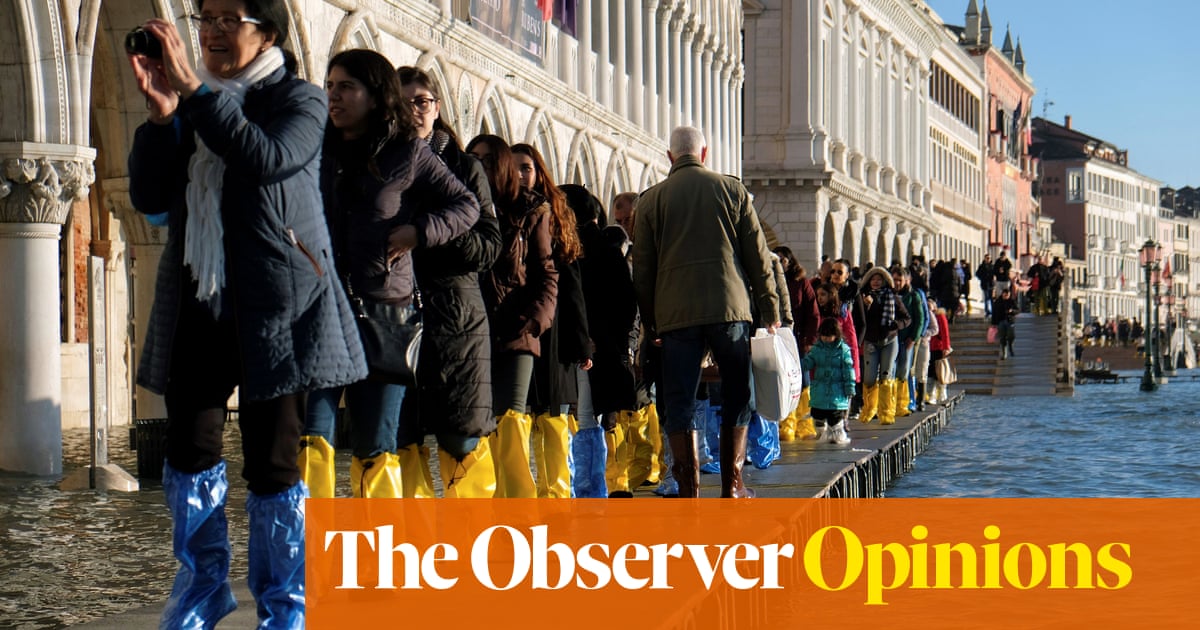
With Brexit looming, more is unknown than known with British economy, trade agreements
Although it has been in the works since June 2016, the transition phase of Great Britain’s decision to leave the European Union (EU) — more commonly known as “Brexit” — is set to take place on Jan. 31. It is a date that will most likely leave a ripple of economic uncertainty in the United Kingdom in its wake as the British prepare for total independence at the end of the year. “Brexit has created so many new unknown variables. It can be profoundly disruptive to England as we know it today,” says Ralf “Don” Keysser, D.B.A., an associate professor in the MBA program at Saint Mary’s University of Minnesota. Keysser predicts a negative short-term impact to the British economy, whereas the long-term perspective is still hard to predict until new free trade agreements with Europe and the rest of the world are established. Keysser does not see a clear-cut benefit to the U.S. establishing a free trade agreement with the U.K., simply based on the lack of British imports in the American market, other than maintaining political closeness. “It’s going to be a shock to the system. England will not be the England that it has been. There’s a lot of speculation, because we’ve never had a country pull out of the EU before, so it’s kind of an unknown. And it’s so highly politicized that it’s hard to get an objective analysis of what it’s going to look like.” Keysser points to a Toyota plant in South Derbyshire that supplies most of its output to countries in the EU through a tariff-free treatment. With Brexit going into effect, the factory may have to vastly reduce its output. Still, the workers in that community overwhelmingly voted to leave the EU. “This is a good example of how people will vote against their economic self-interests for ideological reasons,” Keysser says. “There’s a lot of ideology behind the Brexit vote: anti-immigrant, anti-Europe, pro-nationalist views that very much echoed President Trump’s appeal.” There are a few reasonably good projections, Keysser says, to make about the impact on inflation, unemployment, and economic trends — and none of them look good for Britain. One just has to look at the British pound, which has steadily been losing value to the dollar and euro over the years. In addition, several banks decided to either move from London or expand into other markets within the EU as soon as the Brexit results were announced, which could cost the British capital its status as of the world’s premier financial centers. “I see a gradual diminution of the financial business that’s been a mainstay of London,” Dr. Keysser says. On top of that, there is a real fear of Scotland and Northern Ireland wanting to leave the U.K. in favor of establishing their own independence and returning to the EU. The last time Scotland voted to leave the U.K. in 2004 it only passed 55% to 45%. “That could be the beginning of the end of the United Kingdom as we have known it,” Keysser says. The news might not be entirely bad out of Brexit. For international tourists, especially those from the U.S may be able to take advantage of the dollar’s exchange rate with the declining pound. Do you want to know more about the possible economic ramifications of Brexit? Are you a journalist covering this topic and interested in an interview? That's where we can help. Ralf Keysser, D.B.A., has been an active investment banker and business finance consultant for 35 years. He also serves an associate professor for the MBA program at Saint Mary’s University of Minnesota. To book an interview with him, simply click on his icon above to access his contact information.


Saint Mary’s University of Minnesota has been awarded a $1,732,643 grant from the Kern Family Foundation for the university’s School of Education Character and Virtue Initiative. Using grant funding, Saint Mary’s will develop an enhanced curriculum for current and future educational leaders that places a strong emphasis on moral character, virtue, and ethics. The course content will be enhanced using the University of Birmingham’s (UK) Jubilee Centre for Character and Virtue framework. It will be customized to align with the Lasallian Virtues of a Teacher and the Cardinal Virtues matrix already informing the university’s mission and practices. “Saint Mary’s is a Lasallian Catholic university with a strong reputation for preparing the majority of our state’s educators and educational administrators, and — thanks to this generous grant from the Kern Family — we will strengthen the licensing programs for principals and superintendents, as well as directors of special education by placing character and virtue education philosophies and practices into current programming,” said Father James P. Burns, IVD, Ph.D., president of Saint Mary’s. “This initiative aims to change the face of education today by equipping educational administrators with the framework for virtue that needs to be at the forefront in our schools, and in the hearts and minds of those leading our schools.” Other components of the initiative include establishing an annual retreat on character and virtue in leadership, developing a Character and Virtue School Leadership Academy, designing a character and virtue professional development series for partner schools, and creating online modules. In addition, Saint Mary’s will explore other program pathways and credentials related to this theme that includes microcredentials, certificates, and additional degrees. “We are incredibly grateful to the Kern Family Foundation for partnering with us on this important initiative,” said Audrey Kintzi, vice president for Advancement and Communication at Saint Mary’s. “School administrators have an arduous but extremely important job and, as they face the many challenges that exist in today’s education systems, our goal is to arm them to lead with integrity and to set an example for their faculties and staff and the students in their care.” "Our School of Education prides itself in being one of the state’s largest providers of principal, superintendent, and director of special education candidates,” said Lynn Albee, Ed.D., interim dean of Education. “Through our collaborative relationship with eduCATE, we are able to positively impact the educational experiences of students in Wisconsin as well. This is an exciting opportunity for Saint Mary's Educational Administration program to really make a difference in the lives of Midwest school leaders, as well as children in schools.” Audrey Kintzi, vice president for Advancement and Communication at Saint Mary’s is available to speak with media regarding this grant from the Kern Family Foundation - simply click on her profile to arrange an interview.