
Experts Matter. Find Yours.
Connect for media, speaking, professional opportunities & more.

Summer slide isn't just about academics
As summer reaches its midpoint, many parents are wondering how to keep their children engaged without turning the rest of the break into summer school. University of Delaware professors from the College of Education and Human Development say "summer slide" is real. However, preventing summer learning loss doesn't require expensive camps, tutors or educational apps. Instead, simple everyday activities can help children build academic skills, executive functioning and social-emotional development before they head back to school. Roberta Michnick Golinkoff, internationally recognized expert in child development and early learning can comment on: Why children lose academic skills over the summer – and why the effects are greatest for under-resourced families Why parents shouldn't rely on "educational" apps Free, research-backed ways to keep preschoolers and elementary-age children learning through play, reading and everyday activities like grocery shopping, puzzles and scavenger hunts Andrea Glowatz, expert in special education and child development can comment on: Why boredom is actually good for children – and how it builds creativity, problem-solving and independence How summer routines help children, particularly those with learning differences or neurodivergence Why chores, calendars and family routines strengthen executive functioning, not just responsibility Sara Goldstein, expert in adolescent development and parent-teen relationships can comment on: Why teenagers experience a version of the summer slide through increased screen time, disrupted sleep and reduced activity Healthy ways parents can encourage independence before college, from managing money to building life skills Research showing that strengthening parent-teen relationships during the summer benefits both parents and young adults These experts can also comment on broader parenting topics including screen time, executive functioning, preparing children for the new school year, supporting neurodivergent learners, and helping teens transition to college. If you're planning back-to-school or parenting coverage and want to speak with any of these experts, click on their profiles or email mediarelations@udel.edu.



Gretsch Collection Curator Matthew Hill, Ph.D., is accustomed to handling, researching and presenting iconic guitars and drums from the Fred and Dinah Gretsch Collection of Musical Instruments, offering insight into musical artifacts that have shaped contemporary culture. However, discovering a lost story of American Revolutionary history is a new development in his career at Georgia Southern University. Hill had taken on a complex project, collecting and presenting information on the history of the American drumset through the analysis of French and American drums, when his friend and fellow curator, Christina Linsenmeyer, Ph.D., at Yale University’s Morris Steinert Collection of Musical Instruments brought to his attention an American Revolutionary War drum in Yale’s collection. Together, they discussed what might be learned through closer study of the instrument to better understand its place in American history. “I removed the tensioning ropes and we saw that the inscription read ‘Benjamin Clark. Royalton, Mass. 1781’ and that immediately started ringing bells with me,” Hill said. “1781 was a super important year in the American Revolution as it was essentially the time the hostilities began to wind down before it officially ended in 1783.” The drum originally came from the Belle Skinner collection of musical instruments in Massachusetts. Skinner, a wealthy heiress and philanthropist, acquired her extensive collection of instruments in the 1920s and 1930s and displayed them in a specially constructed arcaded gallery at her mansion, Wistariahurst. Yale would later obtain her collection in 1960, more than two decades after her death. Until now, the true rarity and unusual nature of the drum had not yet been fully realized. “There are very few authenticated American Revolutionary War drums,” Hill said. “Aaron Philips, our special collections curator, photographed the instrument, and Dr. Brent Tharp aided in the historical research of Benjamin Clark. And we found evidence of the person behind the name inscribed on the drum.” Hill says Clark is the most noteworthy musician of the American Revolution. He can be placed at the major battles of Trenton and Saratoga and also likely participated in the Battle of Bunker Hill. However, Clark’s involvement in historic American combat isn’t the only fascinating aspect of the man’s life. He’s also important because he was one of two musicians who wrote down what the drumbeat cadences of the Revolutionary War sounded like. “Clark’s drum book of 1797 is probably the most important,” Hill explained. “By way of writing his manuscript, Clark is one of the main sources for our understanding of Revolutionary War drumming. He is a significant figure, just on his own.” American drum sets during this period focused heavily on practicality, according to Hill. However, Clark’s drum was highly decorated, which was very unusual and included a notable, highly recognizable American adage. “‘E Pluribus Unum’ is written on the drum. It was an official American motto very early on,” Hill said. “But in 1781, it wasn’t that common and would not become more common until later. So this is a noteworthy prominent early use of ‘E Pluribus Unum.’” Hill, alongside other curators at higher education institutions, is working to share this unique discovery with public audiences. In order to best preserve and honor the legacy of the instrument and the drummer who carried it throughout America’s battle for independence, Hill reached out to the Massachusetts Historical Society so that Georgia Southern and Yale Universities can collaborate on a joint publication reproducing Clark’s manuscript, the drum itself and the music that would have carried soldiers across the battlefield. The first and only edition of Clark’s manuscript was privately produced in the 1970s. More recently, Hill and Tharp also presented an essay on this drum at the American Musical Instrument Society’s conference in Vermillion, South Dakota, “A Different Drummer (and His Drum): Benjamin Clark’s Revolutionary War Drum of 1781 and His Drum Book of 1797.” For Hill and fellow historians, this new discovery is not only interesting but also remarkable. “It was like Howard Carter finding the tomb of King Tut, for me. I understood his excitement when I realized what an incredible artifact I had come across that had been so well-preserved from the American Revolution,” Hill said. “But what’s most exciting to me is what will come from all of this work and what we will contribute to the greater body of knowledge surrounding the development, implementation and history of the American drum.” As the United States of America celebrates its 250th anniversary, scholars like Hill continue to unearth hidden artifacts that illuminate the origins of an enduring nation. Want to talk to Dr. Hill about this discovery? Contact Georgia Southern's Chief Communications Officer Jennifer Wise at jwise@georgiasouthern.edu to arrange an interview.


A New Tick Is Moving In on Long Island — And Changing the Landscape for Lyme Disease
There's a new tick establishing itself across the region, and it's not the one most people are used to watching for. The Asian longhorned tick, first detected in the U.S. in 2017, has been steadily expanding its range along the East Coast — including into the backyards, parks, and preserves of Long Island. Unlike the blacklegged tick most associated with Lyme disease, this invasive species reproduces asexually, meaning a single tick can start an entire population, and it's showing up in numbers that are hard to ignore. Russell Burke, professor of biology at Hofstra University, has spent more than a decade studying the ecology of Lyme disease on a continental scale — including how tick host diversity affects disease risk across the eastern U.S. That work has now expanded to track a newer arrival: the Asian longhorned tick, and how its invasion and spread is reshaping the tick communities long dominated by the blacklegged tick, the primary vector of Lyme disease. What he can speak to: How the Asian longhorned tick got to the U.S., and why its ability to reproduce without mating makes it uniquely fast at colonizing new areas What the tick's expansion means for the local ecology of ticks on Long Island, and how it may be competing with or displacing established blacklegged tick populations Why the Asian longhorned tick is not currently considered a significant carrier of Lyme disease itself, but why its presence still raises concerns for public health and agriculture What residents, hikers, and pet owners should know about identifying and avoiding exposure to this new tick species The broader pattern of invasive species establishing themselves on Long Island, and what that signals about changing ecosystems Connect with: Russell Burke Professor of Biology Dr. Burke's current research involves diamondback terrapins at Jamaica Bay, wood turtles in northern NJ, ticks and Lyme disease, and the coyote invasion of Long Island. Key Topics: Ecology · Conservation Biology · Herpetology · Urban Ecosystems Reach Professor Burke through the Contact button on his profile below.
Sharks as Ocean Sensors: How New Tagging Technology Is Advancing Marine Science
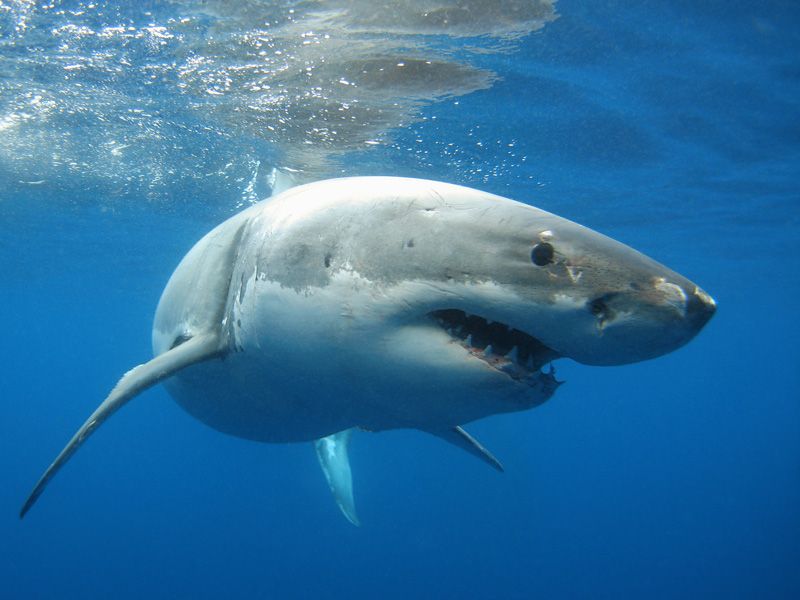
University of Delaware researchers are helping to expand how scientists observe the ocean by developing and deploying animal-borne electronic tags that turn sharks into mobile ocean sensors. The research is led by UD marine scientist Aaron Carlisle, who studies shark ecology, movement patterns and conservation. He can discuss how tagging technology is helping researchers better understand sharks and the ocean environment. The data collected by the tags allow researchers to gather ocean temperature and salinity measurements from parts of the Atlantic that are difficult and expensive to monitor consistently. These observations could help scientists better understand the Mid-Atlantic’s seasonal “cold pool,” a layer of colder bottom water that can influence how quickly hurricanes intensify. This summer, Carlisle and his team are conducting offshore tagging expeditions in the Mid-Atlantic aboard UD's R/V Daiber, where they are testing redesigned tags. Carlisle also studies human impacts on shark populations, including recent research examining the international trade of sand tiger sharks and the biological, ethical and economic concerns surrounding the harvest of a protected species for aquarium display. Carlisle’s expertise includes: • Shark ecology, movement patterns and conservation. • How satellite-linked tags allow researchers to collect and transmit ocean data. • How animal-borne sensors can help researchers gather observations from difficult-to-monitor parts of the Atlantic. • How ocean temperature and salinity data can improve understanding of hurricane development and ocean processes. • How shark-based observations can complement existing ocean observing networks. To arrange an interview with Carlisle, visit his profile and click the contact button. Interested reporters can also send an email to MediaRelations@udel.edu.

Why Christopher Nolan’s The Odyssey Still Matters
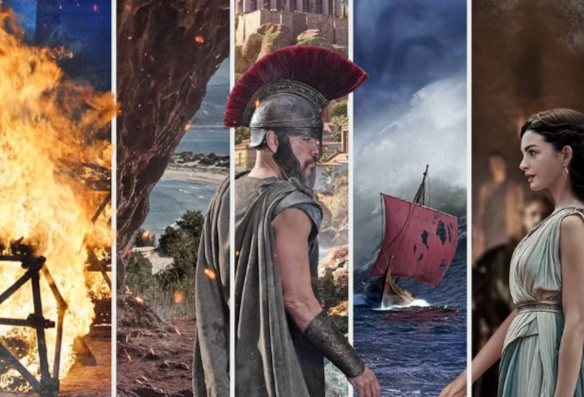
Christopher Nolan’s The Odyssey is bringing one of the world’s oldest and most influential stories back to the big screen. Beyond the monsters, battles and epic-scale adventure, Homer’s story asks questions that still feel immediate. What happens after a long war? What makes a leader legitimate? How do displaced people find their way home? Can violence ever truly restore order? Luke Madson, visiting assistant professor in Greek and Roman Studies at Hofstra University, can help audiences look beyond the spectacle. Madson teaches Greek and Roman epic, mythology, tragedy, comedy and the literature and culture of the ancient world. His research into ancient Greek politics, political identity and historical storytelling also provides insight into the power struggles, competing loyalties and contested ideas of leadership found throughout the epic. An Epic Shaped by War The Odyssey is a story about what comes after war. Odysseus survives Troy, but his journey home reveals the toll of conflict on soldiers, families and societies. In Ithaca, his absence creates a power struggle as the suitors compete to replace him. Drawing on his expertise in ancient Greek politics, Luke Madson can explain how early audiences understood this crisis and why it resonates amid displacement, political instability and contested leadership. Strangers, Stories and Power The epic repeatedly asks how societies treat outsiders. Through the Greek tradition of xenia, Odysseus encounters communities where strangers are welcomed, exploited or attacked, connecting the story to modern debates about migration, refugees and borders. Odysseus also changes identities and carefully shapes his story for different audiences. Madson can explore how persuasion and reputation shaped authority in the ancient world, and how these themes relate to propaganda and misinformation today. A Source for Stories Beyond the Screen Journalists covering Christopher Nolan’s The Odyssey, Greek mythology or the modern relevance of ancient stories can connect with Luke Madson for expert commentary and interview support. He can provide historical, political and cultural context on topics such as: The lasting appeal of Odysseus and the hero’s journey War, displacement and the challenges of returning home Leadership, legitimacy and political instability Hospitality, migration and the treatment of outsiders Storytelling, propaganda and political identity Revenge, justice and cycles of violence How modern adaptations keep Greek mythology relevant The political and cultural world behind Homer’s epic As Nolan brings The Odyssey to a new generation, Madson can help audiences understand the ancient ideas and conflicts behind the spectacle, and why they continue to resonate today.

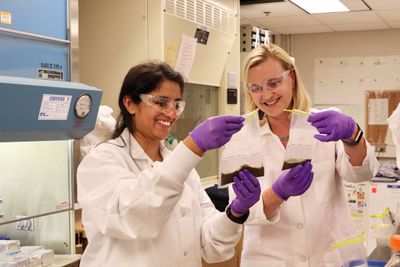
Food safety expert available to discuss emerging health risks
The University of Delaware’s Kalmia Kniel can discuss foodborne parasites and food safety risks, including the ongoing cyclosporiasis outbreak spreading across the United States. Kniel, a professor of microbial food safety, can explain how foodborne parasites spread, why outbreaks (particularly those involving the Cyclospora parasite) can be challenging to investigate and what consumers should know about reducing their risk of illness. She co-authored a study published in December 2025 that examined challenges researchers face in detecting, studying and controlling Cyclospora cayetanensis, including gaps in understanding the parasite and improving prevention strategies. Kniel can also discuss why fresh produce and water are often a focus during investigations and the steps consumers can take to improve food safety. Kniel’s expertise includes: • Foodborne parasites and illness outbreaks • Produce and microbial food safety • Food contamination and prevention • Food safety research Kniel discussed the biology of this specific pathogen in detail at a recent presentation on cyclospora. To arrange an interview with Kniel, visit her profile page and click the contact button. Interested journalists can else email MediaRelations@udel.edu.


Wildfire smoke: Climatologist available to explain air quality and impacts
Wildfire smoke has increasingly affected communities across the United States, including the latest episode in which smoke from Canadian wildfires has moved into the Midwest and Mid-Atlantic regions. The University of Delaware’s Kevin Brinson is available to explain the atmospheric conditions that allow wildfire smoke to travel long distances and affect regional air quality. Brinson, an assistant research professor and Delaware’s state climatologist, can speak to: • How wildfire smoke travels long distances through the atmosphere. • The role of weather patterns, winds and atmospheric conditions in transporting and dispersing smoke. • How wildfire smoke events are monitored and forecast. • How atmospheric and seasonal weather patterns influence smoke transport and regional air quality. To arrange an interview with Brinson, visit his profile and click the contact button. Interested reporters can also send an email to MediaRelations@udel.edu.


University of Delaware registered dietitian and clinical nutrition instructor Sharon Collison is available to discuss seasonal eating, the nutritional benefits of vegetables and practical strategies for making healthy foods more flavorful and appealing. Collison can explain how seasonal produce – including tomatoes, eggplant, cucumbers, corn and other summer favorites – provides important nutrients such as fiber, vitamins, minerals and plant compounds that support overall health. She can also discuss simple preparation techniques, including grilling, roasting, herbs and spices, that can help people incorporate more vegetables into everyday meals. Collison's expertise includes: • The nutritional benefits of seasonal fruits and vegetables and how they contribute to overall health. • Evidence-based strategies for healthy eating and building sustainable nutrition habits. • Simple cooking techniques and meal ideas that make nutritious foods more appealing. To arrange an interview with Collison, visit her profile page and click on the contact button. Interested reporters can also send an email to MediaRelations@udel.edu.

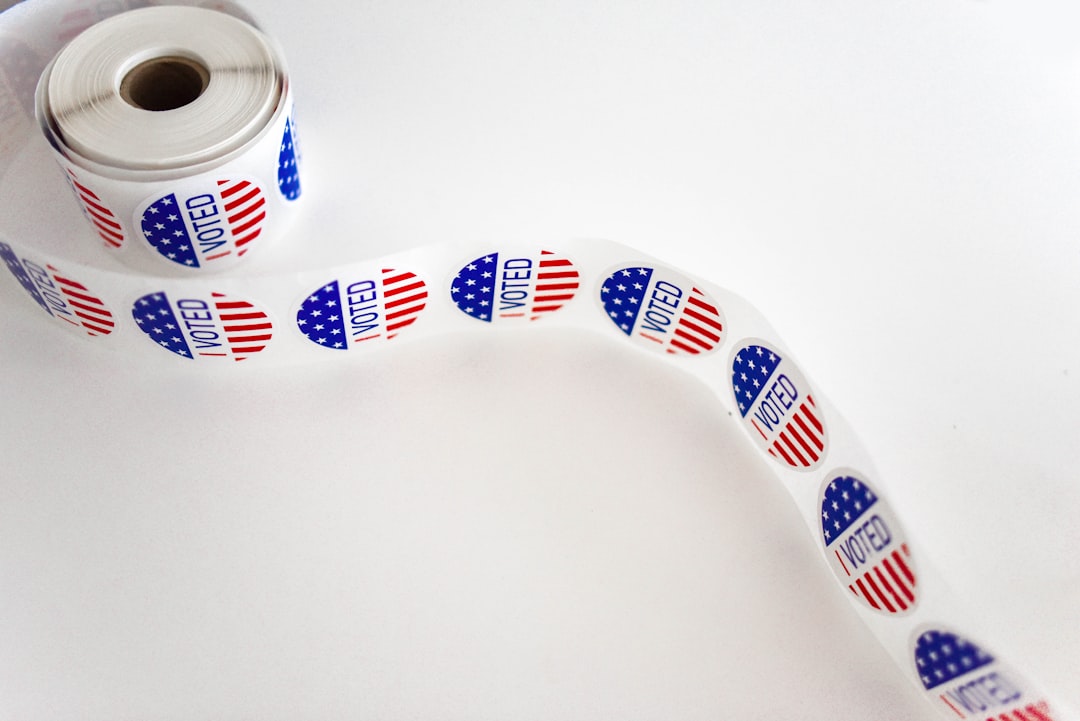
Why Negative Campaign Ads Work: David Schweidel on the Psychology Driving This Election Cycle
As the 2026 Senate races heat up, negative campaign ads are once again dominating the airwaves. David Schweidel, Professor of Marketing and the Roberto C. Goizueta Professor in Business Technology at Emory's Goizueta Business School, has researched political advertising for years and is currently tracking the 2026 Senate races. Asked why negative campaigns tend to outperform positive ones, Schweidel points to what sticks with voters: "It's those negative messages. It's those attack messages," often fear- or anger-based, that he says are "more arousing to us" and "tends to move the needle more so than positive advertising." Where an ad comes from matters too. Schweidel's research looks at whether messaging originates from the candidate directly or from third parties like PACs or political parties, and he's found that candidate-sourced messaging tends to be more believable, "coming from a human brand," in his words, rather than an unfamiliar political organization. His current research pushes this further, into how political advertising shapes what AI chatbots tell voters. Schweidel notes that where news coverage and social media once drove poll movement, more voters are now turning to AI chatbots for candidate information. Using Maine Senate candidate Graham Platner as an example, he explains that recent news coverage and online conversation about a candidate gets absorbed by these chatbots, ultimately shaping what's presented to a voter asking about that candidate. For campaigns and advertisers, Schweidel frames this as a new channel to understand, similar to how companies already monitor social media conversation, and predicts political campaigns will start actively tracking how their candidates are portrayed in AI responses, the same way many companies now treat AI presence the way they once treated search engine optimization: "What a lot of companies are trying to come up with now is what is the playbook to do the same thing for AI." Dr. Schweidel is an expert in marketing technology, AI, social media, political marketing, and customer analytics. He holds a PhD in Marketing from the Wharton School of the University of Pennsylvania and is the author of Social Media Intelligence and Profiting from the Data Economy. His research has appeared in the Journal of Marketing, Journal of Marketing Research, Marketing Science, and Management Science, and he has been recognized as a Marketing Science Institute Young Scholar and named to Poets & Quants' "Top 40 Under 40." Dr. Schweidel is available to discuss: Why are negative campaign ads more effective than positive ads? Why do negative emotions drive people to vote, donate, and campaign, more than positive emotions? The connection between AI and campaign ads How organizations make explicit decisions to exploit these trends Click on the connect button in his profile below.



Augusta University's Simon Medcalfe on the Real Economics of Hosting the World Cup
With the World Cup underway across the U.S., Canada, and Mexico, Dr. Simon Medcalfe, economist at Augusta University's Hull College of Business, wrote for Augusta Business Daily about why FIFA's headline economic projections for the tournament don't hold up. His piece breaks down why most of the spending tied to hosting the event isn't new activity but rather it's money that would have been spent elsewhere regardless. As Medcalfe put it: "New spending is not created; it is just moved around." Read his full column in Augusta Business Daily : Dr. Medcalfe is a Professor of Economics and Finance at Augusta University, with research spanning sports economics, community and economic development, and social determinants of health. He holds a PhD in Business/Managerial Economics from Lehigh University. If you're covering the economics of hosting major sporting events, public subsidies for host cities, or the gap between projected and actual tourism impact, Dr. Medcalfe is available for comment. Click on the contact button in his profile below.

