
Experts Matter. Find Yours.
Connect for media, speaking, professional opportunities & more.

Understanding the red flags: Signs of intimate partner violence explained by an expert
Intimate partner violence is a serious and widespread issue that affects millions of individuals every year. Angela Hattery, professor of women and gender studies at the University of Delaware and co-director of its Center for the Study & Prevention of Gender-Based Violence, can talk about ways to spot warning signs in an effort to prevent further harm and provide support to those in need. "When we think about the warning signs, especially for progressing to lethal violence, the absolute top early warning sign is strangulation,” Hattery recently said to The 19th, a nonprofit newsroom focused on women and LGBTQ+ people. In an article on the recent passing of O.J. Simpson, she noted that "the Simpson trial was a missed opportunity" and "While the nation debated Simpson’s guilt or innocence, it overlooked the signs of intimate partner violence that his wife had reported before her murder." Hattery's expertise has appeared in a number of outlets including The Conversation and New York Public Radio, an NPR affiliate. She can be reached by clicking her "View Profile" button.


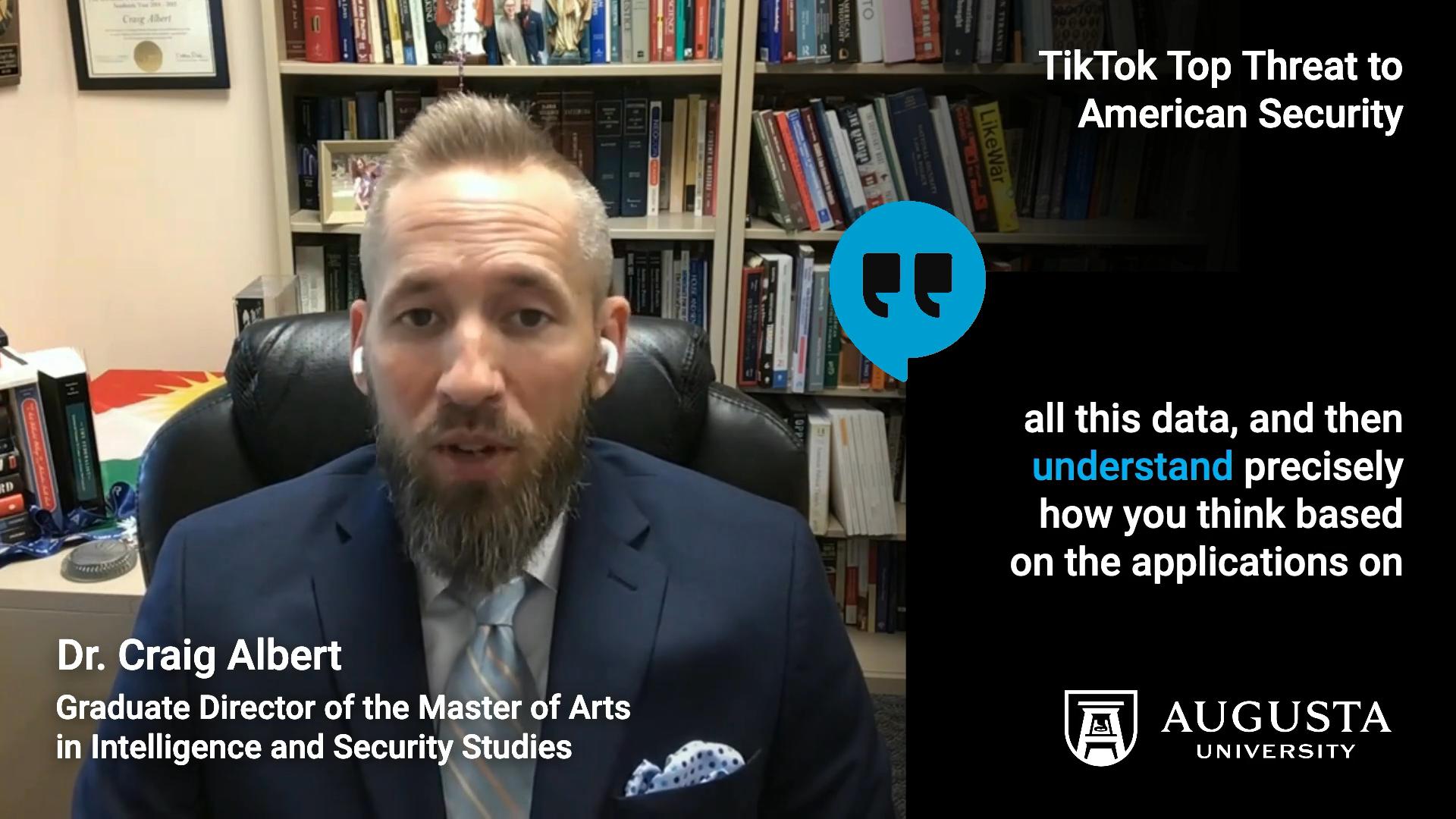
Time to talk about Tik Tok? Dr. Craig Albert explains the reasons we need to know more about the app
Earlier this week, TikTok said they were suing the U.S. government to stop a bill passed last month seeking to force ByteDance, TikTok’s Chinese to sell the app or have it banned. The lawsuit, filed in the U.S. Circuit Court of Appeals for Washington, D.C., argues that the bill violates constitutional protections of free speech. The suit calls the law an “unprecedented violation” of the First Amendment. Lawsuits and rhetoric aside - there are serious concerns about TikTok and Dr. Craig Albert is lending his expertise to explain what is going on behind the screens of the popular app. Read more about the dangers of TikTok here Read more from Albert about Informational Warfare here Read more from Albert about deepfakes here Craig Albert, PhD, is director of the Master of Arts in Intelligence and Security Studies at Augusta University. He is a leading expert on war, terrorism and American politics. AI and the upcoming election is a serious topic. Albert is available to speak with media – simply click on his name to arrange an interview today.


Homes heated by human sewage could be a reality thanks to Aston University
Project to transform sewage sludge into clean water and energy awarded a share of £4.5 million by Ofwat Involves extracting energy from the waste produced during sewage and water treatment Gases obtained can be used to power engines or heat people’s homes. An Aston University project that could transform sewage sludge into clean water and energy has been awarded a share of £4.5 million by Ofwat. The University project with engineering consultancy ICMEA-UK involves extracting energy from the waste produced during sewage and water treatment and transforming it into hydrogen and/or methane. The gases can then be used to power engines or heat people’s homes. The aim is to create a sustainable and cost-efficiently run wastewater processes, plus extra energy. The initiative was one of ten winners of Ofwat’s Water Discovery Challenge, of which the Aston University scientists and two industrial partners have been awarded £427,000. Dr Jude Onwudili based at Aston University’s Energy and Bioproducts Research Institute (EBRI) is leading the team of scientists who will work with the partners to develop a trial rig to transform solid residues from wastewater treatment plants to hydrogen and/or methane. The two-stage process will involve the initial transformation of organic components in the sludge into liquid intermediates, which will then be converted to the fuel gases in a second stage. The project is called REvAR (Renewable Energy via Aqueous-phase Reforming), and Dr Onwudili will be working with lead partner and engineering consultancy company ICMEA-UK Limited and sustainable infrastructure company Costain. REVAR combines the use of hot-pressurised water or hydrothermal conditions with catalysts to achieve high conversion efficiency. The technique can treat sewage sludge in just minutes, and it is hoped that it will replace existing processes. In 2013, a Chartered Institution of Water and Environmental Management report stated that the sector is the fourth most energy intensive industry in the UK. Dr Onwudili said: “This project is important because millions of tonnes of sewage sludge are generated in the UK each year and the water industry is struggling with how to effectively manage them as waste. “Instead, they can be converted into valuable feedstocks which are used for producing renewable fuel gases, thereby increasing the availability of feedstocks to meet UK decarbonisation targets through bioenergy. “We will be taking a waste product and recovering two important products from it: clean water and renewable energy. Overall, the novel technology will contribute towards meeting UK Net Zero obligations by 2050 and ties in with the University’s purpose to make our world a better place through education, research and innovation.” The Water Discovery Challenge aims to accelerate the development and adoption of promising new innovations for the water sector. Over the next six months, winners will also receive non-financial support and will be able to pitch their projects to potential water company partners and/or investors. The 10 winning teams are from outside the water industry and were chosen because of their projects’ potential to help solve the biggest challenges facing the sector. The competition is part of the Ofwat Innovation Fund, run by the water regulator Ofwat, with Challenge Works, Arup and Isle Utilities and is the first in the water sector to invite ideas from innovators across industries. Helen Campbell, senior director for sector performance at Ofwat, said: “This competition was about reaching new innovators from outside the sector with different approaches and new ideas, and that’s exactly what the winners are doing. “The products and ideas recognised in this cross-sector challenge will equip water companies to better face challenges of the future – including achieving sustainability goals and meeting net zero targets – all while providing the highest-quality product for consumers.” ENDS A Blueprint For Carbon Emissions Reduction in the UK Water Industry The Chartered Institution of Water and Environmental Management https://www.ciwem.org/assets/pdf/Policy/Reports/A-Blueprint-for-carbon-emissions-reductions-in-the-water-industry.pdf Ofwat Innovation Fund Ofwat, the Water Services Regulation Authority for England and Wales, has established a £200 million Innovation Fund to grow the water sector’s capacity to innovate, enabling it to better meet the evolving needs of customers, society and the environment. The Innovation Fund, delivered in partnership with Challenge Works (formerly known as Nesta Challenges) and supported by Arup and Isle Utilities, is designed to complement Ofwat’s existing approach to innovation and to help deliver against Ofwat’s strategy which highlights the role of innovation in meeting many of the challenges the sector faces. About ICMEA-UK Based in Sheffield, in the North of England, ICMEA-UK is the UK arm of an established Italian innovative engineering company - ICMEA SRL. They are an innovative Engineering consultancy company, and work in partnership with a range of other organisations to provide innovative, bespoke solutions to problems where an Engineering solution is required. About Costain Costain helps to improve people’s lives by creating connected, sustainable infrastructure that enables people and the planet thrive. They shape, create, and deliver pioneering solutions that transform the performance of the infrastructure ecosystem across the UK’s energy, water, transportation, and defence markets. They are organised around their customers anticipating and solving challenges and helping to improve performance. By bringing together their unique mix of construction, consulting, and digital experts they engineer and deliver sustainable, efficient, and practical solutions. About Aston University For over a century, Aston University’s enduring purpose has been to make our world a better place through education, research and innovation, by enabling our students to succeed in work and life, and by supporting our communities to thrive economically, socially and culturally. Aston University’s history has been intertwined with the history of Birmingham, a remarkable city that once was the heartland of the Industrial Revolution and the manufacturing powerhouse of the world. Born out of the First Industrial Revolution, Aston University has a proud and distinct heritage dating back to our formation as the School of Metallurgy in 1875, the first UK College of Technology in 1951, gaining university status by Royal Charter in 1966, and becoming The Guardian University of the Year in 2020. Building on our outstanding past, we are now defining our place and role in the Fourth Industrial Revolution (and beyond) within a rapidly changing world. For media inquiries in relation to this release, contact Nicola Jones, Press and Communications Manager, on (+44) 7825 342091 or email: n.jones6@aston.ac.uk



Today is Victory in Europe Day (VE Day) - Our history #experts are here to help with your stories
Victory in Europe Day marks a monumental moment in human history, signifying the end of World War II in Europe and the dawn of a new era of peace and reconstruction. This event matters to the public as it commemorates the sacrifices made by millions and celebrates the triumph of freedom over tyranny. VE Day offers a plethora of compelling story angles that resonate with a broad audience: The human stories behind the victory: tales of courage, resilience, and sacrifice The significance of VE Day in shaping post-war geopolitics and international relations Commemorative events and ceremonies honoring veterans and their legacies Reflections on the lessons learned from World War II and their relevance today The cultural impact of VE Day on art, literature, and popular culture Continuing efforts for reconciliation and remembrance across generations As we mark Victory in Europe Day, journalists have an opportunity to delve into these rich narratives, shedding light on the enduring legacy of the Greatest Generation and the ongoing quest for peace and freedom worldwide. Connect with an Expert about WWII and Victory in Europe Day (VE Day): Colin Rafferty Associate Professor · University of Mary Washington Patrick Jung, Ph.D. Professor · Milwaukee School of Engineering Marc Gallicchio, PhD Professor and Mary M. Birle Chair in History | College of Liberal Arts and Sciences · Villanova University Kara Dixon Vuic LCpl. Benjamin W. Schmidt Professor of War, Conflict, and Society in 20th-Century America · Texas Christian University Stephen Sloan, B.B.A., M.A., PhD. Director of Institute for Oral History, Associate Professor of History · Baylor University To search our full list of experts visit www.expertfile.com Photo Credit: Galt Museum & Archives


Covering the Anniversary of the Coronation of King Charles today? Our experts can help
As we mark the anniversary of the coronation of King Charles, we delve into a pivotal moment in history that shaped the trajectory of a nation and its monarchy. This event not only carries historical significance but also holds relevance in contemporary discourse, shedding light on themes of continuity, tradition, and the evolving role of monarchy in modern society. Key story angles that may pique public interest include: Historical Reflections: Exploring the coronation ceremony's historical context, significance, and its enduring impact on the British monarchy. Monarchy in the Modern Age: Analyzing the role and relevance of monarchy in contemporary Britain amidst calls for reform and debates surrounding constitutional monarchy. Cultural Heritage and Identity: Examining how the coronation anniversary fosters a sense of national identity and pride, celebrating traditions and customs that define British heritage. Royal Legacy and Public Perception: Investigating public sentiment towards King Charles's reign, his accomplishments, challenges, and the monarchy's portrayal in the media. Societal Implications: Discussing the monarchy's influence on governance, diplomacy, and national unity, and its role in shaping perceptions of leadership and authority. Global Perspectives: Considering international reactions to the coronation anniversary, its resonance beyond British shores, and its implications for global monarchies and ceremonial traditions. Connect with an Expert about King Charles: Carolyn Harris Historian, Author, Royal Commentator, Instructor, University of Toronto School of Continuing Studies · Helen Wood Professor in Media and Cultural Studies · Aston University Rachel C. Boyle Dean of School · Leeds Beckett University Ruth McClelland-Nugent, PhD Chair History, Anthropology & Philosophy · Augusta University To search our full list of experts visit www.expertfile.com Photo Credit: Samuel Regan-Asante

National Teacher's Day is tomorrow! Covering? let us help!
Celebrating National Teacher's Day is not just about recognizing the individuals who dedicate their lives to education; it's a moment to reflect on the pivotal role teachers play in shaping society's future. From instilling knowledge and critical thinking skills to fostering creativity and empathy, educators mold the next generation. The significance of this day extends beyond the classroom, touching upon broader themes that resonate with the public: The evolving landscape of education in a digital age Challenges and innovations in teaching methods and curricula The impact of teachers on students' mental health and well-being Addressing inequalities in access to quality education The role of teachers in promoting diversity, equity, and inclusion Supporting and empowering educators amidst changing societal needs As we commemorate National Teacher's Day, it's an opportune moment to delve into these critical issues and highlight the invaluable contributions of teachers in shaping a brighter future for all. Connect with an Expert about Education and Teaching in America: Kitty Kelly Epstein, Ph.D. Faculty Trustee + Doctoral Faculty - School of Leadership Studies · Fielding Graduate University Brendan Cantwell Associate Professor · Michigan State University Kristina R. Llewellyn Associate Professor, Department of Social Development Studies · Renison University College, University of Waterloo Amanda L. (Glaze) Townley Associate Professor · Georgia Southern University Marta Baltodano Professor Emeritus · Loyola Marymount University To search our full list of experts visit www.expertfile.com Photo Credit: Kenny Eliason
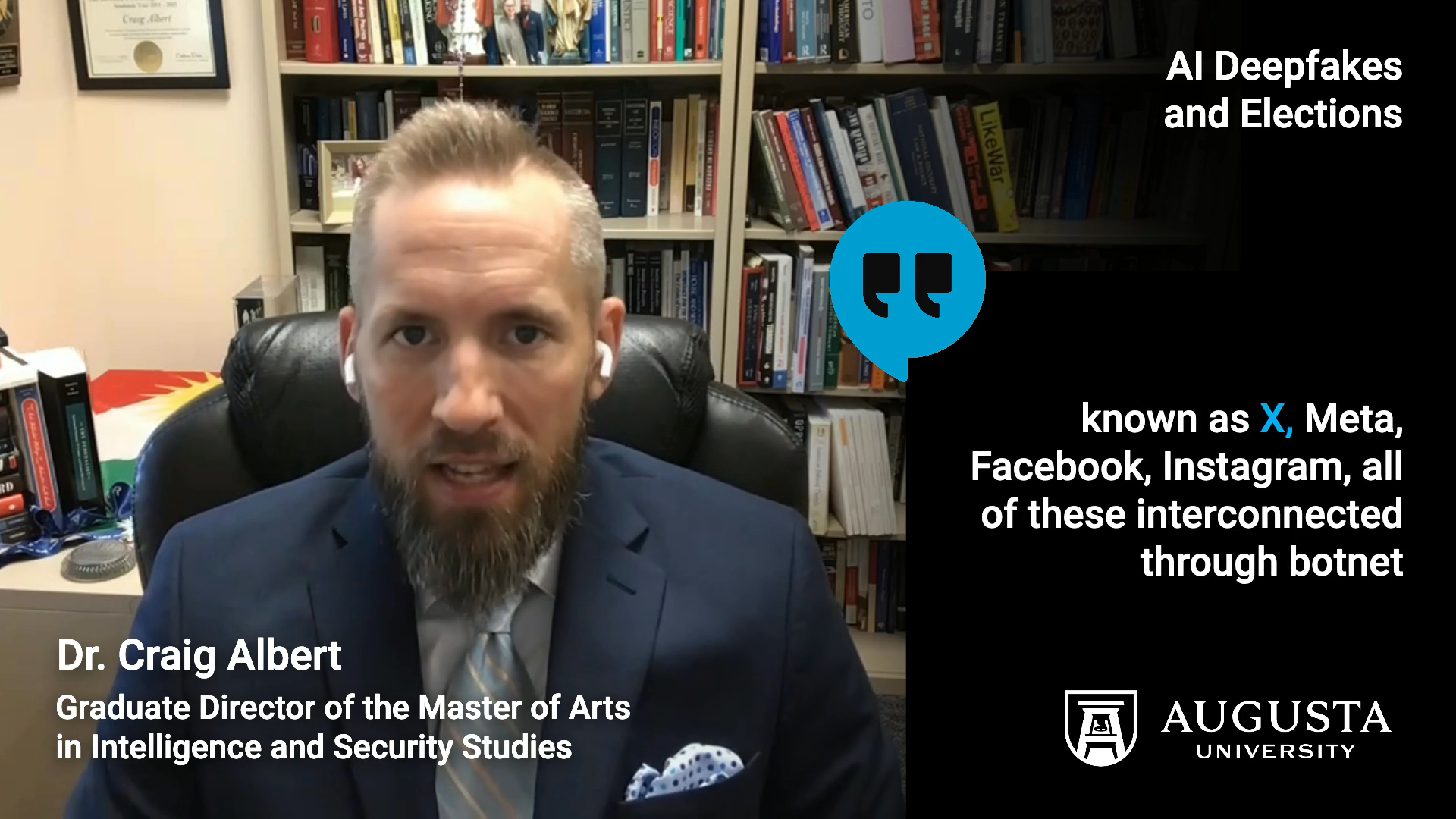
#ExpertSpots: AI, Deepfakes and Elections
The election in November is coming fast. And with voters divided and with what could be a small margin of Americans deciding who wins or loses in the race for the Whitehouse - the worry over misinformation and election interference has never been higher. It's why Dr. Craig Albert is here to break down just how AI and deepfakes might be used against any of the candidates leading up to November 05. Craig Albert, PhD, is director of the Master of Arts in Intelligence and Security Studies at Augusta University. He is a leading expert on war, terrorism and American politics. AI and the upcoming election is a serious topic. Albert is available to speak with media – simply click on his name to arrange an interview today.

Sunday is Cinco de Mayo. Do you know the history behind the day?
Celebrated annually on May 5th, Cinco de Mayo commemorates the Mexican army's victory over French forces at the Battle of Puebla in 1862. While often associated with festive gatherings and cultural celebrations, Cinco de Mayo also holds significant relevance beyond its historical origins, offering various story angles that appeal to a broad audience. Cultural significance and heritage preservation: Explore the historical context of Cinco de Mayo and its importance in Mexican culture, highlighting the traditions, food, music, and art associated with the holiday. Immigration and identity: Examine how Cinco de Mayo is celebrated in different parts of the world, particularly in the United States, and its role in shaping the Mexican-American identity and fostering cross-cultural understanding. Political implications and national pride: Investigate the political undertones of Cinco de Mayo, considering its significance in Mexican nationalism and its portrayal in international relations. Economic impact and tourism: Analyze the economic implications of Cinco de Mayo festivities, including the boost in tourism, sales of Mexican-themed products, and the commercialization of cultural heritage. Education and historical awareness: Discuss the educational value of Cinco de Mayo in schools and communities, examining how it promotes historical awareness, tolerance, and multiculturalism. Social justice and activism: Explore how Cinco de Mayo intersects with social justice movements, addressing issues such as immigration reform, cultural appropriation, and representation in media and politics. By covering these angles, journalists can provide their audiences with a deeper understanding of Cinco de Mayo beyond its surface-level festivities, fostering meaningful dialogue and engagement with the holiday's historical, cultural, and societal significance. Connect with an Expert about Cinco de Mayo: Margarita R. Ochoa Associate Professor and Associate Chair of History · Loyola Marymount University Timothy Matovina Chair, Department of Theology · University of Notre Dame Rodrigo Vargas Professor, Ecosystem Ecology and Environmental Change · University of Delaware Heather Chiero, PhD Associate Professor of History, Anthropology and Philosophy · Augusta University To search our full list of experts visit www.expertfile.com Photo Credit: Daniel Lloyd Blunk-Fernández

Researcher develops microrobots to battle cancer with unique precision
Magnetic robots that can target cancer cells are nothing new. But the patented microrobots developed by the University of Delaware's Sambeeta Das can be guided with a magnetic field to deliver medication to cells – or to destroy infectious cells, such as cancer – inside the body. To mark the launch of National Inventors Month, Das, assistant professor of mechanical engineering, shared her journey toward invention. Q: Tell us about your patented invention on microrobots for cancer research. What problem were you trying to solve? Das: One of the biggest issues with cancer research is the ability to target cancer cells without harming healthy cells. Cancer cells are sneaky, and they have evolved ways of hiding from the body’s immune cells. A big part of our research focuses on targeting, specifically precision targeting. We want to be able to target a single cell in a mass of cells, whether that is a single cell in a mass of cancer cells or whether it is a single abnormal cell surrounded by healthy cells. To do this, we use magnetic microrobots that can be driven inside the body by magnetic fields to a particular cell location. Magnetic fields are biocompatible, meaning they are not harmful to biological tissues, and our microrobots are very small, around 20 microns, which is about the size of a single bacteria cell. We can load our microrobots with various drugs and modify their surface in such a way that when the robots come in contact with the cells we are targeting, they can kill the target cell or perform some other function. Q: How is this solution unique? Das: Other people have made magnetic microrobots, but our system is unique since it allows us to do automatic targeting with a lot of precision. For example, a person operating our microrobots can just point to a cell and our system will drive the microrobot there. Additionally, the instrument we have made and patented is an all-in-one portable device that can be used anywhere. We don’t need a separate microscope, camera or software, it is all built in and very user friendly. Anyone can use it. This makes it super portable, which means quick solutions for health practitioners. In addition, poor and resource challenged areas can also be accessed with this portable solution. Q: What drives you toward invention? Das: I like to solve problems, and I like seeing something come together from nothing. I am very interested in problems that affect human health and longevity, particularly those that affect the common person. Q: How do you approach solving a problem, and whose support has been critical along the way? Das: One thing I have realized is that it is imperative to ask the right question to solve a problem. You must really get to the core of the issue. The second thing is to always keep the end user in mind. So, it’s kind of a two-pronged approach—looking from both ends of the problem. For support, I would say my team members and my collaborators. Their support has been invaluable in helping me solve the problems that I want to solve. In fact, my graduate students keep a running list of crazy ideas that they have come up with. It helps us look at problems in a unique way and come up with innovative solutions. Q: Not every invention makes it. How do you deal with failure? Das: The way that I start working on a problem is to assume that whatever we do, we are going to fail. I always tell my students that their first couple of experiments or designs will always fail. But failure is essential because it will teach you what not to do. And knowing what not to do is sometimes the critical part of the invention process. The failures inform us about the ways of not doing something which means now there is another way of doing something. Q: What is the best advice you’ve ever received? Das: The best career advice I’ve ever received is that there is always another way. If you run into roadblocks there is always another answer, there is always another opportunity. So we just need to keep going and trying new and crazy ideas. Q: How are inventive minds created – is it innate or can it be developed? How do you encourage innovation among your students? Das: That’s an interesting question and honestly, I am not sure. I do believe in what Edison said, “Genius is 1% inspiration and 99% perspiration.” He is a known inventor, so I would go with his interpretation on this. As for my students, I give them lots of freedom. I think freedom is essential in encouraging innovation. The freedom to come up with crazy ideas without anyone saying that won't work and the freedom to fail—multiple times. Das is available for interviews to talk about her microrobots and other projects at UD. To reach her, visit her profile and click the "contact" button.


A monumental anniversary approaches as we commemorate the 1931 opening of the Empire State Building, an architectural marvel that has stood as an emblem of innovation and human achievement for nearly a century. Beyond its towering presence on the New York City skyline, this anniversary is a poignant moment to reflect on the enduring legacy of this iconic structure and its resonance with the public, encapsulating themes of perseverance, ingenuity, and urban development. Here are several compelling story angles that journalists may find ripe for exploration: Historical significance and architectural marvel: Delve into the fascinating backstory of the Empire State Building, exploring the engineering feats and human endeavor that brought this skyscraper to life. Evolving skyline and urban identity: Examine how the Empire State Building has shaped the cultural and visual landscape of New York City, and its enduring significance in an ever-changing metropolis. Sustainable initiatives and environmental impact: Explore the building's initiatives toward sustainability and energy efficiency, offering insights into its role as a model for sustainable urban development. Economic impact and tourism: Investigate the economic impact of the Empire State Building on local communities, tourism, and its enduring appeal as a global tourist destination. Cultural resonance and popular culture: Uncover the building's rich cultural legacy, from its appearances in film, literature, and art, to its symbolic significance in popular imagination. Preservation efforts and historical conservation: Shed light on ongoing efforts to preserve and maintain the architectural integrity and historical significance of this iconic landmark for future generations. Connect with an Expert about Architecture and the Empire State Building: Dana Cupkova Associate Professor · Carnegie Mellon University Richard Campanella Associate Dean for Research, Senior Professor of Practice - Architecture and Geography · Tulane University Eric Corey Freed Founding Principal · OrganicARCHITECT Peter Christensen Arthur Satz Professor of the Humanities and Professor of Art History · University of Rochester Dennis Shelden Director, Center for Architecture Science and Ecology (CASE) · Rensselaer Polytechnic Institute To search our full list of experts visit www.expertfile.com Photo Credit: Ben Dumond