Experts Matter. Find Yours.
Connect for media, speaking, professional opportunities & more.

How the Class of 2026 can keep resumes out of the digital black hole
Students set to graduate this May are entering a job market where the rules of engagement are being rewritten in real-time. AI is both friend and foe, and ghosting has become the norm. University of Delaware career expert Jill Panté shares how college students can navigate these challenges in a rapidly shifting economy. Panté, director of the Lerner Career Services Center at UD, can apply her expertise to the following: The AI recruitment gap • How to prevent resumes from falling into the "digital black hole" of automated tracking systems. • Current recruitment in 2026 is heavily filtered by AI. If resumes don't mirror the language of the job description, a human might never even see it. • In 2026, AI is the gatekeeper. Students who aren’t using AI for assistance are working twice as hard for half the results. However, the goal is to use it as a co-pilot, not an autopilot. Beat the bots (tailor your content) • Use tools like Resume Worded or Generative AI like Microsoft Co-Pilot or Gemini to see how resumes stack up against specific job postings. • It is better to send five highly tailored, thoughtful applications than 50 generic ones that get auto-rejected by an algorithm. • Use AI to run a mock interview based on the job description and company. The "hidden” job market • If a "job search" consists solely of clicking "Easy Apply" on LinkedIn for six hours a day, it’s not searching; it’s just doom-scrolling with a resume. Roughly 80% of your time should be spent talking to humans. The other 20% should be spent on applications and research. • Find the recruiter or a department head on LinkedIn. Send a brief (2-3 sentence) note reiterating your interest. • Leverage alumni networks through LinkedIn. Narrative branding • Especially for Gen Z: Hiring managers don't just want to know what you did; they want to know the impact you made. • Instead of saying "Responsible for social media,” say "Increased engagement by 40% over 3 months by implementing a new video strategy." • Always lead with results (LinkedIn, resume, Interviews) to showcase the value you bring. Workforce anxiety • Managing the mental toll of the modern, high-speed job search and the professional "ghosting" epidemic. • Establish a personal "Board of Directors" to provide a balance of support, accountability and feedback. • Maintain momentum by volunteering, attending local networking events and learning new skills on platforms like LinkedIn Learning and Coursera. To reach Jill Panté directly and arrange an interview, visit her profile and click on the “contact” button.



From “Covfefe” to commanding the algorithm: How Trump turned memes into political power
A recent analysis by CNN traces how Donald Trump’s relationship with internet culture has evolved from accidental viral moments into a deliberate, highly effective communications strategy. The article highlights how memes, once unpredictable and grassroots, have become a central tool in shaping political narratives, driving engagement and bypassing traditional media channels. Some of the great insight and perspective in the article comes from Dannagal Young, whose insights help explain why this strategy resonates so strongly. Young emphasizes that memes act as powerful emotional and cultural signals, allowing political messages to travel quickly while reinforcing identity and belief among audiences. What began with moments of internet spontaneity has matured into a calculated approach that blends humor, provocation and simplicity to dominate attention in a crowded digital landscape. “The entire ethos and aesthetic of this administration is spectacle and subversion of norms,” Young said. “You don’t do that through deliberation or argument, but through symbols.” Her perspective, as presented in the CNN article, underscores a broader shift: political influence is increasingly shaped by content that feels native to the internet, where relatability, repetition and shareability often matter more than traditional policy-driven messaging. ABOUT DANNAGAL G. YOUNG Dannagal G. Young is a Professor of Communication and Political Science at the University of Delaware where she studies the content, audience and effects of nontraditional political information. She has published over sixty academic articles and book chapters on the content, psychology and effects of political information, satire and misinformation.


Professor James Sample Provides National Commentary on Voting Rights, Key Supreme Court Cases
Professor James Sample of the Maurice A. Deane School of Law at Hofstra University continued to serve as a prominent national commentator this month, appearing across ABC News, MS NOW (formerly MSNBC), SiriusXM, and Newsday to analyze fast-moving developments in election law, constitutional doctrine, and executive power. Across these appearances, Professor Sample focused on the evolving legal and practical implications of the SAVE America Act, including its potential burdens on married voters and broader access concerns. He also examined a series of high-stakes Supreme Court matters, including disputes over mail-in ballot deadlines and the constitutional debate surrounding birthright citizenship, offering insight into how the Court’s rulings could reshape election administration and individual rights. In addition, Professor Sample provided analysis of expanding presidential authority following the Court’s immunity ruling, situating current developments within a broader conversation about the scope and limits of executive power.


New report proves earning potential of EVs equipped with vehicle-to-grid technology
The University of Delaware, Exelon Corporation/Delmarva Power and collaborators have released a new report showing that electric vehicles equipped with vehicle-to-grid (V2G) technology can be profitable for private owners and businesses alike, with data from real electricity markets to back up the claims. The report is the outcome of a pilot program announced in 2024 by UD, and completed at the offices of Delmarva Power, which is part of Exelon Corporation, to confirm the value of V2G services to the grid. Among the key findings: the collaborators report that a V2G-enabled passenger electric vehicle (EV) could earn as much as $3,359 per year, based on 2021-2025 market prices, for storing and supplying energy to the electric grid during times of need, otherwise known as providing grid services. Heavier vehicles, such as fleet vehicles, delivery trucks or school buses, could earn over $9,000 per year, per vehicle. That’s a powerful income generator, given that privately owned vehicles are parked 96% of the time, on average, in the United States. Company fleet vehicles — even those operating 40 hours per week — remain stationary 75% of the average work week. The pilot, which included collaborators Ford Motor Company, the region’s electric grid operator PJM Interconnection, and aggregator Nuvve Corp., was tested using a small fleet of Delmarva Power EVs retrofitted with the bidirectional charging technology and a new advanced communications standard. The term “bidirectional charging” means that the V2G technology enables electric vehicle batteries to store extra energy from the electric grid when there is a surplus and to discharge that energy back to the grid when it is needed. In this way, V2G-enabled EVs can help the grid stay balanced, strengthening grid resilience and reliability, especially during peak demand and extreme weather events. New PJM rules allow properly certified EVs to provide this balancing and be paid for it — and the pilot proved they can meet these requirements and be paid for the service. For UD Professor Willett Kempton, who invented the V2G technology with colleagues at the University nearly 30 years ago, it’s a pivotal moment. “Whether it could scale cost-effectively was an open question, and we’ve proven that it can — with the right combination of policies, standards and technology,” said Kempton, professor of marine science and policy. For businesses such as Exelon, the report makes clear that V2G technology can help offset the cost of fleet electric vehicles while supporting the electric grid. This is because when the batteries in the parked fleet vehicles are aggregated together, they can function as a virtual power plant. The result is energy storage and supply that is available to the electric grid significantly faster than other conventional power resources, with virtually no wait times needed to power up or down. Unlocking a parked vehicle’s earning power Since Kempton and colleagues pioneered the innovative V2G technology, UD researchers have kept the charge going, accelerating progress on everything from V2G technology development to new automotive communication standards (called LIN-CP) for electric cars. They have advanced policy innovations at the state and federal level to overcome barriers in widespread adoption by enabling V2G technology to compete in electric markets, too. The recent pilot with Exelon/Delmarva Power and others also revealed that the EV batteries used for V2G remained fully functional after a full year of market operation — with no measured reduction in battery health — all while providing pollution-free power. “Something that might not be obvious to everyone is that these payments are not a subsidy; these EVs are earning money by competing with legacy generators, which is novel in a lot of ways,” said Kempton. “And when you’re participating in the market instead of a fuel-burning generator, you’re also reducing pollution.” This makes the technology both economically smart and functionally sound in a world where the electric grid is expected to include more renewables in the coming years. Kempton explained that most U.S. planned future electricity generation is scheduled to come from wind and solar. This will create greater fluctuation in the electric grid, which means more storage for energy surpluses will be needed. That’s where V2G can help, Kempton said. According to Brian Derr, senior analyst, Exelon Technology and R&D, insights from the pilot will inform future deployments and support the company’s broader strategy to enable the clean energy transition while maintaining reliable service for the communities it serves. “By leveraging existing assets in new ways, Exelon is positioning itself to build a more flexible, resilient and customer-focused energy system,” said Derr. Accelerating progress toward a V2G industry Next steps to expand the V2G industry to support the grid will require mass manufacturing to scale up the number of individual cars or fleets that are participating and earning money, Kempton said. Until now, changes to V2G-enabled vehicles have been done by retrofitting existing EVs to accommodate the V2G technology. Now with lower-cost standards and realistic market revenue values that can be expected, Kempton is looking at how this becomes adopted in many cars and many charging stations. “We’ll need at least a few car companies and charging station companies to mass produce this V2G equipment, and to deploy the technology into vehicles in the factory,” Kempton said. “If it is designed in, and mass produced, it’s incredibly cheap, especially when you compare it to the potential yearly revenue.” At UD, faculty and students continue to play a large role in the work aimed at bringing a fully functioning V2G industry to fruition. Kempton, Rodney McGee and recent graduates John Metz and Catherine Gilman, for example, are focused on policy changes and standards to allow V2G-enabled electric vehicles to provide grid services in more states. Such policies currently exist in Delaware and Maryland. Kempton would like to see this number grow. Meanwhile, UD postdoctoral researcher Garrett Ejzak and alumnus Go Charan Kilaru are focused on other aspects of the work. Ejzak is developing and testing these new EV technologies, and Kilaru is designing cryptography measures to ensure security protocols for V2G communications. Concurrently, UD students Colden Rother, Jude Borden, Lucia Paye-Layleh and Emmie Rossi are examining ways UD could electrify some of its campus fleets, under the advisement of UD’s Kimberly Oremus, associate professor of marine science and policy, economics, and public policy and administration. To arrange an interview with Kempton, visit his profile page below and click on the "contact" button. For interviews with officials from Exelon/Delmarva Power, contact Matt Ford, in Delmarva Power Communications, at 302-429-3060.

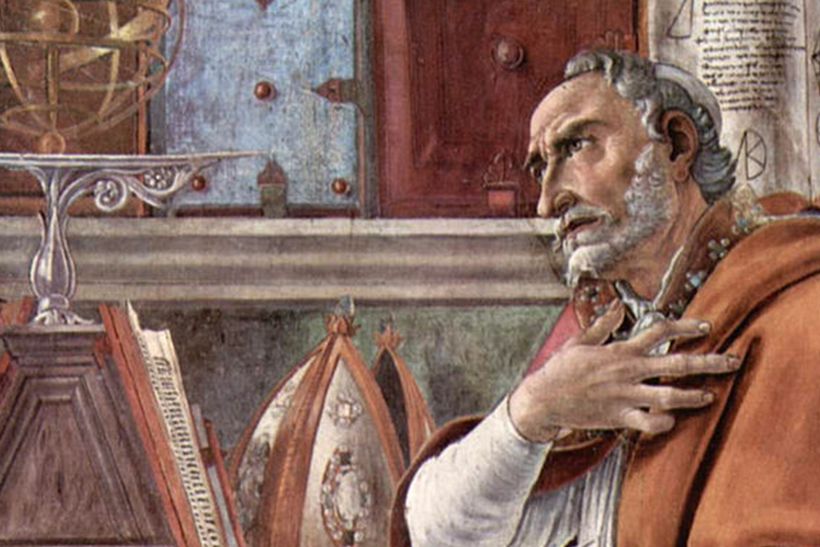
During his historic trip to Africa in April 2026, Pope Leo XIV toured the archaeological ruins of Annaba, Algeria, capping what he referred to as a “special” journey to the country. Annaba, where the ancient city of Hippo Regius once stood, is not far from where St. Augustine—patron of the Augustinian order to which the Pope belongs—was ordained, made bishop and crafted his most influential theological works. Walking in his footsteps, Pope Leo—who referred to himself as a “Son of Augustine” upon his election to the papacy—toured the ruins with other members of the Order and his traveling party. It was a personal and symbolic moment, but for those paying close attention to his early pontificate, it represented only the most recent of many tributes he has paid to Augustine and his teachings. “In reading through Pope Leo’s addresses and his homilies, his messages and his video recordings, there is barely one that goes by without him referencing Augustine in some way,” said Paul A. Camacho, PhD, associate director of The Augustinian Institute at Villanova University, and scholar of Augustine’s teachings. When the Pontiff accepted the St. Augustine Medal from the Augustinian Province of St. Thomas of Villanova in August 2025, he made it clear why. “As Augustinians, we strive every day to live up to the spiritual example of our spiritual father, St. Augustine,” he said to the Province. “To be recognized as an Augustinian, it’s an honor held dearly. So much of who I am, I owe to the spirit and teachings of St. Augustine and I am grateful to all of you for all the many ways your lives exhibit a deep commitment to the values of Veritas, Unitas and Caritas.” Veritas Examples abound related to all three values and how Pope Leo has invoked Augustine in speaking about them. Dr. Camacho cites a handful he found particularly noteworthy. For example, Veritas first appeared in an especially prominent way during an early address for the June Solemnity of the Holy Trinity and Jubilee of Sport. Then, Pope Leo said, “This combination of Trinity and Sport is somewhat unusual, yet the juxtaposition is not inappropriate. Every good worthwhile human activity is in some way a reflection of God’s infinite beauty, and sport is certainly one of these.” “For St. Augustine, the Trinity and wisdom are intimately connected,” Dr. Camacho said, also mentioning that Augustine authored an entire book on the subject titled “On the Trinity.” “Divine wisdom is revealed in the Most Holy Trinity and wisdom always leads us to Veritas—the truth," he said. “What Pope Leo goes on to do is say that the life of God, the Trinity, is a life of play…It’s a dance, and dance is a sport, and our own way of participating in that kind of activity is a participation in life of God.” When Pope Leo later spoke to the International Foundation of Catholic Universities—an occasion for which the motto was “Choreographers of Knowledge”—he referenced that dance again. “Pope Leo invites us to think of our relationship to Veritas not as something to master,” Dr. Camacho said. “But rather as a light that draws us out of ourselves towards it, in a dance of relationship with it and one another.” Unitas During a September Mass for the General Chapter of the Order of St. Augustine, Pope Leo prayed that those in attendance be given “the gift to listen, the gift to be humble and the gift to promote unity within the Augustinian Order, and throughout the Order, throughout the Church and the world.” Earlier in the summer, he touched on unity during the Jubilee of Families, Children, Grandparents and the Elderly, commenting on the Gospel of John, in which “Christ prays that we may all be one.” “This being one is the greatest good we can desire, for this universal union brings about among his creatures the eternal communion of love that is God himself: the Father who gives life, the Son who received it and the Spirit who shares it… the Lord does not want us in this unity to be a nameless and faceless crowd,” Pope Leo said. “What Pope Leo expresses here is that unity is not conformity, but rather community—the kind of community in which each one of us becomes more of who it is that we are the more we love and work for what is good in common,” explained Dr. Camacho. “This is a deeply Augustinian insight.” In one general audience with members of various religious groups, Pope Leo relayed “Unity has always been a constant concern of mine, as witnessed by the motto I chose for my episcopal ministry.” He was referencing, Dr. Camacho says, the Latin phrase In illo uno unum, displayed on his coat of arms. “That phrase—‘in the one [Christ] we are one’—comes from St. Augustine’s commentary on the Psalms. Pope Leo comes back again to this idea that when we love and follow the truth that is Christ, we simultaneously become more uniquely individual, and our unity becomes genuine community, and not mass conformity.” Caritas In his Opening Homily for the Beginning of the Pontificate, Pope Leo followed his salutations with these words: “I greet you all with a heart full of gratitude at the beginning of the ministry that has been entrusted to me. St. Augustine wrote: ‘Lord, you have made us for yourself, and our heart is restless until it rests in you.” According to Dr. Camacho, Augustine taught that the solution to the restless heart is Caritas, or rightly ordered love that finds its rest in God. Augustine’s thinking about love is developed in a social dimension when he distinguishes between two different kinds of political communities, which he calls the “Earthly City” (in which pride and self-love dominate), and the “City of God” (in which love of God and neighbor form the community). Augustine’s enduring and influential work “De Civitas Dei,” or “City of God,” articulates this distinction between false and true loves. At the 16th Annual Meeting of the International Catholic Legislators Network, Pope Leo suggested that we look to Augustine, citing his own witness of social upheavals in his time, and that we consider Augustine’s reminder that we must attend to these “two orientations of the human heart.” “Ordo amoris—order of love,” explained Dr. Camacho. “This is Augustine’s notion that following Christ is not a matter of private devotion, but rather demands a dilation of our hearts: our loves must move out to embrace the poor, the marginalized, the downtrodden, the forgotten. In Catholic Social Thought, this is the principle of solidarity: while the things that we love begin with what is most intimate to us, we are called to expand our love outward. One of the things Pope Leo is trying to say is that Augustine’s thought remains a living inspiration for how we might organize our societies.” Speaking to the International Interparliamentary Union in late June, Pope Leo intimated that St. Augustine speaks of “your responsibility to promote and protect, independent of any special interest, the good of the community, the common good, particularly by defending the vulnerable and the marginalized.” “Augustine’s idea was that what makes a community is what its members love in common,” Dr. Camacho said. “In other words, Caritas—love—is fundamental to how we think about how we relate to one another. Not just on a one-to-one, personal level or in terms of a private relationship to my own good, but rather how we relate to our communities, and what we build together for the common good.” “Bringing Augustine Back to the World” One of the great gifts of the Augustinian Order, says Dr. Camacho, is that “because of its charism of community, it draws individuals to become religious from all walks of life, and not just those who have extensively read or studied the work of Augustine.” It is especially noteworthy, he says, just how entrenched Pope Leo’s words and actions are in his long-time study of Augustine. “It is quite clear that Pope Leo loves Augustine, not just as an exemplar, as a patron saint of the Order, or as a doctor of the Church—though he is all of these. Leo loves Augustine as a companion: a man whose life reminds us that discipleship is about fidelity and not about perfection; a thinker who is rich in philosophical and theological insight; and a priest and bishop who cared deeply for his community. “In his pontificate, it is already clear that Pope Leo, this great “Son of Augustine,” is bringing Augustine back to the Church and to the world as a vital source of wisdom and inspiration.”



University of Delaware biomedical engineer helps develop first immune-capable cervix-on-a-chip
A major breakthrough in biomedical engineering is changing how scientists study sexually transmitted infections (STIs) – and a researcher from the University of Delaware is at the forefront. Published in Science Advances, the study introduces the first immune-capable “cervix-on-a-chip,” a cutting-edge microphysiological system that replicates the human cervical environment. The platform allows researchers to observe how infections, the immune system and the vaginal microbiome interact in real time – something not previously possible with traditional lab models. Co-lead author Jason Gleghorn, associate professor in the College of Engineering, led the development of the model. His work highlights how engineering-driven approaches are advancing critical research in women’s health. By integrating engineering with biology, we can now simulate complex human systems more accurately and make these tools accessible to a wider range of researchers, Gleghorn said. The model recreates key features of the cervix using human cells, immune components and naturally occurring microbiomes within a dynamic system that mimics physiological conditions. When tested with infections such as chlamydia and gonorrhea, the platform revealed how protective bacteria can reduce infection risk – while imbalanced microbiomes can worsen outcomes. These findings could help accelerate the development of new therapies, including probiotics and other preventative strategies aimed at strengthening the body’s natural defenses. The research underscores the growing impact of the College of Engineering, where interdisciplinary collaboration is driving innovation across biomedical engineering and beyond. By combining expertise in engineering, microbiology and immunology, the team has created a powerful new tool that could reshape how STIs – and other complex diseases – are studied. To speak with Gleghorn further about this advancement, email mediarelations@udel.edu.

Artemis II and why repeated missions are essential to lunar success
Getting to the moon wasn’t a one-and-done kind of effort. It took repeated missions, each one teaching scientists and engineers something new, and each one making the next attempt a little smarter and a lot safer. That’s a big reason lunar success eventually became possible: people kept going back, gathering more data, fixing problems, and building confidence step by step. With all eyes on the Artemis II mission's final hours, University of Delaware space professor Bennett Maruca can talk all things space exploration and the race to the moon. Have you ever wondered why Apollo 11 was named Apollo 11? It's because Apollo 1-10 were already taken! And mostly were fact-finding missions, with many barely leaving the ground, says Maruca. Space program launches can cost billions of dollars. In order to ensure that they are successful, trial runs need to take place. Space travel leaves very little room for guesswork, and even small mistakes can have serious consequences. By launching multiple missions, experts could spot weaknesses, improve hardware, and make sure astronauts were better protected before taking on even bigger risks. In a way, each mission was like a rehearsal that made the final performances much more reliable. Maruca can reveal facts like this and more. He has been featured in multiple publications. Click his profile to learn more.

New AI tool matches students with high-impact internships
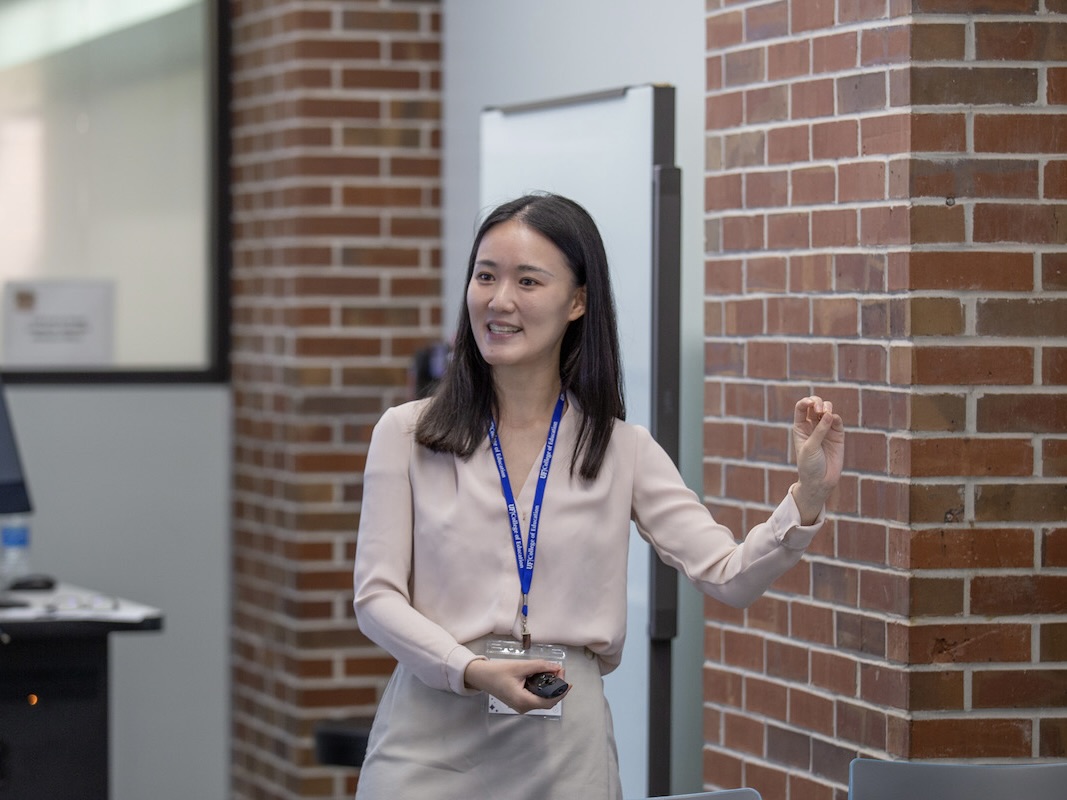
Finding the right internship can be an important step for students, but it’s not always clear which opportunities will lead to the strongest growth. To help solve that problem, University of Florida researchers have developed an AI-powered tool that helps students identify internships most likely to accelerate their technical and professional development. Unlike traditional recommendation engines, Pro-CaRE not only predicts which opportunities will lead to stronger outcomes, it also explains why each suggestion is a good fit. In testing data collected from the students, Pro-CaRE’s predictions proved highly accurate, accounting for more than 72% of the differences in learning gains among participants. While the pilot is being tested in engineering, the tool could be adopted for other disciplines. “Internships are one of the most critical parts of an engineering education, but students often struggle to know which experiences will actually help them grow,” said Jinnie Shin, assistant professor of research and evaluation methodology in the UF College of Education. “What makes Pro-CaRE unique is that it doesn’t just offer a list of options. It provides personalized recommendations backed by data and it tells students clearly why an opportunity is a good match for them.” Pro-CaRE creates matches by analyzing each student’s coursework, major, background and self-reported interest, confidence and self-efficacy in engineering skills. It then compares that profile with a carefully chosen set of similar peers to refine suggestions. The result is more precise guidance that adapts to students at different stages of their degree programs. “Students shouldn’t have to guess or hope that an internship will be worthwhile,” Shin said. “With Pro-CaRE, they can approach opportunities knowing they’re backed by evidence, whether the role is onsite, hybrid or remote and whether it’s at a startup or a Fortune 500 company.” The system is designed to work across a wide range of companies and contexts, giving students flexibility while ensuring their choices align with their personal and professional goals. Each recommendation comes with a clear “why this?” explanation, so students can make confident decisions and discuss options more effectively with advisors. Pro-CaRE was developed by a cross-disciplinary UF team combining expertise in education and engineering. Alongside Shin, the project’s co-principal investigators include Kent Crippen in the College of Education and Bruce Carroll in the Herbert Wertheim College of Engineering. The team is exploring external funding opportunities to expand the usage and test the efficacy on a larger scale. “Ultimately, our goal is to empower students to invest their time in experiences that will have the greatest impact,” Shin said. “Pro-CaRE bridges the gap between what students hope to gain and what internships can truly deliver.”



The Impacts of Stronger El Niño Conditions on LI
Jase Bernhardt, Hofstra University associate professor of geology, environment, and sustainability and director of meteorology, spoke to Newsday to explain how strong El Niño weather conditions could impact the region. “It often leads to the earth’s atmosphere warming,” said Dr. Bernhardt. “It could be expected that this year could be the warmest on record, if El Niño pans out.” He added that El Niño also “plants the seeds for more coastal storms in the late fall and winter.”


Using AI tools empowers and burdens users in online Q&A communities
Whether you’ve searched for cooking tips on Reddit, troubleshooted tech problems on community forums or asked questions on platforms like Quora, you’ve benefited from online help communities. These digital spaces rely on people across the world to contribute their knowledge for free, and have become an essential tool for solving problems and learning new skills. New research reveals that generative artificial intelligence tools like ChatGPT are creating a double-edge effect on users in these communities, simultaneously making them more helpful while potentially overwhelming them to the point of decreasing their responses. “On the positive side, AI helps users learn to write more organized and readable answers, leading to a noticeable increase in the number of responses,” explained Liangfei Qiu, Ph.D., study coauthor and PricewaterhouseCoopers Professor at the University of Florida Warrington College of Business. “However, when users rely too heavily on AI, the mental effort required to process and refine AI outputs can actually reduce participation. In other words, AI both empowers and burdens contributors: it enables more engagement and better readability, but too much reliance can slow people down.” The study examined Stack Overflow, one of the world’s largest question-and-answer coding platforms for computer programmers, to investigate the impact of generative AI on both the quality and quantity of user contributions. Qiu and his coauthor Guohou Shan of Northeastern University’s D’Amore-McKim School of Business measured the impact of AI on users’ number of answers generated per day, answer length and readability. Specifically, they found that users who used AI tools to generate their responses contributed almost 17% more answers per day compared to those who didn’t use AI. The answers generated with AI were both shorter by about 23% and easier to read. However, when people relied too heavily on AI tools, their participation decreased. Qiu and Shan noted that the additional cognitive burden associated with heavier AI usage negatively affected the impact on a user’s answer quality. For online help communities grappling with AI policies, this research provides valuable insight into how these policies can be updated in the current AI environment. While some communities, like Stack Overflow, have banned AI tools, this research suggests that a more nuanced approach could be a better solution. Instead of banning AI entirely, the researchers suggest striking a balance between allowing AI usage while promoting responsible and moderated use. This approach, they argue, would enable users to benefit from efficiency and learning opportunities, while not compromising quality content and user cognition. “For platform leaders, the takeaway is clear: AI can boost participation if thoughtfully integrated, but its cognitive demands must be managed to sustain long-term user contributions,” Qiu said.