
Experts Matter. Find Yours.
Connect for media, speaking, professional opportunities & more.
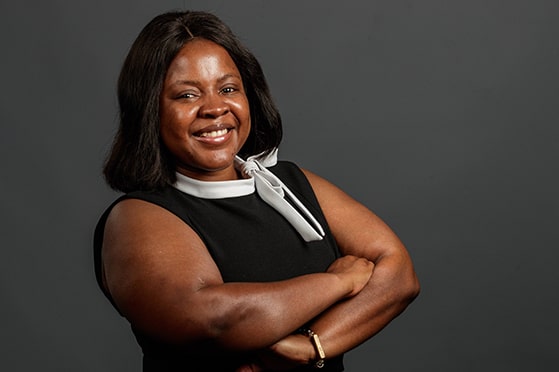
‘Rising star’ graduate: Sylvia Ofori’s journey from Ghana to Georgia Southern to Harvard
On her first flight from Ghana to the United States, Sylvia Ofori arrived in Atlanta, Georgia, at 1 a.m. By 4 o’clock the next afternoon, Ofori was in her first American classroom in Georgia Southern University’s Jiann-Ping Hsu College of Public Health on the Statesboro Campus. Jet-lagged and attempting to absorb a foreign campus and classroom procedures, Ofori was out of sorts when her professor, Isaac Chun-Hai Fung, Ph.D., encouraged her to apply for a student research position following class introductions. Within days, she’d interviewed and earned the spot, supported by funding from the Centers for Disease Control and Prevention. In their first meeting, Fung challenged Ofori to publish 10 papers by the end of her public health doctoral program. “I wasn’t familiar with publications, but he threw that challenge at me from the beginning,” Ofori remembered. “Wow. His plan was for me to start working on dissertation-related projects immediately.” Ofori’s first project was a scoping review on the use of digital technology to improve and monitor handwashing in children. Following a presentation of her review at the University’s 2019 Research Symposium, her work was published in an academic journal, and many more followed as co-author with Fung and another mentor, Kamalich Muniz-Rodriguez, DrPH. By the end of her doctoral training, Sylvia had published 11 papers with Fung, and three more manuscripts will be submitted. On May 13, Ofori earned a DrPH in public health with a concentration in epidemiology as she crossed the stage in one of two Savannah commencement ceremonies. In June, she’ll begin as a Postdoctoral Fellow in the Department of Epidemiology at Harvard University to continue global public health research she began at Georgia Southern. There's a full article detailing Sylvia's amazing story - and her success to date. It's attached here: If you're a reporter looking to know more about Sylvia's story, or how Georgia Southern has students from around 100 countries across the world currently studying on both the Statesboro Campus and the Armstrong Campus in Savannah. Simply reach out to Georgia Southern Director of Communications Jennifer Wise at jwise@georgiasouthern.edu to arrange an interview today.


Georgia Southern launches Asian Studies Digital collection
Georgia Southern University Libraries and Nalanda Roy, Ph.D., recently launched a digital collection, “An Integral History: Asian Studies Digital Archive.” The archive provides a curated collection of multidisciplinary resources in support of the Asian American and Pacific Islander community in the United States. Contributions are curated from Digital Commons, the University’s open-access institutional repository, and highlight Georgia Southern’s scholarly and cultural assets related to the Asian Studies minor. The collection represents faculty and student research, books, videos, community resources and campus events. “The Asian Studies Digital Archive is an important addition to Georgia Southern’s collections because developing an understanding of other cultures will create a cultural awareness,” said Roy, an associate professor of international studies and Asian politics and coordinator of the University’s Asian Studies program. “It will also teach us to have more meaningful interactions with others around us, and celebrate our differences and similarities.” Each May, Asian American and Pacific Islander Heritage Month is observed to recognize the Asian Americans and Pacific Islanders who have contributed to American history, society and culture. The Asian Studies Digital Archive will carry that legacy forward, and continue to grow, as faculty are encouraged to participate in the initiative. “As the coordinator of the Asian Studies program at Georgia Southern University, creating the Digital Archive has been a dream project,” said Roy, who is a Certified Diversity Executive and a former Inclusive Excellence Faculty Fellow at Georgia Southern. “I am very happy to work with the Georgia Southern Libraries to create a resource that will be helpful to both the Georgia Southern and local communities.” For more information on the Asian Studies Digital Archive, visit: Facts about Asian American and Pacific Islander Heritage Month *U.S. Census Bureau 1978 — Congress passed a resolution creating Asian/Pacific American Heritage Week. 1992 — The observance expanded to a month (May), timed to coincide with two important milestones in Asian/Pacific American history: arrival of the first Japanese immigrants in the United States (May 7, 1843) and completion of the transcontinental railroad on May 10, 1869 (the majority of workers who laid the tracks were Chinese immigrants). 2020 — Total Asian population in the U.S. is roughly 6% or 20 million. 5.1 million — The estimated number of the Asian population of Chinese, except Taiwanese, descent in the U.S. in 2020. The Chinese (except Taiwanese) population was the largest Asian group in the U.S. 690,000 — The estimated number of total Native Hawaiian and Other Pacific Islander population in the U.S. 607,010 — Native Hawaiian residents make the largest NHPI group in the U.S If you're a reporter looking to know more about "An Integral History: Asian Studies Digital Archive" - then let us help with your coverage and stories. Nalanda Roy, Ph.D., is available to answer your questions - simply reach out to Georgia Southern Director of Communications Jennifer Wise at jwise@georgiasouthern.edu to arrange an interview today.

Georgia Southern students expand communication disorder awareness amidst Deaf Culture Renaissance
At Georgia Southern, a group of students is taking courses to grow the number of interpreters in their communities and their fields. Each student comes to class with their own motivations to learn ASL. “Most of the deaf people, myself included, feel kind of depressed,” signed Angellia Burnett, a volunteer assistant in Georgia Southern University’s American Sign Language (ASL) course. “We miss a lot of things in life, because it has always been a struggle with communication.” Burnett grew up deaf, and is the only person in her family who is deaf. Members of her family speak ASL, but she said many in the Deaf community continue to be left out of family conversations because not everyone will sign all of the time. This leaves Deaf family members feeling isolated even within their own homes. “Not everyone accepts my deafness,” Burnett signed. “They need to know Deaf culture. They need to accept that.” One of the most effective ways of accepting someone is by understanding the challenges they face. Over the past few years, the world has experienced a Deaf culture renaissance, where the inclusion of people who are deaf becomes more mainstream. Recently, the film “CODA,” which stands for “children of deaf adults,” won the 2022 Academy Award for Best Picture. This brought Deaf culture further into the spotlight, opening many eyes into the lives of those with hearing impairments. “What that means is it embraces the entire community,” said Dana Taylor, Ph.D., Georgia Southern adjunct professor and sign language interpreter. “It’s not isolating one group as being different. Individuals get to see the struggles and challenges and the triumphs that people experience.” At Georgia Southern, a group of students is taking courses to grow the number of interpreters in their communities and their fields. Each student comes to class with their own motivations to learn ASL. Some are learning sign language because they have people in their lives with hearing impairments or other communication disorders where sign can be advantageous. Others are there to develop their Sign skills as a professional tool. “If I had a client who spoke ASL, I’d be able to communicate with them better or make them feel more comfortable,” said Ricki Botsford, speech pathology student. “I’ve learned a lot about how broad communication can be, because there are so many ways to communicate outside of the verbal option.” When the students were asked if they had tried learning other languages like Spanish or French, every hand was raised. When asked if they stuck to learning them, all but a few went down. So what makes Sign different? “It’s a lot easier to integrate into every day,” said Adia Greer who’s studying to be an athletic trainer for Deaf athletes. “I can speak it verbally, but I can also sign it. I’ve picked up signing to my cat a lot. She doesn’t understand it, but it allows me to practice.” While the students practice Sign with their pets and favorite TV shows, Burnett continues to come to class to help show her students the world they share, but not the one they see. Georgia Southern has a network of Student Accessibility Resource Centers on the Statesboro and Savannah campuses providing interpreters for students who want to attend classes and interact with their environment, as well as many other resources for students who are hard of hearing. “The whole world needs to learn Sign,” Burnett signed. “I want to see people motivated to learn. I see a lot of Hearing people who are motivated to learn, and a lot of Deaf people that want to help make them successful. I’m really proud that I can help in that.” If you're a reporter looking to know more about this important topic - then let us help with your coverage and stories. Dana Taylor, Ph.D., is available to answer your questions - simply reach out to Georgia Southern Director of Communications Jennifer Wise at jwise@georgiasouthern.edu to arrange an interview today.

Dignitaries help University officials break ground on Jack and Ruth Ann Hill Convocation Center
State and local dignitaries help break ground on the new Jack and Ruth Ann Hill Convocation Center on Georgia Southern’s south campus in Statesboro. L-R: Georgia Southern Men’s Basketball Coach Brian Burg, Chair of the Georgia Southern Foundation Mike Sanders, University Foundation Board Member Leonard Bevill, University Provost Carl Reiber, Ph.D., Georgia Southern Athletics Director Jared Benko, Regent Everett Kennedy, Majority Leader Jon Burns, USG Chancellor Sonny Purdue, University President Kyle Marrero, Mr. Lance Hill, Congressman Buddy Carter, Chairman Terry England, Congressman Rick Allen, Student athlete Hannah Fuller, Waters College of Health Professions Dean Barry Joyner Ph.D. The opportunity to memorialize the late Sen. Jack Hill and wife Ruth Ann brought an impressive list of state and national leaders to Statesboro on Thursday to help break ground on a new Georgia Southern University Convocation Center that will bear their names. New University System of Georgia (USG) Chancellor Sonny Perdue, state legislators, congressmen and Georgia Southern University President Kyle Marrero – all of whom had worked extensively with Hill over the last several decades – headlined a team of speakers who lauded Hill and his impact on Georgia while helping to kick off a project that will change the face of Statesboro. “I’ve never known a more dedicated public servant than Jack Hill,” said Perdue, who shared an office with Hill and lived with him for a time while they both served in the Georgia Legislature. “It’s an honor to be here today to remember my best political friend in the world.” At 95,000 square feet, the Jack and Ruth Ann Hill Convocation Center will be the largest event venue space between Savannah and Macon and will serve as the signature building on Georgia Southern’s south campus, fronting Veterans Memorial Parkway (US 301 bypass). With an estimated total cost of $64.4 million, the center will be a multi-story complex that provides approximately 7,000 square feet of additional instructional space for the Waters College of Health Professions and provides more than a 50% increase in seating capacity in an arena that will be the new home court for Georgia Southern Eagles NCAA basketball games. The building is named for Jack Hill (‘66), who was the longest-serving Georgia senator when he died in April 2020. He was a senator for 30 years, serving as chairman of several crucial committees, including Appropriations, which has broad jurisdiction over legislation involving budgeting and spending state and federal funds. With Hill’s support, Georgia Southern reached new heights as an institution serving the southeast region and the state of Georgia. Hill was instrumental in helping the University expand its programs and build several new state-of-the-art facilities, including the Engineering and Research Building, which opened for classes in January 2021. His wife of 48 years, Ruth Ann, focused her life on public education and retired as principal of Reidsville Elementary School. She was a triple Eagle, earning degrees from Georgia Southern in 1973, 1990 and 1991. The media release announcing this historic event is attached here: If you're a journalist looking to know ore about this event or Georgia Southern University - simply reach out to Georgia Southern Director of Communications Jennifer Wise at jwise@georgiasouthern.edu to arrange an interview today.

Covering the music beat? Then tune in and get in touch with our resident hip-hop expert
Augusta University Professor Adam Diehl is an expert in hip-hop culture, lyrical analysis, rap as a form of literature and specifically, the works of Kendrick Lamar. Diehl gives an update on what's new in hip-hop and of course, answers questions about Lamar and his highly anticipated new album. How has the hip-hop music scene changed over the last 5 years? The hip-hop music scene has changed faster than any other genre the last five years. Whereas country still uses radio play and music videos to gauge success (along with album sales and streaming numbers) and rock uses touring to supplement and offset recording costs, pop and hip-hop have a great advantage in that they can raise people to stardom almost overnight. In fact, several of the biggest pop stars like Billie Eilish and Post Malone made their rapid ascents through the same channel many of the top hip-hop stars did: Soundcloud. Because this platform allowed new artists the chance to put their music alongside heavyweights, it democratized the listening process. What sent Soundcloud soaring? To put it succinctly, Soundcloud was the great reset of the hip-hop world. But when COVID hit and musicians couldn't tour for upwards of two years, the hip-hop community soared past country and rock (which they were already outselling pre-pandemic) because they didn't base their profit model on touring. Even pop stars were at a disadvantage, because the TV appearances and interviews they used to promote their new releases were few and far between for at least a year, and virtual events just couldn't replicate award show appearances and performances. Hip-hop, meanwhile, continued to be "Black America's CNN" and reported on the protests and outrage following the high-profile deaths of George Floyd and Breonna Taylor. The resurgence of Black Lives Matter brought mainstream media and cultural attention to the Black community, and as such the importance of hip-hop grew, just as it did in the wake of the Rodney King verdict and the deaths of Trayvon Martin, Michael Brown and Eric Garner. How has the economy of music changed? Most people under 20 don't own any CDs. What money these kids don't spend on music can now go to a modern cultural institution: the music festival. Increasingly, cities are hosting these previously camping-required concerts, which has been a particular advantage for hip-hop artists, who don't need roadies or sometimes even other people on stage. All they need is a setlist with six to 10 catchy songs, an entrancing light show, a DJ/engineer and a strong stage presence, and they can captivate the audience as easily as some of the all-time greats of any genre. Going forward, the music industry is going to be about return on investment. Instead of developing artists over a five-year period and then letting them blossom for two to three decades, they are looking for someone to explode in popularity instantly, stay in the spotlight and public consciousness consistently for three to five years, and then maybe stick around. TikTok is, in many ways, analogous to this career arc: the videos are short, the makers are -- to some extent -- largely forgettable, and the popularity relies heavily on a "hook." It's no surprise that hip-hop has been the most adopted genre by TikTokers: the genre has been more effective than any other in terms of codifying "catch phrases." And that's what TikTok is going for: something to hook viewers into watching more. Did the Super Bowl appearance by hip-hop artists take the genre to a whole new level as far as mainstream music? If the Super Bowl halftime show in 2022 did anything, it showed that rap and hip-hop are now as household friendly as rock, country and pop. Perhaps because so many best-selling rock acts had already played the halftime show, and perhaps because the pop acts of recent years had failed to maintain the public's attention, the 2022 halftime show featured one of hip-hop's founding fathers: Dr. Dre. His menagerie of artists' careers stretched over 30 years, and the time constraints of the show made hip-hop the ideal soundtrack. In a 13-minute set, six performers all got their moment in the California sun, and the mega-mix model so often used in clubs was perfect to segue from artist to artist. What 30 to 35 years ago was "Parental Advisory" is now the music that parents listen to. The target demo of the Super Bowl would've thought someone like Simon & Garfunkel or The Eagles much more risky picks than Dr. Dre & Co., even if their music was more family-friendly. Many casual music fans thought Kendrick Lamar was the head-scratcher because of his shorter tenure in the spotlight, but the younger generations watching were much more interested in what Kendrick did than "old heads" like Snoop Dogg and Mary J. Blige. Was this new album by Kendrick Lamar overdue? The new Kendrick Lamar album comes right on time: it is the definitive COVID album. If he had released in spring/summer 2020 when he originally intended (i.e. if the early March 2020 pgLang rollout was foreshadowing his record release), this would be a substantially different work of art. Instead, the project voices what so many people have endured in the pandemic: domestic turmoil. The tracks cover a vast array of topics -- from vaccinations to transgenderism to cancel culture -- but the unifying theme is therapy. As much emphasis as physical health got over the past two years, the pandemic was arguably just as bad if not worse for people's mental health. Accordingly, this album goes into dark valleys in Kendrick's and his family's trials and traumas: child abuse, sex addiction, separation/divorce, deaths, etc. In the two years that society has been persevering through the pandemic, countless marriages and millions of lives have been shaken to their cores. Listening to this double-album adds another tremor to our already-jostled souls. Tracks like "We Cry Together" capture the rapid-fire romantic arguments that can quickly escalate from disappointment to suicidal ideation, and "United in Grief" recreates the sense of a panic attack with its intensifying lyric delivery and drumbeats. Anxiety and depression are the recurring moods of this album, and the track list ranges in sonic textures -- from Lamar's tried-and-true vintage gangsta rap beats to the utterly unpredictable piano flourishes that come straight from a spoken word poetry reading -- to reflect the all-too-familiar combination of monotony and chaos that the world has undergone for the last two years. It is unforgettable -- just like COVID-19 -- but also, perhaps, something we'd rather not relive. Why do some consider Lamar the most influential rapper of our generation? Kendrick Lamar only has two real rivals for most influential rapper of the generation: Kanye West and Drake. Although Kanye is 10 years older, his career overlaps to a large degree with Kendrick's. Kanye's influence certainly comes more in the production of songs than in lyrical delivery, but his subject matter has been very contagious. Kendrick's mentioning of a Birkin bag in "N95" would never have happened if not for Kanye's lyrical (and career) forays into high fashion. Drake, on the other hand, is probably the rapper most influenced by Kanye...who went on to influence the most artists. Without Drake, many rappers wouldn't have had the blueprint for being singers as well as MCs. What Kendrick brings to the conversation is, in a way, more elusive; however, he without a doubt has raised the bar for lyrical delivery and flow, such that rappers have a better chance at success if they are comically basic than if they are merely competent. It's as if Kendrick took Eminem's velocity and used it to speak on bigger picture issues. Kendrick has also proven to be a fashion-forward rapper, collaborating with Reebok, Nike and Converse over the last few years. His influence might be most prominent in the "realness" of his lyrics: without Kendrick's "everyday life music," the emergence and popularization of "Soundcloud rap" might have been significantly limited. Instead, he uses Kodak Black -- one of the most successful of all Soundcloud-era rappers -- on Mr. Morale & the Big Steppers. If Kendrick isn't the most influential rapper of his generation, it's because his ambition and execution have placed him with the all-time greats, and oftentimes that puts artists at odds with their contemporaries. In 100 years, people won't remember some big acts because popularity wears off, but they will still celebrate Kendrick because his work is excellent. Looking to know more? Hit up Adam Diehl today -- simply click on his icon now to arrange an interview.


Up to four scholarships are being offered to students who have sought refuge in the UK The donor, Matthew Crummack, is CEO of Domestic & General, former CEO of GoCompare and lastminute.com and an alumnus of Aston University The Scholarships are named after the donor’s grandfather, Ernest Edward, who left school at 12 to work in a coal mine. Aston University is launching a new sanctuary scholarship scheme for students who have sought refuge in the UK. Up to four sanctuary scholarships are on offer, due to a generous donation by prominent businessperson Matthew Crummack, currently chief executive of Domestic & General. They will be known as The Ernest Edward Scholarships in memory of the donor’s grandfather, Ernest Edward Crummack, who left school aged 12 to work in a coal mine. Matthew graduated with a BSc in International Business and French at Aston University in 1993. His career to date has taken him into well-known companies such as GoCompare, lastminute.com, Expedia, Nestlé and Procter & Gamble. He was awarded an honorary doctorate by Aston University in 2016, in recognition of his professional achievements and service to the University. Ernest Edward Scholars will receive a full tuition fee waiver and up to £25,000 throughout their course to help with living costs. Language assistance will also be offered if required, as well as support from Aston University Students’ Union and professional mentoring support. To be eligible for an Ernest Edward Scholarship, applicants must be an asylum seeker, the partner or dependant of an asylum seeker or an asylum seeker/refugee/partner/dependant who has been granted Discretionary Leave to Remain (DLR) or some other form of temporary status. Applicants need to apply for an eligible Aston University course - any three-year undergraduate or one-year postgraduate programme - before applying for a scholarship. Applications will close on 12 June for the 2022 round. Speaking about his motivation for funding the scholarships, Matthew said: “My grandfather, whom I sadly never met, had little choice but to leave school at 12 to work in a coal mine. “100 years on, so many young people and especially young refugees, still find themselves challenged to grow and fulfil their potential. I hope that these scholarships will create that opportunity and pave the way for some of tomorrow’s leaders. “I strongly value my Aston University education and believe that business and individuals can take a leadership role in giving back to those facing challenge.” Saskia Loer Hansen, Interim Vice-Chancellor of Aston University, said: “Young people seeking asylum in the UK are likely to have experienced trauma and will have lost much which cannot be replaced. The Ernest Edward Scholarship can contribute to a brighter future, made possible by education. It offers hope and an opportunity for respite. “On behalf of Aston University, I would like to express my deep gratitude to Matthew for his generous and compassionate support in helping to make Aston University a safe haven. It is an act of kindness which will have a profound effect on those young lives.” More information about The Ernest Edward Scholarships is available here.


Battleground Georgia: All eyes on the Peach State with midterms in sight
The US midterm elections are quickly approaching, and with key Senate seats and the governor's mansion up for grabs in Georgia, the Peach State will be low hanging fruit for anyone looking to see where the balance of power rests in the country. With reporters across America covering the latest developments, we asked Augusta University's Mary-Kate Lizotte to answer a few questions that are top of mind for reporters and political junkies alike. The strength of endorsements? Q: What kind of an impact could Mike Pence backing Gov. Brian Kemp have going forward? It could have an influence on the willingness of Republicans who are not former President Trump supporters to contribute to the Kemp campaign and be sure to show up to vote for Kemp. But, it will likely not have much of an influence. Research does not find a huge, lasting impact of endorsements. Ultimately, Trump supporters are unlikely to stay home and not vote for Kemp given that they likely are very against Stacey Abrams becoming governor. For Abrams supporters, she has already begun to use Indiana as a comparison with Georgia to say that Indiana under Pence was more moderate, including Medicaid expansion in comparison with Georgia under Kemp. I doubt this will influence Republican voters who like Pence to vote for Abrams, but it could influence some Independents/moderates to vote for Abrams. It is important to note, however, that most Independents/moderates tend to consistently vote for one party's candidates and thus may not be influenced by this either. A fractured right? Q: Could Pence's support also divide the Republican party somewhat after former President Trump backed David Perdue? Yes, but will likely not have a substantial impact on the election. It is unlikely that Trump supporters and/or Perdue voters will stay home on election day. They will likely vote for Kemp as their most preferred candidate who is running. Goal line stand? Q: Herschel Walker won the Republican primary by a large margin. How does he stack up against Sen. Raphael Warnock in the general election? Polling is currently showing a close race within the margin of error. Warnock has not been running against Walker up until now because Walker had not won the primary, but Walker and conservative groups have been able to run against Warnock because there was no reason to believe that he would not win his primary. In terms of experience, Warnock is the incumbent and thus has more experience. Walker is a complicated and controversial public figure but also is loved among University of Georgia football fans. Warnock has focused on putting out positive campaign advertisements up to this point. But, since there are already attack ads against Warnock, the Warnock campaign or groups supporting the Warnock campaign need to begin airing attack ads against Walker to improve the Warnock standing in the polls. The research indicates that it is best to go negative once you have been attacked. Follow the money? Q: Are we likely to see a record amount of cash flow for candidates in Georgia over the next several months knowing it will be a key swing state? Definitely. People from out of state who will be watching these elections closely will likely contribute. We saw that when Abrams and Kemp ran against one another in 2018 and in the special election that elected Warnock in 2020. If you are a journalist covering this topic, then let our experts help. Dr. Mary-Kate Lizotte is an expert in political and voter behavior. She is available to talk about the upcoming midterm and gubernatorial elections in Georgia. Click on her name to schedule an interview.


Enabling the disabled through technology
Technology represents new hope for people disabled by everything from cerebral palsy to injuries sustained in combat or car accidents, and NJIT’s Saikat Pal investigates the possibilities. At the university’s Life Sciences Motion Capture Lab, Pal fits disabled veterans with the latest exoskeletons, which get them upright again and moving across the room. All the while, Pal measures their range of motion to determine the strengths and weaknesses of the latest tech. Similarly, the biomedical engineer uses monitoring and recording equipment to measure the gaits of children with cerebral palsy. In short, he’s an expert on the limits of human movement, and how tech can extend those limits. And his experience is varied, having also worked as a research associate at Stanford University and biomedical engineering at the U.S. Department of Veterans Affairs. To interview Saikat, just click on the button below.


Aston University cyber expert to appear at FinTech event in Birmingham
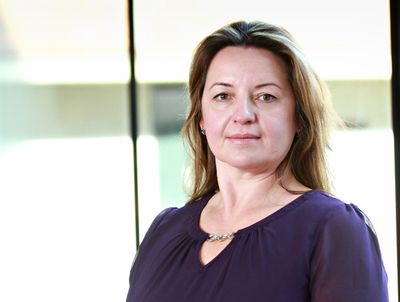
'FinTech Secured – Next Generation' will showcase the work of leading stakeholders in the research and development of financial technology (FinTech) and security Professor Vladlena Benson will offer insight on illicit money flows and trends in Financial Security Registrations are now open for the event on 7 June 2022 at The Compound, Birmingham. The director of the Cyber Security Innovation (CSI) Centre at Aston University is set to appear at a networking event around financial technology (FinTech). Following the success of their first flagship event of 2022 ‘Secure by Design, Advanced Manufacturing’, Midlands Cyber will launch 'FinTech Secured – Next Generation' on the 7 June 2022. The event will be the first face to face event after the pandemic in Birmingham, bringing together thought leaders and service applications specialists for an evening of industry networking. Professor Vladlena Benson, who also serves on the EU’s Agency for Cybersecurity (ENISA) task force defining the Cybersecurity Skills Framework at the European level, will be joined by contacts from within the cryptocurrency sector and offer insight on illicit money flows and trends in financial security. The event will also showcase the work of leading stakeholders in the research and development of FinTech and financial security. FinTech’s academic innovators, CEOs and company founders, entrepreneurs, contractors, investors and policymakers are encouraged to register now to discuss, participate, network and put their questions to our panel of industry experts. Professor Vladlena Benson, an industry-recognised expert in cybersecurity risk management and director of CSI Centre at Aston Business School, said: “Financial services are core to the UK economy and continue to be a common target for cyber criminals. Challenges to the insurance sector and cyber crime prosecution when crypto assets are involved are emerging and at the CSI we are working to provide forensic and data integrity solutions which help secure the FinTech sector.” User of contactless Europay, Mastercard, and Visa (EMV) may be interested in the insights of Tom Chothia, reader in cyber security at the University of Birmingham, on how the vulnerabilities of Apple Pay and Visa could enable hackers to ’Take £1000 from a locked iPhone’. Registrations are now open to join the cluster at 18:00 hrs on the 7 June 2022 at The Compound, Birmingham.


Studying glaciers . . . from Florida
By Emma Richards On the surface, the University of Florida seems an unlikely place to find cutting-edge research on ice sheets. But Emma “Mickey” MacKie says this is the perfect place for her work — thanks in large part to HiPerGator, one of the fastest supercomputers in higher education. MacKie, an assistant professor of geological sciences and glaciologist, joined UF in August 2021 and said her decision hinged largely on access to HiPerGator and the university’s focus on machine learning and artificial intelligence technologies. MacKie uses machine learning methods to study subsurface conditions of glaciers in polar regions and access to a powerful supercomputer is crucial given the large data sets her research generates. “I'm very happy to be in a place with lots of people who are working on different types of problems and are interested in developing these different tools,” MacKie said. “There are a number of members of my department in geology who are studying glacial geology through different lenses. And so, there's all of this complementary geological and machine learning knowledge at UF that I'm very excited to bring together.” MacKie has set up the Gator Glaciology Lab, where she and a team of seven undergraduate students from the fields of geology, computer science, physics, math and data science are using AI to analyze what lies beneath glaciers and how they are moving and melting. “Our work is part of a bigger effort in the glaciology community to start working on quantifying our uncertainty in future sea-level rise projections so that we can give policy makers this information.” It’s a very difficult challenge, MacKie said, because of limited access to polar regions and the miles-thick ice covering the ground. Then there is the scale of ice sheets; Antarctica, for example, is the size of U.S. and Mexico combined. Measurements of the topography below such glaciers are gathered using radars mounted on airplanes to “see” through ice. Her team then uses HiPerGator to simulate realistic looking topography in places where there are gaps or blank spots in the measurements. They generate hundreds of maps to represent different possible ice sheet conditions, which could be used to determine numerous possible sea level rise scenarios. “Our work is part of a bigger effort in the glaciology community to start working on quantifying our uncertainty in future sea-level rise projections so that we can give policy makers this information,” she said. Earlier this spring, MacKie swapped out her flip-flops for snow boots to study subsurface glacial conditions in Svalbard, which is next to northeastern Greenland. Visiting Svalbard will help her test and develop data collection and analysis techniques that could be applied to Antarctica or Greenland, which both contain large ice sheets that could have serious environmental impacts if they experience significant melting. In Svalbard, MacKie and Norwegian researchers from the University of Bergen and the University Centre in Svalbard took seismic and radar measurements of glaciers that will be used to make estimates about conditions beneath the ice. Among glaciers of concern is the Thwaites “Doomsday Glacier,” which is losing the most ice of any glacier in Antarctica. There are signs showing Thwaites’ ice shelf could start to break in the next few years. MacKie said it will likely be a few hundred years before the glacier could undergo significant collapse and jeopardize the West Antarctica Ice Sheet, leading to several meters of sea level rise. The effects of Thwaites and other ice sheet melts in Antarctica and Greenland will become apparent in decades to come, with the potential for a meter of sea level rise by the end of the century, which MacKie and other researchers hope to predict more accurately. “The state of Florida has the most to lose when sea level rises,” she said in an episode of the From Florida podcast. “And so, I think we have a lot of skin in the game and it’s really important to be studying this question here in Florida.” To hear more about MacKie’s work, listen to From Florida at this link.

