Experts Matter. Find Yours.
Connect for media, speaking, professional opportunities & more.

Florida scientists champion ‘Food Is Medicine’ movement to tackle national health crisis
University of Florida researchers are calling for a national transformation in how we address the ongoing epidemic of obesity and Type 2 diabetes, starting with a fundamental shift in how we approach health, agriculture and food. Published recently in the Proceedings of the National Academy of Sciences, the article argues that fruits and vegetables must be treated not just as food — but as medicine. With 73% of U.S. adults and 35% of children classified as overweight or obese, the authors warn that the crisis is not only an individual health issue but a national economic and security threat. Andrew Hanson, Ph.D., a co-author and professor of horticultural sciences at UF/IFAS, emphasized a sense of urgency and collective responsibility toward solving this health crisis. “This isn’t business as usual. We’re taking a public-interest view. This is the kind of thing we all need to be talking about. It’s too important not to,” he said. The article proposes a roadmap for change, including creating five National Institutes of Health-supported “Food Is Medicine” centers across the U.S., with Florida as a leading candidate; scaling up domestic fruit and vegetable production to meet national dietary needs; partnering with food producer and processors to make healthy foods more accessible, affordable and appealing; and reforming medical and nutrition education to include horticultural sciences and vice versa. The article highlights that only 1 in 10 adults meets the recommended daily intake of fruits and vegetables, and that U.S. production falls far short of what’s needed to support a healthy population. The authors call for a dramatic expansion of fruit and vegetable production, especially high-impact crops like berries, leafy greens and carrots. Christopher Gunter, Ph.D., professor and chair of the UF/IFAS Department of Horticultural Sciences, said the team’s goal is to push the role fruit and vegetables crops can play in improving human health into the national consciousness. “As a discipline, horticulture and the science of fruit and vegetables have been largely ignored in this conversation,” Gunter said. “Our goal is to move the needle on health with fruit and vegetables.” Hanson said about 80% of the nation’s cropland is used to grow soybeans, corn and wheat — most of which are processed into products with low nutritional value that contribute to the obesity and Type 2 diabetes epidemic. Mike Jaffee, M.D., a co-author and professor of neurology in the UF College of Medicine, stressed the broader implications of a high-vegetable diet on brain health. “Obesity and insulin resistance are linked to inflammation and neurodegeneration. We’re living longer, but our brains aren’t keeping up. That’s where the real cost to individuals and the health care system comes in,” he said. Gunter agreed, adding, “This epidemic reduces the longevity and productivity of our citizens. It limits the momentum communities need to grow healthy and resilient families.” Hanson pointed out that higher socioeconomic groups are better positioned to meet dietary recommendations, making this not just a health issue, but a deeply embedded social and economic one. “This crisis takes an unduly large toll on people with lower incomes and less time. To eat enough fruits and vegetables in the current system, you need substantial income and time to prepare food. That’s a luxury many don’t have,” he said. The authors argue that farmers bring essential knowledge to the table. “They understand how environmental factors impact nutritional quality,” Gunter said.



Anuradha Godavarty, Ph.D., has joined the Virginia Commonwealth University (VCU) College of Engineering, bringing more than two decades of research leadership in optical imaging, medical device innovation and interdisciplinary training to the Department of Biomedical Engineering. “We are thrilled to welcome Dr. Godavarty to our department,” said Rebecca Heise, Ph.D., Inez Caudill, Jr. Distinguished Professor and chair of the Department of Biomedical Engineering. “She is an outstanding scholar and teacher who will expand our collaborations with VCU Health in many applications of optical imaging. Our students and faculty alike will benefit from her experience and mentorship.” Godavarty comes to VCU from Florida International University (FIU), where she served as director of the Optical Imaging Laboratory at FIU. Her work centered on designing and translating near‑infrared optical imaging technologies for clinical use, with applications ranging from breast cancer detection to functional brain mapping to wound assessment. Godavarty has a national reputation for developing portable, low‑cost imaging systems that improve access to care, including hand-held and smartphone-based near‑infrared imaging devices. Her research portfolio includes funding from the National Institutes of Health (NIH), National Science Foundation, Florida Department of Health and American Cancer Society, among others. Godavarty is also a fellow of the American Institute for Medical and Biological Engineering, a senior member of the International Society of Optics and Photonics and the National Academy of Inventors At VCU, Godavarty will expand her research program in optical imaging technologies while collaborating with clinicians, engineers and industry partners across the university and region. Her long‑term goals include advancing bedside imaging tools for wound care, cardiovascular applications and plastic surgery; strengthening global research partnerships; and training the next generation of optical imaging experts. “Virginia Commonwealth University’s engineering and health sciences ecosystem is an ideal place to grow translational research,” Godavarty said. “I look forward to building new collaborations, developing technologies that can make a meaningful difference in patient care and translating these innovations for real-world use by medical professionals.” Godavarty has played a major role in undergraduate education, serving as the undergraduate program director for biomedical engineering at FIU from 2016 to 2022 and leading the department through a successful Accreditation Board for Engineering and Technology (ABET) cycle. She organized FIU’s Annual Diabetes Awareness Day for four consecutive years and regularly engaged K‑12 students through hands-on demonstrations. Throughout her career, Godavarty has been deeply committed to mentoring. In addition to supervising doctoral, master’s and undergraduate students at FIU, she also advised high school students through outreach initiatives and supported several postdoctoral researchers. Her students have earned multiple awards, including NIH and Department of Defense fellowships, national postdoctoral awards and multiple university‑level honors.



As Disney’s “Zootopia 2” barrels toward becoming the highest-grossing animated Disney movie of all-time, the box office isn’t the only place fans of the franchise are apparently flocking. Recently, CNN reported that “Zootopia 2” fans in China—where the wildly popular movie has already been crowned it’s highest-grossing foreign animated film ever—have expressed increased interest in owning Indonesian pit vipers, a striking blue and highly venomous snake portrayed as an anthropomorphic protagonist named Gary De’Snake in the film. The outlet spoke to individuals who purchased the animal after seeing “Zootopia 2” and noted surges in searches and prices among exotic pet retailers. The reported phenomenon prompts the question: can blockbuster movies really be drivers of the exotic pet trade? “I think they can,” said Ryan Almeida, PhD, an assistant teaching professor of Geography and the Environment at Villanova University who studies the exotic pet trade. “There have been a lot of anecdotal reports of movies and TV shows influencing the pet trade, but the peer-reviewed evidence isn’t there.” Causation or Correlation? Reasons for Pet Demand are Tricky to Single Out While the increased interest in the pit viper may be the latest pet trend influenced by the entertainment industry, it is certainly not the first, says Dr. Almeida, who has recently been conducting research at wildlife expos in an effort to understand more of the intricacies of various pet-related trends. In the 1980-90s, red-eared slider turtles became massively popular pets, and it just so happened to coincide with a popular new show based off the animal. “The Teenage Mutant Ninja Turtles craze, especially in the United Kingdom, probably helped drive demand for these turtles as pets,” Dr. Almeida said. “Turtle exports from the United States exploded in popularity during this time, there just is a not a peer-reviewed study demonstrating it was definitely caused by the show.” In the 2000’s, Pixar’s “Finding Nemo” and its sequel, “Finding Dory,” reportedly bolstered purchases of clownfish and blue tangs—the fish for whom those characters were modeled. Interest in owning owls as pets was also said to have spiked among Harry Potter fans in certain parts of the world amid the height of the joint movie/book popularity. Though much of the evidence of these trends is anecdotal, anecdotal doesn’t necessarily mean it didn’t happen. For instance, it’s difficult to completely discredit an exotic pet retailer who reported a 500% sales increase of an animal featured in a recent, very popular movie. But it’s also difficult to prove the causation, not to mention the scale. Dr. Almeida, who is interested in the qualities that make exotic pets desirous to consumers, says that even if sales of an animal from a movie did increase, the reasons are likely far more nuanced than just their appearance on screen. “Rarity is one important factor. We have good evidence that that certain [consumers] care a lot about rarity, that prices rise as animals become rarer and that retailers sell more animals if they are rare.” Another is morphology, or the physical structure of the animal. “Animals with unique morphology or distinctive colorations and patterns are more susceptible for these spikes in demand,” he said. “If Gary De’Snake was a brown, common garter snake and not a striking blue colored viper, I doubt we would see this attention. “I suspect that that's partially why this snake species, Trimeresurus insularis, was chosen for this movie, and why the fish representing Nemo and Dory are the ones they are, and not one of the millions of more boring looking fish species out there.” Even the on-screen portrayal, he suspects, makes a difference. “If the characters are protagonists, that could potentially either consciously or subconsciously, lead to more positive associations with the pet, especially for something like a pit viper, which probably has sort of a negative connotation to go with it in the first place. Also, the way these animals are anthropomorphized likely matters to some degree to people who report buying these animals because of the movie.” Case in point, one purchaser of the highly venomous viper told CNN that the movie helped give “reptile pets a better image,” saying of Gary De’Snake “I love his enthusiastic attitude and his sense of responsibility,” which would not be qualities associated with or displayed by the actual living species. “Attention to all of this falls in line with the same sort of things we are already know are drivers of demand in the pet trade,” Dr. Almeida said. Blockbuster Movies Probably Don’t Make Blockbuster Pet Trends Yet, while Dr. Almeida cedes that there is likely some degree of real demand for exotic pets based on movies (as evidenced by the self-reporting of people doing so for that reason), he cautions that there is very little to suggest these types of trends typically occur on large scales, especially those large enough to make any ecological impacts. He referenced a 2019 paper published by researchers at the University of Oxford, which looked at the purported increase of clownfish and blue tang sales after “Finding Nemo” and “Finding Dory.” “They found that there was an increase in the amount of people searching for the animal online, but not any evidence that retailers were importing more blue tangs, consumers were buying more blue tangs, or even that people were going to an aquarium to see them.” The findings, per the University of Oxford, suggested “that the impact of movies is limited when it comes to large scale buying of animals.” The authors also noted the role of viral media articles in suggesting this plausible causation was a hard-and-true phenomenon. Similarly, a 2017 study concluded that, contrary to popular belief, the Harry Potter series was unlikely to have increased demand for pet owls in the United Kingdom. Even if the demand was there at those larger scales, Dr. Almeida says meeting that demand could be a challenge, depending on the species. “You’d potentially have to poach them in large numbers from the wild, and that's challenging in and of itself. Or they would have to be captive bred, which for some animals is relatively easy but others not so much.” Not to mention the other roadblocks to mass exotic pet ownership. “Some of them may be tough to obtain or even illegal to own in the first place. Also, many of the consumers of films like ‘Zootopia 2’ who might feel a strong emotional pull to an animal are children, and children aren’t the ones going out and buying pets. And, even if something like this did become a large-scale trend, trends are fleeting. The long-term impact, ecologically, would be hard to predict.” But make no mistake. Pet trends certainly do happen on large scales, and whether they are caused by movies in part or not at all, they can have dire ecological consequences. Look at the case of the red eared slider. “Regardless of any possible influence from the show, these turtles are relatively easy to captive breed, so therefore relatively easy to acquire,” Dr. Almeida said. “But they are tough pets. They live a really long time and are kind of hard to care for, and that leads to people releasing them into the wild. They are now among the most invasive reptile species on the planet.” So much so, that the UK banned their sale in 1996. “It ties back to the complications of assessing certain aspects of the wildlife trade. There are so many factors, how do we get the entire picture? It’s a wicked problem.” Whether that problem includes movies with venomous, anthropomorphic snake protagonists appears unlikely, outside of a few highlighted cases. “It certainly wouldn’t be supported by much hard evidence… yet,” Dr. Almeida said. “But this is very much an under-researched phenomenon. I know I’ll keep my eye out for blue insularis next time I attend a pet expo.”



When Betting Goes Mobile: The Hidden Cost to Young Adults’ Finances
As online gambling and sports betting surge across the United States, concerns are mounting about the financial and social consequences—particularly for young people. Dr. Jared Pincin, Associate Professor of Economics at Cedarville University, offers journalists a data-driven economic lens on how the rapid expansion of digital gambling is reshaping personal finances and increasing financial risk among younger Americans. What's Happening Mobile betting apps have transformed gambling into an always-available activity, accessible anywhere and at any time. With aggressive marketing tied to professional and collegiate sports, online gambling has become normalized—especially among young adults. As participation rises, so do reports of debt, financial instability, and problem gambling, raising questions about consumer protection, regulation, and long-term economic impact. Dr. Jared Pincin primary research interests explore the intersection of public choice economics with foreign aid as well as issues in sports economics. Pincin has published in popular publications such as The Hill, Real Clear Markets, Foxnews.com, and USA Today and scholarly journals such as Oxford Development Studies, Applied Economic Letters, and the Journal of Sport and Social Issues. View his profile here Key Insights Online Gambling Is Built for Continuous Spending Modern gambling platforms are designed to encourage repeated engagement. Gamified interfaces, instant wagers, and constant prompts make it easy for users to lose track of spending, increasing the likelihood of financial loss over time. Young Adults Face Elevated Risk Young people, particularly college-age students and adults in their twenties, are among the fastest-growing users of online betting platforms. Limited financial experience, combined with easy credit access and social pressure, makes this group especially vulnerable to poor financial outcomes. Personal Finances Are Directly Impacted Gambling losses often come at the expense of savings, rent, tuition, and long-term financial planning. Dr. Pincin emphasizes that gambling platforms generate profit only when users lose, making sustained participation a negative-sum financial activity for individuals. Economic Incentives Drive Expansion From an economic standpoint, gambling growth is fueled by state revenue incentives and private profit motives. Dr. Pincin helps explain how these incentives can conflict with consumer well-being, particularly when regulatory safeguards lag behind technological innovation. About Jared Pincin Dr. Jared Pincin is an Associate Professor of Economics at Cedarville University. He holds a Ph.D. in economics and specializes in public choice, behavioral economics, and sports economics. His work examines how incentives shape individual decision-making and how policy choices affect financial outcomes at both the personal and societal levels. Let Us Help with Your Coverage Jared Pincin can assist reporters by: Explaining why online gambling participation has risen so quickly among young people Breaking down the economic mechanics of betting platforms and personal financial risk Providing context on the long-term financial consequences of habitual gambling Contributing expert insight to stories on regulation, advertising, and consumer protection Why This Matters As gambling becomes increasingly embedded in American culture, its financial consequences are no longer limited to isolated cases. Understanding how online gambling affects young people’s financial stability is essential for informed public reporting. Dr. Pincin offers clear, accessible analysis that helps audiences understand the economic realities behind the headlines.



Researchers warn of rise in AI-created non-consensual explicit images
A team of researchers, including Kevin Butler, Ph.D., a professor in the Department of Computer and Information Science and Engineering at the University of Florida, is sounding the alarm on a disturbing trend in artificial intelligence: the rapid rise of AI-generated sexually explicit images created without the subject’s consent. With funding from the National Science Foundation, Butler and colleagues from UF, Georgetown University and the University of Washington investigated a growing class of tools that allow users to generate realistic nude images from uploaded photos — tools that require little skill, cost virtually nothing and are largely unregulated. “Anybody can do this,” said Butler, director of the Florida Institute for Cybersecurity Research. “It’s done on the web, often anonymously, and there’s no meaningful enforcement of age or consent.” The team has coined the term SNEACI, short for synthetic non-consensual explicit AI-created imagery, to define this new category of abuse. The acronym, pronounced “sneaky,” highlights the secretive and deceptive nature of the practice. “SNEACI really typifies the fact that a lot of these are made without the knowledge of the potential victim and often in very sneaky ways,” said Patrick Traynor, a professor and associate chair of research in UF's Department of Computer and Information Science and Engineering and co-author of the paper. In their study, which will be presented at the upcoming USENIX Security Symposium this summer, the researchers conducted a systematic analysis of 20 AI “nudification” websites. These platforms allow users to upload an image, manipulate clothing, body shape and pose, and generate a sexually explicit photo — usually in seconds. Unlike traditional tools like Photoshop, these AI services remove nearly all barriers to entry, Butler said. “Photoshop requires skill, time and money,” he said. “These AI application websites are fast, cheap — from free to as little as six cents per image — and don’t require any expertise.” According to the team’s review, women are disproportionately targeted, but the technology can be used on anyone, including children. While the researchers did not test tools with images of minors due to legal and ethical constraints, they found “no technical safeguards preventing someone from doing so.” Only seven of the 20 sites they examined included terms of service that require image subjects to be over 18, and even fewer enforced any kind of user age verification. “Even when sites asked users to confirm they were over 18, there was no real validation,” Butler said. “It’s an unregulated environment.” The platforms operate with little transparency, using cryptocurrency for payments and hosting on mainstream cloud providers. Seven of the sites studied used Amazon Web Services, and 12 were supported by Cloudflare — legitimate services that inadvertently support these operations. “There’s a misconception that this kind of content lives on the dark web,” Butler said. “In reality, many of these tools are hosted on reputable platforms.” Butler’s team also found little to no information about how the sites store or use the generated images. “We couldn’t find out what the generators are doing with the images once they’re created” he said. “It doesn’t appear that any of this information is deleted.” High-profile cases have already brought attention to the issue. Celebrities such as Taylor Swift and Melania Trump have reportedly been victims of AI-generated non-consensual explicit images. Earlier this year, Trump voiced support for the Take It Down Act, which targets these types of abuses and was signed into law this week by President Donald Trump. But the impact extends beyond the famous. Butler cited a case in South Florida where a city councilwoman stepped down after fake explicit images of her — created using AI — were circulated online. “These images aren’t just created for amusement,” Butler said. “They’re used to embarrass, humiliate and even extort victims. The mental health toll can be devastating.” The researchers emphasized that the technology enabling these abuses was originally developed for beneficial purposes — such as enhancing computer vision or supporting academic research — and is often shared openly in the AI community. “There’s an emerging conversation in the machine learning community about whether some of these tools should be restricted,” Butler said. “We need to rethink how open-source technologies are shared and used.” Butler said the published paper — authored by student Cassidy Gibson, who was advised by Butler and Traynor and received her doctorate degree this month — is just the first step in their deeper investigation into the world of AI-powered nudification tools and an extension of the work they are doing at the Center for Privacy and Security for Marginalized Populations, or PRISM, an NSF-funded center housed at the UF Herbert Wertheim College of Engineering. Butler and Gibson recently met with U.S. Congresswoman Kat Cammack for a roundtable discussion on the growing spread of non-consensual imagery online. In a newsletter to constituents, Cammack, who serves on the House Energy and Commerce Committee, called the issue a major priority. She emphasized the need to understand how these images are created and their impact on the mental health of children, teens and adults, calling it “paramount to putting an end to this dangerous trend.” "As lawmakers take a closer look at these technologies, we want to give them technical insights that can help shape smarter regulation and push for more accountability from those involved," said Butler. “Our goal is to use our skills as cybersecurity researchers to address real-world problems and help people.”


As tensions escalate over the possibility of the United States seeking control of Greenland — including threats of annexation that have drawn international backlash — seasoned international relations expert Glen Duerr, Ph.D. offers critical context for journalists reporting on the diplomatic, legal, and geopolitical dimensions of this unfolding crisis. What's Happening In early 2026, high-level rhetoric from U.S. political figures has revived debates about Greenland’s status as a strategic territory. What began as discussions of acquisition has evolved into broad international concern over sovereignty, alliance cohesion, and Arctic security. Denmark and Greenland have reaffirmed their commitment to autonomy, while NATO allies and the European Union warn that any forceful move by the U.S. could undermine alliance unity and violate international norms — raising profound questions about territorial integrity, international law, and the politics of national interest. Dr. Glen Deurr's teaching and research interests include nationalism and secession, comparative politics, international relations theory, sports and politics, and Christianity and politics. View his profile here How Dr. Glen Duerr Can Help Journalists Cover This Story 1. Understanding Strategic National Interests Dr. Duerr’s expertise in international relations provides journalists with a framework to explain why Greenland has become such a focal point for U.S., European, and Arctic security policy — from its strategic location to its role in broader defense calculations. 2. Explaining Nationalism, Sovereignty & Self-Determination His research on nationalism and secession is especially relevant as Greenlanders and Danish authorities assert self-determination and reject external control, a central narrative in the current debate. 3. Contextualizing International Norms & Legal Constraints As commentators and policymakers discuss potential annexation, treaty obligations, and alliance commitments, Dr. Duerr can unpack how international law, treaties (such as NATO agreements), and norms against territorial conquest shape policy choices and diplomatic responses. 4. Making Sense of Geopolitical Fallout With European leaders labeling aggressive claims as a form of “new colonialism” and threatening economic countermeasures, Dr. Duerr can help journalists interpret how Greenland could become a flashpoint affecting transatlantic relations, alliance politics, and global perceptions of U.S. foreign policy. About Glen Duerr, Ph.D. Dr. Glen Duerr is a Professor of International Studies at Cedarville University with deep expertise in international relations theory, nationalism, secession, and comparative politics. He holds a Ph.D. in Political Science and Government and is widely available to speak with media on geopolitics, sovereignty disputes, and the intersection of national interest and international order. Why This Matters The evolving crisis over Greenland is not merely a diplomatic dispute — it touches on fundamental questions of sovereignty, global strategic balance, alliance credibility, and international legal norms. Dr. Duerr is positioned to help journalists go beyond headlines, offering analysis that clarifies motivations, stakes, and implications for audiences tracking one of the most talked-about international issues of 2026.


Department of Energy awards $928,000 to Lane Carasik, Ph.D., for fusion energy systems research
The Department of Energy (DOE) recently announced $128 million of funding for seven Fusion Innovation Research Engine (FIRE) Collaboratives. Virginia Commonwealth University (VCU) College of Engineering researchers will support the project titled “Advancing the maturity of liquid metal (LM) plasma facing materials and first wall concept” led by the Department of Energy’s Princeton Plasma Physics Laboratory (PPPL). This includes $928,000 to support research led by Lane Carasik, Ph.D., assistant professor in the Department of Mechanical and Nuclear Engineering, as part of a multi-institution effort for fusion energy systems. The FIRE Collaborative seeks to advance the maturity of liquid metal plasma-facing materials and wall concepts. High operating temperatures within fusion energy systems pose a significant material design challenge. Research will help solve technical problems with liquid metal plasma-facing materials and first wall concepts, including four main challenges: testing protective materials, understanding material properties, studying how liquid metals behave in magnetic fields and developing new liquid metal alloys. The goal is to make liquid metals viable for fusion pilot plant designs. “The work done by VCU as part of the FIRE Collaborative will help raise the technology readiness of Liquid Metal based fusion energy concepts. Over the next four years, we will train undergraduate and graduate students on how to extract electricity from these fusion concepts,” Carasik said. Rajesh Maingi, Ph.D., is the lead primary investigator at PPPL. Institutional investigators for the group include Sergey Smolentsev, Ph.D., Oak Ridge National Laboratory (ORNL); Vsevolod Soukhanovskii, Ph.D., Lawrence Livermore National Laboratory (LLNL); Daniel Andruczyk, Ph.D., University of Illinois Urbana-Champaign; Bruce Koel, Ph.D., Princeton University; Michael Kotschrenreuther, Ph.D., ExoFusion; Xing Wang, Ph.D., The Pennsylvania State University; Kevin Woller, Ph.D. from Massachusetts Institute of Technology; and Carasik from VCU. Up to $220 million is expected to fund the FIRE Collaboratives over four years, with $31 million allocated for the 2025 fiscal year. Future distributions are dependent on congressional appropriations.

UF water researchers develop prediction system for harmful algae
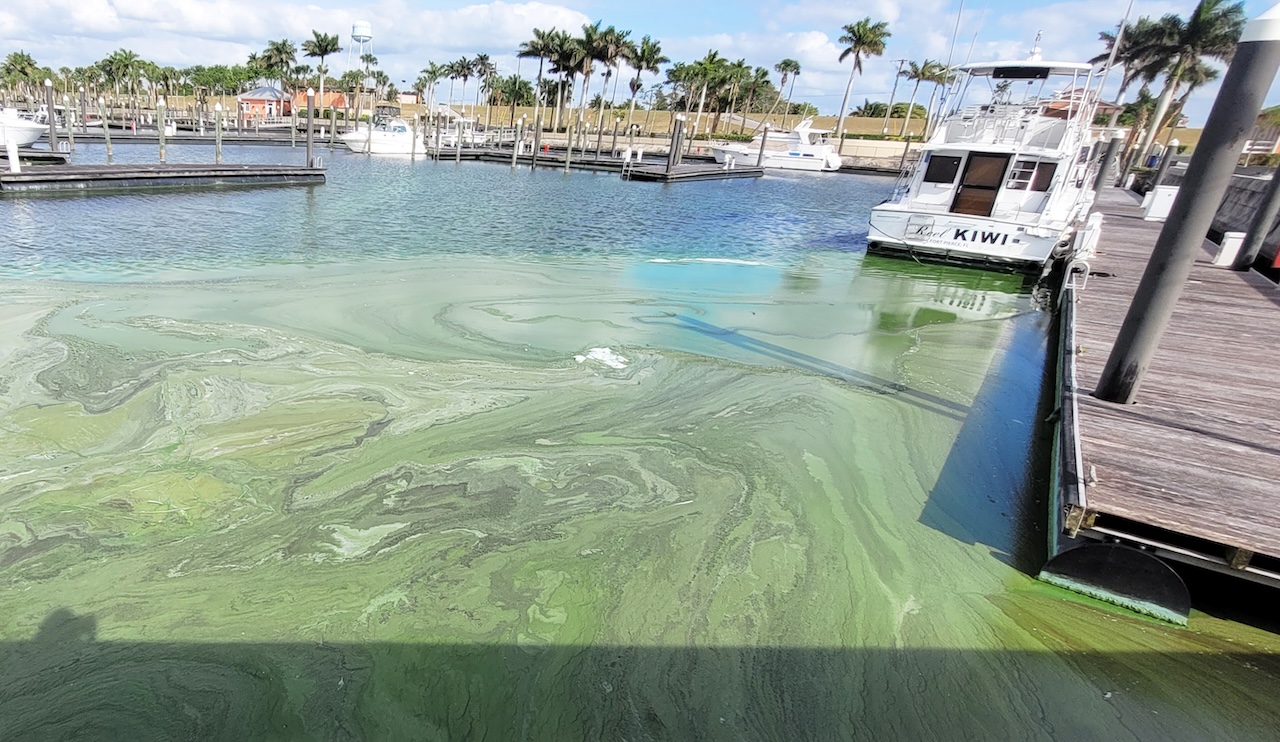
The slimy algae topping Florida’s waterways are more than just unsightly. They are often toxic to humans, animals and the environment. To mitigate those risks, University of Florida researchers are collaborating with North Carolina State University and University of South Florida scientists on a next-day prediction model to warn and inform water managers about harmful algal blooms. The research is funded by two U.S. Army Corps of Engineers grants for two phases, totaling $4.4 million. The project is led by David Kaplan, Ph.D., a professor with the Engineering School of Sustainable Infrastructure and Environment in the Herbert Wertheim College of Engineering and director of the Howard T. Odum Center for Wetlands, and Mauricio Arias, Ph.D., an associate professor at USF. In a paper published recently in the Journal of Environmental Management, Kaplan, UF assistant professor Elise Morrison, Ph.D., and NCSU’s Maria Menchu Maldonado, Ph.D., chronicled their work with harmful algal blooms in the Caloosahatchee River and Estuary, the environmentally sensitive link between Lake Okeechobee and Florida’s southwestern coast. Maldonado performed the work under the guidance of NCSU collaborator Natalie Nelson. In a collaboration between multiple colleges, organizations, departments and universities, the paper’s other authors are Eric Milbrandt of the Sanibel-Captiva Conservation Foundation, Edward Phlips of UF and Natalie G. Nelson of NCSU. The project’s facilitators include Darlene Velez, research coordinator with the UF Water Institute, and Lisa Krimsky, Ph.D., a water resources regional specialized agent with IFAS. Using water samples and computer algorithms, the team developed prediction models based on two water sources feeding the river: Lake Okeechobee and the river’s watershed – the water run-off from the surrounding land. The models determine levels of chlorophyll-a, which is a pigment in algae that is indicative of algal bloom conditions. “For watershed-dominated conditions, the model was able to predict 49% of the variation in next-day chlorophyll-a, which isn’t bad, but for lake-dominated conditions, the model was much better, explaining 78% of the variation in next-day chlorophyll-a in the water,” Kaplan noted. Unlike traditional forecasting models for algal blooms, which are often complex and require much computing power, these models are designed to be practical for daily decision-making, particularly for the Southwest Florida Water Management District (SWFWMD), which has made improving the health of the Caloosahatchee Estuary a state priority. Ultimately, researchers want to develop an algae-prediction system and tools for water managers to reduce risks in all freshwater bodies. “Definitely, this model could be expanded with the use of more data,” said Maldonado. “The same procedure could be applied in other lakes that are highly managed. And this could be done around the world.” Algal blooms in Florida’s lakes, rivers and estuaries have caused significant environmental and economic damage in recent years, UF researchers contend. Blooms are becoming more frequent and longer lasting. The initial project – called Coupling Lake, Estuarine, and Watershed Models for the Caloosahatchee River and Estuary (CLEW) – designed data- and model-driven guidance for Lake Okeechobee water releases. “The overall motivation is that Lake Okeechobee is a challenging natural resource to manage, particularly deciding when and how much water to discharge from the lake to either estuary,” Kaplan said. “There are many competing needs surrounding management of the lake, which has only so much volume. We don't want to cause flooding or other ecological harm.” The follow-up project is UF’s collaboration with USF to develop tools for end users, meaning agencies and managers to make better decisions. The team wants to deliver a system where water managers press the button to get the one-day risk forecast. The study was organized to predict whether the algae-toxin risk is low, medium or high. “In this case, there is a threshold of algal organisms that is considered harmful,” Maldonado said. “Those waters carry phytoplankton species, a microscopic algae that produce toxins. They can be dangerous to swim in, and they can be harmful to the environment. It can be a liver toxin.” Beginning in the late 19th century, the Caloosahatchee River and its watershed underwent extensive modifications that significantly altered the hydrology of the region, according to SWFWMD. The once-shallow river was deepened and widened into a regulated waterway that was connected to Lake Okeechobee and the Kissimmee Chain of Lakes for navigation, water supply and flood control purposes. “Water quality is a challenge in Lake Okeechobee, including sometimes pretty bad harmful algal blooms,” Kaplan said. “And then, of course, the downstream recipients of whatever water is discharged are very sensitive to the amount of water they're getting and what's in it. They’d prefer it to be only the right amount at only the right times with the best quality."

A team of researchers from ChristianaCare and the University of Delaware has uncovered a key early step in how colorectal cancer begins. Their new study shows that a common genetic mutation in colorectal cancer disrupts the colon’s normal tissue renewal process, causing immature cells to build up, tissue structure to break down and early tumors to form. Their findings were published in the journal Cancers. “This finding changes how we think about the very first steps of colon cancer,” said Bruce Boman, M.D., Ph.D., senior author of the study and a senior researcher at the Cawley Center for Translational Cancer Research at ChristianaCare’s Helen F. Graham Cancer Center & Research Institute. “Instead of cancer starting because cells grow too fast, we found that it may start because the normal tissue renewal process slows down, creating a backup of cells that should have moved on. That backup sets the stage for tumors to grow.” The study was led by a multidisciplinary team of engineers, mathematicians, pathologists and tumor biologists from four research institutions. Colorectal cancer is one of the most common and deadly cancers worldwide. According to the World Health Organization, more than 1.9 million people are diagnosed each year, and about 930,000 people die from the disease annually. How healthy colon tissue renews itself The lining of the colon is constantly renewing itself. Every day, billions of cells are shed and replaced to keep the tissue healthy and working properly. This process depends on a steady cycle. New cells form at the base of tiny pockets called crypts, mature as they move upward, and are eventually shed. The new study shows how this natural process breaks down when a mutation occurs in a gene called APC, which is altered in about 90 percent of colorectal cancers. Rather than speeding up cell growth, the APC mutation creates a slowdown, or bottleneck, in the colon tissue’s renewal cycle. According to Boman, this slowdown causes dividing cells to pile up instead of moving through the system as they should. The result is a kind of tumor cell “traffic jam” that leads to distorted tissue and the formation of adenomas, early growths that can become cancerous. What APC-mutant tissue looks like To see these changes up close, the team compared healthy colon tissue with tissue from patients who have familial adenomatous polyposis, or FAP, an inherited condition caused by APC mutations. The differences were clear: APC-mutant crypts contained more immature, rapidly dividing cells. Fewer cells matured into specialized cells needed for healthy tissue. The zone where cells divide extended higher than normal. The overall renewal cycle took longer. “These findings are significant because they show how cancer-driving mutations change tissues that normally renew themselves nonstop,” Boman said. Pairing patient tissue with computer modeling To see how these changes happen over time, the researchers studied patient tissue and used a computer model that shows how colon cells normally grow and renew. When they slowed this renewal process in the model, it matched what they saw in tissue with the APC mutation. Cells became crowded, the structures lost their normal shape, and early tumor-like growths, known as adenomas, began to form. This confirmed that delayed renewal alone can trigger the earliest changes linked to colon cancer, even before cells appear abnormal under a microscope. “Our findings show that APC mutation does more than turn on growth signals,” Boman said. “It changes the timing of renewal. Once that timing is off, the tissue becomes vulnerable to structural damage and early tumor growth.” Building on earlier research This study builds on earlier work by the same team that mapped how healthy colon tissue renews itself. In prior studies, the researchers identified five basic biological rules that guide how colon cells grow, move and replace one another in a steady, organized way. The new findings show what happens when that system breaks down. A common mutation called APC slows the normal renewal process. Young, stem-like cells begin to build up before they can mature. Over time, that imbalance creates the conditions for early tumor growth. To pinpoint how these changes unfold, researchers Gilberto Schleiniger, Ph.D., and Christopher Raymond, Ph.D., from the University of Delaware’s Department of Mathematical Sciences paired mathematical models with real patient tissue data. Their work shows that even small delays in cell renewal can push healthy tissue toward cancer. “This gives us a clearer picture of how cancer can start long before a tumor is visible,” said Schleiniger. “By understanding the rules that keep healthy tissue in balance, we can see where and how things begin to go off track.” A possible path toward future treatments The findings also point toward a potential new approach to treatment. The researchers found evidence that the disrupted renewal process may trigger a chain reaction that allows pre-cancerous cells to keep copying themselves and fueling tumor growth. By targeting this process, it may be possible to restore normal renewal timing and healthier tissue structure before cancer becomes established. “This study shows that cancer isn’t just about rogue cells, but about a system that’s fallen out of rhythm,” said Bruce Boman, M.D., Ph.D. “If we can reset that renewal process, we may be able to prevent or slow early tumor growth before it gains momentum.”

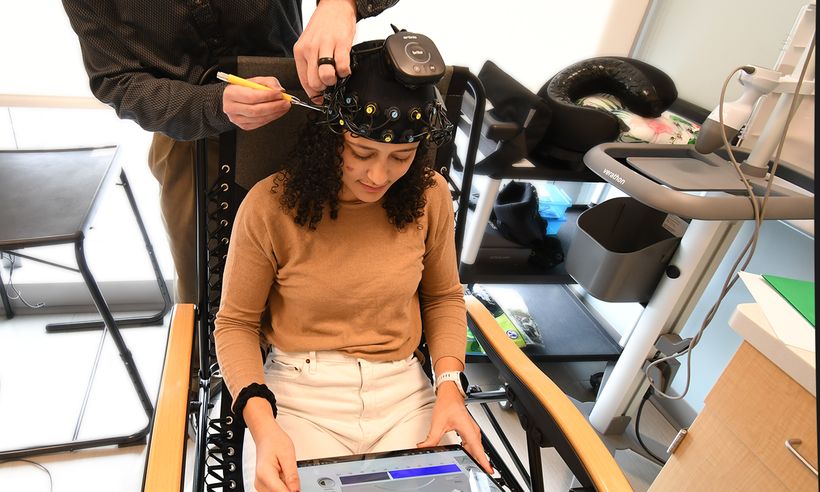
The year was 2003, and John Speich, Ph.D., professor in the Department of Mechanical & Nuclear Engineering, felt like he had a clear sense of the direction his burgeoning career was heading in. Speich had recently completed his doctorate in mechanical engineering from Vanderbilt University, where he concentrated on robotics. Following Vanderbilt, Speich went on to become an associate professor at the Virginia Commonwealth University (VCU) College of Engineering, working with students in the Department of Mechanical & Nuclear Engineering. Leveraging his robotics expertise, Speich planned to continue his work developing robotics for medical surgery and rehabilitation. Then Speich got a call from Paul Ratz, Ph.D., a professor at the VCU School of Medicine, asking for assistance that would change the entire focus of Speich’s career. Ratz used a small robotic lever that moved up and down just a few millimeters to stretch tiny strips of bladder muscle and rings of artery, trying to determine how different chemical compounds changed the mechanical properties of the muscle. Speich was intrigued—this was a form of mechanical engineering. “In mechanical engineering, we pull on things to determine the mechanical properties,” says Speich. “Here, Dr. Ratz was pulling on pieces of bladder instead of the typical substances mechanical engineers are known to work with, like steel, aluminum or plastic.” Speich and Ratz began working together in 2003, and now, because of that unique partnership, nearly all of the research Speich does is about the bladder. “Before I started working with Dr. Ratz, I had never even heard the words neurourology or urodynamics,” says Speich. “Now, Neurourology and Urodynamics is the name of the journal I publish in the most.” Today, Speich collaborates on bladder biomechanics with two doctors at VCU Health. Adam Klausner, MD is a urologist and the interim chair of the new Department of Urology at VCU. Linda Burkett, MD is a urogynecologist from the Department of Obstetrics and Gynecology; prior to medical school, Burkett completed her bachelor’s degree in Biomedical Engineering from the VCU College of Engineering. Together, Speich, Klausner and Burkett aim to find non-invasive methods to characterize and diagnose overactive bladder, with the goal of allowing doctors to precisely match patients with the most effective treatments. A number of students across the VCU College of Engineering and VCU School of Medicine have aided in their research, including recent Biomedical Engineering graduate Mariam William. Speich’s primary methods of research involve Near-Infrared Spectroscopy (NIRS)—a non-invasive technology that uses light to measure tissue oxygenation and brain activity—and ultrasound imaging. By using NIRS to study the brain activity associated with the sudden urge to urinate, Speich and his team are working to pinpoint the brain’s role and determine whether it or the bladder is the primary cause of an individual’s condition. “There are a lot of potential causes of overactive bladder,” says Speich. “Some people may have more than one cause. Individual responses to these treatments vary; what works well for one patient may not work at all for the next. We want to give doctors better tools for quantifying information about their patients so they can make better decisions and more optimized treatments.” Thanks to research grants, including a National Institutes of Health (NIH) grant from 2015-2025, Speich has been able to make a number of important findings in his bladder research. His team has closely examined the bladder’s dynamic elasticity, investigating the biomechanical mechanisms that allow the bladder muscle to fill and expand. Another recent focus asks, “Bladder or Brain. Which is it?” Speich and his team developed a tool called a sensation meter that they use to help determine what an individual is feeling as their bladder is filling over time. All this groundbreaking research and medical school collaboration, and to think—Speich nearly missed the opportunity to enter this field entirely. “When I tell students about how I came to be involved in bladder biomechanics, I tell them, you will always keep learning throughout your entire career,” says Speich. “You never know where you’re going to end up. If you’re an engineer, you’re a problem solver, and there are all kinds of problems in areas like business and medicine—beyond the traditional areas people think of when they think of mechanical engineering.”