Experts Matter. Find Yours.
Connect for media, speaking, professional opportunities & more.

Baylor Expert: 9/11 Reshaped Every Aspect of American Life – Not Necessarily for the Better
English professor, culture expert says terror attacks damaged America, but it’s not too late to recover sense of purpose and generosity The Sept. 11, 2001, terrorist attacks on the World Trade Center and the Pentagon continue – 20 years later – to have profound effects on everything from America’s political, religious and cultural polarization to American entertainment choices, said Baylor University faith and culture expert Greg Garrett, Ph.D., professor of English. “It shouldn’t surprise anyone that an event that shook our sense of security and our identity would be reflected in every aspect of American life,” Garrett said. “But what does surprise and alarm me is the degree to which 9/11 continues to shape our attitudes about race, religion, immigration and the Other, whether that Other is in Afghanistan or just across town. The United States initiated a perpetual war against terror in response to the 9/11 attacks, and the fear that took root in the American psyche has proven difficult to shake.” Garrett, author of more than two dozen books, is internationally recognized as an expert on faith, culture, race and story, and he argues that the reaction to 9/11 can be measured just as much through literature and culture as through accounts of executive orders and covert military operations. Country music, procedurals and reality TV after 9/11 “Initially, Americans supported the War on Terror across political, religious and cultural lines,” Garrett said. “Country musicians like Toby Keith leaned into militant songs about American greatness and righteous revenge. The top-selling act the Chicks (then the Dixie Chicks) was drummed out of country music for their public stand against going to war. The TV show 24 reflected the growing darkness of America’s extra-legal approach to that war—the willingness to use torture, rendition and the opening of a dark site in Guantanamo Bay to house suspected terrorists—and it actually shaped opinion and policy as it grew in popularity and influence.” Two other types of television shows became extremely popular as a result of 9/11, Garrett said. Procedurals (shows such as CSI, Law and Order and House, M.D.) gained a new popularity because they offered viewers something the ongoing War on Terror never could or will: closure. “A serious problem was introduced in every episode, grappled with and solved by the end of an hour,” he said. Another type of show that leapt in popularity in the months and years following the attacks – reality shows – offered “train-wreck escapism,” Garrett said. “The contestants on Survivor and The Bachelor, and the wayward souls on Jersey Shore and Keeping Up with the Kardashians, presented exaggerated versions of our present moment that allowed viewers to forget about the dark actuality of the times,” he said. Springsteen, Harry Potter and critiquing ‘moral failures of the War on Terror’ Not all popular culture offered reinforcement or escapism, Garrett said, adding that some of the most powerful pop culture from 2001 onward critiqued the “moral failures of the War on Terror and critiqued the American people for so readily accepting them.” “Punk rock, always a prime medium for protest, was one of the earliest forms of dissent,” Garrett said. Green Day’s 2004 album American Idiot reached the top of the charts in the United States and 18 other countries, ultimately selling 16 million albums. But mainstream acts like Bruce Springsteen also asked complicating questions about the attacks and their aftermath. “After primarily offering empathy and comfort in The Rising (2002), Springsteen realized that America had betrayed many of its most important ideals, as revealed by songs like ‘Your Own Worst Enemy’ on the No. 1 2007 album Magic,” Garrett said. “Later novels in J. K. Rowling’s Harry Potter series, the most popular fictional narrative of all time, introduce questions of torture and terror, and powerful TV dramas like Battlestar Galactica and the British import Doctor Who also criticize the choices made by the American government and its allies.” Zombies and the Apocalypse Perhaps the most significant byproduct of 9/11 in our culture is the resurgence in apocalyptic stories such as 28 Days Later, Sean of the Dead, The Walking Dead, Game of Thrones, World War Z and The Road, Garrett said. Stories about the Zombie Apocalypse – whether in games, books, comics, TV or movies – asked serious questions about what it means to be human, and about what moral compromises a person might be willing to take to stay alive, Garrett explained. They also reflected the new 24/7 sense of encroaching menace that “seeped into our culture and lit up our phones at all hours of the day and night.” “You could fight all day every day against this menace, these creatures who look like humans but seek your destruction. And then the next morning, you still have to rise and confront it again,” Garrett said. ‘Not too late’ “People 20 years ago said that 9/11 changed everything, and so it did.” Garrett said. “But 20 years later it is not too late to recognize that the fears those attacks brought to the surface don’t have to be the way we continue to live. In my faith tradition, Jesus constantly admonishes his followers not to be so afraid. We make bad and selfish decisions out of fear. We abridge hospitality, compassion and liberty when we believe we are endangered. That’s not the America I grew up in, and it’s not the America in which I hope to die. That America, the light of the world, the city on a hill, Lady Liberty lifting her torch to welcome all, is the America that our founders dreamed, and that we can dream once again.” ABOUT GREG GARRETT, PH.D Greg Garrett, Ph.D., is a professor of English at Baylor University and Theologian-in-Residence at the American Cathedral of the Holy Trinity in Paris. An award-winning professor, Garrett has written about 9/11 and its aftermath in a number of books, including One Fine Potion: The Literary Magic of Harry Potter (Baylor University Press), Living with the Living Dead: The Wisdom of the Zombie Apocalypse, and A Long, Long Way: Hollywood’s Unfinished Journey from Racism to Reconciliation (both Oxford University Press). ABOUT BAYLOR UNIVERSITY Baylor University is a private Christian University and a nationally ranked research institution. The University provides a vibrant campus community for more than 19,000 students by blending interdisciplinary research with an international reputation for educational excellence and a faculty commitment to teaching and scholarship. Chartered in 1845 by the Republic of Texas through the efforts of Baptist pioneers, Baylor is the oldest continually operating University in Texas. Located in Waco, Baylor welcomes students from all 50 states and more than 90 countries to study a broad range of degrees among its 12 nationally recognized academic divisions. ABOUT THE COLLEGE OF ARTS & SCIENCES AT BAYLOR UNIVERSITY The College of Arts & Sciences is Baylor University’s largest academic division, consisting of 25 academic departments and eight academic centers and institutes. The more than 5,000 courses taught in the College span topics from art and theatre to religion, philosophy, sociology and the natural sciences. Faculty conduct research around the world, and research on the undergraduate and graduate level is prevalent throughout all disciplines. Visit baylor.edu/artsandsciences.


Bye-bye Bonnie and Clyde – Brazil is taking bank robbing to a whole new level
The media coverage reads like a scene out of a Michael Bay movie. Bank robbers using drones, strategically planting bombs across the city and taking hostages and placing them atop getaway cars. It’s surreal … but in Brazil, over the top bank heists are becoming the new normal. And the media are looking for experts to try and explain just what it is going on. That’s why the Daily Beast recently contacted Georgia Southern’s expert on Latin America, José de Arimatéia da Cruz, Ph.D. In the predawn darkness last Monday, a group of about 20 heavily armed commandos seized control of the downtown financial block in Araçatuba, a mid-sized Brazilian city in the eastern state of São Paulo. They then proceeded to rob three banks, while the surveillance drones they had deployed kept watch over head. When the heist was complete they accosted several bystanders, shot a man who had been filming them on his phone, and then bound the hostages they’d taken to the tops of their getaway vehicles so as to dissuade police from interfering with their escape…. Since 2015 these kinds of attacks have become so common that Brazilians even have a name for them: Novo Cangaço, which roughly translates into English as “New Struggle.” The name refers to a “social banditry” movement that flourished in Brazil’s hardscrabble northeast in the late 19th and early 20th centuries. The original Cangaço sought to battle back against widespread poverty and inequality. It involved Robin-Hood like figures who plagued wealthy landowners, donated to the poor, and pushed the government to jumpstart economic reforms. “The New Cangaço’s modus operandi is similar” to that of their predecessors, José de Arimatéia da Cruz , Ph.D., told The Daily Beast. The tactics might be alike, but the strategy between the old and new incarnations are quite different, according to da Cruz, who is originally from Brazil but now teaches international relations at Georgia Southern University. “The difference today is that the traditional cangaceiros [peasant bandits] were fighting against politicians. The Novo Cangaço today are attacking banks and are most basically interested in money for different purposes.” This is a sensational chain of events – and if you are a reporter covering these escalating crimes in Brazil – then let us help with your stories. José de Arimatéia da Cruz is available to speak with media regarding this topic — simply reach out to Georgia Southern Director of Communications Jennifer Wise at jwise@georgiasouthern.edu to arrange an interview today.


This Saturday marks the 20th anniversary of the September 11 terrorist attack. It was a day that forever changed how the United States viewed terrorism and its approach to foreign policy. The Middle East, especially Iraq and Afghanistan, has seen upheaval in the wake of 9/11. Over the last two decades, America’s approach to how it deals with enemies and how it collaborates with allies has also been drastically altered. University of Mary Washington Political Science and International Affairs Professor Jason Davidson is an expert in American foreign and security policy, and international security. He is also the author of the commissioned study, "The Costs of War to United States Allies Since 9/11," which focuses extensively on the human and monetary sacrifices made by America's allies in these conflicts. Davidson, and the document, made waves this spring, landing in the likes of Forbes, The Guardian and The Daily Mail. If you’re looking to arrange an interview with Dr. Davidson, simply click on his icon.



Aston Business School to host hybrid conference on tax
• The Tax Research Network (TRN) annual conference will run from 8 – 10 September both in person and online • The focus of the three-day event will be on tax research and education • Over 80 speakers and delegates from across Europe, USA, India, New Zealand and South Africa will take part in the event with around half livestreamed on YouTube Aston Business School (ABS) will host the prestigious Tax Research Network (TRN) annual conference this week. The TRN is one of the main global groupings of those interested in tax research and education with around 500 members worldwide. The event, which is sponsored by the Chartered Institute of Tax (CIOT) and the ICAEW Charitable Funds, will run from 8 – 10 September both in person and online. Two days (8-9 September) will focus on tax research and the third day (10 September) on tax education which will be a series of workshops looking at different current issues in teaching tax. Over 100 speakers and delegates from across Europe, USA, India, New Zealand and South Africa will take part in face-to-face keynote speeches and panel discussions in Aston Business School with around half live-streamed on YouTube. Professor Andy Lymer, who is head of accounting at Aston University and chairing the event, said: “I am delighted that Aston Business School is hosting the Tax Research Network’s (TRN) annual conference. “This is their annual conference which is usually a face-to-face event but was virtual last year and this year hybrid. “Our hybrid approach is a first for ABS with a mix of face-to-face lectures and live-streamed parts interlaced with pre-recorded paper and keynote and panellist contributions. “Aston University will be represented by various academics including Dr Carlene Wynter who is chairing a session on tax and housing linked to the work she did last year with others at the university on social housing and tax as well as presenting a paper.” The schedule includes Dyfed Alsop, CEO of the Welsh Revenue Authority and Stephanie Gray, head of income tax and reserved tax unit in the Scottish Government and various workshops from speakers including Phyllis Alexander (Bournemouth University) on developing international tax teaching in light of current trends in this area towards developing fairer tax systems and Nicky Thomas (University of Exeter) and Terry Filer (Swansea University) on innovations in teaching tax including making use of VR and Lego. You can book your place(s) here. The full schedule for the conference is available here. Full details of the parallel sessions are available here.


GP guidance: Diet and weight loss to achieve type 2 diabetes remission
• Research finds diet and weight loss key to remission of type 2 diabetes • Experts conducted a critical narrative review of over 90 research papers including international clinical trials • Researchers advise on reducing blood sugar levels to manage negative effects of type 2 diabetes and reduce risk of complications Achieving ‘remission’ for people with type 2 diabetes through dietary approaches and weight loss should be the primary treatment goal of GPs and healthcare practitioners, concludes a large-scale review of clinical evidence led by researchers at UCL and Aston University. Type 2 diabetes (T2DM) is a serious condition caused when the body resists the insulin produced in the pancreas, and not enough insulin is made. This leads to high levels of sugar (glucose) in the blood and is associated with multiple health problems including increased risk of heart disease, blindness, and amputation. In the UK T2DM affects around 3.9 million people and 179 million globally. Care and treatment of T2DM costs the NHS around £10 billion a year. Corresponding author, Dr Duane Mellor, Aston University said: “Accounting for all the evidence, our review suggests remission should be discussed as a primary treatment goal with people living with type 2 diabetes. There are multiple dietary approaches that have been shown to bring about T2DM remission though at present meal replacements offer the best quality evidence. Low carbohydrate diets have been shown to be highly effective and should also be considered as a dietary approach for remission.” Lead author, Dr Adrian Brown, UCL Division of Medicine said: “Traditionally T2DM has focussed on managing a person’s blood glucose with medication, however the approach doesn’t address the underlying causes of T2DM. There is now a growing body of research that shows losing significant weight, 10-15kg, either through weight loss surgery or dietary approaches, can bring about type 2 diabetes remission (non-diabetic blood sugar levels).” For the study, published in the Journal of Human Nutrition & Dietetics, specialist dietitians and obesity experts conducted a critical narrative review of over 90 research papers covering international clinical trials and clinical practice data of dietary methods used to treat T2DM. The study found that meal-replacement diets helped around one in three (36%) people successfully achieve remission, while low carbohydrate diets were able to help around one in five (17.6 %) people achieve and maintain remission for at least two years. People who lost the most weight and kept the weight off using both of these dietary approaches were able to stay in remission. Calorie restricted and Mediterranean diets were also able to help people achieve remission – but at much lower rates. Only around 5% of people on calorie restricted diets stayed in remission after one year, while only 15% of people on a Mediterranean diet stayed in remission after a year. In reaching their findings, the research team had to account for the fact there is no single definition of remission; it is typically defined as a return to non-diabetic blood sugar levels (glycated haemoglobin less than 48mmol/mol), without the use of diabetes drugs. Other definitions however say weight (especially fat around the midsection) must be lost to achieve remission, and others that medications can continue to be used. In addition, some reports suggest low-carbohydrate diets can normalise blood sugar levels even without weight loss. This happens as when carbohydrates are eaten, they are broken down into sugars which cause our blood sugar levels to rise. A low-carbohydrate diet means less blood sugar appears in the bloodstream, leading to improved blood sugar control. However, if weight loss is not achieved but individuals are able to achieve non-diabetic blood glucose, the authors are suggesting this should instead be called mitigation, as the underlying mechanisms of T2DM are not being addressed. Dr Brown said: “The evidence is clear that the main driver of remission remains the degree of weight loss a person achieved. Therefore, for those not achieving weight loss but achieving a non-diabetic blood glucose we are suggesting this isn’t remission per se, but rather “mitigation” of their diabetes.” The research concludes that while weight loss appears to be the best predictor of remission success, it assumes fat loss from the pancreas and liver. They note, that it will be important for future studies to compare how these diets work for different ethnic groups, as T2DM can happen at lower body weights in different ethnic groups, who may have less weight to lose. Dr Mellor added: “Not everyone will be able to achieve remission, but people who are younger (less than 50), male, have had type 2 diabetes for less than six years and lose more weight are more likely to be successful. “This could be because these people are able to address the causes of their diabetes, therefore recovering more of the pancreas’s ability to make insulin and the liver’s ability to use it. But this doesn’t mean others won’t be successful if they improve their diet and lifestyle and lose weight. “Whether or not a person achieves remission, reducing blood sugar levels is important in managing the negative effects of type 2 diabetes and reducing risk of complications. But when it comes to choosing a diet, the most important thing is to pick one that suits you – one that you’re likely to stick to long term.” The initial meeting which led to the writing of this paper was supported by the British Dietetic Association and Diabetes UK.

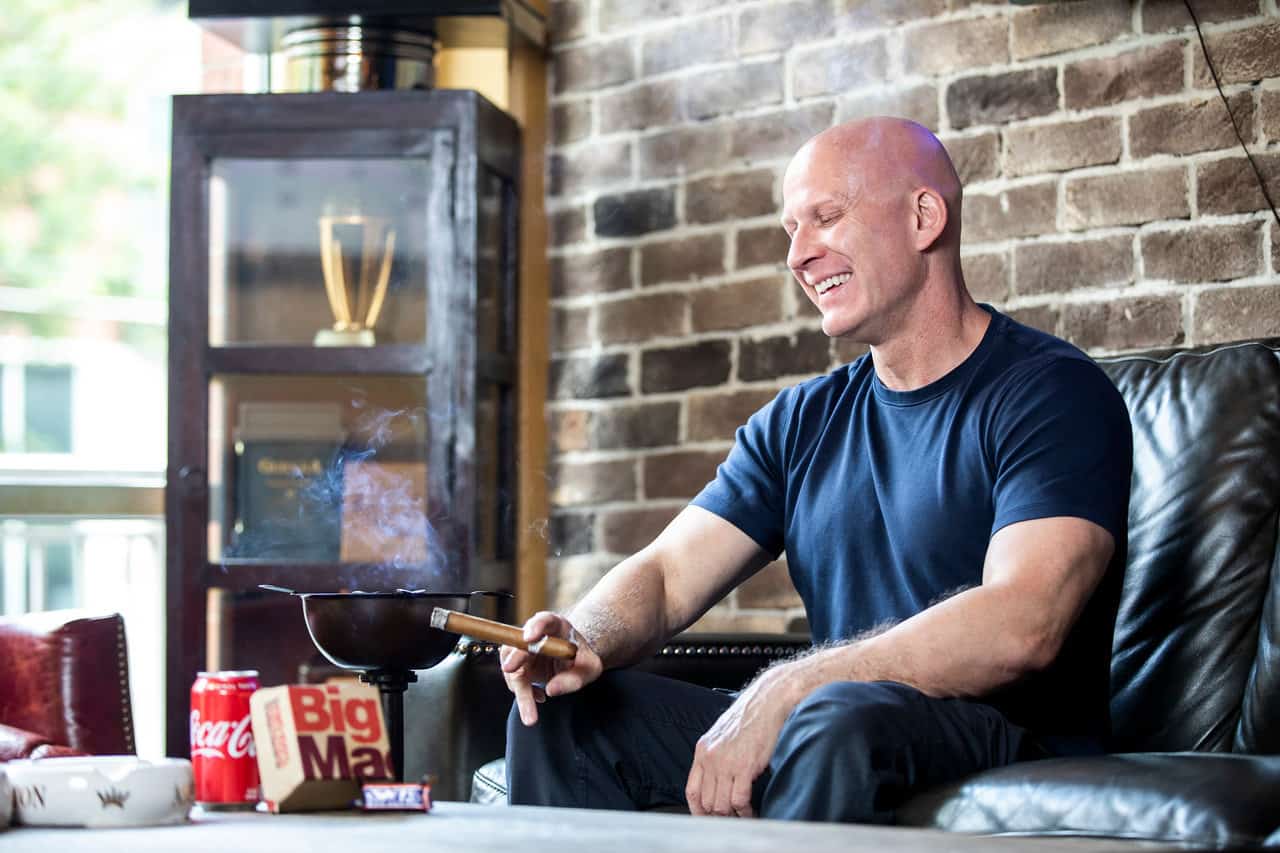
When it comes to marketing, the endgame is almost always to increase brand awareness, strengthen relationships between companies and consumers, and boost market share. But counter-marketing efforts are often employed to reduce consumption of “vice” goods such as cigarettes, sugary sodas, and fast food. Earlier this year, Michael “Mike” Lewis, professor of marketing, faculty director, Emory Marketing Analytics Center, published “Investigating the Effects of Excise Taxes, Public Usage Restrictions, and Anti-Smoking Ads across Cigarette Brands.” in the Journal of Marketing. Mike, along with co-authors, Yanwen Wang PhD14, associate professor of marketing and Canada research chair in Marketing Analytics at the University British Columbia, and Vishal Singh, professor of marketing, Leonard N. Stern School of Business, New York University, took a closer look at the role counter-marketing plays in the consumption of “vice” goods. Given that many “vice” categories are dominated by high-equity brands such as Marlboro, McDonald’s, and The Coca-Cola Company, the authors wanted to explore whether or not strong brands “might also affect the efforts of advocacy groups and regulators to disrupt these relationships and reduce consumption,” they note in their paper. The research focused specifically on the interplay between branding and counter-marketing with respect to cigarette consumption. By focusing on brand manufacturers rather than on regulators and consumers, the authors believe they’ve closed a gap. “The literature on smoking cessation has largely ignored the impact of branding on efforts to reduce cigarette consumption,” they write. “This is an oversight given that marketing researchers have found that brand-consumers’ relationships have significant effects on consumer decision-making.” A full article on the research is attached and is well worth the read. In that piece, readers will learn more about how the researchers expected that strong brands would take advantage of their increased customer loyalty and diminished price sensitivity to protect them from counter-marketing tactics. And while it might be counter-intuitive, the author’s research suggests that market leading cigarette brands would be better off pushing for excise taxes on cigarettes (versus smoking restrictions), as such tax increases would be attractive to government agencies (by increasing government revenue), and big brand cigarette companies would capture more market share. In other words, when it comes to combating counter-marketing efforts, “brand managers may devise strategies or lobbying efforts based on their category position,” suggest the researchers. “This isn’t a clear-cut battle of good versus evil. It’s more a matter of a brand’s people advocating for one position,” said Lewis. “A position that’s going to make them more resilient to some of these tactics.” In addition to big brand cigarette companies, the paper’s findings have implications for brands that anchor other vice categories, such as McDonald’s and The Coca-Cola Company, entities that have been the target of counter-marketing campaigns by various anti-obesity groups. According to Lewis, Wang, and Singh’s research, much of the response by these brands to the counter-marketing attempts has been centered around public relations, but the authors see opportunities to employ “different tactics” that are “appropriate for different brands,” they write. "Relationships between consumers and relatively weak brands may be disrupted using taxes, while for strong brands, the appropriate tactic seems to be usage restriction that limit public consumption. Our results suggest that brand building is the correct response to taxes, whereas usage restrictions would call for other responses, such as lobbying.” If you are a reporter looking to know more about this subject or if you have questions, then let our experts help. Professor Michael Lewis is an Associate Professor of Marketing at Emory University’s Goizueta Business School. In addition to exploring trends in the overall marketing landscape, Lewis is an expert in sports analytics and marketing. He is available for interview - simply click on his icon to arrange a discussion today.



Early-stage entrepreneurial activity in 2020 had fallen sharply from its pre-pandemic high in the UK as the economy was essentially shut down for long periods due to COVID-19 This decline was due to fewer nascent entrepreneurs than normal – that is, individuals in the first three months of starting their new business venture Nevertheless, around two-thirds of working-age adults looking to set up a business within three years said the pandemic had influenced their decision to re-assess their future engagement with the labour market As in previous economic downturns it is the small business community that drives the recovery across all sectors of the economy. UK entrepreneurs once again stand ready to rise to the challenges and opportunities created by the Coronavirus pandemic and the economic fallout from Brexit, a new report says. The latest Global Entrepreneurship Team (GEM) UK report found that although around of half budding entrepreneurs said that the UK government had so far dealt effectively with the economic consequences of the pandemic, there must be improved programmes, financial support and advice to start-ups and scale-ups through different stages of the business life cycle. GEM is the world’s largest survey of entrepreneurship and is the only global research source that collects data on entrepreneurship directly from individual entrepreneurs. It measures various rates of entrepreneurship in 43 countries in 2020. GEM’s UK team – which is led by Professor Mark Hart of Aston University – compared attitudes, activity and aspirations in the UK, Germany and the United States as well as the four home nations of the UK. Access to finance remained one of the major obstacles to entrepreneurial activity in the UK. Enhanced tax benefits for entrepreneurs, such as tax breaks for start-ups and businesses in difficulty to reduce early exits and better tax incentives for recruitment, investment in managerial and digital practices and skills were also highlighted1. The report also called for more entrepreneurial education, especially at school age as well as improved technical education and improved links between the educational system and industry to boost growth post-COVID and post-Brexit. It found that the UK still lags behind many comparable economies in this respect. Mark Hart, professor of small business and entrepreneurship at Aston Business School and deputy director of the UK’s Enterprise Research Centre, said: “The GEM survey undertaken in the last few months of 2020 showed a sharp fall in the number of individuals in the early stages of setting up a new business compared to the pre-pandemic high in 2019. “This is hardly surprising, but the analysis has also shown that the entrepreneurial foundations of the economy and society are still strong and these will be crucial for the recovery after the pandemic and in dealing with the ongoing economic fallout from Brexit. “Those ethnic-minority communities that have borne the brunt of the pandemic in terms of infection, hospitalisation and sadly deaths demonstrated their resilience by maintaining their previous levels of early-stage entrepreneurial activity (TEA rate) which were significantly higher than for the non-ethnic minority population. “Clearly, the pandemic has had no damaging impact on the level of entrepreneurial activity by immigrants and ethnic-minorities although it has depressed it for life-long residents and the non-ethnic population. “There is undoubtedly an appetite for people to start their own businesses in the next three years and many report new opportunities because of the pandemic but they are delaying the actual decision to get the business operational.” The full GEM UK impact report, sponsored by NatWest, is available for download here.

Aston University researchers based in the College of Health and Life Sciences have been awarded a Knowledge Transfer Partnership (KTP) project by Innovate UK, to bring its academic and scientific expertise to assist Catalent in the development of its Zydis® technology, the leading orally disintegrating tablet (ODT). The Zydis ODT fast-dissolve formulation is a unique, freeze-dried oral solid dosage form that disperses almost instantly in the mouth with no water required. It helps delivering treatments to patients and consumers who have difficulty swallowing conventional pills, or where rapid onset of action is desirable. The aim of the KTP partnership is to develop and prove an accurate predictive decision-making tool to pre-determine accurate levels of absorption enhancer for each Zydis product, potentially facilitating faster pharmaceutical development, improving efficiency, and reducing time to market. A Knowledge Transfer Partnership (KTP) is a three-way collaboration between a business, an academic partner and a KTP Associate. The UK-wide programme helps businesses to improve their competitiveness and productivity through the better use of knowledge, technology and skills. Aston University is the leading KTP provider within the Midlands. Academic lead on the project is Professor Afzal Mohammed, who is also chair in Pharmacy in the College of Health & Life Sciences (HLS) and a member of the Aston Pharmaceutics Group (APG) at Aston University. Afzal said: “This is a great opportunity for us to share and translate our academic experience in cell based models, excipient and formulation characterisation to develop an evidence based predictive tool that has the potential to expedite product development at Catalent.” Ralph Gosden, head of Zydis product development at Catalan, added: "We are excited to be working with Aston University on this project. Their expertise in drug transportation, cell biology, data analysis and model cell line design, coupled with its world-class facilities means that together, we will be able to achieve significant improvements in efficiency, and accelerate new product development.” Professor Mohammed will be supported by other colleagues from the Aston Pharmaceutics Group, including, Dr Dan Kirby, who has experience in drug delivery and improving patient acceptability of dosage forms gained through original research; Dr Affiong Iyire who has research expertise in the formulation of drugs for pre-gastric absorption and innovative cell models; and Dr Raj Badhan, who is a pharmacokinetics expert with vast knowledge of in silico methods. The outcomes of the project will be integrated into Aston University’s curriculum through teaching case studies, thereby developing well equipped graduates.


As Pfizer gets full FDA approval – Georgia Southern’s experts are in the media and getting coverage
With a fourth wave of COVID sweeping America and beyond – the Pfizer vaccine receiving full FDA approval couldn’t come at a better time according to most health experts. And as news swept across the country, Georgia Southern University’s Isaac Chun-Hai Fung, Ph.D., associate professor of epidemiology, was front and center for media and reporters, helping to explain the importance and significance of this landmark announcement. The green light from the U.S. Food and Drug Administration to move Pfizer’s vaccine from emergency use to full approval Monday is a milestone in the national pandemic response, and one that comes as Georgia and much of the country battles another surge in infections and hospitalizations due to the delta variant. More than 60% of Americans have received at least one dose of the vaccine, and experts have long pointed to data that shows the shots are safe and effective. Still, the official thumbs-up is a significant piece of evidence to bolster that fact, said Isaac Chun-Hai Fung, Ph.D., associate professor of epidemiology at the Jiann-Ping Hsu College of Public Health at Georgia Southern University. “With this new formal approval from the FDA, the public should have the same confidence as they do with existing vaccines that we have used for years against other diseases,” Fung said. August 24, Georgia Recorder As the COVID story progresses and advances, there will be a lot of questions that need answers and stories for journalists to tell. And if you are covering – then let us help. Fung is available to speak with media regarding this topic — simply reach out to Georgia Southern Director of Communications Jennifer Wise at jwise@georgiasouthern.edu to arrange an interview today.

A severe frost in Brazil has damaged coffee crops, prompting an increase in global coffee prices. According to Reuters, arabica coffee prices have surged to the highest level in almost seven years. "But coffee is grown all over the world, and smart coffee buyers will be able to adapt by finding new sources to replace the lost supply in Brazil," says Daniel Reichman, an associate professor anthropology at the University of Rochester. "Brazil’s losses will benefit coffee growers in places like Colombia and Central America." Reichman explains that the coffee market is segmented between large scale buyers that have sophisticated hedging strategies to deal with risk, and small scale roasters that might have a relationship with single farms. Reichman, who has researched the coffee-growing economies in both Central America and South America, wrote about "big coffee" in Brazil for The Journal of Latin American and Caribbean Anthropology. His upcoming book is titled Progress in the Balance: Mythologies of Development in Santos, Brazil. It's a study of political and economic transformations in the city of Santos, which has been the hub of the world coffee trade for more than a century.