
Experts Matter. Find Yours.
Connect for media, speaking, professional opportunities & more.
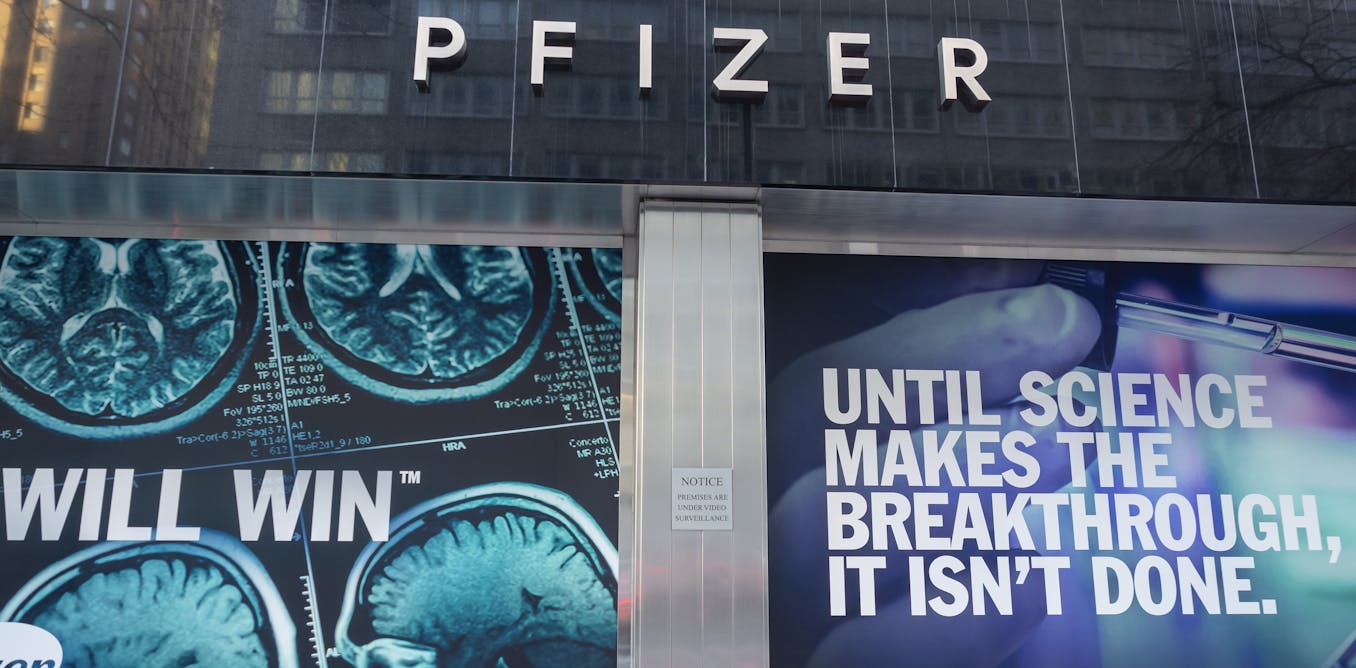
Why is the FDA funded in part by the companies it regulates?
In a recent piece published in The Conversation, C. Michael White, Distinguished Professor and head of the Department of Pharmacy Practice at the University of Connecticut shares his perspective on the Food and Drug Administration and its past and current role and influence in America. “The Food and Drug Administration has moved from an entirely taxpayer-funded entity to one increasingly funded by user fees paid by manufacturers that are being regulated. Today, close to 45% of its budget comes from these user fees that companies pay when they apply for approval of a medical device or drug. As a pharmacist and medication and dietary supplement safety researcher, I understand the vital role that the FDA plays in ensuring the safety of medications and medical devices. But I, along with many others, now wonder: Was this move a clever win-win for the manufacturers and the public, or did it place patient safety second to corporate profitability? It is critical that the U.S. public understand the positive and negative ramifications so the nation can strike the right balance.” May 13 - The Conversation The entire piece is a captivating read and a remarkably interesting topic with regards to accountability, transparency, and the influence big pharma holds across many levels of the United States government. And if you are a journalist looking to cover this topic, then let us help. Dr. White is available to speak with media -- click on his icon now, to arrange an interview today.


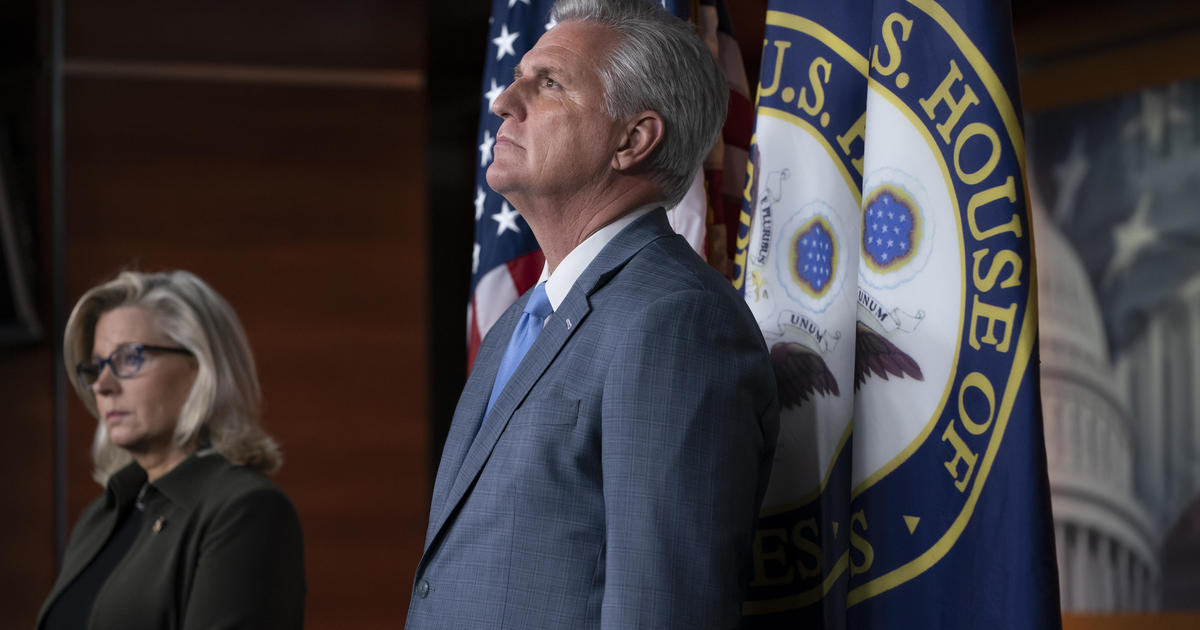
She was once seen as the rising star of the Republican Party, but for Wyoming Congresswoman Liz Cheney, the tides have shifted, and she now finds herself on the outs with the leadership of the GOP. Cheney’s vote to impeach President Donald Trump gained her national attention and accolades from across the aisle, and consequently, several enemies within her own party. Cheney comes with pedigree, profile and a strong following, but with Republicans boasting a record 35 women in Congress, the ousting of Cheney might not have the impact it once did. “It remains to be seen if this decision is a reflection of the Republicans’ willingness to remove a woman from leadership when they aren’t worried about having a ‘woman problem’ in their delegation,” said Dr. Mary-Kate Lizotte, an expert in gender difference in politics and associate professor of political science at Augusta University. What happened Wednesday may have short- and long-term consequences for the Republican party, including how it shapes itself for mid-term elections and the 2024 presidential election. If you are a journalist covering this topic, then let our experts help. Dr. Mary-Kate Lizotte is an expert in political behavior and the implications of gender differences in public opinion. She is available to talk about discuss gender roles in politics and the upcoming Senate runoffs in Georgia. Click on her name to schedule an interview.



UMW Professor Jason Davidson speaks to The Guardian about ‘Costs of War’ in Afghanistan
As America readies to end its military presence in Afghanistan, there’s been much reflection and examining of the role America and its NATO allies played in the war-torn country. A report released just this week shed some light and much-needed perspective on the topic. University of Mary Washington Professor of Political Science and International Affairs Jason Davidson, the study's author, was contacted by The Guardian to lend his expert opinion. “British and Canadian troops were more than twice as likely to get killed in Afghanistan as their US counterparts, according to a study that looks at the scale of the sacrifice made by Nato allies over the course of the 20-year war. The UK also gave more to Afghanistan than the US in the form of economic and humanitarian assistance as a percentage of GDP, the study published on Wednesday by the Costs of War project at Brown University in the US found. Although the US suffered by far the greatest number of fatalities in absolute terms compared with other members of the International Security Assistance Force (ISAF) – 2,316 American troops were killed between 2001 and 2017, the period of the study – Canadians and British soldiers sent to Afghanistan were more likely to die. The Costs of War report looks at fatalities as a percentage of national troop levels at peak deployment in Afghanistan. The US losses were 2.3% of its vast military presence. The UK lost 455 lives, which was 4.7% of its peak deployment level, while the 158 Canadians killed represented 5.4% of their total. The study refers to a grim joke told by American soldiers in Afghanistan that ISAF stood for “I Saw Americans Fight”, but points out in the case of the UK and Canada at least it was grossly unfair. “Americans do not fully understand, do not acknowledge, the sacrifices that allies made in Afghanistan,” said Jason Davidson, the author of the report, and professor of political science and international affairs at the University of Mary Washington. “It’s something that not only doesn’t get attention from those who are critics of the allies. It doesn’t even get the attention that it deserves from those who are generally cheerleaders for allies, like the current administration. I would like to see more American policymaker acknowledgment and discussion with the public of the costs that America’s allies have incurred in these wars.” May 12 - The Guardian There will be a lot of coverage in the lead up to America’s exit from Afghanistan, and if you are a reporter looking to cover that topic or the ‘Costs of War’ project, then let us help. Dr. Jason Davidson is a professor of Political Science and International Affairs and is also an expert in American Foreign and Security Policy, and International Security. If you’re looking to arrange an interview with Dr. Davidson, simply click on his icon now to arrange an interview today.



Taking on Super Polluters to Reduce Greenhouse Gases
If just the top five percent of carbon-emitting plants in the U.S. reduced emissions to the average intensity of all plants, overall emissions from the electricity sector would fall 22 percent. A new book co-authored by Wesley Longhofer, associate professor of organization and management at Goizueta Business School, offers new insights into a persistent problem—how to curb carbon emissions from top-polluting power plants around the world. In Super Polluters: Tackling the World’s Largest Sites of Climate-Disrupting Emissions (Columbia University Press), Longhofer and co-authors Don Grant and Andrew Jorgenson argue that reducing pollution from fossil-fueled power plants should start with the dirtiest producers. From data they gathered over eight years on the carbon emissions of every power plant in the world, they found that a small number of plants contribute the lion’s share of pollution. For instance, if just the top five percent of carbon-emitting plants in the U.S. reduced emissions to the average intensity of all plants, overall emissions from the electricity sector would fall 22 percent. The book also questions claims that improvements in technical efficiency will always reduce greenhouse gases. “It’s the paradox of efficiency,” Longhofer says. “Just because a plant produces power more efficiently doesn’t mean they’ll pollute less. It just becomes cheaper to produce.” As sociologists, the authors are the first to put the problem into context, investigating global, organizational, and political conditions that explain super-polluter behavior. They demonstrate energy and climate policies most effective at curbing power-plant pollution and show how mobilized citizen activism shapes those outcomes. “Climate change is fundamentally an organizational problem. Even if you think about the Paris Accords, it’s the power plants and the cars within those states that produce the emissions, not the states themselves,” Longhofer says. “What do we do with what we already know? How do we develop policies to help us achieve our climate goals?” If you’re a journalist looking to speak with Wesley Longhofer about his book or discuss big pollution and how to cut carb emissions - then let us help. Simply click on his icon now to arrange an interview today.



Do Wholesalers Discriminate Against AI in Procurement Practices?
If we deploy automation without thinking strategically about intelligence, too, isn’t AI likely to backfire on us? Airplane manufacturer, Boeing, made headlines in 2019 for all the wrong reasons. Its 737 Max aircraft was indefinitely grounded after two fatal crashes in the space of just six months had claimed the lives of 346 people. Investigation into the accidents revealed that updates to an automated system – the Maneuvering Characteristics Augmentation System, known as MACS – had failed to integrate one of two intelligent sensors, meaning the system lacked a critical security backstop. As the aircrafts switched into autopilot mode shortly after takeoff, the error sent them both into fatal nosedives within minutes. These tragedies highlight an issue with automation that needs more focused attention says Goizueta’s Ruomeng Cui, assistant professor of information systems and operation management. And it’s this: if we deploy automation without thinking strategically about intelligence too, is AI likely to backfire on us? Cui is an expert in operations strategies in digital retail and platform markets. To better understand the challenges surrounding automation and intelligence in operational processes, she teamed with Shichen Zhang of Tianjin University and Rutgers’ Meng Li to explore how AI brings value in the procurement space. With Deloitte reporting that almost 45% of Chief Procurement Officers globally are now using, piloting, or planning to integrate AI into their operations, these insights should provide interesting food for thought, says Cui. “AI isn’t just about being quicker, it’s also about being smarter. It can deliver automation but can also deliver predictive intelligence; and while these two dimensions might be correlated, one doesn’t necessarily imply the other – as the Boeing example demonstrates,” says Cui. From the tech perspective, there’s a lot of buzz about how AI is helping to drive decision-making, she adds. But there is still plenty that we don’t know about the operational dimensions to using artificial intelligence. “With international procurement, you’re basically talking about big retailers going in and requesting prices for goods or products from wholesale suppliers. And that’s a process that could, in theory, lend itself very well to AI, since it can automate simple (and tedious) tasks over and over again. So there’s a significant potential gain in companies outsourcing this kind of task to the machine.” But although the potential might be clear, Cui and her colleagues believe that simply automating these processes might not in fact yield optimal results; and could in fact work against buyers by encouraging suppliers to quote higher prices than they might in personalized, human transactions. A full article detailing Cui’s research is attached, within it – several theories were explored. Who Comes Out Ahead on Price? Humans or AI Chat Bots? “We speculated about the possibility of wholesalers discriminating against the AI,” says Cui. “Specifically, we wanted to know if the sellers would quote higher prices to AI bots than they would to human buyers, because at the end of the day these bots are just machines; they don’t bring the authenticity or sincerity of human beings.” When Machines are Smart, Discounts Rise “When wholesalers are just asked over and over for their prices, they know that they are dealing with a machine and the intuition is that the machine is not intelligent, that it doesn’t have market expertise, and that it isn’t capable of decision-making. There’s no incentive to build relationships or to engage in any kind of negotiating dynamic here.” The topic is fascinating, and given the increase of AI in the workplace – a timely one. And, if you are a journalist looking to cover this research or speak with Professor Ciu about the subjects of telework and productivity, simply click on her icon now to arrange an interview today.


Aston University wins EU funding for ‘game-changing’ age verification project
Researchers from Aston University led by Abhilash Nair are to take part in a ‘game-changing’ new project to improve children’s safety online. The European Commission has awarded the euCONSENT consortium €1.47m (£1.2m) in funding to create child rights’ centred cross-border system for online age verification and parental consent. "As society continues to grapple with inequalities in terms of digital literacy and digital divide between generations, it is important that the tech industry assumes more responsibility for protecting, as well as upholding the rights of children online.”


Research Reveals Uptick in Hostility toward Black Americans during Tough Economic Times
Goizueta Experts Encourage Business Leaders to Double Down on Diversity, Equity, and Inclusion Efforts. Do recessions stoke racial tension? When there’s an economic downturn, are White Americans more likely to feel distrust or even animosity towards their Black peers? Researchers have long wondered about the broader societal impact of financial recessions, but until recently their effects on race relations have been unclear. In a recent paper, Emily Bianchi, associate professor of organization and management, Erika Hall, assistant professor of organization and management, and Sarah Lee 19PhD, assistant professor of management, Dominican University of California and visiting professor of organizational behavior, Pepperdine University, find that there is indeed a subtle uptick in hostility towards Black Americans during bad economic times. Their paper, Reexamining the Link Between Economic Downturns and Racial Antipathy, examines publicly available data on attitudes, political trends, and behavioral patterns in the U.S. Sarah Lee 19PhD While businesses tend to cut diversity, equity, and inclusion efforts during economic downturns, Bianchi and Hall underscore that these efforts may be even more critical during these times. To study this phenomenon, the researchers analyzed more than 20 years of data from the American National Election Survey (ANES), a biannual survey capturing political affiliations and perceptions of political candidates from 1964 until 2012. They analyzed how White Americans’ attitudes towards Blacks changed depending on the state of the economy and found that in worse economic times, Whites felt more negatively about Blacks. As Bianchi notes: “we were able to analyze the responses of more than 30,000 individuals who identified as White. And we do find that for decades – between the 1960s and the first part of the 21 century – White Americans feel less warmly about Black Americans during times of financial hardship.” Emily Bianchi, associate professor of organization and management In a second study, Bianchi, Hall, and Lee examined data from Project Implicit, a popular website that allows people to test their own implicit bias and also gauges racial attitudes. Again, the authors found that in worse economic times, White Americans held more negative implicit and explicit attitudes about race. In particular, during the Great Recession, they found that White’s attitudes towards Blacks became substantially more negative in states that were hard hit by the economic crisis compared to states in which the economic downturn was less severe. Having established that economic conditions affected fluctuations in attitudes towards race, the authors then examined whether these emotional shifts translated into actual behavioral outcomes. In other words, if Whites felt more negatively towards Blacks during recessions would this mean that Black professionals were less likely to be successful when the economy floundered? They tested this possibility by looking at two domains of public activity: record sales and voting patterns. First, they examined data from the Billboard Top 10 American songs between 1980 and 2014 and recorded the race of each musician who secured a Billboard hit. They found that in bad economic years, Black musicians were 90% less likely to have a top 10 hit, presumably because White consumers (by far the biggest consumer group during this period) were less likely to support them. Next, they examined the results of more than 8000 elections to the U.S. House of Representatives over the same period. They found that in bad economic times, Black politicians were 21% less likely to win elections. Interestingly, the converse also appears to be true. In good times, Black musicians and politicians fared much better in the polls and the charts – pointing to a certain fluidity in attitudes, says Bianchi. “Across these very different domains, studies, and sample sizes, we find the same consistent pattern: when times are tough, White Americans feel more animosity towards Black Americans and are less likely to support Black musicians or politicians. When things pick up, White Americans have more positive attitudes towards Black Americans and are more likely to endorse Black musicians and Black candidates.” The authors attribute these effects to innate human feelings of fear in the face of threat. Economic threats or shocks tend to evoke uncertainty and fear about what is to come. This translates into greater distrust of others, particularly those perceived as different in some way. And it’s an effect, they argue, that should be very much on the radar of businesses and decision-makers. Erika Hall, assistant professor of organization and management The research cites, “Anecdotally, we know that when times are good, organizations will tend to prioritize their efforts in the area of diversity and inclusion. But while this is critically important at all times, our research suggest that these efforts are probably even more important when times are tough.” All of this points to a need to attend to these issues more acutely when there’s a downturn, says Bianchi. And she cautions that this is likely to be counterintuitive to most leaders, who are likely more inclined to sideline diversity efforts when the economy slides. In terms of the current debate around race relations in the US, however, Bianchi stresses that the economic dimension is just one piece of a “very complicated puzzle.” “What we have seen and are seeing in 2020 and 2021 is a confluence of many major factors: a pandemic that has put a lot of people out of work, and that has put everyone on edge, punctuated by some horrific and well documented instances of violence against Black citizens,” Bianchi says. “So many of these things are in the mixing pot, that it’s hard to pinpoint one specific cause behind the current race crisis in the U.S. So many things coming together at once that have put us in this moment.” Only time will tell how this might play out compared to what we saw in the 80s and 90s, which were economic fluctuations rather than a complete drop off a cliff, she says. It will be more difficult to tease apart the effect of the economy versus the effect of the pandemic versus the effect of police violence on America’s race relations – a situation that Bianchi describes as a “cauldron of mess.” That said, she stresses that for business leaders, now is a good time to double down on efforts to drive diversity and inclusion. “I’d suggest leaders be especially mindful that at times of economic stress such as we are currently experiencing, there is a very real danger of heightened racial animosity.” We’ve attached a full article with even more advice and helpful information from our experts – but if you are looking to learn more or cover this topic, we can help. All of our faculty are available to speak with media, simply click on either expert’s icon now – to book an interview today.


Queen's Speech: Measures to tackle obesity and food advertising bans
Two University of Warwick experts comment on measures to tackle obesity and food advertising that have been announced in the Queen’s Speech at the State Opening of the UK Parliament today. Dr Paul Coleman (pictured), from Warwick Medical School and the Warwick Obesity Network, said: We welcome the government's intention to tackle rising rates of obesity by restricting the advertising of products high in fat, sugar or salt (HFSS) shown on TV before 9pm and a total online advertising ban However, the government must focus on all forms on online advertising, not simply traditional commercials. This ban must cover online ‘advergames’, which encourage children to win points by placing branded food item in the mouth of children’s characters. These games are notoriously difficult for the government to regulate. While we also welcome the decision to incentivise individuals to both eat better and exercise more, the government must recognise that increased wages, rather than one-off payments, are needed to ensure all families can access healthy food For many families the main barrier in purchasing healthy food is cost, with families regularly limiting the amount of money spent on food to cover the cost of other essentials. All families require the financial means to purchase healthy food. We would like to see new targets to end household food insecurity by the year 2030. Dr Thijs van Rens of the University of Warwick Department of Economics and the Warwick Obesity Network, said: Required calorie labelling for large out-of-home businesses is a welcome start to address the restaurant and take-away sector, where many people get a large and increasing share of their food. A ban on "junk food" advertising on TV and online is long overdue. While we welcome the government renewed commitment to announce a ban on advertising, it is now time to take action. We are still waiting on the government to publish the result of its consultation on this matter, which was announced in November of last year. In the meantime, overweight and obesity are set to overtake smoking as the biggest cause of preventable death in the UK. Overweight is the silent killer that we can do something about, just as deadly as Covid-19 and much more under our control. Advertising is one of the elements of an environment that nudges, forces and tricks parents and children into buying and consuming food that makes them unhealthy, overweight and eventually kills them. Effective action against HFSS food advertising means banning advertising anywhere where children are likely to see it, which means both on telly and online


How does the job market look for the Class of 2021 ? The answer: much better, says IU expert
As the class of 2021 graduates this weekend to embark on new challenges and careers, Rebecca Cook, executive director of undergraduate career services at the Indiana University Kelley School of Business, reflects on the current job market and offers insights into what summer internships may be like for current students. “The summer of 2020 was a mess for student internships and full-time roles, with pretty much all either going virtual or, in the case of many internships, being cancelled altogether as companies tried to figure out business during the pandemic. Luckily, the job outlook for both full-time roles and internships in May 2021 looks a lot different – and a lot better. “The job market is hopping right now with a significant number of internship and full-time opportunities, as companies open up and business grows. Industries such as professional services, technology, health care, manufacturing and financial services are all seeing significant upticks in job postings. Even companies hard-hit by the pandemic, such as retail and hospitality, are picking up their hiring. “While hiring is back to pre-pandemic levels in many industries, the level of competition for those roles has increased significantly. In a normal year, the majority of job seekers are that year’s graduates. However, this year we have 2021 grads plus some 2020 grads who still are seeking plus those who went to graduate school to put off job hunting during the pandemic and are now graduating. This all leads to a much more competitive job market and one where a student needs to work to stand out from the crowd, particularly through networking and reaching out to potential connections at their companies of interest. “We recommend that students spend a lot more time networking than they may have in the past, creating a focused list of companies they are interested in and then spending the time to connect and speak with employees at those companies. Leverage any ‘warm’ connections possible, such as friends, family members, fellow Kelley alumni, faculty and staff recommendations. “An important point to remember is that roughly 75 percent of jobs are never advertised publicly, so the only way to find out about them is through networking. Many new jobs, as well as internships, may start out virtual “It’s important to note that many roles that students are entering will still be virtual, at least for the time being, as companies are very mixed as to if they are back in the office already, not returning to the office until early fall, or staying remote entirely. Internships in particular are likely going to be virtual, while full-time jobs are looking to be mixed, with many starting out virtual but then likely moving in-person when offices open up. While being virtual once again is probably disappointing, students should remember that they can be just as successful with a virtual full-time role or internship as an in-person one. “The key is staying connected with their supervisor and co-workers on a regular basis. They should also network with as many people in their full-time or internship company as possible, taking the initiative to set up Zoom (or whatever video conferencing tool that the company uses) meetings regularly in order to learn as much about the company and role as possible, as well as to build their network for future opportunities. “Overall, there are a lot of available opportunities out there for students – they just need to put in the time to network and get their name and brand known.” To schedule an interview with Cook, contact George Vlahakis at vlahakis@iu.edu.

Kelley School expert who studies causes and effects of recalls available to discuss Peloton
Peloton Interactive Inc. on May 5 announced that it is recalling its treadmills in a statement from CEO John Foley who also apologized for the company’s initial refusal to comply with federal safety regulators’ prior request for this action. George Ball, assistant professor of operations and decision technologies and Weimer Faculty Fellow at the Indiana University Kelley School of Business, studies the causes and effects of product recalls. Below are comments from Ball. He can be reached at gpball@indiana.edu. “Recall decisions like this are very difficult for managers to make, especially the ones that are high profile and associated with consumer injury. Managers have to balance the firm financial health with consumer safety. Thus, this is a rich area of research. The research that my colleagues and I undertake in this field deal both with the regulator and the firm. My comments will attempt to address both perspectives. “I will start with the regulator. I am currently involved in a research project with two colleagues that is specifically critiquing the Consumer Product Safety Commission for situations very similar to this Peloton recall. There are three main regulators in the US that oversee product quality and in particular recalls: the FDA, NHTSA and the CPSC. “Of those, CPSC is the least proactive and in my view, least successful in properly managing product recalls and their timeliness. This is because there are two main ways in which a firm can push firms to recall; they can force them to, or they can work with the firm management to help encourage them, or nudge them, to recall. The FDA is very good at influencing firms while NHTSA is quite good at mandating recalls. CPSC does neither well. “In particular, the FDA frequently chooses to use their relationships with senior quality executives at firms to nudge them to recall when FDA feels it may be necessary and the firm has not yet acted upon the quality problem. Conversely, NHTSA mandates approximately 20 to 30 percent of auto recalls, such that they choose to force instead of nudge. However, in both cases, while neither industry (medical products and autos) are perfect when it comes to recall timeliness, and both have suffered unfortunate well-known examples of firms dragging their feet in the recall decision, both have a well-developed approach. “CPSC mandates practically no recalls and they do not, from my research, have strong relationships with firm executives that can help them nudge firms to make the quick recall decision. Thus, this Peloton example is one of many in which consumer product firms may take too long to recall. “From the firm perspective. There are several potential red flags that may indicate the firm took too long. The longer a consumer product industry CEO has been in their role, the slower they are to make recall decisions. This is because the longer a CEO is in the role, the less open they are to taking responsibility for such high-profile mistakes. Interestingly, a new CEO, such as one who has been in their role for two to three years, is much more likely to recall a faulty product. “The CEO of Peloton definitely falls into the category of a fairly long-tenured CEO who has his reputation tied closely to the firm’s success. Secondly, the more stock a CEO owns in their firm, the slower they are to make the recall decision, because they are trying to protect their financial welfare. The CEO of Peloton appears to have a significant fortune at stake in Peloton stock, which would be consistent with our research. The more stock a CEO owns, the slower the firm take to recall defective products.”