
Experts Matter. Find Yours.
Connect for media, speaking, professional opportunities & more.

Smell training, not steroids, best treatment for Covid-19 smell loss
Steroids should not be used to treat smell loss caused by Covid-19 according to an international group of smell experts, including Prof Carl Philpott from the University of East Anglia. Smell loss is a prominent symptom of Covid-19, and the pandemic is leaving many people with long-term smell loss. But a new study published today shows that corticosteroids - a class of drug that lowers inflammation in the body – are not recommended to treat smell loss due to Covid-19. Instead, the team recommend ‘smell training’ – a process that involves sniffing at least four different odours twice a day for several months. Smell loss expert Prof Carl Philpott from UEA’s Norwich Medical School, said: “The huge rise in smell loss caused by Covid-19 has created an unprecedented worldwide demand for treatment. “Around one in five people who experience smell loss as a result of Covid-19 report that their sense of smell has not returned to normal eight weeks after falling ill. “Corticosteroids are a class of drug that lowers inflammation in the body. Doctors often prescribe them to help treat conditions such as asthma, and they have been considered as a therapeutic option for smell loss caused by Covid-19. “But they have well-known potential side effects including fluid retention, high blood pressure, and problems with mood swings and behaviour.” The team carried out a systematic evidence-based review to see whether corticosteroids could help people regain their sense of smell. Prof Philpott said: “What we found that there is very little evidence that corticosteroids will help with smell loss. And because they have well known potential adverse side effects, our advice is that they should not be prescribed as a treatment for post-viral smell loss. "There might be a case for using oral corticosteroids to eliminate the possibility of another cause for smell loss actually being a confounding factor, for example chronic sinusitis – this is obviously more of a diagnostic role than as a treatment for viral smell loss. “Luckily most people who experience smell loss as a result of Covid-19 will regain their sense of smell spontaneously. Research shows that 90 per cent of people will have fully recovered their sense of smell after six months. “But we do know that smell training could be helpful. This involves sniffing at least four different odours twice a day every day for several months. It has emerged as a cheap, simple and side-effect free treatment option for various causes of smell loss, including Covid-19. “It aims to help recovery based on neuroplasticity - the brain’s ability to reorganise itself to compensate for a change or injury,” he added. The research was led by researchers at the Cliniques universitaires Saint-Luc in Brussels (Belgium) in collaboration with the Univeristé catholique de Louvain, Brussels (Belgium), the University of East Anglia (UK), Biruni University, Istanbul (Turkey), Aarhus University (Denmark), Université du Québec à Trois-Rivières (Canada), Geneve University Hospitals (Switzerland), Harvard University (USA), Aristotle University, Thessaloniki (Greece), University of Insubriae (Italy), University of Vienna (Austria), the University of Chicago (USA) and the University of Colorado (USA). ‘Systemic corticosteroids in COVID-19 related smell dysfunction: an international view’ is published in the journal International Forum of Allergy & Rhinology.

COVID expert: Prof Lawrence Young, UK
Professor Lawrence Young of the University of Warwick is one of the go-to experts in the UK on COVID-19. A Professor of Molecular Oncology at Warwick Medical School, he can comment on many aspects of the pandemic -- from the nature of the virus itself and its effects in patients, to its impacts on hospitals and wider society. He regularly features on TV, radio, and newspapers in the UK and worldwide, including: If you would like to book an interview with Prof. Young, contact press@warwick.ac.uk or L.Walton.1@warwick.ac.uk

UConn Expert Dr. Wizdom Powell on the mental health impact of Chauvin trial
For weeks, Americans closely watched the trial of the police officer charged in the death of George Floyd last May, and as the jury's guilty verdict brings those proceedings to a close, the impact on communities across the country may be lasting. Dr. Wizdom Powell, director of UConn's Health Disparities Institute Director, joined CBS This Morning to discuss the impact of the Chauvin trial on mental health, particularly among members of the Black community. "The thing about racism, in general, is that it is a bio-social stressor. And incidents, like being in a courtroom and repeating the exposure to those eight minutes and forty-six seconds – and, now we know, nine minutes – of George Floyd’s demise can be triggering for everyone who is exposed to it. And so, there is a consequence of having that be replayed in an open court." **** "I think that we all have had our breaths collectively stolen by the incidents of racial violence that we’re all baring witness to virtually and directly, for those who were actually on scene during the tragic event. So, I would say that, what you can do now, if you’re really wanting to rise up and meet Black, Indigenous, and People of Color in this moment, is to act in true allyship. Listen with a third ear. Accept the reality and truths of what people are experiencing, without requiring them to explain away or to offer additional context for what they are feeling. Believe people when they tell you they’re hurting the first time. That kind of response – legitimating the wounds that we are experiencing in this moment – can go a long way in promoting racial healing, unity, and restorative justice." If you are a journalist looking to discuss this issue or cover this very important topic – then let us help. An associate professor of psychiatry at UConn Health, Dr. Powell is an expert on the role of racism and gender norms in African American male health and healthcare inequities. Dr. Powell is available to speak with media about this topic – simply click on her icon now to arrange an interview today.

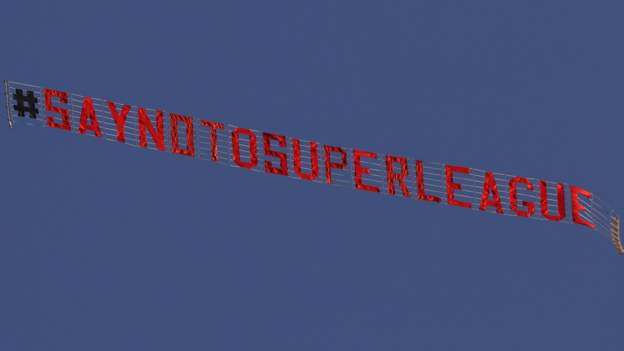
News of the newly proposed European Super League has left a storm of concern, criticism, threats and even political intervention in its wake. The announcement of a mid-week league consisting of a dozen of the top-tiered clubs from across Britain and Europe would rival the popular UEFA Champions League. No doubt, more football to watch is good for fans, and for club owners – but the backlash has been harsh from other stakeholders and teams left on the sidelines. The media coverage has been intense. Meanwhile, UK Prime Minister Boris Johnson met with the Football Association, Premier League officials and fans' representatives on Tuesday, after which the government said it will take "whatever action necessary", including legislative options, to ensure the proposals were stopped. Downing Street added: "No action is off the table." In other developments: Uefa president Aleksander Ceferin called on the English clubs to "come to your senses" Everton criticised the "preposterous arrogance" of the clubs involved Real Madrid president Florentino Perez said that the new league was needed to "save football" The proposed tournament would see teams play one another in midweek games in an attempt to have more matches between the big-name clubs. The other clubs involved are AC Milan, Atletico Madrid, Barcelona, Inter Milan, Juventus and Real Madrid. The plans have been heavily criticised by fans, pundits, football's governing bodies and members of the UK government. "It is our task to protect the European sport model. If some elect to go their own way, they must live with the consequences of their choices," said Infantino, the president of world football's governing body. "They are responsible for their choice completely. This means you are either in or you are out. You cannot be half in and half out." April 20 – BBC If you are a journalist covering this emerging story – then let us help with your questions by providing expert opinion, perspective, and analysis. Peter Dawson from the University of East Anglia is a Professor of Economics and an expert in sports economics. Peter is available to speak with media about this topic – simply click on his icon now to arrange an interview today.

UMW’s foreign security expert Jason Davidson weighs in on America’s exit from Afghanistan
It is America’s longest war, and after 20 years on the ground, President Biden has announced it’s time to recall the troops and bring them home. As media looked to cover this breaking news, experts from the University of Mary Washington were there to answer the call and help with coverage that has been dominating headlines. “I think the Biden administration is trying to balance the president’s desire to get out and cut U.S. losses, but also the fact that the Taliban has not really complied with their side of the deal so far and they are unlikely to fully comply with a deal, period,” said Jason Davidson, a political scientist at the University of Mary Washington. President Donald Trump’s administration agreed more than a year ago to pull U.S. and NATO troops out of the country by the start of next month. The Taliban has warned of violence if that deadline is not met, but Biden administration officials are hopeful setting a firm withdrawal date a few months down the line will not result in reprisals. Trump’s plan spurred bipartisan objections in Washington when it was announced last year, with Republicans and Democrats denouncing a seemingly arbitrary deadline and predicting chaos if U.S. troops were withdrawn prematurely. Progress toward peace has been sporadic since then, with the Taliban continuing to engage in violence as negotiations stalled. April 13 - ABC News Exiting Afghanistan will be a process that will take time and garner lots of media coverage. And if you are a journalist covering this topic, then let our experts help. Dr. Jason Davidson is a professor of Political Science and International Affairs and is also an expert in American Foreign and Security Policy, and International Security. If you’re looking to arrange an interview with Dr. Davidson, simply click on his icon now to arrange an interview today.


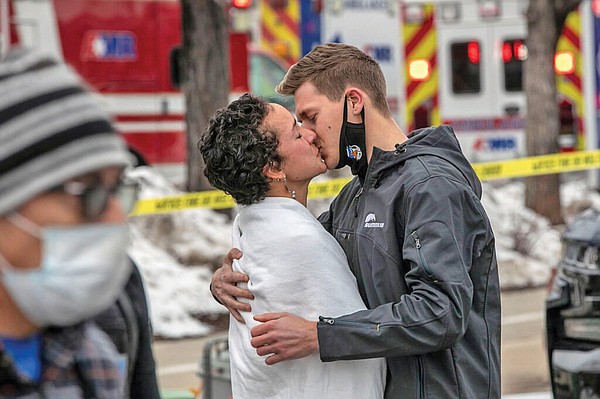
UMW's psychological trauma expert Laura Wilson weighs in on survivors of recent mass shootings
Media have been covering what has been a deadly year in America, with nearly a dozen mass shootings to date. UMW's psychological trauma expert Laura Wilson has been the go-to person to help journalists understand the impact these horrific events have on survivors. Recently, Dr. Wilson was interviewed about the recovery process American Olympic hopeful Maggie Montoya is facing after witnessing first-hand the shooting in Boulder, Colorado, as she prepares to represent America this summer in Tokyo. Laura C. Wilson, associate professor of psychology at the University of Mary Washington in Fredericksburg, Va., has focused on post-trauma functioning from mass trauma. She says most people's exposure and understanding of mass shootings consists of the immediate aftermath. "They see the news coverage of the crime scene and watch the investigators' news briefing," Wilson said. "Within a few days the news trucks leave and people's attention turns to the next major news event. This is when the grief and recovery work starts for the survivors." Wilson said every person will process the events differently. Some will have intense, acute reactions that subside in a few days or weeks. Effects could be chronic for others, and some experience delayed reactions. "Each person is different, and their recovery will look different," she said. Wilson didn't speak specifically about Montoya's running community but said community overall is a powerful strength for survivors in the aftermath of a mass shooting. "It creates a sense of belonging, which can promote psychological recovery," Wilson said. "Having supportive family and friends to validate the feelings and help you process your thoughts is certainly a protective factor." April 18 - The Northwest Arkansas Democrat-Gazette If you are a reporter looking to cover the issues survivors of mass-shooting events will experience, then let us help. Dr. Laura Wilson is a clinical psychologist whose expertise focuses on post-trauma functioning, particularly in survivors of sexual violence or mass trauma (e.g., terrorism, mass shootings, combat). Her research interests extend to predictors of violence and aggression, including psychophysiological and personality factors, as well as indicators of PTSD following mass trauma, long-term functioning among first responders, outcomes among survivors of sexual violence and the influence of media on mental illness stigma. Dr. Wilson is available to speak with media, simply click on her icon to arrange an interview today.


Kelley expert available to discuss Bernard Madoff's legacy, long-term effect of his scheme
Bernard “Bernie” Madoff, convicted architect of an infamous and epic securities Ponzi scheme with thousands of investors, died behind bars on April 14 at the age of 82. Noah Stoffman, an associate professor of finance and Weimer Faculty Fellow at the Indiana Kelley School of Business, has researched the effect of such fraud beyond the direct investments that were lost by victims. His 2018 paper, “Trust Busting: The Effect of Fraud on Investor Behavior,” co-authored with professors at Cornell University and the University of Texas-Dallas, showed that the collapse of the Madoff Ponzi scheme had an effect not only on his many direct victims, but also on the general level of trust in financial services. “People who live in the same areas as victims of the fraud withdrew assets from investment advisers and increased their deposits in banks. Financial advisers in these areas were also more likely to close. Our analysis shows that advisers who provided services that can build trust—such as financial planning advice—saw lower levels of withdrawals. Our evidence suggests that this decline in trust shock was transmitted through social networks,” Stoffman said. Stoffman’s research focuses on the investment decisions of professional money managers and individual investors, and on the effect of technological innovation on asset prices. Much of his work highlights the importance of social interaction in the spread of information in financial markets. Stoffman teaches courses on analysis of financial data to undergraduates, MBAs, and doctoral students at the Kelley School. He can be reached at 812-955-1758 (m) or nstoffma@indiana.edu.

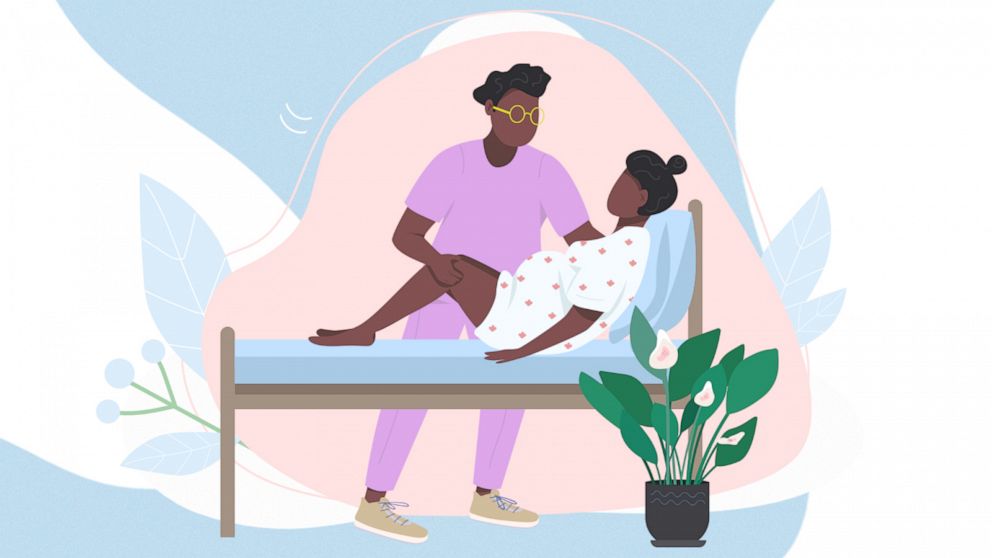
Earlier this week, President Joe Biden proclaimed that April 11 thru 17 would be Black Maternal Health Week in America. In Georgia, the state has consistently been ranked as one of the most dangerous places in this country to be a new mother. Approximately 26 Georgia women die from pregnancy complications for every 100,000 live births, compared to the national average of about 17 women. But even more devastating is the fact that about 60% of the state’s maternal deaths between 2012 and 2016 were found to be preventable, according to the Georgia Department of Public Health. And the mortality rates are much more tragic for Black women in Georgia. African American women are almost three times more likely to die from a pregnancy-related cause than white women in Georgia. Black mothers in rural areas of Georgia are at an even higher risk. “Maternal and infant mortality are really significant indicators of the quality of health in any area, so my colleagues around Georgia really felt challenged to do something that we hadn’t done in a long time in our state, which was to get the data,” says Dr. Chad Ray. “Because you can’t really fix something unless you know who and why. And then you assemble the stakeholders to formulate a plan to make a dent and to move the needle on something that is just so important.” This is an important topic that impacts mothers in Georgia and across the entire United States. And if you are a journalist looking to cover this topic – then let us help. Dr. Chad Ray is the Interim Section Chief of the Department of Obstetrics and Gynecology at the Augusta University Medical Center. He is an expert in the areas of maternal mortality & global women's health initiatives. Dr. Ray is available to speak with media about Black Maternal Health Week - simply click on his icon now to arrange an interview today.


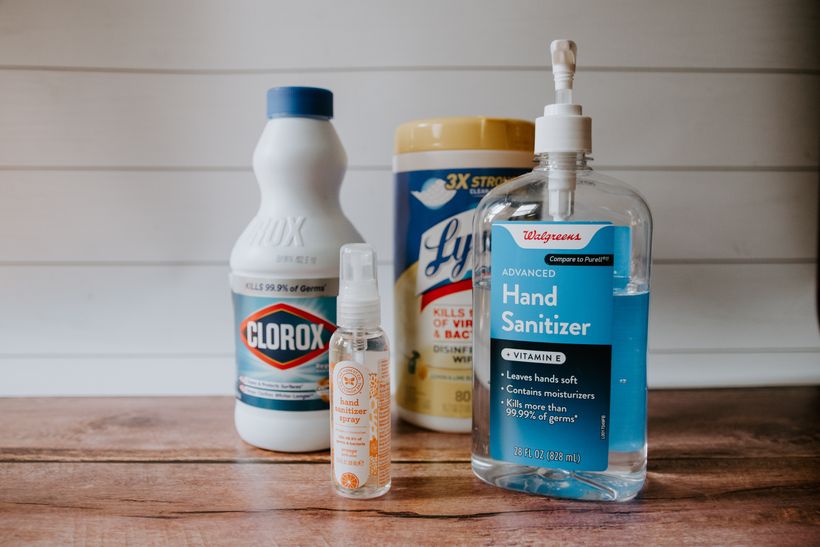
The days of wiping down groceries may be coming to an end, but will Americans' reliance on hand sanitizer follow suit? This week, the Centers for Disease Control and Prevention (CDC) released a report confirming that the risk of catching the coronavirus from surfaces is low. Kevin Minbiole, PhD, chair of the Department of Chemistry at Villanova University, weighs in on hand sanitizer use—and whether too much sanitizing is a bad thing. "I think that a lot of the concern on the overuse of hand sanitizer a decade ago or so was the overuse of triclosan, a strong antimicrobial agent that would persist in wastewater," said Dr. Minbiole, referring to a theory that arose following the H1N1 pandemic in 2009. At that time, scientists expressed worry that bacteria were becoming resistant to hand sanitizer. "It seemed like overkill to go beyond soap and water or simply ethanol (alcohol)—or to add triclosan into hand soap," Dr. Minbiole continued. While Dr. Minbiole does not dismiss this theory, he notes, "I believe there was merit to the concerns of overapplying antibiotics and antiseptics when they were not needed." Looking to the future, Dr. Minbiole does not see hand sanitizer playing as big a role. "I don't foresee a backlash so much here, as folks recognize that this particular virus is more of an airborne concern," he says.

Public health education soars in wake of pandemic
Maybe a silver lining can be found from the COVID-19 pandemic, as interest in public health education is soaring at U.S. colleges and universities, says a nationally prominent public health professor. Public health education has become a logical choice for students when looking at changing public health practice trends and their implications for public health education, explained Gulzar Shah, Ph.D., who authored an invited editorial in the March issue of the American Journal of Public Health (AJPH). Shah is department chair and professor of health policy and community health in Georgia Southern University’s Jiann-Ping Hsu College of Public Health. His editorial is titled “Public Health Education and Changing Public Health Realities in the Public Health 3.0 Era.” “For many of the 19 million college students enrolling annually in public and private colleges in the United States, public health is becoming a logical choice,” he said. “Because of COVID-19, interest in public health careers is soaring, evident from the 20% increase nationwide in Master of Public Health applicants.” The editorial also drew insights from the Association of Schools and Programs of Public Health’s national-level data from schools and programs of public health about the first employment destinations of public health graduates. “The emphasis on aligning public health practice and policy with the Public Health 3.0 framework, in which leaders partner across various sectors to address social, environmental and economic factors that affect population health and health inequity, has attracted the spotlight on generalist, behavioral education and health policy degrees,” Shah noted. “The Public Health 3.0 framework has also underscored the desirability of adopting the Health in All Policies approach and encouraging public health leaders to act as chief health strategists in influencing policies in other sectors affecting population health. Increasing focus on Health in All Policies and higher salary positions in health care may further explain the popularity of health policy and management and health law programs.” If you are a journalist looking to know more about Dr. Shah’s work, and the importance public health education in America of the programs Georgia Southern is offering – then let us help. Dr. Gulzar H. Shah is a Professor and Department Chair, Health Policy and Community Health at the Jiann-Ping Hsu College of Public Health (JPHCOPH), Georgia Southern University. He is available to speak with media regarding this important topic - simply click on his icon now to arrange an interview today.

