Experts Matter. Find Yours.
Connect for media, speaking, professional opportunities & more.

Spitting image: What the blunder by Philadelphia Eagles' Carter can teach us about teams
Social media caught fire when Philadelphia Eagles' defensive tackle Jalen Carter got tossed for spitting on Dallas Cowboys' quarterback Dak Prescott before the first snap of this year's NFL season opener. While the impact on the game was obvious, what unfolded on the field of play has lessons for the workplace and the boardroom. The University of Delaware's Kyle Emich can talk about the parallels between the two worlds when individuals let their teams down. Emich, a professor of management in UD's Lerner College of Business and Economics, said emotional events occur all the time in the workplace, especially in board rooms, where the atmosphere is often competitive. "Emotion regulation is a key part of harnessing motivation appropriately in a competitive context," Emich said. • Early on, the Cowboys were able to regulate their emotions to tap into the incident when they roared out to several seamless offensive drives. • Emich says the Eagles' young, inexperienced and not-yet-gelled defensive unit was unable to regulate their emotions and preserve their confidence (collective efficacy) after the incident. They were unable to stop Dallas in the first half. • Carter's act could also have served as an emotion regulation cue for both teams. The Eagles defense was unable to regulate and maintain stability, leading to a number of costly penalties. But the Cowboys seemed to have had the same issue when they retaliated with personal fouls of their own. • In the end, the Eagles were able to come together under the leadership of their coach, Nick Sirianni, and quarterback, Jalen Hurts, to secure a 24-20 victory. To connect with Emich for an interview, visit his profile page and click on the "contact" button.


Georgia Southern reaches new economic impact record of $1.167 billion
Recent reports from the University System of Georgia (USG) show Georgia Southern University continues its legacy of significant economic impact on its surrounding region. According to the USG’s latest Economic Impact report, the system recorded a $23.1 billion total economic impact from July 1, 2023 until June 30, 2024. In the same period, Georgia Southern continues to reach new heights with a record annual economic impact of $1.167 billion for FY 2024, a 1.9% increase over the previous year. “Georgia Southern’s record economic impact across the region reflects the extraordinary dedication of our faculty and staff on all three campuses to ensuring we continue to meet the needs of our students and our region today and into the future,” said Georgia Southern President Kyle Marrero. “We remain steadfast in our goals of graduating career-ready students, advancing the economic development of the region and elevating our public impact research enterprise.” The report shows there are 3,096 jobs on Georgia Southern’s campuses in Statesboro, Savannah and Hinesville. Because of institution-related spending, an additional 6,627 jobs exist off-campus, totaling 9,723 jobs due to institution-related spending in fiscal year 2024. The report also noted that Georgia Southern students spent $442,818,489 in the region in fiscal year 2024. In addition, the USG’s newest Lifetime Earnings study found that bachelor’s degree graduates from the class of 2024 will earn, on average, more than $1.4 million above what they would without a college degree through their lifetime. The findings confirm how much each level of higher education can add to a USG graduate’s total earnings throughout their lives. Across the entire USG, the analysis showed that the 73,006 degrees conferred by USG institutions can expect combined total lifetime earnings of $230 billion. “A degree from one of USG’s 26 public colleges and universities is a million-dollar deal for graduates and a billion-dollar boost for Georgia,” USG Chancellor Sonny Perdue said. “Students see real returns through higher earnings and better opportunities. Meanwhile, our institutions power Georgia’s economy and help local communities thrive.” Georgia high school graduates who obtain a bachelor’s degree will boost their state work-life earnings by 82%, surpassing the 80% increase estimated for the nation. Georgia Southern University conferred 5,172 degrees in FY 2024. This group of degree recipients can expect their combined work in Georgia to total lifetime earnings of $16.54 billion. The report also broke down total Georgia lifetime earning predictions by degree: The 102 GS graduates with doctoral degrees will earn a total of $429 million. The 1,116 GS graduates with master’s degrees will earn a total of $3.8 billion. The 3,870 GS graduates with bachelor’s degrees will earn a total of $12.5 billion. The 45 GS graduates with associate degrees will earn a total of $97.9 million. The 39 GS graduates with certificates will earn a total of $78.2 million. The Lifetime Earnings report also shows the U.S. work-life earnings for graduates. For example, all Georgia Southern students who graduated in the class of 2024 who graduated with a bachelor’s degree will earn a collective $12.6 billion in their lifetimes. Without the degree, their projected lifetime earnings would only be a collective $7 billion. The Economic Impact as well as the Lifetime Earnings studies were both conducted on behalf of USG by Jeffrey M. Humphreys, Ph.D., director of the Selig Center for Economic Growth in the University of Georgia’s Terry College of Business. If you're interested in knowing more about Georgia Southern University - simply contact Georgia Southern's Director of Communications Jennifer Wise at jwise@georgiasouthern.edu to arrange an interview today.

Don't let brain bias tank your fantasy football season
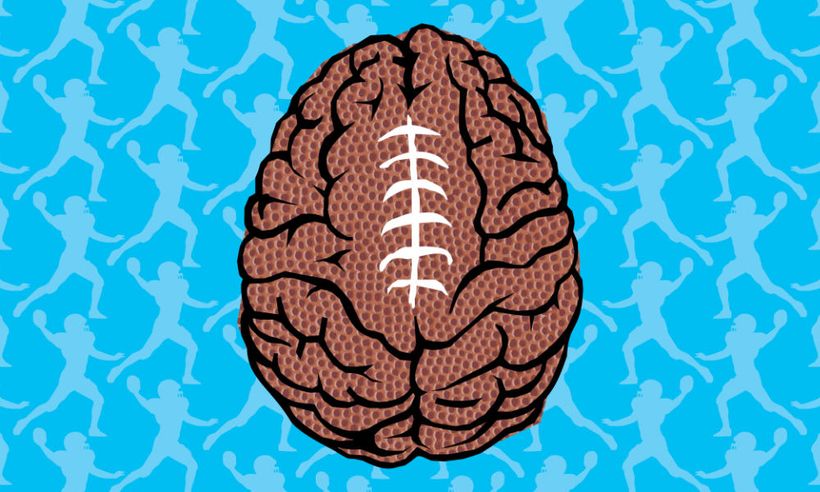
The National Football League season kicks off this week and that means millions of fantasy football coaches are already overthinking their lineups. But before they blame a bad draft slot or a fluke injury for bombing from one week to the next, they might want to look in the mirror and give their head a shake. Renee Miller, a professor of brain and cognitive sciences at the University of Rochester, studies cognitive biases and literally wrote the book on bias in fantasy sports. She plays fantasy football, too. She warns that our brains are wired to interpret fantasy football results in ways that are suboptimal and illogical. “Biased thinking occurs in everyday life and work, and in fantasy sports,” Miller says. “Through the course of a season, you can see a full range of the ways cognitive bias affects a person’s weekly fantasy matchups.” Here’s the good news: Miller says we can untangle those wires if we know what to look for. Among the biggest culprits are what Miller calls “the endowment effect” (overvaluing and clinging to players you drafted high), “recency bias” (falling in love with last week’s star), and “confirmation bias” (cherry-picking stats that support what you already believe). But especially beware of Week One. Thanks to the “primacy effect,” those games early in the season loom larger in memory than later ones. One hot debut or a disappointing flop can warp a coach’s thinking for weeks. The result? Lineups driven more by emotion than logic — and possibly a lot of pick sixes. Biases aren’t all bad, though. Sometimes instincts pay off. First impressions and recent performances sometimes hold fast. But the best fantasy players, Miller says, know when to slow down and think systematically. They stay skeptical, challenge their gut reactions, and accept that they’ll be wrong sometimes. So before you rage-drop that underperforming wide receiver or crown your Week One sleeper a superstar, remember, the smartest move might be to take a look in the mirror and give your head a shake. Miller is available for interviews for journalists covering fantasy sports. Connect with her by clicking on her profile.



This strategic move aligns with LSU’s Scholarship First Agenda, where energy is one of five core focus areas for research critical to the future of Louisiana and the nation. It also builds on the successes of LSU’s Institute for Energy Innovation, Center for Energy Studies, Louisiana Geological Survey, and the LSU-led FUEL team while assuming a leadership role in how the university engages with its partners—industry, communities, donors, and state and federal agencies—through collaboration and service. “As Louisiana’s flagship research university, LSU is committed to organizing our efforts in ways that maximize impact and reflect institutional priorities,” said Robert Twilley, LSU vice president of research and economic development. “The LSU Energy Institute will provide a platform for faculty across multiple colleges and disciplines to collaborate on solutions to Louisiana’s most pressing energy and environmental challenges.” The LSU Energy Institute will unify and expand several longstanding programs, chiefly the Center for Energy Studies, the Louisiana Geological Survey, and a range of externally funded initiatives, including cutting-edge energy research catalyzed by the LSU Institute for Energy Innovation through a dedicated $25 million investment from Shell. This results-focused realignment reflects a broader effort across LSU to improve coordination between strategic research projects and teams with increased support from research centers, institutes, and core facilities. As LSU’s flagship unit in the energy domain, the Energy Institute will enhance the university’s ability to align interdisciplinary research and policy with Louisiana’s energy economy and environmental stewardship goals. “The reorganization of LSU energy efforts into this institute reflects both a long-standing legacy of service and a renewed vision for the future of energy research in Louisiana. It’s about building on 40 years of trusted work while expanding our capacity to innovate, support decisionmakers, and serve the people of our state, said Greg Upton, interim director of the LSU Energy Institute and executive director of the LSU Center for Energy Studies. The LSU Energy Institute will serve as a central hub for faculty, students, industry, and public agencies working at the intersection of energy technology, resource economics, environmental protection, and policy. The integration of the Louisiana Geological Survey will further reinforce the university’s role in providing critical data and analysis to support state planning and hazard assessment. The institute will also continue to seed competitive, high-quality research focused on energy systems resilience, carbon management, and economic opportunity. These investments reflect LSU’s broader vision to translate research into impact and fuel new jobs and technologies to power Louisiana’s future. Original article posted here.


Delaware INBRE Summer Scholars Complete Biomedical Research Projects at ChristianaCare
Eight undergraduate scholars recently completed a 10-week immersion in biomedical research through the Delaware IDeA Network of Biomedical Research Excellence (INBRE) Summer Scholars Program at ChristianaCare. Their projects, spanning oncology, emergency medicine and community health, culminated in a capstone presentation and celebration on August 13 at Christiana Hospital. This year’s cohort included students from University of Delaware, Delaware State University and Delaware Technical Community College, as well as Delaware residents attending college out of state. Each student was paired with expert mentors from across ChristianaCare, contributing to research designed to improve patient care and outcomes. In addition to their primary projects, the scholars explored ChristianaCare’s advanced facilities such as the Gene Editing Institute Learning Lab, gaining hands-on exposure to cutting-edge methods in biomedical research. “This year’s DE-INBRE program at ChristianaCare was a one-of-a-kind experience,” said Susan Smith, Ph.D., RN, program director of Technology Research & Education at ChristianaCare and the INBRE site principal investigator. “We brought together undergraduates from various academic backgrounds and immersed them in real, hands-on biomedical research with some of our most accomplished investigators. “Watching these students go from a little unsure on day one to confidently presenting their own findings by the end of the summer was inspiring, and proof that programs like this are building the next generation of biomedical researchers in Delaware.” Delaware INBRE is a statewide initiative funded by the National Institutes of Health to strengthen Delaware’s biomedical research infrastructure. It supports undergraduate research training, faculty development and core facility investments across partner institutions. At ChristianaCare, the program offers students immersive, hands-on research experiences guided by seasoned investigators, equipping them with the skills, mentorship and exposure essential for careers in science and medicine. Madeline Rowland, a Delaware resident and rising senior at Williams College in Massachusetts, collaborated with Hank Chen, senior medical physicist at the Helen F. Graham Cancer Center & Research Institute, to evaluate tattoo-free, surface-guided radiation therapy for breast cancer patients. She also worked with leaders of ChristianaCare’s Center for Virtual Health to explore how different patient populations experience virtual primary care. Rowland praised the program for the research skills and knowledge she gained as well as the meaningful relationships she built with mentors, health care professionals and fellow scholars she might not have otherwise met. “Dr. Chen and the whole Radiation team really adopted me into the department,” Rowland said. “From sitting on the CT simulation table in my first week to working on my project, I felt fully welcomed. I’ve learned so much, and the people I’ve met made this summer unforgettable.” Chen was recognized as the program’s inaugural “Mentor of the Summer” for his exceptional dedication and thoughtful approach to teaching. Having now mentored INBRE scholars for three years, Chen has a personal connection to the program. His own daughter participated as an undergraduate and recently began her general surgery residency after graduating from Sidney Kimmel Medical College at Thomas Jefferson University in Philadelphia. For Chen, mentoring represents an investment in health care’s future. “The greatest asset of any institution is its talent,” he explained. “When you welcome students into your environment, you draw good people to your field, and patients ultimately benefit from that.” Naana Twusami, a rising senior at Delaware State University, spent her summer with the Oral & Maxillofacial Surgery and Hospital Dentistry Department. She examined social determinants of health in facial trauma patients, analyzing how factors like income, education, transportation and insurance status influence recovery. “Being here showed me that things like income or transportation can matter just as much as the medical care itself,” she said. “The INBRE Summer Scholars Program gave me a real look at how health care works, and how places like ChristianaCare are helping shape where it’s headed.” Amy Minsker, continuing medical education manager, Academic Affairs, served as manager of the summer scholars program. Read more on news.christianacare.org.



Back-to-school stress? Here’s how it can be a good thing.
As America heads back to school, the renewed whirlwind of expectations for students and parents — from demanding coursework to social dynamics and balancing pick-up-and-drop-off schedules — can trigger anxiety for students and parents alike. Jeremy Jamieson, associate professor of psychology who leads the University of Rochester’s Social Stress Lab, studies how social stressors affect decisions, emotion, and achievement and how embracing, rather than battling, those reactions can boost resilience. “We’re not passive receivers of stress,” Jamieson told National Public Radio last year. “We’re active agents in actually making our own stress response.” Jamieson’s research reveals that stress can be helpful when it is reframed as a mobilizer of energy and focus. In a study of students preparing for the GRE, for instance, those who were primed to view physical stress symptoms (like a racing heart) as beneficial outperformed their peers who didn’t reframe those symptoms. As students confront the fall’s demands, a simple shift in mindset can make all the difference. Jamieson’s research has so many practical applications that he is regularly sought out by media outlets on a wide variety of topics. In the last year, he has talked to Golf Digest about battling the “yips,” to The Atlantic about the rise of “anxiety-inducing” television, and to New York Magazine about the stress some people feel when talking on the phone. He is available to discuss his research and to help explain and navigate seasonal pressures. Connect with him by clicking on his profile.


New autism and disability training at Aston University aims to close gaps in healthcare
Aston University is leading a national shift in healthcare education with the rollout of Tier 1 of the Oliver McGowan Mandatory Training (OMMT) — a pioneering initiative developed by NHS England to improve support for individuals with autism and learning disabilities. Oliver McGowan was an 18-year-old with autism and learning disabilities who died in 2016 after a bad reaction to medication for epileptic seizures, which both he and his parents had requested should not be given after a previous bad reaction. Oliver's death was ruled 'avoidable' and revealed serious gaps in training for medical professionals caring for those with autism and learning difficulties. Oliver's mother Paula set up a foundation to campaign for appropriate training, and in 2022, an UK act of parliament mandated learning disability and autism training for all healthcare staff registered with the Care Quality Commission (CQC). This is now being introduced. The evaluation of the project at Aston University is being led by Dr Amreen Bashir, senior lecturer in biomedical science, in close collaboration with Dr Mary Drozd, senior teaching fellow in nursing and Dr Jayne Murphy, associate professorial teaching fellow in nursing. Aston is one of the first universities in the UK to implement this training across undergraduate healthcare programmes, including Nursing, Biomedical Science, Pharmacy, Optometry, and Physician Associate Studies. “Our students not only gained new knowledge, but they were vocal about the importance of this training staying in the curriculum permanently,” said Dr. Bashir. Student feedback highlights the transformative impact of the training: “I will use the training to ensure the patient care I provide is accommodating to people with special needs and will offer reasonable adjustments when needed. I understand autism and learning difficulties are not like other disabilities which are commonly physically noticed and that they may me hidden.” “The most useful aspect of the Oliver McGowan training is its focus on real-life experiences shared by individuals with autism and learning disabilities. These personal insights help to contextualise the challenges they face, making the training relatable and impactful.” “It opened my eyes as to how even within people who are practising and have already been working in clinical settings lack the understanding on how to care and approach those with autism and/or learning disabilities. It shouldn’t have got to a stage where what happened with Oliver happened and I am glad I have had this training so that I know what I can do as a healthcare professional in these situations. My previous job as a support worker also helped as I worked with service users who had autism and learning disabilities as well as physical disabilities and so this training assisted the knowledge I had already gained.” Measuring the impact A total of 176 students completed the pre-intervention survey and 94 students completed the survey post-OMMT. Participants were drawn from Nursing, Biomedical Science, Physician Associate Practice, Optometry, and Pharmacy at Aston University. How the training works Tier 1 of the OMMT consists of two parts: a 90-minute e-learning session completed independently, followed by a one-hour live interactive webinar co-facilitated by trained professionals and experts by experience. This format allows for reflective discussion and a deeper understanding of autism and learning disabilities through real-world perspectives. Post-training surveys measured changes in knowledge, attitudes, and perceptions. Early results Students showed significantly improved understanding of autism and learning disabilities, as well as greater sensitivity toward tailoring communication to individual needs. The training also identified critical areas for further attention, such as the role of ethnicity in healthcare access and the impact of silent conditions like constipation, which can go undetected and lead to preventable harm. The findings will be presented at the upcoming 'Horizons in STEM' higher education conference, which is being hosted at Aston University, with a manuscript currently in preparation for peer-reviewed publication. By embedding OMMT into its core curricula, Aston University is setting a benchmark for inclusive healthcare education across the UK. To follow this research or explore collaboration on the OMMT initiative, contact: Dr Amreen Bashir – a.bashir6@aston.ac.uk Dr Mary Drozd – m.drozd@aston.ac.uk Dr Jayne Murphy – j.murphy5@aston.ac.uk



Colorado wildfires will have severe mental health impact on residents and firefighters
The historic wildfire season in Colorado includes some of the largest in its history, leading to firefighter burnout and resource shortages. University of Delaware epidemiologist Jennifer Horney says that first responders, as well as Colorado residents, will be at risk for both physical and mental health impacts of the fires. "The fires, and the expected flash floods and mud slides to follow, will also be a test of a reduced focus on, and investment in, federal disaster response and hazard mitigation," said Horney, professor and director of UD's epidemiology program. In addition to research on the impacts of natural disasters on public health, Horney also studies linkages between disaster planning and the actions communities and individuals take to prepare, respond and recover. To set up an interview, visit her ExpertFile profile and click on the "contact" button. Reporters can also email MediaRelations@udel.edu.

In an age of fast-moving misinformation, our expert teaches students how to spot what’s credible
As the new academic year begins, and at a time when misinformation often travels faster than facts, University of Rochester’s Kevin Meuwissen offers educators and young learners clarity and practical strategies for identifying credible sources. As an associate professor and chair of teaching and curriculum at the Warner School of Education and Human Development, Meuwissen focuses on how children and teens learn about politics and history — and how they can be taught to critically evaluate what they consume. “Young people pay close attention to who’s been consistently accurate,” he says. “They’re more likely to trust someone over time if their information holds up.” To empower students in our complex information environment, Meuwissen champions the so-called SIFT method — an easy-to-remember acronym and evidence-based toolkit that breaks down like this: • Stop! Pause before reacting or sharing • Investigate the source • Find better coverage • Trace claims back to their origin He also warns about how emotional framing, AI-generated visuals, deep fakes, and repeated exposure can distort judgment through the illusory truth effect — making misinformation feel believable even when it isn’t. His "Ever Wonder: How Can You Tell If A Source Is Credible?" video is a handy teaching tool. Meuwissen and his colleagues encourage teachers grappling with resistance over topics like climate science to consider not just evidence depth, but also students’ identities — political, cultural, and otherwise — when designing lessons. His approach emphasizes building trust, modeling thoughtful verification, and nurturing classroom norms rooted in accuracy — traits essential for forming discerning digital citizens. Kevin Meuwissen is available for interviews about identifying misinformation. He can be contacted through Warner School of Education Director of Communications Theresa Danylak at tdanylak@warner.rochester.edu.

As Trump rolls back regulations, this expert examines the costs of compliance
President Donald Trump has signaled a push to scale back federal regulation across a wide range of industries, reigniting a national debate over the costs and benefits of government rules. For Joseph Kalmenovitz, an assistant professor of finance at the University of Rochester’s Simon Business School who studies the economics of regulation, the moment underscores the importance of understanding not just what regulations do — but how much they cost. Kalmenovitz, who combines legal training with cutting-edge empirical methods, has developed innovative ways to measure regulatory intensity. His research shows how compliance requirements translate into millions of additional hours of paperwork for firms — costs that often fall outside public view. A recent Bloomberg Law article cited his work in explaining how Wall Street alone devotes an estimated 51 million extra hours each year to compliance since the Great Financial Crisis. Beyond tallying hours, Kalmenovitz’s studies also explore how overlapping rules across agencies — what he calls “regulatory fragmentation” — can stifle productivity, profitability, and growth, especially for smaller firms. His long-term aim is to provide evidence-based insights that can guide smarter rulemaking in Washington. “The dream is that people will take insights from my work and use them to improve the way regulation is conceived,” he told Simon Business Magazine. Kalmenovitz is a leading voice in translating data into meaningful insights about the hidden costs and design of regulation whose work has been published in the Journal of Finance, the Review of Financial Studies, Management Science, and the Journal of Law and Economics. He is available for interviews and can be contacted through his profile.