Experts Matter. Find Yours.
Connect for media, speaking, professional opportunities & more.

Is writing with AI at work undermining your credibility?
With over 75% of professionals using AI in their daily work, writing and editing messages with tools like ChatGPT, Gemini, Copilot or Claude has become a commonplace practice. While generative AI tools are seen to make writing easier, are they effective for communicating between managers and employees? A new study of 1,100 professionals reveals a critical paradox in workplace communications: AI tools can make managers’ emails more professional, but regular use can undermine trust between them and their employees. “We see a tension between perceptions of message quality and perceptions of the sender,” said Anthony Coman, Ph.D., a researcher at the University of Florida's Warrington College of Business and study co-author. “Despite positive impressions of professionalism in AI-assisted writing, managers who use AI for routine communication tasks put their trustworthiness at risk when using medium- to high-levels of AI assistance." In the study published in the International Journal of Business Communication, Coman and his co-author, Peter Cardon, Ph.D., of the University of Southern California, surveyed professionals about how they viewed emails that they were told were written with low, medium and high AI assistance. Survey participants were asked to evaluate different AI-written versions of a congratulatory message on both their perception of the message content and their perception of the sender. While AI-assisted writing was generally seen as efficient, effective, and professional, Coman and Cardon found a “perception gap” in messages that were written by managers versus those written by employees. “When people evaluate their own use of AI, they tend to rate their use similarly across low, medium and high levels of assistance,” Coman explained. “However, when rating other’s use, magnitude becomes important. Overall, professionals view their own AI use leniently, yet they are more skeptical of the same levels of assistance when used by supervisors.” While low levels of AI help, like grammar or editing, were generally acceptable, higher levels of assistance triggered negative perceptions. The perception gap is especially significant when employees perceive higher levels of AI writing, bringing into question the authorship, integrity, caring and competency of their manager. The impact on trust was substantial: Only 40% to 52% of employees viewed supervisors as sincere when they used high levels of AI, compared to 83% for low-assistance messages. Similarly, while 95% found low-AI supervisor messages professional, this dropped to 69-73% when supervisors relied heavily on AI tools. The findings reveal employees can often detect AI-generated content and interpret its use as laziness or lack of caring. When supervisors rely heavily on AI for messages like team congratulations or motivational communications, employees perceive them as less sincere and question their leadership abilities. “In some cases, AI-assisted writing can undermine perceptions of traits linked to a supervisor’s trustworthiness,” Coman noted, specifically citing impacts on perceived ability and integrity, both key components of cognitive-based trust. The study suggests managers should carefully consider message type, level of AI assistance and relational context before using AI in their writing. While AI may be appropriate and professionally received for informational or routine communications, like meeting reminders or factual announcements, relationship-oriented messages requiring empathy, praise, congratulations, motivation or personal feedback are better handled with minimal technological intervention.

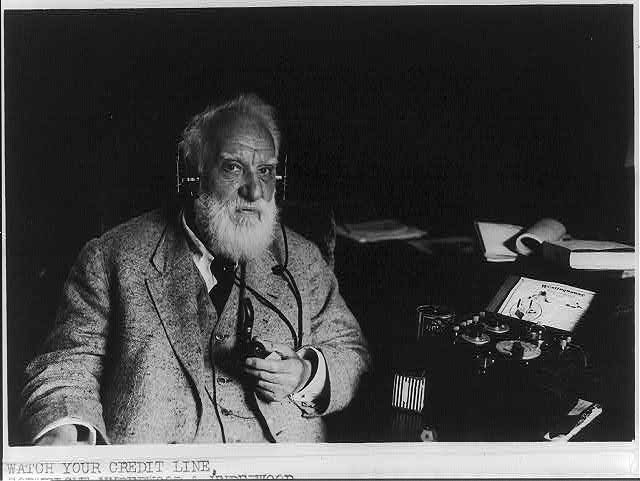
On March 10, 1876, Alexander Graham Bell spoke the first words ever transmitted over telephone: “Mr. Watson, come here; I want you.” This simple request to Bell’s assistant, Thomas Watson, marked a significant milestone in direct person-to-person communication. Now, 150 years later, this message has paved the way for advanced cellular technology in the form of satellites, wireless networks and the personal devices we carry everywhere. For Mojtaba Vaezi, PhD, associate professor of electrical and computer engineering at Villanova University and director of the Wireless Networking Laboratory, Bell’s few words spoken over telephone marked the beginning of an ongoing technological revolution. “One hundred fifty years ago when telephone communication first started, there was essentially a wired line and a transmitting voice,” said Dr. Vaezi. “That simple, basic transmission has transformed the field of communication technology in unimaginable ways.” According to Dr. Vaezi, five shifts have defined the past century and a half of communication technology: wired devices to wireless, analog to digital, voice to data, fixed landlines to mobile phones and human-to-human communication giving way to an increasing focus on machines and artificial intelligence. Early wireless networks were built around one device per person. Today's networks must support multiple devices per person, plus the technology behind innovations such as smart homes, driverless cars and even remote surgery. “Applications are much more diverse now, so communication has to follow,” said Dr. Vaezi. “A big portion of communication now, in terms of number of connections to the network, is from machine to machine—not human to human or even human to machine." The growing number of connections can cause a host of issues for users. When multiple users share the same wireless spectrum simultaneously, their signals interfere with one another—a problem that is becoming more acute as the number of connected devices increases exponentially. Dr. Vaezi’s research at Villanova focuses on developing techniques that allow multiple users to transmit messages on the same frequency at the same time and still be understood. Another vibrant research area of Dr. Vaezi’s involves Integrated Sensing and Communication (ISAC). This field of study focuses on integrating wireless communications and radar so they can function within the same spectrum. “Historically, radar and wireless communication work in different bandwidths or spectrums and use separate devices. Although they are related, they happen in different fields,” said Dr. Vaezi. “Almost every communication scheme that has been developed has focused on this: How can we better utilize the spectrum?” ISAC is increasingly important as new innovations like driverless cars become fixtures in everyday life. These vehicles rely on radar to continuously scan for hazards, and when a hazard is detected, a signal must be sent to trigger safety mechanisms. Currently, the radar and communications systems operate on separate bandwidths using separate hardware. Dr. Vaezi's research explores how both functions could be housed in a single device running on one shared spectrum. Areas of study like Dr. Vaezi’s that focus on machine to machine communication are becoming increasingly relevant as communication technology evolves and moves away from simple person to person messaging. As for the next big milestone in communications, Dr. Vaezi is looking ahead to the implementation of 6G by 2030, though he tempers expectations. For most users, the change will feel modest, amounting to slightly faster device speeds. The most massive shift with 6G will be the amount of added coverage in areas that previously did not have network accessibility. “Say you order a package and it’s coming from somewhere abroad,” explained Dr. Vaezi. “6G will add network coverage over oceans, so you’ll be able to track your package in real time using that satellite technology.” The sixth generation of cellular technology will continue to connect our world and optimize current communications to accommodate more users and devices that need network access each day. It is far different from Alexander Graham Bell’s historic phone call 150 years ago. That brief exchange over a single wired line laid the groundwork for a communications ecosystem that now supports billions of devices, complex data networks and emerging technologies yet to be seen. It also serves as a reminder that despite how far communication technology has come, and how complex it has gotten, it all shares a common, simple goal: to transmit information from one point to another.


Strategic Closure of Strait of Hormuz Puts Pressure on U.S., Threatens Global Oil Trade Stability
Less than a week after the onset of the war in Iran, and amid escalating conflict in the region, Iran effectively closed the Strait of Hormuz to shipping tankers moving oil from the Middle East by threatening attacks against any vessel who entered the waterway. Thus, the small body of water, which moves a large percentage of the world’s crude oil, has become one of the most discussed places in the world in recent days. Frank Galgano, PhD, is a professor of Geography and the Environment at Villanova University. He is an expert in military and Middle East geography and has also studied global maritime shipping and access to natural resources. Dr. Galgano says there geographic, geopolitical, military and economic factors at play, along with widespread potential consequences, as Iran holds steady on their closure of the strait and the U.S. considers how, or if, it will attempt to help escort oil ships through. Geography and Significance of Strait of Hormuz Situated between Iran to the north and Oman and the United Arab Emirates to the south, the Strait of Hormuz is a narrow shipping lane that connects the Persian Gulf to the Gulf of Oman and, further out, the Arabian Sea. It is one of the most vital chokepoints in the Middle East, along with the Suez Canal, Straits of Tiran, Bab al-Mandab and the Turkish Straits. “Right now, because of oil, it is the most important,” Dr. Galgano said. “Every day, roughly 20 percent of global petrochemical use goes through Hormuz.” The strait itself is barely over 20 nautical miles at its narrowest, but only a small portion of that is shipping lanes. Depth constraints limit shipping to two lanes, each two miles wide, with a two-mile buffer between. “You’re essentially looking at all of that shipping constrained to six nautical miles, and the ships are relatively slow,” Dr. Galgano said. “There are usually about 14-25 tankers every 24 hours transiting the Gulf, so there is always a ship in line." By Iran threatening military action against any oil-carrying ships in Hormuz—and by shipping companies refusing to attempt to traverse it— one-fifth of the global oil trade is essentially cut off indefinitely. That is concerning, given that it takes very little to send global oil prices skyrocketing. Dr. Galgano referenced the 2010-11 Somali pirate issue that caused supertankers—which cost upward of $50,000 a day to operate—to be rerouted. “That alone caused gas prices to raise 10 cents per gallon,” he said. In this case, the biggest impact will be felt throughout Asia, which relies more heavily on oil imports. But the U.S., despite being the second-biggest producer of crude oil last year, will still feel significant effects, since oil is traded globally. “It takes these supertankers eight or 12 days to reach the East Coast from Hormuz,” Dr. Galgano said. “So, a few days later you might see diminished supplies, but there is a critical point where we would face a real shortage.” Attempting to Move Ships Through Hormuz Poses Huge Danger Unlike the Iranian-backed Houthi rebels attacks on Israeli ships and those belonging to its allies in the Red Sea last year, Iran itself has far more sophisticated weapons, along with a strong motive to do whatever it can to put pressure on the U.S. and involved allies. In addition to drones designed for attacking ships—like the ones used by Houthis—Iran also possesses Chinese and Russian anti-ship missiles, according to the professor. “Ships are very vulnerable,” he said, then referencing the 2000 bombing of the USS Cole by Al Qaeda operatives. “That was just two guys in a rubber boat with an explosive device, and it almost sunk the whole ship. If one is carrying oil, it becomes almost like a large fuel bomb.” The United States has weighed the idea of sending a convoy to help escort and protect these ships. They did as much in the late 1980s in Operation Earnest Will, in which President Reagan ordered Kuwaiti supertankers—which were being fired at—to reflag under the U.S. flag so the Navy could legally escort them. But weapons technology has changed, and while U.S. naval ships could certainly defend themselves, “supertankers are slow and it is still an incredibly dangerous operation,” Dr. Galgano said. “The convoy would have to be lucky 100 percent of the time. Iran would only have to be lucky once to hit a ship and cause an immediate fiasco, both physically and in the media.” Global Dependance on Shipped Goods According to Dr. Galgano, between 75 and 90 percent of all items you handle on a day-to-day basis come from inside the hull of a ship: shocks on your car, clothes on your back, or components of your computer. When shipment is disrupted, it can cause supply chain and cost issues. “During the pandemic, Ford was waiting on chips for F-150s, and HP was waiting in chemicals to make ink,” Dr. Galgano said. “Even the ship that got stuck in the Suez Canal a few years ago caused $10 billion in losses per day due to the backup.” For commodities like oil, the indefinite inability to utilize perhaps the most important shipping lanes in the world due to large scale conflict quickly raises the economic stakes to even greater levels. “Iran absolutely knows that, and they see this as a bargaining chip,” Dr. Galgano said. “Cause economic pain to force cessation of the attacks.”

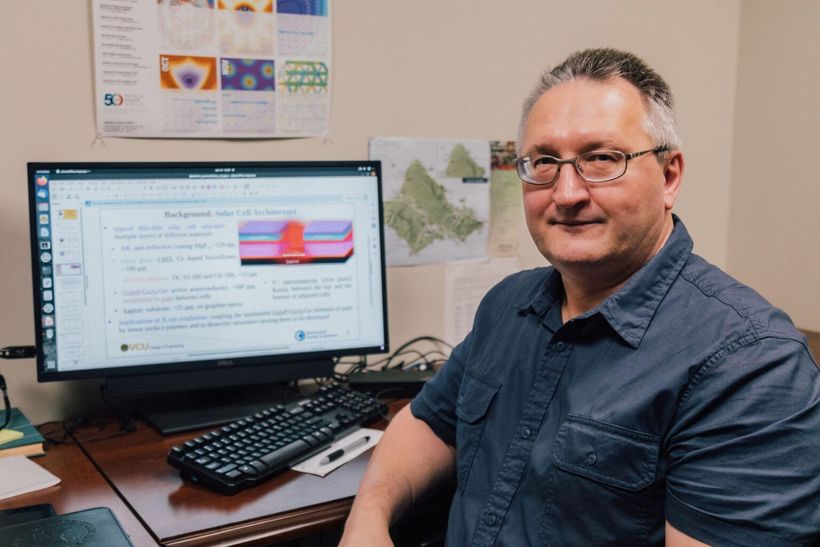
Recently named the nuclear program director at the Virginia Commonwealth University (VCU) College of Engineering, Gennady Miloshevsky, Ph.D., associate professor in the Department of Mechanical & Nuclear Engineering, answers some questions about the direction of VCU Engineering’s nuclear program and what he hopes it can accomplish. What are your top priorities for the nuclear program at the VCU College of Engineering? I want to focus on student development, innovative research and our rankings in best program lists, but that is not everything. Strategy is important. We need to align ourselves with the country’s national energy needs. There are many new developments in the energy sector, like small modular reactors or fusion energy systems, and having the right faculty to engage with these advancements is important. Providing students with a well-rounded education and good opportunities for gaining experience benefits the College of Engineering’s public and private sector partners. Nuclear subject matter is complex, so higher education is very important for workforce development. We want to build partnerships, like the one we have with Dominion Energy, that support this goal. A priority for me is continuing to establish relationships with Commonwealth Fusion Systems, which seeks to build and operate the first commercial grid-scale fusion plant in Chesterfield County, Virginia. Our workforce partners will benefit from VCU’s well-trained nuclear engineering graduates joining the workforce. So, aligning our strategy with national energy needs, hiring the right faculty to support our programs and building industry partnerships that benefit our student’s education and career opportunities are important things for VCU Engineering’s nuclear program. Where would you like to see the College of Engineering’s nuclear program 10 years from now? I would like to see growth in the nuclear program. For example, some new graduate courses on topics like nuclear materials or fusion energy. In 2024, I developed a general course for fusion energy, so building out a curriculum that goes more in-depth would be good. When you look at small modular reactors and micro reactors, current energy policy does not allow private companies to build their own. However, as energy demands increase, policy could change to where you see these compact devices installed in places like data centers, for example. A more in-depth curriculum allows VCU Engineering students to step into industry roles that lead growth of the energy industry while also ensuring students are capable of adapting to the changing field and taking advantage of new developments. What sort of cross-disciplinary opportunities are there for the College of Engineering’s nuclear program? Nuclear engineering and nuclear science are very interdisciplinary fields. You have physics that covers the nuclear reaction and the radiation it generates, for example, then chemistry is needed when talking about nuclear fuel cycles and nuclear waste. You also need materials science because good materials capable of withstanding radiation and high temperatures are needed in nuclear fission and fusion energy systems. This science then connects to engineering, building the reactors, the energy distribution systems like a power grid. It is a small sample of the overall work, but you see how mechanical and electrical engineering are key to this part. All these disciplines come together to solve the same problem. One researcher might be figuring out how to confine plasma and make it stable, then another researcher is looking at how plasma can disrupt the containment wall and how to make materials to protect the wall. Within our department, we are making connections between mechanical-focused faculty working on high-temperature ceramics or additive manufacturing techniques and those of us researching nuclear energy systems in order to make joint proposals. We are also collaborating outside VCU. As an example, I am involved with an alliance founded by the Defense Threat Reduction Agency (DTRA) comprised of 17 universities, research labs and military centers. Coordinated through DTRA, we work together on many of the same problems.Through this partnership, my Ph.D. students do summer research rotations with national labs like Lawrence Livermore National Laboratory in California and The Pacific Northwest National Laboratory. We also bring cadets and midshipman into VCU from other institutions, like the DTRA Nuclear Science and Engineering Research Center, United States Military Academy West Point and the Virginia Military Institute, whose students have been part of research experience for undergraduates programs in the summer. How is artificial intelligence impacting the field of nuclear engineering? So, the United States is sponsoring the Genesis Mission, which seeks to transform science innovation through the power of AI. One area of the Genesis Mission is nuclear fission and fusion energy. I see this playing out with the Department of Energy encouraging national labs, universities and industry to work together on applying these AI advancements to solve the research problems of nuclear energy. It is a great opportunity for students, who we can involve in this work to give them real-world experience with topics they will see after graduation. Last semester I taught a course at VCU on the practical applications of AI on nuclear engineering problems. It is not something like ChatGPT or anything like that. What we did is take Google’s TensorFlow platform that is a library of AI models and machine neural networks. Using Python scripting students learn how to apply these AI resources to about 30 problems in mechanical and nuclear engineering. They create scripts, use data sets and run analytics. We have a nuclear reactor simulator and I have some ideas to create AI-based software we can pair with the simulator, then give the software a data set and let it control the operation of the simulator in a safe way. Tell us about your background. What brought you VCU and the Department of Mechanical and Nuclear Engineering? Actually, I am not a mechanical or a nuclear engineer. My background is in physics. I graduated from the Belarusian State University in 1990 and continued to a Ph.D. in physics from the Heat and Mass Transfer Institute of the National Academy of Sciences of Belarus working on topics related to fusion plasmas and nuclear weapon effects. In space, nuclear weapons produce shockwaves and radiation. I computationally model these effects in my research to determine how something like a nuclear warhead detonation in orbit will impact the materials a satellite is made of, for example. My research also crosses over into nuclear fusion, specifically thermodynamic and optical plasma properties, fusion plasma disruptions, melt motion and splashing from plasma facing components. Accelerating Next-Generation Extreme Ultraviolet (EUV) Lithography (ANGEL) is my most recent collaborative project, supported by the Department of Energy’s (DOE) Office of Science, Fusion Energy Sciences. It involves two national laboratories, three universities and a private-sector company focusing on advancement of future micro-electronic chips, EUV photon sources, mitigation of material degradation and plasma chemistry. Prior to joining the VCU College of Engineering I worked at Purdue University at a DOE-funded center investigating nuclear fusion and the effects of plasma on materials. Around 2019 I wanted to develop my own lab, so I came to VCU with startup funds from the Nuclear Regulatory Commission and DTRA. My first priority after joining the VCU College of Engineering was continuing my fusion research, the second was collaborating with an alliance of universities focused on work for DTRA and DOE.


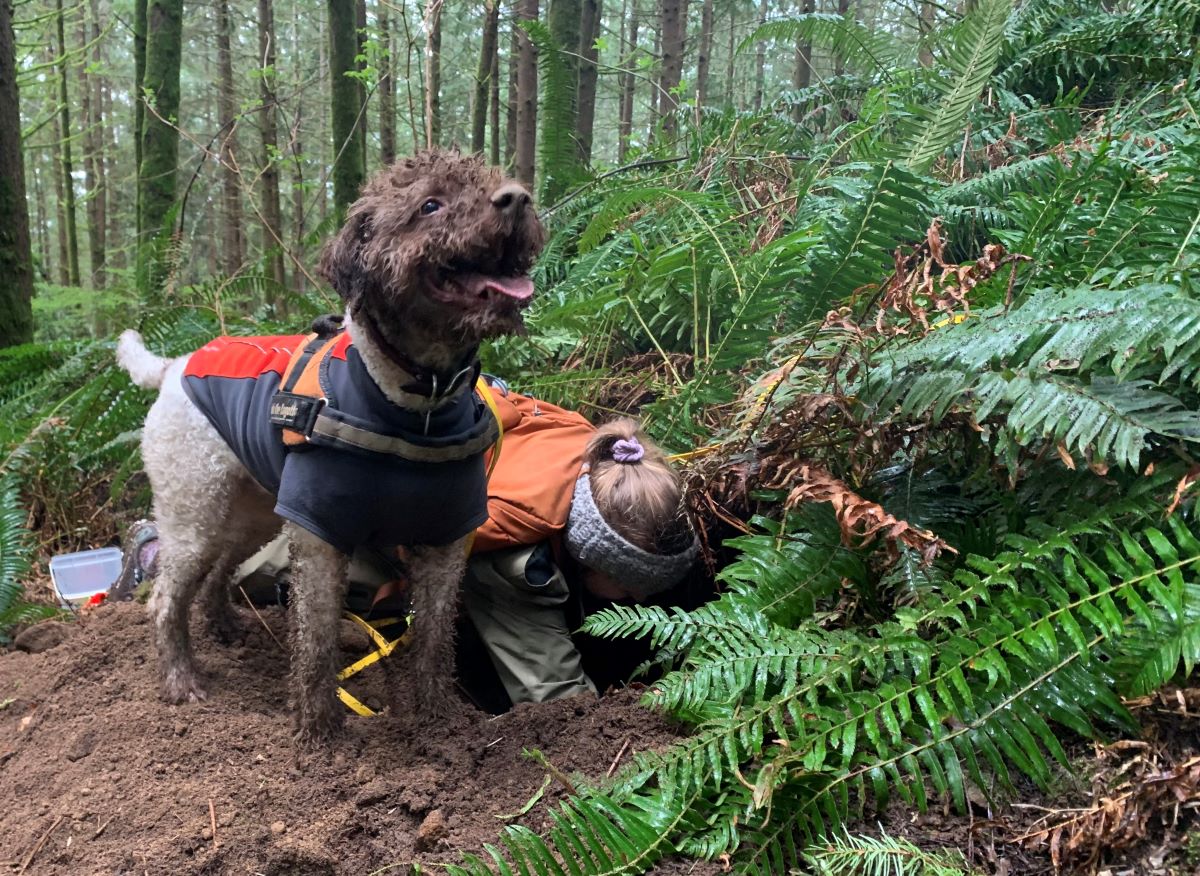
Assisted by sniffer dogs and DNA sequencing, researchers discover three new truffle species
University of Florida biologists studying fungal evolution and ecology have discovered three new truffle species, including one capable of commanding hundreds of dollars per pound within culinary circles. “Our paper confirms what a lot of people had suspected for a long time, which is that the North American truffle species is genetically very distinct from its European relatives.” —Benjamin Lemmond, study co-author and a former UF student The researchers describe their discoveries in a Persoonia. Their work shakes up the Morchellaceae truffle family tree, with key insights related to perhaps the most commercially valuable truffle in North America, the Oregon black truffle. Gourmet chefs, who sometimes grate the odoriferous truffle over dishes or infuse butter with it, have been known to pay as much as $800 per pound for the delicacy. For decades, the Oregon black truffle has been known scientifically as Leucangium carthusianum. It was originally found in Europe and later found in the Pacific Northwest, from California to British Columbia. However, recent genetic testing and field analysis by researchers from UF’s Institute of Food and Agricultural Sciences (UF/IFAS) revealed the North American variety is a distinct species. Scientists are giving this newly recognized species a name honoring the Cascadia region in which it is found: Leucangium cascadiense. “Our paper confirms what a lot of people had suspected for a long time, which is that the North American truffle species is genetically very distinct from its European relatives,” said study co-author Benjamin Lemmond, a former UF student. Lemmond, now a postdoctoral associate at the University of California at Berkeley, began his research into the truffles as a first-year doctoral student studying under professor Matthew Smith of the UF/IFAS plant pathology department. During the COVID-19 pandemic, Lemmond couldn’t access the campus greenhouse where he was conducting an experiment, so Smith secured hundreds of dried truffle specimens from Oregon State University for him to study. The stash included slivers of the Oregon black truffle, a dark-colored, potato-shaped species with tiny, pyramid-shaped warts. When pandemic restrictions relaxed, Lemmond and Smith conducted genetic testing of the Oregon State specimens and others borrowed from Polish, Greek, Italian, French and Japanese collections. Their tests indicated Oregon black truffles from North America had at one point diverged from their European counterparts on the Morchellaceae evolutionary tree, according to the study. They also established the existence of another distinct and very rare species, Imaia kuwohiensis, a pale-colored truffle with dark warts, which is native to threatened spruce-fir habitats in the southern Appalachian Mountains. Their name for the truffle comes from the Cherokee word for the Great Smoky Mountains’ highest peak, Kuwohi. Field tests followed. The researchers wanted to understand the origin of Oregon black truffles’ energy. “Understanding the fundamental, basic biology and life cycle of this truffle is really important,” Lemmond said. “It’s a very valuable commodity, and this knowledge might help us to cultivate the truffle in the future. It also supports long-term conservation and management.” Most gourmet truffles are mycorrhizal, meaning they obtain energy from trees, Lemmond said. It had long been suspected that Oregon black truffles obtain energy through a symbiotic relationship with young Douglas fir trees, but no one had conclusively proven it. Lemmond traveled to the Pacific Northwest and worked with specially trained sniffer dogs capable of detecting truffles buried as deep as 10 inches beneath soil and leaf litter. With the dogs’ help, he unearthed Oregon black truffles nestled among Douglas fir stands. He used fluorescent stain that bonded with the fungal tissue, coloring it green to show where the truffle fungus grew between the cells of the tree root tissue. “The truffle fungi surround the whole root, but the fungus is healthy, and the plant is healthy,” Smith said. “The two trade nutrients back and forth.” DNA sequencing of the roots subsequently proved the truffles rely on the trees as their main source of carbon, according to the study. As the researchers conducted genome sequencing of the Oregon black truffle, they learned of a peculiar find reported by a citizen scientist on iNaturalist, an online science data network: a Leucangium truffle growing among Eastern hemlock trees in Oneida County, New York. It was the first time anyone had ever reported a Leucangium species in the United States, east of the Rocky Mountains, Lemmond said. Lemmond contacted Purdue University, which was preserving the specimen, and requested a sample. The truffle’s physical characteristics, including its dense external hairs and lack of warts, distinguished it from other Leucangium species. DNA analysis confirmed significant variation, too. The researchers named the new truffle species Leucangium oneidaense to recognize the county where it was unearthed. A few years later, just before the researchers submitted their study for publication, someone found a second Leucangium oneidaense specimen growing in Massachusetts, Lemmond said. “It was great timing, and it suggests to me that there are still a lot of undiscovered truffles out there, waiting to be found,” he said.


Operation Epic Fury: Florida Atlantic's Expert is Ready for Your Questions and Coverage
As tensions surrounding Operation Epic Fury in the Middle East intensifies and the risk of regional escalation grows, Robert G. Rabil, Ph.D., professor of political science at Florida Atlantic University, stands out as one of the most authoritative voices journalists can turn to for clear, strategic analysis. A nationally recognized scholar of Middle Eastern politics, political Islam, terrorism and U.S. foreign policy, Rabil brings decades of research, regional expertise and media experience to breaking developments. He does not simply react to headline, he explains the historical forces, ideological movements and geopolitical calculations driving them. At a time when the conflict’s implications stretch far beyond Iran’s borders, affecting Israel, Gulf states, global energy markets and U.S. national security, Rabil provides critical context on both state and non-state actors shaping events on the ground. Robert Rabil, Ph.D., professor of political science at Florida Atlantic University, is a leading authority on Middle Eastern politics, security, and U.S.–Middle East relations. View his profile Recent media coverage: WINK: Dr. Robert Rabil, a political science professor at Florida Atlantic University, said the attack marks one of the most significant escalations in regional conflict in years. "I would say now the joint attack today is one of the very few, if not the only, as a matter of fact, attack on a country in the Middle East," said Rabil. "And today, as we have seen, I believe that the President has taken the final decision, and he said, Listen, it's about time, mainly, either to change the regime or produce a change within the regime.” ABC News: “What the president has done recently, what he did with Maduro, and the assassination of Soleimani — all of that changes the regime’s behavior,” Rabil said. Rabil said if Iran’s government were to collapse or dramatically change, cooperation with Western nations, including the United States, could resume, especially if Iranians pursue a democratic alternative. The Jerusalem Post Op-Ed - The writer is a professor of political science at Florida Atlantic University. He served as chief of emergency of the Red Cross in East Beirut during Lebanon’s civil war. CNN Robert G. Rabil, Special to CNN Rabil offers measured, informed analysis rooted in decades of scholarship and policy study and can help with key story angles such as: • Iran’s Regime Stability and Internal Pressures How domestic dissent, economic strain and political factions inside Iran influence wartime decision-making. • U.S.–Iran Strategic Calculus What options Washington realistically has, historical precedents shaping current policy, and risks of escalation or miscalculation. • Israel and Regional Security Dynamics How Israel, Saudi Arabia and Gulf states are responding — and whether a broader regional war is possible. • Proxy Warfare and Militant Networks The role of Hezbollah, Hamas and other non-state actors in expanding or containing the conflict. • Iran’s Nuclear Program How the conflict affects nuclear negotiations, deterrence strategy and global security concerns. • Energy Markets and Global Economic Fallout Implications for oil prices, shipping lanes and international economic stability. • Long-Term Regional Realignment Whether this conflict accelerates a reshaping of alliances in the Middle East.


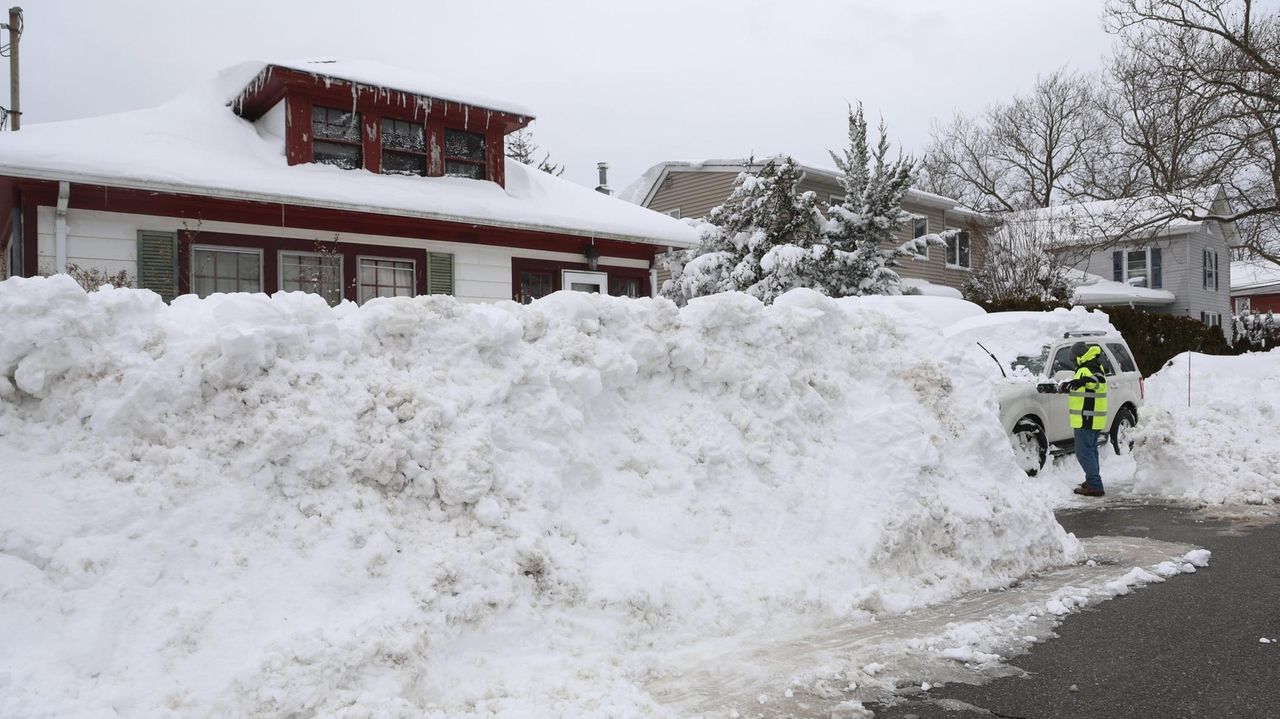
Blizzard of ’26 – One for the History Books
“The blizzard of ‘26 will be remembered in meteorology circles,” Dr. Jase Bernhardt told Newsday about the historic storm this week that dropped approximately 30 inches of snow on parts of Long Island. The Hofstra University associate professor of geology, environment, and sustainability and director of meteorology explained the blizzard hit what’s known as the “70/40 benchmark." That’s 40 degrees north latitude and 70 degrees west longitude, geographic coordinates for a spot over the Atlantic Ocean: “That’s the sweet spot,” said Dr. Bernhardt. “Say it tracks 50 miles south and east, that means the heaviest snow shifts farther away. If it tracks closer, oftentimes, it’s bringing in warm air closer to the center [of the storm], and if it tracks too close, it might yield heavy precipitation, but it’s going to be too warm for all snow.”



Surgery past 65? Brain health screening can aid recovery
Before surgery, your doctor will order evaluations to identify any health problems that may need to be addressed before the procedure. This typically includes medical histories, laboratory tests and checking blood pressure, heart rate and temperature. There’s one vital sign that is often not on the list, but is crucial for older adults: screening for mental and cognitive health. “There is an overwhelming amount of evidence that presurgical brain health predicts complications after surgery,” said Catherine Price, Ph.D., a professor in the University of Florida College of Public Health and Health Professions Department of Clinical and Health Psychology and the UF College of Medicine Department of Anesthesiology. “For example, individuals with weaknesses in memory and attention and people with neurodegenerative diseases, such as Parkinson’s, have higher rates of confusion and memory complications that affect their recovery from surgery.” Research by Price and others has shown that a patient’s cognitive, memory and mental health status before surgery is an excellent indicator of whether they will experience cognitive problems such as delirium, a common complications in older adults after surgery. Delirium, characterized by confusion, disorientation and impaired awareness, can lead to longer recovery times, increased dementia risk, higher mortality rates and health care costs. Price founded and directs the University of Florida Perioperative Cognitive Anesthesia Network, or PeCAN, a first-of-its-kind, multidisciplinary program that seeks to identify older adults who may be at risk of developing cognitive problems after surgery so that clinicians can intervene. In recent findings published in the journal Anesthesia and Analgesia, Price and her colleagues report on two years of PeCAN patient data. Of the thousands of patients over age 65 who received presurgical screening, 23% were found to have issues with their cognitive performance, yet only 2% of the patients screened had a previous note in their medical charts indicating they had a cognitive impairment. “It’s so important to know when an individual has cognitive complications because that changes their care path,” Price said. “From medication to monitoring, the patient’s care is more complex for the perioperative team and family.” For PeCAN patients identified as being at risk for postsurgery cognitive problems, Price and her team will share tailored recommendations with the patient’s care team before, during and after surgery. These may include more monitoring during anesthesia and medication adjustments, such as using medications for nausea and pain management less likely to contribute to delirium. The PeCAN team also might offer the surgical care team specific communication strategies. For example, health care providers should repeat information several times for patients who have trouble remembering new material and ask them to write it down. Recently published research by Price and colleagues found PeCAN patients reported the focus on brain health improved confidence in their surgical team and care plan. Health care systems are only starting to incorporate preoperative brain health teams like PeCAN. Until they are offered more frequently, Price offers a few steps anyone can take to help protect brain health, including a focus on reducing inflammation in the body prior to surgery. To help achieve this: Optimize nutrition. Reduce your intake of added sugars and refined carbohydrates, like white bread. Get good sleep. Improve sleep hygiene so you are well-rested. “Sleep is essential for the brain for a number of reasons,” Price said. Reduce alcohol intake to limit inflammation and dehydration. Pay attention to your medications. Follow your care team’s instructions. Enlist a family member or caregiver to help you keep tabs on what you’re taking, how much and how often. Practice techniques to limit anxiety, such as visualization and deep breathing. The box breathing method is an easy one to remember: Breathe in slowly for four seconds. Hold your breath for four seconds. Slowly exhale for four seconds. Wait four seconds before inhaling again.


Solving for X: Expert highlights importance of algebra in middle and high school
Math educators agree that Algebra is a critical course for middle and high schoolers, often serving as a gateway to more advanced math courses and influencing students’ academic trajectories in STEM pathways. Yet, many students struggle in this important course. Since May 2025, University of Delaware Associate Professor Erica Litke has partnered with the University of Pennsylvania Graduate School of Education and the School District of Philadelphia in a $5 million, three-year initiative to improve algebra teaching in the district. The project offers algebra teachers professional development through a year-long fellowship. With expertise in improving instructional quality in math and supporting algebra teaching, Litke leads the design and delivery of the professional development with Penn GSE experts. Close to 80 teachers participated in the first cohort of the fellowship, which includes a four-day summer institute. Litke’s research in math education has connected instructional quality to broader policy issues in education and focused on teacher knowledge and professional development. “The focus on algebra content and key features of algebra teaching that support students in learning algebra content helps teachers translate their learning from the fellowship directly into their teaching practice,” said Litke. “Being able to translate my research findings into usable knowledge for teachers and contribute to the design of this kind of comprehensive professional learning has been really exciting.” Litke can speak to her role in the Algebra Fellowship project, the importance of Algebra 1 in the trajectory of students’ STEM education and strategies for supporting teaching learning at the school and district levels. ABOUT ERICA LITKE Erica Litke is an associate professor specializing in mathematics education in the School of Education at the University of Delaware. Her research focuses on understanding and improving instructional quality in mathematics for students in the elementary and secondary grades. Her research has described and analyzed instructional practice in mathematics using observation instruments, connected instructional quality in mathematics to broader policy-related issues in education, and focused on teacher knowledge and professional development. She has appeared in The Philadelphia Inquirer, Daily Pennsylvanian and other publications. To speak with Litke or to learn more, email mediarelations@udel.edu.


Florida renters struggle with housing costs, new statewide report finds
Nearly 905,000 low-income renter households in Florida are struggling to afford their housing costs, according to the 2025 Statewide Rental Market Study, released by the University of Florida’s Shimberg Center for Housing Studies. Prepared for Florida Housing Finance Corporation, the report provides a comprehensive look at the state’s rental housing conditions and is used to guide funding decisions for Florida Housing’s multifamily programs, including the State Apartment Incentive Loan (SAIL) program. “Florida’s strong population growth has collided with limited housing supply, pushing rents beyond what many families can afford,” said Anne Ray, manager of the Florida Housing Data Clearinghouse at the Shimberg Center. “This report helps policymakers and housing providers target resources where the need is most acute — including communities that are experiencing the fastest growth and the greatest affordability gaps.” Key findings from the 2025 study include: A growing affordability gap: An estimated 904,635 renter households earning below 60% of their area median income (AMI) are cost burdened, paying more than 40% of their income toward rent. These households are spread across the state, with 64% in Florida's nine most populous counties, 33% in mid-sized counties and 3% in small, rural counties. Surging population and higher rent and housing costs: Between 2019 and 2023, Florida added more than 1 million households — nearly 195,000 of them renters — driven by in-migration from states like New York, Illinois and California. Despite the addition of more than 240,000 multifamily units, median rent soared nearly $500 per month, from $1,238 to $1,719. After years of growth, Florida's older renter population is holding steady: Renters age 55 and older represent 39% of cost burdened households, up from 29% in 2010 but similar to 2022 numbers. Most renters are working: 79% of renter households include at least one employed adult, compared to 67% of owner households. Most non-working renters are seniors or people with disabilities. Homelessness is on the rise: The report estimates 29,848 individuals and 44,234 families are without stable housing, up from 2022, as hurricanes and tight markets contribute to displacement. Assisted housing provides an alternative to high-cost private market rentals: Developments funded by Florida Housing, HUD, USDA and local housing finance authorities provide over 314,000 affordable rental units statewide. Future risks to affordable housing stock: More than 33,000 publicly assisted units may lose affordability protections by 2034 unless renewed. Evalu ating affordable housing in Florida “State- and federally-assisted rental housing developments are essential to providing stable, affordable homes for Florida’s workforce, seniors, and people with special needs,” Ray said. “Florida Housing Finance Corporation’s programs make up a significant portion of this housing, and our study helps ensure those resources are directed where they’re needed most. Preserving these developments — and expanding them — is critical to keeping pace with Florida’s growing population and maintaining affordability.” Since 2001, the Shimberg Center has produced the Rental Market Study every three years to inform strategic investments in affordable housing across Florida. The study evaluates needs across regions and among key populations including seniors, people with disabilities, farmworkers and others. The Rental Market Study and the Florida Housing Data Clearinghouse are part of a 25-year partnership between the Shimberg Center and Florida Housing Finance Corporation to support data-driven housing policy and planning.