
Experts Matter. Find Yours.
Connect for media, speaking, professional opportunities & more.

Aston University AI project aims to make international health data sharing easier
Project to improve sharing data while complying with general data protection regulation (GDPR) guidelines Aston Institute of Photonic Technologies awarded almost £300k to work on European-wide project Will develop secure data sharing system to allow access to large sets of multi-source health data via tailor-made AI tools. Aston University is to explore the use of AI to improve sharing health data internationally. Dr Sergei Sokolovski of the University’s Aston Institute of Photonic Technologies has been awarded €317,500 to work on a European-wide project. Called BETTER (Better real-world health data distributed analytics research platform) the spans16 academic, medical and industrial partners. Although data-driven medicine is currently used to improve diagnosis, treatment and medical research ethical, legal and privacy issues can prevent sharing and centralising data for analysis. The research at Aston University’s involvement in the BETTER project aims to overcome these challenges so health data can be shared across national borders while fully complying with the general data protection regulation (GDPR) guidelines. Dr Sergei Sokolovski will lead the development of a secure data sharing system which will allow access to large sets of multi-source health data via tailor-made AI tools. Scientists and healthcare professionals will be able to compare, integrate and analyse data securely at a lower cost than current methods to improve people’s health. The BETTER project will focus on three health conditions; childhood learning disabilities, inherited degenerative retina diseases and autism, involving seven medical centres across the European Union and beyond. Dr Sergei Sokolovski said: “Data protection regulations prohibit data centralisation for analysis purposes because of privacy risks like the accidental disclosure of personal data to third parties. “Therefore, to enable health data sharing across national borders and to fully comply with GDPR guidelines this project proposes a robust decentralised infrastructure which will empower researchers, innovators and healthcare professionals to exploit the full potential of larger sets of multi-source health data. “As healthcare continues to evolve in an increasingly data-driven world projects like BETTER offer promising solutions to the challenges of health data sharing, research collaboration, and ultimately, improving the well-being of citizens worldwide. “The collaboration between multiple stakeholders, including medical centres, researchers, and innovators, highlights the importance of interdisciplinary efforts in addressing these complex issues.” The research will last 42 months. ENDS Better Real-World Health-Data Distributed Analytics Research Platform, Grant agreement 101136262 https://www.better-health-project.eu/ Research Universities taking part are: Aston University, Klinikum der Universitaet zu Koeln, Universiteit Maastricht, Universitat Politecnica de Valencia, Universitetet i Tromsoe, About Aston University Founded in 1895 and a university since 1966, Aston University is a long-established university led by its three main beneficiary groups – students, business and the professions, and the West Midlands region and wider society. Located in Birmingham at the heart of a vibrant city, the campus houses all the University’s academic, social and accommodation facilities for our students. Professor Aleks Subic is the Vice-Chancellor & Chief Executive. In 2022 Aston University was ranked in the top 25 of the Guardian University Guide, based on measures including entry standards, student satisfaction, research quality and graduate prospects. The Aston Business School MBA programme was ranked in the top 100 in the world in the Economist MBA 2021 ranking. For media inquiries in relation to this release, contact Nicola Jones, Press and Communications Manager, on (+44) 7825 342091 or email: n.jones6@aston.ac.uk

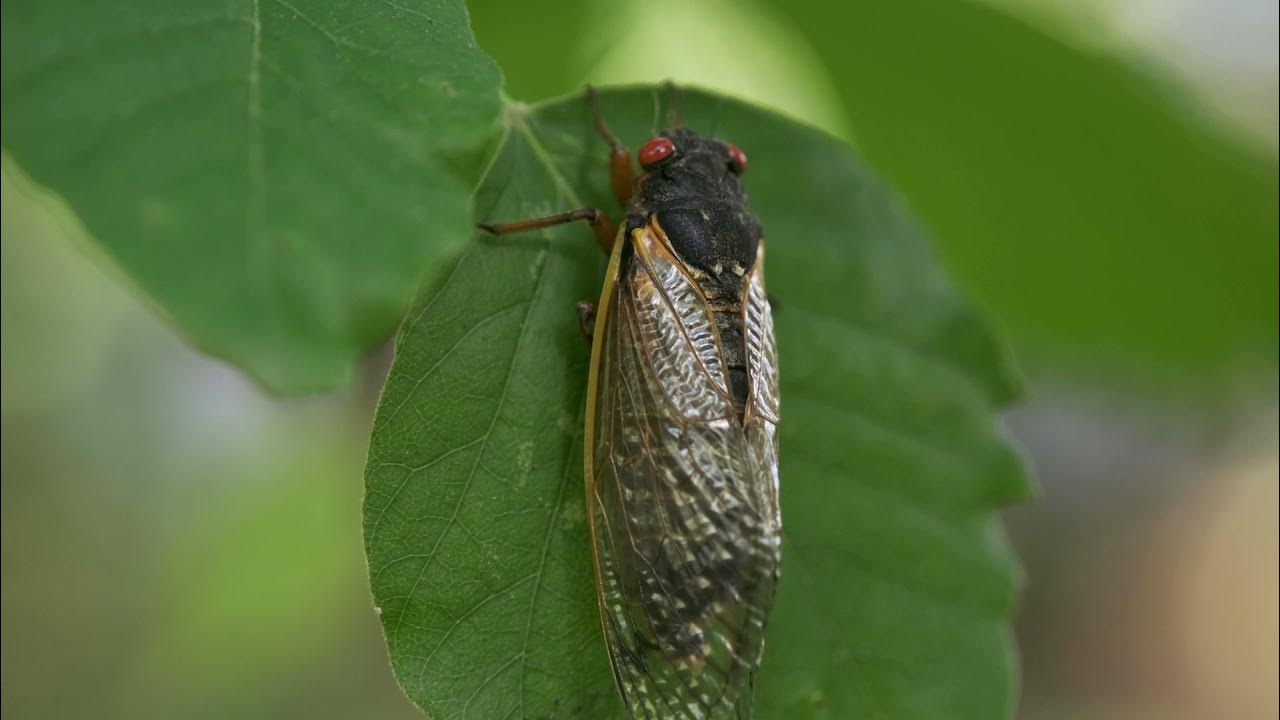
It's coming this summer -- and it'll be twice as big! Two broods of cicadas are set to emerge this year, an event that last occurred more than 200 years ago and now has scientists, bug watchers, and fans of the loud and noisy (yet harmless) insects buzzing with anticipation. Media coverage of this popular event put on by nature is also starting, and John R. Cooley, a cicada expert at UConn, offered his expertise on the impending emergence to MassLive: This summer, some will get a chance to witness a phenomenon rarer — and probably louder — than Halley’s comet. For the first time in more than two centuries, two big groups of cicadas in the United States will emerge simultaneously from the ground. Cicadas, often called “heat bugs,” make their presence known throughout the country every summer by “singing” their loud song. But some of these large, flying insects only emerge from underground every so often, depending on their group, or brood. These “periodical” cicadas bury themselves in soil, where they spend most of their lives. This summer, millions of cicadas from broods XIX (emerging every 13 years) and XIII (every 17 years) will both crawl out from underground and fly across the south and Midwest looking for a mate, according to Cicadamania, a website dedicated to tracking the insects. The last time these two broods popped out of the ground at the same time was in 1803, Cicadamania reported – when the U.S. bought the Louisiana Territory from France. “You cannot possibly be unaware that periodical cicadas are out, because they’re out by the millions and millions, and they’re noisy, charismatic, active insects that are just everywhere,” John R. Cooley, an entomologist who studies cicadas at the University of Connecticut, told MassLive. “When you got them, you know it. And that’s what you can expect to see. That’s what any normal emergence looks like,” he continued. What folks will see are a whole lot of bugs that all look the same, as the ones that come out every decade-plus look the same as the ones that come out every year, Cooley said. Researchers are still exploring why some cicadas emerge periodically. One common theory is that their infrequent appearance helps them avoid predators and prevents enemies from synchronizing on their life cycle. But, Cooley said this theory is flawed since all cicadas have predators, but fewer than 10 species are periodical. Some of the cicada’s natural enemies include birds, moles and Cicada killer wasps, according to the University of California Integrated Pest Management Program. Another theory suggests the last ice age forced cicadas to evolve to have longer periodical life cycles. But, that theory is limited as many cicadas live near glacial areas – few of which are periodical, according to nature.com. “Science isn’t all about having the explanations,” Cooley said. “We just test hypotheses and there are a lot of hypotheses as to why these cicadas are the way they are, but none really stand up so far.” The emerging of cicadas is always a popular and trending topic, and if you have questions or are looking to cover, then let us help. John R. Cooley is an Associate Professor in Residence at the University of Connecticut. He is an entomologist, author, and leading authority when it comes to cicadas. Simply click on his icon now to arrange a time to talk today.


Image shows how tiny water channels control how water enters and exits cells through their membranes The Aston Institute for Membrane Excellence (AIME) will be set up with a £10m grant from Research England AIME will be led by Professor Roslyn Bill from Biosciences and Professor Paul Topham from Chemical Engineering and Applied Chemistry The globally unique institute will use biomimetic polymer membranes for applications such as water purification and drug development Aston University will establish the Aston Institute for Membrane Excellence (AIME), a globally unique, cross-disciplinary institute to develop novel biomimetic membranes, after receiving a major grant of £10m from Research England. AIME will be led by Professor Roslyn Bill, from the School of Biosciences, with co-lead Professor Paul Topham from the department of Chemical Engineering and Applied Chemistry (CEAC). Membranes, both biological and synthetic, are hugely important in many sectors. For example, the world’s top ten selling human medicines all target proteins in biological membranes, while synthetic polymer membranes are used in the US$100bn/year water purification industry. The team behind AIME believes that the full potential of membranes will only be realised by an interdisciplinary group spanning biology, physics and chemistry that can investigate membranes holistically. Professor Bill, a European Research Council (ERC) Advanced grantee leads Aston Membrane Proteins and Lipids (AMPL) research centre of excellence that studies the structure and function of membrane proteins and associated lipids. Professor Topham leads Aston Polymer Research Group (APRG), which investigates the nanoscale behaviour of block copolymers (a type of polymer with a structure made of more than one type of polymer molecule) and polymer technologies for membranes. AMPL and APRG have already begun collaborative research and AIME will bring together the complementary expertise of both research clusters into one institute. AIME will initially comprise the eight researchers from AMPL and APRG. Alongside the co-leads Professor Bill and Professor Topham, will be Dr Alan Goddard, Professor Andrew Devitt, Professor Corinne Spickett, Dr Alice Rothnie, Dr Matt Derry and Dr Alfred Fernandez. It plans to recruit three further academics, six tenure-track research fellows, three postdoctoral research assistants (PDRAs), six PhD students, a research technician and a business development manager. Importantly, AIME will work with many existing Aston University colleagues to build a comprehensive research community focused on all aspects of membrane science. The new AIME team will focus on the development of bioinspired, highly selective polymer structures for applications in water purification and waste remediation, nanoparticles loaded with therapeutic molecules to treat disorders ranging from chronic wounds to neurological injuries, and the purification of individual membrane proteins with polymers to study them as drug targets. The vision is for AIME to become a ‘one-stop shop’ for interdisciplinary, translational membrane research through its facilities access and expertise, ideally located in the heart of the country. Professor Bill said: “The creation of AIME is ground-breaking. Together with Aston’s investment, E3 funding will deliver a step-change in scale and the rate at which we can grow capacity. We will address intractable scientific challenges in health, disease, and biotechnology, combining our world-class expertise in polymer chemistry and membrane biology to study membranes holistically. The excellence of our science, alongside recent growth in collaborative successes means we have a unique opportunity to deliver AIME’s ambitious and inclusive vision.” Professor Topham said: “We are really excited by this fantastic opportunity to work more closely with our expert colleagues in Biosciences to create advanced technology to address real world problems. From our side, we are interested in molecular engineering, where we control the molecular structure of new materials to manipulate their properties to do the things that we want! Moreover, we are passionate about a fully sustainable future for our planet, and this investment will enable us to develop technological solutions in a sustainable or ‘green’ way.” Professor Aleks Subic, Vice-Chancellor and Chief Executive of Aston University, says: “Our new Aston Institute for Membrane Excellence (AIME) will be a regional, national, and international research leader in membrane science, driving game-changing research and innovation that will produce a pipeline of high-quality research outcomes leading to socioeconomic impact, develop future global research leaders, create advanced tech spinout companies and high value-added jobs for Birmingham and the West Midlands region. Its establishment aligns perfectly with our 2030 strategy that positions Aston University as a leading university of science, technology and enterprise.” Steven Heales, Policy Manager (Innovation) at the West Midlands Combined Authority, said: “WMCA is delighted to see Research England back the Aston Institute for Membrane Excellence. This will enable Aston University’s excellent academics and research community to work closely with businesses to make advances in membrane technology and applications. “In 2023 the West Midlands Combined Authority agreed a Deeper Devolution Trailblazer Deal with Government, which included a new strategic innovation partnership with Government. Projects like AIME are exactly the kind of impact we expect this new partnership to generate, so watch this space.” Lisa Smith, chief executive of Midlands Mindforge, the patient capital investment company formed by eight Midlands research-intensive universities including Aston University, said: “This grant is an important vote of confidence in the Midlands scientific R&D ecosystem. AIME will play an important role in the future research of pioneering breakthroughs in membrane science and enable the world-leading research team at Aston University to develop solutions to real world problems. We look forward to closely working with the Institute and nurturing best-in-field research being undertaken at Aston out of the lab and into the wider society so it can make a positive impact”. Rob Valentine, regional director of Bruntwood SciTech, the UK’s leading developer of city-wide innovation ecosystems and specialist environments and a strategic partner in Birmingham Innovation Quarter, said: "As a proud supporter of the Aston Institute for Membrane Excellence (AIME), I am thrilled at the launch of this groundbreaking initiative. AIME exemplifies Aston University's commitment to advancing cutting-edge interdisciplinary research and further raises the profile of the region’s exemplary research capabilities and sector specialisms. AIME's vision of becoming a 'one-stop shop' for translational membrane research, strategically located at the heart of the country, aligns perfectly with our strategy at Bruntwood SciTech. We are committed to working with partners, including Aston University, to develop a globally significant innovation district at the heart of the UK where the brightest minds and most inspiring spaces will foster tomorrow’s innovation.” Membrane research at Aston University has also recently received two other grants. In November 2023, Professor Bill received £196,648 from the Biotechnology and Biological Sciences Research Council’s Pioneer Awards Scheme to understand how tiny membrane water channels in brain cells keep brains healthy. In December 2023, a team led by AIME team-member Dr Derry received £165,999 from the Engineering and Physical Sciences Research Council to develop biomimetic membranes for water purification. For more information about AIME, visit the webpage.



Aston University scientists to tackle challenges of converting rice straw into biofuels Researchers to examine issues that hinder conversion into an alternative fuel Will help protect global food security, minimise CO2 emissions and decrease farmland needed for growing energy crops. Aston University scientists are to tackle some of the challenges of how to make inedible rice straw into the next generation of biofuels. In recent years, biofuels and biobased chemicals have been blended with petrol to create a more sustainable alternative. The Aston University researchers are to examine issues that currently hinder the conversion of rice straw into an alternative fuel. Currently the production of biofuels mainly relies on sugar crops such as sugarcane and sugar beet, which raises major concern about the competition between growing crops for food or fuel. However plant dry matter such as rice straw is seen as a better alternative to current crops because it doesn’t affect food security. Rice straw is often treated as an agricultural waste by-product and is removed by burning in the field. Farmers burn straw to prepare to plough and sow rice credit: S.Narongrit99 The research is being led by Dr Alfred Fernandez-Castane, senior lecturer in biochemical engineering and principal investigator at the Energy and Bioproducts Research Institute (EBRI) at Aston University, alongside a Marie Curie fellow, Dr Longinus Igbojionu. Their two-year project, An integrated approach to ethanol production from rice straw via microwave-assisted deep eutectic solvent pretreatment and sequential cultivation using Candida tropicalis and Saccharomyces cerevisiae, will explore cleaner and cost effective methods to extract rice straw’s energy-containing molecules. Dr Alfred Fernandez-Castane said: “The problems envisaged with the conversion of rice straw to ethanol can be categorised into four main challenges and resolving each challenge will lead to a major advance on the current state of the art. “The first is to develop pre-treatment conditions which will break down complex polymers thereby allowing the removal of lignin. “The next is to investigate novel biomass pre-treatment technologies combining green solvents and microwaves and how different methods affect morphology, structure and crystallinity of biomass. The next is to develop novel biotrasnformations using the yeasts Candida tropicalis and Saccharomyces cerevisiae to convert sugars into ethanol efficiently. “These three challenges will lead to the fourth scientific challenge which is to make the process sustainable and scalable, such as recycling the wastewater created and even the possibility of using the by-product of yeast for animal feeds.” The team believes that the research will help contribute to combating global warming and decreasing avoidable deaths by protecting global food security, minimising CO2 emissions by reducing the burning of straw and decreasing the farmland needed for growing energy crops. The research will end in November 2025.


Dangerous new COVID variant could overwhelm hospitals, weaken immunity
Two new studies have found that the new COVID variant BA.2.86 could lead to more severe diseases than other Omicron variants. Jennifer Horney, one of the leading experts on the COVID-19 pandemic, can discuss the new variant and its potential impact on the healthcare system. Horney, professor and founding director of the University of Delaware's epidemiology program, made the following points: There are spikes now in all respiratory infections across the U.S. High rates of COVID-19 and seasonal infuenza especially among children and older adults could stress healthcare systems. New subvariants of COVID-19 could be severe. High hospitalization rates are occurring in countries with far higher vaccination rates in the US, perhaps due to reduced immunity. We need to continue to track new variants and focus on developing updated vaccines. Continued mutations will mean less protection from infection among those who have prior infections and vaccinations. To set up an interview, visit Horney's profile and click on the contact button.



• Contaminated water is responsible for around 500,000 deaths a year • New transmembrane proteins will allow selective removal of single contaminant from water • Will use tiny transport channels around one million times smaller than an ant. Aston University scientists are to explore a more sustainable method of separating contaminants from water. The method will use exquisite molecular selectivity, which means that just a single chemical or molecular species will be able to pass through the membrane, allowing scientists to selectively remove a single contaminant from water. The World Health Organization estimates that microbiologically contaminated water is responsible for almost 500,000 deaths a year and current filtration technologies aren’t effective enough. The University has received a grant of £165,999 from the Engineering and Physical Sciences Research Council to research the use of bioinspired membranes to selectively remove contaminants from water, while using minimal energy. The membranes will be made from plastic but will have transmembrane proteins embedded within them, made possible thanks to new polymers developed by the University. The transmembrane proteins enable the selective removal of specific contaminants using transport channels measuring approximately 4-10 nanometres - around one million times smaller than an ant. The Aston University team led by Dr Matt Derry, lecturer in chemistry, will be developing bio-inspired membranes which selectively remove contaminants with minimal energy. Working with Dr Alan Goddard, reader in biochemistry at Aston University, the team’s design is based on solutions found in biological evolution and refinement which has occurred over millions of years. Dr Derry, who is based in the University’s College of Engineering and Physical Sciences. said: “Polluted water is a complex global socioeconomic issue that affects human and animal health, and greatly impacts industries such as agriculture and fishing, recreational activities and transport. “Current filtration technologies are ineffective and their manufacture often requires complex and expensive multi-step processes with high associated energy costs. “We are going to use advanced polymer synthesis to develop new bespoke polymers which will both extract transmembrane proteins and immobilise them within artificial separation membranes. “This will create water purification membranes which remove impurities with greater selectivity and specificity.” The new membrane technology developed in this project will advance and evolve membrane science. The platform materials and approaches used can be applied to other membrane filtration and water purification applications such as selective phosphate removal from agricultural wastewater. Dr Derry added: “We are hoping that the new membranes will lead to high-performance devices that can contribute to a circular economy. “The need for such new systems is recognised by the UN with Sustainable Development Goal six on clean water and sanitation.” The research will begin in April 2024 and will end in May 2026.

CorpusCast with Dr Robbie Love: Professor Laurence Anthony on AntConc
CorpusCast is the podcast about corpus linguistics and what it can do for society. Join Dr Robbie Love as he speaks with top researchers in the field to find out more about how corpus linguistics – the study of linguistic patterns in large samples of language – is applied to a diverse range of areas including health, social justice and education. To mark the 25th episode and second anniversary in 2024, this episode reflects on the incredible two-year journey, expressing gratitude to exceptional guests and listeners spanning over 30 countries. In this milestone episode, the spotlight is on Professor Lawrence Anthony, the brilliant mind behind AntConc, a widely used and freely available corpus tool. Listeners are invited to join a profound exploration into AntConc's story, development, and its impact on corpus linguistics. Professor Lawrence Anthony, based at Waseda University in Japan, directs the Center for English Language Education in Science and Engineering. With over two decades of expertise in educational technology, natural language processing, and genre analysis, he has been a pioneer in developing educational software for corpus linguistics enthusiasts. Listeners can anticipate a captivating conversation as CorpusCast delves into the world of AntConc, gaining insights into its significance in the field. The third season kicks off with Professor Lawrence Anthony, promising a knowledge-packed episode. A heartfelt thank you goes out to all CorpusCast listeners for their continuous support. Here's to more discoveries, learning, and growth in 2024! Happy New Year, and welcome to another exciting episode of CorpusCast! Dr Robbie Love ? https://bit.ly/3Zcgo36 Professor Laurence Anthony ? https://www.laurenceanthony.net/ Aston Centre for Applied Linguistics ? https://bit.ly/3QKHcSF School of Social Sciences and Humanities ? https://bit.ly/3JCRAd1 Find out more about courses related to this show ? https://bit.ly/3pR705k #corpuslinguistics #BusinessCommunication #AstonUniversity #RobbieLove #MatteoFuoli #SocietalImpact #corpuslinguistics #AntConc #PodcastAnniversary #EducationTechnology


SME innovation through the lens of ancient myths - public lecture
Professor Nicholas Theodorakopoulos will explore the transformation in the perception of SMEs since the 1970s He will explain the significance of theory-driven design and delivery of interventions for building the capacity of SMEs to innovate The lecture will take place on Thursday 18 January 2024 at Aston Business School from 1800 hrs. Aston University entrepreneurship expert, Professor Nicholas Theodorakopoulos, will be giving his inaugural lecture at Aston Business School on Thursday 18 January 2024. In his talk SME Innovation, Theory-Driven Intervention, and Ancient Myths Professor Theodorakopoulos will explore the transformation in the perception of SMEs, from being viewed as an anachronism in the 1970s to becoming the driving engine of innovation and a prominent feature of public policy worldwide. Professor Theodorakopoulos will explore the significance of theory-driven design and delivery of interventions for building the capacity of SMEs to innovate and will explain that these are not just academic pursuits, but essential tools for developing replicable and impactful intervention programmes on a national and international scale. He will also present a compelling example of a successful intervention that he has run with colleagues for almost a decade in the West Midlands region. Professor Theodorakopoulos said: “The paradigm shift in SME perception necessitates a robust approach to fostering effective SME development ecosystems, not least through Research and Innovation policies. “A critical component of this policy domain lies in strengthening collaboration and knowledge exchange between universities and SMEs, often achieved through targeted interventions. “I look forward to drawing upon an ancient myth as a metaphor for the significance of knowing not just ‘what works’, but also ‘how it works’, in university-SME interventions.” The lecture is open to the public and free to attend in person or online. The in person event will be followed by a drinks reception. To book your place, click here.

Aston University invests £18 million to support doctoral research
Funding to recruit and nurture tomorrow’s researchers Investment will support University’s vision to be a leading university of science, technology and enterprise Investment in research at the interfaces of science, health and technology. Aston University is announcing investment of £18 million in doctoral research funding to recruit and nurture the research leaders of tomorrow. The investment supports the University’s vision to be a leading university of science, technology and enterprise. It will fund research at the interfaces of science, health, technology and enterprise, socio-economic transformations driven by digitalisation, and pressing economic, social and other challenges addressed by researchers in Aston University’s colleges and research institutes. Successful candidates will be recruited for the studentships on the basis of excellence and provided with the support they need to excel as doctoral researchers. They will drive forward their own research projects and make significant contributions to existing innovative research projects and teams. A range of support will be available, including full studentships covering the cost of UK fees and student stipend paid at rates equivalent to UKRI-funded studentships, as well as a fund for research expenses. Professor Phil Mizen, Associate Pro-Vice-Chancellor Researcher Development at Aston University, said: “This investment represents the University’s strategic commitment to supporting inclusive, entrepreneurial and translational research with a clear transformational impact so that the people, businesses and communities it serves can thrive economically, socially and culturally. “I am delighted that, through these studentships, we are able to provide more opportunities for doctoral researchers to gain essential skills and to foster excellence in research and innovation.”

#Expert Insight: Here’s what can happen when dollar stores move in
Dollar stores - they're everywhere and on of America's fastest growing retail options. From the outside looking in, the idea of dollar stores seem like a win/win all around -- cheaper food, cheaper toys, and just about cheaper everything on offer to consumers looking to save money. However, recent research by UConn Professor Rigoberto Lopez might be pulling back the curtain on the bad deal these new outlets are selling to consumers and communities. Dollar stores have proliferated in recent years, and a study by a University of Connecticut economist has found that they contribute to less healthful food choices in the neighborhoods where they open. That’s because independent grocery stores tend to close in the same areas where the dollar stores open, according to professor Rigoberto Lopez, whose research focuses on agricultural economics. “The dollar store expanding is the fastest-growing retail format, and we also have seen a lot of family, independently owned grocery stores going out of business,” Lopez said. “So we try to link the two and to find not just a statistical correlation, but also we find that indeed when the dollar store comes to the neighborhood these stores tend to go out of business as well.” The low-priced dollar store — primarily Dollar General, Family Dollar and its subsidiary, Dollar Tree — “is the most successful type of format that is proliferating all across the United States, especially in rural areas and food deserts, which are the more underserved areas,” Lopez said. According to the study, published in Applied Economic Perspectives and Policy, there were 35,000 dollar stores in the United States in 2019 and they were “among the few food retailers” that grew in revenue after the Great Recession of 2008-10, outperforming big box discounters and retail clubs. Between 2000 and 2019, dollar stores opening in a neighborhood resulted in a 5.7% drop in independent grocery store sales, a 3.7% decrease in employment and a 2.3% increase in the likelihood of the grocery stores closing, according to the research. The effects are three times more likely in rural than urban areas, the study found. The dollar stores tend not to offer fresh produce and meats, with foodstuffs being limited to canned and boxed goods. “In general they provide an unhealthier food assortment … and less services,” Lopez said. “They don’t have bakery, butchers, they don’t have a lot of these.” The article also discusses not just the economic aspects, but public health implications as well. Lopez said the dollar stores’ business model is “low prices, low cost, low quality. … But a lot of the food that they sell is not healthy. It’s processed foods that they can store. Keeping fresh food and vegetables costs money.” Dollar stores are not necessarily a negative, if there was not a grocery store in the area before, Lopez said. “Public health advocates, they’re against dollar stores, but a lot of people that visit the dollar store, they prefer to have a dollar store than not to have anything at all in some areas. … But in general … we find if they are driving some of the local businesses out, then that is the negative trend.” Food insecurity and the changing landscape of grocery stores are important topics, and if you have questions or are looking to cover, then let us help. Rigoberto Lopez is the DelFavero Professor of Agricultural Economics at the University of Connecticut's College of Agriculture, Health and Natural Resources Department of Agricultural and Resource Economics. He is an expert in food systems, marketing, industrial organization, and public policy. Simply click on his icon now to arrange a time to talk today.
