
Experts Matter. Find Yours.
Connect for media, speaking, professional opportunities & more.

Frequent tanning can signal excessive concern over image and vulnerability to taking health risks, researcher says Getty Images People who often sunbathe or use tanning beds are more likely to try risky weight-loss methods and have cosmetic surgery, as well as get tattoos and piercings. But while people who seldom tan also may try unsafe diets and cosmetic surgery, they rarely opt for tattoos or piercings, according to a Baylor University study. "When compared to infrequent tanners, frequent body-tanners — regardless of whether they are tanned by ultraviolet light from the sun, ultraviolet light from a tanning bed or methods such as tanning sprays that do not involve UV light — showed significantly higher behavioral intentions to engage in risky appearance-related behaviors overall," said Jay Yoo, Ph.D., associate professor of family and consumer sciences in Baylor's Robbins College of Health and Human Sciences. "Safer tanners, on the other hand, are more concerned about modifying their bodies in ways such as tattoos and piercing that may carry a stigma," Yoo said. Most skin cancer prevention campaigns have emphasized avoidance of getting sunburned, reducing UV exposure and applying sunscreen, but they have neglected the individual's experience with social and appearance concerns, he said. But "Excessive tanning can serve as a possible sign of overt concern over body image, with vulnerability to greater health risks," Yoo said. His research article — "A Study of the Relationships between Tanning Methods and the Intention to Engage in Risky Appearance-Related Behaviors" — is published in Family and Consumer Sciences Research Journal. Data for the study was collected from an online survey of 395 female college students in the southern United States. The major contributor to skin cancer is frequent exposure to ultraviolet rays, with skin cancer the most common — and one of the most preventable — types of cancer, according to the American Cancer Society. Ironically, previous research has found that many people choose to tan because they believe a tan makes them look thinner and more fit, Yoo said. Tanning has gone in and out of fashion, Yoo noted. Tans at one time were associated with lower classes who worked outdoors — in contrast with the Southern belles of more than a century ago, who used parasols to protect their skin and to look pale and refined. In the 1920s, fashion designer Coco Chanel started a fad after accidentally getting sunburned while visiting the French Riviera, Yoo said. Tanning remained popular, with high-fashion models often sporting tans, whether from UV exposure or sprays and bronzers. And these days, some people sport tattoos along with their tans, he said. The study found that: Frequent tanners who expose themselves to UV rays through sunbathing or tanning beds have the strongest intentions to engage in a wider range of risky appearance-related behaviors when compared to infrequent tanners or spray tanners. Such behaviors include extreme weight control methods, such as diet pills, self-induced vomiting, laxatives and diuretics; cosmetic surgery and Botox injections; spa treatments, such as hair removal by waxing (which has been associated with rashes and infections) and gel nail polish (done with UV curing and associated with DNA damage to the skin that can result in premature aging and possibly cancer; and tattoos or piercings. Infrequent tanners, as well as "safe" tanners who seek to achieve an ideal tan without ultraviolet methods (sprays, lotions or bronzers) are much less likely to engage in behaviors that may convey certain stereotypes, such as tattoos or piercings with visual symbols or messages. But they are willing to try other risky appearance-related behaviors. Yoo suggested that intervention strategies adapted for healthcare providers to reduce UV exposure and skin cancer could use stigmatization — perhaps through images of tattooed or pierced individuals who also are tanned. "A negative stigma attached to UV exposure can create ambivalence in our society about achieving a tanned appearance," Yoo said. "This could decrease the popularity of tanning in much the same way the negative stereotyping of smoking and education about its health risks have reduced the number of people who smoke." He noted that in the 1940s and 1950s, smoking was idealized, especially in Hollywood movies, but "there has been a cultural shift," he said. "One way to change the appeal of tanning would be to make it un-cool," Yoo said. "If I tan and people look at me funny, I'm not going to tan anymore." While another way to stigmatize tanning would be to stress the health consequences, "for young people it may be more effective to emphasize the appearance," Yoo said. "The tanning that makes me attractive now may be counteracted for the long haul because at 50 or 60, I may have leathery skin. "Given that tanning emerged as a fashion trend, gradual attitudes toward dangerous tanning can be made possible in a similar fashion," he said.


Five Tips to Choose Sustainable Fashion
Getty Images Fast Fashion is the most popular trend in retail fashion today. Fast Fashion isn’t a specific style but rather clothing produced quickly and cheaply to respond instantly to consumer demand. Low prices and popular online retailers allow people to purchase clothing more often but at a devastating cost to the environment. According to EarthDay.org, the fashion industry is one of the largest global polluters, creating 4% of all greenhouse gas emissions, 40 million tons of landfill waste and 35% of microplastics in the ocean. According to fashion expert Jay Yoo, Ph.D., associate professor of apparel merchandising in the Robbins College of Health and Human Sciences at Baylor University, consumers are learning more about the environmental impacts of fashion and searching for better options. Fashion expert Jay Yoo, Ph.D., associate professor of apparel merchandising in the Robbins College of Health and Human Sciences at Baylor University Fashion expert Jay Yoo, Ph.D. Yoo’s research shows that purchasing apparel products that help reduce negative impacts on the environment has emerged as a lifestyle. “Fashion-conscious consumers are ready and willing to forgo fast fashion for more sustainable options produced in an ecologically and socially responsible way,” said Yoo. Yoo recommends five ways you can use your purchasing power to support sustainable fashion. Choose natural fibers - organic cotton, linen or hemp. Avoid clothing that requires dry cleaning. Donate to and shop at resale stores. Purchase from retailers that are committed to sustainability. Encourage your friends to join you in supporting sustainable fashion. Although fashion is often understood to center on apparel choices, fashion impacts nearly every aspect of human lives, Yoo said, including health, social responsibility and environmental issues involving consumptive behaviors. His additional research interests include appearance-related behaviors and their implications for individual and social well-being from consumer perspectives, from body-tanning behaviors, body image and quality of life among cancer patients, retail therapy and mental health, and irrational shopping and extreme body modification.

Baylor Researcher Seeks to Understand the Drive for the Perfect Tan
Despite being one of the most preventable cancers, the desirability of tanning is often stronger than the dangers of harmful UV exposure. Getty Images With summer on the horizon, the quest for the perfect tan has begun. However, there is no such thing as a healthy tan. Despite being one of the most preventable cancers, skin cancer is the most common cancer in the United States, with more than 5 million cases of skin cancer diagnosed each year, according to the Skin Cancer Foundation. Baylor University researcher Jay Yoo, Ph.D., associate professor of apparel merchandising in Baylor’s Robbins College of Health and Human Sciences, found that the social and cultural influences on the desirability of tanning – which has been associated with good health and an active lifestyle since the 1920s – is often stronger than the dangers of harmful UV exposure. “The appeal of a tan is so strong in U.S. culture, it may be difficult for some people to stop or even reduce the amount of tanning,” Yoo said. In his 2019 study, “Identifying factors that influence individuals’ intentions to quit body tanning: A sociocultural perspective,”, published in the international journal Social Behavior and Personality, Yoo identified what motivates people to seek the “perfect” tan. Yoo surveyed 385 college students to understand how society effects their tanning behaviors and intention to quit tanning. His research found that the greatest influence on reducing risky tanning behavior was the perceived attractiveness from tanning, whereas skin-aging concerns positively influence their intention to quit tanning. FINDINGS Yoo’s findings provide important implications for skin cancer prevention campaigns. Instead of promoting the message of body tanning as an unhealthy behavior, focusing instead on untanned healthy bodies as a positive image can serve as an effective approach to decreasing skin cancer incidence. Using messages that accentuate a healthy body without tanned skin should be promoted to boost a positive body image and to reduce the likelihood of engaging in risky tanning behaviors. ACTIONS To protect yourself and look great, the Skin Cancer Foundation recommends: Avoid tanning entirely: It’s the best way to safeguard against unhealthy, unsightly skin damage. Fake, don’t bake: If you want a golden glow, consider sunless tanning products. There are many options, but remember, when in the sun, you still need sun protection. Tone, don’t tan: Get radiant skin through exercise. Working out feels good and boosts your mood. Hydrate and eat great: Drink lots of water and choose whole, unprocessed foods. You don’t need to tan to look slim and your skin will thank you.

CorpusCast with Dr Robbie Love: Dr Clyde Ancarno & Professor Insa Nolte on Anthropology
Hello, hello, hello, everyone! Welcome back to Corpuscast, the podcast that brings you the fascinating world of Corpus Linguistics. Can you believe it? We're already on episode 19! Since our launch in January 2022, we've been exploring the incredible impact of Corpus Linguistics on society. And trust me, today's episode is going to blow your mind! As always, I'm your host Robbie Love, a linguist from Aston University. Today, we dive deep into the realm of anthropology, the study of human societies and cultures. Get ready for an engaging discussion on the origins of humanity, the evolution of civilizations, and the incredible diversity that exists across our world. Our special guests for today's episode are none other than Professor Insa Nolte, a leading anthropologist from the University of Birmingham, and Dr. Clyde Ancarno, a brilliant corpus linguist and senior lecturer in Applied Linguistics and Education at King's College London. Together, Insa and Clyde collaborated on a groundbreaking research project in Southwest Nigeria, exploring how members of different religious groups coexist peacefully. Their findings shed light on the intricate social structures that maintain harmony within diverse communities. Join us as we delve into the thought-provoking questions that shape our understanding of humanity. Who are we and where do we come from? How have civilizations transformed throughout history? What factors contribute to the functioning of our societies? This captivating conversation will unveil the incredible insights brought forth by Corpus Linguistics and its intersection with anthropology. Discover how language and culture intertwine to shape our identities and communities. Don't miss out on this enriching episode! Tune in to Corpuscast below, and let's embark on this captivating journey together. Subscribe to Corpuscast on YouTube, Apple Podcasts, Spotify or wherever you get your podcasts, for more thought-provoking episodes exploring the boundless possibilities of Corpus Linguistics in education, health, technology, and beyond. Stay curious, stay inspired! ? #Corpuscast #Anthropology #CorpusLinguistics #Humanity #Culture #Diversity #Podcast #LanguageResearch



Nicholas Petrelli, M.D., Receives Lifetime Achievement Award
Nicholas Petrelli, M.D., Bank of America Endowed Medical Director of ChristianaCare’s Helen F. Graham Cancer Center & Research Institute, has received the Lifetime Achievement Award from Tulane University School of Medicine in New Orleans, Louisiana. Petrelli is a 1973 graduate of the school. Dr. Petrelli, center, receives the Lifetime Achievement Award from Julius L. Levy, Jr., M.D., past president, Tulane Medical Alumni Association, left, and Lee Hamm, M.D., senior vice president & dean of the School of Medicine, and the James R. Doty Distinguished Professor and Chair, Tulane University School of Medicine, New Orleans, Louisiana. The award recognizes an alumnus of the school who has made significant contributions to the field of medicine and has offered outstanding leadership in the community. Under Petrelli’s leadership at ChristianaCare since 2001, the Helen F. Graham Cancer Center & Research Institute has become a national model for multidisciplinary cancer care and a top enroller in U.S. clinical research trials. The Graham Cancer Center is a National Cancer Institute Community Oncology Research Program and one of only five hybrid academic community cancer centers in the nation. Through the work of the Graham Cancer Center and partnerships with health care providers, community organizations and the state to improve the prevention, diagnosis and treatment of cancer, Delaware’s cancer mortality rate has dropped twice as fast as the national rate. In addition, the state is outpacing the nation in reducing deaths from a number of cancers. Delaware has gone from number one in cancer mortality 22 years ago to number 17 today. Petrelli has numerous achievements in cancer care and research. He has established several firsts for Delaware, including a multidisciplinary disease center site, the Cawley Center for Translational Cancer Research, a tissue procurement center, an adult genetic counseling program, a statewide high-risk family cancer registry consisting of more than 500,000 individuals and an innovative oncology express unit to provide patients with cancer a way to address urgent care needs without having to go to the emergency department. Among his accomplishments on the national level are the first primary care practice established at a cancer center and the first gene editing research program integrated into a community cancer center. Through a unique research partnership with the Ellen and Ronald Caplan Cancer Center of The Wistar Institute, he has brought cutting-edge cancer treatments and diagnostics to Delawareans. And in a ground-breaking collaboration among the government, community organizations and the Graham Cancer Center nearly 10 years ago, Delaware ended the disparity between Black and white people for colorectal cancer screenings and mortality, which continues to this day. Petrelli has received numerous awards and has authored 360 peer-reviewed manuscripts and 31 book chapters. He has served on advisory panels of the National Cancer Institute, the American Society of Clinical Oncology, the American Cancer Society and the Society of Surgical Oncology. He was president of the Society of Surgical Oncology from 2007 to 2008. In 2013 he received the Order of the First State Award, the highest honor in the state, from Delaware Gov. Jack Markell. In 2019 he received the James Tilton award (named for the first U.S. Army Surgeon General) from the Medical Society of Delaware.


#Expert Research: Biodegradable ultrasound implant could improve brain tumour treatments
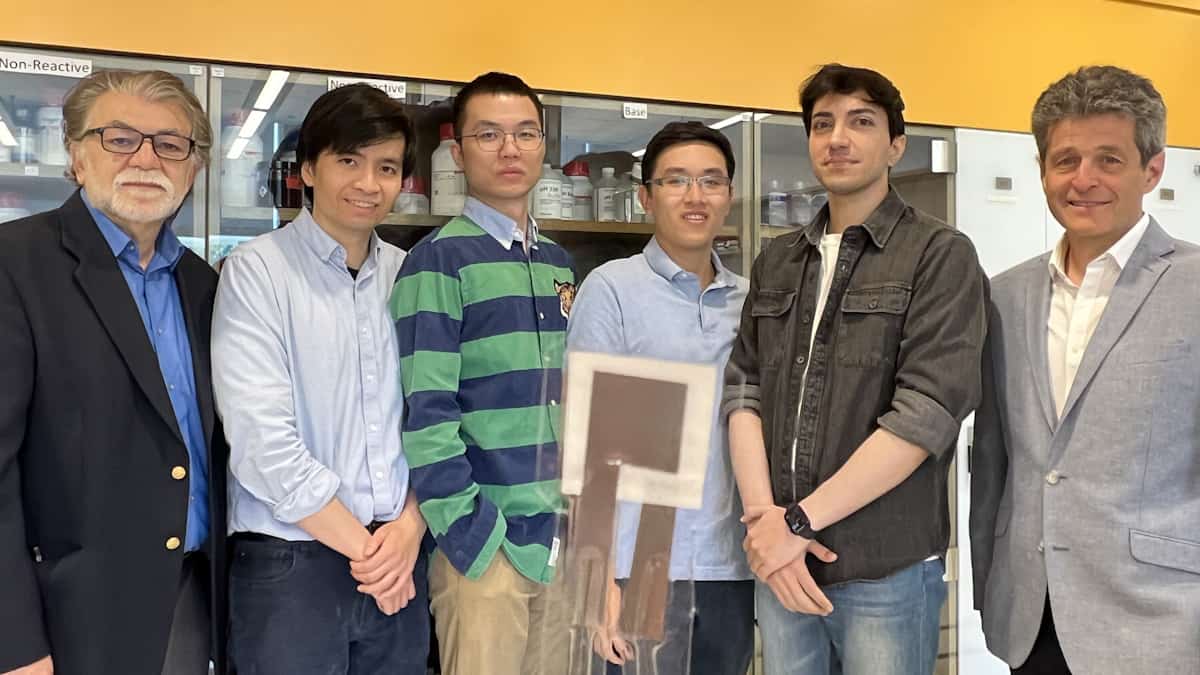
One of the challenges in treating certain types of brain cancer is the way that the blood-brain barrier prevents chemotherapy drugs from reaching the tumors they're meant to target. UConn's Thanh Nguyen, a biomedical and mechanical engineer, is developing new technology that could improve how we are able to treat brain tumors. He recently spoke with Physics World about this groundbreaking research: A new type of biodegradable ultrasound implant based on piezoelectric nanofibres could improve outcomes for patients with brain cancer. Researchers led by Thanh Nguyen from the the University of Connecticut’s department of mechanical engineering fabricated the devices from crystals of glycine, an amino acid found in the human body. Glycine is not only non-toxic and biodegradable, it is also highly piezoelectric, enabling the creation of a powerful ultrasound transducer that could help treat brain tumours. Brain tumours are particularly difficult to treat because the chemotherapy drugs that would be effective in tackling them are blocked from entering the brain by the blood–brain barrier (BBB). This barrier is a very tight junction of cells lining the blood vessel walls that prevents particles and large molecules from making their way through and damaging the brain. However, ultrasound can be safely used to temporarily alter the shape of the barrier cells such that chemotherapy drugs circulating in the bloodstream can pass through to the brain tissues. Currently, to achieve such BBB opening requires the use of multiple ultrasound transducers located outside the body, together with very high intensity ultrasound to enable penetration through the thick human skull bone. “That strong ultrasound can easily damage brain tissues and is not practical for multiple-time applications which are required to repeatedly deliver chemotherapeutics,” Nguyen tells Physics World. By contrast, the team’s new device would be implanted during the tumour removal surgery, and “can generate a powerful acoustic wave deep inside the brain tissues under a small supplied voltage to open the BBB”. The ultrasound would be triggered repeatedly as required to deliver the chemotherapy that kills off the residual cancer cells at tumour sites. After a set period of time following treatment the implant biodegrades, thereby eliminating the need for surgery to remove it. The research, reported in Science Advances, demonstrated that the team’s device used in conjunction with the chemotherapy drug paclitaxel significantly extended the lifetime of mice with glioblastomas (the most aggressive form of brain tumour) compared with mice receiving the drugs but no ultrasound treatment. This is fascinating research and if you are interesting in covering this topic, then let us help. Professor Nguyen focuses on biointegrated materials and devices at nano- and micro-scales for applications in biomedicine, and he's available to speak to media about his research. Simply click on his icon now to arrange an interview today.



Electric vehicles are hitting the streets, but there are potholes to avoid
No doubt about it, electric vehicles are coming and coming fast. Production of EVs has ramped up in the last couple of years but there are many issues that need to be addressed before they become the everyday choice for consumers. Richard Franza, PhD, professor of management at the Hull College of Business at Augusta University said the timing of EVs is contingent on a few things. “It’s not a question of if they’re coming, but how fast will they be here,” said Franza. “One is the speed at which there is infrastructure built for them. There are still not a lot of places to charge a car. We need more charging stations. Eventually, EVs will be predominant.” Franza added a second hurdle is how fast the federal government moves on emissions requirements that will cause consumers to phase out fossil fuel vehicles. Georgia has become one of the leaders in luring EV manufacturers to call the state home. Not just that, but the state is also drawing in companies that supply batteries and other components. “Any time you build a manufacturing or assembly facility, you automatically get the suppliers around them. Even before Georgia got the vehicle manufacturers, we already had a battery manufacturer, so Georgia already has a good network for the automobile industry,” said Franza. Amazon has already made a major investment in EVs and Franza expects other companies like FedEx and UPS, companies that have a fleet of vehicles, to make the switch to EVs as well, since they have more ability to set up charging networks. The biggest question remains: how long it will take before EVs become more prevalent on the streets? Franza said the answer could depend on who you listen to, but other factors come into play. “Right now, electric vehicles account for less than 1% of the vehicles on the road. So I see two leading indicators – the number of gas stations vs. the number of charging stations, and the production of combustion engines vs. electric vehicles. Look for when the ratios of those really start to change, but it’s not black and white. There are several factors that will go into that and it could take longer than people are saying,” Franza said. Covering EVs and the auto industry? Then let us help. Richard Franza, PhD, is available to speak with media about trending issues like inflation, small business and the economy – simply click on his icon now to arrange an interview today.



Georgia Southern University biology professor and researcher Christine Bedore, Ph.D., is helping National Geographic explore the mysteries of shark attacks by sharing her expertise and years of fieldwork as part of the six-part series, “When Sharks Attack 360,” this month. The series, which kicked off July 3, is part of National Geographic’s SharkFest, which will run all month on National Geographic TV, Disney+ and Nat Geo WILD, with new episodes each night through July 11. All episodes are currently available for streaming on Hulu. In episodes 3 and 6, Bedore, an assistant professor in the College of Science and Mathematics who conducts research on sensory systems in sharks, discusses how shark senses may lead to bites by sharks on humans. While filming, she marveled at the channel’s cutting-edge VFX lab and their approach to educating viewers. “Working with National Geographic and the production team on this series was exciting because of the level of experience and creativity of the production team,” said Bedore. “It’s one of the most unique experiences I’ve had filming a documentary so far since it was done in a studio with a green screen, rather than in the field like we typically do. Using the virtual graphics in this series allows us to see these animals from a completely different angle. Although it was challenging to point at a shark that I couldn’t see at the time, we wouldn’t be able to see the detail of the animal at this level filming in the field.” Sharks have long captured the attention of both scientists and the public, and are fascinating animals for many reasons, according to Bedore, who has offered her expertise for previous episodes on Nat Geo WILD, The History Channel and BBC. They’re a species of immense size and diversity, and offer unique behaviors and interactions with other creatures, she noted. Understanding the behavior and physiology of sharks is critical to their survival, as they experience population declines due to overfishing and habitat changes. “In order to combat these changes and ensure the persistence of sharks in our oceans across the world, we first need to understand why they behave the way that they do,” Bedore said. “This series helps us do exactly that. For example, in episode 3 we discuss whether or not sharks can see in color. As a scientist that studies shark color vision, I’m often approached with the question, ‘who cares if sharks can see color?’ As you’ll see, the ability to see color could help sharks identify prey, predators or other objects.” In episode 6, Bedore helps viewers understand that visual acuity, or how clear an image is, may be more important than color when we think about why sharks sometimes have negative interactions with humans. “Being able to discuss my work in these areas through National Geographic’s shark month has been a rewarding experience in helping people understand why these events sometimes happen,” she said. “It’s exciting to study such charismatic animals and have the chance to share your enthusiasm for your research and the sharks with people across the world.” For more information on National Geographic’s “When Sharks Attack 360” visit here. The series can be seen on Hulu, Disney+ and Nat Geo WILD throughout July. To connect with Georgia Southern University biology professor and researcher Christine Bedore to learn more about this fascinating topic - simply contact Georgia Southern's Director of Communications Jennifer Wise at jwise@georgiasouthern.edu to arrange an interview today.


Predicting the post-pandemic desires for the Latin music industry
Coachella, identified as a mega-festival universe, decided on a diverse 2023 roster with artists like Becky G, Kali Uchis, and Rosalía. Bad Bunny, last year’s most-streamed global artist, made history as the festival’s first Spanish-language headliner. It also marked the first year since Coachella’s founding in 1999 that none of the headliners were white. José Valentino Ruiz-Resto, an assistant professor in the School of Music at the University of Florida, co-authored a paper for the Journal of Arts Entrepreneurship Education, which focused on how the music industry would evolutionarily change after the pandemic and ultimately predicted the 2023 Coachella trend. “The rise of Latin artists/headliners at festivals like Coachella is really a reflection of what has been happening in the music industry for the past two decades,” said José Valentino Ruiz-Resto who is also the program coordinator of Music Business & Entrepreneurship at UF. Ruiz-Resto’s research showed that the post-Covid era music industry would encourage more people to stay home and listen to music digitally, but the traditional Latin music experience is an outlier to this. The world-renowned multi-instrumentalist explains, "In order for concerts and festivals to maintain success, they needed to branch out to other markets to bring in those people who were still very much passionate about experiencing music in a live context.” Although this shift was initiated by the pandemic, it has been patiently anticipated by Ruiz-Resto for over 23 years, starting with the founding of the Latin Grammys in 2000. “Because the amount of production within the Latin recording academy is almost equivocal to that of all of the other genres in the American market combined. Latin music is the No. 1 meta genre in the music industry in terms of sales and fan support,” Ruiz-Resto, now a four-time Latin Grammy Award winner, said. Ruiz-Resto's data predicted the need for a stronger focus on the Latin music enthusiasts who still actively go to concerts like Coachella, “In order for Coachella to ultimately succeed in the post-Covid era and attract people, they needed to bring in artists like Bad Bunny.” This historic Coachella moment followed an announcement from the Recording Industry Association of America, stating that Latin music revenues in the United States were at an all-time high, exceeding over $1 billion in 2022. All of this was no surprise to Ruiz-Resto, who observes, researches and directly participates in the Latin music industry. “Now bigger shows are catching up to what has been the largest-selling music market for years. It’s a testament to how positively Latin American cultures are inspiring listeners across the U.S.” By Halle Burton


Smartphones push consumers to prefer a customizable purchasing experience
In a world where purchasing is only a click away, studies have shown that smartphones complicate the most preferred items. Aner Sela, a professor in UF’s Warrington College of Business conducted a new study that discovered consumers who are captivated by their phones gravitate towards specialized, custom products. Compared to large computers or borrowing someone’s phone, an individual’s phone sparks privatized feelings that allow stronger self-expression and strengthens our unconscious preference for a customized consumer journey. Working alongside Camilla Song, an assistant professor at City University of Hong Kong, Sela published their findings in the Journal of Marketing Research in early August. “When you use your phone, your authentic self is being expressed to a greater extent. That affects the options you seek and the attitudes you express,” said Sela, one of the authors of the study. The researchers suspected that smartphones encourage people to reflect on their inner identity, calling on the psychological state of private self-focus that affects all kinds of behaviors. “People with high levels of private self-focus tend to be more independent in the attitudes that they express. They conform less,” the UF professor said. “When they make choices, they tend to choose based on privately or deeply held beliefs, preferences or tastes, and they’re less influenced by social contexts.” Sela and Song chose to test if smartphones have the capability to promote enough private self-focus that it changes behavioral patterns, so they performed five experiments with undergraduates and online respondents. The study found that smartphone users were more likely to choose unique, tailored products rather than large ones than if the user hopped on a large computer. These results vanished if the user was given another phone from the same brand, suggesting that companies should alter their consumer suggestions based on the device they are using. The professor and her former doctoral student found the self-expression mindset likely to cause behavioral changes can be activated by the use of a smartphone. “With a borrowed phone, it doesn’t feel like you’re in your own little bubble. What we find is the use of smartphones and its activation of private self-focus is really unique to a personal device,” Sela said. By Halle Burton
