Experts Matter. Find Yours.
Connect for media, speaking, professional opportunities & more.

Carney Cares. The Tax Code Doesn’t.
Retirement analyst and author Sue Pimento looks more closely at the just-announced "Canada Groceries & Essentials Benefit Program" in the broader context of the country's overall tax-and-benefit system. A closer analysis of steep GIS clawbacks layered on top of taxes shows that some seniors face tax rates comparable to those of the country's highest earners. Pimento argues that we should address this “participation tax” to ensure seniors earn more without being penalized for their work. Prime Minister Mark Carney just announced the Canada Groceries and Essentials Benefit. The intent is good. The relief is welcome. The tax code, however, did not get the memo. Important Disclaimer (Please Read) This article is for educational and discussion purposes only and does not constitute financial or tax advice. Canada's tax and benefit system is complex, highly individualized, and subject to frequent changes. Before making any financial or tax decisions, consult a qualified professional familiar with seniors' benefits, including GIS, OAS, CPP, and related clawbacks. Now that we've cleared that up, let's talk… Here’s a quick overview of what was announced. What the Canada Groceries & Essentials Benefit Program Covers Bigger Benefit Cheques: About 12 million Canadians will receive relief. Food Bank Relief: $20 million to food banks through the Local Food Infrastructure Fund. Food Supply: Immediate expensing for greenhouse buildings to bolster domestic production. Food Security: A national strategy including unit price labelling and enforcement by the Competition Bureau. Business Support: $500 million in supply chain support to help businesses absorb costs rather than passing them on to consumers. These ideas aren’t bad. Some are very sensible. Taken together, the Government estimates in its announcement that these measures would "provide up to an additional $402 to a single individual without children, $527 to a couple, and $805 to a couple with two children. They go on to say that at these levels, Canada’s new government will be offsetting grocery cost increases beyond overall inflation since the pandemic." On paper, this looks helpful. Unfortunately, paper has never had to buy groceries. But… You knew there was a “but” coming. Government announcements are legally required to include one. A Little-Known Tax Reality That Makes You Shake Your Head New research shows Canada's tax-and-benefit system disadvantages low-income seniors who work. The issue? It's hidden in the tax code. On January 28, 2026, a Zoomer Radio Fight Back discussion hosted by Libby Znaimer highlighted the issue. Guests included: • Gabriel Giguère, Senior Policy Analyst, Montreal Economic Institute • Jamie Golombek, Managing Director, Tax & Estate Planning, CIBC Financial Planning & Advice Their conclusion? Canada's tax system discourages low-income seniors from working exactly when they need income the most. Many seniors discover (usually the hard way) that a small side hustle doesn't always pay off. It can lead to higher taxes and benefit clawbacks. Work a little more, and Ottawa takes a lot more. Why Seniors Are Still Working Because the math doesn't add up. Either way. More than 600,000 older adults live below the poverty line. Meanwhile, rent, food, utilities, insurance, and property taxes are increasing faster than pensions ever did. More seniors are employed, particularly GIS recipients. MEI analysis indicates that GIS recipients with work income increased by 56% from 2014 to 2022, rising to 64% among those aged 65–69. These seniors aren't working for "fun money." They're working to keep the lights on and purchase medication. Reviewing the details reminded me of a long-standing issue in my research on income and cash flow for Canadians aged 55 and over. Many Canadians can’t make ends meet and are forced to work well past 65. Yet Canada’s tax system punishes low-income seniors for working—exactly when they need income most. To understand why, we need to look at the Guaranteed Income Supplement. The Guaranteed Income Supplement (GIS) Program for Low-Income Seniors Here's how the GIS benefits work: • A non-taxable monthly benefit on top of Old Age Security for low-income seniors. • Roughly one-third of OAS recipients also receive GIS—over 2 million Canadians. • For a single senior with no other income, the maximum annual benefit is about $13,000. (Source: Government of Canada GIS website) The program has done meaningful work. Combined with OAS, CPP, and private pensions, Canada dramatically reduced senior poverty over the past half-century. But there’s a catch hiding in the design. Think of GIS as a hug that tightens when you try to stand up. The GIS Clawback Problem for Canadians GIS recipients can earn only $5,000 per year in employment income before clawbacks begin. After that, GIS takes back 50 cents of every dollar earned—before income tax and payroll deductions. A partial exemption applies to the next $10,000, where 25–37.5% is clawed back. The program helps seniors—right up until they try to help themselves. How the GIS Clawback Works Against Working Seniors Let me illustrate this. Meet Agnes. She is about to learn more about marginal tax rates than any bookstore employee should. Agnes is between 65 and 69 years old, lives alone, and receives OAS and CPP. Rising costs push her to take a job at a local used bookstore. She works about 15 hours a week at roughly minimum wage. Here annual gross employment income is about $13,000 Here’s what happens: • Her employment income triggers GIS clawbacks once she exceeds $5,000. • She pays income tax, CPP contributions, and sometimes EI premiums. • Between taxes and clawbacks, much of her earnings disappear. Simple version: Agnes works more hours but keeps far less than expected. When you keep 20 cents on the dollar, even capitalism looks confused. Agnes didn’t go back to work for the thrill of alphabetizing mystery novels. She did it to afford her prescriptions. A Canadian Tax System That Punishes the Wrong Thing If we’re going to test income, test investment income. Fine. Tax it. But employment income? Showing up? Working? The system treats that like misconduct. Once you add income tax, CPP contributions, and the loss of other credits, low-income seniors can face effective marginal tax rates of 70–80% on modest earnings. Nothing says “fairness” like taxing a bookstore clerk harder than a boardroom executive. As Gabriel Giguère of the Montreal Economic Institute has noted, "this level of taxation normally applies to wealthy Canadians—not seniors living in poverty." In a well-researched economic brief, Giguère and Jason Dean, Assistant Professor of Economics at King’s University College at Western Ontario, present a compelling argument for policy change. This comment by Giguère and Dean nicely sums up their key findings: "For various reasons, including insufficient pensions to maintain their living standards, seniors are increasingly turning to work. Yet the current tax-and-benefit system merits reform as it undermines their efforts, with the harshest effect on low-income seniors." One-Time Credits Don’t Fix Structural Problems At Davos, Mark Carney famously said, “Nostalgia is not a strategy.” Fair point. So why does our benefit system still behave as if retirement lasts ten years and ends with a gold watch? The system still thinks retirement lasts ten years and includes a gold watch. People are living longer. Many will spend 25 to 30 years in retirement. Some want to work. Many need to. A grocery credit helps. But a broken incentive structure still breaks people. Common Sense Tax Solutions the Canadian Government Should Consider 1. Raise the GIS earnings exemption The Montreal Economic Institute recommends raising it to around $30,000. Estimated cost: $544 million annually. Modest relative to the program’s size. 2. Exempt employment income from GIS clawbacks (at least partially) Keep testing investment income. Stop penalizing work. 3. Rethink retirement assumptions Policy built around “retire at 65 and earn almost nothing” no longer matches reality. None of these ideas are radical. They’re just… current. What to Ask Your Accountant About Your Tax Rate Get professional advice. Not generic advice. Not from Google. Not from your unemployed nephew. Ask specifically about: • Pension income splitting • Strategic RRSP contributions • Consulting or corporate structures where appropriate • Creative but compliant barter arrangements • CPP and OAS deferral strategies • Documentation. Lots of documentation. When clawbacks are involved, paperwork is your lifeboat. A Short, Honest Take Grocery relief is appreciated. The intent is good. But until Canada fixes a tax system that punishes low-income seniors for working, affordability will remain fragile. This isn’t about blame. It’s about aligning incentives with reality. Right now, it feels like we’re helping seniors swim by handing them bigger life jackets—while quietly drilling holes in the boat. And yes… I need to lie down. I feel another blog coming on. Apparently, exercising this much common sense counts as cardio. Sue Don't Retire...Re-Wire! Want more of this? Subscribe for weekly doses of retirement reality—no golf-cart clichés, no sunset stock photos, just straight talk about staying Hip, Fit & Financially Free.



On February 8, 2026, 120 million-plus viewers worldwide are expected to tune into Super Bowl LX. However, the battle on the gridiron will be a secondary attraction for many, especially those from Puerto Rico and of Puerto Rican descent (colloquially known as "Boricuas"). Their attention will be focused on this year's halftime show, headlined by Bayamón-born rapper and producer Bad Bunny. Renowned for songs like "Yo Perreo Sola," "La Canción" and "Me Porto Bonito," the pop sensation is expected to bring a distinctive Latin American flair to his set, representing Puerto Rican culture and creativity to an audience unlike any other. Héctor Varela Rios, PhD, the Raquel and Alfonso Martínez-Fonts Endowed Assistant Professor in Latin American Studies at Villanova University, specializes in popular culture and writes extensively on the Boricua community, to which he himself belongs. From his perspective, Bad Bunny's upcoming performance in the Super Bowl halftime show marks "a high point for Puerto Rican pride," both within the U.S. territory and across the globe. "He is not the first Super Bowl performer to claim Puerto Rican ancestry—Jennifer Lopez performed alongside Colombia-born Shakira in 2020—but he is the first island-born Puerto Rican to perform," says Dr. Varela Rios. "At this moment, he is our brightest superstar and absolutely adored throughout Latin America and the world." To the professor's point, Bad Bunny is among the most successful musical acts touring today, having notched more than 7 million records sold, four diamond plaques and 11 platinums all before the age of 32. His popularity has not come at the expense of his art, either, with the rapper having won six Grammy Awards over the course of his career—including three for his latest album, "Debí Tirar Más Fotos." According to Dr. Varela Rios, Bad Bunny's widespread appeal and critical acclaim can be traced to his authenticity, courage and swagger. Singing in Spanish, making deep-cut cultural references and broaching sensitive, seemingly taboo topics, the Latin American pop star has effectively built a following by unabashedly embracing his own identity. (Perhaps tellingly, he titled his second album "Yo Hago Lo Que Me Da La," or "I Do Whatever I Want.") "Bad Bunny is proud of his Caribbean roots and keenly aware of the history of Puerto Rico, which influences his work," says Dr. Varela Rios. "In addition, he is very unapologetic about the content of his lyrics and performing style. It goes beyond mere shock with him; he relishes challenging assumptions of what being an artist should be, or needs to be in order to 'sell records.'" While this daring approach has netted Bad Bunny a number of accolades and a devoted legion of fans, it has not been without its share of detractors. Still, on the biggest stages and under the brightest lights, the celebrated artist has shown no inclination to alter or tone down his act. Dr. Varela Rios predicts the pop star's Super Bowl appearance will be no different. "Bad Bunny is a businessman, and one of the best I've ever seen," he adds. "This is an artist who knows what to do and how to do it, and when the Super Bowl halftime show's lights go down, his performance will certainly be remembered."



Aston University economists say Prime Minister can reduce UK trade vulnerability with China visit
Greenland episode exposed UK’s lack of effective response to economic coercion from allies Research shows tariff retaliation would have cost the average UK household up to £324 per year Economists say China visit is “portfolio risk management” – diversification reduces vulnerability. The Prime Minister’s visit to China – the first by a British PM since 2018 – is an opportunity to reduce the UK’s vulnerability to economic coercion, according to new research from Aston University. A policy paper from Aston Business School’s Centre for Business Prosperity analyses the January 2026 Greenland tariff episode, when President Trump threatened and then withdrew tariffs on eight European countries. The researchers found that the UK had no good options: retaliation would have made Britain worse off, while absorbing the tariffs left Europe without credible deterrence. Director of the centre for business prosperity, Professor Jun Du, said: “The Greenland episode was a wake-up call. When your principal security ally threatens economic coercion, the old assumptions about who is safe and who is dangerous no longer hold. “The PM’s China visit should be framed as portfolio risk management – building diversified trading relationships that reduce the UK’s exposure to any single partner. Just as investors don’t put all their money in one stock, countries shouldn’t put all their trade into one basket. A UK with multiple strong partnerships is harder to pressure, whether the pressure comes from Washington or Beijing.” The research found that coordinated UK–EU tariff retaliation would have cost British households up to £324 per year – the worst outcome modelled. But the authors argue that Europe has untapped leverage elsewhere: the US runs a €148 billion annual services surplus with the EU, and mutual investment exceeds €5.3 trillion. Associate professor of economics and co-author, Dr Oleksandr Shepotylo, said: “Tariff retaliation fails because it hurts consumers and distorts the economy – the retaliator suffers similarly to the target. But Europe has cards it isn’t playing. Services, investment screening, and regulatory access are pressure points where Europe can respond effectively.” UK exports to China fell by 10.4% in the year to Q2 2025, with goods exports down 23.1% – the sharpest decline among major trading partners. The researchers argue that this closes off the UK’s largest alternative market at precisely the moment US reliability is in question. The paper identifies three priorities for UK policy: Recognise the permanent incentives behind US tariffs. US tariff revenue hit $264 billion in 2025. Trade negotiations alone cannot resolve revenue-driven policy. Build UK–EU coordination on non-tariff instruments. Services, investment, procurement, and regulation offer leverage that tariffs do not. Treat China engagement as portfolio risk management. Concentration in any single market creates vulnerability. Diversification is not about picking sides – it’s about resilience. Professor Du added: “The question for the Prime Minister is whether to use this breathing space to build resilience – or wait for the next Greenland.” To read the policy paper in full, click on this link:



Domestic abuse affects millions of people every year, often in unseen and deeply personal ways, and online threats toward victims can be particularly harmful. To address this reality locally, the University of Florida’s Center for Privacy and Security for Marginalized and Vulnerable Populations, or PRISM, works with Gainesville-based domestic abuse support center Peaceful Paths to help people stay safe in the digital world. Kevin Butler, Ph.D., the director of PRISM and the Florida Institute for Cybersecurity Research at UF, has been researching issues related to security and privacy of technologies that affect survivors of intimate partner violence for years. He and his graduate students connected with Peaceful Paths in 2022, presenting their findings on cybersecurity and demonstrating how their research may help improve online safety for vulnerable populations. They developed a pilot study, a survey and interview protocols that are now helping those in need at the center. “[We aim to] develop principles of design that will allow for a robust technology design that really mitigates harms and improves benefits for all,” Butler said about PRISM. Educating abuse survivors has been a key component of the collaboration between UF and Peaceful Paths. For example, PRISM’s team has conducted research on the effects of stalkerware, also known as spyware, which is a type of software or app designed to be installed secretly on people’s devices to monitor their activities without their consent. Abusers may use this tool to track and harass victims, and stalkerware is regularly linked to domestic violence – a fact that is not widely known. "Even the first presentation [UF] gave enhanced our advocates' knowledge of security pieces, which helps them safety plan with survivors," said Peaceful Paths CEO Crystal Sorrow. “It actually increases the safety of everyone in the community we work with when we talk about red flags, digital dating abuse and healthy relationships.” While PRISM, which is supported by the National Science Foundation, is making an impact on the local community, its overall reach is much broader. PRISM was the first academic partner in the Coalition Against Stalkerware, which includes groups such as the National Network to End Domestic Violence, the Electronic Frontier Foundation, and law enforcement agencies throughout the United States and the world.
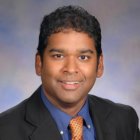


Supporting fusion energy system development in the state, the Virginia Commonwealth University (VCU) College of Engineering will acquire an ultrasonic metal-powder atomizer to advance critical research in magnetic materials needed for compact fusion reactors. Made possible by a $500,000 grant from the Virginia Clean Energy Innovation Bank (VCEIB), the funds support VCU Engineering’s Advanced Magnetic Materials Processing Laboratory (AM2P), enabling VCU Engineering to establish Virginia’s first in-state capability for producing custom, high-purity metal powders tailored for next-generation fusion reactor components. “Clean-energy innovations from fusion to grid-scale technologies demand materials that can operate under extreme conditions while remaining manufacturable at scale,” said Radhika Barua, Ph.D., assistant professor in the Department of Mechanical & Nuclear Engineering and director of AM2P. “This project will be transformative as we can now design advanced alloy compositions, produce them in-house, and immediately integrate them into additively manufactured components—dramatically accelerating the innovation cycle.” This project positions Virginia to capture a share of the rapidly expanding fusion materials and advanced manufacturing market, projected to surpass $8 billion annually by 2035. Also, this investment is expected to unlock more than $4 million in additional federally competitive research funding over the next four years. “This is a smart, high-impact investment in Virginia’s energy future,” said Glenn Davis, director of the Virginia Department of Energy. “By establishing in-state powder atomization and advanced materials capability, we’re positioned to become a critical node in the emerging fusion supply chain while strengthening our defense and clean-energy industrial base.” This comes on the heels of last year’s announcement that Commonwealth Fusion Systems will make a multibillion-dollar investment to build the world’s first grid-scale commercial fusion power plant in Chesterfield County. The AM2P Lab has emerged as one of the few academic research centers in the nation with deep expertise in additively manufactured permanent magnets, soft magnetic alloys and magnetocaloric materials. “This equipment and research will not only support fusion activities but also open doors for collaborative activities with multiple federal agencies including the Army Research Laboratory, the Air Force Office of Scientific Research and the Office of Naval Research,” said Arvind Agarwal, Ph.D., professor and chair of the Department of Mechanical & Nuclear Engineering. “This grant accelerates Virginia’s leadership in advanced nuclear and fusion manufacturing while strengthening workforce readiness,” said Julianne Szyper, deputy director of the Virginia Department of Energy. “By connecting Virginia’s academic talent with industry and national lab partners, we’re creating an ecosystem that drives innovation, supports high-quality careers and positions the Commonwealth as a competitive hub for clean-energy technologies like fusion.”



What makes the NFL's biggest game so Super?
Why would someone pay $10,000 for a Super Bowl ticket? Why does the big game serve as a reason for a party – perhaps the only event to do so on a national level? How do teams lock in and play their best while the whole world is watching? University of Delaware experts can deliver answers to those and other questions long before the first chip hits the dip. Amit Kumar, an assistant professor of marketing and expert on happiness, said that part of the reason people derive hedonic benefits from buying tickets to sporting events like the Super Bowl is because of the memories they provide and the conversational value they generate. He pointed to his study on consuming experiences, which found that consumers derive more happiness from purchasing experiences than from buying possessions. Kumar can also talk about the benefits of Super Bowl parties and the psychology behind the social connections that take place at sports-related gatherings. Other UD experts who can comment on the Super Bowl include: • Kyle Emich, professor of management: The inner-working of teams, decision-making and how emotions influence cognitive processing. • John Allgood, instructor of sport management: Fan engagement and the economics of sports. • Nataliya Bredikhina, assistant professor of sport management: Athlete branding and event sponsorships. • Tim Deschriver, associate professor of sport management: Topics related to sports economics, finance and marketing. • Karin Sabernagel, professor of physical therapy: Specializes in lower extremity musculoskeletal injuries, sports medicine and tendon injuries (ankle, knee). To reach these experts directly and arrange interviews, visit their profiles and click on the "contact" button. Interested reporters can also contact MediaRelations@udel.edu.





The AI Journal: UF and other research universities will fuel AI. Here’s why
In the global AI race between small and major competitors, established companies versus new players, and ubiquitous versus niche uses, the next giant leap isn’t about faster chips or improved algorithms. Where AI agents have already vacuumed up so much of the information on the internet, the next great uncertainty is where they’ll find the next trove of big data. The answer is not in Silicon Valley. It’s all across the nation at our major research universities, which are key to maintaining global competitiveness against China. To teach an AI system to “think” requires it to draw on massive amounts of data to build models. At a recent conference, Ilya Sutskever, the former chief scientist at OpenAI — the creator of ChatGPT — called data the “fossil fuel of AI.” Just as we will use up fossil fuels because they are not renewable, he said we are running out of new data to mine to keep fueling the gains in AI. However, so much of this thinking assumes AI was created by private Silicon Valley start-ups and the like. AI’s history is actually deeply rooted in U.S. universities dating back to the 1940s, when early research laid the groundwork for the algorithms and tools used today. While the computing power to use those tools was created only recently, the foundation was laid after World War II, not in the private sector but at our universities. Contrary to a “fossil fuel problem,” I believe AI has its own renewable fuel source: the data and expertise generated from our comprehensive public academic institutions. In fact, at the major AI conferences driving the field, most papers come from academic institutions. Our AI systems learn about our world only from the data we offer them. Current AI models like ChatGPT are scraping information from some academic journal articles in open-access repositories, but there are enormous troves of untapped academic data that could be used to make all these models more meaningful. A way past data scarcity is to develop new AI methods that leverage all of our knowledge in all of its forms. Our research institutions have the varied expertise in all aspects of our society to do this. Here’s just one example: We are creating the next generation of “digital twin” technology. Digital twins are virtual recreations of places or systems in our world. Using AI, we can develop digital twins that gather all of our data and knowledge about a system — whether a city, a community or even a person — in one place and allow users to ask “what if” questions. The University of Florida, for example, is building a digital twin for the city of Jacksonville, which contains the profile of each building, elevation data throughout the city and even septic tank locations. The twin also embeds detailed state-of-the-art waterflow models. In that virtual world, we can test all sorts of ideas for improving Jacksonville’s hurricane evacuation planning and water quality before implementing them in the actual city. As we continue to layer more data into the twin — real-time traffic information, scans of road conditions and more — our ability to deploy city resources will be more informed and driven by real-time actionable data and modeling. Using an AI system backed by this digital twin, city leaders could ask, “How would a new road in downtown Jacksonville impact evacuation times? How would the added road modify water runoff?” and so on. The possibilities for this emerging area of AI are endless. We could create digital twins of humans to layer human biology knowledge with personalized medical histories and imaging scans to understand how individuals may respond to particular treatments. Universities are also acquiring increasingly powerful supercomputers that are supercharging their innovations, such as the University of Florida’s HiPerGator, recently acquired from NVIDIA, which is being used for problems across all disciplines. Oregon State University and the University of Missouri, for example, are using their own access to supercomputers to advance marine science discoveries and improve elder care. In short, to see the next big leap in AI, don’t immediately look to Silicon Valley. Start scanning the horizon for those research universities that have the computing horsepower and the unique ability to continually renew the data and knowledge that will supercharge the next big thing in AI. Read more...

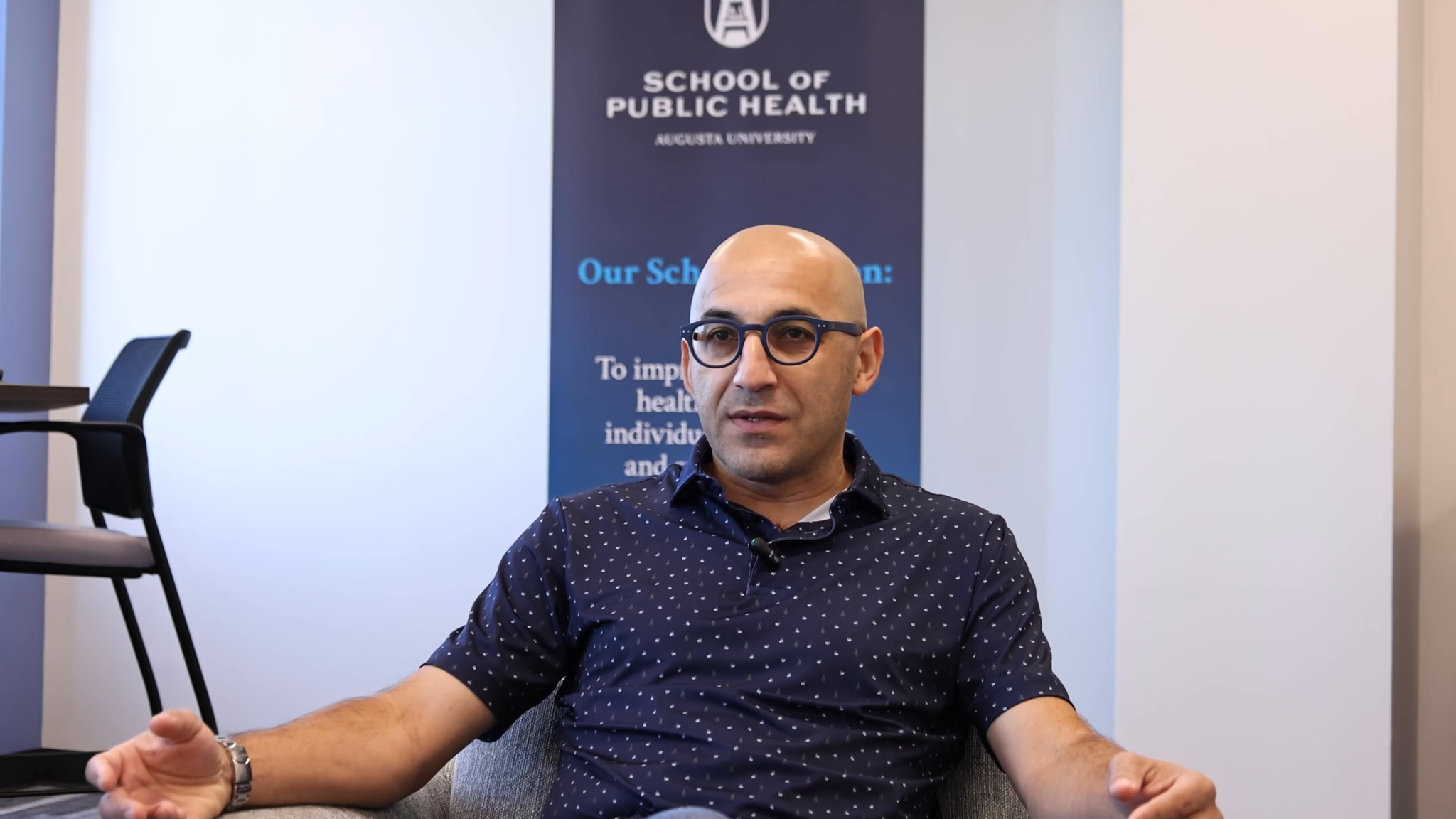
Augusta University public health experts discuss building recovery through economic stability
In this candid conversation, Vahé Heboyan, PhD, and Marlo Vernon, PhD, talk about their work at the intersection of public health, economic stability and substance use disorder recovery. The interviews are centered on Augusta University's public health-driven small business training initiative and explore how recovery is strengthened when communities invest in people and provide practical paths to long-term stability. Heboyan, a professor in AU's School of Public Health and a public health expert with a background as an economist, explains that economic vulnerability often hinders recovery, especially in rural areas with limited resources where risk-taking can be costly. He translates economic research into public health practice, emphasizing that small businesses and microenterprises are about providing a sustainable income for individuals and families, not creating large corporations. This stability, he notes, can have a ripple effect, supporting local economies, job opportunities and community resilience. Vernon, whose research focuses on maternal and infant health, as well as substance use disorder recovery, highlights the human side of recovery and the importance of financial security for families. She notes that economic instability can increase the risk of relapse, especially for mothers in recovery who are supporting children. Her insights show that entrepreneurship can be a public health tool, addressing income, dignity, confidence and long-term wellbeing. Both interviews emphasize the key role of community in recovery. Heboyan points out the power of peer support and shared experience, noting how participants use their past challenges as strengths. Vernon agrees, emphasizing that effective public health work requires building relationships and engaging with communities over time, rather than just conducting short-term research. Together, the interviews show that recovery is part of a larger ecosystem that includes economic opportunity, mentorship and community trust. The video illustrates how combining economics, public health and lived experience can create lasting, meaningful impact for individuals in recovery and their communities. Looking to know more? Click on Dr. Vernon's profile below. To connect with Dr. Heboyan, simply contact AU's Communications team via email (mediarelations@augusta.edu) to arrange an interview today.


Training champions: University of Delaware experts prepares students Olympic success
University of Delaware students, alumni and experts are very involved with this year's Olympics. The following are available for interview. Alumni Attending Olympic Games Shannon Colleton is a 2022 graduate of UD's Physical Therapy Sports Residency Program heading to the Winter Olympics with the U.S. Ski and Snowboard Team. She's specifically working as a PT for the women's speed skiing team (Super G and the downhill competitions). Students Covering Olympics Cris Granada, a senior communication major and member of UD's soccer team, has parlayed a summer internship with NBC Sports into a position as a production assistant with the network at the Winter Olympics. Professors with Olympic Expertise Matthew Robinson, professor of sport management in Lerner, is an all-around Olympics expert. He can talk about the host city, Milan, and the IOC's evolving model of hosting games in multiple locations. He can also talk about the idea of sport as a unifier despite what's going on in the world around us. Robinson can also talk about the burden the NHL faces, having to pause its season so players can compete on the world stage. While it's an honor to have an athlete represent their country on the world stage, it's also a risk to the professional team if they get hurt. The NBA feels similarly about the Summer Games. Soccer also pauses for the World Cup. Jeffrey Schneider, clinical instructor of kinesiology and applied physiology, has worked with Olympic figure skaters in the past and can speak as an expert on this sport. Thomas Buckley, professor of kinesiology and applied physiology, is an expert in ice hockey and bobsledding. He can talk about common injuries, risks/benefits. He noted that bobsledding has a surprisingly high rate of concussion and repetitive head trauma due to the speed of the sport. To contact Robinson and Buckley directly, visit their profile pages and click the "contact" button. Interviews for all the experts featured here can also be arranged by contacting mediarelations@udel.edu.


From classroom to cosmos: Students aim to build big things in space
In the vast vacuum of space, Earth-bound limitations no longer apply. And that’s exactly where UF engineering associate professor Victoria Miller, Ph.D., and her students are pushing the boundaries of possibilities. In partnership with the Defense Advanced Research Projects Agency, known as DARPA, and NASA’s Marshall Space Flight Center, the University of Florida engineering team is exploring how to manufacture precision metal structures in orbit using laser technology. “We want to build big things in space. To build big things in space, you must start manufacturing things in space. This is an exciting new frontier,” said Miller. An associate professor in the Department of Materials Science & Engineering at UF’s Herbert Wertheim College of Engineering, Miller said the project called NOM4D – which means Novel Orbital and Moon Manufacturing, Materials, and Mass-efficient Design – seeks to transform how people think about space infrastructure development. Picture constructing massive structures in orbit, like a 100-meter solar array built using advanced laser technology. “We’d love to see large-scale structures like satellite antennas, solar panels, space telescopes or even parts of space stations built directly in orbit. This would be a major step toward sustainable space operations and longer missions,” said team member Tianchen Wei, a third-year Ph.D. student in materials science and engineering. UF received a $1.1 million DARPA contract to carry out this pioneering research over three phases. While other universities explore various aspects of space manufacturing, UF is the only one specifically focused on laser forming for space applications, Miller said. A major challenge of the NOM4D project is overcoming the size and weight limitations of rocket cargo. To address these concerns, Miller’s team is developing laser-forming technology to trace precise patterns on metals to bend them into shape. If executed correctly, the heat from the laser bends the metal without human touch; a key step toward making orbital manufacturing a reality. “With this technology, we can build structures in space far more efficiently than launching them fully assembled from Earth,” said team member Nathan Fripp, also a third-year Ph.D. student studying materials science and engineering. “This opens up a wide range of new possibilities for space exploration, satellite systems and even future habitats.” Miller said laser bending is complex but getting the correct shape from the metal is only part of the equation. “The challenge is ensuring that the material properties stay good or improve during the laser-forming process,” she said. “Can we ensure when we bend this sheet metal that bent regions still have really good properties and are strong and tough with the right flexibility?” To analyze the materials, Miller’s students are running controlled tests on aluminum, ceramics and stainless steel, assessing how variables like laser input, heat and gravity affect how materials bend and behave. “We run many controlled tests and collect detailed data on how different metals respond to laser energy: how much they bend, how much they heat up, how the heat affects them and more. We have also developed models to predict the temperature and the amount of bending based on the material properties and laser energy input,” said Wei. “We continuously learn from both modeling and experiments to deepen our understanding of the process.” The research started in 2021 and has made significant progress, but the technology must be developed further before it’s ready for use in space. This is why collaboration with the NASA Marshall Space Center is so critical. It enables UF researchers to dramatically increase the technology readiness level (TRL) by testing laser forming in space-like conditions inside a thermal vacuum chamber provided by NASA. Fripp leads this testing using the chamber to observe how materials respond to the harsh environment of space. “We've observed that many factors, such as laser parameters, material properties and atmospheric conditions, can significantly determine the final results. In space, conditions like extreme temperatures, microgravity and vacuums further change how materials behave. As a result, adapting our forming techniques to work reliably and consistently in space adds another layer of complexity,” said Fripp. Another important step is building a feedback loop into the manufacturing process. A sensor would detect the bending angle in real time, allowing for feedback and recalibration of the laser’s path. As the project enters its final year, finishing in June of 2026, questions remain -- especially around maintaining material integrity during the laser-forming process. Still, Miller’s team remains optimistic. UF moves one step closer to a new era of construction with each simulation and laser test. “It's great to be a part of a team pushing the boundaries of what's possible in manufacturing, not just on Earth, but beyond,” said Wei.