
Experts Matter. Find Yours.
Connect for media, speaking, professional opportunities & more.

Aston University celebrates becoming a University of Sanctuary with official event
Aston University officially celebrated becoming a University of Sanctuary with an event held on 16 May for all those who contributed to achieving this status. The University was awarded University of Sanctuary status in December 2022, joining a network of higher education institutions across the UK working to develop support for those displaced by humanitarian crises. The celebration was hosted by Aston University Vice-Chancellor and Chief Executive, Professor Aleks Subic. Guests included Councillor John Cotton, Birmingham City Council Cabinet member for Social Justice, Community Safety and Equalities, who made a special award presentation. The event programme also included a performance by poet Loraine Masiya Mponela, who herself was an asylum seeker and conversations with recipients of Ernest Edward Scholarships, a sanctuary scholarship scheme for students who have sought refuge in the UK. The scheme was set up by Aston University in 2022 due to a generous donation by prominent businessperson Matthew Crummack. Universities of Sanctuary is an initiative to recognise and celebrate the good practice of institutions welcoming people seeking sanctuary through facilitated access to higher education, supporting local refugee communities and taking an active role in learning about the issues and obstacles faced by this group in pursuing university-level education. Professor Aleks Subic, Vice-Chancellor and Chief Executive of Aston University, said: “I am delighted to have had this opportunity to host a celebration event to thank everyone who has helped us achieve the University of Sanctuary status. “Aston University is committed to supporting people seeking sanctuary through its efforts to deepen our understanding of the issues surrounding asylum seekers and refugees, providing a welcoming environment for sanctuary students, and working with individuals and communities beyond the campus to promote the values and principles of sanctuary. “Being a University of Sanctuary is key to our Civic Agreement: our commitment to make Birmingham a better place for everyone who lives, works, and studies here. Birmingham." Councillor John Cotton, Birmingham City Council Cabinet member for Social Justice, Community Safety and Equalities, said: “Birmingham is proud to be a City of Sanctuary, with its long history of offering refuge to those fleeing war, persecution and tyranny around the globe. In these troubled times, standing up for the principles of sanctuary and refuge is more important than ever. “I’m delighted that Aston University has joined the family of Universities of Sanctuary and is one of the many important institutions in our city that actively extends the hand of friendship to those seeking refuge and the chance to rebuild their lives here in Birmingham.”


Vanderbilt historian and Henry Kissinger biographer on Kissinger legacy ahead of 100th birthday
Thomas Schwartz, Distinguished Professor of History, is available for commentary surrounding the legacy of Henry Kissinger, former U.S. Secretary of State and National Security Advisor, ahead of his 100th birthday (May 27, 2023). A historian of U.S. foreign relations, American politics, international relations and Modern European history, Thomas is the author of “Henry Kissinger and American Power: A Political Biography.” Thomas can discuss Kissinger’s: Mixed bag legacy, receiving both praise for his guidance throughout the decades and criticism for his more controversial decisions Approach to foreign policy and leadership style, including: ability to recognize failures, penchant for backbiting and reliance on flattery and praise of the president as a source of power Invention of himself as a celebrity diplomat and his domination of TV news Sensitivity to domestic and partisan politics


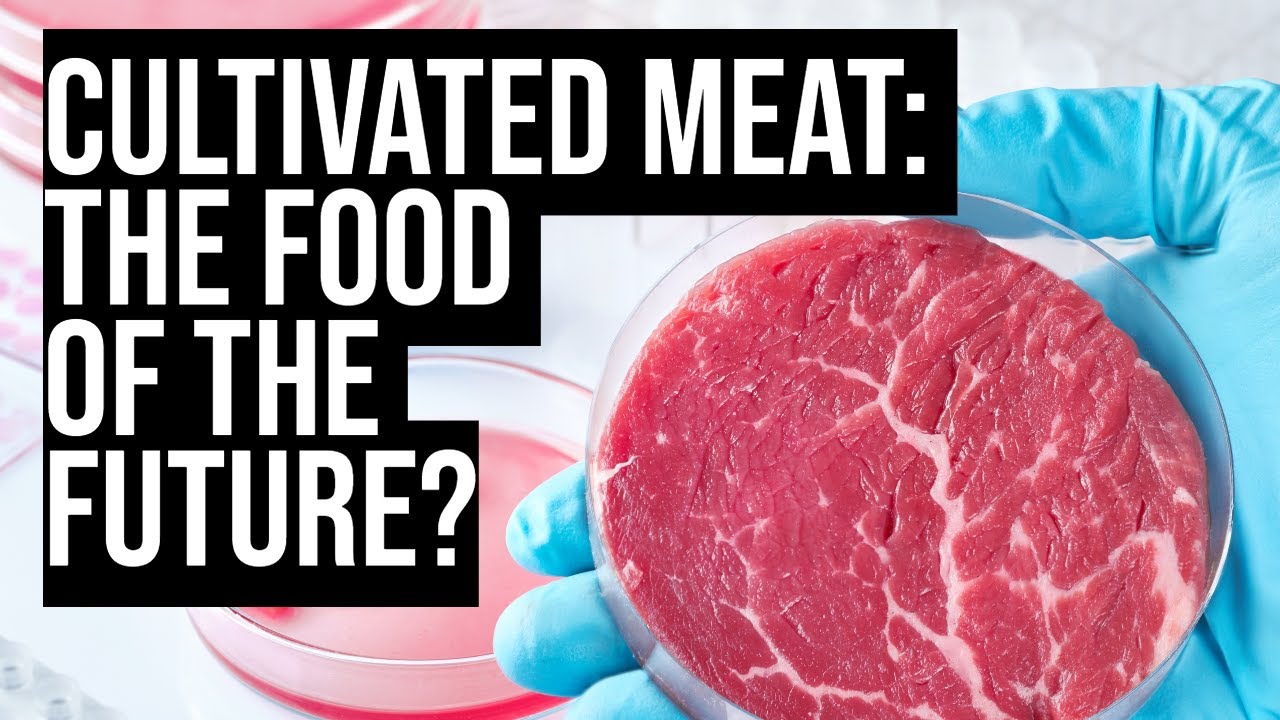
Aston University predicted as one of the UK’s leading centres for lab-made meat
• Aston University named as one of the UK’s leaders in the potential future of food • Highlighted for research, teaching, public outreach, industry links and location • Process uses cells taken from animals via biopsy, so doesn’t involve slaughter. Aston University has been named as one of the UK’s leading lights in what is predicted to be the future of food - lab-made meat. The University is one of 17 higher education institutions that are expected to play a major role in the development of cultivated meat. Cultivated or lab-grown meat is made from cells taken from animals via biopsy. The cells are used to create meat which doesn’t involve the slaughter of animals. The process promises fewer greenhouse gases and a decrease in land required for its production compared to traditional livestock. The list of universities has been compiled by Cellular Agriculture UK, a non-profit organisation which promotes the UK’s so-called ‘cell-ag’ sector. Aston University is one of five institutions they chose to highlight in their report Mapping the potential for UK universities to become research and teaching hubs for cellular agriculture. Aston University is described in the report as having potential to be an anchor institution for cellular agriculture, and was highlighted for its research and teaching, public outreach work, links with emerging industry and its central location. Dr Eirini Theodosiou, senior lecturer in the School of lnfrastructure and Sustainable Engineering, focuses on ways to produce enough cell mass to create the meat. She said: “This is still a relatively new food technology. Unlike many others we work on biomaterials for microcarriers/scaffolds for cultivated meat, which puts us in a very strong position, in the UK at least.” Meanwhile Dr Jason Thomas’ work explores the psychology behind supporting people to accept lab-made food. Although many people are willing to try it, there are still many who are reluctant to do so. A recent study of the US and UK found that 35% of meat eaters and 55% of vegetarians claimed they were too disgusted by the idea of cultured meat to even try it. A key goal of his research is how to support people to not just try it but to integrate it into their diet. Dr Thomas said: “We are interested in finding out what factors can influence consumer purchase of and consumption of lab-made meat.” “The engineering/psychology link is one of our USPs and is something Aston University can capitalise on; learning what the consumer wants from cultivated meat, and what would encourage them to consume it, using psychological science, and then incorporating this directly into the production process via engineering. “It is a relatively new food technology, and much work still needs to be done to make it affordable, acceptable and on a massive scale, but it could easily end up being one of the most transformative new foods of the 21st century.”

Ana Palacios’ interview on “Eagle Eye View,” the official podcast of Georgia Southern University. Palacios discusses her research and how being a mom motivated her. Several esteemed nutrition researchers collaborated on “Effectiveness of Lactation Cookies on Human Milk Production Rates: A Randomized Controlled Trial,” which was recently published in The American Journal of Clinical Nutrition. David B. Allison, Ph.D., dean of the Indiana University School of Public Health-Bloomington (SPH-B), is among the researchers who conducted a one-month, randomized controlled trial of lactating parents of healthy babies in the same age range. Their findings revealed no evidence for an effect of consuming lactation cookies on human milk production. “Too often in the field of nutrition and food, strong beliefs—sometimes even well-reasoned conjectures based upon some scientific knowledge—are mistaken for demonstrated facts,” Allison said. “Conjecture is good, but knowing is better. We come to know about the effects of nutrition and dietary supplements through rigorous, randomized, controlled trials. Having conducted such a study on lactation cookies, we found no evidence for their effectiveness. “This does not mean that it is impossible for any lactation cookie to affect human milk production,” he continued. “This study does suggest that the cookies we studied—under the conditions we studied them—have no discernible effect. The burden of proof seems to now be on those who claim there is an effect.” The study followed 176 U.S. parents who were exclusively breastfeeding healthy two-month-old babies. One group of parents was provided a serving of commercially available lactation cookies to consume daily for a month; the other group of parents ate a serving of conventional cookies not designed to increase lactation, each day for a month. Through a weekly survey, parents reported the quantity of milk they produced after following a validated milk expression protocol using a hospital-grade breast pump, providing data that were analyzed by both the study authors and an independent statistician. These data demonstrated that the impact of consuming lactation cookies did not have a significant effect on how much milk was actually produced or perceived to be produced by the lactating parents. The authors assert that consumers should be cautious when considering the potential effect of this product, or any food and/or supplement that promotes health-promoting benefits without published, peer-reviewed scientific evidence to support its claims. As the researchers noted, these lactation cookies can contain substantial calories and sugars, which could affect postpartum weight loss efforts and related health issues. “Despite being a physician and nutrition scientist focused on early-life nutrition, I still remember how difficult breastfeeding was for me with both of my children,” said study lead author Ana M. Palacios, MD, Ph.D., assistant professor, Department of Health Policy and Community Health, Jiann-Ping Hsu College of Public Health at Georgia Southern University. “Our research highlights that lactation cookies, which include added sugars and saturated fat, may not have the said purported benefits of increasing milk production. Purchasing lactation cookies to increase milk production may pose an unnecessary cost and may have additional implications for parents, such as limiting post-pregnancy weight loss and reducing consumption of healthier foods. More research is needed to better understand what foods and nutrients can best help increase milk supply in diverse populations.” The full article, along with the list of contributing authors, is available by simply clicking the article below: Interested in learning more? For more information about this research or to speak with Ana M. Palacios — simply reach out to Georgia Southern's Director of Communications Jennifer Wise at jwise@georgiasouthern.edu to arrange an interview today.


Why shoppers are paying more for a fake Amazon discount
By Halle Burton According to new research by Jinhong Xie, a Warrington College of Business professor at the University of Florida, more than a quarter of Amazon vacuum cleaners sold have increased their prices while pretending to offer discounts. Xie’s pricing phenomenon research is joined with Sungsik Park at the University of South Carolina and Man Xie at Arizona State University, publishing their analysis in the Marketing Science journal. A product’s price increase is paired with a previously unadvertised listing price, which encourages Amazon shoppers to receive a deceitful false discount. This faux discount drove higher sales despite the price increase, and shoppers end up paying 23% more on average. “When you see this list-price comparison, you naturally assume you are getting a discount. It’s not just that you didn’t get a discount. You actually paid a higher price than before the seller displayed the discount claim,” said Xie. Regulations currently prohibit deceptive pricing by requiring truthful price comparisons from the sellers, but a list price can still be misleading under these circumstances. Shoppers are misled by the timing of price comparisons where retailers advertise a price discount that actually only gives the impression of a deal. “Current regulations are all about the value of the list price, and they don’t say anything about misleading consumers by manipulating the timing of the list price’s introduction,” Xie said. Xie and her colleagues followed more than 1,700 vacuums on Amazon from 2016 to 2017 gathering observational data on their prices. “We found that by increasing the price by 23% on average, the seller achieves a 15% advantage in their sales rank among all products in the home and kitchen category,” Xie said. Xie encourages consumers to be aware, not make assumptions about discount claims and utilize multiple websites to compare prices. “We think that consumer organizations and regulators should evaluate this new marketing practice to determine whether and how to manage it.”


Allen Friedland, M.D., MACP, FAAP, has been recognized with the Dema C. Daley Founders Award for his national impact as an educator, innovator and leader in internal medicine. Given by the Alliance for Academic Internal Medicine, the award honors internal medicine doctors who have greatly influenced undergraduate and graduate medical education and the development of training programs in internal medicine. Watch the video of Friedland’s acceptance speech here. “Dr. Friedland has been a tireless advocate and innovator for internal medicine, medicine-pediatrics, and residency education over two decades,” said Vinay Maheshwari, M.D., MHCDS, Hugh R. Sharp Jr., Chair of Medicine and physician executive of the Medical Group at ChristianaCare. “He is a mentor to countless physicians across the country and beloved by those who have had the privilege of working alongside him. What is most evident about Dr. Friedland is how much he cares about those he has taught locally and nationally – all of them will forever be a part of his family. This award is a testament to a lifetime career dedicated to graduate medical education.” Friedland is ChristianaCare’s section chief of Medicine-Pediatrics (Med-Peds) and has served as the director of ChristianaCare’s combined Internal Medicine-Pediatrics residency program for 25 years. He also teaches medical students at ChristianaCare, which is a branch campus of Sidney Kimmel Medical College at Thomas Jefferson University and Philadelphia College of Osteopathic Medicine. His accomplishments include: Spearheading the development of what is now known as ChristianaCare’s Center for Special Health Care Needs, dedicated to providing primary care and specialty care for adults ages 18 and older with complex medical and social conditions that originated in childhood. Creating the elective Leadership Excellence Education for Residents/Fellows (LEED-R), which partners emerging resident leaders with ChristianaCare senior leaders for mentorship, real-world experience in applying leadership education and the ability to share those learnings with other residents. Known affectionately by his colleagues as “Mr. Med-Peds,” Friedland has held leadership positions with all of the major national med-peds organizations. He co-founded the Med-Peds Academic Channel and received the Leadership Award from the Medicine-Pediatrics Program Directors Association. He recently launched a professional association named the Association of Med-Peds Physicians. Kimberly Bates, M.D., FACP, FAAP, director of the Internal Medicine Residency Program at Dignity Health – St. Rose Dominican, nominated Dr. Friedland for the award. Bates is a ChristianaCare Med-Peds alumna (Class of 2003). “Dr. Friedland is an exceptional human being and a natural leader and mentor who leaves a powerful imprint on every person he meets, whether they are students, residents, physician colleagues or patients,” Bates said. “He has dedicated his career to medical education, and he takes an innovative and problem-solving approach to all that he does.”




Aston University wins grant to make research more sustainable and environmentally friendly
University awarded grant to develop more sustainable separation method through AstraZeneca’s Open Innovation CoSolve Challenge at ELRIG Dr Vesna Najdanovic will explore use of the solvent ethyl lactate It is a biorenewable and environmentally friendly alternative. An Aston University scientist has won a $25000 grant in the AstraZeneca Open Innovation CoSolve sustainability challenge to help to make research more sustainable and environmentally friendly. Dr Vesna Najdanovic, senior lecturer in chemical engineering at the University’s Energy and Bioproducts Research Institute (EBRI), successfully pitched her idea to explore a new method using ethyl lactate as a solvent. Ethyl lactate is a biorenewable and environmentally friendly alternative solvent produced from lactic acid and ethanol, both obtained by fermentation of biomass. Currently hazardous organic solvents such as acetonitrile are widely used instead. Dr Najdanovic won the AstraZeneca’s Open Innovation CoSolve Sustainability Challenge at the European laboratory research & innovation group (ELRIG) Research and Innovation meeting. She said: “Throughout my research career, I have been working with various green solvents, such as supercritical fluids, ionic liquids and biosolvents, to improve chemical and separation processes. “I am delighted to be selected by the expert judging panel and the highly engaged audience to apply my knowledge to develop greener analytical methods using ethyl lactate as a solvent for liquid chromatography. “I hope this project will pave the pathway to use this environmentally friendly alternative solvent while reducing carbon footprint and pollution”. The pharmaceutical industry generates the highest amount of waste per mass of products compared to other chemical industry sectors, such as the petroleum industry, bulk and fine chemicals. Dr Kelly Gray, CoSolve sustainability programme lead at AstraZeneca, said “In order to protect people, society and planet we have to identify and develop solutions to deliver sustainable science. The goal of the CoSolve sustainability programme was to do just that and identify innovative ideas to practical challenges faced by researchers across scientific disciplines in R&D.” Sanj Kumar, CEO of ELRIG, said “Ensuring that drug discovery processes become sustainable is a priority issue to the ELRIG community, so partnering with AstraZeneca on the CoSolve initiative, by hosting the pitching and final award ceremony, is not only an honour, but raises the awareness of sustainability to our community. Dr Najdanovic and her innovation are a worthy winner and ELRIG is proud that we are able to share her success story.” As much as 80% of this waste presents hazardous organic solvents obtained from petrochemical sources. For example, the pharmaceutical industry consumes 50% of globally produced acetonitrile, of which 20% is a solvent for liquid chromatography, a widely used analytical tool in research and development laboratories. After its use, most acetonitrile is discarded as chemical waste and subsequently incinerated, generating greenhouse gases and other pollutants such as nitrogen oxides and highly toxic hydrogen cyanide. The CoSolve sustainability challenge award builds on Dr Najdanovic’s previous work employing ethyl lactate as a solvent for various separation processes. Her new project supports EBRI’s wider objectives of using bioproducts to deliver low-carbon and environmentally sustainable solutions.

Coronation of King Charles III: Augusta University professor talks about what to expect
Eyes from around the world will be on Westminster Abbey in London this weekend as King Charles III is crowned king following the passing his mother Queen Elizabeth II on Sept. 8, 2022. As you might expect, there will be plenty of pageantry involved with the ceremony. Ruth McClelland-Nugent, PhD, is chair of History, Anthropology and Philosophy at Pamplin College of Arts, Humanities, and Social Sciences at Augusta University and an expert on the royal family. McClelland-Nugent said this is a major day for those in the United Kingdom, and to a lesser extent, some parts of the Commonwealth "where the British monarch is still monarch, such as Charles will become king of Canada as well as the U.K." The coronation is a religious service of the Church of England, so there will be a number of traditions upheld, such as anointing of the king with blessed oil, and by the end of the ceremony, Charles will have officially received his crown and his scepter, as well as the traditional robes and stole that mark him as king. The crown and the orb that will be used during the coronation date back to 1661 for King Charles II. New crowns were needed after the Puritans melted the old ones down during the English Civil Wars. “These are very traditional things, and reinforce the ancient idea that the monarch is selected by God to have authority over people,” said McClelland-Nugent. "However, for the first time, there will be participation from clergy of other faiths as well, since the king has invited clergy from the Jewish, Sikh, Hindu, Muslim and Buddhist faiths to participate, reflecting the great religious diversity in the U.K.” She also said those watching the coronation, in-person or virtually, will be invited to swear an oath of allegiance to the monarch, giving the entire country a role in the ceremony for the first time. “It will probably feel very formal and ancient to any Americans who watch it, and it is, but it will be the most informal and diverse coronation in recent British history,” McClelland-Nugent said. Others in the royal family will also play roles in the ceremony. Queen Camilla will be crowned alongside Charles. Princess Anne, Charles' sister, will lead a procession of armed forces and other personnel behind the new king and queen when they leave Westminster Abbey. “Look for her to be on horseback. This is a highly prestigious role and not one carried out by a woman previously.” McClelland-Nugent said Prince William, Prince of Wales, who is now heir to the crown, will make an oath of loyalty directly to the newly crowned king. Some of the king’s grandchildren and queen’s grandchildren will also serve roles during the coronation. If you're a reporter covering the coronation and all the events leading up to it this week, then let our experts help with your stories. Ruth McClelland-Nugent is available for interviews; simply click on her icon now to arrange a time to talk today.


Researchers find an association between autistic traits and young children with ear, nose and throat problems The study used data from the Children of the 90s study which found 177 children were identified with a probable diagnosis of autism – 139 boys and 38 girls The study looked at data from over 10,000 children from birth to four years old. Ear, nose and throat (ENT) problems, relating to the ears, hearing and the upper respiratory system, are more common in young children with a subsequent diagnosis of autism, or who have demonstrated high levels of autism traits - finds new research published in BMJ Open. The study, which was led by researchers from the University of Bristol and Aston University, looked at data from over 10,000 young children from birth to four years old, who were part of the Bristol’s Children of the 90s study. The team investigated whether early ear and upper respiratory signs are associated with the development of autistic traits. Previous studies have found increased prevalence of ENT and related hearing conditions in children with autism compared with typically developing children, but much of this research has been carried out using health records, which can be biased. In the new study, researchers used data from Children of the 90s study, a general population cohort which recruited over 14,000 pregnant women from the Bristol area between 1991 and 1992 and has followed the lives of their offspring ever since. Within Children of the 90s, 177 children were identified with a probable diagnosis of autism – 139 boys and 38 girls. Those with autism traits were defined as the 10% of the sample with the highest trait scores. The team analysed responses to three questionnaires in which mothers recorded the frequency of nine different signs and symptoms relating to the ears, hearing problems and upper respiratory system when their child was aged 18 to 42 months. These included signs such as mouth breathing, snoring, pulling/poking of the ears, ears going red, worse hearing during a cold, ear discharge and rarely listening. The results found that the frequency of these symptoms was associated with high scores on each of the autism traits: social communication, coherent speech, sociability and repetitive behaviours, plus those with a clinical diagnosis of autism. Pus or sticky mucus discharge from the ears was especially associated with autism (an increased risk of 3.29) and for impaired hearing during a cold (an increased risk of 2.18). Dr Amanda Hall, senior lecturer in audiology, at Aston University, said: “Thanks to the data available from Children of the 90s, we were able to analyse results from a large number of children. We found that common ear and upper respiratory signs and symptoms appear to be more prevalent in those with a subsequent diagnosis of autism or demonstrated high levels of autism traits. “However it is also important to note that these ENT symptoms are very common in childhood and most children who experience these signs and symptoms do not go on to be diagnosed with autism. “For example, of the group of around 1,700 children who snored at age 30 months, most of those 1,660 children did not get a later diagnosis of autism. Our results suggest the need for increased awareness of possible ENT conditions.”


UF astrobiologist partakes in her second NASA mission to Mars
By Halle Burton NASA’s Mars Perseverance rover mission is no easy task, yet its distinguished team has discovered signs of organic molecules, containing chemicals known for making life possible on Earth. One of these long-term planners is University of Florida astrobiologist, Amy Williams. “Organics make up life as we know it,” Williams said. “Seeing organic carbon on Mars sets us up to understand if the building blocks for life were present on the planet in the past through the lens of how life evolved on Earth.” Williams and the Perseverance team were published in November’s Science magazine for their organic molecules analysis, after finding numerous organic carbons on the Jerezo crater floor. Through NASA’s Jet Propulsion Laboratory, Perseverance is studying the crater with collected rock samples planned to be sent to Earth during the Mars Sample Return mission. Upon further research and testing on Earth, these rocks could determine compelling evidence of past life on Mars. Several of the rock samples indicate altercations by water, making scientists propose that a water-infused Mars could have supported ancient life. The Jerezo crater itself serves as an intriguing site to study past life on the terrestrial planet. The creation of the crater implies Mars contained a primitive river streaming into a lake billions of years ago. Now, Williams is no stranger to working with the detection of organic molecules on Mars. In 2015, she worked with the Curiosity rover which also found organic carbon on the inner planet. With her work diversified on the Perseverance team, evidence is closer than ever to proving the omnipresence of organic carbon on Mars. “Seeing a consistent story is always reassuring as a scientist,” Williams said.
