
Experts Matter. Find Yours.
Connect for media, speaking, professional opportunities & more.

Navigating Grief During the Holiday Season
The holiday season is a time of joy, togetherness and celebration, but for many – especially those who are grieving the death of a loved one or a deep loss – it can bring a complex mix of emotions, ranging from sadness and sorrow to gratitude and joy. Baylor University professors Candi Cann, Ph.D., a death scholar and associate professor of religion in the Honors College, and Jo-Ann Tsang, Ph.D., a leading gratitude researcher and associate professor of psychology, offer four strategies for people experiencing difficult emotions and grief during the holidays. Embrace the spectrum of emotions Both Tsang and Cann say the key to maintaining balance and authenticity – even while deep in grief – is understanding and accepting where you are emotionally. “It’s possible and normal to feel different emotions at one time,” Tsang said. “You can feel happiness during the holidays, but also sad that you miss someone who you wish were present. Being grateful does not rule out feeling other emotions; we can cultivate gratitude, but that does not necessitate running away from other emotions.” Cann pointed out that grief can be complicated if the death or loss is from a difficult relationship. “It is okay to feel relief in addition to grief and it is important to validate all of your feelings – it’s a complicated grief because it was a complicated relationship,” Cann said. The importance of self-care Self-care is vital during this time, Cann said. She encourages grieving people to stay active, eat healthy, go outside to be in nature and get enough sleep. “It’s totally normal to need more sleep when you're depressed and grieving. You just have to be gracious with yourself about that,” Cann said. Allowing ourselves to feel emotions like stress, sadness or grief gives us insight into what we value and “can motivate us to take some time for self-care,” Tsang said. Acknowledging that we are stressed might lead us to reach out to others for help with tasks that overwhelm us or to let go of things to reduce stress. In addition to taking care of your physical health, staying engaged in your community or church and being in community with others is beneficial for mental health, Cann said. But at the same time, be honest with yourself about what you want to do and only accept invitations or participate in activities that you feel you can handle, she added. The place of gratitude Tsang suggests approaching challenging emotions with gratitude as it “might also provide context and perspective for our loss and potentially transform our negative emotions.” “As an example, I might feel frustrated that I am sad but then feel grateful that I have good family and neighbors to check on me and coworkers to help me finish the tasks that I can’t do while I’m down,” Tsang said. “This gratitude might help reduce my frustration by helping me see the support that is present in my life, on which I had not previously reflected.” At the same time, she reiterated that, in addition to cultivating gratitude, it’s important for people to permit themselves to experience negative emotions such as grief and sadness in response to life circumstances. “It’s okay if it’s hard to experience gratitude. God meets us where we are,” Tsang said. Evaluate traditions and embrace memories Cann suggests evaluating family traditions, choosing those that are most important to continue and starting new traditions that include their loved one. “A lot of people feel like when that person is gone, the love is gone too, but the love is still there,” Cann said. “You wouldn't feel the grief or the big hole that you now have if you didn't have all of this love in the first place.” She suggests embracing their loved one’s presence by including a place at the table for Christmas dinner, making their favorite recipe or finding other ways to continue the bonds. By doing these things, “you're including them in your conversation, and you're making space for that person, both literally and symbolically,” Cann said. Supporting someone who is grieving Being supportive of someone grieving requires patience and vulnerability. “Engage with the person and ask how you can best support them, and let them know that you are thinking about them during this time,” Cann said. Sometimes, friends or family members don’t want to bring up death during the holidays because they don't want to make people sad at a joyful time. “But the point is, they already are sad, so bringing it up allows them to express it” and feel accepted in their pain, Cann said. It also is important to remember that not all grief is related to death. There are many types of loss that people experience such as divorce or disease. The Baylor researchers note that we can’t decide or predict what defines another person's grief, but we can offer love and support. Approaching the holidays when experiencing grief over a death or a deep loss may be painful at first, but using these strategies can help us face the future by celebrating with gratitude what we had in the past. Ultimately, the holidays are a time for reflection, connection and self-compassion. Allow yourself to feel your emotions fully – whether joyful, challenging or a mix of both – and use them as guides for meaningful action. Looking to know more or arrange an interview? Simply click on the expert's icon below or contact: Shelby Cefaratti-Bertin today.


Violence alters human genomes for generations, researchers discover
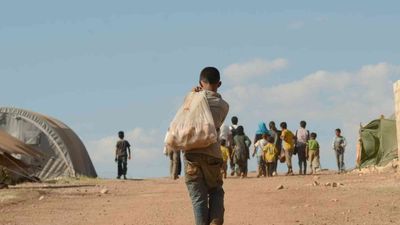
In February of 1982, the Syrian government besieged the city of Hama, killing tens of thousands of its own citizens in sectarian violence. Four decades later, rebels used the memory of the massacre to help inspire the toppling of the Assad family that had overseen the operation. But there is another lasting effect of the attack, hidden deep in the genes of Syrian families. The grandchildren of women who were pregnant during the siege — grandchildren who never experienced such violence themselves — nonetheless bear marks of it in their genomes. Passed down through their mothers, this genetic imprint offers the first human evidence of a phenomenon previously documented only in animal models. The genetic transmission of stress across multiple generations. “The idea that trauma and violence can have repercussions into future generations should help people be more empathetic, help policymakers pay more attention to the problem of violence,” said Connie Mulligan, Ph.D., a professor of Anthropology and the Genetics Institute at the University of Florida and co-senior author of the new study. “It could even help explain some of the seemingly unbreakable intergenerational cycles of abuse and poverty and trauma that we see around the world, including in the U.S.” While our genes are not changed by life experiences, they can be tuned through a system known as epigenetics. In response to stress or other events, our cells can add small chemical flags to genes that may quiet them down or alter their behavior. These changes may help us adapt to stressful environments, although the effects aren’t well understood. It is these tell-tale chemical flags that Mulligan and her team were looking for in the genes of Syrian families. While lab experiments have shown that animals can pass along epigenetic signatures of stress to future generations, proving the same in people has been nearly impossible. “Resilience and perseverance is quite possibly a uniquely human trait.” —Connie Mulligan Mulligan worked with Rana Dajani, Ph.D., a molecular biologist at Hashemite University in Jordan and co-senior author, as well as anthropologist Catherine Panter-Brick, Ph.D., of Yale University, to conduct the unique study. Dajani envisioned the research project; because of her intimate knowledge of the Syrian population and its tragic history, she designed the study to cover three generations of Syrian refugees to Jordan. Some families had lived through the Hama attack before fleeing to Jordan. Other families avoided Hama, but lived through the recent civil war against the Assad regime. The team collected samples from grandmothers and mothers who were pregnant during the two conflicts, as well as from their children. This study design meant there were grandmothers, mothers and children who had each experienced violence at different stages of development. A third group of families had immigrated to Jordan before 1980, avoiding the decades of violence in Syria. These early immigrants served as a crucial control to compare to the families who had experienced the stress of civil war. Study coauthor Dima Hamadmad, a Syrian researcher and the daughter of refugees, led the search for families that met the study criteria and collected cheek swabs from 138 people across 48 families. "The participants took part in the research out of love for their children and concern for future generations,” she said. “But more than that, they wanted their stories of trauma to be heard and acknowledged.” Back in Florida, Mulligan’s lab scanned the DNA for epigenetic modifications and looked for any relationship with the families’ experience of violence. In the grandchildren of Hama survivors, the researchers discovered 14 areas in the genome that had been modified in response to the violence their grandmothers experienced. These 14 modifications demonstrate that stress-induced epigenetic changes may indeed appear in future generations in humans, just as they can in animals. The study also uncovered 21 epigenetic sites in the genomes of people who had directly experienced violence in Syria. In a third finding, the researchers reported that people exposed to violence while in their mothers’ wombs showed evidence of accelerated epigenetic aging, a type of biological aging that may be associated with susceptibility to age-related diseases. Most of these epigenetic changes showed the same pattern after exposure to violence, suggesting a kind of common epigenetic response to stress – one that can not only affect people directly exposed to stress, but also future generations. “We think our work is relevant to many forms of violence, not just refugees. Domestic violence, sexual violence, gun violence: all the different kinds of violence we have in the U.S,” said Mulligan. “We should study the effects of violence. We should take it more seriously.” It’s not clear what, if any, effect these epigenetic changes have in the lives of people carrying them inside their genomes. But some studies have found a link between stress-induced epigenetic changes and diseases like diabetes. One famous study of Dutch survivors of famine during World War II suggested that their offspring carried epigenetic changes that increased their odds of being overweight later in life. While many of these modifications likely have no effect, It’s possible that some have functional effects that can affect our health, Mulligan said. The researchers published their findings, which were supported by the National Science Foundation, Feb. 27 in the journal Scientific Reports. While carefully searching for evidence of the lasting effects of war and trauma stamped into our genomes, Mulligan and her collaborators were also struck by the perseverance of the families they worked with. Their story was much bigger than merely surviving war, Mulligan said. “In the midst of all this violence we can still celebrate their extraordinary resilience. They have persevered,” Mulligan said. “That resilience and perseverance is quite possibly a uniquely human trait.”


The School of Science at Rensselaer Polytechnic Institute (RPI) has launched a new minor in quantum computing, positioning students at the forefront of one of the most rapidly developing fields in technology. The minor leverages RPI's unique status as the first university in the world to house an IBM Quantum System One on campus, providing students with unprecedented access to utility-scale quantum computing technology. The minor, which is now available to all currently enrolled students, requires four courses drawn from physics, computer science, mathematics, and engineering. The curriculum provides both theoretical foundations and practical exposure to quantum hardware and software, and gives students a leg up in a field rapidly approaching quantum advantage — the point at which quantum systems outperform classical computing approaches on meaningful tasks. "The quantum computing minor will augment the training of RPI students with insight into an emerging technology that will reshape industries from pharmaceuticals to artificial intelligence," said Steven Tait, Ph.D., Dean of the School of Science. "With direct access to the IBM Quantum System One, our students will gain hands-on experience with cutting-edge tools that are not yet widely available. This minor equips them with the interdisciplinary foundation needed to understand and contribute to quantum-enabled innovation." The minor arrives at a pivotal moment in quantum computing's evolution. IBM's demonstration of quantum utility in 2023 marked the beginning of an era in which quantum systems serve as scientific tools to explore complex problems in chemistry, physics, and materials science — areas where quantum advantage offers transformative potential. Hannah Xiuying Fried, graduating this December, is one of the first students to declare the minor. “I'm not a physics or computer science major, so it allows me an accredited way to prove a relevant background to future employers,” she said. “It prepares me for graduate school where I plan to continue pursuing quantum hardware research.” Currently enrolled students may declare the minor now and pursue it alongside their established degree programs. Interested students should contact Chad Christensen at sciencehub@rpi.edu.


Trim the Clutter, Keep the Cheer
The holiday season brings warmth, joy and a touch of magic into our homes, but it also can bring excess clutter, waste and energy consumption, making it hard to feel festive. However, there are simple and creative ways to decorate sustainably without sacrificing the festive spirit. Baylor University human sciences and design professor Elise King, M.I.D., M.A., an expert in interior design and built environments, says embracing sustainable decorations, changing to energy-efficient lights, eliminating clutter and reducing waste can help maintain a tidy, eco-friendly home – and create a holiday atmosphere that resonates with joy and meaning. “The holidays can often feel busy and stressful, so it’s helpful to focus on traditions and decorations that bring joy and add meaning to the season,” King said. By taking simple steps to reuse materials, reduce energy consumption and focus on what matters most, families can celebrate the season with both heart and mindfulness, King said. Decorating sustainably One of the easiest ways to approach sustainable decorating is by reusing or repurposing materials you already have or finding decorations at resale shops. "Upcycling items from thrift stores or turning last year’s Christmas cards into garlands are simple and creative ideas," King said. “Beyond thriftiness, these practices add a personal and nostalgic touch to decorations.” King also said that it is important to consider the lifecycle of a product, beyond just being recyclable. "Also consider elements such as durability/longevity, manufacturing processes, transportation, energy consumption and disposal,” she said. “I recommend people make the best-informed decisions they can, while also remembering not to let it become overwhelming. Switch to LED Christmas lights Changing from incandescent to LED Christmas lights is good for both style and sustainability. LED lights reduce energy usage, are more durable and typically last longer than incandescent. Plus, they have come a long way over the past few years. “The criticism used to be that LEDs had a blue hue and were ‘cold’ compared to incandescent,” King said. “That isn’t really the case anymore. You have to be particular about what you purchase, but several companies offer lights that are virtually indistinguishable from vintage lights.” A clutter-free peaceful mindset While holiday decorations create a festive touch around the house, they can add to the clutter and busyness, which ultimately takes away the joy, King said. Decluttering and organization can help create a peaceful environment. “Most people enjoy Christmas decorations, but over the years we tend to accumulate a lot of them,” King said. “Sadly, for many, the thought of decorating for Christmas no longer brings feelings of excitement and joy. Instead, we dread going into the attic, dragging out the tree and boxes of ornaments, checking strands of lights, fixing broken bulbs, etc., only to know that we’ll have to put it all back in about a month. "Keep decorations that bring joy and let go of what no longer feels fulfilling can make a big difference in decreasing the excess while emphasizing what is important to you and your family," she said. By clearing both physical and mental space, families can better prioritize the activities and moments that truly matter. Reducing paper use It can be difficult to go fully paperless because of gift wrapping, but there are ways to reduce paper in the holidays from reusing materials or gifting experiences. “You can reuse paper shopping bags or even cut up the bags or other paper you have around the house and wrap gifts,” King said. Gifting experiences rather than physical items is another growing trend. “I find that many people are interested in receiving or gifting experiences, which can also reduce wrapping needs,” King said. “Not only does this minimize waste, but it also emphasizes shared moments over material possessions.” King noted that since COVID, there has been a trend to go paperless and people tend to be more comfortable with virtual communication and remote collaboration in general, which can also eliminate the need for Christmas cards and other paper products.


Dinosaurs in New Mexico Thrived Until the Very End, Study Shows
For decades, many scientists believed dinosaurs were already dwindling in number and variety long before an asteroid strike sealed their fate 66 million years ago. But new research in the journal Science from Baylor University, New Mexico State University, the Smithsonian Institution and an international team is rewriting that story. The dinosaurs, it turns out, were not fading away. They were flourishing. A final flourish in the San Juan Basin In northwestern New Mexico, layers of rock preserve a hidden chapter of Earth’s history. In the Naashoibito Member of the Kirtland Formation, researchers uncovered evidence of vibrant dinosaur ecosystems that thrived until just before the asteroid impact. High-precision dating techniques revealed that fossils from these rocks are between 66.4 and 66 million years old – placing them in the catastrophic Cretaceous-Paleogene boundary. “The Naashoibito dinosaurs lived at the same time as the famous Hell Creek species in Montana and the Dakotas... They were not in decline – these were vibrant, diverse communities.” – Daniel Peppe, Ph.D. “The Naashoibito dinosaurs lived at the same time as the famous Hell Creek species in Montana and the Dakotas,” said Daniel Peppe, Ph.D., associate professor of geosciences at Baylor University. “They were not in decline – these were vibrant, diverse communities.” Dinosaurs in their prime The New Mexico fossils tell a different story than originally thought. Far from being uniform and weakened, dinosaur communities across North America were regionally distinct and thriving. Using ecological and biogeographic analyses, the researchers discovered that dinosaurs in western North America lived in separate “bioprovinces,” divided not by mountains or rivers, but by temperature differences across regions. “What our new research shows is that dinosaurs are not on their way out going into the mass extinction,” said first author Andrew Flynn, Ph.D., ‘20, assistant professor of geological sciences at New Mexico State University. “They're doing great, they're thriving and that the asteroid impact seems to knock them out. This counters a long-held idea that there was this long-term decline in dinosaur diversity leading up to the mass extinction making them more prone to extinction.” Life after impact The asteroid impact ended the age of dinosaurs in an instant – but the ecosystems they left behind set the stage for what came next, the researchers said. Within 300,000 years of their extinction, mammals began to diversify rapidly, exploring new diets, body sizes and ecological roles. The same temperature-driven patterns that shaped dinosaur communities continued into the Paleocene, showing how climate guided life’s rebound after catastrophe. “The surviving mammals still retain the same north and south bio provinces,” Flynn said. “Mammals in the north and the south are very different from each other, which is different than other mass extinctions where it seems to be much more uniform.” Why the discovery matters today The discovery is more than a window into the past – it’s a reminder of the resilience and vulnerability of life on Earth. Conducted on public lands managed by the U.S. Bureau of Land Management, the research highlights how carefully protected landscapes can yield profound insights into how ecosystems respond to sudden global change. With a clearer understanding of the timeline of the dinosaurs’ final days, the study reveals not a slow fade into extinction but a dramatic ending to a story of flourishing diversity cut short by cosmic chance.


The Meaning Behind Hanukkah Meals
As families around the world prepare to celebrate Hanukkah, University of Rochester professor Nora Rubel can expound on the deeper stories behind the holiday’s foods, rituals, and evolving traditions. Rubel, a scholar of Jewish studies and chair of the Department of Religion and Classics, specializes in how Jewish identity is expressed through everyday practices and food. For instance, her work explores how dishes like latkes and sufganiyot (fried jelly donuts) carry meanings beyond the kitchen. “Food is one of the most powerful ways communities tell their stories,” Rubel says. “During Hanukkah, the foods we make and share help us remember the past, celebrate resilience, and connect with one another.” Hanukkah runs from Dec. 14 through Dec. 22 this year. Oil at the Heart of Hanukkah: Why Fried Foods Matter Many people recognize the holiday through its signature fried foods. But Rubel notes that these traditions developed over centuries and vary widely across cultures. • Ashkenazi Jews typically serve potato latkes. • Sephardic and Mizrahi communities prepare sufganiyot, bimuelos, zalabiya, and other fried sweets. • Some families incorporate dairy dishes, drawing on medieval interpretations of the Hanukkah story. What unites these foods, Rubel explains, is the symbolism of oil, which commemorates the miracle at the heart of the Hanukkah story. Many Ways to Celebrate Rubel emphasizes that Hanukkah is not a monolithic holiday. Its rituals, from lighting the menorah to singing blessings and exchanging gifts, vary across communities and generations. Some families add new traditions such as: • Hosting “latke tasting” gatherings • Experimenting with global Jewish recipes • Incorporating social justice themes into nightly candle-lighting • Sharing stories of family immigration and heritage “Hanukkah is a living tradition,” Rubel says. “It continues to evolve, and food is one of the ways people reinterpret what the holiday means for them today.” A Resource for Understanding Jewish Life Rubel’s broader scholarship focuses on American Jewish life, cultural memory, and how religious identities are shaped in the home as much as in the synagogue. She is a go-to resource for journalists covering holiday practices, regional Jewish cuisines, and the meaning behind rituals that shape the season, and is featured in “Family Recipe: Jewish American Style,” a new documentary now airing on PBS stations across the United States. Rubel is available for interviews throughout the Hanukkah period and beyond, and can speak to how traditions differ in Jewish communities around the world, the evolution of Hanukkah in American culture, and contemporary interpretations of rituals and identity. Click on Rubel's profile to connect with her.



Giving with Purpose This Holiday Season
As the season of giving draws near, many people are searching for meaningful ways to support the causes that matter most. From local food banks to global humanitarian organizations, charitable giving offers an opportunity to make a genuine difference – for the organization and for the donor. Two Baylor University experts in consumer behavior and philanthropy – James A. Roberts, Ph.D., The Ben H. Williams Professor of Marketing in the Hankamer School of Business, and Andrew P. Hogue, Ph.D., associate dean in the Office of Engaged Learning and founder of Philanthropy and the Public Good program – share five practical strategies to help donors give with intention and impact. Five ways to give more thoughtfully and effectively 1. Choose a cause that resonates with you Begin by considering the issues that matter most –education, hunger, health care, the environment or another area close to your heart. Once you identify your passion, take time to research organizations working in that space. Look for transparency, measurable results and a strong record of directing funds to mission-focused programs. “A helpful shortcut is to see whether a nonprofit receives repeat grants from charitable foundations,” Hogue said. “Those grants typically follow a rigorous evaluation process.” 2. Decide what you can comfortably give Giving should feel fulfilling, not stressful. Roberts and Hogue recommend reviewing your household budget and determining an amount that fits comfortably. Even small donations can accumulate into meaningful support over time. 3. Consider how often you want to give Think about whether a single contribution or ongoing support works best for you. Regular giving helps nonprofits plan ahead and maintain steady programming. “Consistent donations allow charities to allocate resources more effectively throughout the year,” Hogue said. 4. Automate your contributions Setting up recurring gifts through your bank or directly with a nonprofit keeps your generosity on track with minimal effort. Automatic withdrawals ensure reliability for the organization and ease for the donor. “It’s a simple way to make sure you don’t forget to give,” Roberts said, “and it provides charities with predictable support.” 5. Offer your time and talent if money is tight Financial support is just one form of generosity. Time, skills and personal networks can be equally valuable. “Donating your time and skills can be just as impactful,” Roberts said. “Whether you’re mentoring, sorting donations or helping at events, your presence matters.” Hogue added that giving enriches both the recipient and the giver: “Charitable giving is about making a difference in others’ lives while adding purpose and connection to your own.” His advice: start small, stay consistent and simply take the first step. “Giving is deeply rewarding,” Hogue said. “And as you grow in your generosity, keep a beginner’s mindset – there is always room to improve how we steward the resources entrusted to us.” Looking to know more or arrange an interview? Simply click on the expert's icon below or contact: Shelby Cefaratti-Bertin today.


Nandi A. Marshall, DrPH, professor and associate dean for Georgia Southern University’s Jiann-Ping Hsu College of Public Health, has been named president of the American Public Health Association (APHA), the nation’s oldest and largest organization of public health professionals. Marshall began her presidential term on Nov. 5, following a year as president-elect. She will serve a three-year term on APHA’s executive board, including her current presidential year and a subsequent year as immediate past president. With more than two decades of experience in community-engaged public health, Marshall is widely recognized for her leadership in advancing maternal and child health equity, and for her dedication to preparing the next generation of the public health workforce. She holds a bachelor’s in religious studies from Spelman College, a master’s in public health from East Stroudsburg University and a Doctor of Public Health from Georgia Southern. “Dr. Marshall’s appointment to lead APHA is a tremendous national recognition of her contribution to public health — and a reflection of Georgia Southern’s growing impact on the global public health landscape,” said Avinandan Mukherjee, Ph.D., provost and executive vice president for Academic Affairs. “Her commitment to community partnership, workforce development and health equity exemplifies the values we strive to instill in every graduate of our distinctive public health college.” Marshall’s work has centered on bridging lived experience and scientific research to drive equitable health outcomes. “I’m deeply honored to serve as APHA president,” Marshall said. “Public health calls us to listen to communities, honor their wisdom and work together to build the equitable systems that recognize health as a human right. Equity is not an outcome — it’s a commitment. And I’m grateful to continue this work with purpose, courage and love alongside partners across the country.” Founded in 1872, APHA represents more than 25,000 members nationwide, serving as a convener, catalyst and advocate for equitable health and well-being for all. The association connects practitioners, researchers, educators and policymakers to advance evidence-based public health initiatives. Looking to know more about Georgia Southern University or connect with Dr. Marshall — simply contact Georgia Southern's Director of Communications Jennifer Wise at jwise@georgiasouthern.edu to arrange an interview today.


One AI-based advancement at a time, UF leaders are transforming the sports industry
As emerging technologies like AI reshape sport industries and professional demands evolve, it is essential for students to graduate with the expertise to thrive in their future careers. To ensure that these students are set up for success, the UF College of Health & Human Performance has launched a new sports analytics program. Led by Scott Nestler, Ph.D., CAP, PStat, a professor of practice in the Department of Sport Management and a national analytics and data science expert, the program ties back to the UF & Sport Collaborative – a five-part project intended to elevate UF’s presence on the global stage in sports performance, healthcare and communication. “Tools and insights that previously were only available to professional sports teams are now coming to the college level, and it makes sense for universities to begin using these data, technologies and new analytic methods,” Nestler said. The sports analytics program fosters collaboration between academic units, such as the Warrington College of Business and the University Athletic Association, helping bridge the gap between sport research and innovation and empowering students to address real-world challenges through data and AI. For example, the program offers opportunities to leverage technology and analytics for strategic decision making in player acquisition, team formation and in-game decisions. Beyond performance metrics, the program also explores marketing strategies and revenue analytics, providing a well-rounded understanding of the field. “When you have enough data and a large enough sample of individuals, AI can help make predictions that otherwise would take prohibitively longer for a human to accomplish with traditional methods,” said Garrett Beatty, Ph.D., the assistant dean for innovation and entrepreneurship and an instructional associate professor in the College of Health & Human Performance’s Department of Applied Physiology and Kinesiology. “Because those data volumes are getting so large, AI models, machine learning, deep learning and other strategies can be leveraged to make sense and glean insights from sport and human performance data in ways that have never been done before.” The program seeks to offer several educational opportunities, such as individual courses, certificate programs and potentially a full degree program. In the long term, Nestler envisions the program evolving into a center or institute, beginning with establishing a research lab in the spring. Additionally, the program will leverage the university’s supercomputer, HiPerGator, to analyze larger data sets and use newer predictive modeling machine learning algorithms. “As faculty and staff move from working with box score and play-by-play data to using tracking data, which contains coordinates of all players and the ball on the field or court tens of times per second, the size of data files in sports analytics has grown tremendously,” Nestler said. “HiPerGator, with its large storage capacity and multiple central processing units/graphic processing units, is ideal for using in sports analytics work in 2025.” Nestler also aims to increase student involvement by enhancing UF’s Sport Analytics Club and hiring research assistants to work on projects for the University Athletic Association. “We need to take a broader view of what AI is and realize that it incorporates a lot of what we’ve been calling data science and analytics in the form of machine learning models, which came more out of statistics and computer science. Those are types of AI and those that I think will largely continue to be used in the coming years within the sports space,” Nestler said. “Also, we’re continuing to see growth in the number of people interested in working in this space, and I don’t foresee that changing. Fortunately, we are also seeing the number of opportunities available to those with the appropriate skills increase as well.”


Trump’s Threat is His Destruction of the Republican Party
In All the King’s Men, Robert Penn Warren describes Willie Stark’s final victory. “And there wasn’t any Democratic party. There was just Willie, with his hair in his eyes and his shirt sticking to his stomach with sweat. And he had a meat ax in his hand and was screaming for blood.” Warren’s description is darkly poetic and metaphorical. Stark, the populist governor of a fictional state, did not murder his rivals, but he did destroy them, along with the political party he rode to power. Like Stark, Donald Trump has carved up the Republican Party of old, and in its place, there is just Trump. This is not the first time a politician has remade a political party, but the death of the G.O.P. threatens to unbalance our political system. We are defined by close elections, tight legislative majorities, and polarized preferences. Neither side in the cultural conflict can achieve core objectives, so the temptation to put more hope and power into the Executive, to skew the system, is mounting. We can argue about the degree to which past Republicans were truly restrained, especially in government spending, but at least the G.O.P. used to advocate for two seatbelts to keep the body politic safe from accidents: character to govern the self and constitutionalism to limit what government can do to others. As the G.O.P. grew to rival Democratic power, in the 1980s and 1990s, the New Deal coalition fractured, along with the assumption that simply more power, expertly applied, could solve our problems. Democrat Bill Clinton conceded “the era of big government is over.” Justice Elena Kagan recognized, “we’re all textualists now.” The tug of war between an evolving progressivism and a robust conservatism may not have made for an ideal way to solve problems, but it did encourage humility, born of the recognition that radical actions, even if successful, would be punished. Dr. Mark Caleb Smith serves as Professor of Political Science and the Director of the Center for Political Studies at Cedarville University. He teaches courses in American Politics, Constitutional Law, and Research Methodology/Data Analysis. His primary research interest is in the field of religion and American politics. View his profile Those days are over. Donald Trump’s Republicans are no longer a restraint of any kind. The seatbelts of the past have been snipped by the same leaders who claimed to buckle them in place. The Epstein Files are the exception of congressional pushback that proves the rule of the party’s degradation. But what of the appointment of unqualified and incompetent leaders in the F.B.I., H.H.S., Homeland Security, and the Department of Defense? Illegal and extra-judicial killings in the Caribbean? An unexplained and unauthorized military buildup in the same region? Shakedowns of universities and media outlets? Crypto corruption? Tariffs? Strong-arming law firms and firing career civil servants for seeking justice in our courts? The Republican response has mostly been crickets. There is no longer a major party that pretends to restrain the president through the law out of principle. The real disagreement between Trump Republicans and Biden Democrats is not about should the president abuse his power, but how. Unless something dramatic happens, the politics of the meat ax will come for us all. Mark is available to speak with the media regarding the state of politics in America. Simply click on his icon now to arrange an interview.

