Experts Matter. Find Yours.
Connect for media, speaking, professional opportunities & more.

‘The surprise, and the up side, is that episodic memories from before the children’s treatment were spared,’ Baylor researcher says Children with certain types of brain tumors who undergo radiation treatment are less likely to recall the specifics of events they experienced after radiation than to remember pre-treatment happenings, according to a Baylor University study comparing them to children with healthy brains. The finding is significant because children after treatment had less volume in the hippocampus — a part of the brain that plays an important role in memory. But while such a decrease usually is associated Alzheimer’s disease, dementia, brain injury, epileptic amnesia, encephalitis and aging, with those conditions both remote and recent memories are impaired, said lead author Melanie Sekeres, Ph.D., director of Sekeres Memory Laboratory at Baylor University. “The surprise, and the up side, is that episodic memories from before the children’s treatment were spared,” Sekeres said. For the study, published in The Journal of Neuroscience, researchers focused on “autobiographical memory,” which is linked to unique personal events and involves the recollection of emotional and perceptual details that allow a person to mentally re-experience the event, said Sekeres, assistant professor of psychology and neuroscience in Baylor’s College of Arts & Sciences. Radiotherapy and chemotherapy are used to treat the most common malignant brain tumor in children — a medulloblastoma. The reduced volume of the hippocampus is likely associated with radiation’s impact on the development of new cells in the nervous system, including the growth of new neurons in the hippocampus, or neurogenesis. “We know that these new cells play crucial roles in regulating memory and spatial learning, which is required to navigate. These treatments limit the brain’s ability to produce these new cells, which, in turn, limits the ability to form new memories,” Sekeres said. Research participants were 13 child survivors of brain tumors who had previously received radiotherapy and chemotherapy treatment at least one year before the study. Twenty-eight healthy youths of similar ages (ranging from 7 to 18) also were recruited for the study, conducted with The Hospital for Sick Children in Toronto, Ontario, Canada. All the youths completed the Children’s Autobiographical Interview — a standardized memory test — and underwent magnetic resonance imaging (MRI) of the brain. In individual interviews, children in both groups also were asked to recall memories from personal events that occurred at a specific time and place. Children were asked to recall a very old memory from an event before their radiation treatment (or an equally old memory for the healthy children) and a recent memory from within the past month. They were offered a list of events such as a birthday party, family trip, graduation and getting a pet but were told that they could choose another happening. The interview allowed children to freely recall without prompting before being asked general and specific questions about the event. “They have a hard time forming new, detailed memories,” Sekeres said. For example, when talking about a recent birthday party for a friend, they might tell how they met the friend and what that individual likes to do, but few specifics such as what they wore, the type of cake, what friends were there and what activities they did at the party, she said. “Such specific details might seem trivial, but these are precisely the kinds of details that allow us to vividly replay important events in our lives,” Sekeres said. “For most events, though, even healthy people forget a lot of specific details over time because we typically don’t need to retain all that incidental information. Some forgetting is normal and adaptive, and what we remember is the gist of an older event.” The patients were just as capable as healthy children of recalling these older memories, she said. But for children with brain tumors who have undergone radiation, the study suggested “deficits in their ability to either encode and/or retrieve highly detailed memories for personal events,” Sekeres said. “And those are the kind of memories that allow us to understand who we are and give us rich personal lives. “The study identifies an area of cognition that is inadvertently impacted by standard treatment, which has real consequences for the quality of life of the survivors. The physicians’ ultimate goal is to allow their patients to survive and to live as well as possible,” Sekeres said. “Although these treatments are often crucial in the effective management of the cancer, if the physicians and the family know there are these unintended side effects, that may be an additional factor to consider when exploring the treatment options.” ABOUT THE STUDY The study — “Impaired recent, but preserved remote, autobiographical memory in pediatric brain tumor patients” — was conducted with the Brain Tumor Program and the Program in Neurosciences and Mental Health at The Hospital for Sick Children in Toronto, Ontario, Canada. Funding was provided through the Canadian Institutes of Health Research. ABOUT BAYLOR UNIVERSITY Baylor University is a private Christian University and a nationally ranked research institution. The University provides a vibrant campus community for more than 17,000 students by blending interdisciplinary research with an international reputation for educational excellence and a faculty commitment to teaching and scholarship. Chartered in 1845 by the Republic of Texas through the efforts of Baptist pioneers, Baylor is the oldest continually operating University in Texas. Located in Waco, Baylor welcomes students from all 50 states and more than 80 countries to study a broad range of degrees among its 12 nationally recognized academic divisions. ABOUT BAYLOR COLLEGE OF ARTS & SCIENCES The College of Arts & Sciences is Baylor University’s oldest and largest academic division, consisting of 25 academic departments and seven academic centers and institutes. The more than 5,000 courses taught in the College span topics from art and theatre to religion, philosophy, sociology and the natural sciences. Faculty conduct research around the world, and research on the undergraduate and graduate level is prevalent throughout all disciplines. Visit College of Arts & Sciences.


When Religiosity Competes with Materialism, Charitable Giving Takes a Hit, Baylor Study Shows
Baylor researchers suggest fundraisers can use study results to boost giving Religious people tend to be more charitable than their nonreligious counterparts, but they’ll think twice about opening their wallets if it prolongs their next big purchase, according to new research from Baylor University’s Hankamer School of Business. Baylor researchers James A. Roberts, Ph.D., professor of marketing, and Meredith David, Ph.D., assistant professor of marketing, partnered on a study that examined the relationship between religiosity and charitable giving, and what drives the latter. They found that religiosity – the way people live out their lives based on their faith – can drive donors to give. But when materialism – that self-serving want for more money or material possessions – enters the equation, giving decreases. “At once, we want to help others, but at the same time, we desire the money and possessions that we all cherish to a greater or lesser degree,” the researchers wrote. “It is the result of such give-and-take between opposing values that drives our behavior as donors to charitable causes.” A total of 180 adults participated in the study, which is published in International Journal of Nonprofit and Voluntary Sector Marketing. Roberts and David looked specifically at religiosity’s effect on peoples’ attitudes toward helping others (AHO) and attitudes toward charitable organizations (ACO). Religiosity, they explained, is different from religious affiliation; it “is something that individuals experience outside of their place of worship and constitutes a way of viewing and experiencing the world that is different from their less religious (or nonreligious) counterparts.” They said they approached the study with the idea that helping others is a common rule among major religions. In general, the research showed that those expressing higher levels of religiosity were found to possess more favorable attitudes toward helping others and to charitable organizations. And those with stronger attitudes toward helping others also expressed a greater breadth in their giving. But higher levels of religiosity do not guarantee open wallets, David said. “We can’t always assume that religiosity ensures charitable giving,” she said. “Our study results suggest that increasing materialism lessened the positive effect of AHO on the breadth of giving.” Roberts, a nationally recognized expert on consumerism, said he and David, a nationally recognized expert on consumer behavior and well-being, weren’t too surprised by the study’s findings, given a basic understanding of human nature and the self-centeredness that accompanies materialism. However, they believe that understanding these dynamics can benefit charitable organizations as they identify potential donors and prepare for “the ask.” “Although materialism was found to reduce the breadth and likelihood of charitable giving in the present study, it could spur charitable giving if it is driven by self-serving motivations,” they wrote in the “managerial implications” section of the study. In other words, appeal to the donors’ inclination to give and their desire for public acknowledgment. “Large donations that come with naming rights, spur news coverage or exceed the donations of other prominent individuals are all examples of how materialism can be used to drive charitable donations,” they wrote. ABOUT THE STUDY “Holier than thou: Investigating the relationship between religiosity and charitable giving,” published in the June 2018 issue of International Journal of Nonprofit and Voluntary Sector Marketing, is authored by James A. Roberts, Ph.D., The Ben H. Williams Professor of Marketing, Hankamer School of Business, Baylor University, and Meredith David, Ph.D., assistant professor of marketing, Hankamer School of Business, Baylor University. ABOUT BAYLOR UNIVERSITY Baylor University is a private Christian University and a nationally ranked research institution. The University provides a vibrant campus community for more than 17,000 students by blending interdisciplinary research with an international reputation for educational excellence and a faculty commitment to teaching and scholarship. Chartered in 1845 by the Republic of Texas through the efforts of Baptist pioneers, Baylor is the oldest continually operating University in Texas. Located in Waco, Baylor welcomes students from all 50 states and more than 80 countries to study a broad range of degrees among its 12 nationally recognized academic divisions. ABOUT HANKAMER SCHOOL OF BUSINESS Baylor University’s Hankamer School of Business provides a rigorous academic experience, consisting of classroom and hands-on learning, guided by Christian commitment and a global perspective. Recognized nationally for several programs, including Entrepreneurship and Accounting, the school offers 24 undergraduate and 13 graduate areas of study. Visit www.baylor.edu/businessand follow on Twitter at twitter.com/Baylor_Business.


Baylor Researchers Awarded Grant to Develop Diabetes Mobile Health App for Use in India
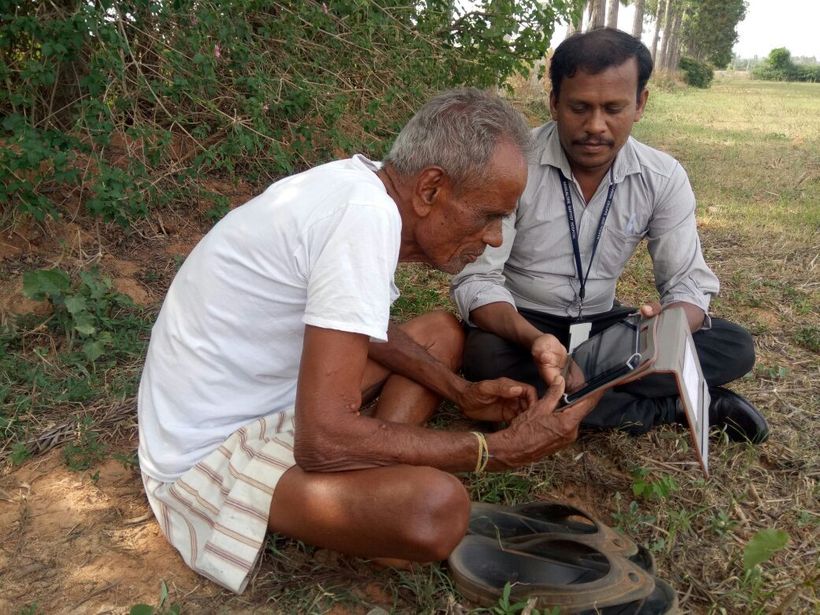
An interdisciplinary team of Baylor University researchers – from nursing and business information systems to art and video game design – and physicians from Bangalore Baptist Hospital in Bengaluru, India, were awarded a 21st Century Knowledge Initiative Grant from the U.S. India Education Foundation (USIEF) to develop a diabetes mobile health app to boost awareness and educate those in India who are most at risk for diabetes. The team is led by Shelby Garner, Ph.D., R.N., assistant professor in Baylor’s Louise Herrington School of Nursing, who has worked in India over the past six years to develop technological health resources. She cited statistics from the World Health Organization that show life expectancy in India is among the lowest in the South East Asian Region and is largely attributed to growing rates of non-communicable diseases, such as diabetes. Contextualized health education is one key to help raise awareness in the country, she said. “There is a need for culturally appropriate health education materials in India,” Garner said. “Our early research showed that technology, such as smartphones and internet accessibility, are widely available in India among health providers, but most technological educational resources were developed in the West and do not effectively translate to the Indian context.” Physicians from Bangalore Baptist Hospital will provide cultural context and help identify important medical content to be included in the app. “Our diabetes app will feature an interactive 3D animated video with gaming features to help educate patients at risk for diabetes,” Garner said. “Answers to questions addressed in the app include: What is diabetes? What happens if I have diabetes? How do I prevent and treat diabetes? What do I do now?” The app also serves as a data collection tool to help researchers determine if the video is improving participants’ knowledge on diabetes. Community health workers employed by Bangalore Baptist Hospital will use the app as they visit with people in rural villages and urban slums during door-to-door health education visits, Garner said. The research team will compare the app’s effectiveness with standard health educational resources previously used. Garner said the USIEF grant was awarded, in large part, due to the success of an earlier project that led to the development of a hypertension app. “Earlier this year, we tested the hypertension app among 346 people in one of the largest slums in Bengaluru, India, and in several rural villages surrounding Bengaluru,” she said. “The app was significantly effective in improving knowledge among participants. We used these results to justify the need to design more resources and applied for funding from the U.S. India Education Foundation.” From previous experience developing and employing the hypertension app, Garner said she knew this new project would require input from a variety of perspectives. “I’ve realized some of the ‘big picture’ challenges in health education, and it will take a team of experts to make this happen,” she said. Team members are: • Shelby Garner, Ph.D., R.N., assistant professor in Baylor’s Louise Herrington School of Nursing • Dr. Carol Elizabeth George, community health physician, Bangalore Baptist Hospital • Dr. Gift Norman, community health physician, Bangalore Baptist Hospital • Dr. Kingsly Victor, internal medicine physician, Bangalore Baptist Hospital • Hope Koch, Ph.D., associate professor of business information systems, Baylor’s Hankamer School of Business • Phil Young, Ph.D., assistant clinical professor of business information systems, Baylor’s Hankamer School of Business • Julia Hitchcock, M.F.A., associate professor of art, Baylor’s College of Arts & Sciences • Matthew Fendt, Ph.D., lecturer in computer science, Baylor’s School of Engineering and Computer Science The grant also will fund exchange teams of researchers and faculty from India to come to the U.S. and for Baylor team members to go to India to collaborate on the research for the next two years. The first team from India is due in late October. “We are really excited about the work we will do together with our Indian partners over the next two years,” Garner said. ABOUT BAYLOR UNIVERSITY Baylor University is a private Christian University and a nationally ranked research institution. The University provides a vibrant campus community for more than 17,000 students by blending interdisciplinary research with an international reputation for educational excellence and a faculty commitment to teaching and scholarship. Chartered in 1845 by the Republic of Texas through the efforts of Baptist pioneers, Baylor is the oldest continually operating University in Texas. Located in Waco, Baylor welcomes students from all 50 states and more than 80 countries to study a broad range of degrees among its 12 nationally recognized academic divisions. ABOUT LOUISE HERRINGTON SCHOOL OF NURSING The Baylor University Louise Herrington School of Nursing (LHSON) located in Dallas was established in 1909 as a diploma program within Baylor Hospital in Dallas, which is now Baylor University Medical Center, and in 1950 became one of the six degree-granting schools of Baylor University. The first Baccalaureate degrees were granted in 1950 establishing the school among the earliest baccalaureate nursing programs in the United States. In 1999, the School was renamed the Baylor University Louise Herrington School of Nursing after Louise Herrington Ornelas, a 1992 Baylor Alumna Honoris Causa, who made an endowment gift to the school. Accredited by the Commission on Collegiate Nursing, LHSON offers Bachelor of Science in Nursing (B.S.N.) degrees through a traditional program and FastBacc (one-year accelerated program). LHSON also offers an online Master of Science in Nursing (M.S.N.) Leadership and Innovation program, as well as Doctor of Nursing Practice (D.N.P.) programs to include Family Nurse Practitioner (F.N.P.), Nurse-Midwife (C.N.M.) and Neonatal Nurse Practitioner (N.N.P.). LHSON was featured in U.S. News & World Reportfor the 2018Best Graduate Schools ranking the D.N.P.program in the top 50 U.S.nursing schools at No. 46. The Baylor M.S.N.program is ranked at No. 56and the Nurse Midwifery Program ranked No. 10. Baylor’s M.S.N. in Nursing Leadership andInnovation Online Program ranked No. 39 in the 2018U.S. News Best Online Graduate Programs. For more information, www.baylor.edu/nursing.

New research examines impact of 'homesharing' services like Airbnb
Local governments across the country are passing laws to limit short-term rentals like Airbnb, HomeAway and VRBO, with Washington, D.C., poised to put some of the strictest limits yet on these homesharing services. Kashef Majid, an assistant professor of marketing at the University of Mary Washington, has examined more than 12,000 rentals in the nation's capital over nearly a decade, identifying which properties are most in demand and earn the most revenue as well as the impact of price and location on demand. Majid also found that commercial operators -- those that purchase properties solely to rent on short-term rental markets like Airbnb -- limit the supply of affordable housing, create neighborhood tensions and negatively impact the number of rentals. "The issue of commercial operators became so contentious that the largest county in Virginia (by population) recently passed legislation to prevent their existence," Majid said. "Commercial operators are simply one example of the issues that arise within the sharing economy. Our research has also explored parallels in other markets, such as ride sharing." Majid is available to speak with media regarding these topics and this research. To contact him, simply click on his icon to arrange an interview.



The next threat to election meddling? Brain Hacking
Almost 15 percent of Americans have reported changing their opinion on political or social issues because of a social media post, according to a recent Pew Research Center survey. “What if, immediately before spreading polarizing social media posts, our adversaries flashed subliminal images known to induce a type of anxiety called state anxiety? Evidence suggests people would perceive those posts in a more emotional way. Those images could, in turn, influence their voting behavior,” said Dr. Jay Heslen, an expert in intelligence and cybersecurity policy and assistant professor of political science with a joint appointment in the Katherine Reese Pamplin College of Arts, Humanities, and Social Sciences and the School of Computer and Cyber Sciences at Augusta University. “Successfully manipulating the cognition of a few thousand people in order to influence their perception of events could be enough to change the result of an election.” Heslen’s current research project focuses on whether exposure to certain visuals or sounds, including subliminal prompts, can induce a negative emotional arousal on people. He’s interested in learning whether that emotional state, called state anxiety, can then influence behavior in a specific, predefined way – a concept he calls neurocognitive hacking. Although research using subliminal prompts is not new and has had mixed results, Heslen’s approach is novel. He uses a specific kind of visuals previously shown to trigger people’s unconscious discriminatory behaviors toward outsiders. “Neurocognitive hacking could potentially be used as a weapon in cyberwarfare,” said Heslen, who worked as an intelligence officer with the Defense Intelligence Agency and the United States Air Force for more than 20 years, specializing in combatting terrorism, counterintelligence and strategic cyber intelligence. “We need to study these capabilities not only for our own understanding but to create sound policies and countermeasures to defend ourselves against others who may use them on us.” With 68 percent of Americans on Facebook and 73 percent on YouTube, according to another Pew Research Center survey, neurocognitive hacking could be a national security problem, Heslen said. “As we advance our understanding of the brain and its processes, including how to manipulate it, we will need to provide neurocognitive cybersecurity to people who use information and communication technologies,” Heslen said. “This will be especially true as we spend more time in virtual worlds.” Heslen is available to discuss: · How neurocognitive hacking can influence people’s behavior · Why neurocognitive hacking is a powerful weapon of cyberwar · What kinds of policies should the government create to protect itself and its citizens from neurocognitive hacking Heslen is a Lieutenant Colonel in the United States Air Force Reserve and has served in military operations on four continents to include humanitarian relief operations in Mozambique and South Africa as well as an operational tour in Afghanistan. In his capacity as a reservist, he is currently assigned to the National Intelligence University pursuing an advanced degree in strategic intelligence. Contact us to schedule an interview with Dr. Heslen or learn more about his expertise.


On World Food Day, Cedar Crest College works to combat food insecurity among students
World Food Day -- an annual event established by the United Nations in 1945 -- will be celebrated on October 16, 2018. Cedar Crest College will join the celebration by continuing to work diligently to eliminate food insecurity among its students. The college's Closing the Gap Committee is holding a Fall Food Drive through October 22 to help stock the campus Resource Pantry. The pantry is open to all students – traditional undergrads, adult learners and graduate students. It offers non-perishable food items, toiletries and frozen meals.The pantry operates solely on donations and gifts. “It is harder to concentrate on your academic work when you are hungry,” said Mary Alice Ozechoski, Vice President of Student Affairs & Traditional Enrollment. “We believe that students who are food insecure need assistance so they can focus on what matters: completing their education.” Cedar Crest College was one of dozens of schools to participate in a recent survey conducted by Temple University and the Wisconsin HOPE Lab assessing the basic needs of university students across the nation. The study determined that 36 percent of students on U.S. College campuses suffer from food insecurity. You can read the full report here. Mary Alice Ozechoski is available to speak with media regarding this issue. Simply click on her icon to arrange an interview.


Vielight Featured on CBC's "The Nature of Things" with Dr. David Suzuki
“The Brain’s Way of Healing”, an episode on The Nature of Things – aired on the CBC news network with David Suzuki and Dr. Norman Doidge. The episode featured the Vielight intranasal photobiomodulation technology. This episode featured Dr. Margaret Naeser a Research Professor of Neurology at Boston University who is researching the uses of an LED light helmet to treat PTSD victims. There are 1.7 million cases of traumatic brain injury right now in the United States and we don't have a really good treatments for them. We give them cognitive rehabilitation therapy which is very important but we're doing the photon work and light therapy to give the cells more energy to work with." To view the CBC Television episode please click below Dr. Margaret Naeser, Research Professor of Neurology at Boston University Select Publications PUBLISHED ON 2/10/2017 Saltmarche AE, Naeser MA, Ho KF, Hamblin MR, Lim L. Significant Improvement in Cognition in Mild to Moderately Severe Dementia Cases Treated with Transcranial Plus Intranasal Photobiomodulation: Case Series Report. Photomed Laser Surg. 2017 Aug; 35(8):432-441. PMID: 28186867. PUBLISHED ON 12/1/2016 Naeser MA, Martin PI, Ho MD, Krengel MH, Bogdanova Y, Knight JA, Yee MK, Zafonte R, Frazier J, Hamblin MR, Koo BB. Transcranial, Red/Near-Infrared Light-Emitting Diode Therapy to Improve Cognition in Chronic Traumatic Brain Injury. Photomed Laser Surg. 2016 Dec; 34(12):610-626. PMID: 28001756. PUBLISHED ON 8/17/2015 Naeser MA, Hamblin MR. Traumatic Brain Injury: A Major Medical Problem That Could Be Treated Using Transcranial, Red/Near-Infrared LED Photobiomodulation. Photomed Laser Surg. 2015 Sep; 33(9):443-6. PMID: 26280257. PUBLISHED ON 5/8/2014 Naeser MA, Zafonte R, Krengel MH, Martin PI, Frazier J, Hamblin MR, Knight JA, Meehan WP, Baker EH. Significant improvements in cognitive performance post-transcranial, red/near-infrared light-emitting diode treatments in chronic, mild traumatic brain injury: open-protocol study. J Neurotrauma. 2014 Jun 1; 31(11):1008-17. PMID: 24568233.


In Georgia governor's race, women could cast deciding vote
With the 2018 midterm elections looming less than a month away, Georgia gubernatorial candidates Stacey Abrams and Brian Kemp are neck-and-neck according to the latest Atlanta Journal Constitution/Channel 2 poll. In an election year with record voter registration numbers in the Peach State—and amid allegations of voter suppression—women voters could cast the deciding vote. But for which side? To find the answer, says Dr. Mary-Kate Lizotte, associate professor of political science at Augusta University, look to the issues. “Women, in particular Republican and Independent women, differ from men of the same party on the issues of government spending on childcare, public schools, welfare, social security, and aiding the homeless,” Lizotte said. “Women typically favor increased spending on the issues.” Examining data from 1994 to 2008, Lizotte, an expert on gender differences relating to public opinion, found that women are also more liberal than men of the same party on the issues of gay rights, government-guaranteed standard of living, and on the provision of more government services. “For races where these issues have become salient, it might be the case that women would be more likely to be motivated to turn out to vote and to vote for candidates that have liberal positions on these issues,” she said. That could be excellent news for the Abrams campaign, which has emphasized public education funding. “Women in Georgia who believe in increasing public education funding should be more likely to vote for Abrams,” Lizotte said. “This may also be the case for several House races where the issue of tax reform and tax cuts has become salient.” The confirmation of Justice Brett Kavanaugh to the Supreme Court earlier this month could also sway election results, albeit in less clearly defined ways. Lizotte said the confirmation could either motivate conservative women voters to turn out or, alternatively, dissuade Republican women with Pro-Choice leanings from voting entirely. The expectation is a little more cut-and-dry for liberal women voters. “The Kavanaugh confirmation is just one more reason to expect an increase in voter turnout among liberal women,” she said. “The Women's March in 2017 and 2018 along with the increase in female interest in running for office all indicate that the Trump election and presidency had already galvanized liberal women voters.” Finally, Lizotte said, although white women are divided politically—with college-educated white women swaying Left and those without a college degree favoring the Right—there was no such division among African American women voters. “And as we've seen, African American women turnout at high rates and can influence elections like the Alabama Senate race,” she said. Dr. Lizotte is available to discuss: "Gender gaps" on various issues leading up to the 2018 midterm elections The role of women voters in State and National elections The perception of voters, in terms of public opinion, toward candidates in Georgia's gubernatorial election.

Women often don't label their sexual assaults as rape. Our experts can explain.
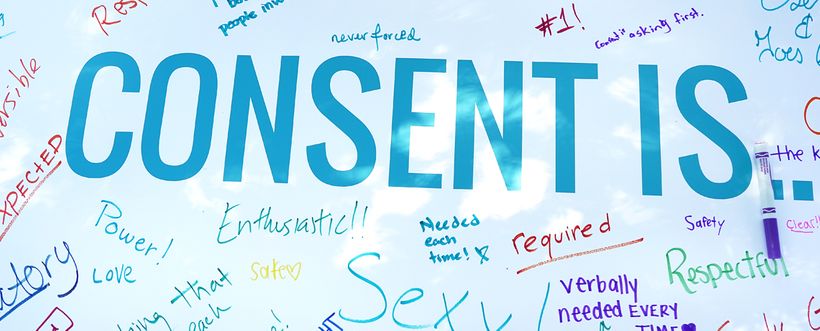
Many sexual violence survivors do not label their experiences as rape but instead use more benign labels, such as “bad sex” or “miscommunication.” Laura C. Wilson, an assistant professor of psychology at the University of Mary Washington, led a review of 28 academic studies to estimate how often women who’ve been sexually assaulted do not label their experience as rape. Across the studies, the researchers find that 60.4 percent of women, on average, did not recognize their experience as rape even though it fit the definition — an unwanted sexual experience obtained through force or the threat of force or a sexual experience they did not consent to because they were incapacitated. “This finding has important implications because it suggests that our awareness of the scope of the problem may underestimate its true occurrence rate, depending on the type of measurement,” the authors write. “This impacts policy reform, allocations of mental health services, survivors’ perceptions of their experiences, and society’s attitudes toward survivors.” For more information on this study, visit: http://journals.sagepub.com/doi/abs/10.1177/1524838015576391 Laura C. Wilson is available to speak with media regarding this topic and study. To contact her, simply click on her icon to arrange an interview.


Out of Office: New Baylor Management Study Examines Relationship Between Stress and Remote Work
Researchers say people with high emotional stability and autonomy are best suited for remote-work opportunities Many U.S. employees believe working from home – or at least away from the office – can bring freedom and stress-free job satisfaction. A new Baylor University study says, “Not so fast.” The study, published recently in the European Journal of Work and Organizational Psychology, examines the impact of remote work on employee well-being and offers several strategies to help managers provide remote-work opportunities that are valuable to the employee and the company. “Any organization, regardless of the extent to which people work remotely, needs to consider well-being of their employees as they implement more flexible working practices,” the researchers wrote. A total of 403 working adults were surveyed for the two studies that made up the research, said lead author Sara Perry, Ph.D., assistant professor of management in Baylor University’s Hankamer School of Business. The research team measured each employee’s autonomy (the level of a worker’s independence), strain (defined in this study as exhaustion, disengagement and dissatisfaction) and emotional stability. Emotional stability, Perry explained, “captures how even keeled someone is or, on the opposite end, how malleable their emotions are. An example would be if something stressful happens at work, a person who is high on emotional stability would take it in stride, remain positive and figure out how to address it. A person low on emotional stability might get frustrated and discouraged, expending energy with those emotions instead of on the issue at hand.” The research found that: • Autonomy is critical to protecting remote employees’ well-being and helping them avoid strain. • Employees reporting high levels of autonomy and emotional stability appear to be the most able to thrive in remote-work positions. • Employees reporting high levels of job autonomy with lower levels of emotional stability appear to be more susceptible to strain. Perry said the study contradicts past research that says autonomy is a universal need that everyone possesses. Per this research, those who are lower in emotional stability may not need or want as much autonomy in their work. “This lower need for autonomy may explain why less emotionally stable employees don’t do as well when working remotely, even when they have autonomy,” researchers wrote. In addition to their findings, the researchers offered several recommendations for managers who design or oversee remote-work arrangements. The research team advised managers to consider their employees’ behavior when deciding who will work remotely. “I would suggest managers look at employee behaviors, rather than for personality traits, per se,” Perry said. “For example, if someone does not handle stress well in the office, they are not likely to handle it well at home either. If someone gets overwhelmed easily, or reacts in big ways to requests or issues in the office, they are likely less well positioned to work remotely and handle that responsibility and stress.” Based on this study, individuals with high emotional stability and high levels of autonomy are better suited for remote work, but such candidates might not always be available. “If less emotionally stable individuals must work remotely, managers should take care to provide more resources, other than autonomy, including support to help foster strong relationships with coworkers and avoid strain,” they wrote. Managers might also consider providing proper training and equipment for remote work, including proper separation of work and family spaces, clear procedural and performance expectations and regular contact (virtual or face-to-face) with coworkers and managers. ABOUT THE STUDY “Stress in Remote Work: Two Studies Testing The Demand-Control-Person Model,” published in the European Journal of Work and Organizational Psychology, is authored by Sara Perry, Ph.D., assistant professor of management, Hankamer School of Business, Baylor University, Emily Hunter, Ph.D., associate professor of management, Hankamer School of Business, Baylor Univeersity, and Cristina Rubino, professor of management, David Nazarian College of Business and Economics, California State University Northridge. ABOUT BAYLOR UNIVERSITY Baylor University is a private Christian University and a nationally ranked research institution. The University provides a vibrant campus community for more than 17,000 students by blending interdisciplinary research with an international reputation for educational excellence and a faculty commitment to teaching and scholarship. Chartered in 1845 by the Republic of Texas through the efforts of Baptist pioneers, Baylor is the oldest continually operating University in Texas. Located in Waco, Baylor welcomes students from all 50 states and more than 80 countries to study a broad range of degrees among its 12 nationally recognized academic divisions. ABOUT HANKAMER SCHOOL OF BUSINESS Baylor University’s Hankamer School of Business provides a rigorous academic experience, consisting of classroom and hands-on learning, guided by Christian commitment and a global perspective. Recognized nationally for several programs, including Entrepreneurship and Accounting, the school offers 24 undergraduate and 13 graduate areas of study. Visit www.baylor.edu/business and follow on Twitter at www.twitter.com/Baylor_Business.