Experts Matter. Find Yours.
Connect for media, speaking, professional opportunities & more.

Black Friday 2025: Earlier, Bigger and More Digital Than Ever
Black Friday is no longer just a day – it’s becoming an entire season. In 2025, shoppers are starting earlier, spending more and relying heavily on technology to find the best deals. With online shopping now the dominant force, an estimated 71% of consumers plan to browse and buy from their screens rather than stand in long lines. Baylor University consumer behavior expert James A. Roberts, Ph.D., said this year’s sales stretch well beyond Thanksgiving weekend. Top 5 Black Friday Trends from Dr. James A. Roberts Retailers have pushed promotions into early November – and in some cases, late October – creating what many now call “Black November.” And for the true procrastinators, “Desperate in December” is the new reality, with next-day delivery extending holiday shopping right up to the last minute. Even as shoppers plan to spend up to 10% more, they’re extremely price sensitive, Roberts said. Inflation, rising living costs and ongoing economic uncertainty – including concerns over tariffs – are prompting consumers to hunt for deeper discounts and compare prices more closely than ever. That caution is also fueling another trend: increased use of buy-now-pay-later plans. While convenient, Roberts urges shoppers to approach them carefully to avoid overspending. Technology also is accelerating the shift. AI tools and retail chatbots are helping customers track deals and make purchases, while influencers and social media ads continue to shape buying habits. Cost-conscious platforms like Temu and Shein are poised for another strong season. Clothing, electronics and home goods remain top categories, Roberts said, with gift cards still the go-to for last-minute buyers. Walmart, Target and Kohl’s are expected to be the most popular in-store destinations, while Amazon – unsurprisingly – continues to dominate Cyber Monday. Overall spending remains robust. Shoppers are expected to spend roughly $20 billion across online and in-store purchases, split almost evenly between the two. The best bargains will be toys discounted about 25 percent, phones and computers discounted around 30 percent and TVs discounted an average of 23 percent. The typical shopper will spend about $650 this holiday weekend. How to navigate the shopping frenzy Roberts offers some simple advice for navigating the frenzy: Set a budget, stick to it, choose thoughtful gifts and keep the season in perspective. After all, the most meaningful gifts are the ones that show how well you know the people you love. ABOUT JAMES A. ROBERTS, PH.D. James A. Roberts, Ph.D., is The Ben H. Williams Professor of Marketing at Baylor University’s Hankamer School of Business. A noted consumer behavior expert, he is among the Top 2% Most-Cited Researchers in a database compiled by Stanford University. In addition to journal citations, Roberts has often been called upon by national media outlets for his consumer expertise and latest research. He has appeared on the CBS Early Show, ABC World News Tonight, ABC Good Morning America, NBC’s TODAY Show and NPR’s Morning Edition, as well as in articles in The New York Times, USA TODAY, The Wall Street Journal, TIME and many others. Roberts’ research has focused on how individual consumer attitudes and behavior impact personal and collective well-being, including investigating the factors that drive ecologically and socially conscious consumer behavior, the impact of materialism and compulsive buying on well-being and the effect of smartphone and social media use on personal well-being. He is the author of “Shiny Objects: Why We Spend Money We Don’t Have in Search of Happiness We Can’t Buy” and “Too Much of a Good Thing: Are You Addicted to Your Smartphone?”


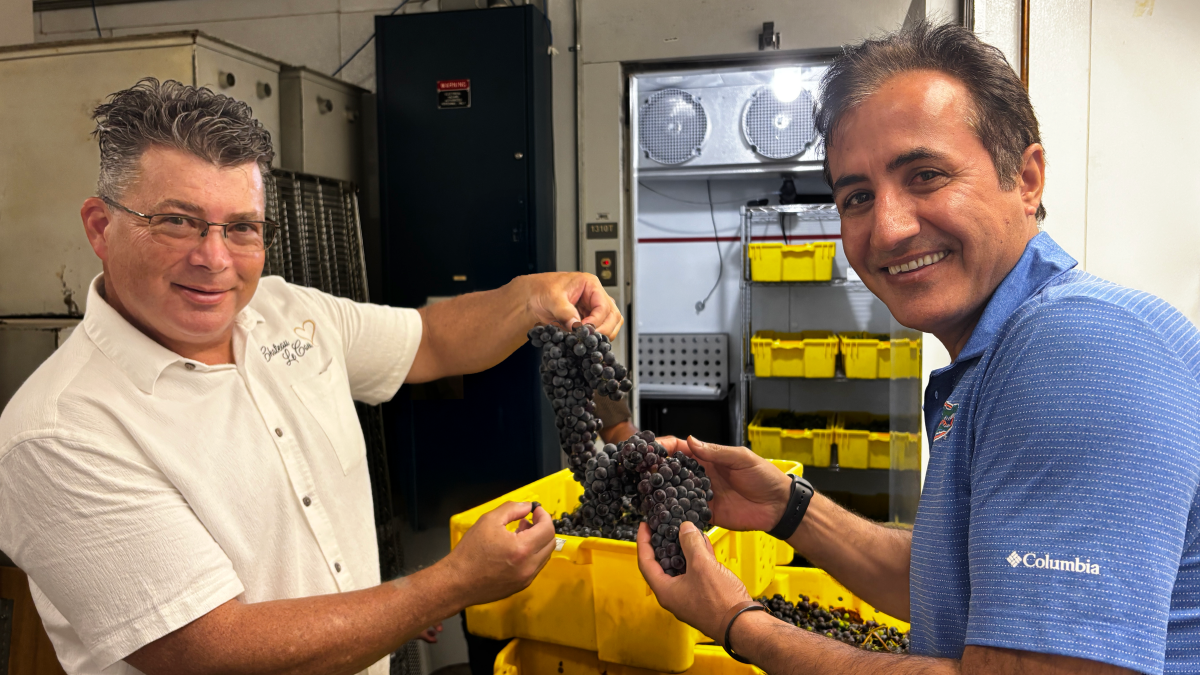
Breakthrough with first disease-resistant wine grapes shows hope for a Florida wine renaissance
In a milestone for Florida agriculture, researchers have grown and harvested wine grapes that are resistant to the main bacterial disease that has long prevented the state from establishing a large-scale wine industry. Researchers successfully grew five grape varieties in Citra, Florida, that are resistant to Pierce’s disease, a bacterial infection that kills the vines and shrivels the grapes. The effort, led by Ali Sarkhosh, associate professor in the UF Institute of Food and Agricultural Sciences (UF/IFAS) horticultural sciences department, produced a harvest of grapes that resulted in 13 cases of wine. “This could be the start of a new chapter for Florida wine.” — Ali Sarkhosh, associate professor in the UF Institute of Food and Agricultural Sciences horticultural sciences department While Florida has a thriving muscadine grape industry, the global market for muscadine wine is small compared to wine made from Vitis vinifera, the species of grapes behind world-famous wines such as cabernet sauvignon, sauvignon blanc and merlot. Florida is already the nation’s second-highest wine-consuming state, behind only California, with an industry valued at $15 billion in 2022. Yet most of the wines served are produced elsewhere, primarily in California, Oregon and Washington. Sarkhosh said he hopes this research will offer a potential additional crop for muscadine grape farmers. As of 2017, there were 547 Florida vineyards, growing muscadine and hybrid grapes. “This could be an enormous opportunity for vineyards in Florida to expand into additional types of wine for a wider market,” he said. “This could be the start of a new chapter for Florida wine.” UF researchers worked with Château Le Coeur, a winery based in DeFuniak Springs, Florida, to make the wine from their harvest. The wine was crafted with 75% Florida-grown fruit and blended with 25% cabernet sauvignon and merlot. The grape used in the wine collaboration is a hybrid called “Erante Noir” and was developed at the University of California, Davis. It carries the genes of sauvignon blanc and cabernet sauvignon. John Choquer, the owner of Château Le Coeur, emphasized the potential for this collaboration. “If we are successful in growing in the area and combating Pierce’s disease effectively, it will be a strong growth industry and emerging market for agri-tourism,” he said. Early tastings point to a dark, fruit-forward wine. Château Le Coeur named this debut wine “Genial,” a French expression for something new and innovative. He said he is also planting a variety of traditional wine grapes, red and white, at his vineyard. He said his winery is grateful for UF’s support and collaboration as he works to create a Florida-based traditional wine industry. “This is not a short-term experiment,” Choquer added. “We plan to test more Pierce’s disease-resistant and traditional vinifera varieties, refine vineyard practices and build a new type of wine industry here in Florida. There will be challenges, there will be setbacks, but the potential is also so great. There is such a strong market potential here in Florida.”


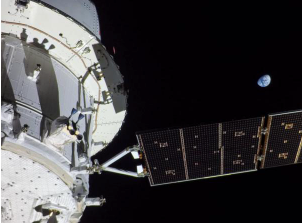
RPI Awarded Air Force Grant to Monitor Growing Traffic Between Earth and Moon
As nations and private companies prepare to ramp up the number of missions to the Moon, researchers at Rensselaer Polytechnic Institute (RPI) and Texas A&M University have secured a $1 million grant from the Air Force Office of Scientific Research to develop a system to track and monitor resident space objects — including spacecraft, satellites and debris — moving through the vast cislunar space between the Earth and the Moon. The initiative, called RCAT-CS (Reconfigurable Constellations for Adaptive Tracking in Cislunar Space), will develop intelligent networks of sensor satellites that can be reconfigured to perform resilient tracking of objects as they maneuver through this complex orbital environment. "Right now, we're seeing an explosive growth in cislunar missions, including everything from commercial lunar landers and orbiters to next-generation spacecraft that secure national interests in this contested domain," said engineering professor Sandeep Singh, Ph.D., RPI’s lead investigator on the project. "But our ability to track what's happening out there hasn't kept pace. Ground-based sensor systems have blind spots and cannot reliably provide measurements. A space-based constellation is the answer, but placing spacecraft in orbit is expensive and solving the resource constraint problem is essential." The cislunar region presents unique challenges for space domain awareness applications. Competing gravitational forces from the Earth and the Moon create complex orbital dynamics, while the sheer distances involved make tracking difficult. When spacecraft and satellites perform maneuvers in this space or behave unexpectedly, current systems can lose track of them entirely. RCAT-CS will tackle these problems by designing constellations of space-based sensors that can dynamically reposition themselves based on what they're observing. Professor Singh and his colleagues will develop novel algorithms to detect maneuvers made by tracked objects, balance fuel costs, track performance of the sensing satellites, and quantify the uncertainties underlying it all. The system addresses critical safety and security needs as cislunar space becomes increasingly congested and contested. The research will also advance fundamental knowledge in orbital dynamics and autonomous space systems, with implications for mission planning, collision avoidance, and safe coordination of a growing cislunar economy. Additionally, the project will train the next generation of space engineers in cutting-edge technologies essential for American leadership in space operations. “Congratulations to Professor Sandeep Singh and his team on securing a research grant in the important area of lunar space exploration,” said Shekhar Garde, Ph.D., the Thomas R. Farino Jr. ’67 and Patricia E. Farino Dean of the School of Engineering. “RPI has always been at the frontier of space exploration, from George Low’s work on the Apollo program to the forthcoming Artemis II mission, led by Commander Reid Wiseman ’97.” “Professor Singh’s work will not only advance research, it will strengthen RPI’s recently launched Aerospace Engineering undergraduate program by bringing the latest research into our classrooms,” Garde added. Looking to know more? Shekhar Garde, Ph.D. is available to discuss this topic. Simply click on his icon now to arrange an interview today.


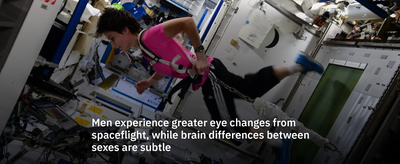
A new study into how spaceflight impacts the human brain and eyes revealed notable sex differences in brain fluid shifts, with female astronauts showing a greater reduction in fluid around the uppermost part of the brain than their male counterparts. Led by Rachael D. Seidler, Ph.D., director of the University of Florida’s Astraeus Space Institute and professor of applied physiology and kinesiology, the study analyzed data from astronauts to determine how factors such as sex, age and body metrics relate to structural brain and eye changes after space travel. The findings, published in August in npj Microgravity, provide key information for protecting astronaut health on long-duration missions to the moon and Mars. This is one of the first studies to look at sex differences in the physiological response to spaceflight. “The data on sex differences in response to spaceflight are scant, given the historically low number of female astronauts.” — Rachael D. Seidler, Ph.D., director of the University of Florida’s Astraeus Space Institute In addition to changes in fluid around the brain, the team also found that a form of eye compression, a hallmark of Spaceflight Associated Neuro-ocular Syndrome known as globe flattening, was the most consistent eye change among crew members. “By far the most prevalent sign of eye changes that we observed was globe flattening, suggesting that this should be the primary monitoring target for ocular health,” Seidler said. “Interestingly, eye changes were more prevalent in males than females.” Globe flattening, when the back of the eyeball becomes slightly indented or pushed inward, might sound minor, but it can have significant effects on vision and raise concerns for long-duration space missions. Surprisingly, there was no strong link between brain structural changes and eye changes, suggesting that the effects on the eyes and brain may arise from distinct mechanisms rather than shared physiological causes. The research underscores UF’s growing leadership in space health science. Through the Astraeus Space Institute, Seidler leads multidisciplinary collaborations that connect neuroscience, physiology and space research to advance human performance and safety in spaceflight. “We used UF's HiPerGator computing cluster for our analyses in this study, enabling us to analyze our data at high speeds,” Seidler said. Read the full study in npj Microgravity.

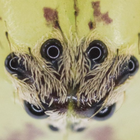
Creepy, crawly, and totally cool: Florida’s “spooktacular” spiders aren’t so scary after all
As Halloween approaches, it’s the perfect time to spotlight some of Florida’s coolest and spookiest spiders —that aren’t so scary after all. Spiders are often misunderstood, but many are shy, harmless and downright fascinating. Lisa Anne Taylor, assistant research scientist at the University of Florida Institute of Food and Agricultural Sciences (UF/IFAS), said that spiders “get a bad rap and aren’t so frightening.” Here are 10 standout species that bring both cool, spooky vibes and ecological value to the Sunshine State. This Halloween, instead of fearing spiders, celebrate their mysterious style and ecological superpowers. They’re nature’s pest control, silk engineers and stealthy hunters. As Taylor puts it, “No one should be afraid of them.” For even more spider fun, check out Taylor’s kid-friendly coloring book, “Coloring with Spiders: Our favorites from Florida.” Black Widow The black widow is perhaps the most iconic Halloween spider, the OG creepy crawly, instantly recognizable by the red hourglass on its jet-black abdomen. Despite its reputation, black widows are shy and rarely bite unless provoked — like when someone slips on a shoe that the spider was hiding in. “Nobody should be scared of them; they should just not hold them. They should keep a respectful distance,” said Taylor, who works for the Department of Entomology and Nematology. Florida is home to both native southern and northern black widows. Brown Recluse The brown recluse is feared but is actually very uncommon in Florida. Most “sightings” in Florida are misidentifications, and bites are rare. “They get blamed for a lot of things, but it’s rarely actually a brown recluse bite,” Taylor explained. Red Widow The red widow is a stunning native Florida spider with a black body with red and white splotches and bright red legs. Found only in Florida’s scrub habitats, this spider is rarely seen and even more rarely bites. Its vivid, spotted red-and-black patterns and elusive nature make it a mysterious and beautiful part of Florida’s spider diversity. Brown Widow The brown widow, an invasive species in Florida, is a close relative of the other widows but their venom seems to be less potent for humans. It has a dark-orange hourglass marking on its brown abdomen and is often identified by its spiky egg sacs. While it may look spooky, the brown widow is not aggressive and prefers to stay hidden in quiet corners. Like the black widow, it’s best to check shoes and outdoor gear before use for these stowaways. Golden Silk Orb Weaver The golden silk orb weaver, also known as the banana spider, adds dramatic flair to Florida’s landscapes with its large, golden webs that shimmer in the sunlight. Females can grow impressively large and display vibrant colors of gold, white and black. Their webs often span several feet, serving as natural Halloween decorations in gardens and forests. Ogre-faced Spider The ogre-faced spider is one of the more bizarre-looking and captivating spiders. With enormous eyes and a unique net-casting hunting style, it can see in near-total darkness and uses a silk net to snatch prey mid-air. During the day, it hangs motionless, resembling a twig. At night, it becomes a stealthy predator, making it a true Halloween terror to its prey. Regal Jumping Spider The regal jumping spider is a fan favorite, known for its iridescent green or pink jaws and bold, colorful patterns. These spiders are curious and often seem to watch humans with interest. “They’ve become internet famous,” said Taylor, noting that influencers even keep them as pets. They tend to be larger than other spiders, making them easy to hold, and they do well in a small terrarium. Green Lynx Spider The green lynx spider blends perfectly into Florida’s foliage with its bright green body and long, spiny legs. It’s a master of camouflage and a skilled hunter, often found on flowers and shrubs. Though it looks fierce, it poses no threat to humans and helps control garden pests. Taylor noted they’re common in gardens and flowerbeds and are great for natural pest control. Twin-flagged Jumping Spider The twin-flagged jumping spider is a tiny acrobat with oversized eyes and a curious nature. These spiders are known for their impressive leaps and use silk safety lines like bungee cords. Their bold movements and alien-like appearance make them a fun and fascinating species to watch. Though they may look intimidating, they’re completely safe for people – but horrifying to ants. “If you’re an ant, these are ferocious predators,” Taylor said. “They’re completely harmless to people, but they’re ant specialists.” Spitting Spider The spitting spider brings a comic-book twist to the mix. It spits sticky glue to trap prey, à la Spiderman, using a rapid-fire technique that’s highly effective against insects. These spiders are small and secretive, but their hunting method is one of the most unique in the arachnid world. For even more spider fun, check out Taylor’s kid-friendly coloring book, “Coloring with Spiders: Our favorites from Florida.”

The keys to holiday happiness: Gratitude, giving and genuine connection
The holiday ads insist that it’s the time for cheer, buying gifts and reconnecting with friends and family. Various factors – social media, remote work, politics – have made that more difficult than ever. There is hope: Research by the University of Delaware's Amit Kumar shows the path to genuine happiness this season. Kumar, assistant professor of marketing in UD's Lerner College of Business & Economics, offered the following three strategies. Gratitude: • Gratitude and giving thanks has benefits for both the giver and the receiver. It makes both parties feel good, and provides a real-life human connection at a time when those are hard to come by. "Investing in doing is a better route to social connection than spending on having." - Amit Kumar A shift in gift buying strategy: • Experiences can make for better gifts than trinkets, coats, jewelry or other items. There's a better chance of social connection if you're doing something rather than giving something. Type less, talk more: • It's important to keep in touch, but reconnecting during the holidays through a phone call or face-to-face interaction (virtually or in person) has a better chance of strengthening our bonds. More information on Kumar, who is also an assistant professor of psychological & brain sciences, can be found on his website. To contact Kumar directly and arrange an interview, visit his profile and click on the contact button. Interested reporters can also send an email to MediaRelations@udel.edu.


UD physicists track one of the most powerful solar flares in nearly two decades
A massive solar flare – possibly the strongest recorded in nearly 20 years – has unleashed a wave of charged particles toward Earth, sparking radio blackouts across parts of Africa and Europe and triggering measurable increases in radiation levels worldwide. At the University of Delaware, physicists Pierre-Simon Mangeard and John Clem are closely monitoring the event through UD’s neutron monitor network, a global system that tracks cosmic radiation from observatories in Newark, Greenland, Canada, Antarctica and Hawaii. “This is a significant event, still in progress,” said Mangeard. The physicists are seeing a roughly 65% increase in ground-level radiation, which is possibly the largest since 2006. These elevated readings are known as a Ground Level Enhancement (GLE) – a rare occurrence caused by high-energy particles accelerated by solar flares that penetrate Earth’s magnetic field and reach the surface. The data being collected now will help researchers better understand how such bursts of solar activity impact Earth’s atmosphere, communications systems and even aviation safety. Clem and Mangeard’s work at UD’s Bartol Research Institute and Department of Physics and Astronomy contributes to global efforts to monitor and predict space weather events, including solar storms and coronal mass ejections. The team’s continuous, real-time data help scientists worldwide assess potential disruptions to satellites, power grids and high-altitude flights. As analysis of this flare continues, UD’s neutron monitor network will remain a key resource for understanding how space weather events ripple through our planet’s systems. Experts available for interviews: • Pierre-Simon Mangeard, research associate, Department of Physics and Astronomy • John Clem, associate professor, Department of Physics and Astronomy To contact Mangeard or Clem, email mediarelations@udel.edu.

Record Breaking Turnout for NYC Early Voting
Dr. Meena Bose appeared on WNYW-TV Fox 5 to discuss how the record-breaking turnout for early voting in New York City underscored public engagement in the mayoral race. “There is reporting that suggests total turnout on Election Day could approach 2 million. We haven’t seen numbers like that for a mayoral race in more than 30 years,” she said. Dr. Bose is a Hofstra University professor of political science, executive dean of the Public Policy and Public Service program, and director of the Kalikow Center for the Study of the American Presidency.


Do the math: We’re awake roughly 16 hours a day. We spend 10 of those hours staring at screens – phones, tablets, computers, TV, gaming devices. That’s 63% of our waking life. The first platform dedicated entirely to digital balance launching today reveals something even more startling: It's not that we lack willpower to change our behavior. It's that we lack confidence. New proprietary research from Offline.now shows that 8 in 10 people are ready to change their relationship with technology, but more than half are so overwhelmed with their digital habits, they don’t know where to start. “If you don’t learn how to manage the screens in your life, they will manage you,” says Eli Singer, Founder of Offline.now and author of Offline.now: A Practical Guide to Healthy Digital Balance. “When people tell us they feel overwhelmed, it’s not laziness. It’s a crisis of confidence. And confidence is something that can be built.” Digital Wellness Experts Address the Struggles No One Else Will These insights come from digital wellness experts in the Offline.now Digital Wellness Directory – a growing community of licensed professionals across North America specializing in ADHD, relationships, family dynamics, high-achievers, and sustainable behavior change. They’re not offering generic advice. They’re addressing specific digital struggles that define contemporary life. Psychotherapist Harshi Sritharan, who specializes in modern anxiety and ADHD, explains: “The biggest mistake people make is reaching for their phone or turning on their computer first thing in the morning. It injects your dopamine full of uncertainty. You’ve essentially told your brain the most important thing you have to do today is put out fires. I tell clients to delay that first scroll as long as possible and never hit ‘snooze’. You’re fragmenting your REM sleep and making yourself more exhausted. These aren’t willpower issues; they’re about understanding how blue light disrupts your circadian rhythm, especially for those with ADHD who already struggle with sleep regulation.” According to Sritharan, the breakthrough happens when people understand the dopamine cycles driving their dependence and “reframe how they connect with all their screens, whether it’s their phone, gaming console, or streaming TV.” High Achievers Can’t Unplug. The ‘Always-On’ Trap is Killing Productivity, Not Boosting It “A lot of high performers think they need better time management,” says Executive Function Coach, Craig Selinger. “But what they actually need are boundaries. They’ve built empires by being available 24/7, and their phones have become permission slips to say yes to everything.” The difference between old and new technology matters,” he explains. “Back in the day with TV, there was a clear demarcation of beginning and end, right? The episode ends and you move on. Now it’s like Minecraft or TikTok – there’s no ending. And mobility makes it sticky, because you’re physically carrying the drug with you, versus a TV that stayed in one room.” The breakthrough happens when they realize being unavailable on purpose isn’t a weakness. “Things like turning off notifications during deep work, or setting ‘do not disturb’ windows? Those aren’t luxuries. They’re the competitive advantages they’ve been missing.” Digital Dependency as a Third Party in a Relationship Licensed Marriage and Family Therapist Gaea Woods says digital devices are killing interpersonal relationships, not because tech is evil, but because “we use it unconsciously at the moments when connection matters most. When you’re scrolling at dinner, you’re telling your partner ‘my phone is more interesting and important than you’.” The breakthrough happens when couples set explicit agreements: response times, when devices go off-limits – and even what’s it’s OK with AI companions. “We’ve exited the era of meaningful communication without realizing it, and now we must deliberately rebuild it. Nature isn’t ‘Nice to Have’. It’s the Antidote to Screen Fatigue No One is Talking About After running a tech-free camp for 25 years, Personal Development Coach Mark Diamond says he’s seen what happens when kids get genuine face-to-face time interaction outdoors. “Their brains reset. The beauty and physical activity provide perspective that screens can never replicate. Digital dependency has eroded our ability to develop real human connections across all ages, not just teenagers. Screens should not replace the moments that define our wellbeing.” Why This Matters Now The stakes extend beyond personal frustration. Unchecked screen dependency is linked to rising rates of anxiety, deteriorating sleep quality, relationship breakdown, and what mental health experts call “continuous partial attention”, a state where we’re always connected, but never fully present. The Data Reveals When Change is Possible Beyond the confidence divide, Offline.now’s research uncovers the precise moments when users are most open to shifting their digital habits: Evenings from 6 pm-11:59 pm emerge as the “Go Time” window. 40% of self-assessment responders peak readiness to act. Sunday is “Reset Day, when 43% want to set boundaries for the week ahead. Saturdays offer natural opportunities for self-compassion and rest. Afternoons become the “Overwhelm Window”, with 57% feeling consumed by their screens. Critically, Fridays – despite having the highest overwhelm factor – are the worst time for interventions. Users are depleted and change rarely sticks. The Framework That Powers the Platform At the platform’s core is the Offline.now Matrix, a behavioral framework that maps the confidence and motivation levels of users to reveal their starting point: Overwhelmed, Ready, Stuck, or Unconcerned. Based on Singer’s book, Offline.now: A Practical Guide to Healthy Digital Balance, the approach replaces willpower-based advice with microlearning strategies – each taking 20 minutes or less – that track emotional triggers rather than just screen time totals. It offers 100 real-world alternatives to scrolling, from reorganizing a drawer to visiting a thrift shop, and reframes slip-ups as data, not disasters. “The books shows that lasting change doesn’t require deleting Instagram or TikTok tomorrow,” says Singer. “You need to win one personal victory today, and then another tomorrow. That’s how confidence rebuilds.” Propelled by University of Toronto’s Innovation Ecosystem Offline.now is a University of Toronto-affiliated startup, leveraging one of the world’s most powerful innovation networks. U of T is ranked among the top five university-managed business incubators globally and has helped create more than 1,500 venture-backed companies and secured more than CAD$14 billion in investment over the past decade. How Offline.now Works For individuals and families: Take the free self-assessment quiz using the Offline.now Matrix to map your motivation and confidence levels in under three minutes. Receive instant access to practical strategies, curated resources, and a searchable directory of digital wellness experts organized by specialty, location, and insurance coverage. For digital wellness professionals: Join a growing community of licensed mental health practitioners, certified behaviorial coaches, and registered social workers by creating your profile at Offline.now. The platform provides new client leads, professional development opportunities, and visibility in a rapidly expanding market. About Offline.now Offline.now is the first global platform dedicated entirely to achieving digital balance. Founder and author Eli Singer built one of North America’s first social media agencies before seeing technology shift from community-building to attention-harvesting. As a parent, he experienced firsthand the struggle to maintain digital balance. The platform combines proprietary behavioral research, expert guidance and counselling from licensed professionals, and science-backed strategies to help individuals and families build healthier relationships with their screens. Visit Offline.now at https://offline.now Expert Interview Availability Offline.now can arrange interviews with: Eli Singer, Founder – Vision for digital wellness; behavioral data insights Harshi Sritharan, Psychotherapist – Dopamine cycles, ADHD, anxiety and intentional tech use Craig Selinger, Executive Function Coach – Digital distraction in high achievers, family dynamics, ADHD Mark Diamond, Personal Development Coach – Outdoor wellness, sustainable behavior change, happiness, connection Gaea Woods, Licensed Marriage and Family Therapist – Communication, digital third-party relationships, phubbing Additional Resources Free self-assessment quiz - The Offline.now Matrix: https://offline.now/quiz Expert directory and booking: https://offline.now/experts/ Join the directory: https://offline.now/join/ Order Offline.now: A Practical Guide to Healthy Digital Balance: https://offline.now/book/





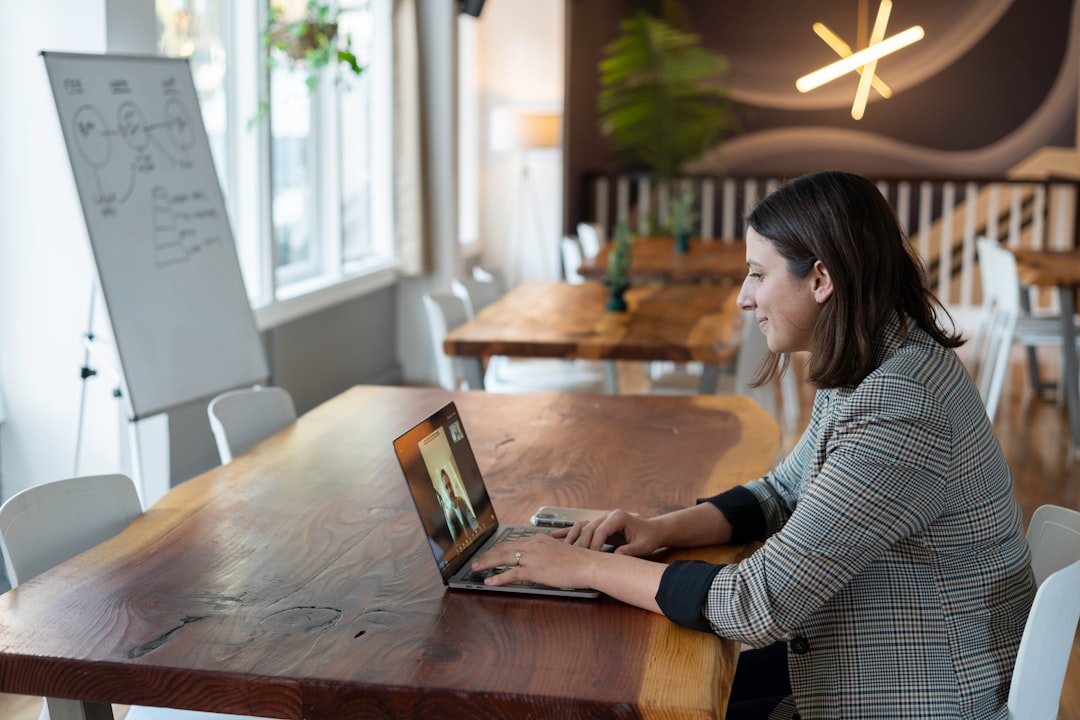
Acing AI interviews: Career expert on strategies for job seekers
AI-conducted interviews are becoming a standard step in the hiring process, but many job seekers still aren’t sure how to handle them. University of Delaware career expert Jill Gugino Panté says candidates should treat these algorithm-driven interviews with the same seriousness as traditional ones and details how this can be done. Panté, director of UD’s Lerner College Career Services Center, can discuss what today’s AI interview platforms really measure – from confidence and tone to eye contact and facial expressions – and how job seekers can stand out. She can also explain what recruiters are looking for in the AI-generated summaries that often determine who moves to the next round. Panté’s expert tips include: • Check equipment to make sure everything is working and the software is updated; turn off all notifications to avoid distractions and set up the space with good lighting, a neutral background. • Smile and maintain your energy, as some AI software will assess your tone and engagement. • Prepare as you would for any other interview - review the job description, research the organization, use the STAR method (Situation, Task, Action, Result) when providing examples. • Be sure to look at the camera and not the screen. It might feel awkward but that’s technically where the "eye contact" will be. • Some platforms will allow you to review your recording before submitting. Use this opportunity to take notes about your body language, pacing and clarity. To contact Panté directly and arrange an interview, visit her profile and click on the connect button. Interested journalists can also send an email to MediaRelations@udel.edu.