
Experts Matter. Find Yours.
Connect for media, speaking, professional opportunities & more.

Georgia Southern now one of nation’s Top Ten Military Friendly® Schools
Georgia Southern University has earned a 2022-2023 Top Ten Military Friendly® distinction by Viqtory. Georgia Southern ranked at number nine on the Top Ten list. Being named a Military Friendly School is nothing new for Georgia Southern University, having earned a gold-level distinction for the past 10 years. “We are extremely proud to be recognized as being among the 10 most military friendly universities in the country, especially after learning that more than 1,800 schools participated in the survey,” said Georgia Southern University President Kyle Marrero. “With our connections to Fort Stewart, and the fact that about 10% of our student body is military-connected, we have a responsibility to ensure our people and our processes are attuned to the needs of those who are serving selflessly, who are retired or who are related to a veteran or active-duty service member. My thanks to all our faculty and staff who have worked hard to earn this recognition.” Institutions earning the Military Friendly® School designation were evaluated using both public data sources and responses from a proprietary survey. More than 1,800 schools participated in the 2022-2023 survey with 665 earning special awards for going above the standard. Georgia Southern University has a strong and proud history of supporting veterans, current-serving military personnel and their families, and has accumulated many awards for its dedication to the military community. Information and resources are available on the Military and Veteran Services webpage. “We are honored to receive such a significant recognition as a Top Ten Military Friendly® institution,” said retired Col. George Fredrick, Ed.D., director of Military and Veteran Services. “Georgia Southern University maintains strong ties to the military forces in our region, specifically Fort Stewart, Hunter Army Airfield, the Marines, the Georgia National Guard, the Air Force, and the Coast Guard. We proudly serve our veterans and their families while on their academic journeys. We are indebted to our faculty, staff, students and communities for their continued support of our military-connected student population.” Methodology, criteria and weightings were determined by Viqtory with input from the Military Friendly® Advisory Council of independent leaders in the higher education and military recruitment community. Final ratings were determined by combining the institution’s survey scores with the assessment of the institution’s ability to meet thresholds for student retention, graduation, job placement, loan repayment, persistence (degree advancement or transfer) and loan default rates for all students and, specifically, for student veterans. “Military Friendly® is committed to transparency and providing consistent data-driven standards in the designation process,” said Kayla Lopez, national director of Military Partnerships, Military Friendly®. “Our standards provide a benchmark that promotes positive outcomes and support services that better the educational landscape and provide opportunity for the Military Community. This creates a competitive atmosphere that encourages colleges to evolve and invest in their programs consistently. Schools who achieve awards designation show true commitment in their efforts, going over and above that standard.” The 2022-2023 Military Friendly® Schools list will be published in the May and October issue of G.I. Jobs magazine and can be found at www.militaryfriendly.com. Retired Col. George Fredrick is available to answer your questions - simply reach out to Georgia Southern Director of Communications Jennifer Wise at jwise@georgiasouthern.edu to arrange an interview today.


As the war rages in Ukraine, what's next? Augusta University expert answers key questions
For a month now, the world has watched the invasion of Ukraine by Russian forces. The war has dominated news coverage since before the invasion, with journalists asking why Russia would invade a sovereign country and whether this could expand to an all-out war in Europe for the first time since World War II? There are still many questions to be asked, which is why we’ve enlisted Dr. Craig Albert, from Augusta University. Albert has been speaking extensively with the media answering key questions about the invasion. Q: How has Russia ramped up their war efforts and are the latest attacks a signal that they are going "all in" in taking over Ukraine? “Right now, Russia is still not fighting the war they are prepared for. In other words, they have a massive war-machine but are still only using small parts of it in this war. There are several reasons for this: they may not want to expose their hands to great powers; they may want to bring Ukraine back to the fold, so annihilating them, vis-à-vis, Grozny, might not be the best play. As it is, Russia is still poised to take Kyiv within a few months unless Ukraine has alliance boots on the ground, which is not likely since it will raise the specter of WWIII." Q: What do you expect we will see next? "I think we will most likely see the rise in dirty war tactics and techniques, with more mercenaries, more artillery bombardment, and more foreign fighters joining on both sides, especially former NATO special operations forces moving into the Ukraine International Legion, and well-paid Syrians on the side of Russia. With this increase in contract soldiers, we can expect more human rights atrocities and atrocities committed against soldiers as well as a relaxation of Geneva rules for armed conflict amongst combatants." Q. Do you expect to see Russia direct more cyber warfare the U.S. way? "I expect a steady, prolonged consistent cyber-conflict campaign waged by Russia against Ukraine and its allies, including the US. I don’t expect an escalation on this front at least at it applies to NATO forces. Russia is saving its most savvy cyberweapons for a possible larger-scaled conflict against a major power." If you’re a journalist looking to know more about what lies ahead as the war between Ukraine and Russia continues and how it may impact the United States, then let us help with your questions and coverage. Dr. Craig Albert is director of the Master of Arts in Intelligence and Security Studies at Augusta University. He is a leading expert on war, terrorism, and American politics. This is an important national and international issue. Albert is available to speak with media – simply click on his name to arrange an interview today.


Aston University partners with HSBC UK to support black and ethnic minority student entrepreneurs
HSBC UK launched new student incubator programme in March 2022 Aston University is one of five universities in the country collaborating with HSBC on the pilot programme The programme will support BAME students to bring their business ideas to life. Aston University is partnering with HSBC UK on a new pilot student incubator programme to support black and ethnic minority students to start new businesses. It is one of five universities in the country working in collaboration with HSBC UK to pilot a competitive enterprise programme that will target aspiring entrepreneurs from under-represented and low-income backgrounds to bring their business ideas to reality. The programme will support students of black and minority ethnic backgrounds from Aston University, University of Bedfordshire, De Montfort University, University of East London and Kingston University to bring their commercial aspirations to life. The programme is now live, with successful candidates from each university embarking in March on a 12-week bespoke course run by Start Up Discovery School. The programme will culminate with a finals day to be held in HSBC UK’s Birmingham head office in June. The successful candidates will receive one to one HSBC UK mentoring from commercial banking relationship directors, alongside guidance from the Start Up Discovery School, access to HSBC UK customer webinars and some modest financial support to enable them to bring their commercial ambitions to fruition. It is hoped that the pilot will provide a model for other banks and financial institutions to emulate in collaboration with universities as a way to nurture talent, encourage innovation, and offer support to aspiring entrepreneurs from underrepresented and low-income backgrounds across the UK. Kemi Badenoch MP, Minister of State for Equalities, said: "We’re pleased to see HSBC act on the Commission’s recommendation by launching their Student Incubator Programme to collaborate with a number of universities across the UK. “The programme is designed to support aspiring entrepreneurs from disadvantaged backgrounds to bring their commercial ideas to life and help entrants to attain the business skills they need to aid their long-term success. “We want programmes like this to encourage more people from ethnic minority backgrounds to flourish and to build the next generation of entrepreneurs.” Peter McIntyre, head of small business banking, HSBC UK said: “We are delighted to support new aspiring entrepreneurs and look forward to seeing their creative ideas at the pitch day at our HSBC UK head office in Birmingham. “We are committed to ensuring that access to finance is fair and open to all entrepreneurs and are delighted to be able to further enable these students to start their businesses and to nurture their entrepreneurial talent.” Paula Whitehouse, associate dean for enterprise in the College of Business and Social Sciences at Aston University, said: “Aston Business School is delighted to join HSBC in the development of this major initiative to support the entrepreneurial aspirations of black and ethnic minority students. “The HSBC Student Incubator Programme will provide all-important national networking and expert support to help our leading student entrepreneurs with their new ventures. “We were delighted to be invited by HSBC to help shape this exciting initiative which will support Aston University’s mission to promote inclusive growth in our region and give our innovative students a unique opportunity.” Gosbert Chagula, co-founder of Start Up Discovery School, said: “The early support that entrepreneurs receive, particularly in the early stages, really does have a disproportionate impact on their long-term success prospects. “This impact is even more pronounced when concerning ethnic minority students who typically may not benefit from deep social and professional networks or early funding from family and friends. “This programme is designed to both nurture and grow participants whilst ensuring they are connected to wide ecosystem of support from both across HSBC and beyond.”


Podcast: Women in business - why it’s a strength, not a weakness
Self-confidence is the key when it comes to overcoming barriers in the male-dominated boardroom Unlock the value of mentoring and the ‘coaching culture’ to get the best out of yourself and your business Successful female business leader launched company while doing an MBA at Aston University and caring for her baby. Budding female entrepreneurs should ignore the “voice on the shoulder” undermining their confidence and fulfil their dream of starting their own business. That is the advice given by a professor at Aston University and a successful female business leader in a podcast created to mark International Women’s Day on 8 March. Helen Higson, professor of higher education learning and management at Aston Business School, spoke about the challenges facing women in the latest episode of the ‘Aston means business' podcast series, presented by journalist Steve Dyson. Daniella Genas, who launched her consultancy company She’s The Boss International while studying for her MBA at Aston Business School, was also interviewed on the podcast. Professor Higson, who was awarded an OBE in 2011 for services to higher education, said she had three main tips for women seeking to start their own businesses. She said: “Be yourself, be authentic, don’t try to mimic anyone else, and don’t let that voice on the shoulder chipping away at your confidence win out. “Where this lack of confidence comes from, I do not know, but self-doubt can really get in the way, so have a conversation with your lack of self-confidence by saying ‘shut up you, I will show you’.” The second piece of advice was to “challenge yourself kindly, be very kind to yourself, and don’t beat yourself up”, while the third was to grasp the “power of mentoring and coaching”, with Professor Higson herself having trained as an executive coach during lockdown. She added: “Coaching culture is fashionable now but it’s actually only trying to help people to take responsibility for maximising their own performance.” Daniella Genas, who also completed the Goldman Sachs 10,000 Small Businesses programme at Aston Business School, has similar advice for women looking to emulate her success. She explained that the first issue was for women to “see your difference as a strength, not as a weakness”. She said: “If more women embraced their femininity, their knowledge and competence, and stop allowing the fact that they are women to make them second guess themselves, we’d be able to get so much further.” Ms Genas said women entrepreneurs should also focus on key systems when building businesses so they are not heavily reliant on the owner. She said: “If you do need to step away to have a child, you are [then] not put in a position where you have to sell your business”. That is particularly relevant to Ms Genas as she was forced to sell her first business, Aspire For You, which she set up in 2006, after becoming pregnant with her first child. However, that decision led her to study rather than go on maternity leave, starting with the Goldman Sachs 10,000 Small Businesses programme and then the MBA at Aston Business School, while caring for her baby. Goldman Sachs 10,000 Small Businesses programme, she recalled, “really changed my mindset”. She said: “I found there were businesses double, triple, quadruple the size that I had that were facing the exact same challenges and problems.” Daniella, who obtained a distinction with her MBA, said completing the programmes gave her the confidence to say ‘I am as good as anybody else and probably better in many areas’. She added: “The idea that I may be seen as less than because I am a woman kind of left my brain.” Her company, which helps female-run businesses grow but in a sustainable way, recently became She’s The Boss International after taking on clients in the US and St Maarten. It is a far cry, she says, from being told by teachers at her comprehensive school that she should set her sights a bit lower, even asking her ‘have you considered being a cleaner?’. Professor Higson said Daniella’s story demonstrated the value of education and energy. “You shouldn’t see anything as a barrier,” she said. “I am quite small, 5ft 2in, and one woman leader said to me: ‘You’re going to find it very difficult to be a female leader because you are so small.’ I replied ‘I may be small but I make up for it with my energy.’ It’s about your impact rather than what you look like.” Episode 7 in series 4 of ‘Aston Means Business’ podcast can be found HERE.

Podcast: Russia expert discusses fears of Putin's 'madness' over Ukraine
Speculation that isolation caused by Covid-19 pandemic could have affected his state of mind Closest advisers said to fear for their lives if they speak out against him Potential scenarios considered include a ‘heart attack-style’ assassination of dictator by senior military and secret services. Two years spent isolating during the coronavirus pandemic have led to a debate that Russian President Vladimir Putin has gone ‘bonkers’, resulting in the invasion of Ukraine. There is now even speculation that only a “heart attack-style” assassination of the dictator by his senior military and secret services could prevent Putin from seeking to expand his borders even further. These themes were discussed by Dr Elisabeth Schimpfössl, a senior lecturer in sociology and policy at Aston University, and author of the award-winning book Rich Russians: From Oligarchs to Bourgeoisie. Dr Schimpfössl, speaking about the ongoing Russian invasion of Ukraine as part of the 'Society matters' podcast series, presented by journalist Steve Dyson, explained there were two reasons why Putin had decided to invade its neighbour. She considered two potential reasons behind the invasion: “The first is he has always had ambitions to incorporate eastern Ukraine and, particularly, keep NATO at bay and not have it anywhere so close to Russia’s own borders. The second thought is whether Putin might have simply lost it, in a clinical sense.” Dr Schimpfössl said Putin had been “extremely isolated” during the pandemic, with very few people allowed to see him in his “bunker”. She added: “It might well be, as bizarre as it sounds and unimaginable as it might be, that he is losing it and courting advice from people who have such fear of him that they would say what he wanted to hear.” While such madness is currently pure speculation, Dr Schimpfössl explained how people close to him would potentially “fear for their lives” if they contradicted him or alerted him to what a “crazy idea” war was. She said Russian Foreign Minister Sergey Lavrov, whose daughter lives in New York, had wanted to retire “years ago” but Putin would not let him. And she mentioned claims that the former head of Russia’s foreign secret service died from an apparent heart attack after he “pretty much messed up” the poisoning of double agent Sergei Skripal in Salisbury in 2018. She said: “It’s pretty obvious that similar fears were deep in the bones of all the closest entourage of Putin. They all know pretty well how the system works.” Dr Schimpfössl described reports on how opposition activists and investigative journalists “suddenly, suspiciously, jump off their balcony to their death. And they threaten people that if they don’t jump then their family will suffer”. She suggested that Russia’s billionaire oligarchs could have taken measures if they had seen what was coming. However, the European Union had now added oligarchs onto the sanctions list for the first time after being deeming them “Putin’s cronies” instead of business leaders. Dr Schimpfössl said: “Until Friday, Putin’s plan was to succeed within maybe a week and sanctions would have become effective in weeks, or months from now. Now things have changed and the EU sanctions have gone a big step further on.” She said it will be a “catastrophe” for Russia’s oligarchs now they are subject to sanctions. The only thing that could “save their skin”, she added, is if they create an image of being “anti-war, anti-Putin”. But would this help stop Putin? “Not if he’s completely gone bonkers, then nothing will stop him,” Dr Schimpfössl again speculated. “It makes him extremely dangerous in terms of his announcement of using nuclear weapons. It would be the maddest possible thing to do, but there is no guarantee anymore.” The only thing that could stop him, she hypothesised, was if Putin suffered the similar fate of a “sudden heart attack” following a “silent coup” by Russia’s top military and secret services, although it is pure conjecture that any such actions are being planned. Opinion polls in Russia suggest that only 40 per cent of the population support the action against Ukraine, compared to 80 per cent over the annexation of Crimea in 2014. Dr Schimpfössl said she hoped negotiations between Russia and Ukraine would lead to an agreement, but added: “We know from history when an aggressor sees itself being on the losing end, or things not go according to plan, they often lash out at the very last moment. Any escalation of the conflict could easily and very quickly get very cruel and barbaric.” Episode 1 in series 3 of the ‘Society matters’ podcast and all previous episodes can be found HERE.


EY Government and Public Sector Cyber Security team and the Cyber Security Innovation (CSI) Centre at Aston University won £180,000 in funding from the Department for Digital, Culture, Media and Sport Experts will work with the UK Government to find appropriate opportunities for investment in cyber security The research will map blind spots within the UK’s regional security innovation systems. Cyber security experts at Aston University will work with the Government to support its national cyber security strategy by mapping blind spots in the UK’s regional cyber security systems. The Cyber Security Innovation (CSI) Centre at Aston University will work with EY Cyber Security Consulting on the £180,000 project for the Department for Digital, Culture, Media and Sport (DCMS) to research and map the UK cyber security ecosystem. The project will consider the current environment, conditions and interventions that exist to influence or affect companies providing cyber security products, services or solutions to support and contribute to the development and growth of cyber security businesses in the UK. The aims of this research are to provide the DCMS with robust evidence of a region-by-region picture of where public, private, academic and industry support mechanisms are in place and to identify service and geographical gaps in their provision. It comes after the CSI Centre helped launch the UK government’s National Cyber Strategy 2022 in Birmingham at a special event last December, for which Aston University professor of cybersecurity management, Vladlena Benson, was an instrumental member of the organising committee. The current project will enable the strategy implementation to support the UK Government’s ambition to grow innovation and academic research in cyber. Dr Anitha Chinnaswamy, lecturer in cyber security management at the CSI Centre at Aston Business School, says: “From the datasets collected that includes different cyber security businesses, incubators, accelerators, clusters, academic centres of excellence and other different mechanisms from across the UK, analysis will be conducted to provide a region-by-region basis of practices involved. “The mapping of the cyber security landscape will also enable the enhancement of skills and diversity across the cyber security sector. “The diversity in cyber security market lags other digital sectors, with the cyber workforce consisting of only 15% females, 16% ethnic minority backgrounds and 9% neurodivergent. The results of this project will be an important contribution for the government to foster the growth of a sustainable, innovative, and internationally competitive cyber and information security sector.”


Aston University appoints new Vice-Chancellor
Aston University is delighted to announce that Professor Aleks Subic has been appointed as its next Vice-Chancellor and Chief Executive. He succeeds Professor Alec Cameron, who stepped down after five years in December 2021. He will take up the post in August 2022, until which time Saskia Loer Hansen will continue in her role as Interim Vice-Chancellor. Dame Yve Buckland, Pro-Chancellor of Aston University, said “I am absolutely delighted at Professor Aleks Subic’s appointment. He joins the University at an exciting time and his wide experience of leadership across both academia and industry makes him a perfect fit for Aston University’s needs and ambitions.” Professor Subic said “I feel privileged at being given the opportunity to lead Aston University at this time. The University is renowned for its commitment to graduate employability, translational research and its engagement with business. “I look forward to continuing the momentum built up by Professor Alec Cameron and Saskia Loer Hansen, and I am ambitious to see Aston University continue to build on its reputation for high quality teaching, research and business engagement locally, nationally and internationally.” Saskia Loer Hansen, Interim Vice-Chancellor of Aston University, said “I should like to congratulate Professor Subic warmly on his appointment. His credentials as a leader, both in industry and in higher education, equip him for guiding Aston University to even greater success. “I am sure he will work rigorously to build on our achievements, promote the University worldwide and further strengthen our reputation as a leading university for business and enterprise.” Professor Subic is currently the Deputy Vice-Chancellor (STEM) and Vice President (Digital Innovation) at RMIT University, where he is responsible for leading the STEM College and Digital Innovation portfolio in Australia and globally. Prior to this appointment he was the Deputy Vice-Chancellor (Research & Enterprise) at Swinburne University of Technology, responsible for research, graduate studies, engagement and partnerships, advancement, innovation, enterprise, and commercialisation, leading the research transformation of the university towards top 2% in the world. Before that, he was the Executive Dean of Engineering at RMIT University, one of the largest engineering faculties in Australia, ranked in top 1% in the world and renowned for industry-partnered education and research. Concurrent with his academic appointments, Professor Subic has held notable appointments on the Australian Prime Minister's Industry 4.0 Taskforce and the Australian Advanced Manufacturing Council Leaders Group (Australian Industry Group). Previously he was the Director and Deputy Chair of the Australian Association of Aviation and Aerospace Industries, Director of Oceania Cybersecurity Centre Governing Board, Director of the Society of Automotive Engineers Australasia Board, Director of National Imaging Facility Governing Board, Director of Australian Housing and Urban Research Institute Governing Board, and Director of the Victorian Centre for New Energy Technologies Governing Board. He has served on a number of national and international research committees and expert panels, including as Chair of the European Research Council Expert Panel for Physical Sciences and Engineering, Technology Group of the Global Federation of Competitiveness Councils, Forbes Technology Council, Defence Materials Technology Centre, Editor and Associate Editor of international scholarly journals.
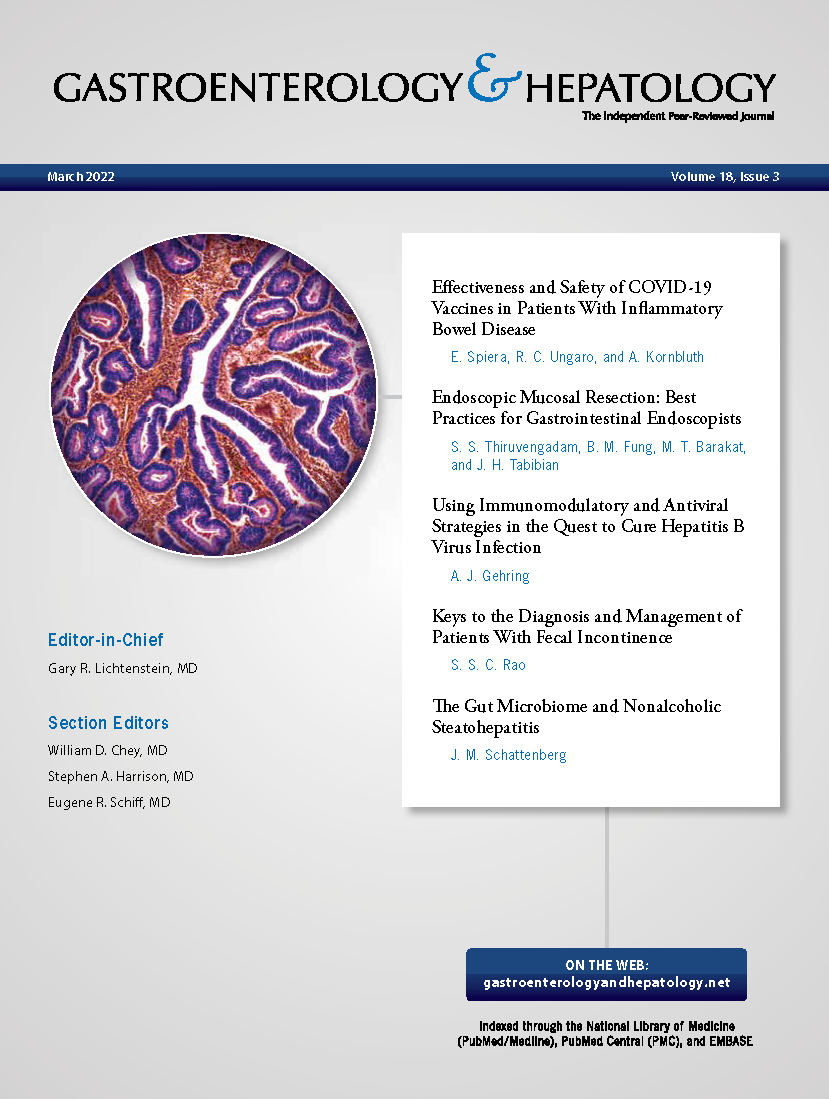
Bowel or fecal incontinence, according to the Mayo Clinic, “is the inability to control bowel movements, causing stool (feces) to leak unexpectedly from the rectum. Also called bowel incontinence, fecal incontinence ranges from an occasional leakage of stool while passing gas to a complete loss of bowel control. Common causes of fecal incontinence include diarrhea, constipation, and muscle or nerve damage. The muscle or nerve damage may be associated with aging or with giving birth.” Dr. Satish Rao is a seasoned gastroenterologist and an expert in digestive health, particularly the brain-gut connection. Rao, a professor of medicine at the Medical College of Georgia at Augusta University, recently offered a Q&A on the topic of fecal incontinence with the journal Gastroenterology & Hepatology. What is the prevalence of fecal incontinence in the adult population? Surveys have indicated a prevalence of approximately 9% to 10% in the United States. A recent study reported a 14% prevalence, although this study was Internet-based and, thus, may not have included many elderly patients, as they may not be as computer-savvy as younger patients. It is safe to say that one in seven Americans currently suffers from fecal incontinence. Prevalence appears to be equal in men and women, although women outnumber men almost three to one when it comes to gastroenterology clinic visits and health care-seeking. Men may be too embarrassed to bring the issue of fecal incontinence to the attention of a physician, but when asked about it, they will admit and discuss it. Also, extracting information from a patient about fecal incontinence depends on how the question is asked. Asking patients whether they have daily leakage vs whether they ever have had leakage or have had leakage in the past month will elicit different responses that a clinician may interpret differently. It is important to remember that leakage is not a physiologic event that a healthy adult should have at any time, even once a month or once a year. Not having the capacity to control bowel evacuation or having leakage unaware of its occurrence signals an abnormality. What are notable risk factors for fecal incontinence? In women, pregnancy can be a risk factor, particularly if giving birth involves pelvic tissue damage, such as injury inflicted by forceps use or the unfortunate occurrence of a significant tear. Neurologic or back injuries are other common risk factors. Also, chronic diarrhea can progress to fecal incontinence owing to severe irritation of the rectum or irritants in stool. Further, any condition that changes the ability of rectal capacity can result in fecal incontinence. These circumstances can include surgery or radiation to the rectal area. Hear from a patient and learn more about Rao's research using magnetic stimulation to treat fecal incontinence. What treatment modalities are currently available? Simple, conservative treatment consists of educating patients about fecal incontinence and instructing them to avoid precipitating events. For example, although many people love to have a meal followed by a cup of coffee and a walk, such a sequence of activities is ill-advised for an incontinent patient: the meal provokes a gastric-colonic response, coffee is a powerful colonic stimulant, and exercise also stimulates motility. This triad creates the perfect storm for a stool leakage or accident while the patient is out on the after-dinner walk. Antidiarrheal therapies can be very effective but only in approximately 15% to 20% of patients. Another treatment is biofeedback, which can correct muscle weakness using behavioral techniques. Biofeedback provides resolution in approximately 50% to 70% of patients. The traditional model of office-based biofeedback requires that the patient make 6 or even up to 10 visits to a specialty clinic. This may mean that some patients must drive very long distances to an appropriate care facility that is staffed with trained personnel or physical therapists. This scenario presents a significant challenge for many patients, which is increasingly being recognized by health care professionals and researchers. Good devices for home-based biofeedback have been scarce; however, such a device was recently approved by the US Food and Drug Administration. The research center at Augusta University has tested it in a clinical trial setting and found it to be quite effective as a home biofeedback treatment. Dextranomer is another treatment modality. It involves injection of small beads of dextran polymers into the anorectal region. The beads form a protective cuff or a buffer to stop stool leakage. Another treatment modality is sacral nerve stimulation using the Medtronic InterStim system. The patient is outfitted with a pacemaker-like device with wires that continuously stimulate the sacral nerves that control stool events. In the case of a torn muscle, suturing the torn ends to reduce the size of the anorectal opening is usually useful for women postpartum, although the effect may not be sustained in the long term. What emerging treatments and research should clinicians be aware of? One emerging treatment developed at Augusta University’s Clinical Research Center is called translumbosacral neuromodulation therapy (TNT). TNT is similar to TAMS and involves the fecal delivery of magnetic energy through an insulated coil to the lumbosacral nerves that regulate anorectal function. The pulses generated are of the same strength as those of magnetic resonance imaging. The team at Augusta University’s research center has shown that TNT mechanistically improves nerve function and substantively improves stool leakage. A sham-controlled study and long-term study are currently underway at Augusta University and Harvard University’s Massachusetts General Hospital. These studies are being sponsored by the National Institute of Diabetes and Digestive and Kidney Diseases. A multicenter study sponsored by the National Institutes of Health that the team at Augusta University also is involved with is the FIT (Fecal Incontinence Treatment) trial. This randomized study compares biofeedback with dextranomer injection. Also, as mentioned, tools are becoming available for home biofeedback that should allow many more affected patients to receive treatment because they can do so in the comfort of their own home. The research center at Augusta University is working on a novel home biofeedback protocol for the treatment of constipation and fecal incontinence. Thus, novel noninvasive tools are emerging for fecal incontinence. The repertoire of current and emerging tools holds the promise of improved outcomes for patients with fecal incontinence. Rao is also the founder of the Augusta University Digestive Health Center. He is available to speak to media regarding any aspect of digestive health -- simply click on his icon now to arrange an interview today.


Villa Vision provides over 2,000 inner-city children with the tools to improve educational prospects
Villa Vision, an innovative collaboration between Aston University, the Aston Villa Foundation and optical lens supplier Essilor Vision For Life is celebrating the end of its second year having engaged with around 4,500 individuals to raise awareness around the importance of eye health and equip inner-city children with the tools to learn in order to enhance their educational experience and help with their longer-term prospects. Launched in 2020 and delivered by the Aston Villa Foundation, the initiative was the first of its kind in the UK and sought to deliver a programme of eye-health awareness lessons in the classroom, free vision and colour vision screening, followed by a more comprehensive eye test and free glasses to those children who require them, using a fully operational custom-designed mobile eye care unit. With the successful completion of Villa Vision’s second Autumn Term in December, a challenging yet successful year means that the project has now benefited schoolchildren in many local inner-city schools, including: Over 2,200 children receiving the Villa Vision workshop across 30 schools Almost 1,800 children having a vision and colour vision screening check in local primary schools Approximately 280 children (around 16%) being flagged for further investigation Around 100 fully comprehensive eye tests being conducted at schools using the Villa Vision eyecare van Nearly 120 pairs of glasses being provided to children requiring them, helping to support both their educational and social development. Nikhil Sonpal, Villa Vision Project Manager and optometrist at Aston Villa Foundation, said: “The Villa Vision team is extremely proud to have directly reached several thousand local children in supporting their visual health and eye care knowledge through the Foundation’s established network of local primary schools and community organisations.” Leon Davies, professor of optometry and physiological optics in the School of Optometry at Aston University and Vice President of the College of Optometrists said: “We are delighted to see the results that our clinical and research expertise in evidence-based eye care is providing our local community. “The provision of free eye care and raising awareness of the importance of eye health is vital in increasing the long-term prospects of schoolchildren and I am looking forward to future developments of the project in 2022.” Funded by the Premier League, the Professional Footballers’ Association (PFA) and Aston University and delivered by the Aston Villa Foundation, the project is designed to fill a crucial lack of knowledge surrounding the importance of having an eye test and how preventative measures can ensure, among a host of benefits, a lifetime of good vision.


Understanding Ukraine and Russia's long history - let UMW's expert help
As the war in Ukraine now extends past a week, many people are trying to understand the reasoning behind Russia’s invasion of its neighbor. Like most of Eastern Europe, the ink that draws the modern borders we see now on maps is still not dry. If you are a journalist looking to know more about this topic and how the past is now affecting the future of Russia, Ukraine and likely Europe – then let our experts help with your stories. Steven Harris is a professor in the University of Mary Washington's Department of History and American Studies. He is a sought-after expert on modern Russian and European history. Dr. Harris is available to speak with media about this important aspect of the crisis in Ukraine – simply click on his icon now to arrange an interview today.

