
Experts Matter. Find Yours.
Connect for media, speaking, professional opportunities & more.

Experts in the Media – Learn how UMW is doing its part to preserve Indigenous history
The members of Virginia’s Rappahannock and Patawomeck tribes can trace their roots back to the times before the first European contact. For hundreds of years, their people fished the rivers and inhabited the area near the Potomac and Rappahannock rivers. It was a rich history and today the efforts to preserve the stories and records of those times are being bolstered by UMW students and faculty. The work was recently featured in a piece by NBC-4 in Washington, D.C. Professor Lauren McMillan and her students are helping with that mission. King George County economic development officials approached her with an idea to create a Native American heritage trail, hopeful that it would drive ecotourism and draw visitors to public access points. “The first step that we did was say we need to consult with the tribes whose stories we’d be telling," McMillan said. Then the class did a deep dive. "We then started diving into the archives, the historical records, oral histories and the archaeological record as well,” McMillan said. They’ve created signs that will go up in seven different locations in King George. Each one tells a different story about the local tribes, spotlighting the past and present. “When you learn Virginia history, you learn about a lot of stuff that happened in Jamestown and that’s kind of the last place you learn about Indians in Virginia history, but we've been here all along,” Brad Hatch, a member of the Patawomeck Tribe, said. “We’ve been preserving our own culture and heritage and it's here for everybody to see." The students worked hard to put that heritage and culture on full display. They also envision their project inspiring others to do some research of their own about Virginia’s first residents. December 07 - NBC News Indigenous history is a fascinating topic – and one being covered more and more by media. And if you’re a reporter looking to know about the work UMW is doing with of the Rappahannock and Patawomeck tribes or other topics – then let us help. Lauren McMillan is the University of Mary Washington's resident historical archaeologist and an expert on middle-Atlantic American history. Dr. McMillan is available to speak with media – simply click on her icon now to arrange an interview today.

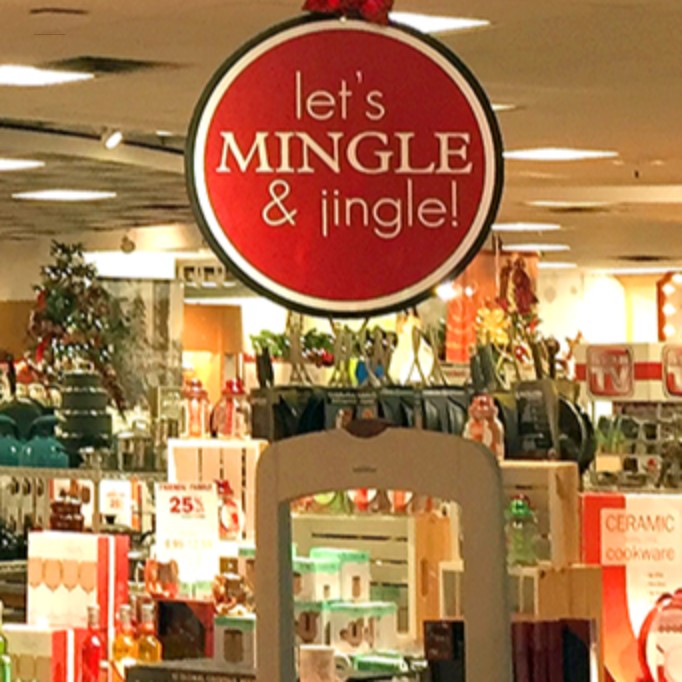
Have you finished your Christmas shopping yet? If not – waiting for last minute deals or just pushing off the pain of navigating a jam-packed shopping mall might result in some failed efforts, unhappy kids and even the potential for coal in your own stocking for letting some loved ones down. Recently, John Talbott, the director of the Center for Education and Research in Retailing at the Indiana University Kelley School of Business was interviewed on the IBJ podcast to explain how supply chain woes may be creating chaos this Christmas. Experts expect shoppers to drop a record amount of money this holiday season. The National Retail Federation forecasts sales for November and December to grow between 8.5% and 10.5% over the same months in 2020. In total dollars, that would be between $843.4 billion and $859 billion. At the same time, the supply-chain issues that have plagued commerce since the start of the pandemic are expected to complicate gift buying and limit stock for some products. The answer is to get your shopping done as soon as possible, because you might not get a second chance, says John Talbott, the director of the Center for Education and Research in Retailing at the Indiana University Kelley School of Business. In the latest edition of the IBJ Podcast, Talbott explores other big questions with host Mason King. Does Indy’s status as a leading U.S. logistics hub give Hoosiers a leg up on gift availability? What role might inflation play in this year’s shopping season? Why are gift cards even more valuable than usual this year? How can we avoid cybercrime? And are there any blockbuster, must-have gifts for this season? November 28 – IBJ Podcast And if you’re a journalist looking to know more or covert this subject – then let us help. John Talbott is the Director for the Center for Education and Research in Retail at Indiana University’s Kelley School of Business. He’s an expert in the areas of retailing, relating marketing activities to financial outcomes, and new media communication. John is available to speak with media regarding this important topic – simply click on his icon now to arrange an interview today.


Brexit caused a large negative effect on UK trade pre-pandemic - new Aston University research
Professor Jun Du and Dr Oleksandr Shepotylo analysed the causal effect of Brexit on the UK’s services trade between 2016 and 2019 They found the UK experienced an average shortfall of £18.5 billion worth of services exports for each of those years Transport, Travel, Insurance and Telecom sectors experienced significant decline post-2016 No significant decline was found in other services including intellectual property, construction and financial. New research from economics experts at Aston University has found Brexit has caused a largely negative effect on UK services trade since the EU referendum. Professor Jun Du and Dr Oleksandr Shepotylo, from Aston Business School, analysed the causal effect of the Brexit referendum on UK’s services trade over the period between 2016 and 2019, in comparison to other major services exporters. They found the uncertainty associated with the UK-EU trade negotiations following the referendum caused harms to the UK services economy as a whole, reducing firms’ exports of services. This damages the competitiveness of services sectors which make up a lion’s share of the UK economy in terms of gross output, value-added and jobs. Professor Du and Dr Shepotylo used a Synthetic Difference in Differences (SDID) estimator to construct a counterfactual of the UK, had it not voted leave in 2016, to compare its services exports performance. This was done by comparing the actual performance of the UK with the modelled performance of a country that looks much like the UK, but did not vote to leave the European Union. They found Brexit resulted in the UK experiencing an average shortfall of £18.5 billion worth of services exports every year between 2016 and 2019 relative to what it would have been, had the UK remained in the EU. The impact varied considerably between different types of services. The UK’s exports in the category of transport, travel, insurance and telecom services saw a statistically significant decline following the referendum. No significant decline was found in business, intellectual property, construction, financial or personal, cultural and recreational services. In addition, Professor Du and Dr Shepotylo did not find evidence to suggest that UK businesses have redirected exports in services from the EU markets to those outside the EU, which is in contrast to exports in goods. The research suggested that Ireland has benefited significantly during this period, with growth in post-Brexit services exports up by £24 billion annually over 2016 to 2019 in the country compared to the counterfactual scenario if Brexit did not occur. This translates to 14.75% of Ireland’s 2019 total services exports, with growth clustered largely in the telecoms, business, intellectual property, and insurance sectors. Jun Du, professor of economics at Aston Business School, said: “Brexit marked a rupture in the highly integrated UK-EU services markets that had been developed during the UK’s membership of the single market. However, the UK’s strength in services was not reflected in the government’s ambitions for the sector in the EU-UK trade negotiations that followed the referendum. “There are other winners besides Ireland in some post-Brexit services areas. The Netherlands have increased considerably in ‘Business’ and ‘Intellectual Property’ exports. “Spain has seen growth in ‘Travel and transport’ services exports. Germany has gained in ‘Transport’, ‘Insurance’, ‘Telecom’ and ‘Intellectual Property’ services exports. While Ireland seems to have done exceptionally well in relation to the export of ‘Telecom’ services, a sharp contrast emerges to the lost exports not just from the UK, but also from the Netherlands, Switzerland and France.” Dr Oleksandr Shepotylo, a senior lecturer in economics, finance and entrepreneurship at Aston University, co-wrote the working paper and said: “UK services exports are 5.7% lower than they would be without Brexit. It reflects an overall decline of the UK as a place for doing business. “What economists tend to agree on is that the UK’s exit from the EU’s custom union and single market may have more significant impacts on services than goods, and more severe impact on post-Brexit regulated services than unregulated services. “It will take some time for the full impact of Brexit on UK services to emerge. Freedom of movement and data flow in some areas between the UK and EU could remain restricted. Stability, transparency and regulatory consistency in financial markets could be challenged. But new opportunities might surface. “Continued trade negotiations and dialogues regarding trade liberalisation are essential with the EU and large, fast-growing markets beyond Europe. Crucial to understanding these impacts will be reliable data and rigorous analysis. Our modelling of marked losers and winners in post-Brexit services trade provides new evidence for an open discussion of the post-Brexit trade in services.” You can read the full working paper HERE


Nathaniel Grow, a nationally recognized expert in the field of sports law and an associate professor of business law and ethics at the Indiana University Kelley School of Business, has published numerous articles on the application of federal antitrust and labor law to the professional sports industry, with a particular focus on Major League Baseball. He has been closely following developments and would glad to serve as an expert for reactions and analysis of developments. The author of 17 law review articles, as well as an award-winning book, Grow has received a number of prestigious research honors for his academic work. Grow is frequently quoted by media outlets such as The Washington Post, The Wall Street Journal and ESPN regarding current legal issues in the sports industry. He can be reached at grown@iu.edu and 812-855-8191.

Aston University pharmacy graduate honoured for charity fundraising work
An Aston University pharmacy graduate has been recognised for his charitable fundraising in the Chemist and Druggist Awards 2021. Shoaib Hussain managed to raise thousands of pounds within just four weeks when he shared a video detailing his 2017 trip to help at Rohingya refugee camps in Bangladesh. He received the Above and Beyond Award at a ceremony held at the InterContinental London – The O2 on 19 November. Shoaib’s powerful video resonated so strongly with the public that he smashed his £25,000 fundraising target in just 24 hours. His campaign eventually raised £135,000 – all of which was donated to the charity Global Helping Hands, which is run by UK medical professionals. The money has paid for thousands of survival packs and the building of a medical centre, over 100 homes, 30 wells, and seven educational sites in Mosques. Shoaib said: “The video shared a personal account and was extremely difficult for me to voice. It detailed something I have not even spoken to my wife about fully, and something I still cannot talk about without tearing up when I remember what I witnessed.” Shoaib dedicated his award to “the refugees who I helped, and the donors who made it possible”.

Citizen Science project set to explore the microbiome of kitchen chopping boards
Researchers in the College of Health and Life Sciences at Aston University have been awarded funds to explore the microbiome of the kitchen chopping board with the help of ‘citizen scientists’. The grant is from UK Research and Innovation (UKRI) and the Food Standards Agency (FSA) as part of a larger project to investigate food standard challenges. The new citizen science project plans to recruit participants from underrepresented communities in the West Midlands to investigate levels of foodborne bacteria in the home and produce educational materials for their communities. Citizen science projects put the public at the heart of the research process. Rather than being the subjects of the research, citizens are actively involved in collecting and analysing data, and even deciding what questions they want to ask and co-developing the approaches with researchers citizen science also gives participants the opportunity to directly contribute to scientific research and influence policy. The research team in the School of Biosciences will recruit citizen scientists through its students, who will act as ambassadors in their own households and communities. The team will create methods for sampling bacteria from chopping boards and gather their observations with their team of citizen scientists and ambassadors. This will enable the researchers to identify the bacteria present and determine their antimicrobial resistance (AMR) profiles, providing opportunities for ambassadors and citizens to perform lab research. The researchers, alongside their ambassadors and citizens, will then co-design and disseminate educational materials on food hygiene tailored to their target communities and based on the findings of the study. Dr Alan Goddard, senior lecturer in the School of Biosciences and project lead, said: "Many foodborne infections begin in the home, often through poor hygiene where chopping boards provide an opportunity for raw foods to cross-contaminate. “This is why this project is an exciting opportunity to work with our students and communities to investigate a microbiological problem that causes significant disease every year. By working with the public, we get privileged access to authentic environments and can ensure our solutions are appropriate." At present, around 40 per cent of outbreaks of foodborne infections in Europe occur at home, with approximately 2.4 million cases of food poisoning occurring in the UK annually, leading to 180 deaths. A common source of such infections is poor food hygiene, with chopping boards, where raw foods may cross-contaminate, playing a key role in the infection chain. Misunderstandings, or poor food hygiene, may therefore contribute a significant disease burden. Professor Anthony Hilton, executive dean of the College of Health and Life Sciences said: “This exciting project brings together the expertise of University researchers with the natural inquisitiveness of members of the public to co-develop and undertake a research project which has the potential for real impact in reducing the burden of foodborne disease in the home.” The FSA and UKRI have awarded a total of £200,000 to fund six projects in order to bring the public and researchers together to investigate food standards challenges. All six projects include exploring the bacteria on home grown produce, parents testing the safety of baby formula, and people with food hypersensitivities analysing the allergens in food bought online. The citizen science projects are all linked to the FSA’s Areas of Research Interest themes, covering issues such as antimicrobial resistance (AMR), food hypersensitivity and food safety and hygiene in the home. The funding was delivered in collaboration with the Biotechnology and Biological Sciences Research Council (BBSRC) and the Economic and Social research Council (ESRC), both part of UKRI. It is part of a wider effort to coordinate activities and develop a joined-up approach to tackle the challenges of maintaining safe food in the UK. Professor Robin May, Chief Scientific Advisor for the FSA said: "I’m delighted that the FSA is supporting these exciting citizen science projects across the country. In addition to delivering invaluable data, these projects will allow the communities we serve to help build the evidence on which policy decisions are made. We are committed to using science and evidence to tackle the latest food-related issues and citizen science is a fantastic way of doing this." The citizen science project investigating the microbiome of the kitchen chopping at Aston University will start in January 2022, concluding in July 2022.

Head of School of Optometry named world expert in contact lenses
Professor James Wolffsohn, head of the School of Optometry at Aston University has been named by Expertscape as a world expert in contact lenses research based on his publications. Expertscape's PubMed-based algorithms placed professor Wolffsohn in the top 0.1 per cent of scholars writing about contact lenses over the past 10 years. He is also ranked by the same organisation as a world expert in presbyopia (the loss of eye focus with age affecting near vision), and is one of the top three scholars in the world. Expertscape is designed to help find the most knowledgeable physicians and health professionals in the world. Expertscape objectively ranks people and institutions by their expertise in more than 27,000 biomedical topics. James’ research focuses of the development, enhancement and validation of ophthalmic instrumentation to optimise contact lens comfort and fitting. He is also pioneering the use of contact lenses as a treatment for dry eyes; and developing methods to restore more natural eye focus through intraocular lenses, that are implanted into the eye as part of cataract surgery; as well as pharmaceutical approaches. Professor James Wolffsohn said: “I am delighted that our research in the field of contact lenses and presbyopia has had the desired impact and is widely read and cited. “Working together with colleagues in industry, we are able to accelerate product innovation, development and validation, leading to enhanced quality of life in patients.” James has published over 280 peer reviewed academic papers and given numerous international presentations. His main research areas are the development and evaluation of ophthalmic instrumentation, contact lenses, intraocular lenses and the tear film. A contact lens is a corrective, cosmetic, or therapeutic lens usually placed on the cornea of the eye. Contact lenses usually serve the same corrective purpose as conventional glasses, but are lightweight and virtually invisible. It has been estimated that about 125 million people use contact lenses worldwide. Presbyopia is the loss of eye focus with age which is usually noticed by ~45 years of age when reading glasses or another form of refractive correction is needed. It has a marked emotional effect being one of the first apparent signs of ageing.

UConn expert weighs in on controversial statue debate at the Connecticut Capitol
What should be the fate of the large statue commemorating John Mason that adorns the Connecticut State Capitol Building? He’s a historic figure and founder of the Connecticut Colony. He also left a legacy of violence and murder, with more than 400 Indigenous people, including 175 women and children, killed under his command. And whether to let his statue stand or remove it has engaged a debate from leading experts, historians, relatives of Mason, and the Indigenous community across the state. UConn’s Manisha Sinha was asked to lend her expertise to the situation: Manisha Sinha, a University of Connecticut professor of 19th century U.S. history, said she is a veteran of debates about the fate of statues memorializing Confederate leaders as well as founding fathers who owned slaves. “I have advocated for the taking down of statues that commemorate Confederate leaders and generals, who I see as traitors to the American republic, fighting for the worst cause in American history, as General Grant put it, in the cause of human bondage,” Sinha said. “On the other hand, I have opposed the taking down of statues of some of our founding fathers, revolutionary figures who did not defend slavery as a positive good.” Sinha said history can be complex, and great men of history can be flawed. “The Mason massacre is not a complex story,” she said. “It was a sheer massacre of non-combatants and of women, children and elders. We cannot excuse this by pointing to internecine warfare among Native Americans.” Mason’s statue is not necessary to teach history, she said. “I think it is high time that you think of removing John Mason’s statue,” Sinha said. “It cannot be contextualized. We do not remember history by statues, especially not in the monumental 19th century forms. We actually end up commemorating people, making them heroic.” November 18 – The CT Mirror This is a sensitive and very important topic as America reconciles with its past and moves forward as a country. And, if you are a journalist covering this topic, then let our experts help with your in-depth coverage and questions. Manisha Sinha is the Draper Chair in American History at the University of Connecticut and the author of "The Slave's Cause: A History of Abolition." She is an expert in the era of America during the 19th Century and available to speak with media regarding this topic – simply click on her icon now to arrange an interview today.


Flavoured vapes less harmful to young people than smoking, could help teen smokers quit
Flavoured vapes are much less harmful to young people than smoking, and could help teen smokers quit tobacco – according to new research from the University of East Anglia. A new study published today looks at young peoples’ use of vape flavours, reporting the views and experiences of more than 500,000 under 18s. It finds that flavours are an important aspect of vaping that young people enjoy, suggesting that flavoured products may help them switch away from harmful tobacco smoking. But the researchers warn that more needs to be done to make sure that youngsters who have never smoked are not attracted to vaping. Lead researcher, Prof Caitlin Notley, from UEA’s Norwich Medical School, said: “There has been a lot of concern that young people may start vaping because they are attracted to e-liquid flavours, and that it could potentially lead them to start smoking tobacco. “We wanted to find out more about the links between vape flavours, the uptake of vaping among young people, and whether it leads to regular vaping and, potentially, tobacco smoking.” The research team studied all available evidence (58 studies) on young peoples’ use of e-liquid flavours. Prof Notley said: “We found that flavoured e-liquids are an important aspect of vaping that young people enjoy. This suggests that flavoured products may encourage young people to switch away from harmful tobacco smoking towards less harmful vaping. “Flavours may be an important motivator for e-cigarette uptake – but we found no evidence that using flavoured e-liquids attracted young people to go on to take up tobacco smoking. “And we also found no adverse effects or harm caused by using liquid vape flavours. “However, there is also a need to monitor flavour use to ensure that young people who have never smoked are not attracted to taking up vaping. “Ensuring the continued availability of a range of e-liquid flavours is likely to be important in encouraging young people who smoke to switch to vaping as a less harmful alternative,” she added. The team found that the overall quality of the evidence on use of e-cigarette flavours by young people was low. In particular, many studies did not clearly define e-liquid flavours and could not therefore be included within the review. The study was led by UEA in collaboration with researchers at University College London, the University of Bristol and University Hospitals Bristol and Weston NHS Foundation Trust. ‘Youth Use of E-Liquid Flavours – A systematic review exploring patterns of use of e liquid flavours and associations with continued vaping, tobacco smoking uptake, or cessation’ is published in the journal Addiction on November 17, 2021.


With mask wearing and social distancing on the decline and the cold and flu season upon us, researchers have developed a viral panel that enables the simultaneous testing for SARS-CoV-2 along with numerous common respiratory viruses, that tells us whether other viruses also are at play in patients hard hit by COVID. This new genetic epidemiology tool that provides detailed genetic information about the viruses present when packaged with a molecular immunology model called Nextstrain also enables researchers to assess the novel viral variants that are circulating in a state or nation and patterns for their spread with the goal of helping predict and mitigate future outbreaks, says Dr. Ravindra Kolhe, director of the Georgia Esoteric and Molecular Laboratory, or GEM Lab, at the Medical College of Georgia at Augusta University. Deficits in SARS-CoV-2 monitoring and keeping tabs on other co-circulating respiratory viruses have been public health challenges during the pandemic, Kolhe and his colleagues report in the journal Viruses. Coinfection is a reality, Kolhe says with these respiratory viruses that we unwittingly transmit through the air when we cough, sneeze, even talk, particularly when we are in close quarters for long periods like hospitals, nursing homes, schools and potentially even our workplace. Another reality is that coinfections can have the compounding effect of worsening symptoms and outcomes, much as we have all heard that co-morbid conditions like diabetes and hypertension can do, he says. Particularly when patients are not doing well, looking for other respiratory viruses with the new panel could help provide insight on why and possibly new directions on how to help, he says. The more expansive panel is more expensive than straight COVID testing, which will remain the frontline test in this pandemic, Kolhe predicts. While the cold and flu season were essentially a wash last year because of COVID precautions like mask wearing — in fact the coinfection rate in the group they studied was under 1% — he and others are concerned the cold and flu season now upon us will be very different even with vaccination initiatives for both COVID and the flu. We’ve attached the full article – and it is well worth reading given the timing of flu season and another potential wave of COVID emerging globally. This is a fascinating topic and if you are a journalist covering the latest advancements in the effort to contain and eradicate COVID-19 – then let our leading experts help with your coverage and questions. Ravindra Kolhe is a Molecular and Genetic Pathologist, involved in identifying and validating cutting-edge platforms for diagnostic medicine. He’s also the Director of the Georgia Esoteric & Molecular Laboratory at Augusta University. If you are looking to arrange an interview with Dr. Kolhe – simply click on his icon now to find a time to talk today.

