
Experts Matter. Find Yours.
Connect for media, speaking, professional opportunities & more.

Kelley expert available to discuss Bernard Madoff's legacy, long-term effect of his scheme
Bernard “Bernie” Madoff, convicted architect of an infamous and epic securities Ponzi scheme with thousands of investors, died behind bars on April 14 at the age of 82. Noah Stoffman, an associate professor of finance and Weimer Faculty Fellow at the Indiana Kelley School of Business, has researched the effect of such fraud beyond the direct investments that were lost by victims. His 2018 paper, “Trust Busting: The Effect of Fraud on Investor Behavior,” co-authored with professors at Cornell University and the University of Texas-Dallas, showed that the collapse of the Madoff Ponzi scheme had an effect not only on his many direct victims, but also on the general level of trust in financial services. “People who live in the same areas as victims of the fraud withdrew assets from investment advisers and increased their deposits in banks. Financial advisers in these areas were also more likely to close. Our analysis shows that advisers who provided services that can build trust—such as financial planning advice—saw lower levels of withdrawals. Our evidence suggests that this decline in trust shock was transmitted through social networks,” Stoffman said. Stoffman’s research focuses on the investment decisions of professional money managers and individual investors, and on the effect of technological innovation on asset prices. Much of his work highlights the importance of social interaction in the spread of information in financial markets. Stoffman teaches courses on analysis of financial data to undergraduates, MBAs, and doctoral students at the Kelley School. He can be reached at 812-955-1758 (m) or nstoffma@indiana.edu.

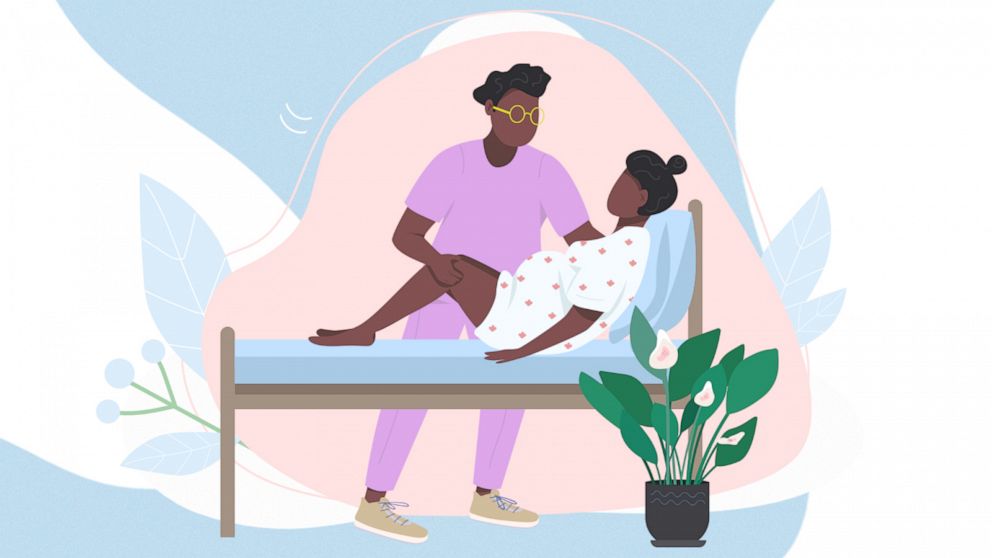
Earlier this week, President Joe Biden proclaimed that April 11 thru 17 would be Black Maternal Health Week in America. In Georgia, the state has consistently been ranked as one of the most dangerous places in this country to be a new mother. Approximately 26 Georgia women die from pregnancy complications for every 100,000 live births, compared to the national average of about 17 women. But even more devastating is the fact that about 60% of the state’s maternal deaths between 2012 and 2016 were found to be preventable, according to the Georgia Department of Public Health. And the mortality rates are much more tragic for Black women in Georgia. African American women are almost three times more likely to die from a pregnancy-related cause than white women in Georgia. Black mothers in rural areas of Georgia are at an even higher risk. “Maternal and infant mortality are really significant indicators of the quality of health in any area, so my colleagues around Georgia really felt challenged to do something that we hadn’t done in a long time in our state, which was to get the data,” says Dr. Chad Ray. “Because you can’t really fix something unless you know who and why. And then you assemble the stakeholders to formulate a plan to make a dent and to move the needle on something that is just so important.” This is an important topic that impacts mothers in Georgia and across the entire United States. And if you are a journalist looking to cover this topic – then let us help. Dr. Chad Ray is the Interim Section Chief of the Department of Obstetrics and Gynecology at the Augusta University Medical Center. He is an expert in the areas of maternal mortality & global women's health initiatives. Dr. Ray is available to speak with media about Black Maternal Health Week - simply click on his icon now to arrange an interview today.



The days of wiping down groceries may be coming to an end, but will Americans' reliance on hand sanitizer follow suit? This week, the Centers for Disease Control and Prevention (CDC) released a report confirming that the risk of catching the coronavirus from surfaces is low. Kevin Minbiole, PhD, chair of the Department of Chemistry at Villanova University, weighs in on hand sanitizer use—and whether too much sanitizing is a bad thing. "I think that a lot of the concern on the overuse of hand sanitizer a decade ago or so was the overuse of triclosan, a strong antimicrobial agent that would persist in wastewater," said Dr. Minbiole, referring to a theory that arose following the H1N1 pandemic in 2009. At that time, scientists expressed worry that bacteria were becoming resistant to hand sanitizer. "It seemed like overkill to go beyond soap and water or simply ethanol (alcohol)—or to add triclosan into hand soap," Dr. Minbiole continued. While Dr. Minbiole does not dismiss this theory, he notes, "I believe there was merit to the concerns of overapplying antibiotics and antiseptics when they were not needed." Looking to the future, Dr. Minbiole does not see hand sanitizer playing as big a role. "I don't foresee a backlash so much here, as folks recognize that this particular virus is more of an airborne concern," he says.

Public health education soars in wake of pandemic
Maybe a silver lining can be found from the COVID-19 pandemic, as interest in public health education is soaring at U.S. colleges and universities, says a nationally prominent public health professor. Public health education has become a logical choice for students when looking at changing public health practice trends and their implications for public health education, explained Gulzar Shah, Ph.D., who authored an invited editorial in the March issue of the American Journal of Public Health (AJPH). Shah is department chair and professor of health policy and community health in Georgia Southern University’s Jiann-Ping Hsu College of Public Health. His editorial is titled “Public Health Education and Changing Public Health Realities in the Public Health 3.0 Era.” “For many of the 19 million college students enrolling annually in public and private colleges in the United States, public health is becoming a logical choice,” he said. “Because of COVID-19, interest in public health careers is soaring, evident from the 20% increase nationwide in Master of Public Health applicants.” The editorial also drew insights from the Association of Schools and Programs of Public Health’s national-level data from schools and programs of public health about the first employment destinations of public health graduates. “The emphasis on aligning public health practice and policy with the Public Health 3.0 framework, in which leaders partner across various sectors to address social, environmental and economic factors that affect population health and health inequity, has attracted the spotlight on generalist, behavioral education and health policy degrees,” Shah noted. “The Public Health 3.0 framework has also underscored the desirability of adopting the Health in All Policies approach and encouraging public health leaders to act as chief health strategists in influencing policies in other sectors affecting population health. Increasing focus on Health in All Policies and higher salary positions in health care may further explain the popularity of health policy and management and health law programs.” If you are a journalist looking to know more about Dr. Shah’s work, and the importance public health education in America of the programs Georgia Southern is offering – then let us help. Dr. Gulzar H. Shah is a Professor and Department Chair, Health Policy and Community Health at the Jiann-Ping Hsu College of Public Health (JPHCOPH), Georgia Southern University. He is available to speak with media regarding this important topic - simply click on his icon now to arrange an interview today.



The Zoom Boom? More and more Americans are getting plastic surgery – let our expert explain why
After almost a year where most American offices went unused, experts are noticing an unexpected side effect from all those online meetings. It appears that prolonged exposure to seeing yourself in that tiny box during video calls is inspiring a sudden uptick in plastic surgery. The plastic surgery industry is booming during the coronavirus pandemic, largely due to the increase in the number of virtual meetings offered through Zoom and other video web services. Call it the “Zoom boom.” The interest in cosmetic surgery is boosting appointments for Botox, lip fillers and other plastic surgery procedures that help people feel more attractive on computer screens, according to Dr. Maria Helena Lima, an assistant professor of Surgery for the Section of Plastic and Reconstructive Surgery in the Medical College of Georgia at Augusta University. “In the last few months, there has been a jump in the number of patients wanting plastic surgery procedures,” said Lima. “We have discovered that when people are in Zoom meetings, they should be listening to the content and paying attention to what’s going on, but they’re not.” Lima says participants are oftentimes looking at themselves on the screen and wondering what could be done to alter their image. It is a trend that offers up some interesting questions: • Along with the Zoom boom, are there other reasons people are opting to go under the knife for an elective procedure? • Are there long-term consequences to these decisions? • What do patients need to know first to avoid any safety or health issues? There’s a lot to know about this topic, and if you are a journalist looking to learn more, then let us help with your coverage. Dr. Maria Helena Lima is one of the nation’s leading plastic surgeons with 12 years of experience specializing in aesthetic plastic surgery, facial reconstruction and craniofacial pediatric plastic surgery. She is available to speak with media about this emerging trend. Simply click on her name now to arrange an interview today.
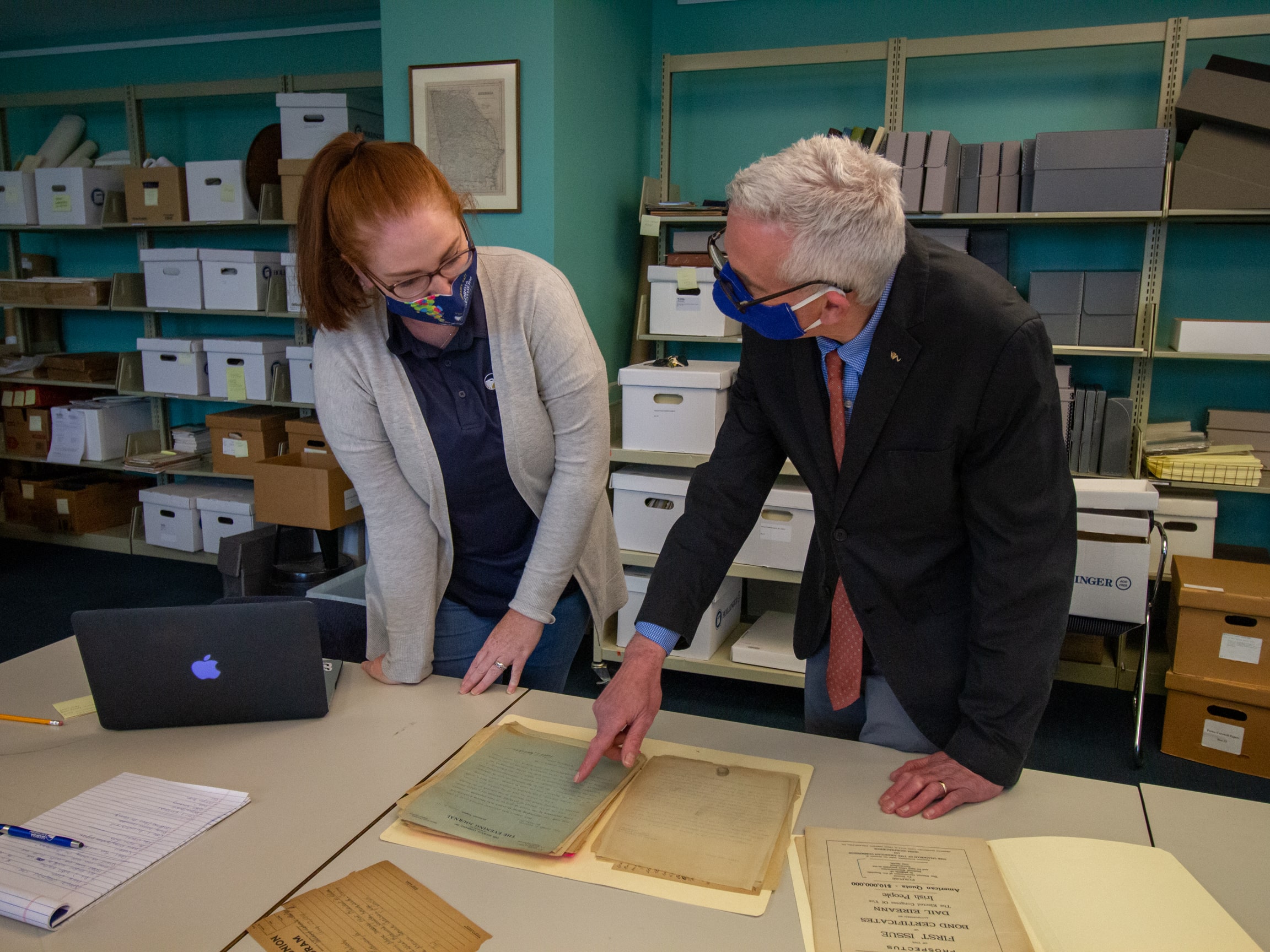
This year marks 100 years since the signing of the Anglo-Irish Treaty, which eventually would establish Ireland as a republic, and Georgia Southern University undergraduate student Caitlyn Hudson is getting a first-hand look at some historical documents that chronicle U.S. efforts to help establish Ireland’s freedom from British rule. Hudson is researching a collection of documents called the Lawless papers, which follow Virginia-native and Irish descendant Joseph Thomas Lawless’ involvement in the southern leg of an extensive U.S. tour by Éamon de Valera, a prominent political leader in Ireland’s history. “My favorite part of working on the project has to be the physical work with the documents,” Hudson said. “It is fascinating to see primary documents in hand rather than online. It provides a unique form of analysis.” The collection, which was gifted in Fall 2020 to the Center for Irish Research and Teaching (CIRT) at Georgia Southern, includes letters, advertisements and more that document an important narrative in modern Irish-American history, according to Howard Keeley, Ph.D., director of CIRT. “These documents shed significant new light on how Ireland perceived Savannah and our region at a critical time in Irish history: that nation’s War of Independence from 1919 to 1921,” Keeley said. “The collection helps us understand the network that Éamonn de Valera and other future leaders of an independent Ireland sought to build in the American South, using as one anchor the sizable and active Irish-American community in Savannah.” All of the Lawless papers were either written or received by Lawless, the son of immigrants from County Galway, Ireland. Lawless was involved in arranging southern stops on de Valera’s tour, which included a stop at the Chatham Artillery Armory in April 1920, in an effort to raise funds for the self-proclaimed Republic of Ireland. Lawless, who would go on to become a lawyer and prominent political figure in Virginia, was also very devoted to Ireland and involved in several prominent Irish-American organizations, including the Friends of Irish Freedom (FOIF), which advocated for political independence for Ireland. “De Valera’s fundraising tour of the U.S. is among the most important episodes in modern Irish-American history,” said Keeley. “The collection sheds significant light on how FOIF used the tour to advance a southern strategy. Clearly, Judge Lawless was key to those efforts.” Keeley also pointed out that in time, de Valera would become prime minister, and then president, of an independent Ireland, dominating the country’s politics for decades. The collection was gifted to CIRT by direct descendants of Lawless and is now housed in the special collections section of the Zach S. Henderson Library. “We are honored to be granted stewardship of these documents,” said Autumn Johnson, special collections librarian at Zach S. Henderson Library. “Having increased opportunities for Georgia Southern students to examine rare, one-of-a-kind collections, such as the Lawless papers, enriches the learning experience, particularly for our undergraduates.” Hudson said her work on the project has allowed her to fully understand the various aspects of potential careers she can pursue, as well as narrow down specific goals for her graduate school journey and beyond. “This type of work is generally done by graduate students, and it is amazing to know that I am able to gain experience in a field while an undergraduate,” said Hudson. “It has allowed me to learn career-relevant material earlier on and in turn has allowed me to better prepare for graduate school and my overall future goals.” Keeley added a collection like the Lawless papers allows students and faculty to conduct research on high-value primary source documents. The collection will also help further CIRT’s ongoing mission to increase research productivity, particularly with respect to the history of the Irish in Savannah and the state of Georgia. “The Irish experience in the south is open to much more study than has thus far been attempted,” Keeley said. “The generous gift of the Lawless papers to the Center for Irish Research and Teaching significantly enhances our drive to conduct meaningful research. For undergraduate students, such as Caitlyn, the opportunity to uncover knowledge by analyzing primary-source documents brings new levels of rigor and satisfaction to the college experience. And for our program, this collaboration with the Special Collections unit of University Libraries is a powerful way to honor our donors’ trust in us and, in addition, celebrate Irish heritage, especially around St. Patrick’s Day.” If you're a journalist looking to learn more about his project of the historical significance the Irish had on Georgia - then let us help. Dr. Howard Keeley is available for interviews — simply reach out to Georgia Southern Director of Communications Jennifer Wise at jwise@georgiasouthern.edu to set and time and date.
Find out how GSU is fighting fast fashion and promoting sustainability with students on campus
Sustainability Programs at Georgia Southern University recently teamed up with student organization Fashion Menagerie, a group of fashion merchandising and apparel design students, to fight fast fashion by hosting the first campus thrift store on the Statesboro Campus. Fast fashion is a textile trend where clothes are mass-produced to be quickly sold and thrown away. “Tons of textile waste gets dumped from people throwing away their clothes, even the ones that are lightly used, but more clothing is constantly being produced,” said Geneisa Ragin, president of Fashion Menagerie. “This thrift store can help our campus prevent that increase of waste and give students a sustainable way to donate and shop that can discourage fast fashion production.” Cami Sockow, Sustainability Programs coordinator, said in addition to being wasteful, fast fashion is often characterized by poor work conditions, such as underpayment, child labor, physical and verbal abuse, and working long hours. “The social costs of fast fashion are immensely under discussed,” Sockow said. “We largely leave out the social conversation when we discuss sustainability, but this is a great example of how many social costs ensue with our addiction to consumption. So while we pay a low economic cost, we need to start asking ourselves if it is worth the social and environmental ones.” Clothing donors received shopping credits at the thrift store for each item they donate. The thrift store also gave shopping credits for donations of nonperishable food items, hygiene products and cleaning supplies to the Eagle Essentials Food Pantry. On campus programs like this provide perspective and lived experiences from students and faculty – and if you are a journalist looking to know more about Georgia Southern’s Sustainability Programs – then let us help. Cami Sockow and Geneisa Ragin are available for interviews — simply reach out to Georgia Southern Director of Communications Jennifer Wise at jwise@georgiasouthern.edu to set and time and date.

Are big changes coming to financial accountability in Ontario as Laurentian loses its elite status?
As the higher education community anxiously awaits more news on just exactly how Laurentian University in Sudbury has essentially gone bankrupt, those who oversee universities and colleges in Ontario are also watching with interest. The chain of events that led to Laurentian having to file for creditor protection reveal a failure in governance. And it points to a wider set of reforms that are being contemplated within the public sector. A special investigator’s report on the Laurentian University insolvency is coming out soon, according to the Minister of Training, Colleges and Universities, Ross Romano. The province has warned it may introduce legislation granting it greater oversight of every university’s finances. Recently, Umar Saeed, a public sector accounting expert and a partner at Welch LLP, sat down with Newspoint360 to discuss in an in-depth interview how Ontario’s ability to control and govern the university sector is unlike other provinces, such as British Columbia. If new legislation is introduced that enhances the government’s ability to appoint Board members or control the financial and operating policies of Ontario universities, it will have broad implications for the entire university sector in Ontario: • New legislation may lead to consolidating all the universities (debts and deficits) into the Ontario government’s public accounts • Legislation would acknowledge an implicit promise by the Ontario government to backstop public sector debt (including the university sector) • Public universities may lose their perceived independence if they are “controlled” for accounting purposes The story of Laurentian University is fundamentally about poor governance. However, missing from this story is the backdrop and conditions that led to poor governance. There’s a lot at stake for Laurentian, it’s faculty and staff and the provincial university sector as a whole, and if you are a journalist looking to cover this topic, then let us help. Umar Saeed is a partner at Welch LLP in Ottawa and an expert in Public-Sector Accounting Standards. Umar is available to speak with media about this subject – simply click on his icon now to arrange an email today.


Solar geoengineering - it’s a topic that has caused an ethical lightening storm in the science community. The concept is complex. Should the world take on the crisis of climate change by attempting to artificially attempting to cool the earth? It’s an idea that has the National Academies of Sciences, Engineering and Medicine seeking a billion dollars in the next five years to investigate the theory. It’s a topic that is somewhat controversial, and journalists are looking to leading experts from across America for expert insight, opinion and perspective. Prakash Kashwan, a political scientist at the University of Connecticut, said he felt the report could have better emphasized the seriousness of some concerns over others. Uncertainties about the impacts of solar geoengineering on global weather patterns have the potential to affect some regions of the world more severely than others, he pointed out. Some experts have raised concerns about potential effects of geoengineering on monsoon rainfall in parts of Asia and Africa, he said. More than 2 billion people around the world rely on these rainfall patterns to support their water and agricultural needs. These kinds of issues should be given special weight, Kashwan suggested. "Some uncertainties are much more highly consequential for the global society, and especially for the poor and vulnerable," he told E&E News. Kashwan also reiterated concerns about potential political effects. While the report makes clear that geoengineering is not a substitute for climate mitigation, he suggests that this doesn't necessarily prevent policymakers from using it in that way. "The problem is the extent to which researchers are really helpless in deciding how research is used in the political system," he said. "That part has yet to be fully appreciated." Kashwan suggests that more dialogue might be warranted before funding a national research program, with greater input from both the international community and political experts who can weigh in on the ways that geoengineering research might affect political decisions. March 26, Scientific American It's a captivating idea – but it could have political, social and ethical consequences. Dr. Kashwan has also been interviewed by The New York Times. If you are a journalist looking to learn more about solar geoengineering, its possibilities and the reasons some scientists are worried – then let us help with your coverage. Prakash Kashwan is an Associate Professor of Political Science at UConn and an expert in the areas of environmental and climate justice, planetary justice, global commons, climate governance, and climate geoengineering governance. Dr. Kashwan is available to speak with media regarding this topic – simply click on his icon now to arrange an interview today.

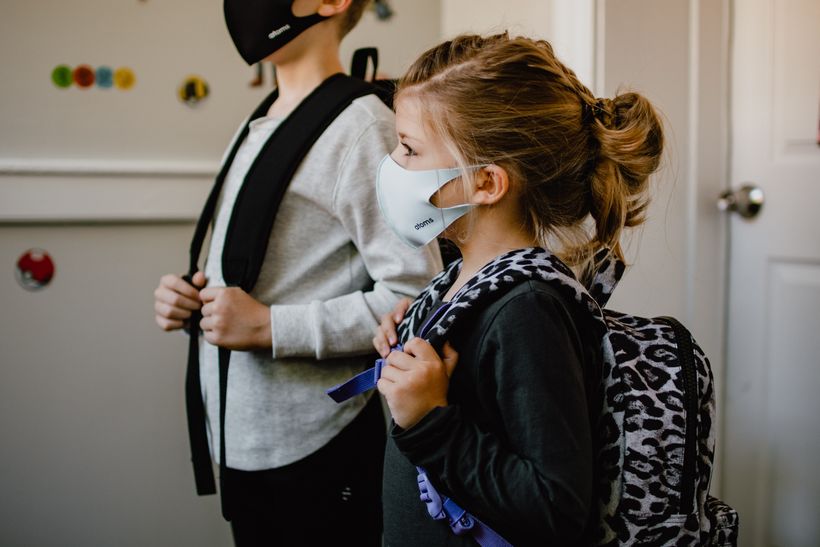
Kids in School: 3 Feet Apart or 6 Feet?
The Centers for Disease Control and Prevention (CDC) recently published updated guidelines for elementary schools, "now [recommending] that, with universal masking, students should maintain a distance of at least 3 feet in classroom settings" as opposed to the previous recommendation of 6 feet. While many have had strong reactions for and against this updated guidance, immunologist Joseph Comber, PhD, an associate teaching professor of biology at Villanova University, wants to add nuance to the conversation. On the one hand, Dr. Comber notes, when the CDC updates health and safety guidelines, the public can trust that as more information and data become available, the science behind the updates becomes more accurate. He stresses that studies "showed no difference in transmission between kids kept 3 feet apart or 6 feet apart in schools." Plus, Comber says, "we already know that kids younger than 10 and 11 are less likely to spread the virus than older kids and adults." However, Dr. Comber cautions that the subjects of the study followed "strict mask guidance and adherence to masking. We don't know what happens if schools enforce 3 feet of distance but are not strict with masking." He also points out that where the study was done can have an impact on the results. Comber emphasizes that "community spread is most important to the specific community and, as we've seen so far, different states and regions can spike with infections at different times." He wonders "if this is especially true in areas that have higher virus circulation than others." Dr. Comber notes that these guidelines are for elementary schools only, with one rather large caveat: "children are increasingly being infected." Another concern with these shifting regulations is whether they will impact public trust. Villanova professor Jie Xu, PhD, is an expert on science and health communications. Her concern about this change is minimal "because science is evolving." She emphasizes that "we need to be able to revise conclusions when new evidence comes in," and she sees the country's "highly politicized environment" as something to be taken more seriously, when it comes to public health. Dr. Xu cites "rising distrust in authorities and institutions (which has been going on for quite some time)" and notes that, when it comes to the nation’s children, in-person versus virtual schooling is a "highly charged issue." In the end, according to Dr. Comber, "it remains to be seen what happens when kids are packed 3 feet into classrooms on a broad scale."