
Experts Matter. Find Yours.
Connect for media, speaking, professional opportunities & more.

Comfort Women – UConn expert weighs in as a dark piece of history returns to light
A recent article in an academic journal claiming that Korean comfort women -- imprisoned, raped, and subjected to brutal atrocities during World War II -- were "prostitutes" who had willingly entered indentured contracts set off a firestorm of controversy and a chorus from historians and academics calling for the paper's retraction. It's a topic garnering international attention as survivors continue to seek resolution, compensation, and acknowledgement of the past. UConn's Alexis Dudden is a professor of history specializing in Japan and Korea who has heard stories from survivors first-hand and is among those scholars calling out the erroneous claims: A recent academic journal article by the professor — in which he described as “prostitutes” the Korean and other women forced to serve Japan’s troops — prompted an outcry in South Korea and among scholars in the United States. It also offered a chance, on the Zoom call last week, for the aging survivor of the Japanese Imperial Army’s brothels to tell her story to a group of Harvard students, including her case for why Japan should issue a full apology and face international prosecution. “The recent remarks by the professor at Harvard are something that you should all ignore,” Lee Yong-soo, a 92-year-old in South Korea and one of just a handful of so-called comfort women still living, told the students. But the remarks were a “blessing in disguise” because they created a huge controversy, added Ms. Lee, who was kidnapped by Japanese soldiers during World War II and raped repeatedly. “So this is kind of a wake up call.” The dispute over the academic paper has echoes of the early 1990s, a time when the world was first beginning to hear the voices of survivors of Japan’s wartime sexual slavery in Asia — traumas that the region’s conservative patriarchal cultures had long downplayed. Now, survivors’ testimony drives much of the academic narrative on the topic. Yet many scholars say that conservative forces are once again trying to marginalize the survivors. “This is so startling, 30 years later, to be dragged back, because in the meantime survivors from a wide range of countries found a voice,” Alexis Dudden, a historian of Japan and Korea at the University of Connecticut who has interviewed the women. In dual articles from The New Yorker and The New York Times, Dr. Dudden weighed in on the controversial journal article and offered her findings on the atrocities committed against the women: Alexis Dudden, the historian of Japan and Korea, was one of the scholars invited to publish a reply to Ramseyer in the journal. In her comment, she observes that a reason for studying past atrocities is to try to prevent similar occurrences in the future, “not to abuse history by weaponizing it for present purposes.” She told me of meeting Korean comfort women in Tokyo, in 2000, at the Women’s International War Crimes Tribunal on Japan’s Military Sexual Slavery. “One of them had her tongue cut out,” she said. “Another woman literally lifted up her hanbok to show me where one of her breasts had been lopped off.” Dudden said that the tribunal was “a big watershed in terms of understanding how oral testimony really was necessary, to shift the legal approach but also in terms of doing historical evidence gathering” in the study of crimes against humanity. In some sense, such testimony of atrocities is seemingly irrefutable. But historians such as Dudden continually seek to verify it, producing knowledge of unspeakable horrors, through cycles of historical denial, political conflict, and diplomatic irresolution. If you are a journalist covering this topic, Dr. Dudden is available to speak with media about how history is playing a role in the current controversy. Click on her icon to arrange an interview today.


March is Women’s History Month – Let the expert from Georgia Southern help if you are covering
March is Women’s History Month – a full month dedicated to the efforts, rights and advancement of women in America. Felicity Turner, Ph.D., associate professor of history at Georgia Southern University, specializing in women’s issues and is regularly featured in media speaking to the subject. "This year, the pandemic has clearly demonstrated that, despite the great strides that all women have made toward achieving equality, much remains to be done," said Turner. "In many households, ever more women have taken on the multiple roles of principal caretaker and schoolteacher, while holding down full-time jobs. "Looking to the past helps us understand why the burden of this labor has fallen disproportionately on the shoulders of women. Importantly, however, history also helps us appreciate how women today can continue to work toward equality in the future." If you are a journalist looking to cover this angle, or any other aspect of Women’s History Month – then let us help with your coverage. Felicity Turner is available for interviews — simply reach out to Georgia Southern Director of Communications Jennifer Wise at jwise@georgiasouthern.edu to set and time and date.

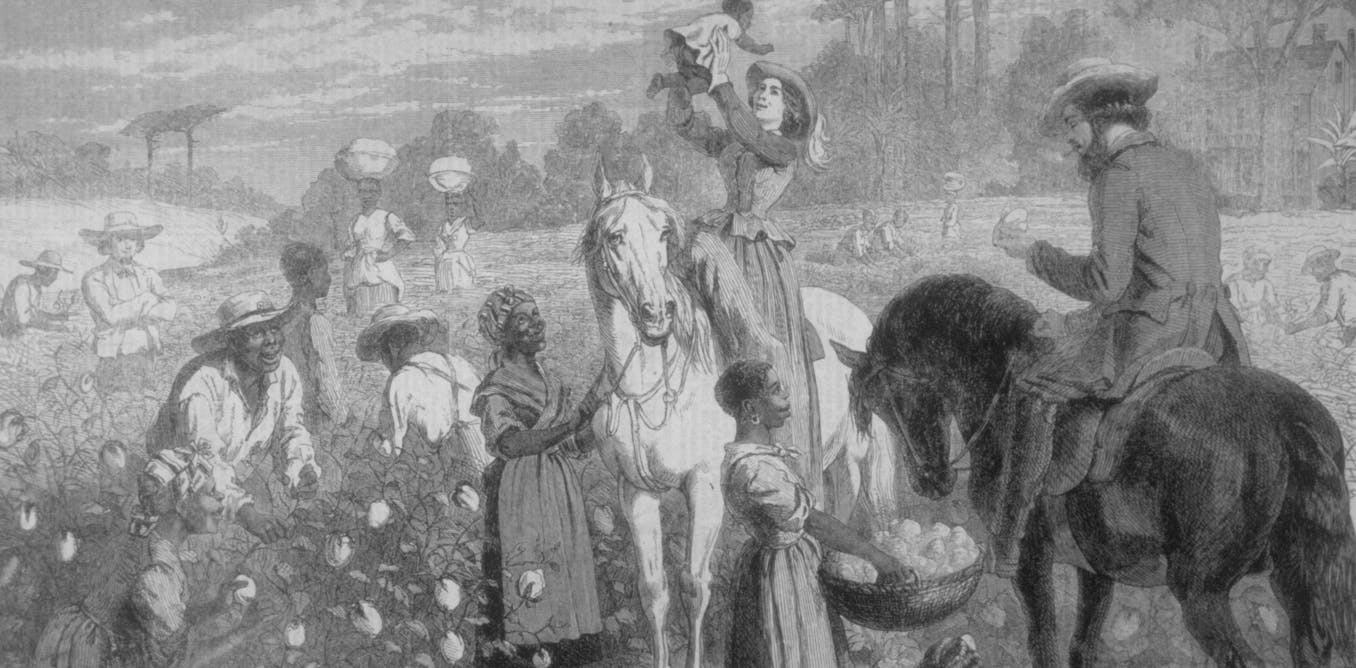
With the topic of reparations under discussion and debate, Thomas Craemer -- an expert from the University of Connecticut -- had this to offer in a new essay for The Conversation: The cost of slavery and its legacy of systemic racism to generations of Black Americans has been clear over the past year – seen in both the racial disparities of the pandemic and widespread protests over police brutality. Yet whenever calls for reparations are made – as they are again now – opponents counter that it would be unfair to saddle a debt on those not personally responsible. In the words of then-Senate Majority Leader Mitch McConnell, speaking on Juneteenth – the day Black Americans celebrate as marking emancipation – in 2019, “I don’t think reparations for something that happened 150 years ago for whom none of us currently living are responsible is a good idea.” As a professor of public policy who has studied reparations, I acknowledge that the figures involved are large – I conservatively estimate the losses from unpaid wages and lost inheritances to Black descendants of the enslaved at around US$20 trillion in 2021 dollars. But what often gets forgotten by those who oppose reparations is that payouts for slavery have been made before – numerous times, in fact. And few at the time complained that it was unfair to saddle generations of people with a debt for which they were not personally responsible. There is an important caveat in these cases of reparations though: The payments went to former slave owners and their descendants, not the enslaved or their legal heirs. Dr. Craemer discusses such aspects as the “Haitian Independence Debt,” British ‘reparations,’ and paying for freedom. Dr. Craemer is an expert on slavery reparations, racial bias, and the psychology of racism, and he is available to speak with media – simply click on his icon now to arrange an interview today.


This week’s shocking news of golf legend Tiger Woods rolling his vehicle and sustaining serious injuries to his right leg have sports fans, journalists and most of the world watching and waiting for word of whether he’ll play again. According to ESPN, the injuries are extensive: Tiger Woods is recovering from a lengthy surgery to repair what a doctor said Tuesday night were "significant orthopaedic injuries to his right lower extremity" suffered in a single-car rollover crash hours earlier on a steep roadway in a Los Angeles suburb. As part of a statement on Woods' official Twitter account, Dr. Anish Mahajan of Harbor-UCLA Medical Center updated the famed golfer's condition, saying in part that Woods had multiple "open fractures" to his lower right leg, and he had a rod placed in his tibia and screws and pins inserted in his foot and ankle during an emergency surgery. "Comminuted open fractures affecting both the upper and lower portions of the tibia and fibula bones were stabilized by inserting a rod into the tibia," said Mahajan, the chief medical officer and interim CEO at Harbor-UCLA. "Additional injuries to the bones of the foot and ankle were stabilized with a combination of screws and pins. Trauma to the muscle and soft-tissue of the leg required surgical release of the covering of the muscles to relieve pressure due to swelling." ESPN – February 23 If you’re a journalist looking to know more about this type of injury, what the recovery process usually involves and what the long-term prognosis may be – then let us help. Dr. Monte Hunter serves at Augusta University as the Satcher Distinguished Chair of the Department of Orthopedic Surgery and director of the Sports Medicine Program. Dr. Hunter is an expert in reconstruction and sports injury prevention – and he is available to speak with media about this topic. Simply click on his icon now to arrange an interview today.


The Power of Poetry in a Pandemic and Time of Social Injustice
Amanda Gorman captured hearts and imaginations across the nation when she performed her poem “The Hill We Climb” at the inauguration of President Joe Biden. While Jennifer Lopez’s stirring rendition of “This Land Is Our Land” and Garth Brooks’ “Amazing Grace” were performed to great acclaim, there was something special about the Inaugural Youth Poet Laureate’s recitation. Villanova University professor of Creative Writing and Luckow Family Chair in English, Lisa Sewell, PhD., talks about the cultural impact of poetry in times of turmoil, like the political and social uncertainty brought on by an attack on the US Capitol combined with a global pandemic. “Poetry is something people turn to in times of crisis -- and the pandemic and the ways it has made all of us face the grave inequities of our society has been an extended, seemingly endless crisis” said Dr. Sewell. “Amanda Gorman’s poem was powerful because she put a name to what so many people were feeling about the insurrection that occurred on January 6.” According to Dr. Sewell, poets like Alice Quinn, the former poetry editor of The New Yorker, have already edited a collection of “pandemic” poetry, demonstrating how artists take inspiration from and create art in reaction to what’s going on in their lives—to connect to others who may be experiencing the same complicated emotions. “In my poetry writing class, I talk to my students about how poets often try to say the impossible and write about experiences and ideas that are difficult to understand and difficult to put into words,” says Sewell. “What makes poetry powerful is the gesture, the effort to find the language that is adequate to the uncertainty and ambiguity of experience—and this seems true especially now.” The task of putting experiences into words that connect with a wide audience is not an easy one, especially with so much content competing for attention in 2021. So what it is about poetry in particular that makes it appropriate for this moment? Dr. Sewell suggests that the metaphorical language of poetry, as opposed to the certainty of prose or dialogue, hits home right now. She adds, “when the future is uncertain and the ‘before’ time seems hazier and hazier, poems are somehow both clear and direct with every word deliberately chosen, and also ambiguous and strange enough to speak to our sense of peril and uncertainty. Poems can both express our fears and also gesture towards the ways language is inadequate.” To speak with Dr. Lisa Sewell, email mediaexperts@villanova.edu


Covering Eating Disorders Week? Let our experts explain how COVID-19 can affect eating disorders
COVID-19 is presenting many different issues across all spectrums of society and life. The experts at Michigan State University took questions and provided answers in order to assist those looking to know more about how COVID-19 can affect eating disorders. Eating disorders can often stem from trauma or stress. Kelly L. Klump, professor in the Department of Psychology and fellow in the Academy for Eating Disorders, answers questions on eating disorders and how the pandemic may trigger or exacerbate this disorder. Q: Is there any evidence that the pandemic triggers eating disorder behaviors among teenagers? We have emerging data on risk for eating disorders during COVID-19. Although data are in the early stage, we are seeing increased weight-shape concerns, increased binge eating and, potentially, increased dietary restriction during COVID-19. These symptoms seem to be increasing in the general population, but results are more consistent in showing exacerbation of these symptoms in individuals with anorexia nervosa (increased restriction and potentially exercise) and bulimia nervosa (increased binge eating and purging). Reasons for these increases aren’t entirely clear, but theories focus on increased stress, increased isolation and, for individuals in recovery, decreased access to care during the pandemic. There are also fears of weight gain due to less activity overall that may fuel concerns about weight/shape and later, eating disorder symptoms. Limitations in access to food during the pandemic also seem to be related to these symptoms. Although, how they are related may vary across eating disorder symptoms. Q: What are some signs parents should be aware of that might indicate eating disorder behaviors or warning signs? These signs would be similar to those that we watch for during non-pandemic times. Decreased food intake, increased exercise and increased discussion of weight concerns are early signs. In addition, if food that was present (particularly high fat/high sugar foods) comes up missing frequently, this could be a sign of binge eating. Because eating disorders are highly comorbid with depression and anxiety, increased signs of these conditions (e.g., sad mood, withdrawal, increased anxiety about a range of concerns) could be early signs, particularly if in combination with the weight/shape/binge eating early signs mentioned above. Q: What should a parent who is concerned their child is exhibiting eating disorder behaviors do to address the issue? The first step is to talk with your teen and listen. Check in on how they are doing generally, but then also let them know about the signs you are seeing and your concerns. Empathic listening is key in these conversations and letting them know that you would like to do whatever is needed to help. They may not be willing to talk the first time they are approached. It might take multiple conversations for them to open up and/or admit that they need help. Q: What resources are available to parents looking to get help for their kids right now? There are some websites that can help parents identify eating disorder specialists in their area, including: • Academy for Eating Disorders. Find an Expert page • National Eating Disorders Association Q: Are families facing obstacles in getting preteens and teenagers help for eating disorder behaviors because of COVID-19 measures? A potential decrease in treatment resources appears to be present for eating disorders and other psychiatric illnesses. Treatment that is available may be in the form of telehealth, which some individuals may find very helpful, while others may feel is not enough. We are still collecting data on treatment availability during COVID-19, so we don’t have great data on availability. But early theories are that treatment access may be decreased. Q: What advice do you have for parents who feel like they are seeing their teenagers’ past eating disorders either reappear or become more severe in light of COVID-19? Seek help and do so early. Catching an increase or exacerbation of symptoms early in the process will increase the chances that you can catch the symptoms before they become more severe. Your teen may need “booster” sessions with treaters that can help them get back on track and help them cope with current stressors. If you are a journalist looking to know more or interview Dr. Klump, then let us help - simply click on her icon now to arrange an interview today.

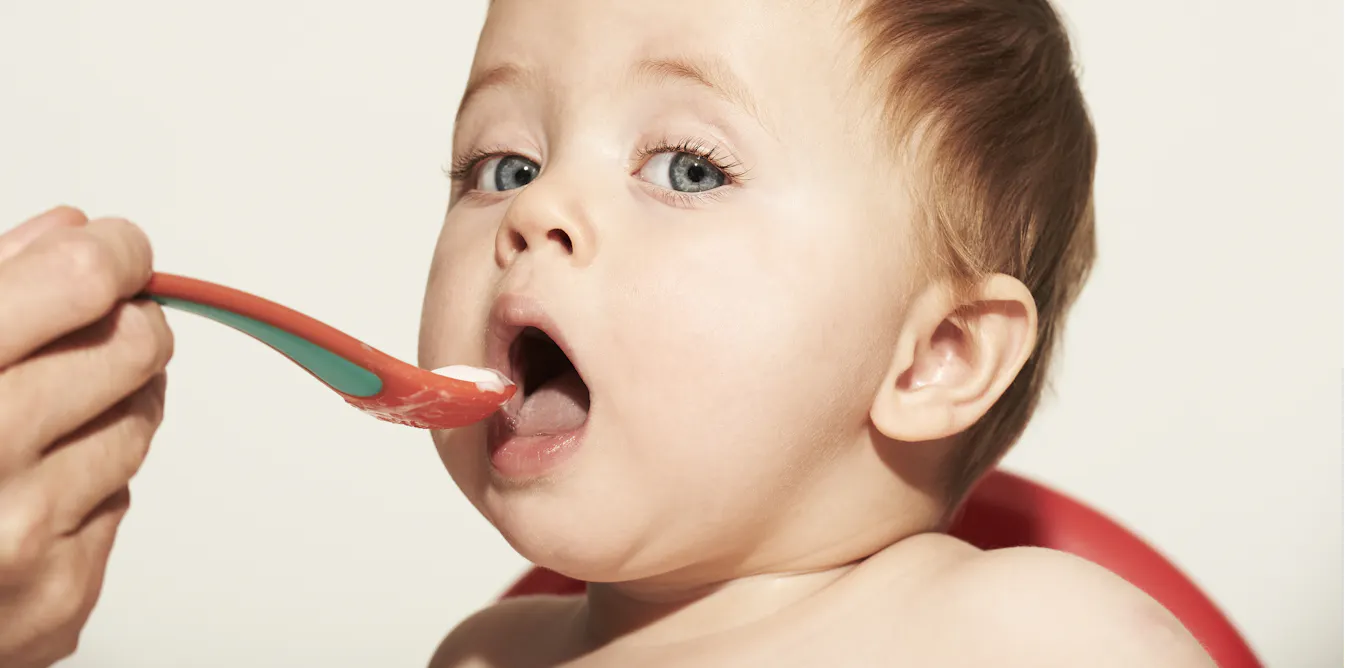
How safe is your baby food? A UConn expert explains.
A new congressional report has raised concerns from regulators and outcry from parents about the level of heavy metals - including things like lead, arsenic, and mercury - that are found in commercial baby foods. Dr. C. Michael White, chair of Department of Pharmacy Practice at the University of Connecticut and an expert in the safety of drugs and dietary supplements, has weighed into the baby food debate with a recent piece for The Conversation. In his article, Dr. White examines such topics as: How do heavy metals get into baby food? How much heavy metal is too much? What can parents do to reduce a child’s exposure? Is anyone doing anything about it? Dr. White says that, while there are steps for parents to take now, baby food manufacturers will ultimately have to alter certain practices to reduce the presence of heavy metals in their products. The U.S. has made important inroads in reducing heavy metals in air and water since the 1980s, dramatically lowering exposure. With additional focus, it can further reduce heavy metal exposure in baby food, too. Dr. White is available to speak with media regarding this topic. Simply click on his icon now, to arrange an interview today.


Evaluating the Impact of Facebook's Ban on Vaccine Misinformation
A new Facebook policy has banned misinformation about all vaccines on its platform. Villanova University professor Jie Xu, PhD, who specializes in science and health communication, examined this decision. "On one hand, there clearly is a lot of mis/disinformation on social media regarding vaccines; some of them are simply uninformed and, of course, harmful to public health," said Dr. Xu. "On the other hand, many details relating to the COVID-19 vaccine, in my view, are still open to scientific debate." So, what determines what is labelled misinformation? Dr. Xu believes this is a complicated determination. "Science itself is evolving with falsification and revision to previous claims when new evidence comes in," Dr. Xu noted. "Who is to say that some claims deemed true at this moment won't be overturned in the future? What are the standards to be used in defining what is true information or misinformation? And perhaps more importantly, who are the 'fact-checkers' that are considered trustworthy to the majority of Americans?" However, there are some benefits to Facebook's decision. "On a more positive note, there is some preliminary evidence indicating that labeling misinformation on social media may help to alleviate the negative influence of vaccine misinformation claims," Dr. Xu said. "The challenge is that the people that are most susceptible to misinformation, and those that health professionals really want to reach out to, are the ones that have the least level of trust on this type of intervention. In some corners, this will likely to be viewed as violation to free speech and perhaps backfire." How does Facebook's banning align with free speech? "My understanding of free speech is that it's not that we don't pay a price for it—unless it's inciting violence, most information has been allowed to flow relatively freely—but it's that the alternative could be much worse," said Dr. Xu. "At the end of the day, we need to create an environment in which honest, open and critical conversations are welcomed, and we do need each other to find the truth."

Study of auto recalls shows carmakers delay announcements until they can 'hide in the herd'
BLOOMINGTON, Ind. - Automotive recalls are occurring at record levels, but seem to be announced after inexplicable delays. A research study of 48 years of auto recalls announced in the United States finds carmakers frequently wait to make their announcements until after a competitor issues a recall - even if it is unrelated to similar defects. This suggests that recall announcements may not be triggered solely by individual firms' product quality defect awareness or concern for the public interest, but may also be influenced by competitor recalls, a phenomenon that no prior research had investigated. Researchers analyzed 3,117 auto recalls over a 48-year period -- from 1966 to 2013 -- using a model to investigate recall clustering and categorized recalls as leading or following within a cluster. They found that 73 percent of recalls occurred in clusters that lasted 34 days and had 7.6 following recalls on average. On average, a cluster formed after a 16-day gap in which no recalls were announced. They found 266 such clusters over the period studied. "The implication is that auto firms are either consciously or unconsciously delaying recall announcements until they are able to hide in the herd," said George Ball, assistant professor of operations and decision technologies and Weimer Faculty Fellow at the Indiana University Kelley School of Business. "By doing this, they experience a significantly reduced stock penalty from their recall." Ball is co-author of the study, "Hiding in the Herd: The Product Recall Clustering Phenomenon," recently published online in Manufacturing and Service Operations Management, along with faculty at the University of Illinois, the University of Notre Dame, the University of Minnesota and Michigan State University. Researchers found as much as a 67 percent stock market penalty difference between leading recalls, which initiate the cluster, and following recalls, who follow recalls and hide in the herd to experience a lower stock penalty. This indicates a "meaningful financial incentive for auto firms to cluster following recalls behind a leading recall announcement," researchers said. "This stock market penalty difference dissipates over time within a cluster. Additionally, across clusters, the stock market penalty faced by the leading recall amplifies as the time since the last cluster increases." The authors also found that firms with the highest quality reputation, in particular Toyota, triggered the most recall followers. "Even though Toyota announces some of the fewest recalls, when they do announce a recall, 31 percent of their recalls trigger a cluster and leads to many other following recalls," Ball said. "This number is between 5 and 9 percent for all other firms. This means that firms are likely to hide in the herd when the leading recall is announced by a firm with a stellar quality reputation such as Toyota. "A key recommendation of the study is for the National Highway Traffic Safety Administration (NHTSA) to require auto firms to report the specific defect awareness date for each recall, and to make this defect awareness date a searchable and publicly available data field in the auto recall dataset NHTSA provides online," Ball added. "This defect awareness date is required and made available by other federal regulators that oversee recalls in the U.S., such as the Food and Drug Administration. Making this defect awareness date a transparent, searchable and publicly available data field may discourage firms from hiding in the herd and prompt them to make more timely and transparent recall decisions." Co-authors of the study were Ujjal Mukherjee, assistant professor of business administration at the Gies College of Business at the University of Illinois who was the lead author; Kaitlin Wowak, assistant professor of IT, analytics, and operations at the Mendoza College of Business at the University of Notre Dame; Karthik Natarajan, assistant professor of supply chain and operations at the Carlson School of Management at the University of Minnesota; and Jason Miller, associate professor of supply chain management at the Broad College of Business at Michigan State University.


Why customers hold the key to a company’s true valuation
When determining a fair valuation for a company—especially in anticipation of an initial public offering (IPO)—investors often rely heavily on “top down” approaches focusing primarily on traditional financial measures to do so. But what if this approach doesn’t paint the full picture? Daniel McCarthy, assistant professor of marketing at Emory’s Goizueta Business School, is building the case that augmenting traditional data sources with customer behavior data gives investors a more accurate company valuation. For the past several years, McCarthy and Peter Fader, professor of marketing at the Wharton School of the University of Pennsylvania, have worked to refine a customer-driven investment methodology they created. “Customer-based corporate valuation (CBCV) simply brings more focus to how individual customer behavior drives the top line,” they explained in “How to Value a Company by Analyzing Its Customers,” an article published in the Harvard Business Review (HBR) earlier this year. “This approach is driving a meaningful shift away from the common but dangerous mindset of ‘growth at all costs,’ towards revenue durability and unit economics—and bringing a much higher degree of precision, accountability, and diagnostic value to the new loyalty economy.” Fader, McCarthy’s PhD advisor while he was at Wharton, had done some of the seminal work on forecasting customer shopping/purchasing behaviors. This helped build baseline expertise for how one could go about the customer-level modeling. McCarthy recognized that this behavioral modeling could be put to good use in a financial setting, if done the right way. “There was this untapped source of intellectual property that’s been accumulating within marketing over the last 30 years,” McCarthy said. While other academics have done some conceptual work in the area, none, McCarthy noted, had done so in a way that was consistent with how financial professionals go about performing corporate valuation. McCarthy and Fader merged these well-validated customer-level models with standard corporate valuation methods, then put their resulting valuation tool head-to-head with alternative approaches. They found that their CBCV model subsequently outperformed. A full article on this subject is attached, within it, you will find key CBCV highlights such as: Using unit economics to more accurately predict revenue forecasts Gaining access to the right data The CBCV model is also good for managers and for customers Working to have publicly traded companies adopt CBCV McCarthy’s work on the CBCV methodology has earned him a number of awards, including the MSI Alden G. Clayton, American Statistical Association, INFORMS, and the Shankar-Spiegel dissertation awards. If you are a journalist covering this topic or if you want to learn more about this work or customer-based corporate valuation – then let our experts help. Daniel McCarthy is an Assistant Professor of Marketing at Emory University's Goizueta School of Business where his research specialty is the application of leading-edge statistical methodology to contemporary empirical marketing problems. If you are looking to contact Daniel – simply click on his icon now to arrange an interview today.
