
Experts Matter. Find Yours.
Connect for media, speaking, professional opportunities & more.

Trump’s reaction to defeat further confirms urgency for school focus on social-emotional skills
Sandra Chafouleas, psychologist and behavioral health expert from the University of Connecticut, weighs in: Imagine what would happen if a preschooler didn’t “use their words” when they got upset about sharing, instead stomping around yelling while adults simply observed in silence. Think about what the school climate would feel like if a student punched another during recess while others watched without seeking help. Now consider the actions – and inactions – by Donald Trump on January 6 as the electoral vote counts occurred at the U.S. Capitol. Those behaviors show a desperate need for social emotional learning. According to the Collaborative for Academic, Social, and Emotional Learning (CASEL), social emotional learning involves five core competencies: self-awareness, self-management, social awareness, relationship skills, and responsible decision-making. Trump did not demonstrate these competencies when the election didn’t go the way he wanted. Connecting these school scenarios and Trump’s behaviors is not intended to contribute to the ever-mounting list of recommended consequences that could result from his fueling the insurrection that our nation has just experienced. It does bear noting, however, that if Trump were a Black teenager, he most certainly would have received exclusionary disciplinary action such as suspension and perhaps even expulsion from school. The purpose in connecting the two scenarios is to draw energies toward actions that propel us forward in bridging a divided nation. The responsibility for forward movement falls to future generations, which means it is critical that we pay attention to what happens in schools right now. We need to demand that policies and practice — and necessary resources — are put in place to strengthen school capacity to support students on their path to holding responsibility for democracy. Many excellent resources have quickly appeared to assist educators in teaching about the insurrection. Discussion guides are available to facilitate defining key terms, contrasting events through a social justice lens, and comparing justifications for action using fact checking. Other resources have been released that help adults talk about violence and support emotional safety of kids. What seems to be less prominent, however, is a direct connection to the social, emotional, and behavioral skills that we have just witnessed are missing. Education systems have begun the work of acknowledging their historic roles in contributing to exclusion, inequity, and intolerance of differences. Educators are working hard to turn the tide toward promising alternative approaches. Prominent among those approaches is a focus on social emotional skills. In either classroom scenario above, educators would be jumping into discussion about what supports are needed to address student needs. Social and emotional well-being fulfills us throughout every stage of life – integrating those skills should be in all that we do as adults to model, teach, and give feedback to our children. Of course schools must teach academic content areas and have high expectations, but there is tremendous potential to increase capacity to embed exploration, active practice, and positive feedback about social and emotional skills within each corner of the day. As one example, history professor Kellie Carter Jackson writes about challenges in teaching violence in political history. The author describes the need to question how political violence should be labeled, which could reveal an expression of unmet need by marginalized people. Learning through this analysis offers social and emotional parallels, such as examining biases, recognizing emotions, and examining integrity. As another, Facing History and Ourselves offers a classroom resource specific to the insurrection. Activities reference principles of social and emotional learning, such as steps for educators to practice self-awareness and relationship skills by examining their own emotions and perspectives. Student self-management and social awareness builds through reflection activity that builds civic agency. All of these examples offer incredible opportunity in social and emotional learning that could be advanced with more explicit connection. Entrenching social and emotional learning within the school day beyond this immediate teachable moment also is needed to enable sustained effort. CASEL identifies adults as key to social emotional strategies that will maintain safe, supportive, and equitable learning environments for this moment in history. To do so requires a strong collection of social, emotional, and behavioral education policies and practices. Responsibility for urgently resourcing this collection rests within each of us, right now, to ensure future generations who can and do take part in a resilient democratic nation. Dr. Chafouleas is licensed psychologist and Distinguished Professor, with expertise in school psychology and school mental health at the University of Connecticut’s Neag School of Education. If you’re a reporter looking to speak with Dr. Chafouleas about this topic – let us help. Simply click on her icon to arrange an interview today.


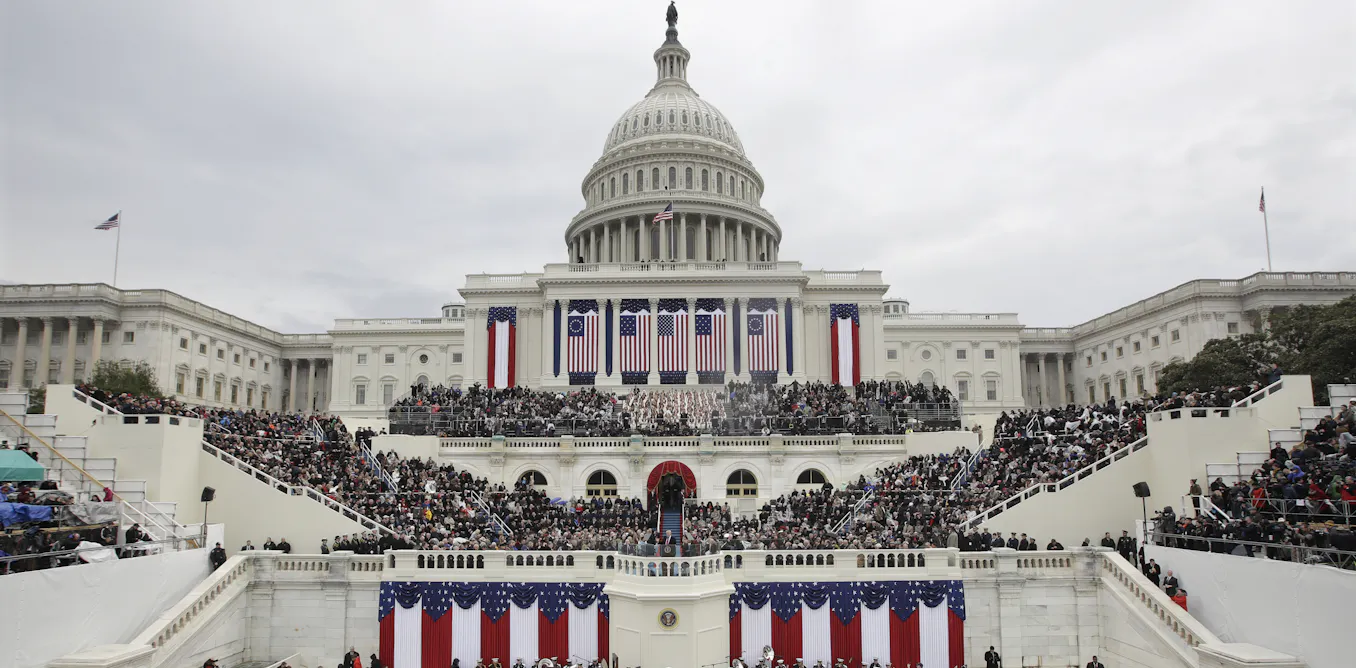
Why do presidential inaugurations matter? Let our expert explain
All eyes are on Washington on Wednesday as the country, and the world for that matter, tune in to watch the inauguration ceremony of Joe Biden as President of the United States. It’s a formal occasion, and one that comes with pomp and circumstance – but after the speeches and the parties, is it a day that really has significance? It’s a question that’s being asked, and one that Dimitris Xygalatas, an anthropologist and cognitive scientist at the University of Connecticut, decided to answer in a recent contribution to The Conversation. In the piece, he examines the appeal of such special and momentous occasions on society and why rituals have a great impact on the public’s perception on major events. The piece is attached – and if you are a reporter looking to learn more of speak to Professor Xygalatas about the significance of the inauguration, simply click on his icon to arrange an interview now.


It’s as if there’s an all-out war on the world’s insects – and experts from across the country are all buzzing with some very bad news. Recently, University of Connecticut’s Professor of Ecology and Evolutionary Behavior, David Wagner was featured on CBS National News in an in-depth story about the potential apocalypse the world’s insect kingdom faces. “The world's vital insect kingdom is undergoing "death by a thousand cuts," the world's top bug experts said. Climate change, insecticides, herbicides, light pollution, invasive species and changes in agriculture and land use are causing Earth to lose probably 1% to 2% of its insects each year, said University of Connecticut entomologist David Wagner, lead author in the special package of 12 studies in Monday's Proceedings of the National Academies of Sciences written by 56 scientists from around the globe. The problem, sometimes called the insect apocalypse, is like a jigsaw puzzle. And scientists say they still don't have all the pieces, so they have trouble grasping its enormity and complexity and getting the world to notice and do something. Wagner said scientists need to figure out if the rate of the insect loss is bigger than with other species. "There is some reason to worry more," he added, "because they are the target of attack" with insecticides, herbicides and light pollution… Insects "are absolutely the fabric by which Mother Nature and the tree of life are built," Wagner said. January 12 - CBS News The story is attached above – and must-read material for anyone concerned about insects and the vital role they play in just about every aspect of our world. If you’re a journalist looking to know more about this topic and would like to contact Dr. Wagner – simply click on his icon now to arrange an interview today.

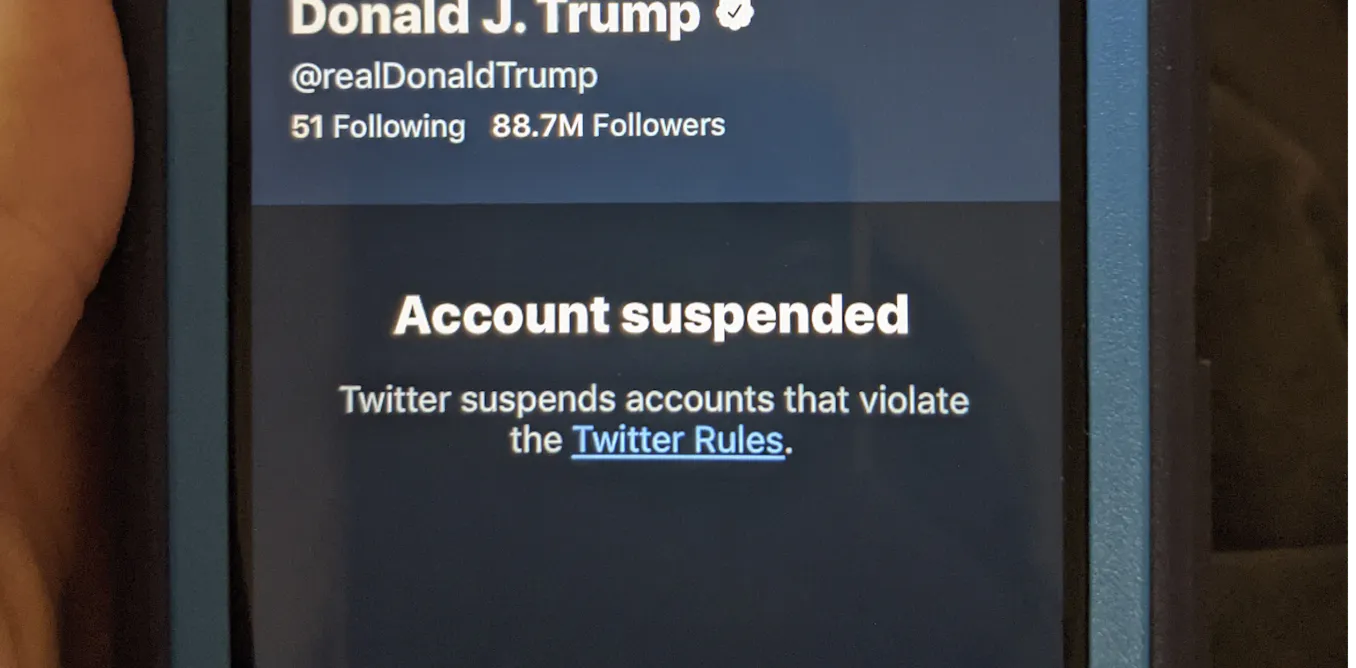
After an incited and encouraged crowd of Trump supporters stormed the Capitol buildings last earlier this month – social media, or at least the executives that run companies like Twitter and Facebook had had enough and opted to oust President Donald Trump from their platforms. Donald Trump has been ‘deplatformed’ and no longer has easy access to an audience of millions of followers. The concept of deplatforming is being widely debated. And recently, University of Connecticut’s Ugochukwu Etudo was asked to lend his expert perspective on the idea. Does the deplatforming of prominent figures and movement leaders who command large followings online work? That depends on the criteria for the success of the policy intervention. If it means punishing the target of the deplatforming so they pay some price, then without a doubt it works. For example, right-wing provocateur Milo Yiannopoulos was banned from Twitter in 2016 and Facebook in 2019, and subsequently complained about financial hardship. If it means dampening the odds of undesirable social outcomes and unrest, then in the short term, yes. But it is not at all certain in the long term. In the short term, deplatforming serves as a shock or disorienting perturbation to a network of people who are being influenced by the target of the deplatforming. This disorientation can weaken the movement, at least initially. However, there is a risk that deplatforming can delegitimize authoritative sources of information in the eyes of a movement’s followers, and remaining adherents can become even more ardent. Movement leaders can reframe deplatforming as censorship and further proof of a mainstream bias. There is reason to be concerned about the possibility that driving people who engage in harmful online behavior into the shadows further entrenches them in online environments that affirm their biases. Far-right groups and personalities have established a considerable presence on privacy-focused online platforms, including the messaging platform Telegram. This migration is concerning because researchers have known for some time that complete online anonymity is associated with increased harmful behavior online. In deplatforming policymaking, among other considerations, there should be an emphasis on justice, harm reduction and rehabilitation. Policy objectives should be defined transparently and with reasonable expectations in order to avoid some of these negative unintended consequences. January 15 – The Conversation If you’re a journalist covering deplatforming and would like to talk with Ugochukwu Etudo – simply click on his icon today and we’ll arrange an interview today.

Renowned educator and author Gloria Ladson-Billings to present Georgia Southern 2021 Fries Lecture
Gloria Ladson-Billings, Ph.D., renowned pedagogical theorist, teacher educator and author, will present the 2021 Norman Fries Distinguished Lecture, hosted by Georgia Southern University’s College of Education. In her lecture, “Culturally Responsive Pedagogy: Educating Past Pandemics,” Ladson-Billings will discuss how pandemics provide opportunities for revisioning and reimagining culturally relevant teaching practices. She suggests that instead of “getting back to normal,” it is time to get on to new and more equitable ways of educating all students and creating a more democratic society. Ladson-Billings is the former Kellner Family Distinguished Professor of Urban Education in the Department of Curriculum and Instruction and faculty affiliate in the Department of Educational Policy Studies at the University of Wisconsin-Madison. She also served as the 2005-06 president of the American Educational Research Association (AERA). Ladson-Billings’ research examines the pedagogical practices of teachers who are successful with Black students. She also investigates critical race theory applications to education. She is the author of critically acclaimed books The Dreamkeepers: Successful Teachers of African American Children and Crossing Over to Canaan: The Journey of New Teachers in Diverse Classrooms, as well as numerous journal articles and book chapters. About Ladson-Billings Former editor of the American Educational Research Journal and a member of several editorial boards, Ladson-Billings’ work has won multiple scholarly awards including the H.I. Romnes Faculty Fellowship, the National Academy of Education/Spencer Postdoctoral Fellowship and the Palmer O. Johnson Outstanding Research Award. She is a 2018 recipient of the AERA Distinguished Research Award and was elected to the American Academy of Arts and Sciences in 2018. About the Norman Fries Distinguished Lectureship series The annual Norman Fries Distinguished Lectureship series began in 2001. It is funded by an endowment in honor of Norman Fries, founder of Claxton Poultry. In his more than 50 years of business, Fries built the company from a one-man operation into one of the largest poultry production plants in the U.S. Past Fries lecturers include David Oreck of Oreck Vacuums, South African apartheid author and lecturer Mark Mathabane, NASA director James W. Kennedy, Pulitzer Prize-winning author and historian Gordon S. Wood, Nobel Prize laureate William D. Phillips, Ph.D., bestselling author Susan Orlean, concussion expert Dr. Russell Gore, and PricewaterhouseCoopers Network chief operating officer Carol Sawdye. The lecture will take place virtually via Zoom on Feb. 8 at 7 p.m. The event is free and open to the public. If you are a journalist looking to know more about the Norman Fries Distinguished Lectureship or would like to interview Gloria Ladson-Billings -- simply reach out to Georgia Southern Director of Communications Jennifer Wise at jwise@georgiasouthern.edu to set and time and date.

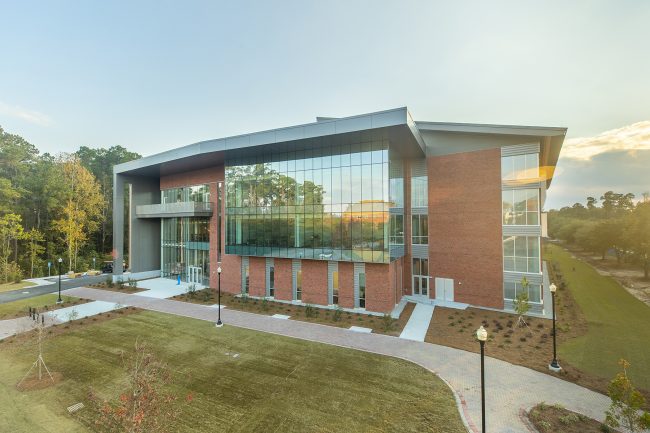
Last Friday, Georgia Southern officially opened its new Engineering and Research Building for students and researchers, a facility that will serve as the epicenter for engineering excellence and innovation in southeast Georgia. The building is designed to facilitate academic and institutional partnerships, inspire creative engineering and accelerate academic success for students in the College of Engineering and Computing. Through the instructional research labs and academic spaces that bridge theory and practice, students will be prepared to solve today’s challenges and to make tomorrow’s discoveries. “Today marks the culmination of years of forethought and investment from a number of state leaders, industry leaders and local advocates, who paved the way for us to be here,” said Georgia Southern President Kyle Marrero. “Leaders who, dating back to the 90s, could see the future of a growing industry, a state on the precipice of being a national leader in technology and innovation, and a critical need to develop talent in applied engineering across south Georgia.” The Engineering and Research Building’s sleek, contemporary environment defined by glass and natural light, soaring high-bay ceilings and modern, industrial feel is strengthened by new, industry-relevant equipment, instrumentation and technology that encourage active learning and sustainability. The highly efficient facility includes sustainable features that complements existing spaces on campus. The three-story building houses applied research spaces with a strong focus on manufacturing engineering, civil engineering, electrical and computer engineering, and mechanical engineering. The workspaces can be easily reconfigured for various uses, projects and applications and provide students with access to industry-grade equipment as well as expanded opportunities for undergraduate research. “The investment of the Engineering and Research Building solidifies Georgia Southern University’s commitment to students in providing a world-class education in the engineering field, while providing the space and resources necessary to facilitate such,” said student Kristifer Bell. “I am enthusiastic to continue my research work and look forward to the interdepartmental collaboration that will be encouraged through the housing of new student and faculty labs under one roof.” The full media release about this historic occasion is attached – and if you are a journalist looking to know more about this facility or Southern Georgia University -- simply reach out to Georgia Southern Director of Communications Jennifer Wise at jwise@georgiasouthern.edu to set and time and date.

The U.S. House of Representatives is set to vote Wednesday to impeach President Donald Trump for inciting the deadly insurrection at the United States Capitol last week. Many House Democrats have called for Trump’s resignation and urged Vice President Mike Pence to remove him under the 25th Amendment. However, with those two options looking extremely unlikely, Democrats are preparing to impeach the president for a second time. The question is how quickly will impeachment happen? On Monday, the House introduced a single article for "incitement of insurrection," which could allow a fast-tracked floor vote on impeachment by Wednesday. Upon receiving the article, the Senate must take it up either through a vote to dismiss the charge or, if that fails, moving ahead with a trial to determine whether to convict the 45th president. There’s been a lot of coverage – and a lot of opinions shared. If you are a journalist covering this ongoing story, that’s where our experts on this topic can help. Dr. Martha Ginn, professor of political science at Augusta University, is an expert on the judicial process, constitutional law and the U.S. Supreme Court. If you have questions, let Ginn share her expertise and experience to ensure your coverage is accurate. Ginn is available to speak with media about this topic – simply click on her name to arrange an interview today.


The events that led to the storming of the Capitol buildings last week have garnered attention from just about every news organization across the planet. Pundits and politicians have weighed in on both sides regarding whether President Trump’s words and actions need to be held accountable for the damage to America’s democratic institutions as well as the five people who have since died as a result of the events that occurred on January 6, 2021. Recently, University of Connecticut’s Richard Ashby Wilson, the Gladstein Chair and Professor of Anthropology and Law and an expert on hate speech and incitement on social media shared his perspective in an Op-Ed published in the Los Angeles Times. It’s a thoughtful, methodical, and excellent piece outlining why he believes, in his expert legal opinion, that President Trump crossed the line and now deserves to be held accountable for his crimes. This is a burning topic, and if you are a journalist looking for objective and expert opinion on this topic – then let us help. Richard Ashby Wilson is available to speak with media about this issue – simply click on his icon now to arrange an interview today.

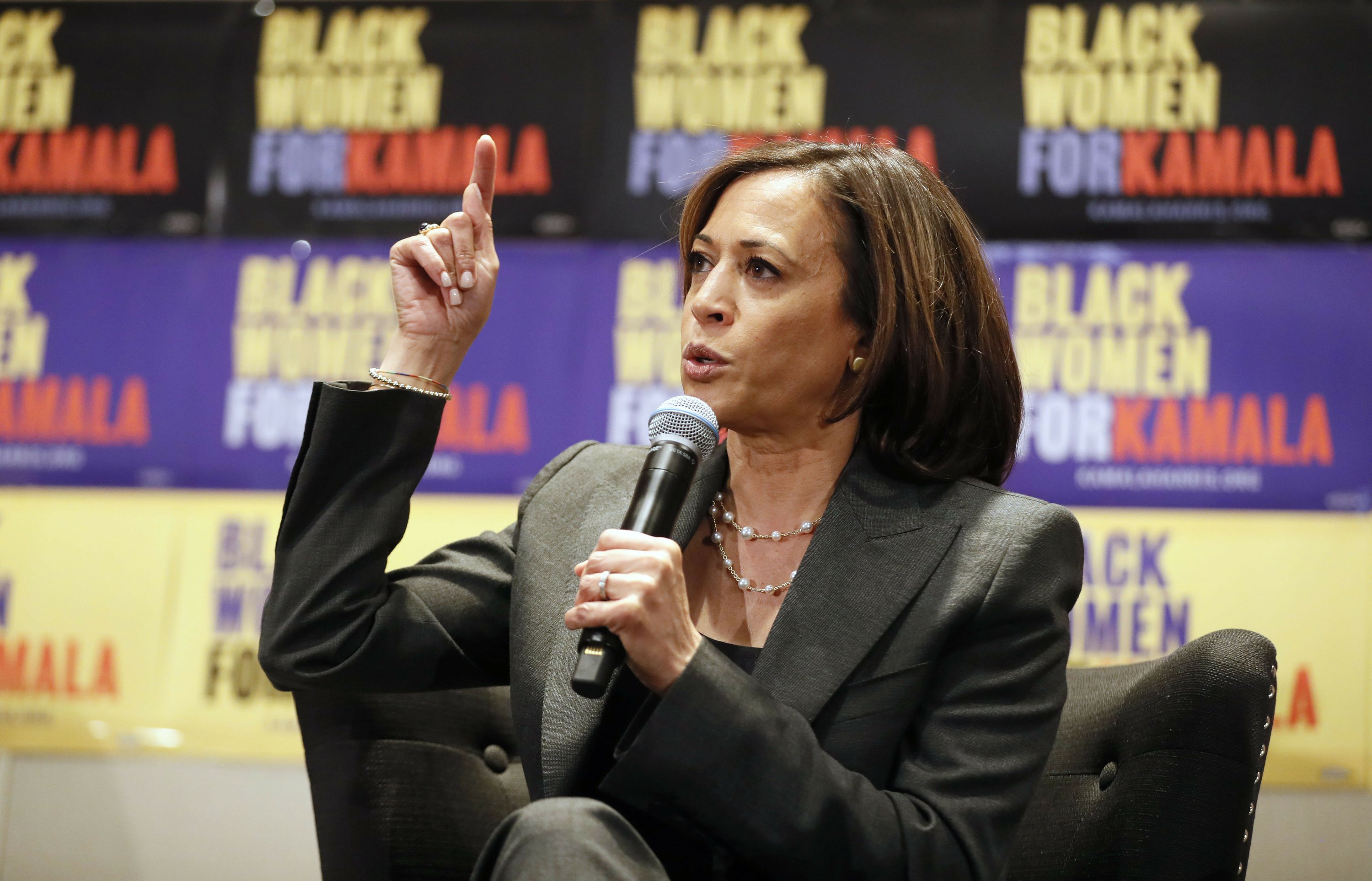
The 'XX' factor: Women voters and what candidates need to know for future elections
As unique as the 2020 election was, it was still similar to every other election, where winning comes down to isolating key demographics, swaying them to lend support and getting those voters out to the ballot box. There are many different blocks of voters in America based on income, education, race, geography and gender. Gender among them is key, and on Nov. 3, women ensured their votes were counted. Ask Virginia voter Mary Hayes why Joe Biden defeated Donald Trump, and she does not hesitate. “Women won this election!” says Hayes, 56, a mother of three and Biden supporter from Leesburg, Virginia. In particular, she credits two categories of voters that she herself is part of: Black women and suburban women. Trump had begged the latter group — some of whom he’d alienated by referring to them as “housewives” — to “please, please” like him. But that plea rang hollow, she says. “We showed America that suburban women are diverse, and are a beautiful collection of ethnicity, race, marital status, occupations and many other categories,” Hayes says. “Suburban women mobilized, determined to remove Trump from office.” And, she says, they succeeded. Nov. 16, Associated Press Women did play a key role in the vote as it rolled across the country. But now, the balance of power in Washington will rely on two key Senate races in Georgia. And no doubt, both sides are strongly courting female voters. If you are a journalist looking to know how important a role gender will play in the January runoffs and what all four of the candidates need to do to secure those votes, then let an expert from Augusta University help with your story. Dr. Mary-Kate Lizotte is an expert in political behavior and the implications of gender differences in public opinion. She is available to talk about the 2020 election and the upcoming Senate runoffs in Georgia. Click on her name to schedule an interview.


Are vaccine passports legal in a post-COVID-19 era? Let our experts explain
As America and the world look to slowly round the corner of the safety measures enacted during the COVID-19 pandemic, the new coronavirus vaccines are giving hope of an eventual return to normal. However, with an active anti-vaccination movement afoot and many still skeptical of getting that essential poke in the arm, the World Health Organization said some government officials are suggesting the idea of vaccine passports. A simple piece of identification would end the uncertainty that comes with travel, work and the much sought-after leisure that often means crowded places and smaller spaces. The idea has already caught on in countries in Europe and South America. It may be the safety blanket many seek, but are vaccine passports actually legal? It is a question that’s beginning to get serious coverage. “Having proof of vaccination can be essential for a number of sectors other than health, but we cannot overlook the potential discriminatory consequences that may arise,” said Dr. William Hatcher, an expert in public policy and interim chair of the Department of Social Sciences at Augusta University. Another idea being floated is immunity passports, but Hatcher suggests¬ allowing only people with immunity to work might disadvantage those who haven’t gotten sick or those without the antibodies to prove it. It’s as if, in the eyes of their employer, their lack of infection constitutes a disability. The inequality that immunity passports could foster in these situations may be illegal under the Americans with Disabilities Act. There are also other ethical, practical, and cultural aspects to consider as well. If you are covering this emerging topic and are looking to know more, our experts can help. Dr. Hatcher is a professor of political science and interim chair of Augusta University’s Department of Social Sciences. He is an expert in the areas of public administration and social, economic, and political institutions in local communities. Hatcher is available to speak with media regarding the concept of vaccination and immunity passports. To arrange an interview, simply click on his name.
