
Experts Matter. Find Yours.
Connect for media, speaking, professional opportunities & more.

University of Delaware, in close collaboration with Delaware State Police, the Delaware Association of Chiefs of Police, the Office of Highway Safety, and the Delaware DMV, has co-developed the Blue Envelope Program – now launched statewide as of Aug. 26, 2025. The program offers no-questions-asked, no-ID-required, free envelopes that drivers with disabilities (including communication differences, sensory needs, mobility limitations, or other differences) can keep in their vehicle. The envelope includes space for emergency contact or medical notes, instructions for law enforcement and tips to ensure safe, respectful, clear exchanges during traffic stops. The University of Delaware Center for Disabilities Studies helped review and approve the content and design to ensure inclusivity and accessibility. UD experts – including Sarah Mallory (Associate Director of the Center for Disabilities Studies) and Alisha Fletcher (Director, Delaware Network for Excellence in Autism) – are available to speak about how the program supports an underserved and underrepresented group and improves outcomes in law enforcement encounters. Why This Matters: Traffic stops can be stressful for drivers with disabilities and can lead to misinterpretations or heightened risk. The Blue Envelope helps reduce misunderstandings while preserving dignity and safety. Delaware joins around 10 other states (including Maine, Massachusetts, New Jersey, New York, Rhode Island, and Vermont) in adopting a traffic-stop communication aid for drivers with disabilities This is a practical, no-barrier solution that promotes equity, accessibility, and respectful law enforcement practices. To speak with either Mallory or Fletcher to learn more about the program's development, impact and what’s next, email mediarelations@udel.edu.


Apanaskevichiella: Georgia Southern’s tick detective honored with genus classification
Dmitry Apanaskevich, Ph.D., doesn’t look like a traditional detective. He won’t be found chasing down clues in back alleys or interrogating shady characters in a dimly lit room. But he does have that inquisitive, investigative passion that fuels his unique work — serving as the assistant curator at the U.S. National Tick Collection, housed in Georgia Southern University’s Math/Physics Building on the Statesboro Campus. “I’ve been fascinated by animals my entire life,” he says. “I’ve always wanted to be a biologist.” That fascination gave birth to a decades-long career studying ticks, part of the Arachnida class, leading to a lifetime full of discovery and distinction. He was recently awarded one of the highest honors a biologist can receive: a newly recognized genus of soft ticks named Apanaskevichiella. The genus was discovered through advanced genomic work by world-renowned tick phylogeneticist Stephen Barker, Ph.D., of the University of Queensland. Barker is a long-time collaborator, and the naming of the newly discovered genus is his way of honoring Apanaskevich. “It has turned out to be a very pleasant surprise,” said Apanaskevich. “To have a genus named after me is already more than I ever expected. It means my work has made a lasting mark — and that’s a rare and humbling gift.” But his love for ticks came about accidentally. Apanaskevich received his education in Russia, earning a bachelor’s and a master’s at St. Petersburg State University. He went on to obtain his Ph.D. at the Zoological Institute of Russian Academy of Sciences. It was during this period of his life when his professors ignited what would become a decades-long fascination with the tiny arthropods. “In my early days as an undergrad, my professors had a major influence on me,” he explained. “The professor who offered the most interesting topic would win.” One day, a professor handed him a jar filled with mayflies, tasking him with describing each species. It was a request that would change his life forever. “He completely won me over with that,” said Apanskevich. “Discovering new species became my dream.” He became obsessed, spending hours glued to the microscope, developing a huge passion for tiny parasites. “Parasites like ticks might look like they’re small, but they’re quite large,” he explained. “That being said, you need to use a microscope when examining them, especially if you’re trying to find and identify those more minute details.” Finding and analyzing those small details is as much of an art as it is a science, he said. “You have to be able to see things that others can’t,” explained Apanaskevich. “You can provide objective data like measurements and comparisons all day, but the artistic, subjective part of this research is how the biologist can analyze and find connections between the thousands, even millions of specimens.” Ambition and curiosity have fueled his journey through the scientific world. But now, he has something else that makes him tick. “My kids are proud of it,” he said, a grin spreading across his face. “They’re pretty proud of me. And really, that’s enough for me.” If you're interested in knowing more about the work Dmitry Apanaskevich is doing at Georgia Southern University or looking to speak with him — simply contact Georgia Southern's Director of Communications Jennifer Wise at jwise@georgiasouthern.edu to arrange an interview today.


Ashley Panichelli, M.D., has been appointed vice chair of the Department of Family and Community Medicine at ChristianaCare. In this role, Panichelli will support the department’s clinical and academic missions. She will help guide quality and safety initiatives and promote a culture of accountability, learning and psychological safety. She will advance education and professional development across faculty and residency programs, assist with strategic planning, mentorship and peer review, and strengthen collaboration across department leadership, faculty and staff. A Delaware native, Panichelli earned her medical degree from Sidney Kimmel Medical College at Thomas Jefferson University and completed her residency and chief residency in Family Medicine at ChristianaCare in 2018. She joined the residency program’s core faculty that same year and has since held several leadership roles, including clinical lead and associate program director. In 2022, she was named clinical director of Academic and Complex Primary Care, a role she continues to support. Panichelli is a clinical assistant professor at Sidney Kimmel Medical College and has been recognized with several honors, including the Delaware Academy of Family Physicians’ Teacher of the Year award and the Department’s Rising Star award. She completed ChristianaCare’s ACT course, the LEED-R elective, and the Harvard Medical Director Leadership Institute. She was an Emerging Leaders Institute scholar with the American Academy of Family Physicians Foundation. She reports to Erin Kavanaugh, M.D., FAAFP, chair of the Department of Family and Community Medicine.


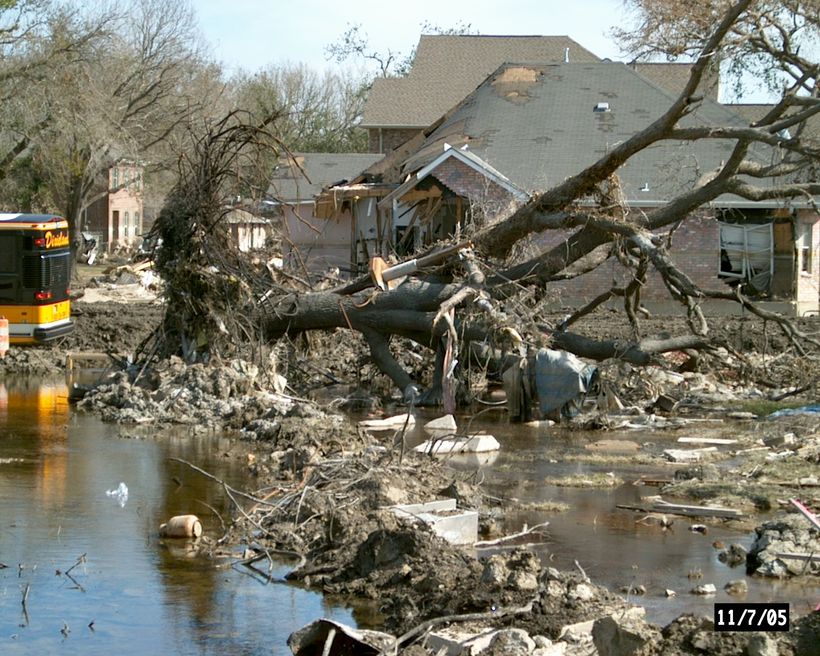
Twenty years ago, Hurricane Katrina hit the southeastern coast of the United States, devastating cities and towns across Louisiana, Florida, Mississippi, Alabama and beyond. The storm caused nearly 1,400 fatalities, displaced more than 1 million people and generated over $125 billion in damages. Rob Traver, PhD, P.E., D. WRE, F.EWRI, F.ASCE, professor of Civil and Environmental Engineering at Villanova University, assisted in the U.S. Army Corps of Engineers' (USACE) investigation of the failure of the New Orleans Hurricane Protection System during Hurricane Katrina, and earned an Outstanding Civilian Service Medal from the Commanding General of USACE for his efforts. Dr. Traver reflected on his experience working in the aftermath of Katrina, and how the findings from the investigation have impacted U.S. hurricane responses in the past 20 years. Q: What was your role in the investigation of the failure of the New Orleans Hurricane Protection System? Dr. Traver: Immediately after Hurricane Katrina, USACE wanted to assess what went wrong with flood protections that had failed during the storm in New Orleans, but they needed qualified researchers on their team who could oversee their investigation. The American Society of Civil Engineers (ASCE), an organization I have been a part of for many years, was hired for this purpose. Our job was to make sure that USACE was asking the right questions during the investigation that would lead to concrete answers about the causes of the failure of the hurricane protection system. My team was focused on analyzing the risk and reliability of the water resource system in New Orleans, and we worked alongside the USACE team, starting with revising the investigation questions in order to get answers about why these water systems failed during the storm. Q: What was your experience like in New Orleans in the aftermath of the hurricane? DT: My team went down to New Orleans a few weeks after the hurricane, visited all the sites we were reviewing and met with infrastructure experts along the way as progress was being made on the investigation. As we were flying overhead and looking at the devastated areas, seeing all the homes that were washed away, it was hard to believe that this level of destruction could happen in a city in the United States. As we started to realize the errors that were made and the things that went wrong leading up to the storm, it was heartbreaking to think about how lives could have been saved if the infrastructure in place had been treated as one system and undergone a critical review. Q: What were the findings of the ASCE and USACE investigation team? DT: USACE focused on New Orleans because they wanted to figure out why the city’s levee system—a human-made barrier that protects land from flooding by holding back water—failed during the hurricane. The city manages pump stations that are designed to remove water after a rainfall event, but they were not well connected to the levee system and not built to handle major storms. So, one of the main reasons for the levee system failure was that the pump stations and levees were not treated as one system, which was one of the causes of the mass flooding we saw in New Orleans. Another issue we found was that the designers of the levee system never factored in a failsafe for what would happen if a bigger storm occurred and the levee overflowed. They had the right idea by building flood protection systems, but they didn’t think that a larger storm the size of Katrina could occur and never updated the design to bring in new meteorological knowledge on size of potential storms. Since then, the city has completely rebuilt the levees using these lessons learned. Q: What did researchers, scientists and the general population learn from Katrina? DT: In areas that have had major hurricanes over the past 20 years, it’s easy to find what went wrong and fix it for the future, so we don’t necessarily worry as much about having a hurricane in the same place as we’ve had one before. What I worry about is if a hurricane hits a new town or city that has not experienced one and we have no idea what the potential frailties of the prevention systems there could be. Scientists and researchers also need to make high-risk areas for hurricane activity in the United States known for those who live there. People need to know what their risk is if they are in areas where there is increased risk of storms and flooding, and what they should do when a storm hits, especially now with the changes we are seeing in storm size.


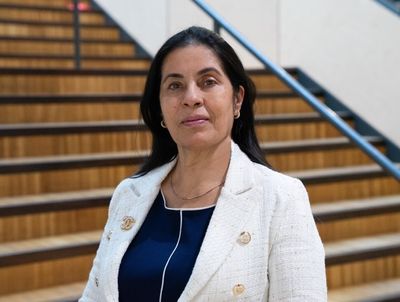
Professor Sangeeta Khorana made a Fellow of the Academy of Social Sciences
Professor Sangeeta Khorana, professor of international trade policy at Aston University, has been made a Fellow of the Academy of Social Sciences Fellows are elected for their contributions to social science, including in economic development, human rights and welfare reform The 2025 cohort of 63 Fellows will join a 1,700-strong Fellowship with members from academia, the public, private and third sectors. Professor Sangeeta Khorana, professor of international trade policy at Aston University, has been made a Fellow of the Academy of Social Sciences as part of the Autumn 2025 cohort. The 63 new Fellows have been elected from 39 UK organisations, comprising 29 higher education institutions, as well as think tanks, non-profits, business, and from countries beyond the UK including Australia and China. The Academy of Social Science’s Fellowship comprises 1,700 leading social scientists from academia, the public, private and third sectors. Selection is through an independent peer review which recognises their excellence and impact. Professor Khorana has more than 25 years of academic, government and management consulting experience in international trade. She has worked for the Indian government as a civil servant and on secondment to the UK Department for Business and Trade. Her expertise includes free trade agreement (FTA) negotiations and World Trade Organization (WTO) issues. As well as sitting on various expert committees, Professor Khorana is an advisor on gender and trade to the Commonwealth Businesswomen’s Network in London and serves on Foreign Investment Committee of the PHD Chambers of Commerce and Industry, India. The Autumn 2025 cohort of Fellows have expertise in a range of areas including educational inequalities, place-based economic development, human rights protection, the regulation of new technologies, and welfare reform, highlighting the importance, breadth and relevance of the social sciences to tackling the varied challenges facing society today. As well as excellence in research and professional applications of social science, the new Fellows have also made significant contributions beyond the academy, including to industry, policy and higher education. Professor Khorana said: “I am deeply honoured to be elected a Fellow of the Academy of Social Sciences. This recognition underscores not only the importance of international trade policy as a driver of inclusive and sustainable growth, but also the role of social sciences in shaping fairer and more resilient societies. At Aston University, my research seeks to bridge academia, government and industry to inform evidence-based trade policy for global cooperation. I am proud to contribute to the Academy’s mission of demonstrating how social science knowledge and practice can address some of the most pressing challenges of our time.” President of the Academy, Will Hutton FAcSS, said: “It’s a pleasure to welcome these 63 leading social scientists to the Academy’s Fellowship. Their research and practical applications have made substantial contributions to social science and wider society in a range of areas from international trade policy and inclusive planning systems through to innovative entrepreneurship and governing digital technologies. We look forward to working with them to promote further the vital role the social sciences play in all areas of our lives.”


Spitting image: What the blunder by Philadelphia Eagles' Carter can teach us about teams
Social media caught fire when Philadelphia Eagles' defensive tackle Jalen Carter got tossed for spitting on Dallas Cowboys' quarterback Dak Prescott before the first snap of this year's NFL season opener. While the impact on the game was obvious, what unfolded on the field of play has lessons for the workplace and the boardroom. The University of Delaware's Kyle Emich can talk about the parallels between the two worlds when individuals let their teams down. Emich, a professor of management in UD's Lerner College of Business and Economics, said emotional events occur all the time in the workplace, especially in board rooms, where the atmosphere is often competitive. "Emotion regulation is a key part of harnessing motivation appropriately in a competitive context," Emich said. • Early on, the Cowboys were able to regulate their emotions to tap into the incident when they roared out to several seamless offensive drives. • Emich says the Eagles' young, inexperienced and not-yet-gelled defensive unit was unable to regulate their emotions and preserve their confidence (collective efficacy) after the incident. They were unable to stop Dallas in the first half. • Carter's act could also have served as an emotion regulation cue for both teams. The Eagles defense was unable to regulate and maintain stability, leading to a number of costly penalties. But the Cowboys seemed to have had the same issue when they retaliated with personal fouls of their own. • In the end, the Eagles were able to come together under the leadership of their coach, Nick Sirianni, and quarterback, Jalen Hurts, to secure a 24-20 victory. To connect with Emich for an interview, visit his profile page and click on the "contact" button.


Georgia Southern reaches new economic impact record of $1.167 billion
Recent reports from the University System of Georgia (USG) show Georgia Southern University continues its legacy of significant economic impact on its surrounding region. According to the USG’s latest Economic Impact report, the system recorded a $23.1 billion total economic impact from July 1, 2023 until June 30, 2024. In the same period, Georgia Southern continues to reach new heights with a record annual economic impact of $1.167 billion for FY 2024, a 1.9% increase over the previous year. “Georgia Southern’s record economic impact across the region reflects the extraordinary dedication of our faculty and staff on all three campuses to ensuring we continue to meet the needs of our students and our region today and into the future,” said Georgia Southern President Kyle Marrero. “We remain steadfast in our goals of graduating career-ready students, advancing the economic development of the region and elevating our public impact research enterprise.” The report shows there are 3,096 jobs on Georgia Southern’s campuses in Statesboro, Savannah and Hinesville. Because of institution-related spending, an additional 6,627 jobs exist off-campus, totaling 9,723 jobs due to institution-related spending in fiscal year 2024. The report also noted that Georgia Southern students spent $442,818,489 in the region in fiscal year 2024. In addition, the USG’s newest Lifetime Earnings study found that bachelor’s degree graduates from the class of 2024 will earn, on average, more than $1.4 million above what they would without a college degree through their lifetime. The findings confirm how much each level of higher education can add to a USG graduate’s total earnings throughout their lives. Across the entire USG, the analysis showed that the 73,006 degrees conferred by USG institutions can expect combined total lifetime earnings of $230 billion. “A degree from one of USG’s 26 public colleges and universities is a million-dollar deal for graduates and a billion-dollar boost for Georgia,” USG Chancellor Sonny Perdue said. “Students see real returns through higher earnings and better opportunities. Meanwhile, our institutions power Georgia’s economy and help local communities thrive.” Georgia high school graduates who obtain a bachelor’s degree will boost their state work-life earnings by 82%, surpassing the 80% increase estimated for the nation. Georgia Southern University conferred 5,172 degrees in FY 2024. This group of degree recipients can expect their combined work in Georgia to total lifetime earnings of $16.54 billion. The report also broke down total Georgia lifetime earning predictions by degree: The 102 GS graduates with doctoral degrees will earn a total of $429 million. The 1,116 GS graduates with master’s degrees will earn a total of $3.8 billion. The 3,870 GS graduates with bachelor’s degrees will earn a total of $12.5 billion. The 45 GS graduates with associate degrees will earn a total of $97.9 million. The 39 GS graduates with certificates will earn a total of $78.2 million. The Lifetime Earnings report also shows the U.S. work-life earnings for graduates. For example, all Georgia Southern students who graduated in the class of 2024 who graduated with a bachelor’s degree will earn a collective $12.6 billion in their lifetimes. Without the degree, their projected lifetime earnings would only be a collective $7 billion. The Economic Impact as well as the Lifetime Earnings studies were both conducted on behalf of USG by Jeffrey M. Humphreys, Ph.D., director of the Selig Center for Economic Growth in the University of Georgia’s Terry College of Business. If you're interested in knowing more about Georgia Southern University - simply contact Georgia Southern's Director of Communications Jennifer Wise at jwise@georgiasouthern.edu to arrange an interview today.

Don't let brain bias tank your fantasy football season
The National Football League season kicks off this week and that means millions of fantasy football coaches are already overthinking their lineups. But before they blame a bad draft slot or a fluke injury for bombing from one week to the next, they might want to look in the mirror and give their head a shake. Renee Miller, a professor of brain and cognitive sciences at the University of Rochester, studies cognitive biases and literally wrote the book on bias in fantasy sports. She plays fantasy football, too. She warns that our brains are wired to interpret fantasy football results in ways that are suboptimal and illogical. “Biased thinking occurs in everyday life and work, and in fantasy sports,” Miller says. “Through the course of a season, you can see a full range of the ways cognitive bias affects a person’s weekly fantasy matchups.” Here’s the good news: Miller says we can untangle those wires if we know what to look for. Among the biggest culprits are what Miller calls “the endowment effect” (overvaluing and clinging to players you drafted high), “recency bias” (falling in love with last week’s star), and “confirmation bias” (cherry-picking stats that support what you already believe). But especially beware of Week One. Thanks to the “primacy effect,” those games early in the season loom larger in memory than later ones. One hot debut or a disappointing flop can warp a coach’s thinking for weeks. The result? Lineups driven more by emotion than logic — and possibly a lot of pick sixes. Biases aren’t all bad, though. Sometimes instincts pay off. First impressions and recent performances sometimes hold fast. But the best fantasy players, Miller says, know when to slow down and think systematically. They stay skeptical, challenge their gut reactions, and accept that they’ll be wrong sometimes. So before you rage-drop that underperforming wide receiver or crown your Week One sleeper a superstar, remember, the smartest move might be to take a look in the mirror and give your head a shake. Miller is available for interviews for journalists covering fantasy sports. Connect with her by clicking on her profile.



This strategic move aligns with LSU’s Scholarship First Agenda, where energy is one of five core focus areas for research critical to the future of Louisiana and the nation. It also builds on the successes of LSU’s Institute for Energy Innovation, Center for Energy Studies, Louisiana Geological Survey, and the LSU-led FUEL team while assuming a leadership role in how the university engages with its partners—industry, communities, donors, and state and federal agencies—through collaboration and service. “As Louisiana’s flagship research university, LSU is committed to organizing our efforts in ways that maximize impact and reflect institutional priorities,” said Robert Twilley, LSU vice president of research and economic development. “The LSU Energy Institute will provide a platform for faculty across multiple colleges and disciplines to collaborate on solutions to Louisiana’s most pressing energy and environmental challenges.” The LSU Energy Institute will unify and expand several longstanding programs, chiefly the Center for Energy Studies, the Louisiana Geological Survey, and a range of externally funded initiatives, including cutting-edge energy research catalyzed by the LSU Institute for Energy Innovation through a dedicated $25 million investment from Shell. This results-focused realignment reflects a broader effort across LSU to improve coordination between strategic research projects and teams with increased support from research centers, institutes, and core facilities. As LSU’s flagship unit in the energy domain, the Energy Institute will enhance the university’s ability to align interdisciplinary research and policy with Louisiana’s energy economy and environmental stewardship goals. “The reorganization of LSU energy efforts into this institute reflects both a long-standing legacy of service and a renewed vision for the future of energy research in Louisiana. It’s about building on 40 years of trusted work while expanding our capacity to innovate, support decisionmakers, and serve the people of our state, said Greg Upton, interim director of the LSU Energy Institute and executive director of the LSU Center for Energy Studies. The LSU Energy Institute will serve as a central hub for faculty, students, industry, and public agencies working at the intersection of energy technology, resource economics, environmental protection, and policy. The integration of the Louisiana Geological Survey will further reinforce the university’s role in providing critical data and analysis to support state planning and hazard assessment. The institute will also continue to seed competitive, high-quality research focused on energy systems resilience, carbon management, and economic opportunity. These investments reflect LSU’s broader vision to translate research into impact and fuel new jobs and technologies to power Louisiana’s future. Original article posted here.



Delaware INBRE Summer Scholars Complete Biomedical Research Projects at ChristianaCare
Eight undergraduate scholars recently completed a 10-week immersion in biomedical research through the Delaware IDeA Network of Biomedical Research Excellence (INBRE) Summer Scholars Program at ChristianaCare. Their projects, spanning oncology, emergency medicine and community health, culminated in a capstone presentation and celebration on August 13 at Christiana Hospital. This year’s cohort included students from University of Delaware, Delaware State University and Delaware Technical Community College, as well as Delaware residents attending college out of state. Each student was paired with expert mentors from across ChristianaCare, contributing to research designed to improve patient care and outcomes. In addition to their primary projects, the scholars explored ChristianaCare’s advanced facilities such as the Gene Editing Institute Learning Lab, gaining hands-on exposure to cutting-edge methods in biomedical research. “This year’s DE-INBRE program at ChristianaCare was a one-of-a-kind experience,” said Susan Smith, Ph.D., RN, program director of Technology Research & Education at ChristianaCare and the INBRE site principal investigator. “We brought together undergraduates from various academic backgrounds and immersed them in real, hands-on biomedical research with some of our most accomplished investigators. “Watching these students go from a little unsure on day one to confidently presenting their own findings by the end of the summer was inspiring, and proof that programs like this are building the next generation of biomedical researchers in Delaware.” Delaware INBRE is a statewide initiative funded by the National Institutes of Health to strengthen Delaware’s biomedical research infrastructure. It supports undergraduate research training, faculty development and core facility investments across partner institutions. At ChristianaCare, the program offers students immersive, hands-on research experiences guided by seasoned investigators, equipping them with the skills, mentorship and exposure essential for careers in science and medicine. Madeline Rowland, a Delaware resident and rising senior at Williams College in Massachusetts, collaborated with Hank Chen, senior medical physicist at the Helen F. Graham Cancer Center & Research Institute, to evaluate tattoo-free, surface-guided radiation therapy for breast cancer patients. She also worked with leaders of ChristianaCare’s Center for Virtual Health to explore how different patient populations experience virtual primary care. Rowland praised the program for the research skills and knowledge she gained as well as the meaningful relationships she built with mentors, health care professionals and fellow scholars she might not have otherwise met. “Dr. Chen and the whole Radiation team really adopted me into the department,” Rowland said. “From sitting on the CT simulation table in my first week to working on my project, I felt fully welcomed. I’ve learned so much, and the people I’ve met made this summer unforgettable.” Chen was recognized as the program’s inaugural “Mentor of the Summer” for his exceptional dedication and thoughtful approach to teaching. Having now mentored INBRE scholars for three years, Chen has a personal connection to the program. His own daughter participated as an undergraduate and recently began her general surgery residency after graduating from Sidney Kimmel Medical College at Thomas Jefferson University in Philadelphia. For Chen, mentoring represents an investment in health care’s future. “The greatest asset of any institution is its talent,” he explained. “When you welcome students into your environment, you draw good people to your field, and patients ultimately benefit from that.” Naana Twusami, a rising senior at Delaware State University, spent her summer with the Oral & Maxillofacial Surgery and Hospital Dentistry Department. She examined social determinants of health in facial trauma patients, analyzing how factors like income, education, transportation and insurance status influence recovery. “Being here showed me that things like income or transportation can matter just as much as the medical care itself,” she said. “The INBRE Summer Scholars Program gave me a real look at how health care works, and how places like ChristianaCare are helping shape where it’s headed.” Amy Minsker, continuing medical education manager, Academic Affairs, served as manager of the summer scholars program. Read more on news.christianacare.org.
