
Experts Matter. Find Yours.
Connect for media, speaking, professional opportunities & more.

The Asian Needle Ant (Brachyponera chinensis) Found in Southern Louisiana
In Louisiana, there are several ant species that are capable of stinging besides the red imported fire ant (Solenopsis invicta), such as the elongate twig ant (Pseudomyrmex gracilis), Comanche harvester ant (Pogonomyrmex comanche) and several species in the subfamily Ponerinae. The Asian needle ant (ANA) (Brachyponera chinensis) joins the list and has been confirmed in the state. Recent reports on the Asian needle ant by Mississippi State University extension entomologist, Santos J. Portugal and other urban entomologists in the region spurred the authors at Louisiana State University to investigate the presence of ANA in their state. By happenstance, two citizen scientists had reported sightings of the ant on iNaturalist at two Louisiana parks in August 2024 and June 2025. Therefore, on June 17, 2025, an LSU entomologist visited one of the parks to ground-truth the citing by collecting the ant, as he had prior experience with it. The Asian needle ant is a termite specialist, preferentially feeding on them, often living in close proximity with termite colonies and inside damp wood. To collect the ants, water-soaked wood was located in a forested area, broken open, revealing ANA, and they did not react aggressively to the disturbance. The ants immediately grabbed immature larva and retreated into crevices, not bothering the collectors at all. Upon retrieval, an LSU entomologist used a microscope at 40x to 60x magnification and the dichotomous key authored by MacGown (2003) to confirm that the collected specimens were ANA. It is important to verify the identity of invasive species submitted on citizen scientist projects as the images may not be of sufficient quality to get a positive identification. The ANA was discovered in the U.S. in 1934 while individuals were researching Argentine ants (Linepithema humile). Since the introduction of the ANA, it has spread to many states within the U.S., ranging from Wisconsin to Texas to the east coast. ANAs are medium sized (about 5 mm long) and slender. The species originated from Asia. Queens are slightly larger (6.5 mm) and look similar in appearance to workers. ANAs are black to dark brown in coloration, with light brown legs, mandibles and antennae. To distinguish the ant from other look-alikes, ANA has a large single petiole node that extends above the thorax or alitrunk, and a shiny mesopluron on the side of the thorax. ANA colonies are typically small in numbers, up to a few thousand individuals in large colonies. They are polygynous, meaning they have multiple queens. ANAs use a unique foraging behavior, where the worker carries another worker to a food resource, then drops off the worker to assist in food transport. ANAs do not form mounds, but instead nest in damp, high humidity areas, such as rotting logs, void spaces, under rocks and in leaf litter. They are typically found in forested areas. They also form multiple colonies within an area, which is called polydomy. ANAs swarm during the spring and early summer, although this time range may vary for Louisiana. People typically encounter the ants when they are working with wet wood or digging in moist soil. This is when someone may potentially be stung, although they are not aggressive. The sting is reported similar to that of a honeybee. Individuals who are allergic to stings may have a life-threatening anaphylactic response if stung by the ant, which requires medical attention. Wearing gloves is adequate protection from ANA stings while working with rotten wood or soil in infested areas. People who are sensitive to other insect stings should be aware of the potential for ANA stings and carry an approved rescue device for severe allergenic responses. In addition to feeding on termites, the Asian needle ant will feed upon beetles, craneflies, springtails and native ants found in their preferred habitats. Because of their ability to prey upon native ants, they can impact native species that deposit seeds in the soil, thus reducing floral diversity. Therefore, ANA is capable of reducing both native animal and plant diversity in infested areas. Article originally posted here.
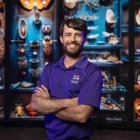


ChristianaCare Appoints Jennifer Moberg, DNP, Vice President of Emergency Services
Jennifer Moberg, DNP, MPA, RN, CPPS, NEA-BC, has been appointed vice president of Emergency Services at ChristianaCare. In this role, she will oversee the delivery of safe, high-quality, patient-centered care across ChristianaCare’s emergency departments and support prehospital services and trauma programs. Jennifer Moberg, DNP, has been appointed vice president of Emergency Services at ChristianaCare. Moberg has a strong track record of improving care quality, safety and caregiver engagement in complex health care settings. She has helped build more diverse teams, reduce staff turnover and lead major emergency department renovation projects. She has also worked to make patient care more efficient and improve safety for caregivers by strengthening security practices. Prior to joining ChristianaCare, Moberg served as director of Emergency Services at HealthPartners in Bloomington, Minnesota. She also worked as a senior advisor assessing and standardizing security protocols across hospitals and clinics. Earlier in her career, she spent more than 20 years at Abbott Northwestern, where she served as a critical care nurse and later as a patient care manager. Moberg earned a Doctor of Nursing Practice in executive leadership from Baylor University. She holds a Master of Public Affairs in nonprofit leadership from the University of Minnesota and a Bachelor of Science in nursing from Bethel University. She reports to Chief Nurse Executive Danielle Weber, DNP, MSM, RN-BC, NEA-BC.



In the News: School Choice and Vouchers
A Trump administration proposal to use the federal tax code to offer vouchers that students could use to attend private secular or religious schools has reignited public debate over school choice. David Figlio, a professor of economics and education at the University of Rochester whose research on vouchers has been widely cited, is available to offer insight on the matter. A recent study he co-authored on a school choice program in Ohio showed that low-income children in the program were likely to realize significant and positive academic benefits. Figlio warned in an interview with National Public Radio, though, that the results need to be taken “with a grain of salt.” “This program was a highly targeted program that bears little resemblance to the statewide, universal vouchers that are being rolled out today,” he said. Figlio’s research spans a wide range of education and health policy issues, from school accountability and standards to welfare policy and the intersection between education and health. Contact Figlio by clicking on his profile.


Georgia Southern University’s Office of Student Wellness and Health Promotion, Jiann-Ping Hsu College of Public Health (JPHCOPH) Center for Addiction Recovery and Health Services have partnered to provide overdose prevention education to the campus community. The University will distribute naloxone, which is used to rapidly and temporarily reverse the effects of an opioid overdose, allowing time for first responders to arrive and initiate further intervention, to the campus community at no cost. Savannah nonprofit No More O.D.s donated a large quantity of naloxone to Georgia Southern for this purpose. “The health and safety of our campus and the many visitors it welcomes are of high priority,” said Shay Little, Ph.D., vice president for Student Affairs. “By increasing access to naloxone we are equipping our community with another life-saving tool.” Georgia Southern Public Health Administrator Sean Bear, DPH, agrees. “Naloxone is a life-saving medication,” he noted. “It is safe, fast-acting and easy to use.” Although many in the Georgia Southern community do not consume alcohol or other recreational substances, opioid overdoses can occur under a number of circumstances. Misuse of prescription opioids provided by a health care provider or the use of illegal opioids can result in negative health consequences, including overdoses. Some common prescription opioids include codeine, morphine, hydrocodone and oxycodone, among others. Counterfeit pills designed to look like prescription opioids often contain a synthetic opioid known as fentanyl, with many of these pills containing enough fentanyl in just one dose to cause an opioid overdose. “The primary aim of distributing naloxone and providing education on overdose prevention, recognition and response is to save lives,” said Robert Bohler, Ph.D., JPHCOPH assistant professor. Just as AED/CPR first aid boxes are placed strategically across campus, naloxone kits and utilization instructions will be placed in high-traffic, high-risk areas. Distribution locations include the Campus Food Pantries (all campuses), Center for Addiction and Recovery (Statesboro Campus), Health Centers (Statesboro and Armstrong campuses), Counseling Centers (Statesboro and Armstrong campuses), and Student Wellness and Health Promotion (Statesboro and Armstrong campuses). “All naloxone packages come with instructions, however, additional educational information, such as a video link on how to administer naloxone, where to find additional information and more will be available at each of these distribution locations,” said Gemma Skuraton, DPH, director of Student Wellness and Health Promotion. Universities play a vital role in promoting harm-reduction strategies. As such, Georgia Southern is committed to ensuring the availability, accessibility and education surrounding naloxone on each of its campuses. Educational initiatives will focus on overdose prevention, recognizing signs and symptoms of overdose, overdose response planning, naloxone administration, legal protections (Georgia’s 911 Medical Amnesty Law and Georgia Southern’s Amnesty Protocol), bystander intervention, and treatment and recovery service availability on campus and in the community. You can sign-up for an open workshop to learn more on the Student Wellness and Health Promotion webpage: Interested in learning more? If you want to connect with any of the experts from this story and want to book time to talk or interview, then let us help - simply contact Georgia Southern's Director of Communications Jennifer Wise at jwise@georgiasouthern.edu to arrange an interview today.


Vishesh Agarwal, M.D., Appointed Chief of Addiction Medicine Services
Vishesh Agarwal, M.D., has been appointed chief of Addiction Medicine Services at ChristianaCare. In this role, Agarwal will lead and expand ChristianaCare’s comprehensive addiction treatment services, guiding care for people with substance use disorders across inpatient, outpatient, emergency and consultation settings. He will oversee addiction programs across all campuses, help create consistent care guidelines and support teams of experts working together to provide safe, effective and compassionate care for patients. A key priority for Agarwal will be to explore strategic growth opportunities to broaden ChristianaCare’s reach and strengthen its impact on individuals and families affected by substance use disorders. His leadership will be instrumental in ensuring that ChristianaCare continues to set the standard for innovation and excellence. Agarwal will continue in his role as vice chair of the Department of Psychiatry at ChristianaCare, maintaining his leadership of clinical and operational initiatives in the Behavioral Health Service Line. He will continue to lead efforts to improve provider well-being, develop care pathways and foster clinical growth. He also oversees the Behavioral Health Unit, Emergency Department crisis services and psychiatric consultations for hospitalized patients. Agarwal is board certified in general adult psychiatry, addiction psychiatry and obesity medicine. He has published research on substance use and behavioral addictions in peer-reviewed journals and has presented at national conferences. His 2021 study linking gambling disorder, major depression and suicide risk was published in Addictive Behaviors and gained national attention. Agarwal holds an Executive MBA from Quantic School of Business and Technology and completed an addiction psychiatry fellowship at the Zucker Hillside Hospital. He completed his psychiatry residency and served as administrative chief resident at Einstein Medical Center. He earned his medical degree from Gauhati Medical College. Agarwal teaches and mentors psychiatry residents and medical students as a clinical assistant professor at Sidney Kimmel Medical College at Thomas Jefferson University. He also co-chairs system committees and serves on the board of the Mental Health Association in Delaware. He reports to Mustafa Mufti, M.D., chair of the Department of Psychiatry.


Why Simultaneous Voting Makes for Good Decisions
How can organizations make robust decisions when time is short, and the stakes are high? It’s a conundrum not unfamiliar to the U.S. Food and Drug Administration. Back in 2021, the FDA found itself under tremendous pressure to decide on the approval of the experimental drug aducanumab, designed to slow the progress of Alzheimer’s disease—a debilitating and incurable condition that ranks among the top 10 causes of death in the United States. Welcomed by the market as a game-changer on its release, aducanumab quickly ran into serious problems. A lack of data on clinical efficacy along with a slew of dangerous side effects meant physicians in their droves were unwilling to prescribe it. Within months of its approval, three FDA advisors resigned in protest, one calling aducanumab, “the worst approval decision that the FDA has made that I can remember.” By the start of 2024, the drug had been pulled by its manufacturers. Of course, with the benefit of hindsight and data from the public’s use of aducanumab, it is easy for us to tell that FDA made the wrong decision then. But is there a better process that would have given FDA the foresight to make the right decision, under limited information? The FDA routinely has to evaluate novel drugs and treatments; medical and pharmaceutical products that can impact the wellbeing of millions of Americans. With stakes this high, the FDA is known to tread carefully: assembling different advisory, review, and funding committees providing diverse knowledge and expertise to assess the evidence and decide whether to approve a new drug, or not. As a federal agency, the FDA is also required to maintain scrupulous records that cover its decisions, and how those decisions are made. The Impact of Voting Mechanisms on Decision Quality Some of this data has been analyzed by Goizueta’s Tian Heong Chan, associate professor of information systems and operation management. Together with Panos Markou of the University of Virginia’s Darden School of Business, Chan scrutinized 17 years’ worth of information, including detailed transcripts from more than 500 FDA advisory committee meetings, to understand the mechanisms and protocols used in FDA decision-making: whether committee members vote to approve products sequentially, with everyone in the room having a say one after another; or if voting happens simultaneously via the push of a button, say, or a show of hands. Chan and Markou also looked at the impact of sequential versus simultaneous voting to see if there were differences in the quality of the decisions each mechanism produced. Their findings are singular. It turns out that when stakeholders vote simultaneously, they make better decisions. Drugs or products approved this way are far less likely to be issued post-market boxed warnings (warnings issued by FDA that call attention to potentially serious health risks associated with the product, that must be displayed on the prescription box itself), and more than two times less likely to be recalled. The FDA changed its voting protocols in 2007, when they switched from sequentially voting around the room, one person after another, to simultaneous voting procedures. And the results are stunning. Tian Heong Chan, Associate Professor of Information Systems & Operation Management “Decisions made by simultaneous voting are more than twice as effective,” says Chan. “After 2007, you see that just 3.4% of all drugs and products approved this way end up being discontinued or recalled. This compares with an 8.6% failure rate for drugs approved by the FDA using more sequential processes—the round robin where individuals had been voting one by one around the room.” Imagine you are told beforehand that you are going to vote on something important by simply raising your hand or pressing a button. In this scenario, you are probably going to want to expend more time and effort in debating all the issues and informing yourself before you decide. Tian Heong Chan “On the other hand, if you know the vote will go around the room, and you will have a chance to hear how others’ speak and explain their decisions, you’re going to be less motivated to exchange and defend your point of view beforehand,” says Chan. In other words, simultaneous decision-making is two times less likely to generate a wrong decision as the sequential approach. Why is this? Chan and Markou believe that these voting mechanisms impact the quality of discussion and debate that undergird decision-making; that the quality of decisions is significantly impacted by how those decisions are made. Quality Discussion Leads to Quality Decisions Parsing the FDA transcripts for content, language, and tonality in both settings, Chan and Markou find evidence to support this. Simultaneous voting or decision-making drives discussions that are characterized by language that is more positive, more authentic, and more even in terms of expressions of authority and hierarchy, says Chan. What’s more, these deliberations and exchanges are deeper and more far-ranging in quality. We find marked differences in the tone of speech and the topics discussed when stakeholders know they will be voting simultaneously. There is less hierarchy in these exchanges, and individuals exhibit greater confidence in sharing their points of view more freely. Tian Heong Chan “We also see more questions being asked, and a broader range of topics and ideas discussed,” says Chan. In this context, decision-makers are also less likely to reach unanimous agreement. Instead, debate is more vigorous and differences of opinion remain more robust. Conversely, sequential voting around the room is typically preceded by shorter discussion in which stakeholders share fewer opinions and ask fewer questions. And this demonstrably impacts the quality of the decisions made, says Chan. Sharing a different perspective to a group requires effort and courage. With sequential voting or decision-making, there seems to be less interest in surfacing diverse perspectives or hidden aspects to complex problems. Tian Heong Chan “So it’s not that individuals are being influenced by what other people say when it comes to voting on the issue—which would be tempting to infer—rather, it’s that sequential voting mechanisms seem to take a bit more effort out of the process.” When decision-makers are told that they will have a chance to vote and to explain their vote, one after another, their incentives to make a prior effort to interrogate each other vigorously, and to work that little bit harder to surface any shortcomings in their own understanding or point of view, or in the data, are relatively weaker, say Chan and Markou. The Takeaway for Organizations Making High-Stakes Decisions Decision-making in different contexts has long been the subject of scholarly scrutiny. Chan and Markou’s research sheds new light on the important role that different mechanisms have in shaping the outcomes of decision-making—and the quality of the decisions that are jointly taken. And this should be on the radar of organizations and institutions charged with making choices that impact swathes of the community, they say. “The FDA has a solid tradition of inviting diversity into its decision-making. But the data shows that harnessing the benefits of diversity is contingent on using the right mechanisms to surface the different expertise you need to be able to see all the dimensions of the issue, and make better informed decisions about it,” says Chan. A good place to start? By a concurrent show of hands. Tian Heong Chan is an associate professor of information systems and operation management. he is available to speak about this topic - click on his con now to arrange an interview today.



Sevki Cesmeci, Ph.D., associate professor of mechanical engineering in the Allen E. Paulson College of Engineering and Computing at Georgia Southern University, has been selected to take part in the 2025-2026 Governor’s Teaching Fellows (GTF) Academic Year Program in Georgia. This program is designed to provide Georgia’s higher education faculty with expanded opportunities for developing teaching skills and innovative pedagogies. “I am grateful to have been nominated by Provost Reiber as Georgia Southern University’s sole nominee,” Cesmeci said. “I have been deeply passionate about both research and teaching during my time at Georgia Southern, and I am grateful for the opportunity to contribute meaningfully to both.” GTF chose only 16 faculty members from across Georgia’s higher education institutions. Cesmeci’s innovative teaching strategies and methods were integral to his nomination. His work with leading textbook publisher McGraw Hill was one project that garnered recognition, as he worked with professors across the country to create an online, application-based activity (ABA) for fluid mechanics problems. “ABA is a next-generation learning method based on a storytelling-teaching strategy,” Cesmeci said. “Students are challenged with questions and guided through detailed feedback at each step of the solution.” In addition to research accolades, Cesmeci has been recognized for his teaching excellence at Georgia Southern with the 2022-2023 Georgia Southern University Award of Excellence in Student Success and the 2023-2024 Allen E. Paulson College of Engineering and Computing Faculty Award for Teaching. Through his participation in GTF, Cesmeci plans to integrate artificial intelligence tools into the mechanical engineering curriculum. “Unlike disciplines such as computer science and electrical engineering, mechanical engineering curricula have been slower to adopt contemporary and innovative tools,” Cesmeci said. “I hope to leverage this experience in the GTF program to enhance curriculum development at Georgia Southern, sharing insights and best practices to advance mechanical engineering education.” Hosted at the University of Georgia, GTF brings together faculty from accredited private and public institutions across the state for a series of interactive seminars focused on teaching practices, faculty development and course design. Throughout the program, fellows will work on a course design or instructional improvement project aimed at enhancing student learning. “I look forward to engaging with fellow educators, refining my teaching strategies and bringing new insights back to Georgia Southern students,” Cesmeci said. If you're interested in learning more and want to book time to talk or interview with Sevki Cesmeci then let us help - simply contact Georgia Southern's Director of Communications Jennifer Wise at jwise@georgiasouthern.edu to arrange an interview today.

Expert Perspective: The Hidden Costs of Cultural Appropriation
In our interconnected world, cultural borrowing is everywhere. But why do some instances earn applause while others provoke outrage? This question is becoming increasingly crucial for business leaders who must carefully navigate cultural boundaries. Take the backlash the Kardashian-Jenner family faced for adopting styles from minority cultures or the controversy over non-Indigenous designers using Native American patterns in fashion. These examples highlight the issue of cultural appropriation, where borrowing elements from another culture without genuine understanding or respect can lead to accusations of exploitation. Abraham Oshotse, an assistant professor of organization and management at Goizueta Business School, along with Assistant Professor of Sociology and Anthropology at Hebrew University Yael Berda and Associate Professor of Organizational Behavior at the Stanford Graduate School of Business Amir Goldberg, explores this in their research on “cultural tariffing.” They shed light on why high-status individuals, such as celebrities or industry leaders, often come under fire when crossing cultural boundaries. The Concept of Cultural Tariffing Oshotse and coauthors define cultural tariffing as “the act of imposing a social cost on cultural boundary crossing. It is levied on high-status actors crossing into low-status culture, in order to mitigate the reproduction of the status inequality.” This notion suggests that the acceptance or rejection of cultural boundary-crossing is influenced by the perceived costs and benefits. Cultural appropriation involves taking elements from a culture that one does not belong to, without permission or authority. For example, when Elvis Presley brought African-American music into the mainstream, it was initially seen as elevating the genre. However, in today’s context, such acts might be criticized as appropriation rather than celebration. This research seeks to analyze people’s modern reactions to different examples of cultural boundary-crossing and which conditions induce cultural tariffing. The Hypotheses The researchers make four hypotheses about participants’ reactions to cultural appropriation: People will disapprove of cultural borrowing if there’s a clear power imbalance, with the borrowing group having more status or privilege than the group they are borrowing from. Cultural borrowing is more likely to be criticized if the person doing it has a higher socioeconomic status within their social group. Cultural borrowing is more likely to be criticized if the person doing it has only a shallow connection to the culture they’re borrowing from. Cultural borrowing is more likely to be criticized if the person doing it benefits more from it than the people from the culture they are borrowing from. Put to the Test Oshotse et al exposed respondents to four scenarios per hypothesis (16 total) with a permissible and a transgressive condition. In the permissible condition, subjects exhibit lower status or socioeconomic standing or a stronger connection to the target culture. Subjects in the transgressive condition exhibit a higher status or socioeconomic standing and less of an authentic connection to the target culture. Insights from the Study Oshotse’s study offers four key insights: Status Matters: Cultural boundary-crossing is more likely to generate disapproval if there’s a clear status difference favoring the adopter. Superficial Connections: The less authentic the adopter’s connection to the target culture, the more likely they are to face backlash. Socioeconomic Influence: Higher socioeconomic status within the adopter’s social group increases the likelihood of disapproval. Value Extraction: The more value the adopter gains relative to the culture they’re borrowing from, the higher the disapproval. These insights are crucial for leaders who want to navigate cultural boundaries successfully, ensuring their actions are seen as respectful and inclusive rather than exploitative. Real-World Implications for Business Leaders Why does this matter for business leaders? Understanding cultural tariffing is crucial when expanding into new markets, launching multicultural campaigns, or even managing diverse teams. The research suggests that crossing cultural boundaries without deep understanding or respect can backfire. That’s especially true when the adopter holds a higher socioeconomic status. Consider the example of a luxury brand adopting traditional African patterns without engaging with the communities behind them. In this case, it risks being seen as exploitative rather than innovative. The consequences aren’t just reputational; they can also impact the brand’s bottom line. This research isn’t just about isolated incidents; it mirrors sweeping societal shifts. Over the past 50 years, Western views have evolved to embrace ethnic diversity and multicultural exchange. But with this newfound appreciation comes a fresh set of challenges. Today’s leaders must navigate cultural interactions with greater care, fully aware of the historical and social contexts that shape perceptions of appropriation. In today’s global and interconnected business landscape, mastering the subtleties of cultural appropriation and tariffing is crucial. Leaders who tread thoughtfully can boost their reputation and success, while those who falter may face serious backlash. By understanding the hidden costs of crossing cultural boundaries, business leaders can cultivate authentic exchanges and steer clear of the pitfalls of appropriation. Abraham Oshotse is an assistant professor of organization & management. He is available speak to media regarding this important topic - simply click on his icon now to arrange an interview today.


What's That Smell? Something is Rotten and Florida Atlantic's Seaweed Expert has the Answers
It’s back…and bigger than before. This summer, Floridians can expect a record amount of it! Sargassum, it smells like rotting eggs and a 'mega bloom' of the algae is expected to wash up on beaches soon. Sargassum is essentially a brown seaweed and also a type of algae. When out at sea, it's an essential item that helps feed fish, turtles, crabs and an array of ocean life. But once it hits land, it begins to rot and can be at the very least annoying and even potentially dangerous to humans by emitting harmful gases. The topic is getting a lot of media coverage - with reporters connecting with experts like Florida Atlantic's Brian LaPointe to get the answers and explanations they need. The Atlantic Ocean has a toxic seaweed problem. Floating in brown islands of algae, this year’s sargassum bloom has already broken its own size record by millions of tons — and the growing season isn’t done yet. Now stretching across some 5,500 miles of ocean, the annual bloom is more than just an eyesore: Sargassum hurts ecosystems and economies wherever its overgrown arms reach. And they are spreading into Florida’s waterways, coating marinas and beaches in the Miami area. “Sargassum goes from being a very beneficial resource of the North Atlantic to becoming what we refer to as … a harmful algal bloom, when it comes ashore in excessive biomass,” said Brian LaPointe, a research professor at Florida Atlantic University’s Harbor Branch Oceanographic Institute. For more than a decade, Atlantic coastal communities have been inundated by more and more sargassum. Images of white sand beaches stretching into azure waters have been altered by the toxic and putrid invasion. In the water, it’s home to larvae and other organisms that can irritate the skin of any passing swimmers. As it rots on shore, it emits harmful gases— an infamous stench. It’s a blight on beaches that repels tourists during the high-travel season, ultimately hurting towns that rely on tourism to fuel their economy. Rising ocean temperatures due to human-caused climate change have spurred this sargassum surplus, supercharging the seaweed. In April, the University of South Florida estimated this year’s bloom is already at 31 million tons — “40% more” than the previous record from June 2022, according to LaPointe. May 15 - CNN Looking to know more? We can help. Brian LaPointe is available to speak with media about seaweed, sargassum and what beachgoers can expect this summer in Florida. Simply click on his icon now to arrange an interview today.



Will AI undermine or support writing and critical thinking?
As artificial intelligence reshapes the way we write and think, a central question emerges: Is AI helping or hindering our ability to engage in independent, critical thought? Joshua Wilson, professor of education at the University of Delaware, investigates this topic in a new paper that examines the risks of AI dependency and discusses the need for AI literacy in education. Wilson explores how AI impacts cognitive development through writing — highlighting both the promise and peril of AI-powered tools like ChatGPT. His expertise centers on how these tools interact with foundational models of writing and learning and what that means for education, workforce readiness and civic engagement. In his new paper, Wilson warns that while AI can support higher-order thinking by automating basic writing mechanics, it also risks eroding critical thinking if students and professionals come to rely on it uncritically. He is a leading advocate for AI literacy in education – training individuals not just to use AI, but to think with it. Wilson is available for interviews with reporters, particularly those covering the intersection of AI, education and society and investigating the risks of cognitive offloading in an AI-saturated world. To reach Wilson directly, visit his profile and click on the contact button.

