
Experts Matter. Find Yours.
Connect for media, speaking, professional opportunities & more.

Black Friday Shoppers Seek Deals on Electronics, Early Sales and Convenience in a Competitive Market
This year’s Black Friday shopping will bring a fresh wave of trends for both consumers and retailers. With electronics, online convenience and competitive pricing at the forefront, the landscape of Black Friday is evolving to match the shifting shopping habits of today’s consumers, said Baylor University consumer behavior expert James A. Roberts, Ph.D. Roberts – who serves as The Ben H. Williams Professor of Marketing at Baylor’s Hankamer School of Business – keeps a close watch on Black Friday, including what he sees as the Top 5 trends for holiday shopping in 2024. Top Trends for Black Friday 2024 The Shift in Shopping Habits: The balance between online and in-store sales remains steady, with consumers enjoying a 50/50 split in shopping preference, Robert said. While COVID-19 accelerated a surge in online shopping, this year, both are expected to perform equally as shoppers appreciate the flexibility of both options. Holiday Deals Start Early: As the competitive landscape has grown, Black Friday sales now launch weeks in advance. This early kickoff benefits consumers who are eager to lock in discounts and spreads out the typical holiday rush, providing retailers a longer window to capture consumer interest, Roberts noted. Electronics Dominate Sales: As in previous years, electronics will be the driving force of Black Friday 2024, accounting for nearly half of all sales. Roberts said that shoppers are especially focused on deals for televisions, laptops, smartwatches and gaming consoles – underscoring the lasting demand for high-quality technology at competitive prices. Gen Z and Millennials Drive Online Growth: Digital natives like Gen Z and Millennials continue to shape holiday shopping habits. Roberts said their comfort with online shopping – coupled with their mobile-first approach – makes them a powerful force in the online retail space. Retailers can expect these younger consumers to leverage social media, mobile apps and seamless e-commerce platforms for their holiday purchases. Rising Categories: Beyond electronics, Roberts predicts that other sectors will see strong sales this season, particularly in clothing, cosmetics and home appliances. As consumer preferences expand, brands in these categories should prepare for increased demand. Factors shaping consumer choices For Black Friday in 2024, competitive pricing and convenience remain top priorities, Roberts said. “Retailers who offer the best deals alongside quick and reliable delivery options stand out among consumers,” he said. Additionally, low-cost brands – such as Shein – have set consumer expectations for affordable pricing, even as “Buy Now, Pay Later” options have increased in popularity – though Roberts said retailers and consumers alike should be cautious when using this financing option at the risk of overspending. Future of Black Friday Looking ahead, Roberts said Black Friday’s trajectory appears geared more towards online channels, with each year seeing a slight shift away from brick-and-mortar shopping. Retailers are encouraged to keep an eye on pricing expectations and financing trends, as they’ll play an increasingly influential role in the holiday season. ABOUT JAMES A. ROBERTS, PH.D. James A. Roberts, Ph.D., is The Ben H. Williams Professor of Marketing at Baylor University’s Hankamer School of Business. A noted consumer behavior expert, he is among the "World's Top 2%" most-cited scientists in a database compiled by Stanford University. In addition to journal citations, Roberts has often been called upon by national media outlets for his consumer expertise and latest research. He has appeared on the CBS Early Show, ABC World News Tonight, ABC Good Morning America, NBC’s TODAY Show and NPR’s Morning Edition, as well as in articles in The New York Times, USA TODAY, The Wall Street Journal, TIME and many others. Roberts’ research has focused on how individual consumer attitudes and behavior impact personal and collective well-being. His research has investigated the factors that drive ecologically and socially conscious consumer behavior, the impact of materialism and compulsive buying on well-being and the impact of smartphone and social media use on personal well-being. He is the author of “Shiny Objects: Why We Spend Money We Don’t Have in Search of Happiness We Can’t Buy” and “Too Much of a Good Thing: Are You Addicted to Your Smartphone?”


Election Coverage with Dr. Meena Bose
Meena Bose was interviewed on and after Election Day by a number of media outlets, including WNYW-TV Fox 5 and News 12 Long Island. Dr. Bose is a Hofstra University professor of political science, executive dean of the Public Policy and Public Service program, and executive director of the Kalikow Center for the Study of the American Presidency.


International Education Week: University of Delaware leads the way in global studies
The University of Delaware has a lot to boast about in regards to International Education Week, which takes place from Nov. 18-22. This includes a four-year academic program that immerses students in both culture and classrooms of host countries; a mentoring program for international students on UD's campus; and the oldest study abroad program in the nation. UD's World Scholars program offers students a four-year global education that begins with a semester of study in Greece, Italy, England, New Zealand or Spain where students earn credits in their majors while becoming immersed in the culture and history of the respective host country. The 101-year-old Study Abroad Program – the oldest program founded by a U.S. institution – offers programs in 40 countries. More than 30 percent of UD undergraduates study abroad at least once, and while one in 10 American students study abroad, at UD the number is 3 in 10. Finally, UD’s Center for Global Programming and Services offers the iBuddy Mentoring Program, which pairs incoming international students with trained and experienced UD student mentors. After undergoing iBuddy training, these mentors offer friendship and guidance on academic matters, social life, housing options and more. They also organize events to help them get socialized.


Kert Anzilotti, M.D., Appointed President of the Medical Group of ChristianaCare
Kert Anzilotti, M.D., MBA, FACR has been appointed president of the Medical Group of ChristianaCare. Anzilotti has served as interim president since June 2024. He will also continue in his role as system chief medical officer of ChristianaCare. As president of the ChristianaCare Medical Group, Anzilotti will seek to improve every aspect of care for every person the Medical Group touches. He will focus on the optimization of care delivery, strategic visioning, network development, clinical technology implementation and leveraging medical informatics. Anzilotti will continue to develop new care models that transcend settings, promote value-based care and improve the patient experience across the clinical enterprise. Among his priorities are the adoption of population health measures, the embedding of health equity into care delivery and workforce development, further expansion of access points for patients and the continuous enhancement of patient and caregiver experience. “Dr. Anzilotti is exceptionally qualified to lead the Medical Group of ChristianaCare,” said Janice E. Nevin, M.D., MPH, president and CEO of ChristianaCare. “His passion for our mission and vision for the future strength of our Medical Group is unwavering. Since joining ChristianaCare in 2011, Dr. Anzilotti has earned a well-deserved reputation as a thoughtful and collaborative leader.” Anzilotti has served in numerous leadership roles at ChristianaCare, including as chief medical officer, acute care; chair of the Department of Radiology; medical director of Imaging Services; and physician leader of the Neurosciences Service Line. He also previously served as Interim President and CEO for the eBrightHealth ACO with responsibility for physician leadership and network operations. He is board certified in Neuroradiology. “Over the many years I have been at ChristianaCare, I have had the privilege of witnessing the dedication and compassion of my Medical Group colleagues as we served together with love and excellence,” Anzilotti said. “I am honored to lead this incredible, dynamic group that is reshaping the future of care, ensuring everyone we serve can achieve their best health.” Anzilotti earned his medical degree from Jefferson Medical College of Thomas Jefferson University in Philadelphia. He earned his MBA at the University of Delaware, completed the Managing Health Care Delivery Course at Harvard Business School and graduated as Physician Executive Fellow in the Health Management Academy, GE Fellows Program. The Medical Group of ChristianaCare consists of over 2,200 dedicated doctors, nurse practitioners, physician assistants and other caregivers. This highly skilled team delivers exceptional care through ChristianaCare’s community-based primary care and specialty care practices serving Delaware and surrounding states. Additionally, the Medical Group collaborates with ChristianaCare hospitalists to ensure seamless continuity of care for our patients, from primary care to hospital care and back again.


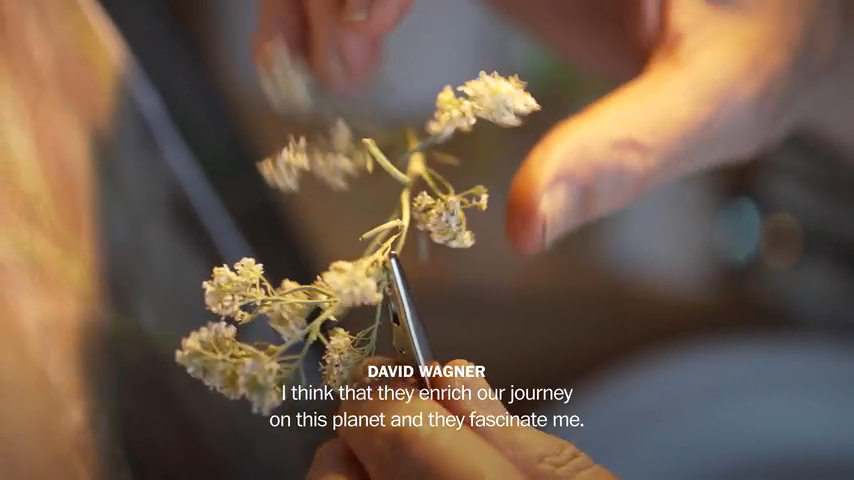
Moths in the Mojave, with UConn's David Wagner
Did you know that there are approximately 180,000 moth and butterfly species living in California’s Mojave Desert? Moths, the winged insects famous for eating sweaters and flocking to lights at night, are a mysterious and captivating species for entomologists like UConn's David Wagner. He was part of a research study that was documented recently in The Washington Post. Each night in the desert, vast clouds of sphinx moths, some spanning the palm of your hand, speed between night-blooming flowers, sipping nectar. Ethmia, tiny black moths with spots shaped like musical notes, emerge from the dark like fairies. Thousands of geometrid moths, no bigger than your fingernail, slip by cloaked in desert hues from rusty reds to pale green. To witness them, I traveled deep into the Mojave Desert this spring with a team from the California Academy of Sciences working to ensure the survival of lepidoptera. For two days, we beat bushes, placed traps and collected thousands of moths to see what lives there — and what can be saved. Moths have inhabited our planet for at least 200 million years. But the conservation status of about 99 percent of moth species remains unknown. Some, like sphinx moths, remain abundant. Many others are probably being pushed to the brink by development, land-use changes, pesticides and pollution, and rising temperatures. “It’s not this unseen force,” says David Wagner, an entomologist at the University of Connecticut. “It’s humans.” Over two nights in the desert, I discovered just how easy it is to fall in love with an unloved insect. And why “mothing” may be the best way to discover the miracle of biodiversity in your own backyard. On the arid western edge of the Mojave, where the desert floor rises to meet the San Bernardino Mountains, sits the 306-acre Burns Piñon Ridge Reserve. We venture out in the morning with beating sticks. Hitting the branches of small oaks and rabbitbrush deposits a treasure trove of insect life into collectors made out of fabric: Crane flies, green lacewings, spiders, walking sticks and caterpillars that will one day grow into moths. Wagner and Chris Grinter, an entomologist and collection manager at the California Academy of Sciences, will catalogue the most interesting ones. The academy houses a collection of 18 million insects, 700,000 of which are butterflies and moth specimens. Many are still waiting for scientists to identify and name them. The plight of moths and caterpillars has fascinated Wagner since childhood. After 20 years, he is no less enthusiastic — or worried. Wagner traveled to Burns Piñon to help finish his magnum opus, the successor to his 500-page guide to eastern North America’s caterpillars. The guide for the west will probably run more than 1,500 pages, a testament to the region’s remarkable biodiversity. As the sun sets, the mood is anticipatory. We head out into the desert to set our traps and see what moths we’ll discover. “The nice thing,” says Grinter, “is moths will come to you.” The article is an amazing read - and the link is above. And if you are interested in knowing more about moths, insects, or the fascinating field of entomology, then let us help. Dr. David Wagner is an expert in caterpillars, butterflies, moths, and insect conservation, and he's commented extensively on the current decline of insects worldwide. Click his icon to arrange an interview today.


Expert Q&A - Craig Albert, PhD, talks election interference
Going into the final days of the 2024 election cycle there is a very real concern about election interference from both foreign and domestic actors, and it's something that will continue to be monitored even after the final votes are tallied. Craig Albert, PhD, graduate director of the PhD in Intelligence, Defense, and Cybersecurity Policy and Master of Arts in Intelligence and Security Studies programs at Augusta University, is a leading expert on propaganda, information warfare and national security studies. Albert has answered key questions about who is trying to interfere in the U.S. elections and why it matters. Q: How and when should someone vote and does it protect you more to avoid interference? The access to instantaneous news or events could affect people and their understanding of whom they want to vote for all the way up until the day they vote. Because of this ease of access, this election cycle has especially shown us how cautious we need to be in regards to scams. It's also why I know there has been a big push for early voting and mail-in voting, and it's necessary in some cases, but I prefer to vote on Election Day because you never know what type of news might come out about one of the candidates or parties. If something comes out that proves to be true, it could affect how someone might vote, but if you voted before Election Day, it's too late. At the same time, a very serious deepfake could be released that could manipulate how people choose to vote and it could mislead people, as well. Q: What are the consequences of the optics of an 'unfair' election? What the U.S. needs to be cautious about is preserving and maintaining the legitimacy of the election cycle. After the election, no matter who wins, narratives of interference and how it impacted the election are going to be shared and that's just irresponsible. Unless there's damning information and very clear evidence, you shouldn't mess around with the idea that the election was interfered with, because that could threaten the very structure of the United States. Q: What's the potential for post-election meddling? We have domestic bad actors as well as foreign maligned actors that are going to say the election was delegitimized no matter who wins. They have social media campaigns ready to post no matter which side wins, they're going to circulate false videos of ballot boxes burning or news that not all the the votes were counted and things of that nature. They're going to do all kinds of things because anybody can fake a ballot box being burned or mail in votes not being counted properly on video or something like that. The problem is if it goes out there or becomes viral, so many people will believe it and that sows discord. So, that creates distrust in the public system on a pretty big swath of the American population. Q: Who benefits from post-election doubts and chaos? You have foreign actors that really build on the type of anger that the political candidates and their parties already use through their propaganda and rhetoric. We have already seen Russia amplifying the message that somebody cheated or elections were hacked, and you have China, Iran, Venezuela, ISIS and Al Qaeda doing that, as well. You also have regular cyber criminals that just want to sew discord and distress so they can manipulate people later on and get into our banking systems and things of that nature. You have potentially hundreds, if not thousands of attack vectors coming at the United States between election night and January 20 when the new President will be sworn in. And then afterwards, they will all still be trying to create chaos, rebellion, civil unrest, or in the case of Iran, China and Russia, open civil war in the United States. Looking to know more and covering the election, Augusta University can help. Albert is available to speak with media – simply click on his name to arrange an interview today.



An Underwhelming October: The Latest Jobs Report
October brought disappointing news in the most recent U.S. jobs report. In the last jobs report before the U.S. presidential election, only 12,000 jobs were added. This is significantly lower than the expected number of 100,000, marking the slowest hiring month in years. This jobs report is reflective of the multiple hurricanes that ravaged the country this month and the ongoing Boeing strike. Dr. Jared Pincin, economic expert and associate professor at Cedarville University, has provided insight into the current economy of the U.S. and how announcements like this could affect the future. Here are three key takeaways from Pincin's recent interview: The October jobs report may have been skewed by the two major hurricanes and the Boeing strike that have hindered Americans from working temporarily. How will the Federal Reserve view this report as they consider future rate cuts? The stock market can have strong reactions to announcements such as this. What will the market do with these numbers that are unexpected but potentially untrustworthy? This jobs report is the last key piece of economic data to come out before the presidential election on November 5. Is there any chance that voters change their minds based on this news? If you are covering the recent jobs report or the U.S. economy and need to know more, let us help with your questions and stories. Dr. Jared Pincin is an expert on economics and is available to speak to media regarding the job market, inflation, and what this means for families in the United States – simply click on his icon or email mweinstein@cedarville.edu to arrange an interview.


Civil discourse will be crucial to healing after the election
As we inch toward Election Day and brace for the aftermath, learning to disagree will be as important as ever. Civil discourse – actively engaging while aiming to understand, not persuade – is the key to navigating the upcoming political minefield, says Tim Shaffer, the Stavros Niarchos Foundation Chair of Civil Discourse at the University of Delaware. Shaffer, who is also director of the Stavros Niarchos Foundation Ithaca Initiative in UD's Biden School of Public Policy and Administration, can discuss the concept of civil discourse and how it can be used to navigate a society so divided politically that it has torn friendships and families apart. Some main points: • Civil discourse emphasizes listening to understand others’ perspectives, focusing on shared values – such as family – rather than conflicting positions. • Disagreement is actually important. Society needs friction for growth and progress. • Advice for healthy discourse: Practice intellectual humility, acknowledging the complexity of issues beyond right and wrong and recognizing the importance of gray areas in life. • Staying safe and sane on social media: "People need to feel safe and included, and we need to ensure we hear differing viewpoints, so how do we balance those competing values? There’s no secret answer, but we have to figure it out collectively." • Open discussions can be a valuable tool. "I believe in the power of education—church basements, community spaces, classrooms—to make a difference," Shaffer says. Reporters can connect with Shaffer directly by visiting his profile and clicking on the contact button.


From collecting candy to carving pumpkins, Halloween is defined by its traditions, and few are as time-honored as the telling of ghost stories. Whether recounted by crackling campfires, read from well-worn books or streamed on big-screen TVs, supernatural tales seem to take on a special resonance in the lead-up to October 31. And, on the whole, we seem more than comfortable enduring chills and braving thrills to enjoy them. But what draws our attention, season after season, to things that go bump in the night? And what makes the paranormal such a powerful, and persistent, storytelling device? Mary Mullen, PhD, is an associate professor of English at Villanova University and the instructor of the course "Ghostly Matters," which delves into haunting's role in culture, history and society. From her perspective, our longstanding fascination with spirits, specters and phantoms speaks as much to our concern for the world around us as to our interest in the hereafter. "At their core, ghost stories unsettle us," says Dr. Mullen. "They raise questions about what we consider normal, what we view as 'everyday life,' what we value as 'modern' and whether the past is still with us or not." As Dr. Mullen explains, when we're presented with something that's "haunted," we're essentially being asked to consider the reasons why. The very existence of spirits, emerging from beyond the grave, compels us to reflect on their presence's meaning—and to think about what developments might draw the ire, intrigue or intervention of the dead. (When watching Steven Spielberg's "Poltergeist," for instance, a viewer might feel the movie's ghosts are completely justified in terrorizing the profit-hungry real estate firm that disturbed their eternal slumbers.) Spirits, in turn, consistently set our focus on items left unsaid, unconsidered or overlooked. Departed yet still present, drifting somewhere between this plane and the next, they often challenge the living's notions of progress, propriety and success—and signal a last-ditch effort at preserving something that has all but faded from recollection. In effect, they bring the past into dialogue with the present for the sake of the future. "Ghost stories are really useful for contemplating transition and change and what's lost in the process," says Dr. Mullen. "They give a name to things that are liminal… For example, Luke Gibbons [a professor at Maynooth University] says that ghost stories, in modern Irish writing, are frequently connected to memories that haven't yet become public history. So, they speak to facets of social life that exist, or have existed, but are not present in monuments or official accounts." From Virginia Woolf's "A Haunted House" to Toni Morrison's "Beloved," tales of the supernatural provide us with what Dr. Mullen terms "glimmers of possibilities." They serve to mirror and embody our complicated feelings on transformative happenings, whether personal, communal or generational, and they afford us the language and vocabulary to express sadness over what is done and hope for what is yet to come. "There are certainly ghost stories, like Elizabeth Bowen's 'The Demon Lover,' that end in absolute terror with no seeming resolution," says Dr. Mullen. "But I think that, in a lot of these tales, haunting leads to reconciliation, or different kinds of healing or important acknowledgements—of things that need to be acknowledged." As Dr. Mullen proceeds to explain, it's no coincidence that the roots of the contemporary ghost story can be traced to the 19th century, a period of great social upheaval, cultural displacement and scientific and technological advancement. The product and reflection of a tumultuous "new age," the genre, as we know it, took hold as a means of reckoning with that which was lost, actively transpiring and still to occur. Perhaps it's no surprise then that, as the leaves begin changing and autumn starts giving way to winter, we have an affinity for tales that center on visits from the afterlife, bridging the past, present and future. "I think that we tell ghost stories when we're open to moving beyond our sense of 'the everyday,'" says Dr. Mullen. "And there are certain points of the year, like the holidays and gatherings with family and friends, that are so rich with emotion and memory that the boundary between this world and the 'otherworld' seems maybe—just maybe—capable of being crossed."


Enhancing environmental governance in the Caribbean
The University of Delaware's Island Policy Lab has launched a first-of-its kind initiative to ensure that future development projects in the Caribbean are equipped to adapt to climate risks effectively. When completed, this work will set a new benchmark for sustainable development across the region. The research initiative is led by Professor Kalim Shah, Director of the UD Island Policy Lab, with colleagues at the University of the West Indies. The collaborative effort, which kicked off this month in Barbados, will integrate climate services into Environmental Impact Assessments (EIA) and bring together key stakeholders from public agencies, academic institutions and private organizations. Funded by NOAA and the U.S. Department of State, the project aims to strengthen environmental governance by embedding scientific climate data into regulatory frameworks. The work will cover multiple Caribbean islands chosen for their contrasting regulatory frameworks, with the aim of addressing critical gaps in how climate risks are incorporated into EIA processes, which often lack consistent and actionable climate data. On this first Barbados leg, the project has drawn support from the Barbados Meteorological Services, the Ministry of Environment and National Beautification, the Coastal Zone Management Unit and international financial institutions such as the Caribbean Development Bank and the Inter-American Development Bank. Private sector project developers are working alongside regulatory bodies and academic institutions to ensure the success of the initiative. Minister of Planning and Development William Duguid emphasized the importance of the project during the launch event, held at the Savannah Beach Club in Christ Church. “Our very survival as a nation depends on building climate resilience,” Duguid said, highlighting the vulnerability of Barbados’ key infrastructure — such as airports, seaports, and hospitals — located along the coast. He stressed the significance of using climate data in EIA processes to mitigate risks such as sea-level rise and storm surges, which threaten the island’s long-term sustainability. The initiative follows a phased approach, beginning with assessments of the existing institutional frameworks in Barbados, Dominica, Trinidad and Tobago, with other countries following in the future. The research team will evaluate how well current climate services align with the needs of both public agencies and private developers. In subsequent phases, stakeholders will participate in co-designing tailored climate tools to enhance EIA processes, leading to the development of Climate Services Implementation Plans. These plans will provide a roadmap for integrating climate services sustainably across sectors and jurisdictions. “This project is about more than just collecting data – it’s about turning scientific insights into practical tools for decision-makers,” Shah explained. The co-design process, which involves collaboration with local stakeholders and international partners, aims to reduce conflicts between regulators and developers by embedding climate considerations early in the project approval process. This alignment will ensure that new developments are both environmentally sound and climate-resilient. The research is expected to deliver several key outcomes, including enhanced coordination among regulatory bodies, improved access to climate data, and greater institutional capacity to manage environmental risks. Dr. Sylvia Donhert, Chief of the Inter-American Development Bank’s Compete Caribbean program, endorsed the project saying that it reflects the growing urgency for climate action across the region. “Embedding climate science into development planning is essential not just for policy but for the economic well-being of the region."
