
Experts Matter. Find Yours.
Connect for media, speaking, professional opportunities & more.

Wordle: How to Play (and Win) Like a Linguist
Wordle. If you haven’t heard of it, maybe you're on vacation, on a remote island, with no WiFi. If you have, maybe you've seen friends post their results to Twitter or Facebook and wondered what it was about. Maybe you heard about the game from reading the news. Either way, you're probably in deep. But for those of us who are unfamiliar, what is the game and how does it work? Why is it just so popular? And most importantly, how do you win? To answer these questions and more, we spoke with Villanova University professor and linguist Grant Berry, PhD. "I think word games have to some degree always been popular (think of Scrabble or the New York Times crossword, for example), and a big reason for that is that every human being has a lifetime of experience with language—it's familiar ground for all of us who speak a given language," Dr. Berry says. The appeal of the game, then, makes a lot of sense. It's not a new phenomenon. Rather, it's a reimagining of an established pastime. And Wordle is delightfully simple; each player is tasked with guessing a five-letter word in six tries. The tiles turn gray to show when letters are not in the word, yellow when letters are in the word but in the wrong position and green when letters are in the word and in the correct position. "To start, you need to find a five-letter word that maximizes the likelihood that you'll find at least one of the letters in the target word," Dr. Berry says. "I parsed a word list from powerlanguage’s GitHub page (the person who created Wordle), and the five most frequent letters in that list are A (7,646), E (7,563), S (6,612), O (5,007) and R (4,937). There is one word in English that contains all of these: SOARE (a young hawk). This word is not very common, and it's very unlikely to be the correct word, but it should give you a few pieces of the puzzle. Odds are the target word is fairly common, so it's unlikely to have the least common letters: W, V, Z, X, J or Q." Okay, so you should now have one or two correct letters. If not, Dr. Berry recommends "guessing a word (with the other two vowels) that doesn't contain any letters we've tried yet." (Some options are CUMIN, UNTIL, TULIP and INPUT.) After this, start thinking about common sequences of letters in English using the letters you've uncovered. "The ten most common consonant clusters in the dataset were ST, CH, TS, SH, TH, NG, NT, NS, LL and LY. Alternatively, you could appeal to the tendency in English syllable structure to favor what's called sonority sequencing." For those non-linguists out there, sonority sequencing means, "you're more likely to see harder, obstruent sounds like P, T, C, D, B and G followed by more resonant or continuant sounds like R, L, N, H or S at the beginning of syllables (i.e., before a vowel) and the opposite order at the end of syllables (i.e., after a vowel). For example, DRINK follows this principle." And a helpful tip? "If you have an S in the word and not much other information besides vowels, your best bet is to put it at the beginning of the word or at the very end," Dr. Berry says. "The S sound is the only one in English that can form consonant clusters with more than two distinct sounds (e.g., STRAP); it's also commonly found at the end of words in plurals." Congratulations, you're on a roll! "From this point, move forward without forgetting what you've learned so far, meaning that if a letter is gray from a previous guess, do not use it in another guess. Similarly, if a letter was in yellow in a previous guess, use it in a different position. If the new position is wrong, choose a third position that's different from the previous two. This way you aren't throwing away the useful positional information from your previous failed guesses." And there you go. With some expert tips and a bit of calculated guessing, you've uncovered the word of the day! Now that we know what Wordle is and how to win, we talked with Dr. Berry about the puzzle's virality. "The short duration of the game and its simplicity make it easily shareable, and the fact that there's only one word per day makes it easy for a large group of people to have common ground and a central topic of discussion. Those two things combined are the recipe for a viral phenomenon." Ever finish someone's sentence? Wordle taps into that experience and in a sense replicates it. "There’s strong evidence to suggest that human beings are capable of tracking distributions of words and sounds, using them to help predict what's coming next when reading or listening," Dr. Berry says. "In a sense, then, this game is asking players to do what they've always done: use what you know about the structure of words in English alongside feedback you get to come up with the appropriate target." How many tries did it take you to uncover the word of the day? With Dr. Berry’s help, you probably have a score worth bragging about.


Ask an Expert: Are airline concerns over 5G technology warranted?
Airlines around the world announced they were grounding planes this week as the rollout of 5G technology was set to begin. Major providers AT&T and Verizon halted their 5G rollout plans amidst the airlines’ claims that the technology would render a large swath of their aircraft unusable. Dr. Steven Holland, an associate professor at Milwaukee School of Engineering, helps sort out the validity of the airlines’ claims and explain why they are so concerned. Dr. Holland is an expert in electromagnetics, antennas and microwave/radio frequency circuits. “5G wireless systems promise transformational increases in wireless internet speed and connectivity. A key to the higher network speeds is increased 5G radio frequency spectrum usage. While reduced speed 5G has been operational in parts of the US for several years, new 5G frequency spectrum was set to become operational in early December 2021 and offer significantly higher network speeds. “However, rollout was delayed one month when the FAA raised warnings that 5G towers operating in this new spectrum could interfere with airplane radar altimeters, which operate at frequencies just above this new 5G spectrum. Altimeters are critical instruments in modern aircraft that measure a plane’s altitude, and thus potential interference could be disastrous. “While the altimeter and 5G frequency bands do not overlap, they are relatively close together, and the altimeter standards were set decades ago when the radio spectrum was far less crowded. As a result, the altimeter circuitry was not designed to operate in the vicinity of systems like the 5G towers that will transmit radio signals so close to the altimeter frequency range. “Due to limited testing, the FAA and FCC were not able to determine conclusively if the interference concern is warranted before the month-long delay expired in early January, and so an additional two-week delay was instituted. This brings us to today, January 19th – and still no conclusion has been reached by the FCC and FAA. To avoid further rollout delays, today several wireless carriers deployed the new 5G operating band on their networks except for those towers near airports. More extensive testing is needed to determine whether 5G interference is truly a risk to the altimeter systems.” Dr. Holland is available to speak with media about 5G technology and how it can impact aircraft. Simply click on his icon below to arrange an interview today.



Aston University opens applications for Midlands’ Pitch Up investment competition
The Minerva Birmingham Pitch Up Competition is aimed at small business leaders looking for support with gaining investment Ambitious business leaders can improve their ability to win investment while boosting their profile The final will take place at Venturefest on 24 March 2022 at Eastside Rooms. Applications to Minerva Birmingham’s Pitch Up 2022 competition have opened. Formerly known as ‘Pitchfest WM’ and now in its 7th year, participating businesses have the chance to pitch head-to-head to a variety of investors to win a cash prize, and the ultimate accolade of Pitch Up Champion. Pitch Up is a collaboration, co-delivered by the Aston Centre for Growth, University of Birmingham Enterprise, and Minerva Business Angels, part of the University of Warwick Science Park Ltd. The competition provides the opportunity for ambitious business leaders to improve their ability to win investment while simultaneously boosting their business profile. Interested business leaders can apply here, applications close on 28th February. Shortlisted applicants will be supported through a workshop to refine their pitch deck, sharpen their pitching skills and receive valuable feedback in order to improve. The first workshop will take place on 20 January 2022. A select number of successful applicants will then advance to the next stage of the competition and have the opportunity pitch to an investor-led panel to gain more practice and receive more feedback. The best performing businesses will then be selected to pitch at the prestigious Pitch Up Final. This will take place as part of Venturefest WM on 24 March 2022 at Eastside Rooms, Birmingham. Venturefest attracts some 300 delegates including investors, entrepreneurs and innovators. The overall winner will be decided by audience vote and crowned Pitch Up Champion 2022, they will receive a cash prize and the option of additional support from Minerva Birmingham. Last year’s winner, Mark Platt Founder and CTO of Figura Analytics, said: “I was really amazed to win last year’s competition and delighted at the new connections and networks I made as part of the process. “The support received through the competition was fantastic; each workshop I attended allowed me to meet new people, learn new skills and left me energised and eager for more. Our winning pitch was definitely the result of some really insightful advice and feedback from the team and panel members.” The event has put more than 125 entrepreneurs directly in front of investors and helped bring in excess of £40,000,000 of investment to the region's small businesses to date. Paula Whitehouse, director of Aston Centre for Growth, said: “We are delighted to continue this collaboration, Minerva Birmingham Pitch Up exists to boost access to finance for the region’s most exciting and innovative young businesses. “The competition continues to play a crucial role in unlocking opportunities and investment for the future of high growth companies within the region.” Alex Toft, head of Minerva Business Angels, part of the University of Warwick Science Park Ltd. said: “It’s great to be part of such a collaborative relationship building not only support for our entrepreneurs but helping to build that support structure of finance and experience provided by investors. “This is a great opportunity for those earlier in their development cycle who would otherwise struggle to get noticed. We also continue to call on those who have never considered angel investing to join to reach out to us to find out more.” David Coleman, CEO of University of Birmingham Enterprise said: “Within the Midlands, there is a clear disparity between the large proportion of the UK's high-growth companies that are based here, and the investment secured. “That's why collaborative programmes like Pitch Up, which engage a diverse range of investors, are so important to increasing the likelihood of companies securing the funding they need.” Find out more about Pitch Up, by contacting centreforgrowth@aston.ac.uk, visiting Minerva Birmingham Pitch Up or apply now here.

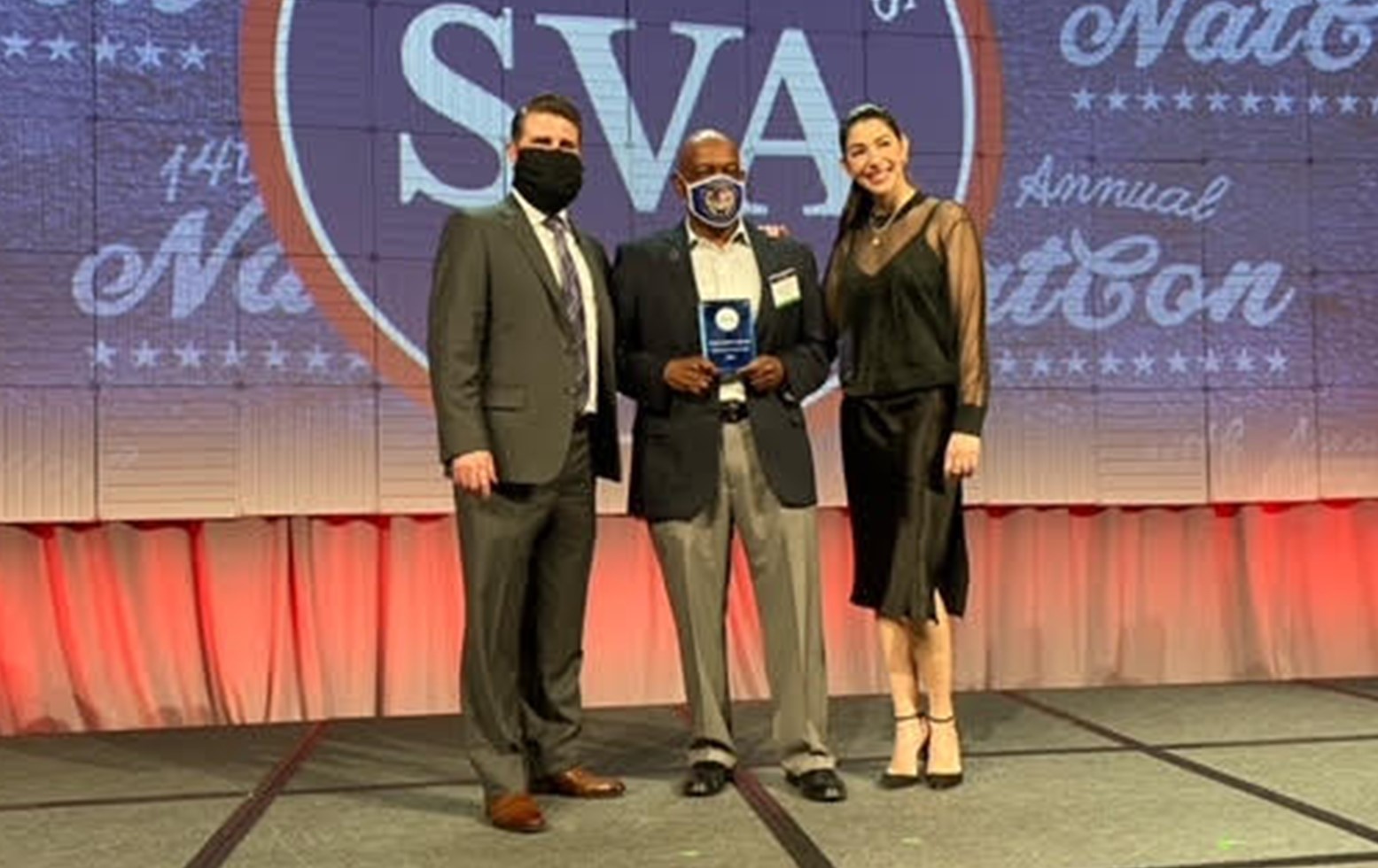
Georgia Southern University was selected as a finalist for the Chapter of the Year awarded by Student Veterans of America (SVA), an organization focused on advocating for and advancing resources for veterans in higher education. The University has SVA chapters on the Statesboro Campus and Armstrong Campus in Savannah, both of which were recognized with the award. “I am so proud of both of our SVA Chapters,” said Col. George Fredrick, Ed.D., director of Military and Veteran Services. “They offer truly outstanding support to our military-connected student population at Eagle Nation.” While this is the first time Georgia Southern has been a contender for this acknowledgement, the University has a tradition of being recognized for its investment in the military community. The Army ROTC program was established in 1980, and has won the MacArthur Award four times since 2009 for being one of the nation’s top ROTC programs. The Military Times publication named Georgia Southern as a Top 15 Best for Vets 4-year school for five consecutive years, including in 2019 when the University was ranked No. 1. Because the University operates near Hunter Army Airfield in Savannah and Fort Stewart in Hinesville, a number of students, faculty and staff are enlisted, retired or spouses of military members. Richelle Keilholz, Ed.D., is the staff advisor for SVA-Armstrong, and she believes this makes the campus community and military community deeply intertwined. “They become part of the campus culture, and I think that’s where you start to see that excellence comes when you have that kind of devotion,” said Keilholz. “You want to see our military service members, our family members and our spouses succeed in the military community and in higher education.” Georgia Southern’s relationship with veterans isn’t common among other universities, said military veteran project coordinator Rudy Duero. Many veterans feel overlooked and are an “untapped resource,” but not at Georgia Southern. “It’s awesome to have a group of individuals at the executive level who care and respect the opinions of the veteran students,” Duero said. “Veterans are being heard and they know that they’re being heard when they have good leadership representing them. The communication is always open.” Georgia Southern is one of five schools to be named a finalist for the award. The University sent a delegation to Orlando to attend the awards ceremony on Jan. 7. Academic and financial resources for veterans looking to pursue a degree can be found here. And if you’re a journalist looking to cover how Georgia Southern is working to support our veterans and the university’s military veteran project – then let us help. Rudy Duero is available to answer your questions - simply reach out to Georgia Southern Director of Communications Jennifer Wise at jwise@georgiasouthern.edu to arrange an interview today.


Research offers larger implications for health care environments Some of the most dangerous contaminants aren’t visible to the naked eye, but Georgia Southern University researchers are working to protect construction workers from this invisible danger. In the construction world, chronic exposure to crystalline silica, which is present in dust particles created from drilling, grinding and sawing on job sites, can lead to serious medical issues and preventable fatalities. Atin Adhikari, Ph.D, associate professor in Georgia Southern’s Jiann-Ping Hsu College of Public Health, has been awarded a $28,400 grant from Poma 22, LLC, to test new air curtain technology that could protect construction workers from hazardous fine dust particles. As the principal investigator (PI), Adhikari will work with co-PIs Aniruddha Mitra, Ph.D, professor of mechanical engineering, and Saman Hedjazi, Ph.D, assistant professor of civil engineering and construction management, from Georgia Southern’s Allen E. Paulson College of Engineering and Computing. “This research is important and innovative because we will test a revolutionary technology against fine dust exposure in construction sites that integrates a filtered air duct system into a hard hat, creating an air curtain or armor,” said Adhikari. “If we get a promising result, then this technology can be applied against other types of particles including bioparticles present in healthcare work environments.” Graduate research assistant Victoria Clower, who is earning a Master of Public Health in environmental health sciences, values her involvement in life-changing research. “This study of new technology on dust exposure control in construction sites will be very valuable with the quantifiable results showing the effectiveness of the air curtain technology,” she said. “As someone who is interested in occupational health, I am excited to work on a study that may provide an opportunity for other innovations for workplace safety to improve.” The U.S. Department of Labor’s Occupational and Safety Health Administration estimates roughly 2.3 million people in the U.S. are exposed to silica at work. Workers at risk can develop lung cancer, chronic obstructive pulmonary disease (COPD) and kidney disease. In addition, approximately 500 preventable silica-related deaths occur each year. As an environmental public health researcher, Adhikari has published numerous peer-reviewed studies on air quality and filtration. This project will focus on testing a newly developed respiratory protection technology, the Z Flow Pro helmet, which provides a downward draft through the front of the helmet, creating an air curtain in front of the worker’s face. Previous research has found that the air curtain is strong enough to deflect larger, visible particles. Adhikari and his team will conduct comprehensive field testing of this new technology to determine if it is also effective protection against fine particles, providing valuable information and justification on the readiness level of this product to protect construction workers. If you’re a journalist looking to cover this new testing that Georgia Southern is a major part of – then let us help. Atin Adhikari is available to answer your questions - simply reach out to Georgia Southern Director of Communications Jennifer Wise at jwise@georgiasouthern.edu to arrange an interview today.

What it will take to overcome supply chain disruptions
The supply chain disruptions sparked by the pandemic highlight the need for behavioral shifts by both consumers and companies. Asoo Vakharia, McClatchy Professor and director of the Supply Chain Center at UF’s Warrington College of Business, says supply chain disruptions are — and will continue to be — a way of life. But the degree of the turmoil experienced recently demonstrates the need for some change. “Demand dropped so quickly and at such a high volume that it created a problem for us,” Vakharia said in an episode of the From Florida podcast. Approximately 20% of imports to the United States come from Asia with the biggest share off-loaded in Los Angeles, followed by Long Beach, California. Those ports, along with other large centers, can accommodate the Ultra Large Vessels often used for trans-Pacific shipping. But they’ve been severely impacted by inflow/outflow imbalances caused by a range of factors including truck driver shortages and poor infrastructure. In response, companies such as Amazon, have purchased smaller vessels that can access a larger number of smaller ports, including those that may require passage through the Panama Canal. The move will enable the commerce giant to side-step some of the bottlenecks slowing down larger ports, but it will also add to expense. This is where Professor Vakharia says companies, and consumers, will need to make choices. He cautions companies to play the long game. “Consumers have long memories and they will reward people who have a little bit of recognition of our conditions,” he said. And he says buyers should always be on the lookout for deals. “There is lots of opportunity out there,” Vakharia said. “Maybe you won’t get the brand you want, but you will get a good brand. Let’s moderate our wants a little bit. Let’s think logically.” Professor Vakharia also sees opportunity for Florida ports, with the caveat that the complexity of the issue will require significant planning — and investment. “We need to have an infrastructure, which is rail or trucks, which are going to visit these ports and take the goods away from them because otherwise we’re going to do the same thing as Long Beach.” The added expense of smaller ships will also need to be managed. To hear more about the supply chain issues currently at play, and possible solutions for the future, listen to the episode on From Florida at this link. Read the recent article that Professor Vakharia has been quoted in: Listen to other episodes in the "From Florida" series from the link below.


Good COP or bad COP? | The Aston Angle
Four Aston University experts reflect on COP26 and what it means for transport, community and global action on decarbonisation, support for small businesses and China’s coal consumption. COP26 was the 26th United Nations Climate Change conference held in Glasgow from 31 October to 13 November 2021. The participating 197 countries agreed a new deal, known as the Glasgow Climate Pact, aimed at staving off dangerous climate change. But will it be enough? Dr Lucy Rackcliff explains why replacing petrol and diesel vehicles with electric ones alone is not radical enough. The overwhelming message coming from COP26 transport day seemed to be that moving to zero emission-vehicles would solve the well-documented issues created by petrol and diesel fuelled vehicles. As noted at the conference itself, transport is responsible for 10% of global emissions, and emissions from transport continue to increase. The WHO estimates that transport-related air pollution affects the health of tens of thousands of people every year in the WHO European Region alone. However, on-street pollution is not the only effect we should seek to address. Transport is responsible (directly or indirectly) for a wider range of environmental issues, and a wider range of health impacts. Moving to electric vehicles will not address impacts such as loss of land for other activities, use of finite resources in the manufacturing process, the need to dispose of obsolete materials such as used tyres, and the health effects of sedentary lifestyles, facilitated by car-use. In urban areas in particular, re-thinking policy to focus on walking, cycling and public transport-use could free up land for other activities. Car parks could become actual parks, in turn encouraging more active lifestyles, creating space for people and plants, and leading to a range of wider societal benefits. Assuming that replacing petrol and diesel vehicles with electric ones will solve all our problems is a strategy which lacks ambition, and thus denies us the benefits that more radical thinking could deliver. Dr Lucy Rackcliff, Senior Teaching Fellow, Engineering Systems & Supply Chain Management, Aston Logistics and Systems Institute, College of Engineering and Physical Sciences. "Assuming that replacing petrol and diesel vehicles with electric ones will solve all our problems is a strategy which lacks ambition." Professor Patricia Thornley reflects on the role that Aston University and EBRI can play in empowering community action and informing global action with research. COP26 energy day was a fabulous experience. I have never before seen so many people in one place with one ambition: to support and accelerate decarbonisation of the UK’s energy systems. We ran a “fishbowl”, which allows people with different perspectives on a topic (experts and non-experts) to participate in dialogue around a common interest. Our researchers, local government representatives, industrialists and students shared their thoughts on what our future energy mix should look like, how it should be delivered and who needs to act. Without doubt the consensus was that many different technologies have a role to play and there is an urgent need to accelerate implementation. There were reflections on the importance of governance at different levels and an interesting discussion around the relative merits of centralized solutions and devolved actions. The reality is that of course we need both and that made me think about what Aston University and EBRI can do. Of course we should implement centrally with initiatives like the impressively low carbon Students’ Union building, but we also need to raise awareness among our students. Our film showing with the Students’ Union a week later helped with that I hope, and many more of our courses are incorporating sustainability elements which is fantastic. But what we haven’t quite achieved yet is an empowered, proactive voice that would lead to wider community action. There are pockets of excellence but a lot still to be done. My second week at COP26 was very different with police presence outside a building where I had three meetings with industrialists on the controversial topics of forestry and land-use. It was sad to be working with key players to improve sustainability and increase carbon reductions through UK bioenergy while listening to drumbeats outside from objecting protestors. There is a real lack of understanding around forest management and global land use and we need to work harder to improve that. It is a huge challenge, but one that EBRI will work hard to address. Professor Patricia Thornley, Director of EBRI, Energy and Bioproducts Research Institute (EBRI), College of Engineering and Physical Sciences. "There is a real lack of understanding around forest management and global land use and we need to work harder to improve that." Professor Presanta Dey explores whether Government pledges on climate change will translate to practical support for small businesses Following the COP26 climate change summit, the UK Government led the way in making a series of pledges and policy commitments to combat climate change. The question is: how will this translate to practical support for SMEs? Large corporations often take centre stage at COP, which is welcomed, but if we are to see real change, everyone needs to be involved. COP26 provided a refreshing voice for UK small businesses which featured panel discussions on the ‘SME Climate Hub’, highlighting net zero opportunities and challenges for SMEs. The momentum of COP26 has already inspired over 2,000 UK small businesses to sign up to the UN's Race to Zero campaign, which is designed to accelerate the adoption of credible net-zero targets. A long journey ahead still awaits us, however campaigns like these will hopefully start a ripple effect inspiring the remaining six million UK SMEs to take climate action. Small businesses have been crying out for more assistance from the government in the form of ‘green’ grants and financial support to enable them to make the necessary long-term changes. The timely announcement of HSBC’s £500m Green SME Fund at COP26 marks a promising first step towards making it easier for SMEs to fund their green ambitions. In summary, COP26 provided some comfort to UK SMEs seeking a higher level of commitment from government, financial services and businesses. This moment must act as a catalyst for policy makers to continue removing the barriers that are holding small businesses back. Professor Presanta Dey, Professor of Operations & Information Management, College of Business and Social Sciences. Professor Jun Du explains what China’s deal means for the rest of the world following its own energy crisis earlier this year… Despite the many disappointments expressed around the COP26 outcomes, important progess has been made for the world economy moving towards carbon neutrality. Among the noticeable achievements China and the US, which together emit 43% of the total CO2 in the air, have agreed to boost climate co-operation despite many disagreements. This includes China’s pledge to more actively control and cut methane emissions during the next decade - even when the country did not sign up to the global methane pledge made in Glasgow. Reaching net zero will be an unprecedented challenge for all countries. China will need to do the heaviest lifting among all. The country’s energy crisis earlier this year has shown just how hard it will be to reach net zero. The exceptionally early and cold winter this year will demand even more coal, so China’s willingness and resolve for climate commitments are good news to all. While lots of attention was turned to the absence of China’s president, Xi Jinping, from the COP26 climate summit, what is less appreciated is the fact that China is serious about decarbonisation. Few countries invest as much as China in that area, nor grow as fast in finding alternative energy to coal and in green industries like electric cars. China has set specific plans in its 14th national five-year plan for economic and social development to reach peak carbon emissions by 2030 and carbon neutrality by 2060. COP26 could be an additional driver for “an era of accountability” for China. Professor Jun Du, Professor of Economics, Finance and Entrepreneurship, Centre Director, Centre for Business Prosperity, Aston Business School levy.



The Day the Universe Changed: A Conversation With Scott Engle, PhD
In the opening to last week's 60 Minutes episode, host Scott Pelley remarked, "this December 22 may become known as the day the universe changed." December 22, today, is the day the National Aeronautics and Space Administration (NASA) launches the James Webb Space Telescope, the largest and most expensive instrument ever flown. A hundred times more powerful than the Hubble Space Telescope, Webb can see back in time to the formation of the earliest galaxies in the universe in order to study how our solar systems have evolved. Villanova University's Scott Engle, PhD, is an expert in the field of astrophysics and planetary sciences. He recently joined us to answer a few burning questions: Q: 60 Minutes pegged this as "the day the universe changed." Do you think that's overstated or accurate? Dr. Engle: Well, it's mostly accurate. They naturally want to keep it concise, so it sounds a bit better, but it's definitely going to be the day when our understanding of the universe started to change. Webb's capabilities and the quality of data it promises to deliver are going to at least refine, but in the end likely redefine, several theories about the universe. Q: Relatedly, from your knowledge, what do you think are the impacts this type of project will have? DE: The satellite has its primary science goals, but I'm sure a project this large will wind up impacting all areas of astronomy. Theories and models are continually improving, and pairing any of them up with some of the best data possible is always going to produce exciting results and advances in the field. Q: Had you or anyone else in the department (that you're aware of) applied for any research as a part of this project? DE: I don't believe that anyone in the department has applied to Webb yet, but I'm looking to during one of their future calls for proposals. Q: As an astrophysicist, is this something that can be a 'superfan' moment? Is this comparable to any other experiences or projects in your career? DE: There's simply a lot of anticipation and nerves. They've done rigorous testing, so it should all go to plan, but at this point I'm just waiting to see that everything has gone well and observations are underway. After that, it's incredible every time a new satellite is launched and you see the great data it can produce and the new studies that data is allowing astronomers to carry out. It makes me think of when the Kepler satellite first started producing data. It sounds simple enough—Kepler simply stared at thousands of stars and repeatedly measured how bright they were—but the data it produced was a huge leap forward. The number of stars it was observing, the continuous measurements and their excellent precision all combined to produce a dataset that I was amazed to see. Q: What else are you looking forward to about this initiative? Certainly, seems like it was a long time coming. DE: One area of results I'm personally looking forward to are the exoplanet studies and what Webb can tell us about the atmospheres of planets orbiting other stars.

When students collectively save $748,925 in one semester and have easy access to textbooks on the first day of classes, coupled with Georgia Southern’s University Store’s ability to provide lower costs to students and avoid inventory delays, it’s a win-win for the campus community. The University-hosted Day1Access (D1A) program, a digital textbook model in collaboration with top publishers to reduce the cost of required course materials, ensures that all D1A materials are delivered at the lowest possible cost to the student – even lower than buying the material directly from the publisher. “The program itself grew out of the need to lower required materials cost and allow students to acquire that material on the first day of school,” said Derick Robertson, interim director for retail services at Georgia Southern. “Instructors no longer worry if the students have what they need and are ready to teach day one. We have allowed Day1Access to grow organically with instructors who see the benefits in the delivery method. Parents appreciate not having to search for their students’ material elsewhere for the cheapest option. The University Store appreciates the ease of delivery and not waiting on inventory to show up and running out of materials. In the end parents win, instructors win, students win and the University wins.” Through a partnership with Willo Labs, a leading digital resource provider, the program allows students to purchase their course material and have all the resources they need to begin their studies without having to visit the store. Access for all students begins the first day of class, with the option to opt-out of purchasing through the drop/add period. Each course utilizing D1A materials has received approval to digitally deliver required course materials to students from the instructor of that course. “The University Store is always looking to lower costs to students and provide the best service to the students of Georgia Southern University,” said Robertson. “Through Day1Access students have the required material they need at the cheapest price possible. As more departments adopt D1A the savings will continue to grow.” If you’re a journalist looking to learn more about Georgia Southern's digital textbook program– then let us help. The researchers behind this study are available, simply reach out to Georgia Southern Director of Communications Jennifer Wise at jwise@georgiasouthern.edu to arrange an interview today.

Georgia Southern University has established a new research and outreach center, the Institute for Water and Health, to investigate the complex interactions between water and human activities, and protect and restore public health in a changing environment. As part of the University’s focus on public impact research, the center will foster collaboration among scientists, government agencies, industry, nonprofit organizations and communities. Coastal Georgia is the perfect location for such an institute to conduct interdisciplinary research because it lies at the intersection of many social, economic and ecological issues. The center supports the region through research, workforce training for students, and actively involving communities in water resource management decision-making process, said Asli Aslan, Ph.D., associate professor in Georgia Southern’s Jiann-Ping Hsu College of Public Health Department of Biostatistics, Epidemiology and Environmental Health Sciences. Now also director of the Institute for Water and Health, Aslan is a water microbiologist, and her research program bridges ecosystem and human health. She has ongoing funded projects on tracking sources of water pollution and assessing health risks associated with exposure to chemical and microbial contaminants. She works with local communities and nonprofit organizations to encourage water stewardship behaviors. Aslan has served in various federal and state agencies and organizations as an adviser, reviewer, scientific committee member and affiliated faculty. She is also the founder and currently the co-chair of the Water and Health Committee of the American Public Health Association. “We want to create a nationally recognized institution that provides meaningful solutions for community needs,” said Aslan. “Our immediate plan is to develop a coalition with all stakeholders in the region to address issues related to increased water demand, impact of sea-level rise on water resources, and potential emerging contaminants in our urban and rural water infrastructure. We are in the process of establishing a community advisory group consisting of scientists from academic institutions, representatives from local and state governments, community leaders, non-profit organizations and businesses to identify and prioritize community needs in water research and education.” For example, she said, although one in every six households in Georgia has a private well, few residents realize any water testing, treatment or well maintenance is the sole responsibility of the property owner as per the Safe Drinking Water Act. Aslan said the Institute for Water and Health will work with the homeowners to help them recognize potential risks and provide solutions that will keep families safe in the long term. “We also look at sources of contaminants using state-of-the-art-methods. And if you know where the pollution is coming from precisely, it’s easier to go fix that problem once and for all, which has a direct impact on the decision-making process to protect water resources.” she said. These new techniques allow researchers with the institute to provide test results within a few hours, which helps end-users to be informed the same day instead of days where most water testing methods currently take about 48 hours. The implications of these methods are broad, as they can be used to identify pathogens in storm water or in household drinking water pipes; assess how new sustainable water treatment technologies efficiently remove contaminants, or provide same-day results for recreational beach monitoring. “We can do all this fancy research in the lab, but it will be very important for us to go out into the community and talk to people, ask them what their immediate needs – our goal is to involve communities from the very beginning of our research so that we co-develop meaningful solutions that will improve the quality of their everyday lives,” Aslan said. “Our group at Georgia Southern consists of established researchers from multiple disciplines such as environmental education, public health, social and behavioral sciences, environmental and computational engineering, coastal ecology, and we are growing everyday”. Carl L. Reiber, Ph.D., Georgia Southern’s provost and vice president for academic affairs, said the center will pull together faculty from across the University, many of whom have already established themselves as water experts within their own discipline. He expects the center to take a very visible role for the University and is renovating space in Savannah near the Armstrong campus to house the center and its labs. “The Institute for Water and Health will bring to southeast Georgia an awareness of the importance of water quality, water management and how tightly these areas are aligned with our health,” Reiber said. “The public impact of this institute is immeasurable and will ultimately increase the quality of life in our community.” If you're a journalist looking to know more about this topic or are looking to cover - then let us help. Asli Aslan, Ph.D., is a water microbiologist, and her research program bridges ecosystem and human health. She has ongoing funded projects on microbial source tracking, health risk assessment of water resources, and the ecology of pathogens in the aquatic environment. She is available to speak with reporters – simply click her icon now to arrange an interview today.
