
Experts Matter. Find Yours.
Connect for media, speaking, professional opportunities & more.
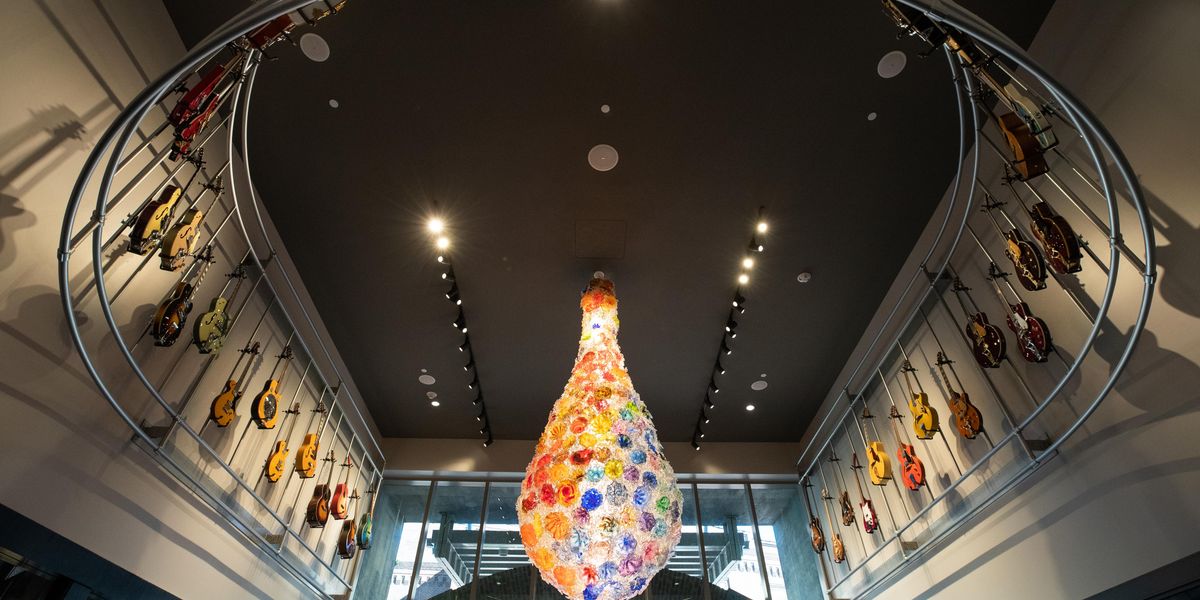
Striking a chord! New Savannah museum tells the storied history of Gretsch instruments
Drums, guitars, history, business and education have come together in a spectacular new interactive museum and exhibit in downtown Savannah that will pique the interest of any music lover. That Great Gretsch Sound! museum is a new destination where Georgia Southern University helps tell the story of a family-owned company that is still regarded as one of the music industry’s most influential and innovative instrument manufacturers. The permanent display of music memorabilia, highlighting more than 135 years of Gretsch instruments, is featured in District Live’s new lobby and performance space on the banks of the Savannah River. The museum is the latest addition to the Plant Riverside District. The museum’s opening was recently featured in Premium Guitar : The exhibit space highlights some of the most popular and unique pieces of Gretsch's historic catalog. The museum lobby features some of the most iconic instruments the company has produced, including the White Falcon™, the Chet Atkins® Country Gentleman®, a Brian Setzer Signature G6120, and a vintage 1963 Jet™ Firebird popularized by AC/DC's Malcolm Young. In the District Live performance hall, visitors will be treated to a visual timeline that will allow them to explore the evolution of Gretsch instruments dating back to the 1920s. Approximately 100 guitars are on display in the exhibit, 48 of which were recently on display in Nashville's Country Music Hall of Fame. The museum was developed through a special partnership between the Fred and Dinah Gretsch School of Music at Georgia Southern University and The Kessler Collection. In addition to the instruments that line the performance hall and upper section of the lobby, the museum features three sound dome displays with original videos that highlight Gretsch history, instrument production, the worldwide community of past and present Gretsch artists from Chet Atkins and George Harrison to Phil Collins, and the family's storied commitment to music education. Several other display cases take guests on a visual journey from Gretsch's beginnings as a local manufacturer of calf-skin drums, banjos, and accordions to one of the most popular and sought-after producers of guitars and drums during the height of the Rock & Roll era. Downtown Savannah is now helping tell that Gretsch story. The Gretsch museum includes Gretsch instruments and storyboards with QR code links to detailed narratives. "We hope this new museum will preserve the long history and legacy of the Gretsch Family and the Gretsch Brand," Dinah Gretsch said. "It is wonderful to share our history with the city of Savannah, the loyal Gretsch fans and all the tourists that will visit the museum." The museum's artifacts were curated and installed by Aaron Phillips, Georgia Southern's project curator for the Fred and Dinah Gretsch Artifacts Collection. Through his research to prepare the museum, he is confident that the Gretsch Museum will provide a unique musical experience. "My goal was to create a space that is expressive, inspirational, and true to the roots of the Gretsch family and community," Phillips said. "I am in awe of how this turned out!" To learn more – the full media release from Georgia Southern is attached below: If you’re a journalist looking to cover That Great Gretsch Sound! – then let us help. Aaron Phillips, Georgia Southern's project curator for the Fred and Dinah Gretsch Artifacts Collection is available, simply reach out to Georgia Southern Director of Communications Jennifer Wise at jwise@georgiasouthern.edu to arrange an interview today.


Recently, the expertise of Georgia Southern University’s researchers was featured in an in-depth piece by Business Insider Magazine. U.S. oncology company OncoTEX has made a significant leap in the future of cancer treatment. A part of the bioscience development portfolio The iQ Group Global, OncoTEX has licensed a gold compound platform technology, AuraTEX, that helps destroy cancer cells by using the body’s immune system. The gold-based compounds enter cancer cells and attack them from the inside. Through this process, the tumours are disrupted, and cancer cells are made visible, causing the human body’s immune response to kick in. With the immune system and gold compounds working together, killer T-cells and the drug destroy the remaining cancer. The futuristic technology was developed in collaboration with the University of Texas at Austin, Georgia Southern University, and Wright State University, before being licensed to OncoTEX. In the coming months, OncoTEX and the University of Texas at Austin will test the gold compounds in rigorous studies to learn more about the treatment and its potential in fighting various forms of cancer. December 16 - Business Insider The full article is attached. And, If you’re a journalist looking to cover this new research that Georgia Southern is a major part of - – then let us help. We have experts available to answer your questions - simply reach out to Georgia Southern Director of Communications Jennifer Wise at jwise@georgiasouthern.edu to arrange an interview today.
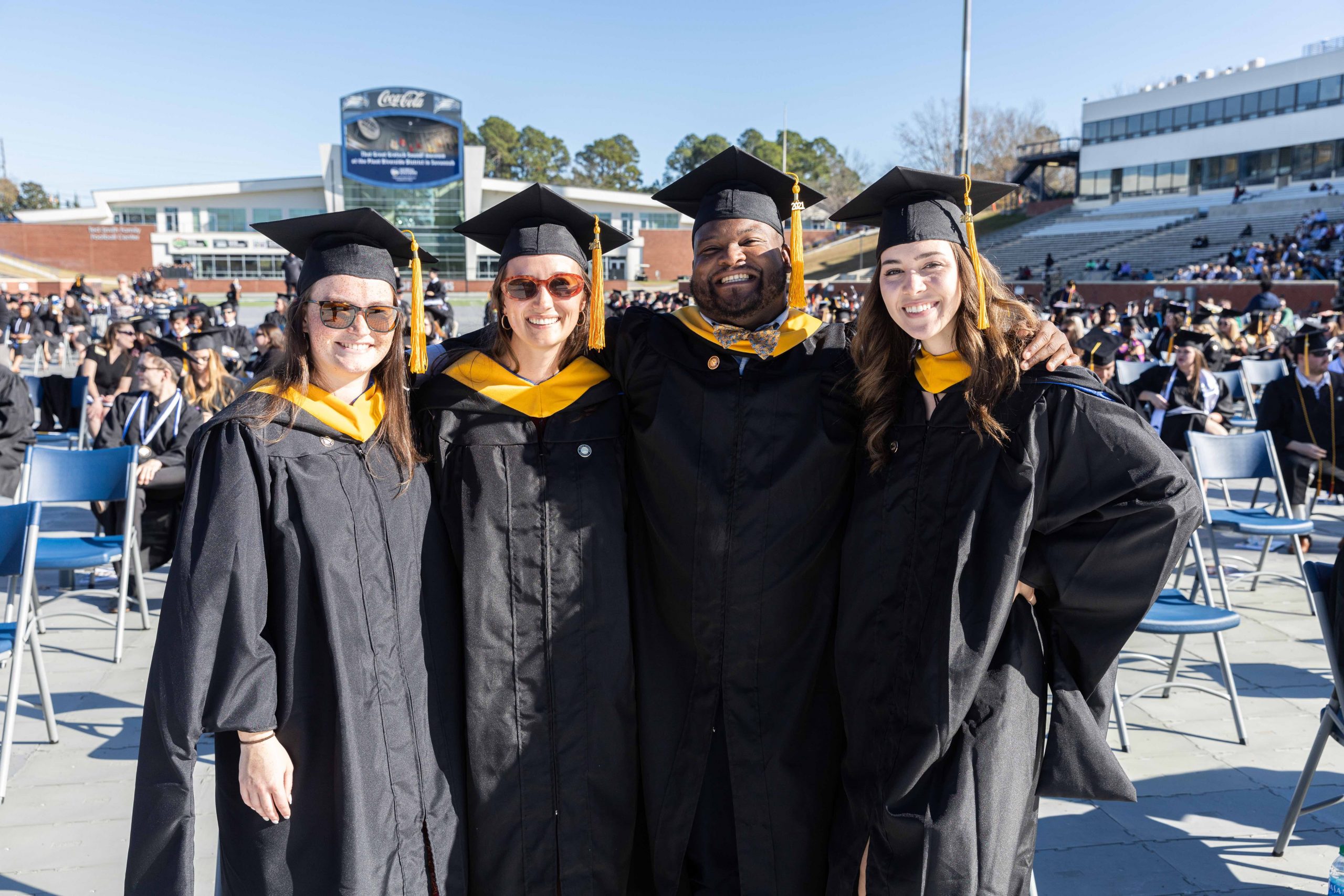
Hats off to the 2,100 graduates at Georgia Southern
Last week, approximately 2,100 undergraduate and graduate students from Georgia Southern University’s Statesboro, Armstrong and Liberty campuses received associate, baccalaureate, master’s, specialist and doctoral degrees in three Fall 2021 Commencement ceremonies. Georgia Southern President Kyle Marrero welcomed the graduates and their families to the University’s Fall Commencement ceremonies, held at the Savannah Convention Center in Savannah on Dec. 11, and the Allen E. Paulson Stadium in Statesboro on Dec. 13 and 14. He commended the graduates on their achievements and tenacity. “Graduates, I don’t need to tell you about your unique college journey, which has been challenging for all of us,” said Marrero. “I am very proud of how, together, we have persevered allowing us to have a successful semester and today, our commencement ceremony. You, our graduates, deserve great recognition.” During the Savannah ceremony, Georgia’s 2022 Teacher of the Year Cherie Dennis (Armstrong ‘10), who teaches English to Speakers of Other Languages at Hesse K-8 School in Savannah-Chatham County Public Schools, addressed the packed house with a call for kindness. “My hope for you is that you go out into the world with your eyes and your hearts wide open,” she said. “That you go out into the world and make something beautiful out of its cracks and imperfections. A world that is bound together by the irrefutable strength and integrity of kindness. Be the repairers of the world; the menders of the world; the bridge builders; the constructive, contributive citizens who nurture communities large and small. And that may sound daunting, but really it all starts with something so very simple, something so very possible and within your reach. Something you knew how to do even as a child. Just being kind.” Sachin Shailendra, chair of the University System of Georgia Board of Regents and president of SG Contracting, Inc. in Atlanta, spoke at the first ceremony in Statesboro. “Georgia Southern – which in a few minutes will be your alma mater – is one of the shining stars among our 26 institutions,” he said. “It ranks as one of Georgia’s best comprehensive universities, with a growing reputation for research that impacts not only vital industries but the environment and our communities. The degree you earned lets everyone know you learned from outstanding faculty, top staff and talented fellow students. “The opportunities ahead of you are many. I know this because of my own experience. I was born in Georgia, but my father was not. I am only a generation away from the farmers my family were in India. Education has been a game changer for both me and my family, and I know it’s a major accomplishment for many of you. I hope your degree will inspire you to take the next steps in building your future. So go out into the world and create a worthy future, not only for yourselves, but one that will represent Georgia Southern, our entire university system, and this state as well…Your education has already changed you. It also has the power to change your community, and move our state forward in exciting ways.” To read the full release please see the attachment below. This is a great moment for Georgia Southern University and if you are looking to learn more about this year's graduating class or the school - then let us help. Simply reach out to Georgia Southern Director of Communications Jennifer Wise at jwise@georgiasouthern.edu with your questions or to arrange an interview today.
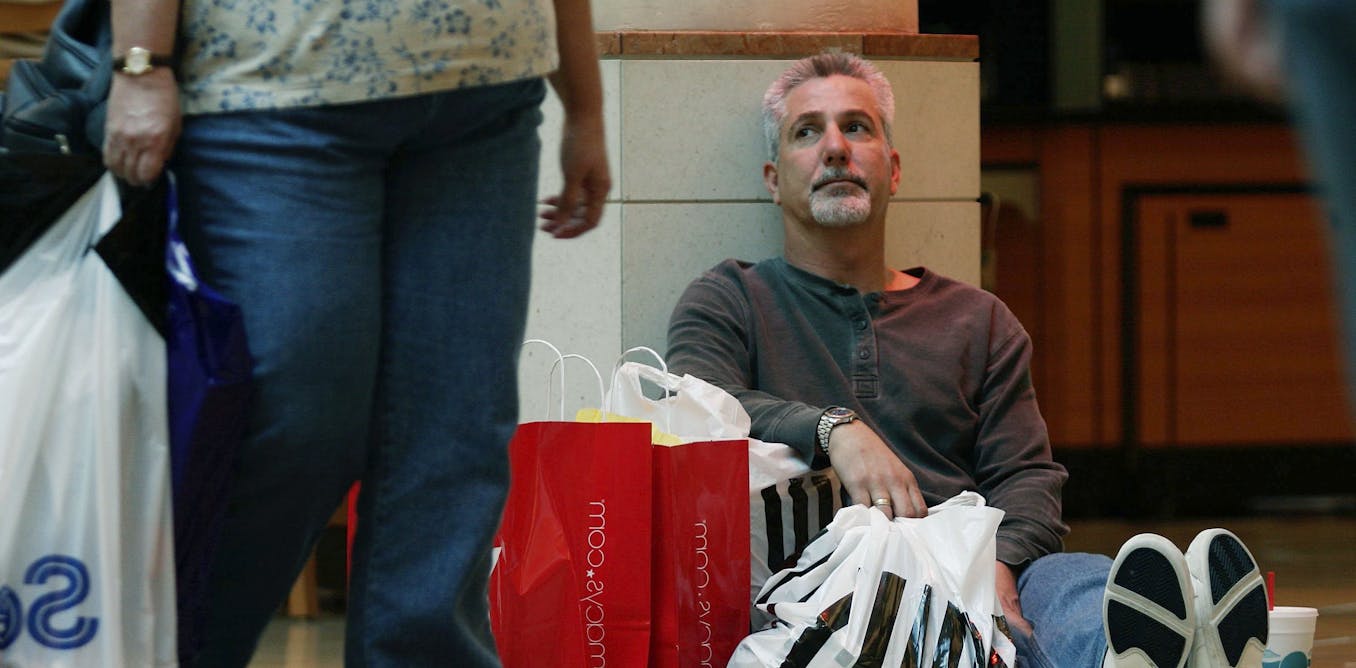
Is it better to give than receive? Our expert explains the science behind holiday gift giving
It's the holiday season -- full of merriment and cheer and gift giving. But why do we give gifts? And why is it a ritual that cuts across cultures on just about every continent on Earth? UConn professor Dimitris Xygalatas, an expert in human rituals, details the social science behind the centuries old tradition of exchanging gifts in a new essay for The Conversation: From the shells exchanged by Pacific islanders to the toys and sweaters placed under Christmas trees, sharing has always been at the center of many ritual traditions. This is fundamentally different from other forms of material exchange, like trade or barter. For the Massim, exchanging a shell necklace for a shell armband is not the same as trading yam for fish, just as giving a birthday present is not the same as handing a cashier money to purchase groceries. This speaks to a more general rule of ceremonial actions: they are not what they appear to be. Unlike ordinary behaviors, ritual actions are nonutilitarian. It is this very lack of obvious utility that makes them special. Professor Xygalatas is an anthropologist and cognitive scientist at the University of Connecticut who specializes in some of the things that make us human, including ritual, sports, music, cooperation, and the interaction between cognition and culture. He is available to speak with media, answering all your holiday ritual questions. Click on his icon to arrange an interview today.


New £1.5 million healthcare simulation facilities to open at Aston University
New clinical simulation facilities for medical, pharmacy and optometry students are set to open in 2022 Including an ocular simulation unit facility which will be the only one in Europe, as part of further investment in clinical facilities in the College of Health and Life Sciences at Aston University. The facilities are part funded by the Office for Students which awarded the University £806,226 to set up a ‘high fidelity’ simulation A&E room with further expenditure by Aston University on an ocular simulation unit. Aston Medical and Pharmacy School students will be able to practise in emergency settings using high quality manikins where they will simulate treating patients for acute conditions such as a heart attack or learning how to intubate a patient onto a ventilator. The high-fidelity acute care simulation room will be equipped with recording facilities, a debrief room and control room. The funding will allow for the purchase of other training equipment such as a hospital grade bed and single task trainer simulation equipment. For example, male and female catheterisation models, pelvic and rectal trainers, venepuncture arms, breast trainers and abdominal trainers. Professor Liz Moores, deputy dean of the College of Health and Life Sciences, said: “We are really excited to have the support from both the Office for Students and Aston University in building these state-of-the-art facilities for our students and can’t wait to start using them. “The acute care simulation room will allow us to simulate a variety of emergency resuscitation scenarios that are very difficult to teach in real life situations, such as heart attacks, acute breathlessness and severe allergic reaction and will be of great value in training students of medicine and pharmacy.” Students in the School of Optometry will also be equipped with simulation facilities to carry out treatment on patients. Professor James Wolffsohn, head of the School of Optometry said: “The ocular simulation facility at Aston University will be unique in Europe, allowing students to refine their skills in examining the health of the front and back of the eyes and to experience a wide range of eye disease. “One of the simulators even allows them to utilise their smartphone to practice at home. They can gain direct feedback and be assessed by the simulators, allowing more flexible, diverse and intensive learning than can be achieved with clinical practice placements.” It is hoped these facilities will help plug some of the gaps in clinical placements that are currently affecting students since the COVID-19 pandemic. As a result of the pandemic, alternative ways are being explored to gain high quality authentic ‘clinical’ experiences, whilst not exposing patients, staff, or students, to risk. The health crisis has also increased pressure on the NHS creating a need for alternative but appropriate training facilities, to ensure that students are fully prepared for the medical profession. The simulation facilities are due to be open in time for the September 2022 intake of students.


Inflation's on the rise - can it be reigned in for 2022?
It seems the cost of everything is going up. For most Americans, filling up your car and filling up your grocery cart are now noticeably more expensive. Costs of goods are going up and that's taking a toll on the cost of living for a lot of people across the country. But what's causing the prices of goods and services to creep upwards - and what will it take to tame the upward trend that has inflation at its highest rate in more than 30 years? Recently, Andrew Butters and Kyle J. Anderson from Indiana University’s Kelley School of Business sat down with Indiana NewsDesk to help explain what's going on. Inflation might be the one the leading news stories of 2022 - and if you are a reporter looking for answers - then let us help with your coverage. Andrew Butters is an Assistant Professor of Business Economics and Public Policy at Indiana University’s Kelley School of Business. He is also an expert in the areas of industrial organization, productivity, market integration, demand and business cycles. Kyle J. Anderson is a Clinical Assistant Professor of Business Economics. He is an is an economist researching business and pricing in online environments. Both Kyle and Andrew are available to speak with media regarding this important topic – simply click on either expert's icon now to arrange an interview today.


Will Biden’s Plan to Resettle Afghans Transform the U.S. Refugee Program?
Among the high-profile anti-immigration policies that characterized the four years of Donald Trump’s presidency was a dramatic contraction in refugee resettlement in the United States. President Biden has expressed support for restoring U.S. leadership, and increased commitment is needed to help support the more than 80 million people worldwide displaced by political violence, persecution, and climate change, says UConn expert Kathryn Libal. As Libal writes, with co-author and fellow UConn professor Scott Harding, in a recent article for the Georgetown Journal of International Affairs, the rapid evacuation of more than 60,000 Afghans pushed the Biden administration to innovate by expanding community-based refugee resettlement and creating a private sponsorship program. But more resources are needed to support programs that were severely undermined in previous years and to support community-based programs that help refugees through the resettlement process: Community sponsorship also encourages local residents to “invest” in welcoming refugees. Under existing community sponsorship efforts, volunteers often have deep ties to their local communities—critical for helping refugees secure housing, and gain access to employment, education, and health care. As these programs expand, efforts to connect refugees to community institutions and stakeholders, which are crucial to help facilitate their social integration, may be enhanced. As Chris George, Executive Director of Integrated Refugee and Immigrant Services in New Haven, Connecticut, has observed, “It’s better for the refugee family to have a community group working with them that knows the schools and knows where to shop and knows where the jobs are.” As more local communities take responsibility for sponsoring refugee families, the potential for a more durable resettlement program may be enhanced. In the face of heightened polarization of refugee and immigration policies, community sponsorship programs can also foster broad-based involvement in refugee resettlement. In turn, greater levels of community engagement can help challenge opposition toward and misinformation about refugees and create greater public support for the idea of refugee resettlement. Yet these efforts are also fraught with significant challenges. Sponsor circle members may have limited capacity or skills to navigate the social welfare system, access health care services, or secure affordable housing for refugees. If group members lack familiarity with the intricacies of US immigration law, helping Afghans designated as “humanitarian parolees” attain asylum status may prove daunting. Without adequate training and ongoing support from resettlement agencies and caseworkers, community volunteers may experience “burn out” from these various responsibilities. Finally, “successful” private and community sponsorship efforts risk providing justification to the arguments of those in support of the privatization of the USRAP and who claim that the government’s role in resettlement should be limited. Opponents of refugee resettlement could argue that community groups are more effective than the existing public–private resettlement model and seek to cut federal funding and involvement in resettlement. Such action could ultimately limit the overall number of refugees the United States admits in the future. December 11 - Georgetown Journal of International Affairs. If you are a journalist looking to know more about this topic – then let us help with your coverage and questions. An associate professor of social work and human rights, Kathryn Libal is the director of UConn's Human Rights Institute and is an expert on human rights, refugee resettlement, and social welfare. She is available to speak with media – click on her icon now to arrange an interview.


Christmas is here! And with the hustle and bustle of shopping and scouring the internet for that perfect gift or deal, odds are there are people lurking in the dark corners hoping to stuff their stockings with scams if you’re not too careful. At Thanksgiving, when the official start to the shopping season began – the experts from Indiana University’s Kelley School of Business were front and center answering media calls and doing interviews about this very topic Scott Shackelford, a professor at Indiana University specializing in cyber security, said there are some red flags to be on the lookout for while shopping online. “There’s some easy ones to spot right off the bat, including if on the URL,” said Schackelford. “If you see it just as HTTP and not HTTPS. That S stands for secure, which means your information is encrypted when you use that site.” Shackelford also said to be on the lookout for funny wordplay involved on the website. Maniscalo says most of these fake websites originate from outside the country. “English is not their native tongue, so they will a lot of times have misspellings, or say things in kind of an awkward way, not how we would say it, or how we would print it out there,” said Maniscalo. There is also the problem of what Shackelford calls Grinch Bots. These are automated bots that monitor major retail sites to see what items are the hottest and buy them out as soon as they are restocked. “There’s actually been bills that have been proposed in Congress to deal with example of that phenomenon. But of course, they’re not enacted yet, so it’s still up to consumers,” said Shackelford. November 25 – Fox News It’s going to be a busy holiday shopping season – and if you’re a journalist looking to cover this important top, then let us help. Scott Shackelford is an Assistant Professor of Business Law and Ethics at Indiana University’s Kelley School of Business. He’s an expert in the field of cybersecurity law and policy. Scott is available to speak with media about this subject – simply click on his icon now to arrange an interview today.

Opinion: Artists, influencers key to successful public health messages re: COVID
Can the artists and culture-bearers among us help move people who are unvaccinated to action? That’s the hope of a new initiative from the Centers for Disease Control and Prevention (CDC) to build vaccine confidence across the country. Read more from Jill Sonke in her op-ed in the Atlanta Journal-Constitution.


.jpg)
Is there such a thing as ‘a little cheating’ in American schools? Let our expert explain.
Cheating … it’s a universal tactic that seems to be a part of every academic institution regardless of subject, program or geography. Recently, Inside Higher Ed took a look at how students view cheating – and how their perspective of just what constitutes cheating is viewed. UMW’s David Rettinger provided his expert take on just what is going on in American schools. How acceptable is it to use study websites, or Google, to find answers to test or homework questions? What about using unapproved technology or tools to assist in an online exam? And would it be OK to give credit to another team member on a group project even if that person did not participate? These are a few ways the latest Student Voice survey, conducted in mid- to late October by Inside Higher Ed and College Pulse with support from Kaplan, explored the nuances of academic integrity and what students view as unethical… When David Rettinger, president emeritus of the International Center for Academic Integrity (ICAI), looked over the Student Voice data, he was drawn to the numbers that showed how much students realize certain actions would be considered cheating. “Some of [the unacceptable responses] are a little lighter for sure, but students generally would describe these behaviors as unacceptable,” says Rettinger, a professor of psychological science and director of academic integrity programs at the University of Mary Washington. “Their institutions talk about these things, and students know what they’re supposed to do, yet students cheat a fair bit.” He can imagine a stressed-out student saying, “I know it’s unacceptable, mostly I don’t do it, but in this situation, I’m going to do something I generally don’t believe in.” “That poses a problem for us as administrators,” he adds. December 07 – Inside Higher Ed Professor of Psychological Science David Rettinger oversees Academic Integrity Programs at the University of Mary Washington. He is available to provide expert insight into this study and the concept of students who cheat while attending at American colleges and universities. Simply click on his icon now to arrange an interview today.
