
Experts Matter. Find Yours.
Connect for media, speaking, professional opportunities & more.
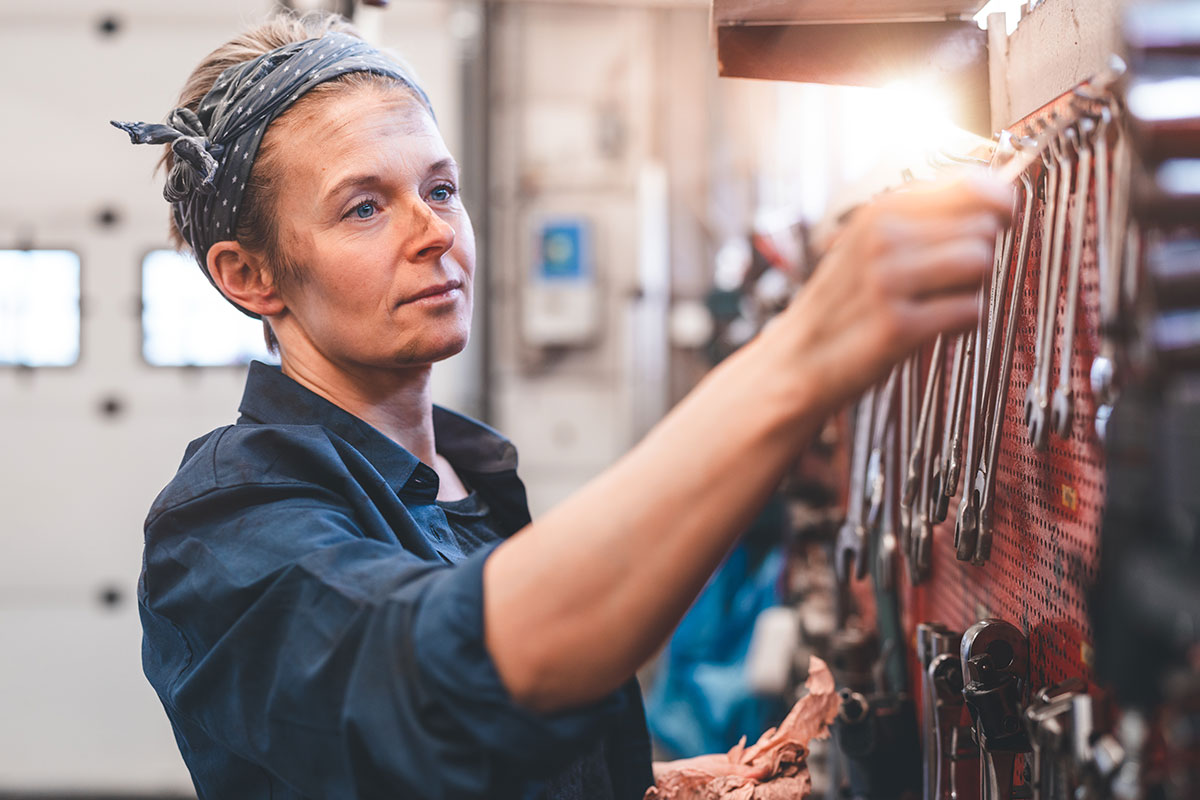
Social class has a significant role to play in career success in the United States. A growing body of research is shedding disquieting light on the extent to which working class Americans face discrimination in recruitment, pay and promotion – despite having a college degree. This demographic is up to four times less likely to get hired, 34% less likely to accede to leadership roles, and earns around 17% less on average than counterparts from middle or upper-class backgrounds. But while research is starting to document how class can impede or accelerate professional success, it remains unclear why these discrepancies exist. What are the mechanisms or dynamics at play that make it so much tougher for working class people to succeed than others? Goizueta Business School Assistant Professor of Organization & Management Andrea Dittmann has an interesting hypothesis. She believes that employees from different backgrounds can bring inherently different strengths and weaknesses to the workplace; advantages and disadvantages that speak to certain norms governing how we think about work and leadership. And it boils down, she says, to the way we work with others. “People from working-class backgrounds—those with blue-collar parents, who might be the first in their family to get a college degree—typically relate a certain way to other people. They are better connected to others, more team-like in their approach, than their middle-class counterparts who see themselves as more independent or unique,” says Dittmann. This team spirit could be working against lower-class employees, she says, in the sense that they see themselves or are perceived by bosses as being less adept at working autonomously or as individuals within organizations; and are therefore viewed by others as less poised to advance into roles of greater responsibility. On the flip side, this very capacity to work well with other people could actually give working class employees an advantage in team-based activities or cultures; an advantage that might translate into concrete benefits for organizations. To put this to the test, Dittmann conducted a series of studies aimed at unpacking how individuals perceive themselves within the context of work, and at the interactions that occur between employees and the workplace. Among these studies were qualitative interviews with MBA students from different social class backgrounds about their experiences navigating white-collar workplaces after graduating from college. She also ran a number of experiments to assess how well working-class people performed in teams and individually, and how environments that prioritize collaborative dynamics or interdependence might produce better experiences and outcomes for employees than environments geared to working individually or independently. A full article detailing Dittmann’s work is attached here and offers very compelling research showing how social class plays out in the workplace. It covers important aspects such as: The Catch-22 of Working Well with Others “It’s a kind of catch-22. Working class kids don’t make it into the gateway settings of school or college as much as middle-class kids in the U.S. They are significantly underrepresented in leading business schools like Goizueta, at roughly 15% of the student population,” she notes. “So, the higher-educational context—the talent pool for corporate America—is very much geared to a different social demographic and dynamic; one that inherently favors independent work ethics and approaches and sees them as the norm. Other ways of working, collaborating, and contributing risk are being undervalued as much as they are underrepresented.” When Considering Diversity, Companies Stand to Benefit “We know that companies that are more diverse perform better than others, and diversity needs to extend to social class. What my research and others are showing is that people from a working-class background tend towards behaviors that are more relational, that they are better at working together. If they fail to make it into the workforce in a more representative fashion, companies are basically missing out on opportunities to form better teams.” Faculty research like Dittmann’s is a critical element in Goizueta Business School’s drive to develop principled leaders who are better prepared to engage in the business of tomorrow. If you are interested in learning more, then let us help. Andrea G. Dittmann is an Assistant Professor of Organization & Management at the Goizueta Business School. She is an expert in the areas of diversity and inequality, particularly employees' social class backgrounds, aiming to promote equity and inclusion at work. Dr. Dittmann is available to speak with media about this research – simply click on her icon now to arrange an interview today.


Crossing Space and Time at Japan Society's 2021 Annual Dinner
On June 22, Japan Society celebrated its 2021 Annual Dinner, raising over $1.3 million to take us into the next year and beyond. It was—literally and virtually—a star-studded evening at the intersection of science, art, culture, business, and the U.S.-Japan alliance. After a special message from Japanese Prime Minister Yoshihide Suga, the program included a conversation between former JAXA astronaut Naoko Yamazaki, the second Japanese woman to fly in space, and Ambassador Caroline Kennedy—marking the 60th anniversary of President Kennedy's Moonshot Address, followed by a performance from Japan's Ryoma Quartet. The keynote Fireside Chat brought together two titans of industry, our very own Chairman Joseph Perella, Chairman Emeritus, Perella Weinberg Partners and private equity pioneer Henry Kravis, Co-Chairman and Co-CEO of KKR—also the recipient of this year's Japan Society Award. Mr. Kravis underscored the value of investing in long-term relationships throughout his talk with Mr. Perella, noting, "You have to be patient. You have to set your mission. You have to have a focus on ESG (environmental, social, and governance). Any company today that is not focusing on their ESG and on diversity of their workforce is not going to have much of a future. Today, it's not all about making money. That's a part of it. But it's also very important to ask, 'What are you doing for society, what are you doing to help your country?'" In her conversation with astronaut Naoko Yamazaki, Ambassador Caroline Kennedy cited her father's famous Moonshot Address at Rice University in 1962: "We choose to go to the Moon in this decade and do the other things, not because they are easy, but because they are hard, because that goal will serve to organize and measure the best of our energies and skills, because that challenge is one that we are willing to accept, one we are unwilling to postpone, and one which we intend to win, and the others, too." Yamazaki, who is working to inspire the next generation in aerospace, among other initiatives, is "thrilled to be able to witness the Artemis Program, which is sending the first woman and the first person of color to the moon, with international cooperation. Japan is in charge of the cargo transfer to the Lunar Gateway, the station [that will orbit the moon], and also Toyota and JAXA are developing a pressurized lunar rover to explore the surface of the moon." For Japan Society, the next 50 years will be our own Moonshot, as we move forward into a new post-pandemic inflection point—a significant reopening full of energy and excitement this fall that embodies the best of American and Japanese spirit. It's time to reach beyond the physical space of our landmarked building, which opened to the public 50 years ago in September 1971, re-imagining our enduring mission of connecting American and Japanese people, cultures, and societies across time and space for the next half century. Sixty years ago, President John F. Kennedy's Moonshot Address inspired a generation of Americans to look to the moon in the spirit of adventure, patriotism, and freedom. Today, under new leadership in the United States and Japan, Japan Society starts a new chapter in building our kizuna, our forward-facing energy and deeply interwoven connections, between New York and Japan – and beyond. How do we continue to inspire the next generation of leaders in U.S.-Japan relations? As we think about the next 50 years at Japan Society, much has changed, yet many of the foundations remain the same from our starting point 114 years ago. There's a lot to look forward to as we celebrate significant milestones in 2021-22 and beyond. As Mr. Kravis said, in order to grow and to survive, "You have to keep innovating, you have to keep moving." Japan Society is a convener for the future. With your support, we, too, will overcome the tough challenges facing this world and the U.S.-Japan alliance, together. See you at Japan House and on the far side of the moon! If you missed out on our 2020-21 season, below are some of the highlights. Stay tuned for more exciting events coming this summer and fall, in person and online! Published on June 22, 2021 on Japan Society’s new Watch & Read page.


England’s identity: fans sing football’s coming home, but what is home?
Sport matters to national identity. The pageantry of flags, emblems and anthems (both official and unofficial) load sport with symbolism and imagery of the nation. One of the key reasons governments spend billions of dollars to host sporting mega events is to build or reinforce a sense of national identity. However, national identity is fluid, not fixed. Sport offers an arena in which national identity can adapt and change. In England, where many civic institutions represent Britain as a whole, the men’s national football team is particularly important to English identity. In 1996, the country hosted the European Championships tournament. This coincided with the so-called awakening of English national identity, symbolised by the supplanting of the union flag with the waving of the Saint George’s cross at Wembley football stadium and the singing of a new fans’ anthem, Three Lions (Football’s Coming Home). In recent years, celebrating Englishness has often been linked to a narrow and exclusive imagery, which is said to marginalise ethnic minorities and those with a more socially liberal perspective, and has been tied to a football culture often associated with hooliganism. Yet now, as England have reached the finals of the Euros for the first time, the team and its manager, Gareth Southgate, have put football at the centre of a debate about English identity for the opposite reason. Is a more proud, inclusive version of Englishness emerging? Multicultural teams in a globalised world A recent graphic promoted by the UK’s Museum of Migration shows a stark picture of what England’s starting 11 would look like without immigration over the past two generations. With only three players without a parent or grandparent born overseas, the national team is held up as a microcosm of a diverse, multicultural population (although the absence of England’s significant Asian communities is glaring). To paraphrase historian Eric Hobsbawm, the imagined community of multicultural England seems more real as a team of eleven named people. As Southgate said before the 2018 World Cup: “In England we have spent a bit of time being a bit lost as to what our modern identity is. I think as a team we represent that modern identity and hopefully people can connect with us.” In many ways, this is old news. Sport in England and the UK (akin to national identity) has always been a multinational affair, owing to its colonial ties with the countries of the former British Empire. Whether it was Jamaican-born John Barnes scoring against Brazil in 1984, Kevin Pietersen (South African born) winning the Ashes in 2005, or Greg Rusedski (Canadian born), Johanna Konta (Australian born) or, more recently, Emma Raducanu (Canadian born) performing at Wimbledon, British sport has long reflected its colonial history and the tensions and contingencies that brings. Nor is this issue unique to England or the UK. In 1998, the French World Cup-winning team was both celebrated and attacked by pro- and anti-migrant voices for the multiracial makeup of their “rainbow team”, as a large proportion of its players – including its star Zinedine Zidane – had ethnic backgrounds in former French colonies in Africa and the Caribbean. The imperial legacies of Belgium, Netherlands and Portugal are also evident in the diversity of their respective squads. Beyond former colonial powers, most national teams are now more ethnically diverse than they were 30 years ago, due to globalisation and the naturalisation of foreign athletes. England’s quarter-final opponents Ukraine have fielded Brazilian born players Júnior Moraes and Marlos this year, and their captain Andriy Yarmolenko was born in Russia. In addition to historical, cultural and linguistic connections, there is a clear performance imperative: teams that embrace ethnic diversity often outperform teams that don’t. ‘Englishness’ and immigration What is significant about this moment is the wider political context in the UK – particularly the uncertainty over what is “English” national identity and, critically, what should it be. All this comes amid the fray of polarised debate over the issues of immigration and race in England, and the UK more generally. The prospect of a tighter, points-based system of immigration, which has now been introduced, was one of the key themes of the Leave campaign in the 2016 EU referendum. Had such a system been installed several decades ago, the graphic about the English team’s immigration history may well have been approaching reality. And without the talents of Raheem Sterling, Kalvin Phillips, Kieran Trippier and others, England fans may well have been lamenting another disappointing tournament campaign. Amid the euphoria of reaching a final, there remains much soul-searching, as well as division, among the English on the key questions of “who are we” and “what exactly do we want to celebrate”? Fans, quite rightly, are celebrating the achievements of the whole English team, as well as the activism of individual heroes like Sterling and Marcus Rashford. Yet while many fans embrace the diversity of the team, the booing of their own players taking the knee against racism – a gesture that originated in the US – shows that identity politics can still divide, on and off the pitch. In spite of the positive image of diverse modern England projected by this group of players and manager, it is unrealistic to expect football to navigate the current “culture war” and be able to consolidate a more progressive, inclusive vision of Englishness – at least on its own. Other civic, and possibly political, institutions are needed if England is going to mean more than “the 11 men in white shirts at Wembley”. Notwithstanding how people identify themselves in terms of their nationality, research shows that both hosting a football tournament and making successful progression through it can have a positive impact on national feelings of happiness and well-being. If England beat Italy at Wembley on Sunday and win Euro 2020, a feel-good factor will inevitably abound, which may be a springboard to unite a country that is still deeply divided.


Aston University experts look at how cash and social media are part of 'coping with success'
"It's the whole 'money doesn't make you happy' adage... two fifths of football players are bankrupt within 5 years of retirement, while a third divorce in the same period" Professor Andy Lymer, Aston University In this episode, Steve chats to Dr Tahmineh Tayebi and Professor Andy Lymer and the social media abuse and financial responsibility that comes with being a top footballer and athlete. Dr Tahmineh Tayebi looks at the linguistics of social media abuse. She starts by understanding the fans' perspective. They've invested time, money and trust in clubs/players and feel entitled to opinions/criticism - but the issue is the language used. Explicit and hateful language - often racist and/or violent - is the easiest to cope with, as it can be banned. But there's lots of "clever" offensive language which breaks no laws and is difficult to spot but still hurtful. Tahmineh discusses loose boundaries between freedom of expression and bullying. She also points to the recent social media boycott and the BT Hope United project. Professor Andy Lymer looks at the issues faced by wealthy players. He cited interesting research showing 2/5 of football players are bankrupt within 5 years of retirement, while 1/3 divorce in the same period. Players have short careers and either need to earn enough to last them with good advice or need to do something else after playing. However, Professor Lymer says many still quickly burn through their fortunes. He notes Britain is bad at educating people in dealing with money, especially in 'decumulation' - e.g. making it last, planning savings for pensions and downsizing. He points to various government-backed schemes/helplines which can help anyone. The big issue is top footballers attracting long queues of people wanting to advise their slice. Getting the right, trustworthy advice is the problem. In football itself, big clubs are guiding young, vulnerable players as part of their development, and various players' organisations also help, such as a 24-hour helpline. But the stats show us it's not enough, and Andy calls for the sector to do more in education.


Aston University experts explain what it takes to make a champion for EURO 2020 podcast series
"It's the age-old question... you need talent, drive, and luck. I always believed 'attitude' was one of the top attributes to becoming an elite athlete, but I've changed my mind" Professor Gavin Woodhall, Aston University In this episode, journalist Steve Dyson chats to Professor Gavin Woodhall and Dr James Brown about how far our genetic makeup can take us in the journey to becoming an elite athlete, and how attitude makes it all possible. Professor Woodhall looks at the question from a pharmacology and neuroscience angle. He explains the chemistry of the brain, and how neurones are wired to talk to each other. He references the importance of genetic muscle fibres but focuses on how high cognitive brain loads enable feet skills and positioning due to brain synapse connections, "pruned to be more efficient", with proprioceptors unconsciously guiding movement. Dr James Brown looks at the question from a ‘bioscience’ perspective. He explains that there have to be genetic and physical aspects but that these take years to refine, quoting research that ‘it takes 10,000 hours training over ten years to become elite’. He looks at family links and cites interesting monozygotic twin research that disentangles nature/nurture elements. He talks about well-known sports examples in relation to science - Tiger Woods, Robbie Fowler, Usain Bolt, Conor McGregor, Lennox Lewis and various cricketers. He mentions the YIPS (when elite sports stars start losing their edge) and how this can be overcome.

Gas boiler ban: how to make sure everyone can afford low-carbon heating
Most of us only think about central heating when it stops working or when the fuel bills arrive. So reports of an impending ban on gas boilers in the UK – and news that green alternatives such as heat pumps can cost over £10,000 – might have been a nasty shock for many. Most UK households rely on gas boilers, which are more efficient than ever, but still burn fossil fuels. As a result, domestic heating accounts for over a third of greenhouse gas emissions and almost half of energy consumption nationwide. Tackling climate change means changing how we heat our homes. But this is possible without turning warmth and comfort into unaffordable luxuries. Our research has looked at how business models can break this trade-off between people and the planet. One involves reimagining heating as a service. When buying a boiler, a customer typically pays someone to buy and install it. They then sign a contract with an energy company to provide the fuel and find another service provider to fix the boiler when it breaks down. Wouldn’t it be simpler to sign one contract with one company that could guarantee a steady supply of heat? A manufacturer would be responsible for installing the heating system and for ensuring it works. Since the manufacturer would be paid for delivering heat, you wouldn’t be billed for repairs or have to pay steep upfront installation costs – you’d simply have to keep up with flat monthly payments. By aligning the objectives of all parties, “heat as a service” allows the risks and rewards of investing in new technologies like heat pumps to be shared. Fuelling poverty Low-carbon technologies such as heat pumps can go a long way to achieving net zero targets. Unlike a boiler, heat pumps move heat from warm to cold spaces rather than generate it, operating in a similar way to air conditioning. Heat pumps run on electricity and can reduce greenhouse gas emissions if their power comes from low-carbon sources. Waste heat from sewage plants and other facilities can even be redirected to supply home central heating systems with the right infrastructure, such as district heat networks. But most UK homes have gas on tap, and new heating technologies are expensive to install and manage. Much of the required infrastructure needs to be funded. Heat pumps decarbonise home heating by replacing fossil fuel burning boilers. I AM NIKOM/Shutterstock Over two million households in England suffer from fuel poverty. This means that paying fuel bills would leave them with nothing left over for food and other necessities. More efficient, low-carbon heating can bring those bills down, but when faced with the decision to heat or eat, is it fair to expect people to invest in expensive technology? If these technologies are unaffordable, can we hope for the needed revolution in domestic heating? The slow adoption of rooftop solar panels and electric cars demonstrates what a hard sell these technologies can be for cash-strapped consumers. Technology is not enough. Instead, we need to change the business logic for bringing technology into our homes. Heat as a service Digital technology has made it easier for almost everything we use, from music to cars and clothing, to be delivered as a service. Record stores selling albums now compete with online streaming services which offer a vast library of music ready to be played with a monthly subscription. Taxi drivers and car dealers have had to adjust to ride-sharing services and even fast-fashion companies are now threatened by online rental services, which help old clothes find new purpose. Businesses offer software as a service and even manufacturing as a service, which take away the need for upfront investment and unexpected bills and allow customers to access and pay for what they need with a single fee or subscription. Heat as a service does something similar by cutting out the complexity of installing, maintaining and fuelling a boiler or heat pump. In the winter of 2017, over 100 UK homes were offered a heat plan, which guaranteed an indoor temperature for an arranged monthly fee. Customers often struggle to keep track of how much they spend on heating, so the plan offered some peace of mind. The trial involved collaboration between local authorities, an energy company and a boiler manufacturer, plus digital tool providers that helped monitor and control the temperature. Most participants found they were more comfortable and were more likely to consider low-carbon heating on its own, and particularly as part of an arrangement like heat as a service. Paying for heating technologies that are kinder to the planet is likely to be too expensive for lots of people. Relying on households to make these preparations on their own would also be disastrous for decarbonisation. A recent report by the International Energy Agency forecasted that less than 5% of the total emissions reductions needed to reach net zero by 2050 can be expected to come from such behaviour changes among the general public. Rather than expecting households to buy heat pumps, states and energy utilities should offer them low-carbon heating as a service. This article was co-written by Ahmad Beltagui, Andreas Schroeder, and Omid Omidvar, of Aston University


Victory for Kim Leadbeater, relief for Keir Starmer. Peter Byrne/PA Images/Alamy Stock Photo Parveen Akhtar, Lecturer in Political Science, Aston Centre for Europe at Aston University, dissects the close vote. The Batley and Spen by-election was a close contest that went right down to the wire with few commentators risking calling the result before it was announced. At 5:25am it was declared. Kim Leadbeater was the new Labour MP for Batley and Spen, beating her nearest rival, the Conservative candidate Ryan Stephenson, by 323 votes. It was close but a clear victory for Labour. Leadbeater’s acceptance speech was always going to be poignant. This was the seat held by her older sister, Jo Cox, at the time of her murder in 2016. Cox, who won the seat for Labour in 2015, was killed by a terrorist who held extreme right-wing views and targeted Cox because of her work with refugees. But what was striking – if also sobering and shocking in equal measure given the context – was that Leadbeater also had recourse to thank West Yorkshire police for their protection of her during the campaign. “Sadly”, she said, “I have needed them more than ever.” In fact, even before her victory had been declared, she released a statement pointing to the “intimidation and violence of those who had convened in the constituency with the sole aim of sowing division”. Discord, division and dirty tricks A total of 16 candidates put their hats in the ring for the race in Batley and Spen – a number of whom represented far-right political parties. But it was the presence of George Galloway standing as an independent for the Workers Party which seriously threatened to undermine Labour’s chances of retaining the seat it had held since 1997. Galloway was determined to woo traditional Labour supporters, including the significant Muslim constituent in Batley and Spen. Capitalising on escalating tensions in the Middle East, Galloway sought to paint the Labour leader Sir Keir Starmer as anti-Muslim. His intention was to set up the vote as a referendum on Starmer’s leadership, to split the Labour vote and ultimately force Starmer out of office. To this end, he also attempted to attract white working-class voters by building a narrative of the Labour leader as “woke” rather than for the working class. In the run-up to July 1 there were deeply disturbing reports coming out of Batley and Spen detailing the intimidation and abuse of candidates. There were accusations of dog-whistle racism and homophobia, fake leaflets and foul play. The campaign descended into one of the most bitter and divisive by-elections of recent years. Tracy Brabin, who had won the seat after the murder of Cox and whose win in the West Yorkshire mayoral election triggered the by-election, described witnessing her group of canvassers “being egged, pushed and forced to the ground and kicked in the head”. It was by no means the only time such disturbing strategies have been exploited. In fact, similar divisions were present in the 2015 general election in Bradford West, an election in which Galloway was again present, this time fighting to retain his seat. At a hustings at the university, the then conservative candidate, George Grant, captured the “wild west” nature of the campaign by likening it to a 19th-century rotten borough rather than a 21st-century parliamentary democracy. That election too descended into discrediting individuals and delving into their private lives rather than concentrating on the issues faced by people on the ground. Changing nature of campaigns Electioneering is by its very nature divisive, effectively asking the electorate to vote for party or candidate A and not party or candidate B. But dirty tricks or underhand tactics used to discredit opponents are by no means inevitable. And yet, while the notion of a sense of fair play and decency may be engraved in the nation’s idea of itself, the 2019 general election demonstrated how easy it is to resort to electioneering in bad faith in the age of social media. From faking fact checks to manipulating videos, the 2019 election threw up a whole catalogue of ways in which to unduly undermine political opponents. Indeed, divisive and personal campaigns may become more prevalent in an era of online campaigning. Something not unique to the UK, of course. The 2020 US presidential election was also divisive in nature as were the state elections in India’s West Bengal earlier this year. In Batley and Spen, in the end, as the Leadbeater pointed out in her speech, the people voted for hope not hate. Yet the constituency is deeply divided and will take much work to bring together. Leadbeater was the only major candidate on the ballot box who was local to the area. While the others leave, she remains, in her words, “the best person” to get on with the job of reconciliation.

Many of us think of ADHD (attention deficit hyperactivity disorder) as a childhood condition – which is typically when it’s diagnosed. But a growing number of people are sharing their experiences of being diagnosed with ADHD in adulthood. Social media has even played a role in this, with reports of people going to see their doctor after first learning about symptoms on TikTok. In fact, around 2.5% of adults are thought to live with ADHD – including us. Yet despite this growing awareness, many adults continue to struggle to get a diagnosis. ADHD is a genetic neurodevelopmental disorder, in which the brain grows differently, lacking action from specific chemicals involved in pleasure and reward. This means ADHD brains often search for ways to stimulate these chemicals, which is why people can experience inattentiveness, hyperactivity and impulsivity. Common traits of ADHD include: Not following through on longer tasks (or not starting them) Getting distracted by other tasks or thoughts Seeking out risk or activities that provide immediate reward Restlessness (either outwardly or internally) Interrupting other people (without wanting to) Symptoms are similar for both adults and children, although elements of them differ or change as we age. For example, inattention is the most persistent symptom in adults. ADHD can be debilitating and is associated with higher likelihood of lower quality of life, substance use issues, unemployment, accidental injuries, suicide and premature death. In addition, ADHD can cost adults around £18,000 per year because of things like medical care or paying for social support. It’s also commonly associated with a wide range of co-existing conditions in adults. For example, depression is almost three times more prevalent in adults with ADHD. And nearly half of all adults with ADHD also have bipolar spectrum disorder. Around 70% of adults with ADHD also experience emotional dysregulation, which can make it more difficult to control emotional responses. It’s also thought that almost all adults with ADHD have rejection sensitive dysphoria, a condition where perceived rejection or criticism can cause extreme emotional sensitivity or pain. On top of this, adults with ADHD may have poor working memory – such as being unable to remember a simple shopping list – and “time blindness” (the inability to perceive time). Some may also have oppositional defiant disorder, which means they often react poorly to perceived orders or rules. While none of these co-existing conditions are used to diagnose ADHD, they can make ADHD feel all the more difficult to live with. Being diagnosed Getting an ADHD diagnosis as an adult in the UK is notoriously difficult – with reports of some people waiting up to five years. Waiting for a diagnosis is common for adults with ADHD. Roman Kosolapov/ Shutterstock This is because you can only be diagnosed by a specialist psychiatrist. But even with a referral to a specialist, a person has to show clear evidence of almost all ADHD traits, having had these traits since childhood, and that they’re having a serious affect on their life – such as causing issues with work, education, or maintaining relationships. For us, our experiences of being diagnosed with ADHD aren’t all that different from what other adults have gone through. Like many people I (Alex) was only diagnosed with ADHD “by accident” after being referred to an NHS psychiatrist to get help with (what I now know to be) alcohol self-medication. Because of my ADHD, my brain demands quite extreme inputs most of the time. Ironically, I’ve published scientific papers on ADHD and – probably due to a classic ADHD lack of self-awareness – it didn’t cross my mind that I could have it. The “label” has since helped me move away from feeling broken toward an understanding of my behaviour. My main challenges remain prioritising tasks based on importance (instead of excitement) and quite extreme anti-authority behaviour (sometimes called oppositional defiance). I am also a terrible spectator, struggling to attend conference talks or sit still at the theatre – it can feel like physical pain. On the other hand, I (James) was diagnosed pretty quickly because I used a private clinic – though there was still a long wait for medication. Yet I’d known for five years before this that I probably had ADHD, but coped with it well until the pandemic. The added pressure of isolation and increased workload impacted my mental health, so I sought a diagnosis. Now diagnosed and medicated, life is getting easier to cope with – although there are still many challenges every day. I frequently get anxiety about the silliest things, like talking to a friend, but appearing on television is fine. On a daily basis I forget many simple things, such as where I left my keys, or that I am running a bath. I struggle immensely with controlling my emotions and with rejection especially. For example, when no one responded to a joke I made about my ADHD on a senior management messaging group I was tempted to quit my job. I am utterly unable to pay full attention in meetings or seminars and cannot control my impulse purchasing. While there’s a growing recognition of ADHD in adults, many people still live with it undiagnosed for any number of reasons – sometimes even because they’re unaware that what they experience is actually different from other people. Understanding the condition in adults, taking it more seriously as a disorder, raising awareness of it, and investing in services to improve diagnosis times are key. Diagnosis opens the door to treatment, which can have a marked impact on living with the disorder – such as improving self-esteem, productivity and quality of life. This article was co-written by Dr James Brown (Aston University) and Dr Alex Connor (University of Birmingham)

"Our brains will drive us to avoid activities associated with failure. We have what's called an 'error evaluate' system, which works like traffics lights. When we did something in the past that works, we're likely to do it again - and vice versa" Professor Gina Rippon, Aston University

Free bioenergy tool launching at Aston University to accelerate bioenergy production in Global South
• Aston University team of bioenergy researchers set to launch free tool to calculate energy potential • The launch event on 1 July will allow participants to use the tool for themselves and is focused on bioenergy development in the Global South • The tool can calculate bioenergy output from waste materials including straw, nutshells and manure A simple tool which allows users to easily calculate how much bioenergy they can produce from biomass is being launched this week by researchers from the Energy and Biproducts Research Institute (EBRI) at Aston University. The easy-to-use tool, called the Bioenergy Mass-Energy Balance Model, allows the user to experiment virtually with different biomass materials in several industrial processes including cement production, tea production and food processing to understand the potential implementation. Developed with the focus on bioenergy development in the Global South, users can simply and easily calculate how much heat or electricity they can produce from the biomass. The EBRI team based at Aston University who developed the tool will be launching the model and summarising their methodologies at an online event on Thursday 1 July. Dr Katie Chong, lecturer in chemical engineering, who led the development team said they were looking forward to the launch. “This tool will be available to everyone for free and has been built in Excel to make it accessible for all. We wanted to keep it as simple as possible and we really think it will make a difference, particularly in Sub-Saharan Africa,” she said. Mirjam Röder, associate professorial research fellow at EBRI, added: “The launch event will be a chance for us to introduce the Mass-Energy Balance Model, summarise the methodologies and give participants the opportunity to use the model and generate their own results in our guided walk-through during the workshop.” The tool was developed as part of a larger two-year research programme by the team at Aston University who are a core member of the consortium implementing the Bioenergy for Sustainable local energy services and Energy Access in Africa (BSEAA). Aston University partnered with NIRAS-LTS, E4Tech and AIGUASOL. The project was funded by the UK Foreign, Commonwealth and Development Office (FCDO) as part of the Transforming Energy Access programme. To sign up for the free event which runs from 9.30am until 11.30am on Thursday 1 July, visit this link. For more details about the world-leading research taking place at EBRI, click here.
