
Experts Matter. Find Yours.
Connect for media, speaking, professional opportunities & more.

A veteran police officer and a bystander were gunned down in a Denver suburb earlier this week in what authorities are saying was a targeted attack by someone who “expressed hatred” for police. A 19-year veteran of the force, Gordon Beesly was allegedly killed because he was simply wearing a uniform and a badge. The tragic fatality is getting massive coverage and UMW’s Laura C. Wilson was interviewed by The Washington Post to provide her expert perspective on the impact this incident will have on survivors. Laura C. Wilson, an associate professor of psychology at the University of Mary Washington in Virginia, said that years ago she might have thought about each mass shooting or shooting in a public place as having unique characteristics that affect survivors. But she now considers the trauma of multiple events. “When we start to see a lot of these events happening in a small community or within the country, we start to have these compounding impacts,” she said. “People now have more evidence that the world is unpredictable, more evidence that regardless of what I do I can’t keep myself safe.” But Wilson stressed that the effects of trauma are unique to every individual, every survivor. There will be extensive coverage of this killing and if you are a reporter looking to cover the issues survivors of mass shooting events will experience, then let us help. Dr. Laura C. Wilson is a clinical psychologist whose expertise focuses on post-trauma functioning, particularly in survivors of sexual violence or mass trauma (e.g., terrorism, mass shootings, combat). Her research interests extend to predictors of violence and aggression, including psychophysiological and personality factors, as well as indicators of PTSD following mass trauma, long-term functioning among first responders, outcomes among survivors of sexual violence and the influence of media on mental illness stigma. Dr. Wilson is available to speak with media, simply click on her icon to arrange an interview today.



"Apocalypse" - A period of mass extinction threatens insects – and the world that depends on them
UConn entomologist and professor David Wagner says all kinds of insects are at risk for “a death by a thousand cuts" -- decline attributed to multiple factors, including the climate crisis, agricultural intensification, development, deforestation, and the introduction of exotic and invasive species into new environments. He discusses the threats to the world's insect populations in this compelling new video report from UConn Today: Wagner cautions that many of these creatures will not be with us for much longer, and says people must act swiftly to help prevent these tremendous losses before it is too late. Wagner remains hopeful, and says there are many actions that can be taken now — from encouraging political leaders to enact policy changes, to simply letting part of the front lawn grow freely to provide a food-rich environment for insects. “This planet isn’t here for us to exploit,” Wagner says. Dr. David Wagner is an expert in caterpillars, butterflies, moths, insect conservation, and global insect decline, and he’s available to speak with media. Simply click on his icon now to arrange an interview today.


Aston University – inspiring more women into engineering careers
• Aston University is celebrating International Women in Engineering Day • College of Engineering and Physical Sciences photography campaign of females as #EngineeringHeroes • Campaign aims to encourage girls into engineering careers A team of female engineering heroes from Aston University’s College of Engineering and Physical Sciences has banded together to encourage girls into STEM careers. As part of International Women in Engineering Day (INWED), the world’s largest initiative to celebrate the achievements of women in engineering, Aston University’s very own team of engineers have shown themselves to be the very best STEM superheroes. Aston University Mechanical Engineering Student and STEM Ambassador Olamide Olabode Dressed in capes and taking selfies for the event on Wednesday 23 June, female ambassadors from the College, in collaboration with the Greater Birmingham and Solihull Institute of Technology, have also put together video content to show off their engineering skills and become ‘heroes’ for girls wanting to do the same. Also launching on the day will be a competition for participating schools linked to Aston University. Girls are being challenged to come up with their own superhero gadget / gizmo idea. Professor Sarah Hainsworth OBE FREng, Pro-Vice Chancellor and Executive Dean of the College of Engineering and Physical Sciences at Aston University, said they were proud to be a part of INWED2021. “It is so important to us to encourage more girls into STEM subjects. Our hope is that through our teaching, and our partnership with the Greater Birmingham and Solihull Institute of Technology with its focus on technical skills for advanced manufacturing and giving students a clear route to technical employment, many will follow in the footsteps of our incredible team and be the STEM leaders of the future. “At Aston University, we work on sustainability for the environment, bioengineering, robotics, machine learning, sensors, communications, artificial intelligence, technologies for future vehicles and the issues that shape our future. On International Women in Engineering Day (INWED 2021), our College of Engineering and Physical Sciences celebrates the amazing contribution of our women colleagues who represent the cutting edge of engineering who are making vital contributions to our health and wellbeing, our society and our planet,” she added. Katy Lewis, marketing manager, said schools invited to take part were from the Aspire to Aston progressive programme, which works with 10 schools in and around Birmingham from areas of high deprivation. “At each of these schools there are up to 40 pupils per year group who have the academic ability to aim for university but lack the knowledge and confidence to do so and are selected for the programme. Our aim is to raise aspirations and normalise the idea of going into higher education, which is why us doing challenges like this one is so vitally important, so we can’t wait to help find the STEM female stars of the future,” she said. Currently the College of Engineering and Physical Sciences has 25% female academic staff (the UK STEM staff benchmark being 17 – 19%). The amount of female students studying the engineering subjects at Aston University has also grown over the past five years from 22% - 27%, above the UK STEM benchmark of 17% – 19%. To find out more about engineering at Aston University, visit ww.aston.ac.uk/eps For more details about the Greater Birmingham and Solihull Institute of Technology, visit this link: http://gbsiot.ac.uk/


Emily Baum: Chilling academic exchanges between China and the U.S. Emily Baum is an associate professor of modern Chinese history and director of the Long U.S.-China Institute, which aims to bridge the gaps between academia, journalism and the public sector. Baum says the pandemic will likely affect study abroad for years to come, in both directions, with negative impacts on both sides. There was already a significant disparity with roughly 370,000 Chinese students studying in the U.S. and only 11,000 Americans studying in China annually. “A drop in Chinese enrollments will have major consequences for the future of higher education in the U.S., where many schools rely on the full tuition paid by international students to stay afloat,” Baum says. But equally worrisome: “The educational decoupling that had already begun before COVID-19 — and will be greatly exacerbated by it — means that there will be far fewer opportunities for each country’s students to gain firsthand knowledge of, and mutual understanding about, the other.” Reach Baum at: emily.baum@uci.edu Wang Feng: China has passed its peak Wang Feng is a professor of sociology and an adjunct professor at Fudan University in Shanghai, China. He is an expert on global social and demographic changes and social inequality. He has served on expert panels for the United Nations and the World Economic Forum, as well as he served as a senior fellow and director at the Brookings Institution Brookings-Tsinghua Center for Public Policy. Wang sees the ascendance of China in the last 40 years as the result of a unique confluence of circumstances: a dynamic leader in Deng Xiaoping, plus a significant rural population that moved to cities and provided a huge labor force. In the last 20 years, China has produced 600 billionaires — and gaping wealth disparities. “When China was poor, people thought it would be poor forever. Now that China is rich, people think it will be rich forever. But China has passed its peak,” he says. “The headwinds of an aging population, the legacy of the one-child policy, and tremendous social inequality will present enormous internal challenges in the years ahead.” Reach Wang at fwang@uci.edu. Jeffrey Wasserstrom: China’s box office changes Hollywood portrayals Jeffrey Wasserstrom is a Chancellor’s professor of history. A specialist in modern Chinese history, he has testified before a Congressional-Executive commission on China, conducted a State Department briefing on contemporary Chinese politics, and worked with the Hong Kong International Literary Festival. His articles have been published by TIME, The Nation, Wall Street Journal, Financial Times, The New York Times and others. Wasserstrom notes that Hollywood films and TV often negatively present whichever East Asian country is most feared at the time. However, the power of China’s box office is changing that. “Due to concern with the massive market for movies in the People’s Republic of China, you do not often see negative portrayals of that country on American screens,” says Wasserstrom. “A telling example of our living in a new era is that when filmmakers were setting out to make a new version of ‘Red Dawn,’ a film that originally portrayed a Russian invasion of the U.S., the plan was to have Chinese soldiers serve as the enemies. Concern about PRC box office receipts led to a change in nationality — the enemies became North Korean soldiers.” Reach Wasserstrom at: jwassers@uci.edu. Yong Chen: Chinese food in the U.S. and China Yong Chen is the author of several books including "Chop Suey, USA: The Story of Chinese Food in America" (Columbia University Press, 2014). He also co-curated “‘Have You Eaten Yet?’: The Chinese Restaurant in America” in Atwater Kent Museum, Philadelphia (2006), and the Museum of Chinese in the Americas, New York City (2004–05). He is professor of history. He points out that the COVID-19 pandemic hastened changes to culinary habits that were already underway in China, including less consumption of wild animals, greater demand for fast food, and a shift away from communal or “family style” meals. Meanwhile, in the U.S., Chinese restaurants have been hit hard by anti-Asian sentiments, while also showing signs of resilience thanks to the popularity of Chinese takeout. “If the seriously strained relationship between China and the US continues to deteriorate, it is possible that more people in America will lose their appetite for Chinese food, to say the least,” Chen says. Reach Chen at: y3chen@uci.edu.


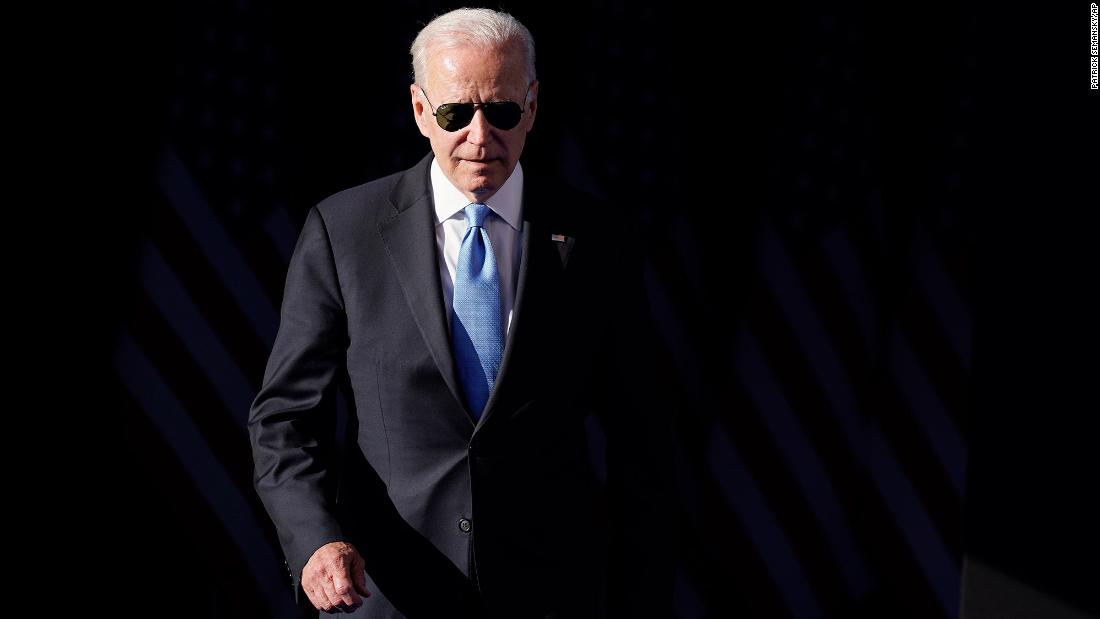
The odd couple – Can Biden and Putin find a way to thaw relations between America and Russia?
It was a meeting of two world powers that came with low expectations but much anticipation. The face-to-face meeting between American President Joe Biden and Russian President Vladimir Putin may not have accomplished much, but it did allow Biden to set a tone on his approach to foreign relations. President Joe Biden's meeting Wednesday with his Russian counterpart came after months of diplomatic wrangling over the details, days of preparation with reams of research and the elaborate construction of two separate lakeside venues for the leaders to appear afterward. But after the summit had concluded, the ornate French style manor home was locked up and the leaders were jetting in opposite directions home, the state of relations between the United States and Russia seemed about the same as before. That is not necessarily a surprise, least of all for Biden, who entered the summit with the vague and modest goal of establishing a "predictable and rational" relationship with Vladimir Putin. Putin's performance afterward was certainly predictable, if not entirely rational. Ultimately, Biden set expectations so low for his first face-to-face encounter with Putin that anything more than someone not showing up at all amounted to breaking even. June 16 - CNN What comes next is up to both leaders – but the world will be watching. Is there a chance to find common ground between the two countries? Will Russia continue to interfere in U.S. elections and hack American agencies - and how will American respond? What happens if Russian opposition leader Alexei Navalny dies in prison? And, did this meeting give Putin the elevated push he needs internationally? If you are a journalist looking to cover this subject – then let us help. Dr. Stephen Farnsworth is a sought-after political commentator on presidential politics. He has been widely featured in national media, including The Washington Post, Reuters, The Chicago Tribune and MSNBC. Dr. Farnsworth is available to speak with media any time. Simply click on his icon to arrange an interview today.


Did you know in America more than 6 million people are living with Alzheimer’s disease? June is Alzheimer's and Brain Awareness Month and the experts from Georgia Southern University have been busy talking with reporters and media about the importance of brain health and how to monitor your memory for any signs that may require attention. Earlier this month, Georgia Southern’s Adrienne Cohen spoke to NBC News about Dementia and the many types of brain disorders. Alzheimer’s is one of the many types of Dementia, a brain disorder that causes the brain to create gaps, initially effecting the short-term memory. “It can have several stages,” said Adrienne Cohen, Ph.D, associate professor and director, Center for Social Gerontology . “It can effect your memory, it can effect your mood, it can effect the way you interact with other people. It’s a slow progression, initially people might just be confused or can’t remember things and sadly that happens to all of us.” For many, it can be difficult to determine whether a person’s forgetfulness is caused by a number of underlying factors, like vitamin deficiencies or metabolic-related issues, or if it could potentially be something more serious. June 07 – NBC News With nearly six million Americans effected by Alzheimer’s disease, the chance of being effected doubles every five years for every American as they age after 65. This is an important topic and if you are a reporter looking to cover this subject – then let our experts help. Simply reach out to Georgia Southern Director of Communications Jennifer Wise at jwise@georgiasouthern.edu and she’ll assist with connecting you with Dr. Cohen today.


UConn Expert on the "FDA's Big Gamble" with Controversial Alzheimer's Drug
The Food and Drug Administration's accelerated approval of the drug aducanumab for the treatment of Alzheimer's disease is mired in controversy -- three scientists have resigned from the independent committee that advised the agency on the monthly infusion treatment priced at $56,000 per year. C. Michael White, distinguished professor and head of the Department of Pharmacy Practice at the University of Connecticut, explains the situation surrounding the drug's approval this week in an essay published by The Conversation: Over 6 million Americans now have Alzheimer’s disease, and deaths from Alzheimer’s have risen over 145% over the past 20 years. Alzheimer’s disease not only robs individuals of their autonomy but also places a huge burden on family members and the U.S. economy: $355 billion is spent annually on caring for people with Alzheimer’s. Current FDA-approved treatments are only modestly effective at controlling disease symptoms, and none target a possible underlying cause. The accelerated approval pathway allows patients with early-stage Alzheimer’s to access aducanumab while a larger and more definitive clinical trial is conducted. Biogen says it hopes to have the clinical trial completed by 2030. If the study does not find reductions in the hard clinical endpoints, the drug will be withdrawn. If aducanumab is ultimately found to be effective, many patients with early-stage Alzheimer’s will reap the benefits in reductions in hospitalizations, doctor visits, nursing home costs and societal burden. If aducanumab is found to be ineffective, however, Medicare, insurers and patients will have spent tens of millions of dollars on a drug that not only did not work but also exposed patients to adverse events, including the risk of bleeding in the brain. June 10 - The Conversation Dr. C. Michael White is an expert in the areas of comparative effectiveness and preventing adverse events from drugs, devices, dietary supplements, and illicit substances. If you are a journalist looking to cover this topic, then let us help. Dr. White is available to speak with media -- click on his icon now to arrange an interview today.


Tennis Pro Naomi Osaka Elevates the Conversation on Athletes and Mental Health
Though Naomi Osaka's announcement of her dropping out of the French Open and German Open tournaments came as a surprise to many of her followers, there has been plenty of support from fans and corporations for the 23-year-old tennis pro who chose to take time off because of mental health concerns. One company, the Calm App, offered to pay fines for tennis players skipping press briefings. And Formula 1 champion Lewis Hamilton—who, when he was 22 years old, found it difficult to deal with media commitments—offered encouragement to Osaka. "When you’re young and you're thrown into the limelight, it weighs heavily, and most of us are not prepared," Hamilton told The New York Times. Guy Weissinger, PhD, an assistant professor in Villanova's M. Louise Fitzpatrick College of Nursing whose research focuses on mental health, says, "Elite athletes are people. They have mental health struggles—good days and bad days—and it's important that we recognize that mental health is complicated, not just 'doing well' or 'not doing well.' One may be capable of doing one thing (i.e., playing tennis) but not other things (i.e., being peppered by reporters with questions). It saddens me that she needed to withdraw from the tournament rather than the tournament organizers reaching out to find ways to accommodate her mental health needs." He noted that the 23-year-old Osaka is an amazing athlete who rose to global prominence beating Serena Williams in a match that got a lot of negative attention. "While no one was saying that she did not deserve her victory, the conversation was mostly focused on Serena, and Osaka was a teenager caught in a media firestorm. I could see how that would create a high level of baseline anxiety around the Opens and media interactions for her, in addition to the already stressful situation of participating at that elite level of sports. Combine that with the high level of stress that everyone has been experiencing over the last year and a half, with COVID, I'm surprised that she isn't the only person who has said that they would be unable to do media appearances." He says this is a great opportunity for discussion of mental health and how it's a concern for everybody. "Too often, we think of people that are successful as being immune to mental health struggles, but we have to acknowledge that people can be both successful and struggling. Sometimes they will be able to manage (as Naomi has in many circumstances), but sometimes even their best coping mechanisms are not enough." Weissinger hopes that we can find ways for people to 'tap out' of the things that overwhelm their ability to cope. "It's not fair or ethical to only wait until people are not just struggling but completely drowning before trying to support or accommodate them. Like with physical health, prevention before things get bad is better for everyone than trying to fix things when they get really bad."


A leading London based architectural metalwork company, specialising in the design, fabrication and installation of bespoke metal products has entered into a Knowledge Transfer Partnership (KTP) with Aston University, with the aim of developing antimicrobial coatings as a way to reduce infection in high risk environments. The Aston University research team will work with John Desmond Limited to develop high end metallic products that can be used where there is a high risk of the spread of bacteria. The antimicrobial coating will be developed for use in communal areas on products such as handrails, balustrades, push plates, door handles and faceplates, – all of which are common in high traffic areas such as hospitals, doctors surgeries, dental practices, schools and transportation hubs. A Knowledge Transfer Partnership (KTP) is a three-way partnership between a business, an academic partner and a graduate, called a KTP Associate. The UK-wide programme helps businesses to improve their competitiveness and productivity through the better use of knowledge, technology and skills. Aston University is the leading KTP provider within the Midlands. Microbiologists from Aston University’s College of Health and Life Sciences and materials scientists from its College of Engineering and Physical Science will establish the effectiveness of the antimicrobial coatings against a panel of bacteria under a range of conditions to further optimise the surface performance. The team will support John Desmond Ltd to establish an in-house microbiology laboratory to enable extensive testing of the developed coatings which will be carried out under lab conditions. Information from the lab tests will provide supporting evidence to prospective clients of the antimicrobial coating’s efficacy, expected lifespan and performance under varying conditions. Ian Desmond, owner of John Desmond Ltd, said: “We are very excited to be working with Aston University on this ground-breaking project to develop industrial coatings capable of reducing the spread of infection within public spaces. “We are confident that with the expert knowledge and experience that the Aston University team brings to this collaboration, we will succeed in formulating a potent cost-effective means to protect all of us from the threat of micro-organisms, and their impact on the environment in which we live and work.” The Aston University academic team consists of Dr Tony Worthington, associate professor in clinical microbiology and infectious disease; Professor Anthony Hilton, and executive dean of the College of Health and Life Sciences, and Dr Richard Martin from the Aston Institute of Materials Research in the College of Engineering and Physical Science. Professor Anthony Hilton said: “I’m delighted to be able to work on this exciting project with John Desmond Ltd, bringing together a multi-disciplinary team of scientists and engineers from across Aston University to work with an industry partner. “Knowledge exchange between academia and industry is a core element of Aston University’s strategy and it is exciting to be part of a team developing a product which has the potential to have real impact in preventing and controlling infection.” Dr Richard Martin, Aston Institute of Materials Research, said: “Over the past year, we have all become aware of just how important it is to limit the spread of microorganisms. This project is an exciting opportunity to develop new antimicrobial coatings that will significantly reduce the transmission of microorganisms from touchpoint surfaces such as door handles and handrails." The research team have found that claims for the effectiveness of the anti-microbial properties of products already on the market are not always backed with scientifically rigorous evidence. As a result of this, these products have not been able to penetrate markets such as healthcare, where generic claims are not sufficient for buyers to change suppliers. This KTP will establish a body of testing and efficacy data which will support the application and use of antimicrobial coatings in a range of settings where control of bacteria on environmental surfaces is critical for infection prevention and control. You can visit our website for more information about The College of Health and Life Sciences and The College of Engineering and Physical Science at Aston University.


Experts available to comment on G7 summit discussions
A range of experts from the University of Bristol are available to comment on the upcoming G7 summit taking place in Cornwall, UK. Professor Simon Tormey, Professor of Politics and Dean of Social Sciences and Law at the University of Bristol can speak about what G7 means for UK, reboot of US-China relations, climate change, and taxes on large corporations. Simon can also do interviews in French. Dr David Matthews, Reader in Virology in the School of Cellular and Molecular Medicine at the University of Bristol and a member of the 'G2P-UK' National Virology Consortium, can discuss vaccines and global health security. Dr Kate Hendry, Associate Professor of Geochemistry at the University of Bristol can discuss ocean action including net zero oceanographic capability. Dr Tommaso Jucker, Research Fellow at the University of Bristol’s Cabot Institute for the Environment, can cover: supporting the transition to a low carbon economy – the role of forest conservation and reforestation in mitigating climate change, and action to halt and reverse biodiversity loss – ecosystem restoration. Dr Kristen Reyher, Reader in Veterinary Epidemiology and Population Health at the University of Bristol, is able to discuss antimicrobial resistance, antimicrobial stewardship, antimicrobial use, and epidemiology. And Professor Awais Rashid, Professor of Cyber Security at the University of Bristol, is available for the following topics: Internet safety including protecting children and online fraud, darknet markets, privacy issues and data exploitation.
