
Experts Matter. Find Yours.
Connect for media, speaking, professional opportunities & more.
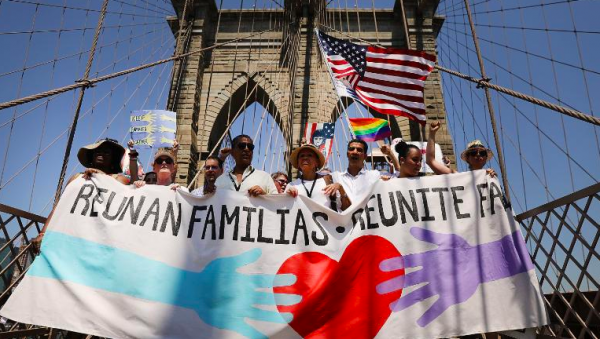
6 Facts We Learned Working with Migrants and Refugees Around the World - Facts 3 and 4 Working with migrants and refugees is our business at Catholic Relief Services. CRS was founded in 1943 to assist refugees during World War II. Seventy-five years later, we are still coming to the aid of people escaping conflict, violence and natural disasters. While CRS doesn’t resettle refugees in the United States (these programs are run by the Catholic Church’s Migration and Refugee Service and Catholic Charities), our rich history has taught us valuable lessons on how to best help families fleeing crisis. 3. Support the Family. The family unit provides the primary support for children during the traumatic refugee experience -- whether it is witnessing violence or crossing a desert on foot. CRS focuses on keeping families together. This means housing a family together and using any services provided – from trauma counseling to income generation – to boost family cohesion. Shannon Senefeld is a global development expert at CRS. She has published and presented extensively on international children’s issues and the importance of strengthened family care for children’s development. See her contact information at the bottom. 4. Kids Need School and Play. CRS is dedicated to keeping up children’s education, to provide stability and normality and give them hope for the future so they can be productive citizens wherever they end up. Kids need to be kids, too. Whether they are in a camp or any sort of migrant or refugee holding center they need a space to play. Caroline Brennan is the Emergency Communications Director for Catholic Relief Services. In her role, she travels to and/or works in areas facing natural or man-made emergencies. See her contact information at the bottom. The experts at Catholic Relief Services are available to help with any media coverage or insight that is required regarding this ongoing news story and issue that is continuing in America. Simply click on any of their icons to arrange a time for an interview. Source:

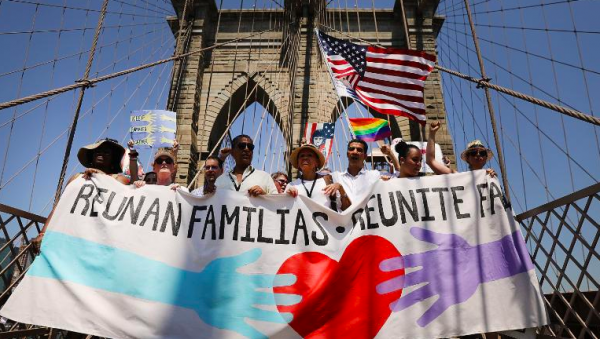
6 Facts We Learned Working with Migrants and Refugees Around the World: Facts 1 and 2 Working with migrants and refugees is our business at Catholic Relief Services. CRS was founded in 1943 to assist refugees during World War II. Seventy-five years later, we are still coming to the aid of people escaping conflict, violence and natural disasters. While CRS doesn’t resettle refugees in the United States (these programs are run by the Catholic Church’s Migration and Refugee Service and Catholic Charities), our rich history has taught us valuable lessons on how to best help families fleeing crisis. 1. People Do Not Want to Leave Their Homes. An astonishing 1 in 110 people have been forced to flee their home (UNHCR). They only do that when they feel they have no other choice. Most people the world over give the same reason for starting their perilous journey across borders -- violence. That’s true for millions fleeing conflict in South Sudan and for tens of thousands fleeing gang violence in Central America. Most often, people flee to other parts within their country first. Only when they see no other option do people leave their country. Rick Jones is the agency's Youth and Migration Advisor in Latin America and the Caribbean. He also specializes in issues affecting Central American migration, including gang violence, poverty, and internal displacement. See his contact information at the bottom. 2. Don’t Separate Families. Based on extensive experience with refugees and migrants, CRS agrees with the criticism of the former U.S. policy of separating children from their parents. Decades of research shows that this is so traumatic for children it can lead to long-term psychological, and even physical damage. Shannon Senefeld is a global development expert at CRS. She has published and presented extensively on international children’s issues and the importance of strengthened family care for children’s development. See her contact information at the bottom. The experts at Catholic Relief Services are available to help with any media coverage or insight that is required regarding this ongoing news story and issue that is continuing in America. Simply click on any of their icons to arrange a time for an interview. Source:

Always Keep Families Together. Separation Damages Children.
The ongoing situation in America’s border towns with the detention and separation of thousands of children from their parents is both highly damaging for children and unnecessary. The actions of American authorities who are enforcing the ‘zero-tolerance’ policies have led to outcries from world leaders, American politicians and a large segment of the public. The following is a statement from Shannon Senefeld, Senior Vice President, Overseas Operations, Catholic Relief Services. “At Catholic Relief Services, keeping children with their parents is always one of our paramount goals. That’s true in emergencies, in health crises, in all of our long-term work combatting poverty and working to end the institutionalization of children. The research is clear – separating children from their families causes lasting mental, and even physical damage. Family support is vital for all children, especially those fleeing violence or dire poverty. “ As a Clinical Psychologist and with a long career working with vulnerable children around the world, Shannon Senefeld can speak with authority on why the ongoing situation with the separation of families on the US border. She can also speak to the root causes that propel families to migrate in the first place, such as rampant gang violence and poverty in Central America. Shannon is available to speak with media. For an interview – simply click on her icon to contact her and arrange a time. Source:

Definitely …Maybe? Donald Trump’s planned sit-down with Kim Jun Un
It was diplomacy that was almost out of a movie. Two bitter leaders, both unpredictable and avowed enemies who seemed on the brink of war … until suddenly they are friends, complimenting each other and arranging a meeting of historic proportions. There was even talk of a Nobel Prize. It seemed too good to be true. And now the world is back to reality. The surprisingly insta-warm relationship between American and North Korea seems to have once again chilled. And now it’s a battle of statements over who has upset who and why. According to North Korean media, Choe Son Hui, a vice-minister in the North Korean Foreign Ministry, said the summit is being reconsidered. And annihilation may follow. "Whether the US will meet us at a meeting room or encounter us at nuclear-to-nuclear showdown is entirely dependent upon the decision and behavior of the United States," Choe said. Vice President Pence responded in the media with a veiled threat of his own. "There was some talk about the Libya model," Pence told Fox News "As the President made clear, this will only end like the Libya model ended if Kim Jong Un doesn't make a deal." So where are we now? What’s next? Is this relationship over before it even started? Experts from the University of Connecticut may have some insight and deeper understanding of this issue. Alexis Dudden is a Professor of History specializing in modern Japan and Korea, and international history at the University of Connecticut. Dudden stresses the importance of understanding the complexity of modern Korea-Japan relations to better appreciate Korean resistance to U.S. demands. South Korea is a country where one in six families is directly affected by the North-South divide. It is “imperative that Washington planners take seriously South Korean desires for renewed engagement,” Dudden says. Professor Dudden is available to speak with media regarding the ongoing talks and threats between North Korea and America. Simply click on her icon to arrange an interview. Source:


New Star Wars, Same Political Landscape?
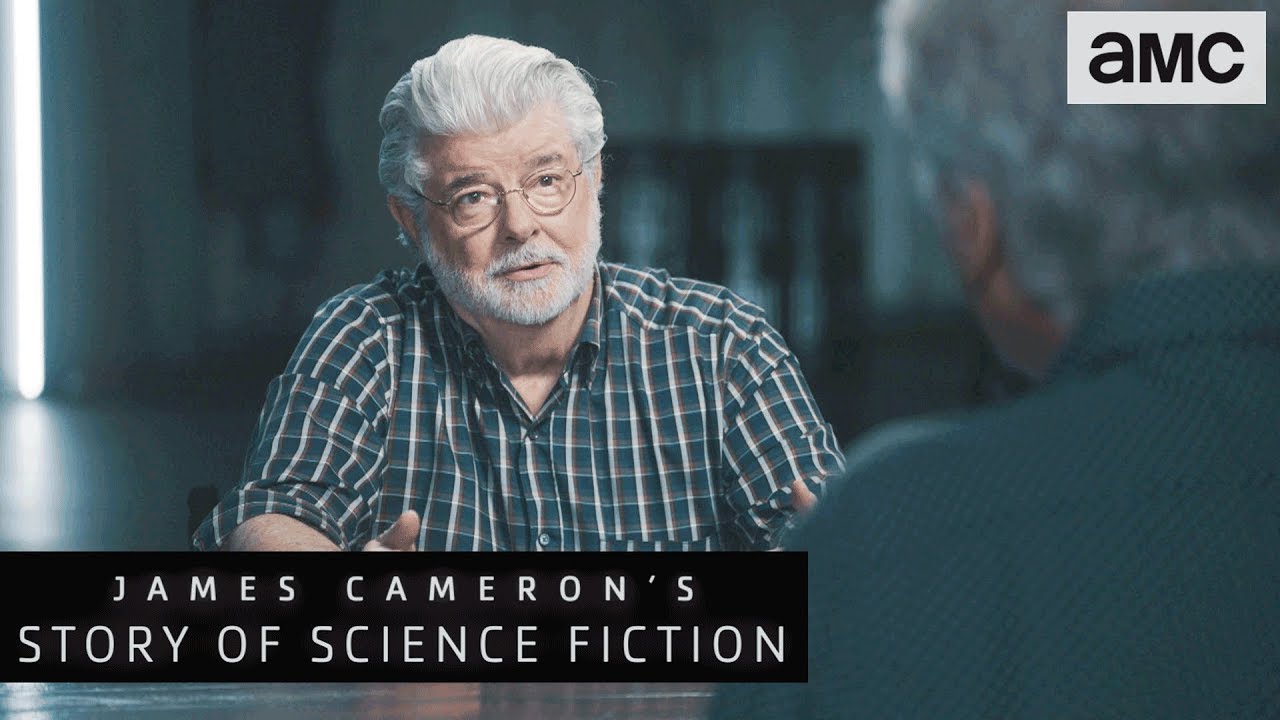
There’s been an enormous amount of hype leading into this Friday’s release of Solo: A Star Wars Story. Will the 10th installment of what is the most valuable franchise in film history live up to the lofty expectations of both fans and film executives? What does this latest epic tell us about current events here on Earth? The politics of Star Wars has proved to be an enduring fascination to many throughout the past 40 years. Equating current political events to the Star Wars saga is where the experts From the University of Connecticut can help. Stephen Dyson has dissected the politics of the "Game of Thrones," "Star Trek" and previous editions of "Star Wars." He can "read between the lines" of the movie dialogue and equate on-screen dialogue to what's happening now in the United States. Source:


Talking to Kids about Tragedies (Such as Shootings and Terror Attacks) in the News
News of yet another #schoolshooting reminds us of the vulnerability all children face. Even if not directly involved, children may be affected by the media coverage. The resources here can provide guidance: https://www.schoolcrisiscenter.org/resources/talking-kids-about-tragedies/ Source:


As Canadian consumers continue their Connected Life journey – one in which they have seen technology transition from the front office to our homes, from our homes to our fingertips and in our pockets - we are now at stage where tech is now on our bodies and soon will become omni present in our life. Canadian consumers have to decide how deep they want dive into the waters of the next wave of Connected Smart Home products. Join IDC Canada's Research Analyst of Consumer and Mobility Research, Manish Nargas as he explores the current status of the Smart home market, the consumer connected life and today's key players, platforms, technologies and early success stories. This dynamic and interesting session is being held on April 26. If you want to attend this this event as part of the press or for other media inquiries - simply click the analyst's icon to connect with us. To learn more about IDC Directions, please click the image below. Source:


Baylor Biology Professor Travels To Antarctica To Study Leopard Seals As Part Of NSF-Funded Research
As part of an $800,000 National Science Foundation-funded project, Stephen J. Trumble, Ph.D., associate professor of biology at Baylor, and other experienced Antarctica researchers from the University of California, Santa Cruz and Colorado State University will work to gain an understanding of the foraging ecology and physiology of the leopard seal, an Antarctic apex, or top, predator. “This three-year project will collect data on foraging and dive behavior, diet, habitat use and fuel use in leopard seals,” Trumble said. “Ultimately, the goal is to relate foraging behavior with physiological performance and determine physiological limits. The estimated physiological limits combined with habitat modeling will help us understand how leopard seals may respond and cope with a changing Antarctic environment.” Trumble and his fellow researchers will conduct their research at the remote Cape Shirreff Field Station on Livingston Island, relying on 55-years of combined experience and lights to navigate the terrain in the dark while searching for leopard seals. A vertebrate physiologist and expert in marine mammals, Trumble has made his fair share of national research headlines since he began working at Baylor in 2008. Along with his graduate students in his Laboratory of Ecological and Adaptational Physiology (LEAP), Dr. Trumble investigates and publishes on basic and applied research involving skeletal muscle physiology, organismal energetics, lipid biochemistry, digestive physiology and health indices in models ranging from rats to seals to whales. Source:


Trade wars – is America’s economy collateral damage?
There’s been a lot of tough talk on trade coming from Washington as of late. With debates and even some delusions about trade surpluses and deficits,it’s feed for the political fodder, but are the politics behind the talk negatively impacting America’s economy? President Trump says he is standing up for American jobs, but by threatening to tear up NAFTA and imposing billions in tariffs on China, is starting a street fight with America’s traditional trading partners worth it? The common folk might think so. However, those who control the markets on Wall Street think not. The DOW is down. A lot. The NASDAQ is also falling. That means a lot of money is being lost and the ripples might be felt by middle America in the form of lost jobs. So, what exactly happens in a trade war? Is America truly getting the raw deal President Trump is claiming when it comes to doing business with China, Canada, Mexico and others? What will come of all the tough talk on trade? How will it impact the economy? There are many questions and issues to consider. That’s where the experts from Missouri State University can help. Dr. David Mitchell is a professor of economics and director of the Bureau of Economic Research at Missouri State. He is also an expert in economic forecasting and understanding market trends and direction. He can address what these trade wars will do for America's economy and what, if any, effects they will have on the American people. Click on his icon to connect with him. Source:

Microsoft Working to Close the STEM Gap
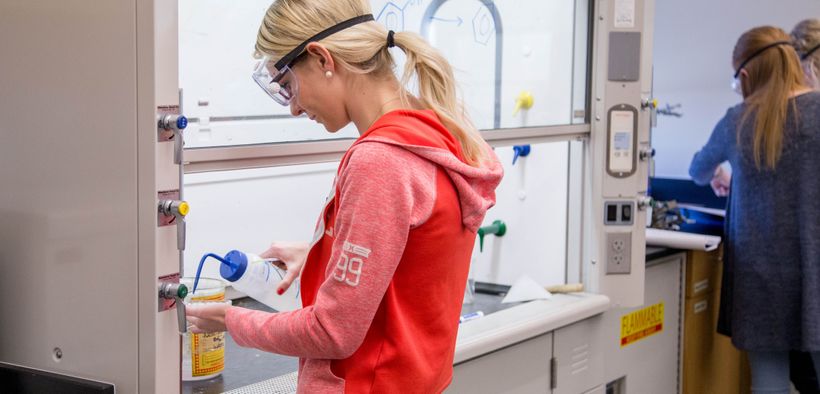
Even with a higher priority placed on science, technology, engineering, and math (STEM) throughout education in the US, only a fraction of girls are likely to pursue a STEM career. According to the National Center for Education Statistics, while more than 57 percent of college undergraduates are women, only 18 percent progress into STEM careers. With a clear gap, Microsoft set out to better understand what causes girls and women to lose interest in STEM subjects and careers, as well as what strategies have the greatest potential to reverse the trend. According to Microsoft, the goal of the study “was to inform our work in this area and to share learnings with schools, government leaders, nonprofits, employers and others. What we learned is that conditions and context can make a significant difference to girls, young women and their interest in STEM. And the solution doesn’t necessarily require a curricula overhaul.” Dr. Shalini Kesar, Associate Professor of Information Systems at Southern Utah University and advocate for women in technology, has known for years that girls and young women are a critical missing part of STEM studies and careers. “The stubborn gender disparity in STEM fields has sparked important debates on the underlying reasons,” said Kesar. “Some attribute the gender disparity to social and infrastructural factors, lack of mentors and role models, and lack of awareness about what these fields offer in terms of educational and career opportunities. Others point to studies that indicate traditional mindsets of computing as ‘boring’ and ‘only for boys’ as a major reason why girls and young women do not consider a degree or career in this field.” The study found that “we may be able to make significant strides just by showing girls and young women how STEM knowledge is applicable outside of the classroom, and how it can power their aspirations to make the world a better place.” “Recently, I was invited to collaborate with Microsoft on research which quantifies many of my observations from over 20 years of working to reduce the gender gap in STEM and computing,” said Kesar. “This work is an essential step forward in helping us learn more about how girls and young women currently perceive STEM.” Dr. Kesar was recently recognized by the Women Tech Council, receiving the Education Excellence Award at the 2016 Women Tech Awards. She is familiar with the media and available for an interview. Simply visit her profile.

