Experts Matter. Find Yours.
Connect for media, speaking, professional opportunities & more.
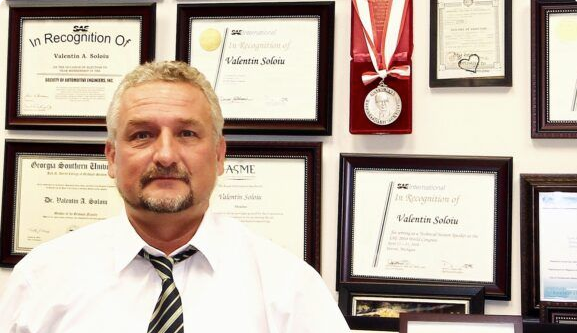
Georgia Southern University’s Allen E. Paulson College of Engineering and Computing and College of Education are teaming up to bring the latest innovative research on renewable energy to STEM educators and their classrooms across Georgia. That’s all thanks to a $600,000 grant from the National Science Foundation to establish the Engaging Educators in Renewable Energy (ENERGY) program. The funds will support a three-year-long initiative that will bring Valentin Soloiu, Ph.D.’s energy research into high school and technical college classrooms. Soloiu and engineering graduate students from Georgia Southern will conduct research related to renewable energy, reducing greenhouse gas emissions, and mitigating climate change, covering topics like renewable and alternative energy (solar and wind), climate change, enhanced energy technologies and the development of sensors and controls for energy applications and smart grids. Soloiu, the Allen E. Paulson Distinguished Chair of Renewable Energy, will be joined by mechanical engineering professor Mosfequr Rahman, Ph.D. and Elise Cain, Ph.D., director of the Educational Leadership Program in the College of Education, in developing the program. “The core requirement is to conduct state-of-the-art, transformative research in science and engineering,” explained Soloiu. “After that is complete, we bring high school and technical college teachers in to translate this research into classroom-ready modules.” Teachers will be selected from a large pool of statewide applicants to work alongside faculty and graduate students from the College of Engineering and Computing. They’ll also receive funds to incorporate that research into their curriculum. Soloiu will oversee the program as the principal investigator, with Cain serving as the education lead, bringing a multidisciplinary approach to the program. “I think interdisciplinary collaborations are vital in academic work,” noted Cain. “Faculty from the Allen E. Paulson College of Engineering and Computing contribute their technical knowledge and skills related to renewable energy, while I bring my College of Education perspectives on educational contexts and pedagogy. Working together allows us to create a robust program with immediate and lasting impacts.” Educators will visit local companies and interact with leaders in renewable energy, such as Gulfstream Aerospace in Savannah, Georgia, and Rolls-Royce Power Systems in Aiken, South Carolina. These experiences are designed to help teachers share career opportunities with students they might not otherwise encounter. “This program reflects the essence of our institutional mission,” said Cain. “It’s about discovery, teaching, and community engagement—all grounded in excellence and innovation.” Soloiu echoed those sentiments. “Many teachers and students in rural areas don’t even know what we do here at Georgia Southern,” explained Soloiu. “By engaging with educators directly, we’re creating awareness, inspiration, and pipelines to higher education and high-tech careers. This is reflective of the University’s dedication to our communities as we move towards R1 status.” Looking to know more about this important research happening at Georgia Southern - Valentin Soloiu is available to speak with media. Simply click on his icon now to arrange an interview today.



Spitting image: What the blunder by Philadelphia Eagles' Carter can teach us about teams
Social media caught fire when Philadelphia Eagles' defensive tackle Jalen Carter got tossed for spitting on Dallas Cowboys' quarterback Dak Prescott before the first snap of this year's NFL season opener. While the impact on the game was obvious, what unfolded on the field of play has lessons for the workplace and the boardroom. The University of Delaware's Kyle Emich can talk about the parallels between the two worlds when individuals let their teams down. Emich, a professor of management in UD's Lerner College of Business and Economics, said emotional events occur all the time in the workplace, especially in board rooms, where the atmosphere is often competitive. "Emotion regulation is a key part of harnessing motivation appropriately in a competitive context," Emich said. • Early on, the Cowboys were able to regulate their emotions to tap into the incident when they roared out to several seamless offensive drives. • Emich says the Eagles' young, inexperienced and not-yet-gelled defensive unit was unable to regulate their emotions and preserve their confidence (collective efficacy) after the incident. They were unable to stop Dallas in the first half. • Carter's act could also have served as an emotion regulation cue for both teams. The Eagles defense was unable to regulate and maintain stability, leading to a number of costly penalties. But the Cowboys seemed to have had the same issue when they retaliated with personal fouls of their own. • In the end, the Eagles were able to come together under the leadership of their coach, Nick Sirianni, and quarterback, Jalen Hurts, to secure a 24-20 victory. To connect with Emich for an interview, visit his profile page and click on the "contact" button.


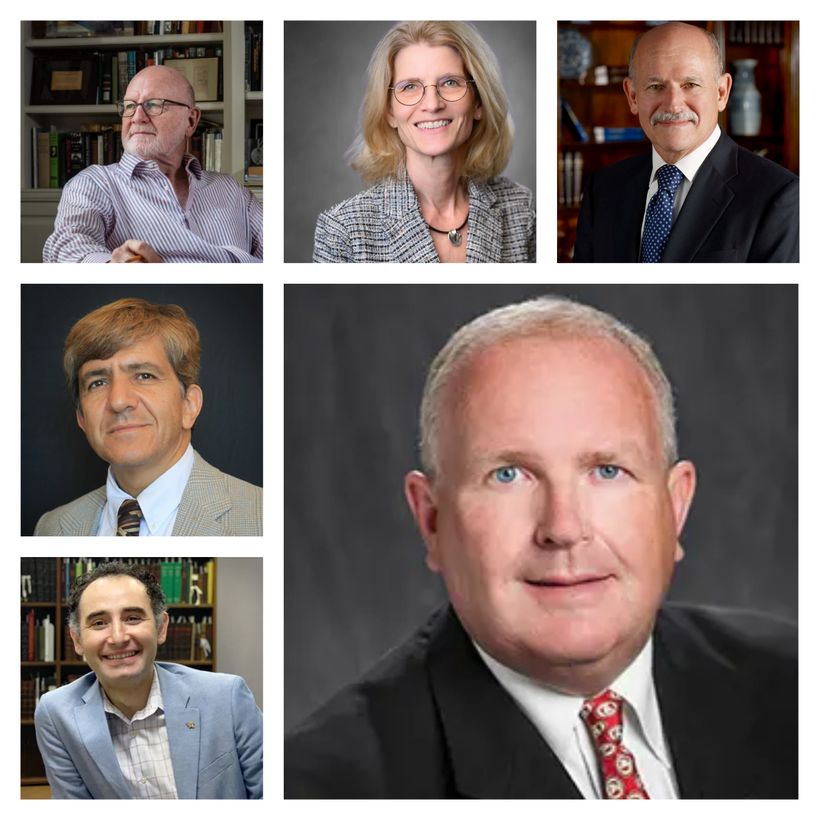
Largest Cohort in LSU History: Six Distinguished Faculty Members Named Boyd Professors
Named in honor of brothers Thomas and David Boyd, early presidents and faculty members of LSU, the Boyd Professorship recognizes faculty who bring honor and prestige to LSU through their national and, as appropriate, international recognition for outstanding achievements. Before today, only 79 faculty members from all of LSU’s campuses have ever achieved this distinguished rank. The newest cohort of Boyd Professors represent a wide variety of disciplines and hail from three of LSU’s eight campuses: LSU A&M, Pennington Biomedical Research Center, and LSU Shreveport. This group includes LSU Shreveport’s first-ever Boyd Professor, a landmark achievement for the campus and a testament to its academic distinction. As the largest group of Boyd Professors ever named at one time, this cohort underscores LSU’s rising reputation for research excellence across all of its campuses. “This is a moment of real pride for LSU. Naming six new Boyd Professors is not only historic in scale, it's a clear reflection of the extraordinary strength and momentum of our academic enterprise,” said Interim LSU President Matt Lee. “These scholars are advancing knowledge in ways that reach far beyond our campuses, and their work is helping to define LSU’s place on the national and global stage. I am especially proud to see LSU Shreveport represented for the first time, a milestone that reflects the growing excellence across our campuses. This achievement is a powerful reminder of our commitment to advancing scholarship and shaping the future through research, education, and service.” The newest Boyd Professors are: Mette Gaarde, Les and Dot Broussard Alumni Professor, Department of Physics and Astronomy, College of Science, LSU A&M John Maxwell Hamilton, Hopkins P. Breazeale LSU Foundation Professor, Manship School of Mass Communication, LSU A&M Steven Heymsfield, Professor of Metabolism and Body Composition, Pennington Biomedical Research Center Michael Khonsari, Dow Chemical Endowed Chair and Professor, Department of Mechanical Engineering, College of Engineering, LSU A&M Alexander Mikaberidze, Professor of History, Ruth Herring Noel Endowed Chair, College of Arts & Sciences, LSU Shreveport R. Kelley Pace, Professor, Department of Finance, E. J. Ourso College of Business, LSU A&M Nominations for the Boyd Professorship are initiated in the college, routed for review and support at the campus level, then considered by the LSU Boyd Professorship Review Committee, which seeks confidential evaluations from dozens of distinguished scholars in the candidate’s field of expertise. Once endorsed by the review committee, the nomination is forwarded to the LSU President and Board of Supervisors for consideration. With this distinction, a Boyd Professor’s compensation is elevated to reflect the stature of LSU’s most distinguished faculty, with a salary set at no less than the 95th percentile of full professors in comparable disciplines at peer public institutions across the southeastern United States. They also receive an annual stipend to further support their research and scholarly pursuits. Please join us in congratulating these faculty on this outstanding accomplishment.


LSU Expert Carol Friedland on Katrina’s Legacy: What’s Changed, What Still Needs to Be Done
After Hurricanes Katrina and Rita devastated Louisiana and brought billions of dollars of damage to the state, lawmakers worked with researchers, engineers and others to create and implement new codes and laws in an attempt to prevent such serious damage happening again. On Aug. 29, LSU and the LSU AgCenter hosted an event at the Energy, Coast and Environment Building in honor of the 20th anniversary of Hurricane Katrina, which made landfall in Louisiana on the same date in 2005. The daylong conference featured leading voices from LSU and government officials, who spoke about the impacts that hurricanes Katrina and Rita had on Louisiana and how policies and research have changed since those storms. As a part of the program, Carol Friedland, the director of the AgCenter LaHouse Research and Education Center, spoke alongside Brad Hassert, executive director of the Louisiana State Licensing Board for Contractors, for a seminar called “Innovating Resilience: Solutions Inspired by Katrina.” The two discussed recent developments in building materials and building codes that showed the changes, or lack thereof, since the two devastating hurricanes. At the time of the storms, building codes were not uniform in the state, and some parishes had almost no building codes at all. After Katrina and Rita, however, officials pushed for a unified code that better protected Louisiana residents from dangerous storms and weather events. “After Hurricane Katrina, we actually enacted very strong legislation to adopt the model code,” Friedland said. “Also, at the same time, the FEMA mitigation assessment team went out and documented a lot of the failures from Katrina. This program really helps us learn around the country what are the practices that are working and what are the practices that are not working and then getting those integrated into the code process.” Friedland went on to talk about some developments for houses that she has been working on, like “fortified roofs,” which are new roofs that will protect residents more efficiently than the codes required in Louisiana. Friedland also talked about the process of implementing new codes. Researchers must find agreement with governmental entities and other parties, like insurance adjusters and contractors, to succeed, she said. Hassert spoke about the importance for homeowners to find a licensed contractor after a weather event causes damage to their house. This is mostly to ensure that the house will be repaired to code and so the homeowners will not be scammed or stolen from. Hassert, who was recently appointed executive director of the Louisiana State Uniform Construction Code Council, urged researchers and other stakeholders to come together and participate in council meetings so they can make the most informed and beneficial decisions that they can. Both Hassert and Friedland believe there is work to do to improve the codes and building standards in Louisiana houses, but with communication and more involved research, enhancements can be made. “One of the ways I like to frame this is to think about are we happy with the level of losses that we have?” Friedland said. “Do we think that we’re doing well? Who is happy with the level of loss that we see? I think we can still do better.” Original article posted by the LSU AgCenter here.


Play, Learn, Lead: How Aston’s Gamification-Driven MBA Is Redefining Business Learning
Professor Helen Higson OBE of Aston Business School, discusses why gamification is embedded in all of the School's postgraduate portfolio of degrees Give the students something to do, not something to learn; and the doing is of such a nature as to demand thinking; learning naturally results. (attributed to John Dewey, US educational psychologist (1859-1952) Imagine you’re the CEO of a cutting-edge robotics firm in 2031, making high-stakes decisions on R&D, marketing and finance; one misstep and your virtual company could collapse. You win, lose, adapt, and grow. This isn’t a case study, it’s your classroom experience at Aston Business School in Birmingham. Imagine you’re participating in Europe’s biggest MBA tournament, the University Business Challenge, where your strategic flair and financial acumen will be tested against the continent’s sharpest minds. Then you’re solving real-world sustainability crises in the Accounting for Sustainability Case Competition, crafting solutions that could be showcased in Canada. What if you could do all this from your classroom seat, armed with only your MBA learnings, teamwork and the thrill of gamified learning. At Aston, we believe the best way to master business is by doing business. That’s why we’ve embedded active learning through games, simulations, and competitions across all our postgraduate programs. The results? Higher engagement, deeper learning, and students who graduate with confidence and real-world skills. Research says gamified learning boosts motivation, lowers stress, and helps students adopt new habits for lifelong success. As educational researchers Kirillov et al. (2016) found, “Gamification creates the right conditions for student motivation, reduces stress, and promotes the adoption of learning material—shaping new habits and behaviours.” This has led to what Wiggins (2016), calls the “repackaging of traditional instructional strategies”. In Aston Business Sschool we have long embraced this approach as a way of increasing student outcomes and stimulating more student engagement in their learning. Our Centre for Gamification in Education (A-GamE), launched in 2018, is dedicated to advancing innovative teaching methods. We run regular seminars with internal and external speakers showcasing gamification adoption, design and research and we use these techniques across the ABS in a wide range of disciplines. (We have included two examples of this work in our list of references.) Furthermore, in 2021 we published a book which outlines the diverse ways in which we use these methods (Elliott et al. 2021). Subsequently, during 2024 we redesigned all our postgraduate portfolio of degrees, and as part of this initiative games and simulations were embedded across all programmes. Why Gamification Works Through simulations like BISSIM, students step into executive roles, steering futuristic companies through the twists and turns of a dynamic marketplace. A flagship programme running since 1981, BISSIM was developed in collaboration between academics from ABS and Warwick Business School, and every decision on R&D, marketing, or HR has real consequences as teams battle each other for the top spot. After each year of trading the results are input into the computer model. The results are then generated for each company in the form of financial reports, KPIs and other non-financial results and messages. Each team’s results are affected by their own decisions and the competitive actions of the other teams, as well as the market that they all influence. This year one of our academics, Matt Davies, has been awarded an Innovation Fellowship further to commercialise the game. Competitions with Global Impact We also encourage students to take part in national and international competitions which have the same effect of developing their engagement with real-life business problems on a global scale. Beyond the classroom, Aston students represent the university in major competitions like the University Business Challenge (in which ABS had the highest number of UK teams this year) and the Accounting for Sustainability (A4S) Case Competition, for which we are an “anchor business school”. Here, theory gets stress-tested against real-world scenarios and top talent from around the globe. The result? Award-winning teams, global experience, and friendships built under pressure. At the heart of this approach is Aston’s Centre for Gamification (A-GamE), dedicated to making learning interactive, motivating, and fun. Regular seminars, fresh research, and close ties to industry keep the curriculum evolving and relevant, so students graduate ready to lead, adapt, and thrive in any business environment. Why does it matter? In a volatile, fast-paced economy, employers appreciate agility, teamwork and decisiveness. At Aston, every simulation and competition is geared towards sharpening these skills. Graduates emerge not only knowledgeable, but prepared for the job market. Engagement Our students have been embracing these opportunities. Six MBA/Msc teams developed their A4S videos, hoping to reach the final in Canada early in 2025, and three teams out of nine reached the national UBC finals. Additionally, the BISSEM simulation has just finished inspiring another group of MBA students (particularly as the prize for the winning team was tickets to a game at our local Aston Villa premiership football (soccer) club, currently riding high in the league!). Typical feedback from non-Finance specialists is that they suddenly surprised themselves during their participation in the simulation and were reconsidering the options of taking a career in Finance. It seems that our original purposes have been met – increased confidence, passion, deep learning and engagement have been achieved. To interivew Professor Higson, contact Nicola Jones, Press and Communications Manager, on (+44) 7825 342091 or email: n.jones6@aston.ac.uk Elliott, C., Guest, J. and Vettraino, E. (editors) (2021), Games, Simulations and Playful Learning in Business Education, Edward Elgar. Kirillov, A. V., Vinichenko, M. V., Melnichuk, A. V., Melnichuk, Y. A., and Vinogradova, M. V. (2016), ‘Improvement in the Learning Environment through Gamification of the Educational Process’, International Electronic Journal of Mathematics Education, 11(7), pp. 2071-2085. Olczak, M, Guest, J. and Riegler, R. (2022), ‘The Use of Robotic Players in Online Games’, in Conference Proceedings, Chartered Association of Business Schools, LTSE Conference, Belfast, 24 May 2022, p. 79-81. Wiggins, B. E. (2016), ‘An Overview and Study on the Use of Games, Simulations, and Gamification in Higher Education’, International Journal of Game-Based Learning (IJGBL), 6(1), 18-29. https://doi.org/10.4018/IJGBL.2016010102

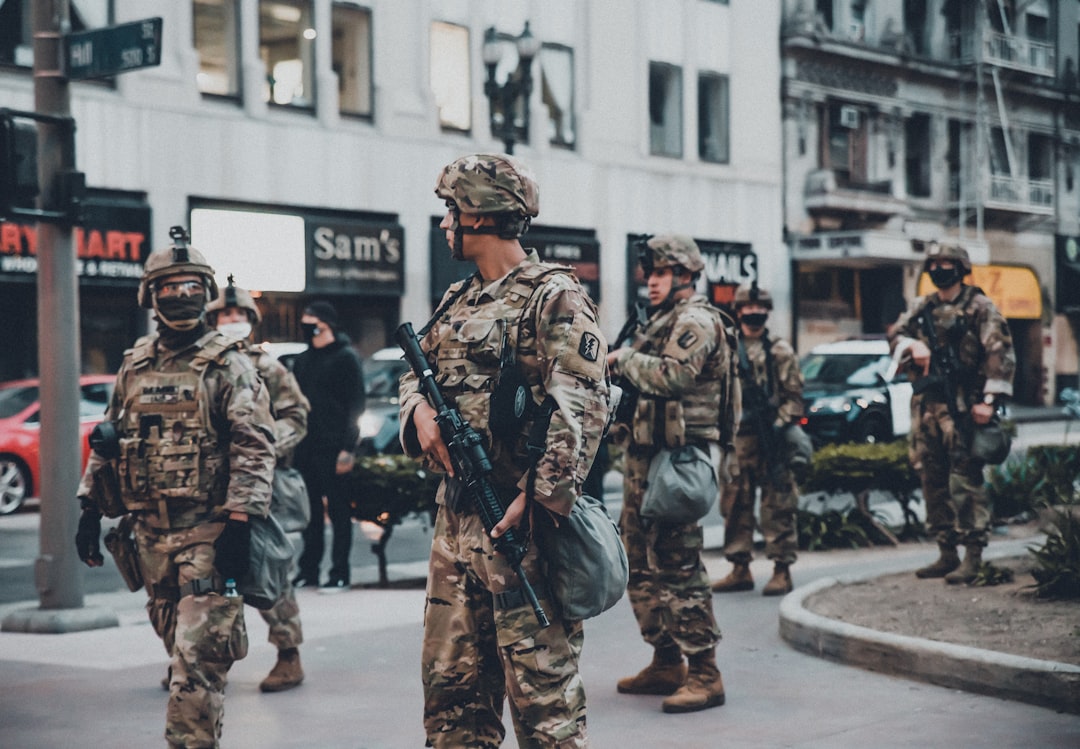
4 out of 5 US Troops Surveyed Understand the Duty to Disobey Illegal Orders
This article is republished from The Conversation under a Creative Commons license. Read the original article here. With his Aug. 11, 2025, announcement that he was sending the National Guard – along with federal law enforcement – into Washington, D.C. to fight crime, President Donald Trump edged U.S. troops closer to the kind of military-civilian confrontations that can cross ethical and legal lines. Indeed, since Trump returned to office, many of his actions have alarmed international human rights observers. His administration has deported immigrants without due process, held detainees in inhumane conditions, threatened the forcible removal of Palestinians from the Gaza Strip and deployed both the National Guard and federal military troops to Los Angeles to quell largely peaceful protests. When a sitting commander in chief authorizes acts like these, which many assert are clear violations of the law, men and women in uniform face an ethical dilemma: How should they respond to an order they believe is illegal? The question may already be affecting troop morale. “The moral injuries of this operation, I think, will be enduring,” a National Guard member who had been deployed to quell public unrest over immigration arrests in Los Angeles told The New York Times. “This is not what the military of our country was designed to do, at all.” Troops who are ordered to do something illegal are put in a bind – so much so that some argue that troops themselves are harmed when given such orders. They are not trained in legal nuances, and they are conditioned to obey. Yet if they obey “manifestly unlawful” orders, they can be prosecuted. Some analysts fear that U.S. troops are ill-equipped to recognize this threshold. We are scholars of international relations and international law. We conducted survey research at the University of Massachusetts Amherst’s Human Security Lab and discovered that many service members do understand the distinction between legal and illegal orders, the duty to disobey certain orders, and when they should do so. Compelled to disobey U.S. service members take an oath to uphold the Constitution. In addition, under Article 92 of the Uniform Code of Military Justice and the U.S. Manual for Courts-Martial, service members must obey lawful orders and disobey unlawful orders. Unlawful orders are those that clearly violate the U.S. Constitution, international human rights standards or the Geneva Conventions. Service members who follow an illegal order can be held liable and court-martialed or subject to prosecution by international tribunals. Following orders from a superior is no defense. Our poll, fielded between June 13 and June 30, 2025, shows that service members understand these rules. Of the 818 active-duty troops we surveyed, just 9% stated that they would “obey any order.” Only 9% “didn’t know,” and only 2% had “no comment.” When asked to describe unlawful orders in their own words, about 25% of respondents wrote about their duty to disobey orders that were “obviously wrong,” “obviously criminal” or “obviously unconstitutional.” Another 8% spoke of immoral orders. One respondent wrote that “orders that clearly break international law, such as targeting non-combatants, are not just illegal — they’re immoral. As military personnel, we have a duty to uphold the law and refuse commands that betray that duty.” Just over 40% of respondents listed specific examples of orders they would feel compelled to disobey. The most common unprompted response, cited by 26% of those surveyed, was “harming civilians,” while another 15% of respondents gave a variety of other examples of violations of duty and law, such as “torturing prisoners” and “harming U.S. troops.” One wrote that “an order would be obviously unlawful if it involved harming civilians, using torture, targeting people based on identity, or punishing others without legal process.” Soldiers, not lawyers But the open-ended answers pointed to another struggle troops face: Some no longer trust U.S. law as useful guidance. Writing in their own words about how they would know an illegal order when they saw it, more troops emphasized international law as a standard of illegality than emphasized U.S. law. Others implied that acts that are illegal under international law might become legal in the U.S. “Trump will issue illegal orders,” wrote one respondent. “The new laws will allow it,” wrote another. A third wrote, “We are not required to obey such laws.” Several emphasized the U.S. political situation directly in their remarks, stating they’d disobey “oppression or harming U.S. civilians that clearly goes against the Constitution” or an order for “use of the military to carry out deportations.” Still, the percentage of respondents who said they would disobey specific orders – such as torture – is lower than the percentage of respondents who recognized the responsibility to disobey in general. This is not surprising: Troops are trained to obey and face numerous social, psychological and institutional pressures to do so. By contrast, most troops receive relatively little training in the laws of war or human rights law. Political scientists have found, however, that having information on international law affects attitudes about the use of force among the general public. It can also affect decision-making by military personnel. This finding was also borne out in our survey. When we explicitly reminded troops that shooting civilians was a violation of international law, their willingness to disobey increased 8 percentage points. Drawing the line As my research with another scholar showed in 2020, even thinking about law and morality can make a difference in opposition to certain war crimes. The preliminary results from our survey led to a similar conclusion. Troops who answered questions on “manifestly unlawful orders” before they were asked questions on specific scenarios were much more likely to say they would refuse those specific illegal orders. When asked if they would follow an order to drop a nuclear bomb on a civilian city, for example, 69% of troops who received that question first said they would obey the order. But when the respondents were asked to think about and comment on the duty to disobey unlawful orders before being asked if they would follow the order to bomb, the percentage who would obey the order dropped 13 points to 56%. While many troops said they might obey questionable orders, the large number who would not is remarkable. Military culture makes disobedience difficult: Soldiers can be court-martialed for obeying an unlawful order, or for disobeying a lawful one. Yet between one-third to half of the U.S. troops we surveyed would be willing to disobey if ordered to shoot or starve civilians, torture prisoners or drop a nuclear bomb on a city. The service members described the methods they would use. Some would confront their superiors directly. Others imagined indirect methods: asking questions, creating diversions, going AWOL, “becoming violently ill.” Criminologist Eva Whitehead researched actual cases of troop disobedience of illegal orders and found that when some troops disobey – even indirectly – others can more easily find the courage to do the same. Whitehead’s research showed that those who refuse to follow illegal or immoral orders are most effective when they stand up for their actions openly. The initial results of our survey – coupled with a recent spike in calls to the GI Rights Hotline – suggest American men and women in uniform don’t want to obey unlawful orders. Some are standing up loudly. Many are thinking ahead to what they might do if confronted with unlawful orders. And those we surveyed are looking for guidance from the Constitution and international law to determine where they may have to draw that line. Zahra Marashi, an undergraduate research assistant at the University of Massachusetts Amherst, contributed to the research for this article.



This article is republished from The Conversation under a Creative Commons license. Read the original article here. The last few weeks of summer, heading into Labor Day weekend, can sometimes mean vacations and driving more miles on the road for all people, including teens. Traffic crashes are the No. 1 cause of death for teens, and the crash rate for teen drivers is disproportionately higher than the share of licensed teen drivers. In addition to this grim statistic, summer is the riskiest time for teen drivers. The 100 deadliest days represent the period from Memorial Day to Labor Day when the number of fatal crashes involving teen drivers dramatically increases. A third of each year’s teen driver crashes occur during the summer. We are scholars who research transportation safety and teen driver behavior. Our expertise helps us understand that these 100 days are not just a statistical fluke – they reflect a dangerous intersection of factors such as inexperience and a propensity to take risks. What makes summer different? Regardless of the season, some teen drivers engage in risky behaviors that increase their likelihood of a fatal crash, such as getting distracted, driving with friends in the vehicle, driving under the influence, not wearing seat belts and a lack of hazard awareness. Teens also have more free time in the summer, since most aren’t in school. Combined with the longer days and better weather, teens drive more over the summer. More time on the road means more risk, especially for inexperienced drivers. Teens may also be more likely to drive after dark during the summer, in comparison to more experienced drivers. But nighttime driving is also when visibility is reduced and crash risks are higher, particularly for teens who haven’t fully developed the skills necessary for night driving. This increased exposure, in addition to teens’ general risky driving tendencies, contributes to the 100 deadliest days for teen drivers. The increased crash risk for teens over the summer isn’t equally distributed either. Crashes with teen drivers that lead to serious injuries are more likely to occur with male drivers, in rural areas, for those of lower socioeconomic status and for those with disorders, such as attention deficit and hyperactivity disorder. Teaching young drivers Driver’s education programs are the formal method to teach teen drivers the rules of the road. In driver’s education programs, teens receive information about driver and road safety though classroom and behind-the-wheel instruction in preparation for the licensing exam. Some states require teens to complete a driver’s education course if they want to receive a license under the age of 18. Of teens who have a license, nearly 80% of them have gone through some form of driver’s education. Though driver’s education programs can be helpful, their effects are not equally felt. In some states, teens and their guardians must pay out of pocket for driver’s education courses to obtain a license. This makes driver’s education and, as a consequence, obtaining a driver’s license inequitable. There are also driving school deserts – areas where the poverty rate is 20% or above and there are no behind-the-wheel driver education courses within a 10- to 15-minute drive. This makes driver education courses inaccessible. Many of these driving school deserts happen to be in areas with high populations of minorities. Over 20 years ago, graduated driver licensing was introduced to reduce teen crash rates. This is a phased licensing system wherein teen drivers are restricted in terms of when, where and with whom they can drive until they turn 18. Such a system allows teens to gradually learn and gain experience with driving over time. Graduated driver licensing has been implemented in all 50 states, and it has been shown to reduce teen driver crash rates. However, its effectiveness is limited to those who participate in the system. A large number of teens are unlicensed and are of low socioeconomic status. Many of these unlicensed teens forgo the entire process and remain unlicensed but still drive, well into their 20s when the graduated driver licensing restrictions are lifted. Making summer safer There are two things people can do to turn the 100 deadliest days into the 100 safest days. First, it is important that communities offer free supplementary training programs for teen drivers, because becoming a safe and responsible teen driver shouldn’t be limited to those with resources. As one example, in collaboration with industry partners, we have developed a program called Risk-ATTEND. It is a free, online, evidence-based program that teaches teen drivers how to anticipate risks while driving. Our research has shown that programs such as these can improve teen driving skills and may be especially effective for teen drivers in high-poverty areas. Second, our research has shown that parents and guardians still play an important role in influencing teen driver behavior. Studies show that teens mirror the behaviors they observe: If they see adults text and drive, they’re more likely to do the same. Once teenagers become old enough to drive, it is also important to establish rules and guidelines about expectations to establish clarity and accountability. Written agreements or checklists can address high-risk conditions such as nighttime driving, driving with other young passengers, phone use and adherence to speed limits. Systems to help monitor and enforce rules have been shown to be effective in improving teen driver behavior. One such program is Checkpoints, which is a Connecticut-based program in which families agree to limit teen driving during high-risk conditions. Teens face consequences for violating these limits, such as a temporary loss of driving privileges. However, the limits are gradually lifted as they gain driving experience. More than rules matter Ultimately, preventing crashes in the summer and beyond extends beyond mere adherence to regulations. Avoiding them fundamentally hinges on cultivating a robust safety culture that emphasizes a collective commitment to risk reduction and continuous improvement in driving practices. For teens, the summer months present unique challenges and opportunities. Drawing on best practices, such as training programs, teens can build essential skills in varied conditions before gaining full, unsupervised privileges.

Life Hacks in Retirement: Strategies for Aging Well
If Jean Smart can star in Hacks at 72, clearly life hacking is age-appropriate. Hacks may be a TV comedy about a sharp-tongued, aging comic, but let’s face it: retirement needs a few hacks of its own. It turns out that aging well requires more than good genes—it demands good strategy. The goal isn’t perfection. It’s progress. Progress with fewer bruises, bigger laughs, and more money left at the end of the month than freezer-burnt chicken. So here are some tried-and-true hacks in three essential areas: Money, Muscle, and Mood. Let's get you hip, fit, and financially free. Ready, Set, Go! Money Hacks: Japan Might Have Found Something In Japan, there's a charming financial custom called Kuzukai, where men hand over all their income to their wives and receive a monthly allowance. No joke—it's a thing. And it works. Japan boasts: • One of the highest household savings rates at 23% (OECD, 2023) • Low household debt per capita (World Bank) • The lowest personal bankruptcy rate in the developed world (IMF Report) • And a whopping 74% of households follow this practice (Nikkei Asia, 2021) Maybe they’ve discovered the ultimate money hack: give the money to the person most likely to use spreadsheets recreationally. But you don’t need a spouse or a sushi habit to save big. Whether you're solo or shacked up, a homeowner or a renter, here are some effectively universal money-saving tips. Everyday Money-Saving Hacks: • Cut the Hidden Fees: Banking, streaming, delivery apps—if you’re not actively using them, cancel or deactivate. Your wallet will thank you. Read your bank and investment statements carefully, as if they were love letters from your money. That $3 “maintenance fee”? It might be costing you more than you realize. • Unsubscribe to Survive: Subscriptions are like house guests—pleasant at first but staying too long and costing too much. Establish a quarterly ritual—Subscription Audit Sunday. Review auto-renewals—Netflix, meditation apps, fancy sock clubs. If it doesn’t bring you joy or serve your needs weekly, cancel it. You might find enough loose change for a weekend escape. • Shop Daily, Eat Fresh: Instead of over-buying in bulk, buy just what you need for the day. It supports spontaneity and reduces waste. (Bonus: you can honour the “I feel like chicken wings” days guilt-free.). Power Tip: Shop daily, eat fresh. Channel your inner Parisian. Shop just for today—reducing waste, adding joy, and turning dinner into a choice rather than a guilt-ridden freezer excavation. • Use Senior Discounts Like a Boss: Shoppers Drug Mart (55+), Pet Valu (60+), movie theatres, golf, bowling… but only if you ask. Ask proudly: “I dare you, card me.” Mark senior days on your calendar like paydays, because they are. • Split with a Buddy: Share groceries with a friend. Half a BBQ chicken is more realistic (and less greasy) than the whole bird, and it reduces “fridge clutter”! • Ride Together: Share Ubers or Lyft. Or better yet, plan your errands with a friend and make a day of it; it will feel more like an adventure. • Scan for Free Fun: Check local listings for subsidized classes, outdoor concerts, and "pay what you can" events. Even dress rehearsals can be hidden gems at a discount. Money Traps to Avoid: 1. Subscription Creep – Set reminders to cancel trials. They add up faster than your grocery bill in the frozen aisle. 2. Silent Statement Siphons – Monitor your monthly expenses. Cut out what doesn’t bring joy or value. 3. Lifestyle Drift – Just because you can spend, doesn’t mean you should. You don’t need another air fryer. 4. Over-Gifting – Love isn’t measured in Amazon orders. The best gift is your time, or your famous banana bread. 5. Retail Therapy – If it’s cheaper than therapy, it’s probably just a distraction. But that doesn’t mean it’s helpful therapy. 6. Impulse Upgrades – Your current phone may be a few years old—but so are you, and you’re still fabulous. Your toaster doesn’t need Bluetooth, and neither do your socks. Physical Hacks: Train Like You Really Mean It The book ‘Younger Next Year’ (thank you, Bill P. and Steven H.) offers a wake-up call: Life is a test of endurance. Prepare yourself for it. In retirement, fitness isn’t just a hobby — it’s your new full-time job. And this job offers better hours, no toxic bosses, and a dress code that includes spandex. Fitness Hacks That Work 1. Schedule it: If it’s not on the calendar, it’s not happening. Even better, set a recurring date with a friend. Accountability is appealing. 2. Make it enjoyable: Not feeling spin class? Skip it. Try Zumba, power walking, or even disco gardening. Move as if no one’s watching (even if your neighbour is). 3. Start where you are: Don’t join Advanced Pickleball if your last workout was chasing a runaway dog in 2017. 4. Make It Social: Grab a friend or make new ones—bonus points for post-sweat smoothies and commiseration. 5. Keep Commitments (Especially to Yourself): Be a “serious person,” as Logan Roy would say. If you schedule a walk, show up—even if you’re in Crocs and a hoodie. 6. Track progress, not perfection: Count steps, not pounds. Celebrate consistency. Aim for “better than yesterday,” not “six-pack by September.” Fitness Traps to Avoid: 1. Choosing Something You Hate: If you dread it, you’ll ditch it. Guaranteed. 2. Overestimating Your Ability or Availability: Planning to run a marathon in 30 days after a decade on the couch? That’s... aspirational. 3. Overpaying for Motivation: Fancy gym + guilt ≠ results. Try a budget-friendly gym, or even YouTube workouts in your living room. 4. Ignoring Recovery: If you can’t walk after leg day, you’re doing it wrong—stretch, hydrate, nap. Repeat. 5. All-or-Nothing Thinking: Missing one workout doesn’t mean the week’s a write-off. Perfection is the enemy of progress. 6. Comparing Yourself to 30-Year-Olds on Instagram: Just… don’t. Unless you want to feel bad in high def. 7. Try "Fitness Snacking" Squats while the kettle boils. Do wall push-ups before brushing your teeth. Have a dance break during Jeopardy. Movement matters. 8. Stretch Before Bed Nightly stretches improve sleep and help you wake up feeling refreshed. It’s five minutes that pay dividends. Emotional Hacks: Mindset Is Your Muscle This is the part they don’t teach in school—or even in yoga class. Emotional health is what sustains you when the stock market tanks, your golf swing falters, or the kids “forget” to call. Emotional Hacks to Try 1. Upgrade Your Self-Talk: You hear your voice more than anyone else’s. Make it kind. Make it constructive. 2. Be Your Own Biggest Fan: Self-love isn’t arrogance. It’s survival. 3. Treat Yourself Like a Dear Friend: Would you tell your best friend she’s lazy, useless, and past her prime? No? Then stop saying it to yourself. 4. Forgiveness: Begin with yourself. Write that forgiveness letter, see a therapist, cry it out. Let go. No one leaves here flawless. 5. Basic Self-Care: Feed your body with wholesome food, ensure proper rest, and maintain regular grooming. Yes, plucking your chin counts. 6. Gratitude: morning and night. Focus on one thing you’re grateful for each day. It’s better than Botox. 7. Practice "Mental Hygiene" meditation, journaling, or a walk without your phone. It's like flossing for your nervous system. 8. Try Five-Minute Journaling: “What made me smile today?” “What felt hard?” “What do I want more of tomorrow?” Answer honestly—no grammar police. Emotional Traps to Avoid 1. Negative Self-Talk: There is zero upside. Science backs this up—positive self-talk improves performance and wellbeing. Try this: “Today wasn’t my best. I was tired and snappy. I’ll apologize and do better tomorrow.” or “I know I can do this. I need to practice and be patient with myself.” 2. Not Making Yourself a Priority: The oxygen mask rule is absolute. If you don’t take care of yourself, you can’t help anyone else. 3. Self-Medicating with Booze, Bingeing, or Buying: Feel the feelings. Don’t dodge them with Chardonnay or Amazon. 4. Righteousness Addiction: Would you rather be right or be happy? Being “right” is expensive—emotionally, physically, and energetically. 5. All-or-Nothing Perfectionism: Perfection is a myth—and frankly, a boring one. Flaws are where the fun and growth live. 6. Regret. Let’s face it, regrets are a part of life. The trick is not to dwell on them. Don’t store them in Samsonite to pull out whenever we want to beat ourselves up! Ever notice that the windshield on your car is much bigger than the rearview mirror? Read that again. The Social Capital Audit You are more than your RRSP and Fitbit stats. What do you bring to the table? Your kindness? Humour? Lived wisdom? A killer lemon loaf? Whatever it is—own it. Hone it. Make it your signature. Whether you’re the neighbourhood listener, laughter-bringer, or human glue-stick, your contribution matters. What Are You Proud Of… and Is It Still Serving You? Maybe once upon a time, you were known for your hair, your legs, your singing voice, or your abs of yesteryear. But here's the truth: gravity always wins. And that’s not failure—it’s biology. So if you’re still starting sentences with “Back in my day…”, you might be overdue for a mindset update. Choose something new to feel proud of now: your resilience, your sense of humour, your garden, or your ability to FaceTime your grandkid without accidentally hanging up. Adjust the metric. Celebrate the upgrade. Some Mantras for the Journey • “Done is better than perfect.” • “I am doing the best I can, and that’s enough.” • “Every day is a fresh start (even if my back cracks getting out of bed).” • “Progress, not perfection.” • “I am not too old, and it’s not too late.” • “If not now… when?” • “Stop acting my age.” The Final Hack: Don’t Just Celebrate – Throw Confetti Practice makes progress. And progress, my friends, is where the magic lives. Every step matters. Every stumble adds a twist. Perfection is overrated. Progress is the new gold standard. And as Mel Robbins reminds us: “There will be many people who won’t appreciate your value. Make sure you’re not one of them.” You’ve spent your life caring for others. Now it’s your turn to care for yourself—thoughtfully, warmly, and with plenty of good humour. Retirement isn’t the end. It’s the ultimate reboot. Be the Jean Smart of your own story. Jean, watch your back... and Kuzukai, watch our money. Star power meets allowance power. Don’t Retire…Re-Wire! Sue


LSU Veterinary Teams Recall Courage, Loss, and Lasting Change from Hurricane Katrina Animal Rescues
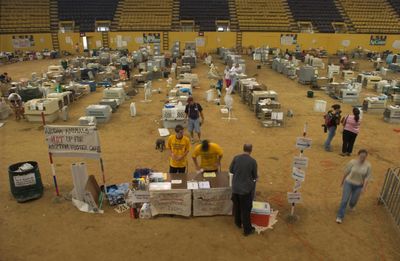
From that tragedy came transformative change, with new animal evacuation protocols and policies, including the creation of the federal Pet Evacuation and Transportation Standards (PETS) Act, which requires state and local disaster plans to include provisions for pets and service animals. LSU School of Veterinary Medicine played a pivotal role in this evolution. In the days and months after Katrina, LSU Vet Med faculty, staff, and students worked alongside state officials, military units, and volunteers from across the nation to rescue, treat, and shelter thousands of animals. Two decades later, Katrina’s scars remain, but so does the resilience of the people and animals who lived through it. Their stories serve as a reminder that in even the darkest moments, compassion can spark lasting change. Rescue in a War Zone Dr. Jenny Sones (then veterinary student): I had been working at LSU Vet Med for five years when Katrina hit. LSU Vet Med put out an ‘all hands on deck’ call to employees. All of our hospital wards were turned into an ER. We opened our homes to complete strangers who came to help. It was organized chaos. Many animals came to us looking like corpses with a heartbeat because they’d been in the flood waters so long. I worked all day at LSU Vet Med, where we saw the sickest, most injured patients, and worked at Lamar Dixon evenings and weekends. Twenty years later, the images are so vivid in my mind. I took a horse trailer on a rescue mission into New Orleans with two students and a state veterinarian escort one week after Katrina hit. The scene looked like a war zone, helicopters everywhere, buildings burning, gunshot sounds. Every area we saw was looted. The stench was awful. There were people on the overpasses who had been there for a week. We were there to rescue animals. Military, Louisiana National Guard, and police brought the animals to us where our trailer was parked on an overpass. We picked up a few strays on our way out. The animals we rescued were so scared. Some had been in the flood waters a long time and were soaking wet and foul smelling. Their skin was sloughing off and they were emaciated. Amazingly, none of the dogs, cats, or horses were aggressive—maybe because they were in shock or they were grateful. We treated them all at Lamar Dixon, washed them with Dawn dishwashing soap and applied betadine. Sick ones were transported by trailer to LSU Vet Med. They were very dark times and very good times too. We were able to get the New Orleans French Quarter mules out to Lamar Dixon. Their caretaker crew stayed with them. They hooked up the mules, still in good shape because they weren’t in the flood waters, and they gave workers short rides around the Lamar Dixon grounds. It was such rewarding work. We were exhausted but in the best way. It would have been easy to get caught up in the devastation if we didn’t focus on our purpose to help animals. You can’t fix everything, but you can fix what’s in front of you. If you can survive the devastation of Katrina, you can survive anything. From Classroom to Crisis Dr. Jenny Sones (then veterinary student): In August 2005, I was starting my second year of veterinary school at LSU. I had no idea that life was about to change so drastically. School was cancelled, and electricity was out most places except at the vet school. My colleagues set up temporary housing in our study rooms and other places throughout the vet school. We then began to learn of the effects of Katrina on our veterinary species—dogs, cats, horses, and more. These precious creatures were the reason why we studied, crammed, and signed up to endure the rigors of veterinary school. It was time to close the books and help! Although we were not licensed veterinarians yet, we were keen to provide aid in any way we could. I, along with lots of my classmates, volunteered at Parker Coliseum on the LSU campus, where displaced small animals were seeking refuge, and at Lamar Dixon, which became the shelter for large animals and small animals. We spend many hours doing anything we could, cleaning litter boxes, refilling water bowls, changing bedding, administering medications, and assisting the heroic volunteer veterinarians working tirelessly to treat the injured, sick, and rescued. Lots of important lessons were learned during Katrina. Many animals were not reunited with their owners. That's when I learned the value of microchipping to permanently identify animals, gained an appreciation for animal search and rescue, and the value of quick response. (Sones is now CSU Equine Reproduction Laboratory reproduction specialist.) Mapping Rescues by Hand Ashley Stokes (former faculty member): It was unlike anything I’ve ever experienced. I was researching and teaching at LSU Vet Med in 2005. LSU Vet Med stepped up in so many ways. We started receiving calls from citizens and local authorities at the vet school almost immediately after the storm. They needed help with resources—animal rescue, food, and water. They had to leave New Orleans quickly. I particularly remember a call from someone from south of Belle Chase, La., who had left horses, cattle, and two dogs in the house and needed help. It was surreal to see the devastation, houses floating, there in the Delta. We were making real-time decisions to help their animals. They’d lost so much, and for some, their animals were all they had left. We put a paper map of Louisiana on the wall and put pins in the locations that called for assistance. We covered all of New Orleans and surrounding areas, including the north shore and extending west to Baton Rouge. We took the callers’ information and sent teams of staff, students, and volunteers to different locations with donated trailers, hay, water, and other resources for rescue. We continued rescues for months after the storm. We were there for people for the long haul. The whole experience was transformational in my life. What I learned from Katrina became part of my own career and what I continue to do. There were beautiful moments, especially seeing how resilient and helpful people could be. I saw every day how the community came together and were absolute bright lights. Positive came from tragedy. (Stokes is now dean of UC Davis College of Agricultural & Environmental Sciences.) The Boxer on the Third Floor Dr. Neil Henderson (alumnus): When Katrina hit, the Louisiana Veterinary Medical Association sent out a request for help from veterinarians. I got to the Lamar Dixon Center on Day 5 after Katrina hit. St. Bernard Parish was where I spent most of my time helping. It was literally destroyed. One day, while we were making our rounds, a man came running up to me and said that he just remembered that while the storm was coming through—he was on the third story of a building looking out of the window—he noticed a dog swimming around frantically with nowhere to go. He opened a window for it with the hopes that it would swim inside the building to safety. Seven or eight days later, with the temperature well into the upper 90s, the man came up to me and asked me to go into the building to see if I could find the dog. I did not have much hope but went anyway. There, on the third floor of the building, I found the dog, a boxer, alive. She was in surprisingly good shape. The man was ecstatic to see the dog and could not believe that it made it inside the building to safety. I stayed for five days helping animals, and my late father (Dr. Robert Henderson, class of 1977) came after that for five more days. (Henderson is the owner of the Pine Ridge Veterinary Center in Stonewall, La.) Article originally posted here.

Jennifer Oldham of ChristianaCare Champions Life-Saving CPR Care
“Whether you’re a brother or whether you’re a mother/ You’re stayin’ alive, stayin’ alive.” Nearly 50 years since this song’s debut, the faint symphony of the Bees Gees’ “Stayin’ Alive” can be still heard around the world, though not only through an ordinary radio or Bluetooth speaker. Some people, like Jennifer Oldham, MSN, RN, CEN, AACC, play the tune in their thoughts when giving and demonstrating rhythmic CPR compressions. The song’s tempo serves as guidance to match the timing of CPR chest compressions. Oldham, a cardiovascular quality and innovation nurse program manager at ChristianaCare’s Center for Heart & Vascular Health, has dedicated the last three decades to teaching others about harnessing the power of CPR to save patients and loved ones. She knows firsthand the miracles CPR can produce. Knowledge is power Community members, health care professionals and students have the ability to save a life thanks to Oldham. She’s conducted dozens of classes and lectures to give nurses and bystanders the tools and confidence to perform CPR in an emergency. Her profound work recently earned her an honor at the American Heart Association’s Delaware Heart Ball. The Heart Association recognized four individuals representing four key tenets or “chambers” — “discovery, advocacy, equity, and knowledge.” Oldham was chosen as the honoree for the Knowledge Chamber for her dedication to empowering others with life-saving education and tools. “Jen Oldham’s work is the heartbeat of our Knowledge Chamber. Her dedication to CPR education reflects the very mission of the American Heart Association – to ensure more lives are saved through awareness and action,” said Ellen Vild, director of the Delaware Heart Ball. “Jen’s story reminds us that knowledge is power, but more importantly, it’s compassion in action. We are honored to recognize her as someone who lives that mission every single day.” Oldham’s colleague Neil Wimmer, M.D., MS, interventional cardiologist and medical director of the Cardiac Catheterization Laboratory, was delighted to see her recognized. “Jen is an amazing colleague and friend who is driven by compassion and empathy. She makes everyone in our state safer, whether they know it or not,” Wimmer said. The gift of life To Oldham, teaching others about CPR is rewarding. She makes a meaningful impact on patients’ lives every day through care, education, emotional support and community connection. CPR is more than just a technique, she said: It’s a lifechanging bond. “In my opinion, performing CPR is one of the most kind and loving acts one person can do for another. It is incredibly intimate … laying hands on someone’s chest and pushing, circulating their blood to save their life,” Oldham said. “What a beautiful gift to give someone — the gift of life, the gift of more time with their loved one.” Walking to save lives The ChristianaCare team and Oldham support heart health as part of the annual Wilmington Heart Walk. Last year they raised over $42,000 for the American Heart Association to fund research and education to help Americans live longer, healthier lives. Oldham has been a co-chair of the event since 2017 and is a strong advocate of the AHA’s mission. Valerie Dechant, M.D., MBA, FACP, chief medical officer of Christiana Hospital, knows the value of Oldham’s efforts in the community. “Jen’s passion for educating the public about acute cardiac emergencies is unmatched,” she said. “With decades of experience and a remarkable ability to translate clinical expertise into clear actionable knowledge, she empowers others to learn to feel confident and prepared in a crisis.”