
Experts Matter. Find Yours.
Connect for media, speaking, professional opportunities & more.

Retirement Maxxing: How Small Decisions Help You Build a Better Future
The basic idea is to pick a corner of your life and optimize it ruthlessly. Sleep maxxing. Health maxxing. Productivity maxxing. In its more extreme corners, people are attempting to optimize their actual physical features. Go ahead and Google "looksmaxxing" if you are curious and have a strong constitution. One influencer named Clavicular — a 20-year-old from Hoboken who claims to have taken a literal hammer to his face to coax a chiselled jawline — has become the reigning king of this particular rabbit hole. Medical experts would prefer you not try that at home. The Globe and Mail published a comprehensive explainer on the whole phenomenon. The Republican National Committee put out a press release praising Donald Trump for "jobsmaxxing" the economy. The Department of Defence posted a soldier with the caption "lethality maxxing." It has become, as one writer put it, the suffix that just will not quit. Retirement Maxxing: because chin waxing, I mean maxxing, was already taken. And yet, buried beneath all the absurdity, the underlying impulse is not entirely ridiculous. Humans want to optimize things. We always have. The real question is whether we are optimizing the right things. Then, as these things sometimes happen, three articles landed in my inbox in the same week and refused to leave my mind. Maxxing. The psychology of future selves. A golfer named Max Greyserman, who sits just one-tenth of a stroke from the top of his sport. I am not a woman who ignores signs. The connection was obvious once I saw it: retirement might be the most important time to apply this kind of thinking. Not the obsessive version involving ice baths and fourteen supplements before breakfast. The practical version. Thoughtful maxxing that quietly stacks the odds in your favour over decades. Retirement isn't just one decision; it's hundreds made over the years, each guiding your future self toward either financial dignity or a Shaggy tribute tour you never signed up for. The “Shaggy Problem”: How Your Retirement Decisions Today Determine Your Financial Security Tomorrow You remember Shaggy. The reggae artist. Enormous hit. "It Wasn't Me." When it comes to retirement, it absolutely was you. Every decision you make today is writing a letter to your future self. Some of those letters are generous and thoughtful. Others arrive decades later, like a bill you forgot to pay, from a creditor with excellent memory and zero sympathy. The seventy-five-year-old version of you hopes the fifty-five-year-old paid attention. The eighty-five-year-old version would very much like functioning knees, a dignified income, and the ability to say "I planned for this" rather than "I did not think it would go this fast." It went that fast. That's why the most useful habit you can develop right now is what I call the future-self test. Before making a major financial or lifestyle decision, pause and ask: how will this look from the other end? Will I still think this tattoo is a good idea when I’m ninety? Will I regret staying in a house that is too large and too expensive for another decade? Will my future self thank me for delaying CPP, or curse me for taking it early because waiting felt uncomfortable? Or as the Beatles asked rather memorably: “when I'm sixty-four, will you still need me, will you still feed me?” The song is charming. The financial planning version is considerably less so if you have not thought it through. The future-self test is not complicated. It is just the habit of writing better letters. What Sports Analytics Can Teach Us About Smarter Retirement Decisions Speaking of decisions that come back to haunt you, let's discuss probabilities. A recent New York Times article about golfer Max Greyserman stopped me mid-scroll (Lindgren, 2026). Not because of the golf — though the golf is fascinating — but because of what it revealed about the gap between what the data says and what people actually do when the stakes are high. Greyserman's scoring average is less than one-tenth of a stroke per round away from the elite level. One-tenth of a stroke. Not a full swing, a putting mistake, or a collapse on the eighteenth. The difference between obscurity and greatness in pro golf is about the time it takes to find your reading glasses. Which, as we've established, were on your head the entire time. Hockey analytics have demonstrated that teams trailing late in a game should often pull the goalie much earlier than the traditional last-ninety-seconds rule. Research indicates that pulling the goalie around the eight-minute mark can significantly boost the chances of scoring, as the extra attacker alters the odds. However, most coaches still wait until the final minute or two. Why? Because if you pull the goalie at eight minutes and lose badly, it can look like you lost your mind. The math checks out, but the optics are terrifying. Soccer offers a similarly uncomfortable example. A widely cited study analysing thousands of penalty kicks found that about one-third of kicks are aimed straight down the middle of the net, yet goalkeepers stay in the centre only around six percent of the time (Chiappori, Levitt, & Groseclose, 2002). Shooting directly down the middle often provides good odds because the keeper has already committed to diving one way or the other. But if the goalkeeper stays put and makes the save, the kicker seems to have tried to outsmart the odds and failed. The math checks out. The optics, however, are still terrifying. Retirement is filled with these moments. And most people make their decisions based on the optics. Common Retirement Decisions Canadians Get Wrong — And What the Data Actually Says: Working a couple of extra years often delivers significantly better retirement outcomes, yet people retire early because they feel emotionally ready. Delaying CPP can greatly increase guaranteed lifetime income, yet many choose to claim early because waiting seems risky. Downsizing can free up cash and lessen financial stress, yet people stay in large homes because selling feels like giving up. Using home equity wisely can boost retirement income, yet many retirees dismiss this option because of a stigma rooted in outdated beliefs rather than current data. In each case, the emotionally comfortable choice is not the one with the best long-term odds. Fear of loss, fear of regret, fear of looking foolish — those emotions sprint ahead of rational thinking every single time. That is why the future-self test matters. Math is universal, but money is deeply personal, and the goal is to let one inform the other before it is too late. The Psychology of Retirement Saving: Why We Treat Our Future Self Like a Stranger The second New York Times article examined the psychology of how we connect with our future selves (The New York Times, 2026). The findings are humbling. Psychologists have discovered that people often see their future self almost like a stranger, which explains why saving for retirement can seem somewhat punishing. It feels less like helping yourself and more like sending a cheque to someone who shares your cheekbones but whose problems seem distant and abstract. Research led by Hal Hershfield found that when people feel more connected to their future selves, they save more and make consistently better long-term financial decisions (Hershfield, 2011). Retirement planning is not just about spreadsheets and withdrawal rates. It is about being genuinely generous towards the person you are becoming. It is a love letter, written in small decisions, over a very long time. So, write a good one. Your future self is counting on you. How to Optimize Your Retirement: A Practical Framework for Canadians If retirement maxxing were a lifestyle trend — and I am formally proposing that it should be — it wouldn’t involve bone-smashing or extreme jawline enhancement. It would look more like this. Health Maxxing: Why Strength and Mobility Are Financial Assets Move your body. Lift weights now and then. Walk up hills. Muscle strength is one of the most underrated assets for retirement that nobody discusses at dinner parties. Research from the National Institute on Aging confirms that strength training improves mobility, balance, and healthy longevity (National Institute on Aging, 2023). These are the very factors that influence whether your later years feel like a gift or a burden. People hesitate over the cost of a gym membership while ignoring the significant long-term benefit of staying upright, independent, and capable. Skipping exercise to save a few dollars is like stepping over a hundred-dollar bill to find a quarter. As Aunt Equity likes to say: be careful not to get out over your skis. (Yes, that was an exercise metaphor. You’re welcome.) Income Maxxing: How to Build Reliable Cash Flow That Lasts Build reliable income streams so you can sleep at night without one eye on the market. Pensions, annuities, dividends, home equity, and carefully structured withdrawals — these all play a role in a well-crafted retirement income plan. The goal isn’t to maximize a single number – it’s to reduce the worry behind all of them. If your retirement plan currently makes you watch financial news at midnight while eating crackers over the sink, something has gone wrong and we should talk. Purpose Maxxing:Why It Matters for Your Health and Longevity Retirement is not a forty-year holiday. Humans need purpose, connection, and something worth getting out of bed for — especially on days when nobody expects you anywhere and the morning is entirely, terrifyingly yours. NIH research consistently shows that social engagement and a sense of purpose are linked to better health and longer life (National Institute on Aging, 2023). Purpose is what makes a retirement that feels like freedom different from one that feels like a long Sunday afternoon with nowhere to go. Somewhere along the way, society decided that aging meant quietly fading into the background. Retirement is when you finally have permission to dye your hair a vibrant colour, volunteer somewhere meaningful, start a project that genuinely excites you, or do all three at once and totally surprise your grandchildren. Purpose is not optional. It is the foundation. Decision Maxxing: How to Overcome Emotional Bias Use data when the stakes are high. Emotions are useful for choosing dessert but much less reliable for planning a thirty-year income. Don't swat away analytics like a fly at a family picnic just because they suggest something uncomfortable. Run projections. Stress-test your plan. Understand probabilities. Pull the goalie early if the math indicates so, even if it looks odd at the moment. Because appearing odd now and being wrong later are not the same thing. Not even close. The Ending That Brings It All Together: Small Decisions That Compound Over Time Here’s what three articles about “maxxing” our future selves, and golf, taught me about retirement. Clavicular is out there taking a hammer to his face in pursuit of optimization. Max Greyserman is grinding for one-tenth of a stroke. Hal Hershfield is reminding us that we treat our future selves like strangers when we should treat them like people we love. And somewhere between all three of them is the retirement insight that really matters: the best decisions compound quietly. Tiny improvements in health, income strategy, purpose, and decision-making build up into dramatically different outcomes over decades. Not because of one dramatic move, but because of many small, sensible ones made with the future in mind. Your future self isn't a stranger waiting to judge you. They are the person you are intentionally becoming, shaped by every decision you make today. Perform the future-self test before making risky decisions like pulling the goalie, shooting down the middle, or getting a tattoo that might lead to an awkward chat with your colonoscopy technician (this is for you, JK). Consider whether your fifty-five-year-old self is being kind to your seventy-five-year-old self. Look at what the data says, not just what feels right. Retirement maxxing isn't about perfection. It's about making small, sensible decisions consistently and thoughtfully over time. Think of it as compound interest for your future self. Einstein allegedly called compounding the most powerful force in the universe. He was talking about money, but he might as well have been talking about the small, steady choices that create a retirement worth living. Your future self will be deeply grateful—having functional knees, a dignified income, and a tattoo they still absolutely love. And when you turn sixty-four, and someone asks how you got there so gracefully, you won't need to channel your inner Shaggy. You just smile and say: It was me! Sue Don’t Retire…ReWire! P.S. Aunt Equity approves. Ready to start retirement maxxing? Here are two things you can do today. Run the future-self test on one financial decision you have been avoiding. Just one. Write down what your seventy-five-year-old self would think of the choice you are leaning toward. You might be surprised what comes up. Move your body and find your people. Join a pickleball club, a walking group, a trivia night, or a bridge league. Laugh often. Sweat occasionally. Your future self needs both, and your colonoscopy technician will be thrilled. Want more insights like this? Subscribe to my free newsletter here, where I share practical strategies, real-world stories, and straight talk about navigating retirement with confidence—not confusion. Plus, all subscribers get exclusive early access to advance chapters from my upcoming book. For Canadians 55+: Get actionable advice on making your home equity work for you, understanding your options, and living retirement on your terms. For Mortgage Brokers and Financial Professionals: Learn how to become the trusted advisor your 55+ clients desperately need (and will refer to everyone they know). This isn't just another revenue stream—it's your opportunity to build lasting relationships in Canada's fastest-growing demographic.


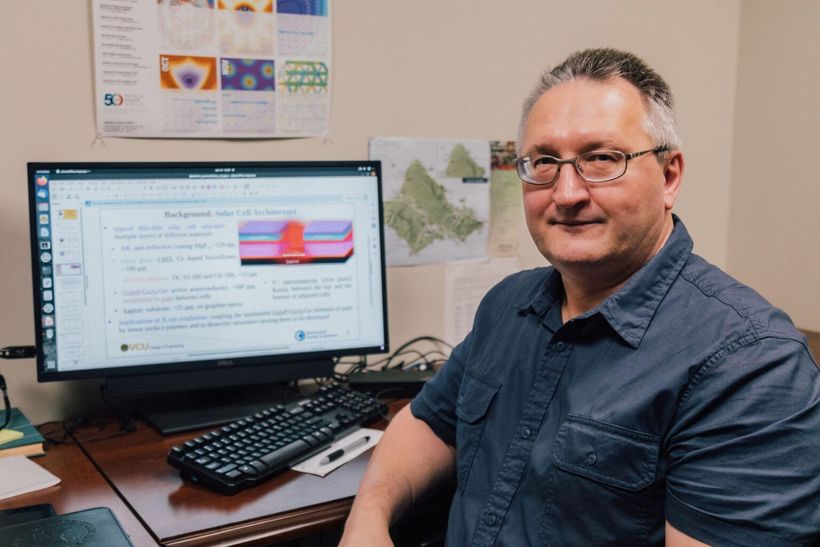
Recently named the nuclear program director at the Virginia Commonwealth University (VCU) College of Engineering, Gennady Miloshevsky, Ph.D., associate professor in the Department of Mechanical & Nuclear Engineering, answers some questions about the direction of VCU Engineering’s nuclear program and what he hopes it can accomplish. What are your top priorities for the nuclear program at the VCU College of Engineering? I want to focus on student development, innovative research and our rankings in best program lists, but that is not everything. Strategy is important. We need to align ourselves with the country’s national energy needs. There are many new developments in the energy sector, like small modular reactors or fusion energy systems, and having the right faculty to engage with these advancements is important. Providing students with a well-rounded education and good opportunities for gaining experience benefits the College of Engineering’s public and private sector partners. Nuclear subject matter is complex, so higher education is very important for workforce development. We want to build partnerships, like the one we have with Dominion Energy, that support this goal. A priority for me is continuing to establish relationships with Commonwealth Fusion Systems, which seeks to build and operate the first commercial grid-scale fusion plant in Chesterfield County, Virginia. Our workforce partners will benefit from VCU’s well-trained nuclear engineering graduates joining the workforce. So, aligning our strategy with national energy needs, hiring the right faculty to support our programs and building industry partnerships that benefit our student’s education and career opportunities are important things for VCU Engineering’s nuclear program. Where would you like to see the College of Engineering’s nuclear program 10 years from now? I would like to see growth in the nuclear program. For example, some new graduate courses on topics like nuclear materials or fusion energy. In 2024, I developed a general course for fusion energy, so building out a curriculum that goes more in-depth would be good. When you look at small modular reactors and micro reactors, current energy policy does not allow private companies to build their own. However, as energy demands increase, policy could change to where you see these compact devices installed in places like data centers, for example. A more in-depth curriculum allows VCU Engineering students to step into industry roles that lead growth of the energy industry while also ensuring students are capable of adapting to the changing field and taking advantage of new developments. What sort of cross-disciplinary opportunities are there for the College of Engineering’s nuclear program? Nuclear engineering and nuclear science are very interdisciplinary fields. You have physics that covers the nuclear reaction and the radiation it generates, for example, then chemistry is needed when talking about nuclear fuel cycles and nuclear waste. You also need materials science because good materials capable of withstanding radiation and high temperatures are needed in nuclear fission and fusion energy systems. This science then connects to engineering, building the reactors, the energy distribution systems like a power grid. It is a small sample of the overall work, but you see how mechanical and electrical engineering are key to this part. All these disciplines come together to solve the same problem. One researcher might be figuring out how to confine plasma and make it stable, then another researcher is looking at how plasma can disrupt the containment wall and how to make materials to protect the wall. Within our department, we are making connections between mechanical-focused faculty working on high-temperature ceramics or additive manufacturing techniques and those of us researching nuclear energy systems in order to make joint proposals. We are also collaborating outside VCU. As an example, I am involved with an alliance founded by the Defense Threat Reduction Agency (DTRA) comprised of 17 universities, research labs and military centers. Coordinated through DTRA, we work together on many of the same problems.Through this partnership, my Ph.D. students do summer research rotations with national labs like Lawrence Livermore National Laboratory in California and The Pacific Northwest National Laboratory. We also bring cadets and midshipman into VCU from other institutions, like the DTRA Nuclear Science and Engineering Research Center, United States Military Academy West Point and the Virginia Military Institute, whose students have been part of research experience for undergraduates programs in the summer. How is artificial intelligence impacting the field of nuclear engineering? So, the United States is sponsoring the Genesis Mission, which seeks to transform science innovation through the power of AI. One area of the Genesis Mission is nuclear fission and fusion energy. I see this playing out with the Department of Energy encouraging national labs, universities and industry to work together on applying these AI advancements to solve the research problems of nuclear energy. It is a great opportunity for students, who we can involve in this work to give them real-world experience with topics they will see after graduation. Last semester I taught a course at VCU on the practical applications of AI on nuclear engineering problems. It is not something like ChatGPT or anything like that. What we did is take Google’s TensorFlow platform that is a library of AI models and machine neural networks. Using Python scripting students learn how to apply these AI resources to about 30 problems in mechanical and nuclear engineering. They create scripts, use data sets and run analytics. We have a nuclear reactor simulator and I have some ideas to create AI-based software we can pair with the simulator, then give the software a data set and let it control the operation of the simulator in a safe way. Tell us about your background. What brought you VCU and the Department of Mechanical and Nuclear Engineering? Actually, I am not a mechanical or a nuclear engineer. My background is in physics. I graduated from the Belarusian State University in 1990 and continued to a Ph.D. in physics from the Heat and Mass Transfer Institute of the National Academy of Sciences of Belarus working on topics related to fusion plasmas and nuclear weapon effects. In space, nuclear weapons produce shockwaves and radiation. I computationally model these effects in my research to determine how something like a nuclear warhead detonation in orbit will impact the materials a satellite is made of, for example. My research also crosses over into nuclear fusion, specifically thermodynamic and optical plasma properties, fusion plasma disruptions, melt motion and splashing from plasma facing components. Accelerating Next-Generation Extreme Ultraviolet (EUV) Lithography (ANGEL) is my most recent collaborative project, supported by the Department of Energy’s (DOE) Office of Science, Fusion Energy Sciences. It involves two national laboratories, three universities and a private-sector company focusing on advancement of future micro-electronic chips, EUV photon sources, mitigation of material degradation and plasma chemistry. Prior to joining the VCU College of Engineering I worked at Purdue University at a DOE-funded center investigating nuclear fusion and the effects of plasma on materials. Around 2019 I wanted to develop my own lab, so I came to VCU with startup funds from the Nuclear Regulatory Commission and DTRA. My first priority after joining the VCU College of Engineering was continuing my fusion research, the second was collaborating with an alliance of universities focused on work for DTRA and DOE.


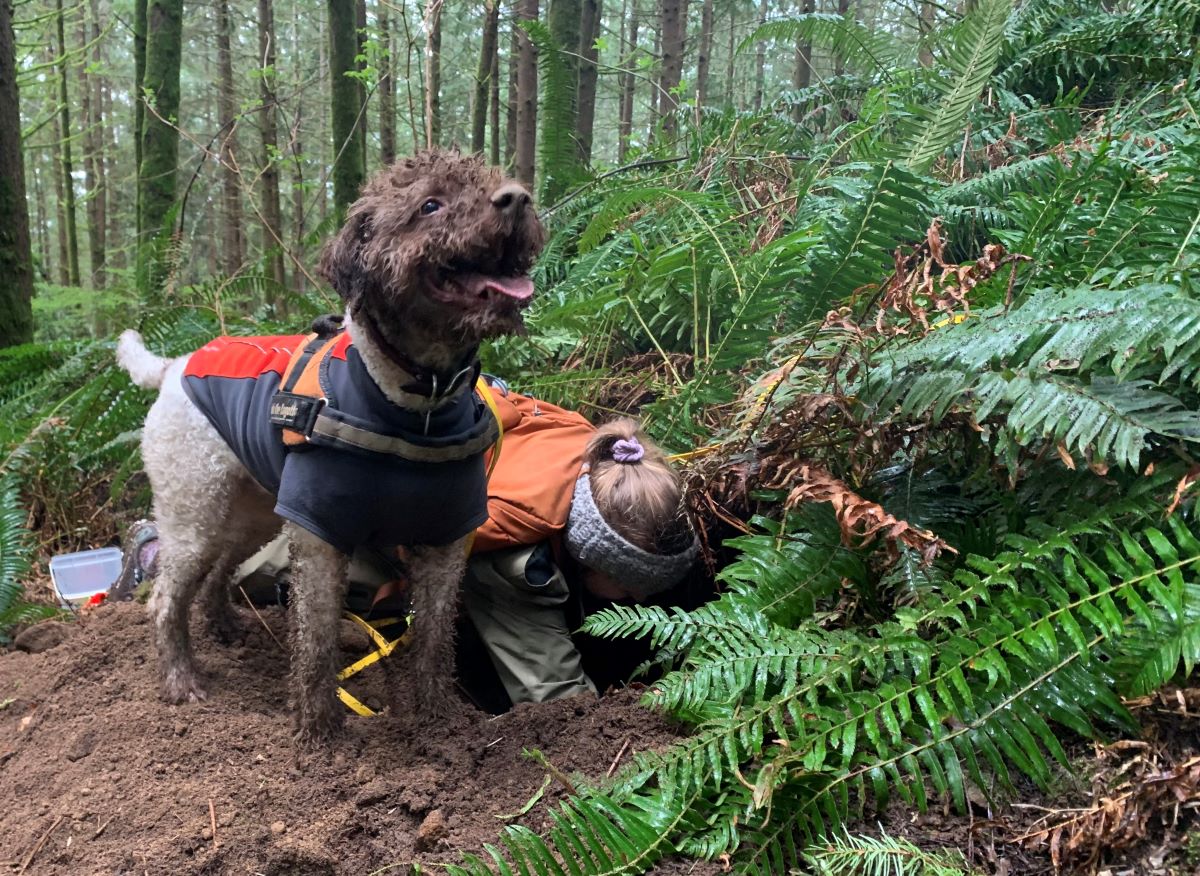
Assisted by sniffer dogs and DNA sequencing, researchers discover three new truffle species
University of Florida biologists studying fungal evolution and ecology have discovered three new truffle species, including one capable of commanding hundreds of dollars per pound within culinary circles. “Our paper confirms what a lot of people had suspected for a long time, which is that the North American truffle species is genetically very distinct from its European relatives.” —Benjamin Lemmond, study co-author and a former UF student The researchers describe their discoveries in a Persoonia. Their work shakes up the Morchellaceae truffle family tree, with key insights related to perhaps the most commercially valuable truffle in North America, the Oregon black truffle. Gourmet chefs, who sometimes grate the odoriferous truffle over dishes or infuse butter with it, have been known to pay as much as $800 per pound for the delicacy. For decades, the Oregon black truffle has been known scientifically as Leucangium carthusianum. It was originally found in Europe and later found in the Pacific Northwest, from California to British Columbia. However, recent genetic testing and field analysis by researchers from UF’s Institute of Food and Agricultural Sciences (UF/IFAS) revealed the North American variety is a distinct species. Scientists are giving this newly recognized species a name honoring the Cascadia region in which it is found: Leucangium cascadiense. “Our paper confirms what a lot of people had suspected for a long time, which is that the North American truffle species is genetically very distinct from its European relatives,” said study co-author Benjamin Lemmond, a former UF student. Lemmond, now a postdoctoral associate at the University of California at Berkeley, began his research into the truffles as a first-year doctoral student studying under professor Matthew Smith of the UF/IFAS plant pathology department. During the COVID-19 pandemic, Lemmond couldn’t access the campus greenhouse where he was conducting an experiment, so Smith secured hundreds of dried truffle specimens from Oregon State University for him to study. The stash included slivers of the Oregon black truffle, a dark-colored, potato-shaped species with tiny, pyramid-shaped warts. When pandemic restrictions relaxed, Lemmond and Smith conducted genetic testing of the Oregon State specimens and others borrowed from Polish, Greek, Italian, French and Japanese collections. Their tests indicated Oregon black truffles from North America had at one point diverged from their European counterparts on the Morchellaceae evolutionary tree, according to the study. They also established the existence of another distinct and very rare species, Imaia kuwohiensis, a pale-colored truffle with dark warts, which is native to threatened spruce-fir habitats in the southern Appalachian Mountains. Their name for the truffle comes from the Cherokee word for the Great Smoky Mountains’ highest peak, Kuwohi. Field tests followed. The researchers wanted to understand the origin of Oregon black truffles’ energy. “Understanding the fundamental, basic biology and life cycle of this truffle is really important,” Lemmond said. “It’s a very valuable commodity, and this knowledge might help us to cultivate the truffle in the future. It also supports long-term conservation and management.” Most gourmet truffles are mycorrhizal, meaning they obtain energy from trees, Lemmond said. It had long been suspected that Oregon black truffles obtain energy through a symbiotic relationship with young Douglas fir trees, but no one had conclusively proven it. Lemmond traveled to the Pacific Northwest and worked with specially trained sniffer dogs capable of detecting truffles buried as deep as 10 inches beneath soil and leaf litter. With the dogs’ help, he unearthed Oregon black truffles nestled among Douglas fir stands. He used fluorescent stain that bonded with the fungal tissue, coloring it green to show where the truffle fungus grew between the cells of the tree root tissue. “The truffle fungi surround the whole root, but the fungus is healthy, and the plant is healthy,” Smith said. “The two trade nutrients back and forth.” DNA sequencing of the roots subsequently proved the truffles rely on the trees as their main source of carbon, according to the study. As the researchers conducted genome sequencing of the Oregon black truffle, they learned of a peculiar find reported by a citizen scientist on iNaturalist, an online science data network: a Leucangium truffle growing among Eastern hemlock trees in Oneida County, New York. It was the first time anyone had ever reported a Leucangium species in the United States, east of the Rocky Mountains, Lemmond said. Lemmond contacted Purdue University, which was preserving the specimen, and requested a sample. The truffle’s physical characteristics, including its dense external hairs and lack of warts, distinguished it from other Leucangium species. DNA analysis confirmed significant variation, too. The researchers named the new truffle species Leucangium oneidaense to recognize the county where it was unearthed. A few years later, just before the researchers submitted their study for publication, someone found a second Leucangium oneidaense specimen growing in Massachusetts, Lemmond said. “It was great timing, and it suggests to me that there are still a lot of undiscovered truffles out there, waiting to be found,” he said.



Laura Mauldin's rule of thumb is that if you think you're caregiving, you probably are. The University of Connecticut professor and author has a new book that just been released In Sickness and in Health, where an urgent argument is made that America’s caregiving crisis is not a private family matter, but a structural and political failure. Mauldin isn't just a scholar in the field. She also speaks from personal experience about the impact of caregiving -- as well as how society views and values it -- on both caregivers and those that they care for. It may not have been the birthday present then 32-year-old Laura Mauldin wanted to buy herself, but purchasing long-term care insurance was something she knew she needed. Mauldin, an associate professor in UConn’s Department of Social and Critical Inquiry, had been caring for her sick partner the five years prior, watching as cancer destroyed the promise of a long life. “It’s not about being morbid, rather it’s about recognizing the inevitability of a completely typical, expectable part of life,” Mauldin says of her advanced planning. “Why not just go ahead and in a neutral way have a plan? Then it’s there, you don’t have to worry, and you can feel more prepared.” A detailed account of her caregiving experience is the launching point for her new book, “In Sickness and in Health,” released this month by HarperCollins’ Ecco Press, in which she tells the story of a handful of couples from around the country who she came to know over years of spending time with them, oftentimes days and nights. “I grew to love these people and to care about them,” she says. “Their stories tell us something bigger about our culture, about our society, and about our choices around care policy and care systems. Theirs are the hidden stories that are going on behind millions of closed doors.” In her quest to bring discussions about caregiving to the light of day, Mauldin sat with UConn Today recently to talk about the different forms that caregiving can take, the result of absent social safety nets, and how ableism permeates the culture. February 2026 - UConn Today Drawing from her new book, Mauldin blends her personal experience with sociological research to show how love, marriage, and devotion are routinely forced to compensate for weak public policy, limited Medicaid support, and a culture shaped by ableism. Her work reframes caregiving as essential labor, deeply gendered, largely invisible, and profoundly political, and challenges the notion that “love is enough” in a system that offers far too little support. It’s an old adage: when people get married, they promise to stick together “in sickness and in health.” But that’s easier said than done when you’re caregiving for a spouse or long-term partner, when systemic failures often lead to burnout. In her new book, In Sickness and in Health: Love Stories from the Front Lines of America’s Caregiving Crisis, University of Connecticut professor Laura Mauldin explores the relationships between caregivers and their disabled and sick spouses, and the underlying lack of structural support in the US that makes unpaid care an inescapable feature of most such relationships. The topic is personal for her: Maudlin’s partner’s leukemia came out of remission as they were getting closer in 2006. “Falling in love with J had called upon me to increasingly fill a role that required meeting nearly every one of her needs,” Mauldin writes in her introduction. “This was more than just providing emotional support when the person you love is suffering.” J passed away in 2010. I spoke to Mauldin about crafting this book based on her lived experiences, how systems fail both disabled people and their caregivers, and what is at stake with Medicaid cuts exacerbating the damage to an already broken system. February 2026 - Mother Jones Dr. Laura Mauldin, an associate professor in the Department of Social and Critical Inquiry at the University of Connecticut, blends rigorous scholarship with lived experience to challenge prevailing assumptions about caregiving, disability, and public policy. Her work exposes how cultural norms and policy gaps intersect to offload care onto private homes, obscuring the true costs of care and the human toll of under-resourced support systems. She is available to speak with media - simply click on her icon now to arrange an interview today.


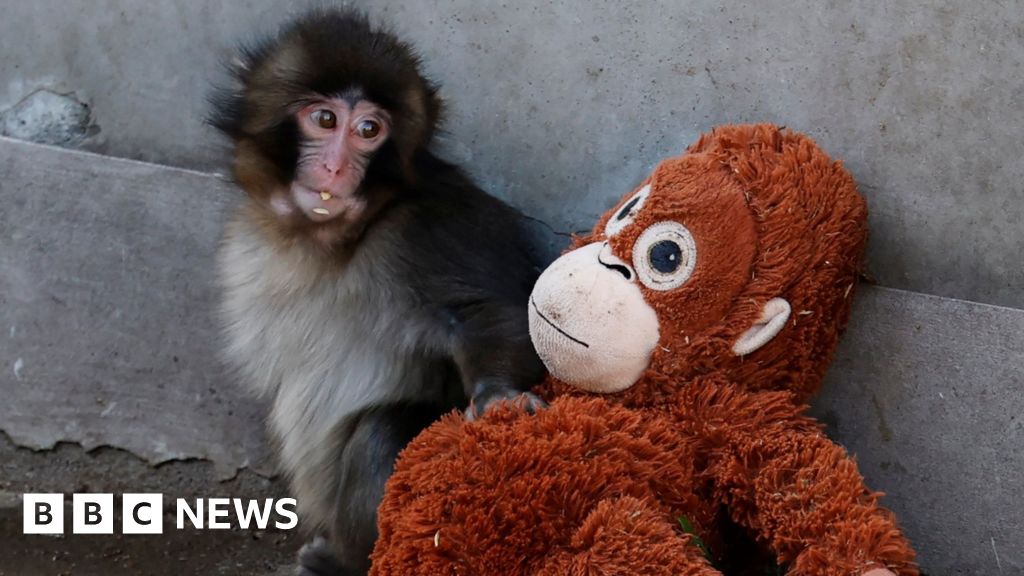
Expert Q and A: Understanding "Punch," The Baby Monkey That Captured The World's Heart
A tiny Japanese macaque named Punch has unexpectedly become one of the internet’s most talked-about animals. Born at a zoo in Japan and rejected by his mother shortly after birth, the young monkey was hand-raised by staff and given a stuffed toy for comfort—an image that quickly ricocheted across social media worldwide. Videos showing Punch tentatively approaching other macaques, sometimes being pushed away or corrected as he tried to socialize, struck an emotional chord. What began as a local zoo update rapidly turned into international headlines, with audiences from North America to Europe weighing in on what they saw as loneliness, resilience and the universal need for belonging. But experts say the story is more nuanced than a viral clip suggests. The interactions that many viewers interpreted as bullying are, in fact, typical components of macaque social development, part of how young primates learn boundaries, hierarchy and group norms. While Punch’s early maternal separation makes his integration more delicate, gradual acceptance into the troop is a positive sign. As internet users continue to share and comment, the moment has sparked broader conversations about animal emotion, anthropomorphism and the realities of wildlife behavior in managed care settings. Florida Tech's Catherine Talbot offered insight into the complexities of animal behavior. Catherine F. Talbot is an assistant professor in the School of Psychology at Florida Tech and co-director of the Animal Cognitive Research Center at Brevard Zoo. Her overarching research goal has been to study the ultimate (evolutionary) and proximate (behavioral, biological, and developmental) mechanisms underlying sociality. Q: Is it normal for mother macaques to abandon their babies, or is this an unusual occurrence? What circumstances can cause this to happen? It’s not necessarily normal, but also not that uncommon in primates, unfortunately. It’s more common in first time mothers that are inexperienced and sometimes lower ranking mothers. A number of factors can increase the likelihood of abandonment including stress on the mother and unfavorable conditions such as limited resources. Q: How does abandonment affect development in young macaques? Early maternal contact is critical for normal behavioral and emotional development. Infants rely on their mothers for nutrition, warmth, protection and learning how to navigate social dynamics. When infants do not have their mothers during critical developmental periods like infancy, in the short term, they tend to have elevated stress responses and difficulty with emotional regulation. In the long-term, it depends on whether the infant is able to form other types of attachment. In the worst-case scenario, they may have increased aggression, abnormal and/or self-injurious behavior, digestive issues and may lack social skills. But primates are resilient, and with social support and gradual integration into a troop, Punch can form new attachments, learn socially appropriate behavior and ultimately live a fairly normal monkey life. Q: Is it obvious to the rest of the troop when a young macaque has no mother? How does this affect integration? Japanese macaques have really complex social worlds, so they are really in tune with the relationships they have with one another and recognize the relationships between other individuals. That can certainly make it more difficult for Punch to be accepted back into the troop – he needs to find some friends and possibly even a surrogate parent. With social support, he should be able to recover from the absence of a mother. It’s really great to see that the care staff stepped in to support Punch as he begins to recovery from the stress of this experience. It’s even more important that Punch is around other monkeys of the same species so that he can continue to learn from them and respond appropriately to social communication cues. I’m thrilled to see that Punch is now making friends. Q: Punch is obviously attached to his stuffed orangutan. We can understand how this happens from our own human experience, but can you explain, on a biological level, how he bonded with this stuffed animal? Primates, including humans, are neurobiologically wired to form strong social bonds with a caregiver very early in life. In many primate species, infants are born highly dependent on their mother. Punch’s attachment to the stuffed orangutan reflects this need for attachment. That physical touch – warmth, softness, graspable limbs, a stable physical presence – can partially activate those same calming biological pathways, including the release of oxytocin which regulates stress and promotes feelings of safety. Without activation in those pathways, Punch would likely experience stronger feelings of separation or loneliness and ultimately social withdrawal. These biological pathways are crucial to proper social and emotional development of any primate species. Any way we can help mitigate those effects for Punch is crucial for successful integration back into his troop. Q: How does sociality among Japanese macaques compare to that of similar species? Japanese macaques live in large multi-male, multi-female social groups that can range from roughly 50 to 150 individuals. Like many macaques species, they form stable, female-bonded societies. Females remain in their natal group (or the group they were born into) for life, inherit their mother’s rank, and form strong kin- based alliances whereas males emigrate to a new group at adolescence. Their societies are organized around matrilines or extended female family lines in which rank is very important. They have strong dominance hierarchies and generally high levels of aggression, but levels of aggression and tolerance can vary a good amount from group to group. Entire matrilines can outrank others, which dictates access to food, grooming partners, and coalitions. Within a single troop, you often see multiple matrilines with long-standing dominance competitions. I sometimes compare it to a Romeo and Juliet-style Montague and Capulet dynamic, where beneath the surface of daily grooming and foraging is a complex political landscape structured by kinship and status. Q: What behaviors can Punch expect from the rest of the monkeys as he continues to integrate with the troop? What behaviors can the troop expect to see from him? As Punch continues to integrate into his troop, I would expect to see some social testing by other members of the group to see how Punch responds- they may use mild aggression like open mouth threats or direct stares (which arethreatening is macaques), brief chases, and displacement from resources like food/resting spots. These will help clarify Punch’s rank and help form and maintain a stable hierarchy. Therefore, I hope to see Punch make at least a few strong social bonds (friends), to help defend him against more intense aggression. As long as he makes a few friends, he should begin to receive more affiliative behavior. Integration is usually gradual as these bonds form and strengthen and these skills develop. I would expect to see more play and grooming with conspecifics and less reliance on his stuffed orangutan as real social bonds start to form. Grooming is especially important for forming and maintaining social bonds and there are already videos showing Punch receiving some grooming from older monkeys, which bodes well for him. He also needs to respond in socially appropriate ways, like grooming others and showing submission to higher ranking individuals. Essentially, he needs to understand and follow the rules of Japanese macaque society. Q: What message do you have as people continue to root for Punch? It's uplifting to see how much support Punch has gained across the world. And while Punch is clearly adorable and so vulnerable that you just want to love him and give him (or other monkeys like him) a home, it’s important to remember that more than anything else, he needs to live with other monkeys so that he can live a life that is true to his species and nature. Unfortunately, many people still have monkeys as pets. The illegal wildlife trade is a multi-billion-dollar industry, ranking as the fourth largest illegal trade after drugs, arms, and human trafficking. Within the United States, it is estimated that there are more than 15,000 nonhuman primates living in unsuitable conditions. Primates are intelligent, sentient beings that need complex communities and relationships to thrive. There currently is no federal legislation that protects primates from private ownership, but the Captive Primate Safety Act (H.R.3199/ S.1594) has been proposed to prohibit the private possession of nonhuman primates and the sale or transportation of nonhuman primates for the wild pet trade. If you're interested in connecting with Catherine and learning more about animal behavior, let us help. Contact Adam Lowenstein, Assistant Vice President for External Affairs at Florida Institute of Technology, at adam@fit.edu to arrange an interview today.

Target Market: Who Are They, What Do They Value, and Where Are They?
In last week’s column on Super Bowl ads, I stressed the importance of providing a value proposition when you are advertising or marketing your goods and services. As a reminder, a value proposition is a promise that you make to potential customers that provides them a compelling reason why they should buy your product rather than a product from one of your competitors. Prior to developing a value proposition, you first need to understand who you are trying to sell to and what product characteristics they value. This will ensure that your value proposition will be more likely convince these buyers (your target market) to buy from you. The most effective Super Bowl ads from last week did this important work well. Once the company has a good, valuable proposition, it then needs to communicate that valuable proposition to its target market. Fortunately for companies with Super Bowl ads, just about all target markets are watching the game. However, for pretty much all other advertising and marketing, it must communicate where the target market will see or hear it. In today’s column, I will walk you through how to determine who your target market is, what they value, and finally, where to distribute your marketing messages. You are probably asking yourself, why is a guy who teaches Operations and Supply Chain Management (O&SCM) writing about Marketing? The answer is simple, really. It is the job of the O&SCM function of the company to deliver on the value proposition. So, as marketing develops its value proposition, it must confer with O&SCM to determine if the firm can deliver on that value proposition. If marketing communicates a value proposition it cannot meet, the company will likely be unsuccessful. With that in mind, let us examine the target market/value proposition development process. As a firm begins to identify its target market for a particular product, it must first determine the various potential customers who might buy that product and attempt to partition those customers into groups who value similar things. For instance, looking at the automobile market, there are some customers who value low price most, some who value performance and aesthetics most, and others who value reliability, durability, and consistency. If we are either in the automobile market or thinking about entering the automobile market, we need to find a group that values some characteristics that we think we can provide better than other market entrants. As you can see, the identification of a target market and the development of a value proposition that will appeal to that target market are done concurrently and iteratively. As noted above, the O&SCM function of the company is also brought in during these iterations to determine if the physical good can be manufactured or a service can be delivered in such a way that it can meet the value proposition. One important thing to remember is that in most cases, you are not your target market. What I mean by that is that you are often biased by your own knowledge and taste/preferences, and this may differ significantly from what your target market values. Remember that you are a unique individual whose preferences for a price point and evaluation of other characteristics might differ from your target market. Be sure to develop a value proposition that reflects the buying habits of your target market customers. Once you have developed a strong value proposition that you know your O&SCM can deliver upon, it is time to message that value proposition in places where your target market is present. As noted above, this aspect of our process is like “shooting fish in a barrel” for Super Bowl advertisers because all target markets are typically watching the Super Bowl. It is not so trivial for the rest of us. We need to understand what forms of media our target markets consume (e.g., television, radio, social media), but also, with each of these media, which applications or types of shows do they frequent. While most think social media skews young, and that is true for the most part, Facebook skews older, while Instagram, Snapchat, and TikTok skew much younger. On television, much of network television skew older, but there are shows like “Dancing with the Stars” and The “Bachelor” that do particularly well with younger women. Many mornings when I am getting ready for the day, I listen to “Augusta’s Morning News” on WGAC radio, and it is clear that my fellow listeners are primarily in my age demographic. My advice is to do your homework and find out where your target market is consuming media. All the work above is not very easy, but doing it right will lead to big returns. If you can identify who you want to target, based on what they value, and then be sure they get the marketing message that you have what they value, your business will succeed!



Beyond the field: New research highlights how NIL is reshaping college athlete identity
In an era of name, image and likeness, or NIL, many college athletes are thinking differently about who they are — seeing themselves not just as competitors or students, but also as influencers with distinct voices and causes, according to a new study from the University of Florida. Molly Harry, Ph.D., an assistant professor in the Department of Sport Management at the UF College of Health and Human Performance, surveyed 200 athletes from 21 Power Four universities to better understand how NIL, which refers to the rights of college athletes to earn money through endorsements, sponsorships, social media promotions and other commercial opportunities, has impacted the way athletes perceive their roles and identities. “Historically, we’ve viewed them (college athletes) through the lens of athletics or academics, but they’re daughters, brothers, role models, and increasingly, they’re now cultivating public personas and marketing skills.” —Molly Harry, Ph.D., an assistant professor in the Department of Sport Management The findings, published Friday in the Sociology of Sport Journal, reveal a growing recognition among athletes that they are more than the two-dimensional “student-athlete” model that is traditionally used in research and policy. “With the shift in NIL policies, athletes are starting to develop roles and identities related to that of the influencer,” Harry said. “Historically, we’ve viewed them through the lens of athletics or academics, but they’re daughters, brothers, role models, and increasingly, they’re now cultivating public personas and marketing skills.” Through survey responses across seven major sports — football, baseball, men’s and women’s basketball, gymnastics, volleyball and softball — Harry and UF doctoral student Hannah Kloetzer examined athletes' engagement with NIL opportunities, as well as the personal sacrifices they made to pursue them. They found that many athletes now view NIL as a platform to promote causes they care about, build connections with their communities and explore career pathways after college. One softball player described the value of NIL in a way that highlights the broader impact: “It’s been great to feel seen and have your hard work in a sport help in other parts of life. It’s really nice to use NIL on a resume as marketing experience.” Athletes surveyed said they found deals not just with big-name brands, but more often with local businesses like restaurants, boutiques and community partners. This entrepreneurial approach often required initiative and personal outreach, something many athletes had to learn on their own. “Some athletes told us they felt lost when trying to navigate NIL,” Harry said. “Others shared how they reached out to local businesses or organized their own camps.” One particularly striking finding, Harry said, was that some athletes were making athletic sacrifices — like spending less time training — to pursue NIL work, a shift that underscores the importance of these opportunities. Harry stressed that while no one reported skipping practices, athletes did acknowledge shifting their priorities to make room for NIL-related endeavors. “If you’re willing to give up something in your athletic routine, that speaks volumes about how central NIL — and influencer identities — could become for some athletes,” she said. Another key insight: football players of color from low socioeconomic backgrounds were most likely to self-identify as influencers. This emerging pattern stands in contrast to perceived broader trends in the social media world. “That was one of the most fascinating takeaways,” Harry said. “We have this unique subset of influencers — college football athletes — that are starting to enter this space.” Harry’s research builds on a growing conversation in the academic community about the evolving identity of college athletes. A few conceptual pieces have previously proposed the idea of a “student-athlete-influencer,” but Harry’s team is one of the first to gather empirical data to back it up. This new perspective has broad implications for how universities and organizations like the NCAA support college athletes, both during their playing years and as they prepare for life after sport. “As fans, we often see athletes as commodities on the field,” Harry said. “But they’re humans first, and they’re starting to recognize their own value and tap into their potential beyond the playing field.” In addition to academic and athletic support, Harry believes universities should invest in more targeted resources tailored to influencer pressures, like mentorship opportunities and training that goes beyond basic social media etiquette. “Athletes who take on influencer roles may deal with unique stressors, whether it’s comparing engagement numbers or coping with public scrutiny,” she said. “It would be valuable to provide opportunities where athlete-influencers can support each other, share strategies and protect their mental health.” A football player who participated in the study summed up the broader potential of NIL: “I’m very appreciative of NIL opportunities and the ability to continue to grow my camp and greater brand outside of my football program.” Looking ahead, Harry plans to explore this evolving identity through more qualitative research, with a focus on what it truly means to be an “influencer” in the context of college athletics. “Athletes are more than football players. They are more than swimmers,” she said. “They are people who we walk with on our college campuses, and they are people who bring value to our society in a host of ways.”


LSU astrophysicist weighs in on potential release of UFO records
Dr. Eric Burns is a leading researcher in high-energy astrophysics, he studies neutron star mergers and gamma-ray bursts and helped lead the first multimessenger discovery of a binary neutron star merger. "Given the vast size of the universe, most scientists think life beyond Earth likely exists, and we are actively searching for it. However, there is no credible evidence that extraterrestrials have visited Earth or made contact with humanity. Previous government reviews of UFO reports have not produced convincing proof of alien technology. Astronomers are terrible at keeping secrets — if even one of us had solid evidence of aliens, the entire world would know by lunchtime. I strongly support transparency and look forward to the release of additional information, but extraordinary claims require extraordinary evidence."


Young magmas on the moon came from much shallower depths than previously thought, new study finds
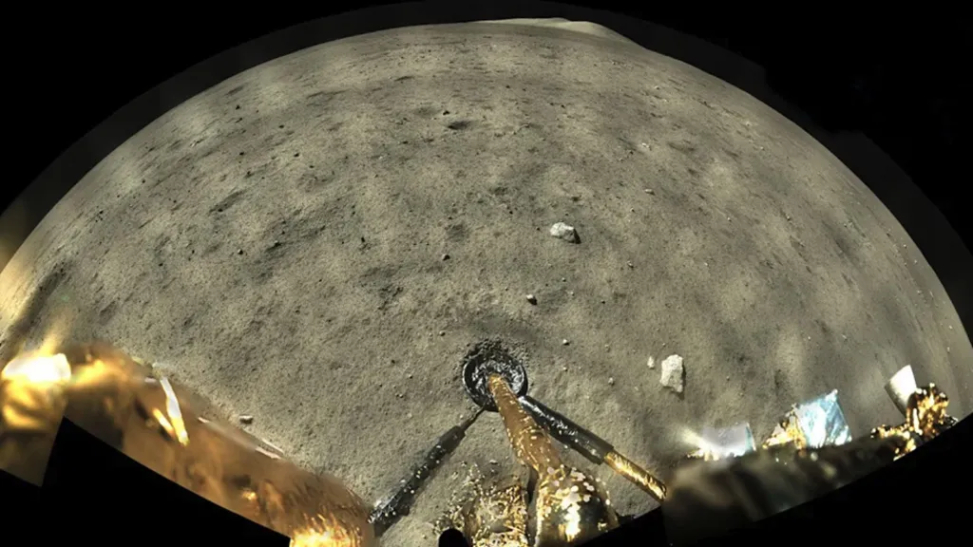
New research on the rocks collected by China's Chang'e 5 mission is rewriting our understanding of how the moon cooled. Stephen Elardo, Ph.D., an assistant professor of Geological Sciences with the University of Florida, has found that lava on the near side of the moon likely came from a much shallower depth than previously thought, contradicting previous theories on how the moon produced lavas through time. These samples of basalt, an igneous rock made up of rapidly cooled lava, were collected from the near side of the moon by the Chang’e 5 mission and are the youngest samples collected on any lunar mission, making them an invaluable resource for those studying the geological history of the moon. In order to get an estimate of how deep within the moon the Chang’e 5 lava came from, the team conducted high-pressure and high-temperature experiments on a synthetic lava with an identical composition. Previous work from Chinese scientists has determined that the lava erupted about 2 billion years ago and remote sensing from orbit has showed it erupted in an area with very high abundances of potassium, thorium and uranium on the surface, all of which are radioactive and produce heat. Scientists believe that, in large amounts, these elements generate enough heat to keep the moon hot near the surface, slowing the cooling process over time. “Using our experimental results and thermal evolution calculations, we put together a simple model showing that an enrichment in radioactive elements would have kept the Moon's upper mantle hundreds of degrees hotter than it would have been otherwise, even at 2 billion years ago,” explained Elardo. These findings contradict the previous theory that the temperature of the moon’s outer portions was too low to support melting of the shallow interior by that time and may challenge the hypothesis about how the moon cooled. Prior to this study, the generally-accepted theory was that the moon cooled from the top down. It was presumed that the mantle closer to the surface cooled first as the surface of the moon gradually lost heat to space, and that younger lavas like the one collected by Chang’e 5 must have come from the deep mantle where the moon would still be hot. This theory was backed by data from seismometers placed during the Apollo moon landings, but these findings suggest that there were still pockets of shallow mantle hot enough to partially melt even late into the moon’s cooling process. “Lunar magmatism, which is the record of volcanic activity on the moon, gives us a direct window into the composition of the Moon's mantle, which is where magmas ultimately come from,” said Elardo. “We don't have any direct samples of the Moon's mantle like we do for Earth, so our window into the composition of the mantle comes indirectly from its lavas.” Establishing a detailed timeline of the moon’s evolution represents a critical step towards understanding how other celestial bodies form and grow. Processes like cooling and geological layer formation are key steps in the “life cycles” of other moons and small planets. As our closest neighbor in the solar system, the moon offers us our best chance of learning about these processes. “My hope is that this study will lead to more work in lunar geodynamics, which is a field that uses complex computer simulations to model how planetary interiors move, flow, and cool through time,” said Elardo. “This is an area, at least for the moon, where there's a lot of uncertainty, and my hope is that this study helps to give that community another important data point for future models.”

What "Super Agers" Are Teaching Us About Growing Older
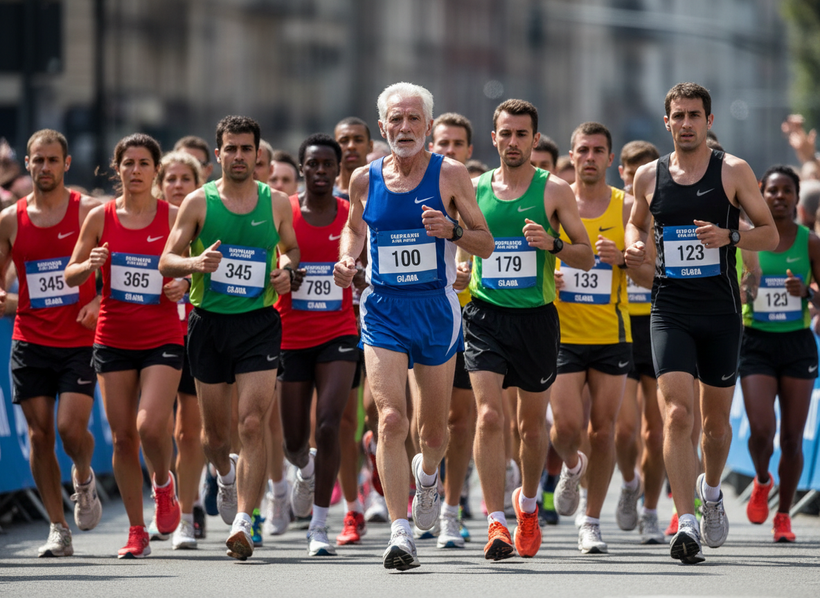
When I think about aging well, I don't see a number on a birthday cake. I see capacity. The ability to think clearly. To move with confidence. To stay curious. To laugh easily. To remember where I put my keys. (Okay, that last one is still aspirational.) That's why I teach 4 fitness classes a week and pay close attention to how I fuel my body. Not because I'm chasing youth, but because I've learned, both personally and professionally, that the way we move, eat, sleep, and cope influences how we feel... and how we show up for the people we care about. I don't want to live forever. I just want to live well while I'm here. Like many Boomers, I've been interested in the growing research on longevity. And let's be honest: Boomers have never been good at accepting "no" for an answer. Why would we start now, just because it's mortality asking? We're the generation that refused to compromise. Retirement? Optional. Slowing down? Negotiable. Death? We'd like to speak to the manager. This leads us to a fascinating group of scientists known as "Super Agers." Who Are Super Agers, Really? In research terms, Super Agers are adults over 80 whose cognitive abilities, especially memory, perform at levels expected of people in their 50s or 60s (Rogalski et al., 2013). But here's what I love most: they aren't superhuman. They're not top athletes. They're not biohackers living on kale foam and cold plunges at dawn. (Though if that's your thing, carry on.). They're everyday people who never disconnected from life. A striking Canadian example is Morry Kernerman, a Toronto violinist who kept on learning, hiking, and performing well into the ripe age of 101. His story embodies the spirit of Super Aging: it's not about dodging age, it's about refusing to stop living. In a CBC interview, Maury Kernerman doesn't sound like someone "trying to live longer." He talks like someone who's still interested in living, fascinated by the world, hungry for learning, and unwilling to stand still just because he might do something imperfectly. He also admits something that matters to a lot of readers: he wasn't always an exercise person. He started taking it seriously later in life and describes it as a "rear guard action" that hasn't stopped aging, but has helped him keep his capacity. One of the most poignant lessons: when we're afraid of doing the wrong thing, afraid of failing or being embarrassed, we stop. And standing still is what really costs us. Haven't you heard? Sitting is the new Smoking!! What the Science Is Showing Us Canadian and U.S. researchers, at Western University and Northwestern University, are discovering something significant. Not a pill. Not a quick fix. A system. Angela Roberts (Western University) explained that the Canadian arm of the research isn't relying only on lab snapshots. Participants are sent home with wearable devices so researchers can monitor real-world activity patterns continuously (24 hours a day) over multi-week periods (CBC News, 2024 - https://www.cbc.ca/news/health/superager-centenarians-brain-second-opinion-9.7049411). That design matters because it turns "healthy aging" from a vague concept into measurable behaviours: how much movement you get, how intense it is, how consistent it is, and how it fits into the rhythm of normal life. Super Agers typically stay active, remain mentally sharp, maintain close relationships, handle stress effectively, sleep well, and keep a generally positive attitude (Rogalski et al., 2013 - https://doi.org/10.1162/jocn_a_00300; Sun et al., 2016 - https://doi.org/10.1523/JNEUROSCI.1492-16.2016) Their brains display thicker cortical areas linked to attention and memory, experience slower atrophy rates, have fewer Alzheimer's markers, and show stronger neuronal connections (Gefen et al., 2015 - https://doi.org/10.1523/JNEUROSCI.2998-14.2015; Harrison et al., 2012 - https://doi.org/10.1017/S1355617712000847) A Data Point Worth Remembering When It Comes to Longevity From the wearables, the research study observed that many 80-year-olds in the study, both "super agers" and the control group, were averaging about 25 to 30 minutes of exercise a day (roughly aligned with Canadian movement guidelines). The difference wasn't that super agers moved a little more. The study showed that they got about 30% more of the kind of movement that raises heart rate, what researchers call moderate-to-vigorous physical activity In plain language: it's not just steps. It's getting your engine up into that slightly breathy zone on purpose, most days. There's no single longevity switch. It's a belt-and-suspenders approach: multiple protective habits working together over decades. Let's Talk About Weight (Without Losing Our Minds) People often ask: Should Super Agers be skinny? Or a little plump? The research answer is surprisingly dull (and comforting): Neither. Super Agers come in all sizes. There is no evidence that they share a specific body weight or BMI. What matters much more than the scale is stability, strength, and body composition (Stenholm et al., 2008). Obesity Shows Up Consistently in the Research Midlife obesity is associated with an increased risk of dementia later in life. Several large studies indicate that obesity (BMI ≥30) during midlife raises dementia risk by 33 to 91% compared to individuals of normal weight (Kivipelto et al., 2005; Qizilbash et al., 2015) However, in older age, unintentional weight loss often signals frailty or illness. Weight loss in later life is linked to faster cognitive decline and higher risk of death (Diehr et al., 2008) Being underweight increases the risk of death. Studies consistently indicate that underweight older adults (BMI <20) have 2 to 3 times the all-cause mortality risk compared to those with a normal weight, with one study reporting a 34% higher risk of dementia (Diehr et al., 2008). A slightly higher BMI in later life may actually be protective, especially if muscle mass is maintained. The "obesity paradox" demonstrates that overweight and mild obesity in older adults (ages 65+) are often linked to a lower risk of mortality, particularly from non-cardiovascular diseases (Natale et al., 2023). So, the prescription is clear: avoid extremes. Not so skinny you could use a Cheerio as a hula hoop, and not so plump that tying your shoes feels like a full-contact sport. Here's What Truly Matters: Muscle Mass Strength defends the brain, maintains balance, boosts metabolism, and offers resilience during illness or stress (Peterson & Gordon, 2011) "Skinny-fat", low muscle, higher fat, is actually worse for aging than carrying a bit more weight with muscle beneath (Prado et al., 2012). Super Aging isn't about shrinking yourself. It's about supporting the structure you live in. Sleep: The Quiet Superpower If movement is the main act, sleep is the stage crew ensuring the entire show runs smoothly. Sleep isn't just one thing. It's a cycle (Walker, 2017). The Stages of Sleep (a quick, non-boring tour) Light sleep: The warm-up. Easy to wake from. Necessary, but not enough by itself. Deep sleep: The body's main repair mode. This is where physical repair occurs: muscle recovery, immune support, hormone regulation (Scullin & Bliwise, 2015) (Walker, 2017). REM sleep: The brain's spa. Memory consolidation, emotional regulation, creativity, and learning all occur here (Scullin & Bliwise, 2015) (Walker, 2017). Missing deep sleep leaves your body feeling exhausted. Missing REM causes your brain to become fragile and foggy (Mander et al., 2017). Super Agers tend to guard their sleep, though not perfectly, deliberately (Mander et al., 2016). Consistent bedtimes, morning sunlight, daily activity, and relaxing evenings appear repeatedly. For some people, slow-release melatonin or magnesium can help improve sleep maintenance (Ferracioli-Oda et al., 2013). However, the greatest benefits often come from simple routines: consistency, darkness, cooler rooms, and avoiding phone use at 10 p.m. Sleep isn't a luxury. It's essential brain maintenance (Mander et al., 2017). Stress: The Real Villain Chronic stress is like kryptonite for cognitive health (McEwen & Sapolsky, 1995). The main source of stress is not accepting what is. We argue with reality, and we lose every time. We revisit conversations. We resist change. We attempt to control others. Super Agers appear more accepting, not resignation, but realism (Sun et al., 2016) Here are some practical strategies to consider: Let them. (Thank you, Mel Robbins.) People will be people. You don't need to manage them. Save your energy for what truly matters. And remember: what people think of you... is none of your business. Calm isn't passive. Calm is protective. Gratitude also plays a role. Many Super Agers exhibit a distinct emotional tone: more grateful, less gripeful (Hill & Allemand, 2011) Life wasn't simpler; they simply didn't let bitterness steer the way. Relationships and Quality of Life: The Real Gold Standard Super Agers don't have more friends; they have deeper ones. Strong relationships are linked to better emotional regulation and preserved brain regions. (Cacioppo & Cacioppo, 2014) (Holt-Lunstad et al., 2010) And this isn't about extending life. It's about quality of life: cognitive, physical, and emotional well-being. Because no one wants a farewell-to-life party where nobody shows up because you've been miserable, bitter, or exhausting to be around (thank you, BR). Strong body. Clear mind. Warm relationships. A sense of humour that endures gravity. That's the win. 3 Practical Takeaways to Steal this Week If you want the super-ager approach without turning your life into a science experiment, here are three low-drama moves: Add intensity, not just activity. Keep your regular walk, but pick one segment to walk faster, take a hill, or add short brisk bursts. Your heart rate is the clue. Keep a learning thread running. Music, audiobooks, a class, a museum habit, a book club, anything that keeps your mind taxed in a good way and makes you feel curious again. Make "don't stand still" a rule. If you're avoiding something because you might look silly (a dance class, a new hobby, a new friend group), that's exactly the place to lean in, gently, but on purpose. Super Agers aren't chasing youth. (No one needs to see me in low-rise jeans again.) They're cultivating engagement. (Do you want to dance?) They move. They learn. They sleep well. They stay positive. They accept what is. They remain connected. They rely on the belt and suspenders. And most importantly, they don't wait for permission to live life to the fullest at any age. Yes, biology will win eventually. None of us gets out of this alive. But the real victory isn't in defeating what we can't control. It's in mastering what we can, for as long as we can, and living fully right up until biology takes its final bow. Don't Retire...ReWire! Sue Want more of this? Subscribe for weekly doses of retirement reality—no golf-cart clichés, no sunset stock photos, just straight talk about staying Hip, Fit & Financially Free.