
Experts Matter. Find Yours.
Connect for media, speaking, professional opportunities & more.

Tales of Christmas Past: Preserving Your Family History During the Holidays
During past family Christmas gatherings, many of us remember when older relatives regaled everyone with tales about their fascinating life stories, firsthand experiences as an eyewitness to history or simply sharing how favorite family traditions started. So how do you preserve those precious family memories during the holidays? Baylor University oral historians Stephen Sloan and Adrienne Cain Darough have recorded and preserved the oral history memoirs of thousands of individuals through their work with Baylor’s renowned Institute for Oral History, home of the national Oral History Association. Together, the historians share seven simple best practices to help family members begin oral history conversations that enrich recollections of the past and capture your family memories. “The holiday season brings about the opportunity to spend time with family members, especially those you may not be able to see on a frequent basis,” Cain Darough said. “This presents the perfect opportunity to conduct oral histories to capture the stories and experiences of your family and loved ones, to learn more about them, the history of your family, traditions that have been passed down from generation to generation and more.” Seven best practices for preserving your family’s oral history 1. Ask first! Make sure your family member wants their story to be documented or recorded. That is the first – and most important – question to ask, said Adrienne Cain Darough, M.L.S., assistant director and senior lecturer with the Institute for Oral History. Ask first. “Many oral historians have run into the spot where someone says, ‘Oh, my grandpa would be great for that topic,’ and you get there and it's, ‘Grandpa does not want to talk to you.’ So first, make sure they want their story recorded,” she said. 2. Determine the type of recording equipment you want to use. Decide if you want to record your interview with an audio recorder or use a video recording device. It all depends on your needs and comfort level with the technology. For family members who are unable to travel this holiday season, you can include them by capturing their stories using a remote recording platform like Zoom, which became a vital tool for oral historians when COVID struck in 2020. Helpful resources from Baylor’s Institute for Oral History include: How to choose the right digital recorder Oral History at a Distance webinar on the dynamics of conducting remote oral history interviews Remote Interviewing Resources guide (Oral History Association) 3. Research your family member’s life and their timeline to help you formulate your questions. Recording a family member’s oral history is more than just putting down a recorder in front of them and saying, “Talk.” If you’re recording an oral history over Christmas with a family member, are there specific things that you want to know that are related to the holiday? For example, what was Christmas morning like for them as a child? How did your favorite family traditions start? What is their favorite holiday dish? (Maybe they could even share the recipe. “You can finally learn why Nana’s banana pudding doesn’t even have bananas in it,” Cain Darough said.) “Doing your research to try to form those questions will help you get around the reluctance to talk sometimes,” Cain Darough added. “The favorite thing that I love to hear is, ‘Oh, I don't have much to say,’ or ‘I'm not that important.’ And then you sit down with them, and you listen to their stories, and your mind is just blown by the things that they've seen and experienced.” 4. Start with the basics: “Where are you from?” When Baylor oral historians conduct an interview, they generally begin with some life history of the subject, providing important context for historians. “Ask questions early on that are easy for them to answer: a little bit of the backstory, a little bit of where they're from, where they grew up,” said Stephen Sloan, Ph.D., director of the Institute for Oral History, executive director of Oral History Association and professor of history at Baylor. “I want to understand the lens through which they experienced events, and the only way I can do that is, who was this? What was formative in their life growing up? Who spoke into who they were? What did they learn? Where did they go? What did they do? Those are the sorts of things that I would be exploring early in the interview.” One of the questions Cain Darough enjoys asking is, “What did you want to be when you grew up?” “You want to give them something that's very easy and comfortable to talk about,” Cain Darough said. “What was your favorite subject in school, just to see if that was something that continued on in their life. If there's a certain hobby or something that you know that they're affiliated with, when did you learn about that? Tell me more. What's your interest with this? And then they'll get to talking.” 5. Ask open-ended questions – without making any assumptions. With oral history, it is important that you don’t go into the interview with a specific agenda or try to lead anyone to a certain conclusion. “We can do this very subtly by assuming information, but you can't assume anything about their experience with the topic,’” Sloan said. “If we assume information, it could be very far from how they encountered whatever event that may have been. Allow them to relate the ways in which they lived these experiences.” 6. Listen closely. Listening is an important facet of gathering oral history. But historians say you are not only listening for what they're saying, you're also listening for what they're not saying. “Are there things that are being skipped around?” Cain Darough said. “For example, sometimes when you're talking to veterans about their combat experience, it may be the first time that they're reliving or retelling these stories. They need time, and you just have to be prepared for that.” 7. Be patient. It might take your subject some time to warm up to the conversation. “If you're talking to someone who is 80, 90 or even 100, that's a lot of memories that they have to go through, so patience is important,” Cain Darough said. Looking to know more or arrange an interview? Simply click on Stephen's icon or contact: Shelby Cefaratti-Bertin today to connect with Adrienne Cain Darough.


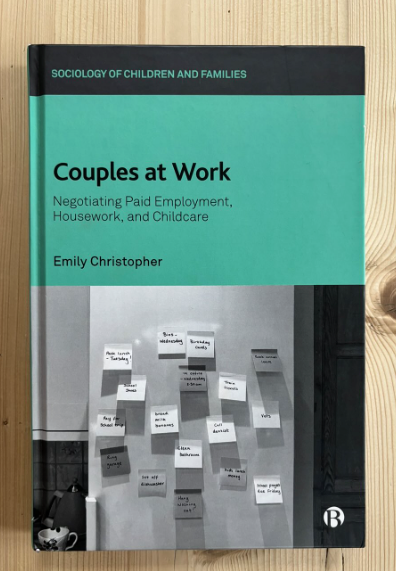
New book from Aston University academic shows that Christmas tasks mostly fall on women
New book by Dr Emily Christopher shows differences in how household tasks are divided by men and women Book highlights that women tend to buy the Christmas presents and send cards Men often see women as being more thoughtful or having better knowledge of what people would like. A new book from Aston University’s Dr Emily Christopher reveals that when it comes to sending Christmas cards and buying Christmas presents, women are still mostly doing the work as they are perceived to have better knowledge of what people would like. Dr Emily Christopher, a lecturer in sociology and policy at Aston School of Law and Social Sciences, has recently published her book Couples at Work: Negotiating Paid Employment, Housework and Childcare, which look at how household tasks are divided by men and women and the reasons behind these divisions. The data for the book has been collated over an eight-year period with couples being interviewed twice to provide a robust set of results. It looks at how different sex parent couples combined paid work, housework and childcare. The research revealed how gender norms continue to shape how certain daily household jobs are divided. Women were more likely than men to clean the house, especially bathrooms, wash clothes and put clothes away. Men still tend to do tasks like mowing the lawn and DIY but now are also more likely to do the cooking and the grocery shopping. The research shows that the key to understanding how household tasks are divided lies in the meaning they hold for partners. With the festive season upon us, the book reveals that woman are largely responsible for the Christmas present buying and sending cards with 100% of those taking part in the research saying that women mostly carried out these tasks. This also included buying for the male partner's relatives. In instances where men had a 'helping' role in these tasks, this included being involved in the discussion or consulting on choice of presents, especially for children, with only a small minority buying presents for their own family. The data revealed that where women didn't choose and buy presents for their partners family, they were still involved in reminding their partners that this needed to be done or advising on choice of gifts, showing that women were still taking on the mental load of planning for the festive season. The book reveals that when men were questioned about why they didn't get involved in present buying, they drew on gender norms. Women were often described, by the men, as being more thoughtful or having better knowledge of what people would like. Men often described how family members wouldn’t receive presents at all if it relied on them. Although much of the gift giving and organising represented love and affection for the women, which many found enjoyable, many still saw it as work and expressed that they would like their partners' to be more involved. Dr Christopher said: “This book takes an in-depth look at the way in which everyday roles around the household are divided between men and women. “The research shows that over a period of eight years fathers increased their role in childcare tasks but this did not always extend to housework. “The pandemic was an opportunity to change how couples share housework but women were still more likely to carry out tasks like cleaning, washing clothes and putting clothes away and overwhelmingly remained responsible for the mental orchestration of family work.”



With OpenAI’s latest release, GPT-5.2, AI has crossed an important threshold in performance on professional knowledge-work benchmarks. Peter Evans, Co-Founder & CEO of ExpertFile, outlines how these technologies will fundamentally improve research communications and shares tips and prompts for PR pros. OpenAI has just launched GPT-5.2, describing it as its most capable AI model yet for professional knowledge work — with significantly improved accuracy on tasks like creating spreadsheets, building presentations, interpreting images, and handling complex multistep workflows. And based on our internal testing, we're really impressed. For communications professionals in higher education, non-profits, and R&D-focused industries, this isn’t just another tech upgrade — it’s a meaningful step forward in addressing the “research translation gap” that can slow storytelling and media outreach. According to OpenAI, GPT-5.2 represents measurable gains on benchmarks designed to mirror real work tasks. In many evaluations, it matches or exceeds the performance of human professionals. Also, before you hit reply with “Actually, the best model is…” — yes, we know. ChatGPT-5.2 isn’t the only game in town, and it’s definitely not the only tool we use. Our ExpertFile platform uses AI throughout, and I personally bounce between Claude 4.5, Gemini, Perplexity, NotebookLM, and more specialized models depending on the job to be done. LLM performance right now is a full-contact horserace — today’s winner can be tomorrow’s “remember when,” so we’re not trying to boil the ocean with endless comparisons. We’re spotlighting GPT-5.2 because it marks a meaningful step forward in the exact areas research comms teams care about: reliability, long-document work, multi-step tasks, and interpreting visuals and data. Most importantly, we want this info in your hands because a surprising number of comms pros we meet still carry real fear about AI — and long term, that’s not a good thing. Used responsibly, these tools can help you translate research faster, find stronger story angles, and ship more high-quality work without burning out. When "Too Much" AI Power Might Be Exactly What You Need AI expert Allie K. Miller's candid but positive review of an early testing version of ChatGPT 5.2 highlights what she sees as drawbacks for casual users: "outputs that are too long, too structured, and too exhaustive." She goes on to say that in her tests, she observed that ChatGPT-5,2 "stays with a line of thought longer and pushes into edge cases instead of skating on the surface." Fair enough. All good points that Allie Miller makes (see above). However, for communications professionals, these so-called "downsides" for casual users are precisely the capabilities we need. When you're assessing complex research and developing strategic messaging for a variety of important audiences, you want an AI that fits Miller's observation that GPT-5.2 feels like "AI as a serious analyst" rather than "a friendly companion." That's not a critique of our world—it's a job description for comms pros working in sectors like higher education and healthcare. Deep research tools that refuse to take shortcuts are exactly what research communicators need. So let's talk more specifically about how comms pros can think about these new capabilities: 1. AI is Your New Speed-Reading Superpower for Research That means you can upload an entire NIH grant, a full clinical trial protocol, or a complex environmental impact study and ask the model to highlight where key insights — like an unexpected finding — are discussed. It can do this in a fraction of the time it would take a human reader. This isn’t about being lazy. It’s about using AI to assemble a lot of tedious information you need to craft compelling stories while teams still parse dense text manually. 2. The Chart Whisperer You’ve Been Waiting For We’ve all been there — squinting at a graph of scientific data that looks like abstract art, waiting for the lead researcher to clarify what those error bars actually mean. Recent improvements in how GPT-5.2 handles scientific figures and charts show stronger performance on multimodal reasoning tasks, indicating better ability to interpret and describe visual information like graphs and diagrams. With these capabilities, you can unlock the data behind visuals and turn them into narrative elements that resonate with audiences. 3. A Connection Machine That Finds Stories Where Others See Statistics Great science communication isn’t about dumbing things down — it’s about building bridges between technical ideas and the broader public. GPT-5.2 shows notable improvements in abstract reasoning compared with earlier versions, based on internal evaluations on academic reasoning benchmarks. For example, teams working on novel materials science or emerging health technologies can use this reasoning capability to highlight connections between technical results and real-world impact — something that previously required hours of interpretive work. These gains help the AI spot patterns and relationships that can form the basis of compelling storytelling. 4. Accuracy That Gives You More Peace of Mind...When Coupled With Human Oversight Let’s address the elephant in the room: AI hallucinations. You’ve probably heard the horror stories — press releases that cited a study that didn’t exist, or a “quote” that was never said by an expert. GPT-5.2 has meaningfully reduced error rates compared with its predecessor, by a substantial margin, according to OpenAI Even with all these improvements, human review with your experts and careful editing remain essential, especially for anything that will be published or shared externally. 5. The Speed Factor: When “Urgent” Actually Means Urgent With the speed of media today, being second often means being irrelevant. GPT-5.2’s performance on workflow-oriented evaluations suggests it can synthesize information far more quickly than manual review, freeing up a lot more time for strategic work. While deeper reasoning and longer contexts — the kinds of tasks that matter most in research translation — require more processing time and costs continue to improve. Savvy communications teams will adopt a tiered approach: using faster models of AI for simple tasks such as social posts and routine responses, and using reasoning-optimized settings for deep research. Your Action Plan: The GPT-5.2 Playbook for Comms Pros Here’s a tactical checklist to help your team capitalize on these advances. #1 Select the Right AI Model for the Job: Lowers time and costs • Use fast, general configurations for routine content • Use reasoning-optimized configurations for complex synthesis and deep document understanding • Use higher-accuracy configurations for high-stakes projects #2 Find Hidden Ideas Beyond the Abstract: Deeper Reasoning Models do the Heavy Work • Upload complete PDFs — not just the 2-page summary you were given • Use deeper reasoning configurations to let the model work through the material Try these prompts in ChatGPT5.2 “What exactly did the researchers say about this unexpected discovery that would be of interest to my <target audience>? Provide quotes and page references where possible.” “Identify and explain the research methodology used in this study, with references to specific sections.” “Identify where the authors discuss limitations of the study.” “Explain how this research may lead to further studies or real-world benefits, in terms relatable to a general audience.” #3 Unlock Your Story Leverage improvements in pattern recognition and reasoning. Try these prompts: “Using abstract reasoning, find three unexpected analogies that explain this complex concept to a general audience.” “What questions could the researchers answer in an interview that would help us develop richer story angles?” #4 Change the Way You Write Captions Take advantage of the way ChatGPT-5.2 translates processes and reasons about images, charts, diagrams, and other visuals far more effectively. Try these prompts: Clinical Trial Graphs: “Analyze this uploaded trial results graph upload image. Identify key trends, and comparisons to controls, then draft a 150-word donor summary with plain-language explanations and suggested captions suitable for donor communications.” Medical Diagrams: “Interpret these uploaded images. Extract diagnostic insights, highlight innovations, and generate a patient-friendly explainer: bullet points plus one visual caption.” A Word of Caution: Keep Experts in the Loop to Verify Information Even with improved reliability, outputs should be treated as drafts. If your team does not yet have formal AI use policies, it's time to get started, because governance will be critical as AI use scales in 2026 and beyond. A trust-but-verify policy with experts treats AI as a co-pilot — helpful for heavy lifting — while humans remain accountable for approval and publication. The Importance of Humans (aka The Good News) Remember: the future of research communication isn’t about AI taking over — it’s about AI empowering us to do the strategic, human work that machines cannot. That includes: • Building relationships across your institution • Engaging researchers in storytelling • Discovering narrative opportunities • Turning discoveries into compelling narratives that influence audiences With improvements in speed, reasoning, and reliability, the question isn’t whether AI can help — it’s what research stories you’ll uncover next to shape public understanding and impact. FAQ How is AI changing expectations for accuracy in research and institutional communications? AI is shifting expectations from “fast output” to defensible accuracy. Better reasoning means fewer errors in research summaries, policy briefs, and expert content—especially when you’re working from long PDFs, complex methods, or dense results. The new baseline is: clear claims, traceable sources, and human review before publishing. ⸻ Why does deeper AI reasoning matter for communications teams working with experts and research content? Comms teams translate multi-disciplinary research into messaging that must withstand scrutiny. Deeper reasoning helps AI connect findings to real-world relevance, flag uncertainty, and maintain nuance instead of flattening meaning. The result is work that’s easier to defend with media, leadership, donors, and the public—when paired with expert verification. ⸻ When should communications professionals use advanced AI instead of lightweight AI tools? Use lightweight tools for brainstorming, social drafts, headlines, and quick rewrites. Use advanced, reasoning-optimized AI for high-stakes deliverables: executive briefings, research positioning, policy-sensitive messaging, media statements, and anything where a mistake could create reputational, compliance, or scientific credibility risk. Treat advanced AI as your “analyst,” not your autopilot. ⸻ How can media relations teams use AI to find stronger story angles beyond the abstract? AI can scan full papers, grants, protocols, and appendices to surface where the real story lives: unexpected findings, practical implications, limitations, and unanswered questions that prompt great interviews. Ask it to map angles by audience (public, policy, donors, clinicians) and to point to the exact sections that support each angle. ⸻ How should higher-ed comms teams use AI without breaking embargoes or media timing? AI can speed prep work—backgrounders, Q&A, lay summaries, caption drafts—before embargo lifts. The rule is simple: treat embargoed material like any sensitive document. Use approved tools, restrict sharing, and avoid pasting embargoed text into unapproved systems. Use AI to build assets early, then finalize post-approval at release time. ⸻ What’s the best way to keep faculty “in the loop” while still moving fast with AI? Use AI to produce review-friendly drafts that reduce load on researchers: short summaries, suggested quotes clearly marked as drafts, and a checklist of claims needing verification (numbers, methods, limitations). Then route to the expert with specific questions, not a wall of text. This keeps approvals faster while protecting scientific accuracy and trust. ⸻ How should teams handle charts, figures, and visual data in research communications? AI can turn “chart confusion” into narrative—if you prompt for precision. Ask it to identify trends, group comparisons, and what the figure does not show (limitations, missing context). Then verify with the researcher, especially anything involving significance, controls, effect size, or causality. Use the output to write captions that are accurate and accessible. ⸻ Do we need an AI Use policy in comms and media relations—and what should it include? Yes—because adoption scales faster than risk awareness. A practical policy should define: approved tools, what data is restricted, required human review steps, standards for citing sources/page references, rules for drafting quotes, and escalation paths for sensitive topics (health, legal, crisis). Clear guardrails reduce fear and prevent preventable reputational mistakes. If you’re using AI to move faster on research translation, the next bottleneck is usually the same one for many PR and Comm Pros: making your experts more discoverable in Generative Search, your website, and other media. ExpertFile helps media relations and digital teams organize their expert content by topics, keep detailed profiles current, and respond faster to source requests—so you can boost your AI citations and land more coverage with less work. For more information visit us at www.expertfile.com



From Saint to Superstar: The Remarkable History of Santa — and His Many Global Identities
Santa Claus may look familiar — red suit, white beard, infectious laugh — but behind the modern icon is a centuries-long story shaped by religion, folklore, migration, marketing, and local tradition. Far from being a single character, “Santa” is a global collection of gift-givers, each reflecting the culture that shaped them. The Historical Roots: A Saint Becomes a Symbol The story of Santa Claus begins with St. Nicholas, a 4th-century Greek bishop known for generosity, compassion, and secret gift-giving. Stories of Nicholas helping the poor — often anonymously — spread across Europe, establishing a lasting connection between generosity and winter celebrations. Over time, St. Nicholas evolved from a religious figure into a folkloric one as traditions blended with local customs, seasonal festivals, and storytelling. The idea of a benevolent winter gift-giver became firmly embedded in European culture long before Santa ever boarded a sleigh. Santa in North America: Reinvention and Red Suits In North America, Santa Claus emerged as a cultural hybrid: Dutch settlers brought traditions of Sinterklaas 19th-century poems and illustrations reshaped Santa into a jovial, approachable figure 20th-century popular culture and advertising standardized the modern image: red suit, round belly, flying reindeer, North Pole address What began as a saintly figure became a universal symbol of generosity, childhood wonder, and seasonal joy — largely detached from religious roots but deeply tied to cultural celebration. Santa Around the World: Same Spirit, Different Stories Santa’s core traits — kindness, generosity, winter magic — remain consistent, but his appearance and habits vary widely: Europe Sinterklaas (Netherlands & Belgium): Arrives by boat, wears bishop’s robes, celebrated earlier in December Father Christmas (UK): Rooted in feasting and goodwill, later merged with Santa traditions Père Noël (France): Delivers gifts with a quiet, gentle presence La Befana (Italy): A broom-riding grandmother figure tied to Epiphany traditions Nordic Countries Joulupukki (Finland): Lives in Lapland, wears practical winter clothing, and feels distinctly grounded in nature Julenisse (Norway & Denmark): A blend of Santa and household folklore spirits Asia Hoteiosho (Japan): A cheerful monk associated with happiness and abundance Christmas gift-givers in many Asian countries are largely secular, tied to pop culture rather than religion Latin America Papá Noel: Often coexists with religious gift-bringers tied to Epiphany Emphasis may be placed more on community and family than individual gift-giving Why Santa Still Matters Santa’s endurance lies in his adaptability. He absorbs cultural values — generosity, kindness, joy — and reflects them back in familiar, comforting ways. Whether religious, secular, or purely symbolic, Santa represents shared traditions that bring people together during the darkest days of the year. Story Angles for Journalists How St. Nicholas became a global icon The commercialization of Santa — myth vs. modern marketing Cultural identity through holiday folklore Why children worldwide believe in gift-givers How immigrant communities blend Santa traditions Santa as a mirror of societal values across cultures Why This Matters Today In an increasingly globalized world, Santa Claus is a rare figure who crosses borders with ease — adapting, evolving, and uniting cultures through shared storytelling. His many forms remind us that traditions aren’t static; they grow with the people who keep them alive. Journalists covering culture, history, religion, folklore, or holiday traditions can connect with historians, anthropologists, religious scholars, and cultural experts through ExpertFile to explore how Santa continues to shape — and reflect — societies around the world. Find your expert here: www.expertfile.com

The holiday season is a whirlwind of joy, lights, and laughter, but sometimes it can also sneak in some added stress. Experts from the University of Delaware are here to remind us that our mental wellness shouldn’t take a backseat during these festive times. By weaving mindfulness into our holiday plans, we can maximize the joy and peace we experience. Prioritizing presence over presents Let's face it: the holiday rush often translates to an avalanche of consumerism. But Amit Kumar, a marketing professor who focuses on the scientific study of happiness, suggests focusing on being present rather than the presents. Carving out mindful time The holidays can stir up complex emotions as families come together. Psychology professors Franssy Zablah and Zachary Meehan offer strategies to support mental well-being this season. Valerie Earnshaw and Raphael Travis, professors who study health and wellbeing, can share guidance for supporting family members with substance use disorders this holiday season. Gifting intentionally this year Education professors Myae Han and Roberta Golinkoff can talk about gifts for children that promote reading or positive play. Keeping the spirts bright year after year Debra Hess Norris offers tips on how to preserve decorations and make them look brand new every year. To contact any of these experts, click on their expert profiles or email MediaRelations@udel.edu.




Reviving the Christmas Spirit: Forgotten Christmas Traditions to Reclaim the Christmas Season
Christmas is just around the corner and many families have already decorated their homes and started celebrating their Christmas traditions – but many stores have had their Christmas products out for months. This early bombardment of holiday advertisements and adornments often takes away from the excitement. So how do you recapture the true spirit of Christmas? Baylor University Honors College professor Michael Foley, Ph.D., who teaches in the Great Texts Program, has researched the history of common Christmas traditions and uncovered forgotten customs. “Christmas is indeed the most wonderful time of year, and that wonder is increased when we understand why we do the things we do,” Foley said. “Our delight in the season becomes greater when we appreciate the history and symbolism of the Christmas tree or why we kiss under the mistletoe.” Foley shares three practices to recapture the essence of Christmas and bring more joy to the season for your family. Enjoy the 12 Days of Christmas Historically, the season of Advent during the weeks leading up to Christmas was a period of joyful restraint and preparation. During the Twelve Days of Christmas, from Christmas Day on Dec. 25 to the Feast of the Epiphany on Jan. 6, people would celebrate a release with a continuous period of leisure and merriment. “Today, the Christmas season seems to start earlier and earlier each year. In the 20th century, the commercial season began the day after Thanksgiving, but now stores inundate the market with Christmas decorations much earlier,” Foley said. “The problem with this arrangement is that by the time Christmas finally comes, you’re tired of it. The older model has an organic build-up to the big day and then a great, 12-day release.” Returning to a slower-paced season full of cheerful spirits in the 12 days following Christmas is a way to recenter, refocus and reignite your Christmas spirit, Foley said. Capture the Joy of Incarnation It’s easy to get caught up in the festivities and pressure of the holiday, but it is also important to return to the reason behind Christmas, Foley said, and take time to understand the meaning behind what seem like meaningless customs. “The best traditions capture the fact that God became man in order to redeem us from our sins out of sheer love for us,” he said. Practices like caroling and gathering with family for food and drink are all acts of gratitude and joy that can remind us of God’s love. What may seem like typical holiday decorations, the holly wreath and the Christmas tree, are actually symbols of Christ bringing new life, Foley said. Embrace the Bizarre Today, Christmas is surrounded by a light, cheery feeling. But history tells us that there has always been a certain “dark side” of Christmas. “There is a reason why Ebenezer Scrooge was visited by three ghosts on Christmas Eve,” Foley said. “All of winter was the season of fiends, and they were not happy that the winter solstice around Christmas Day marked the beginning of the end of the long dark nights and that Jesus Christ was born and triumphed over evil.” Other traditions involve swapping places with someone such as a parent and child, abbots and novices, or men and women. “At one time, this custom of inverted social roles played an important role in gaining clarity and releasing tension in a hierarchical society,” Foley said. While this might seem useless, impractical, or even pointless today, it can still offer value to the Christmas joy. “These inversion customs are a giddy imitation of the ultimate inversion in all of history,” Foley said. “That Almighty God chose to become a little baby in a measly manger.” Although some forgotten customs might seem odd to us today, there can be a certain kind of wisdom behind them – a wisdom that leads us back to the true spirit of Christmas, Foley said. After all, even Ebenezer Scrooge was able to find joy in Christmas again. Michael Foley is a Professor of Patristics in the Honors College at Baylor University and the author of 17 books, including Why We Kiss under the Mistletoe: Christmas Traditions Explained. Looking to know more or arrange an interview? Simply contact: Shelby Cefaratti-Bertin today.
Staying Sober and on the Path to Recovery During the Holidays
The holidays can be a joyous time full of celebrations and they also can be a time of intense stress. Individuals with substance and alcohol use disorders can experience additional stress during the holidays, which can interfere with their recovery, and they may need additional support to abstain from substance use. What can people in recovery do to both abstain and enjoy the holidays? And what can loved ones do to support them? “Holidays can be difficult for anyone, but those with substance use and mental health disorders may have a more difficult time coping with those difficulties,” said Baylor University substance use disorder treatment expert Sara Dolan, Ph.D., professor of psychology and neuroscience. “The holidays can be – on one hand – a time rife with loneliness, and on the other hand, a time where family conflict might be more present,” Dolan said. “Both of these situations are hard for many of us to cope with, but we may want to be more sensitive to those who struggle more with these situations.” Dolan is a nationally known researcher on how neuropsychological dysfunction, including problems with memory and executive functions, affects how people cope with alcohol and substance use disorders and how these issues affect the treatment process and outcome. Dolan offers the following suggestions for individuals in recovery to help them get through the holidays and how family and friends can offer support. Stay active in recovery If the individual already has a recovery plan in place such as a 12-step program or Celebrate Recovery, make sure to continue attending meetings and appointments during the holiday season. “There are numerous virtual and in-person resources for people who are struggling, including mutual aid support groups like Alcoholics Anonymous, Narcotics Anonymous and Smart Recovery,” Dolan said. “People can also call the SAMHSA national helpline at 1-800-662-HELP.” Even when traveling, it is a good idea to know local meeting schedules, use virtual resources and consider attending extra meetings to stay on top of your recovery. Have a coping plan “It is important for people to have a solid coping plan before they go into potentially distressing situations,” Dolan said. Are there places or events to just stay away from? Dolan said it is “okay to keep yourself safe by leaving or even avoiding places that may be unsafe.” By having a plan to handle stressors ahead of time, you can manage it better in the moment. Preparation is key to feeling safe and enjoying the holidays. Avoid triggers and stressors Understanding personal triggers, which can be different for different people, can help us avoid them ahead of time. “For some people, it’s family conflict, for some, it’s loneliness, and for some it’s feelings of anxiety or depression,” Dolan said. “It’s important to know your own stress points before you go into situations that may trigger them.” Once you know what leads to urges to use alcohol or other substances, you can determine how to counteract those circumstances or avoid them if necessary. Reach out for support Reach out to family and friends who will most likely offer positive support. Letting your loved one know what you need – and how to support you in your recovery – can help you abstain from substance use during stressful situations. In fact, Dolan said you may even want to let them know ahead of time that you may need extra support. How to support someone with a substance use disorder Be as open, direct and caring as you can be. Dolan suggests talking to your loved one directly about what may – or may not be helpful – during the holidays. “Some people in recovery may feel more comfortable in alcohol-free environments,” she said, “but some may not want their loved ones altering their behavior. “Ask – don’t assume – and let your loved one tell you what might work best for them,” Dolan added. Using these suggestions can help both individuals with substance and alcohol use disorders and their families have a healthy and happy holiday season.

Have Yourself a Sustainable Christmas: Five Tips for a Greener Holiday
As the holiday season approaches, there are multiple ways that individuals and families can employ mindful practices – both meaningful and eco-friendly – that reduce waste and support local communities. From reusable wrappings to sourcing meals locally and composting the leftovers to smarter Christmas tree choices, Baylor University’s Joshua King, Ph.D., professor of English and director of Environmental Humanities minor, and Gary Cocke, senior director of sustainability, offer five tips for embracing sustainability during the holidays to help us reconnect with simpler, more meaningful traditions. Five Tips to Make Your Holidays Meaningful and Eco-friendly 1. Thoughtful gift giving: Choose long-lasting gifts or experiences that recipients will use and appreciate. "Quality over quantity is always a good rule of thumb," Cocke said. “Giving gifts that are useful and durable is best – and if you think of what the recipient would actually be able to use, it is, by its very nature, a more thoughtful gift.” He also encourages exploring and supporting local businesses and the local economy while shopping for unique presents. King added that crafting a creative letter, poem or handmade gift “take us back to the gratitude that should be at the heart of our celebration.” "Experiences can also be wonderful gifts – they often foster lasting memories and meaningful connections," Cocke added. For those looking to give back, donating to a nonprofit organization that resonates with the recipient’s values is a thoughtful gesture. 2. Eco-friendly gift wrapping options An easy way to reduce holiday waste is with intentional gift wrapping. "Choose recyclable paper wrapping over shiny, plastic-laden alternatives and reuse materials when possible," Cocke said. King added that reusable options like fabric and premade bags can be stylish and sustainable. Do-it-yourself wrapping paper can be a fun family activity. “Grab some plain paper and decorate with stamps and markers,” Cocke said. “Grandparents especially love the personal touch of kid-decorated paper." 3. Eat locally and compost Another way to support local businesses is by “sourcing meals locally and making use of leftovers or composting what can’t be eaten,” King said. The Baylor Community Garden offers compost buckets for families to collect their food waste for composting. 4. Greener Christmas tree choices When it comes to Christmas trees, the debate between real versus artificial trees comes down to longevity and disposal. "Artificial trees can be the more sustainable option if used for at least 10 years," Cocke said. "However, real trees are a good choice if properly composted after use." Cocke highlighted the importance of composting and local options for live tree recycling or mulching: 5. A sustainable future “The holidays invite us to practice gratitude and to celebrate relationships we cherish, often by giving gifts, and at Christmas, Christians express gratitude for the ultimate gift: God’s pledge of love to creation through the incarnation, becoming one with us as a fellow creature,” King said. “What better time for practicing a revolution of gratitude through gift-giving and celebrations that are light on the earth and that respect the many relationships by which we live?” Cocke hopes that Baylor’s strategic initiatives and local partnerships will continue to foster sustainable practices, from increasing access to composting to raising awareness about holiday waste reduction. "A little mindfulness can go a long way toward making the holidays more meaningful and sustainable," he said. Looking to know more or arrange an interview? Simply contact: Shelby Cefaratti-Bertin today.

Tinsel, Tears, and Turkey: How Seniors Really Feel About the Holidays
Ah, the holidays. That magical season when cinnamon fills the air, grandkids are glued to their phones, and you're wondering if it's too early to spike the eggnog. (Answer: it's 5 o'clock somewhere, and that somewhere is your kitchen.) For many older adults, the season is a cocktail of nostalgia, joy, and melancholy—served in a glass rimmed with memories of when the house was full, and the turkey wasn't store-bought. Dealing With The Ghosts of Christmas Past The holidays used to mean full houses, laughter echoing off the walls, and more food than a Costco freezer aisle. Now? Smaller gatherings, missing faces, and a nagging feeling that you're somehow in the way at your own celebration. There's a certain ache that comes with the holidays as we age. It's not just arthritis—it's memory. The people who made our holidays special might no longer be around, and while their photos still grace the mantle, their absence can hit harder than a fruitcake to the forehead. It's the quiet that gets you. The stillness of a home that used to hum with chaos. The microwave hums where the oven once sang. The Christmas card list has ghosted us—literally—replaced by e-cards that can't be hung on the fridge or hugged. And yet, despite the ache, many seniors keep the traditions alive. They polish the silver, bake the cookies, and set the table—because ritual matters. It's a way to say, I'm still here, and this still matters. Loneliness: The Fear No One Talks About Let's name the holiday elephant in the room. Yes, it turns out that one really is the loneliest number. It's that heavy feeling that sneaks in right around the time commercials start showing perfect families in matching pajamas (who, let's be honest, probably fought about those pajamas in the parking lot). The numbers tell a sobering story: A report by the National Institute on Ageing, finds that as many as 41 per cent of Canadians aged 50 years and older are at risk of social isolation and up to 58 per cent have experienced loneliness before. The holidays often bring additional pressure for many. It's important to note, you don't have to live alone to feel lonely. Seniors often fear being forgotten—left out of the group chat, the dinner invite, or even the conversation at dinner. Some feel like a burden, convinced their presence is more "obligation" than "invitation." That fear of irrelevance can creep up faster than fruitcake at a church bake sale. The internal dialogue doesn't help: "They're busy." "They have their own lives." "I don't want to be a bother." But here's the truth: you're not a bother. You're the keeper of stories, the family's living archive, and—let's face it—the only one who actually knows how to carve a turkey without creating a crime scene. The health stakes are real: According to a 2023 research report from the U.S. Surgeon General, loneliness and social isolation have a profound effect on mortality, equal to smoking 15 cigarettes per day. That’s more impact than obesity or sedentary lifestyles. It's associated with increased risk of heart disease, stroke, dementia, depression, and anxiety. This isn't just about feeling blue; it's about actual health outcomes. When Depression Wears a Santa Hat Holiday depression doesn't always look like tears and tissues. Sometimes it's withdrawing from events, skipping meals, or not bothering to decorate. It's saying "I'm fine" with a smile that doesn't reach your eyes. A prominent research study of seniors in the UK over a 12-year period published in The Lancet, confirms what many seniors experience: loneliness is a significant predictor of depression in older adults. The study found that higher loneliness scores were consistently associated with increased depression severity. The relationship works both ways—people with mental health conditions are more than twice as likely to experience loneliness. It can also show up physically—fatigue, poor sleep, or that vague feeling that something's just... off. The sparkle of the season fades under the weight of grief, change, or just the exhausting pressure to be merry when you're not feeling it. A few sad moments are natural. We all get a little misty when "White Christmas" plays for the 47th time. But if the blues linger past Boxing Day, it might be time for a gentle check-in—with a friend, a doctor, or someone who actually listens (not just nods while scrolling). Remember: asking for help isn't a weakness. It's wisdom. And honestly? It's badass. The Magic of Rituals and Traditions For seniors, traditions aren't just habits—they're anchors. The same decorations, the favorite songs, the "don't touch that, it's Grandma's angel" moment that happens every. Single. Year. Research shows that rituals and traditions provide crucial psychological benefits for older adults, including a sense of stability, purpose, and belonging. They offer structure and comfort during challenging times, helping seniors feel grounded and connected to their roots. Studies have found that maintaining traditions contributes to overall mental well-being and can even reduce symptoms of anxiety and depression. These rituals offer stability in a world that keeps changing at warp speed (seriously, when did voice-activated ornaments become a thing?). But when traditions fade—when no one asks for the shortbread recipe or the ornaments stay boxed—it can feel like being erased in real time. So here's the trick: Evolve the traditions. Pass the torch, not the guilt. Let the grandkids lead carols (even if they insist on adding Mariah Carey). Use the good china. Pull out the silverware stored in the wooden case under the china cabinet that hasn't been opened since 1987. Keep the spirit alive, even if it looks different now. How Seniors Can Create a Joyful Holiday (Yes, Really!) Reach Out First: Don't wait for others to make the first move. Call, text, or—even better—show up with cookies. People are often grateful for the invitation but also afraid to impose. Be the one who breaks the ice. Host a Mini Gathering: Even if it's just tea with a neighbor, connection is the best seasoning of all. Bonus: smaller gatherings mean less cleanup and more actual conversation. Volunteer: Nothing lifts the spirit like helping someone else. Food banks, shelters, and local schools welcome extra hands. Plus, it's a great reminder that you're still needed—and you are. Laugh on Purpose: Watch old comedies. Tell those same stories (again). Laughter really is medicine—no prescription, no co-pay required. Decorate Anyway: Even if no one's visiting, do it for you. Light up your space, and your mood might just follow. And if the neighbors think you're overdoing it? Even better. What Families Can Do (Besides Show Up Hungry) Here's your holiday homework, families: Visit More, Scroll Less. You can't hug over FaceTime. And honestly, Grandma's WiFi probably can't handle it anyway. Listen Like It's a Gift. Because it is. Let seniors share their stories without rushing them or checking your phone. They're not just repeating themselves—they're reliving joy. (And yes, you've heard it before. Listen again.) Include Them in the Chaos. Let Grandma wrap presents, Grandpa set the playlist, or Aunt Sue take charge of... okay, maybe not the gravy. But give them a role. Purpose is the best present. Check In Regularly. A quick "thinking of you" text can mean more than an expensive gift. Though, to be fair, both are nice. Respect Their Pace. Big gatherings can be overwhelming. Sometimes small and meaningful beats loud and crowded. Not everyone wants to do the Macarena at Christmas dinner. (Looking at you, Uncle Bob.) Remember: the greatest present you can give an older adult is presence—yours. The Importance of Joy (and How to Find It Again) Joy doesn't always come in grand gestures. Sometimes it's hiding in the small stuff: • The smell of pine needles • The first snowflake (before it turns into gray slush) • That old ornament you swore you'd throw out • The laughter of family—even if it's at your expense Joy isn't found lying around like loose change. It's made. Sometimes it's coaxed out with a memory, a song, or a well-timed bad joke about Aunt Sue's lumpy gravy. And if all else fails, remember this: you've survived decades of holidays. Burnt turkeys. Broken ornaments. That unfortunate incident with the glue gun in 2003. You've earned the right to laugh through the tears and dance in your slippers if you damn well feel like it. The Real Gift The holidays remind us that connection—not perfection—is the true magic. For seniors, it's about being seen, heard, and loved. For families, it's about showing up, listening, and laughing together. Because one day, those elders' stories will become yours. And you'll want someone to care enough to hear them, too. So let's make this season count. Let's call more, visit more, and laugh more. Let's honor the past while making new memories. And let's remember that the best traditions aren't the ones that stay the same—they're the ones that adapt, evolve, and keep bringing us together. Now pass the eggnog. The spiked kind. Let's All Sit Under the Mistletoe and Sing the Retired Remix of "Jingle Bells" (To the tune of "Jingle Bells") Dashing through the snow, With a walker all in tow, To the mall we go, Moving nice and slow! Family's out of sight, Texting through the night, Oh, what fun it is to Zoom My grandkids once a night—hey! Chorus: Jingle bells, jingle bells, jingle all the way, Oh, what fun it is to chat With friends who won't delay—hey! Jingle bells, jingle bells, laughter saves the day, Lonely hearts can still feel joy— If love just finds a way. Happy holidays, everyone. May your turkey be moist, your family be present, and your eggnog be strong. Want more insights like this? Subscribe to my free newsletter here, where I share practical strategies, real-world stories, and straight talk about navigating retirement with confidence—not confusion. Plus, all subscribers get exclusive early access to advance chapters from my upcoming book. For Canadians 55+: Get actionable advice on making your home equity work for you, understanding your options, and living retirement on your terms. For Mortgage Brokers and Financial Professionals: Learn how to become the trusted advisor your 55+ clients—it's your opportunity to build lasting relationships in Canada's fastest-growing demographic. Sue Don’t Retire…Re-Wire! References & Resources for You or a Loved One On Loneliness and Social Isolation: • U.S. Surgeon General. (2023). Our Epidemic of Loneliness and Isolation: The U.S. Surgeon General's Advisory on the Healing Effects of Social Connection and Community. https://www.hhs.gov/sites/default/files/surgeon-general-social-connection-advisory.pdf • Medicare FAQ. (2024). Loneliness in Seniors Statistics: Combating Social Isolation. https://www.medicarefaq.com/blog/senior-loneliness-statistics/ • Mayo Clinic. (2023). Loneliness and Social Isolation Through the Holidays. https://newsnetwork.mayoclinic.org/discussion/loneliness-and-social-isolation-through-the-holidays/ On Depression and Mental Health: • Kok, R.M., & Reynolds, C.F. (2020). The association between loneliness and depressive symptoms among adults aged 50 years and older: A 12-year population-based cohort study. The Lancet Psychiatry. https://www.thelancet.com/journals/lanpsy/article/PIIS2215-0366(20)30383-7/fulltext • Cigna. (2021). The Loneliness Epidemic Persists: A Post-Pandemic Look at the State of Loneliness Among U.S. Adults. On Traditions and Rituals: • Oregon Counseling. Why Traditions Matter to Mental Health. https://oregoncounseling.com/article/why-traditions-matter-to-mental-health/ • Care365. Maintaining Traditions with Seniors. https://www.care365.care/resources/maintaining-traditions-with-seniors Additional Support: • National Council on Aging. Four Steps to Combat Loneliness in Seniors During the Holidays. https://www.ncoa.org/article/four-steps-to-combat-loneliness-in-seniors-during-the-holiday-and-beyond/ Emergency Services If the situation is urgent or someone is in immediate danger: Call 911. Canada Suicide Prevention Service (CSPS) • Call: 1-833-456-4566 (available nationwide, 24/7) • Text: 45645 (evenings) • Chat: available at 988.ca



Built-In Backup System Helps Muscles Counteract Fatigue
When you're running up stairs or out on a jog, your muscles eventually start to feel heavy and weak. That's fatigue setting in, a sign that the muscles’ energy reserves are becoming depleted. But a team of researchers led by Rensselaer Polytechnic Institute (RPI) biology professor Doug Swank, Ph.D., have discovered something surprising: certain muscle fibers have a built-in backup system that fights back against fatigue, potentially helping us keep going when we'd otherwise have to stop. The secret lies in a phenomenon called "stretch activation": when a muscle is stretched just before it contracts, it can produce a short burst of extra force. Stretch activation has been studied extensively in the context of insect flight muscle and heart muscle contraction in mammals, but its effects have long been assumed to be physiologically irrelevant for the big skeletal muscles we use for day-to-day activities like walking around. The new study, published in the Journal of General Physiology, shows that assumption was wrong, at least when it comes to certain fast-twitch muscle fibers used to produce quick, powerful movements. “For decades, stretch activation in skeletal muscle was considered physiologically insignificant because it contributes a relatively small amount of force under normal conditions," Swank said. "But we realized no one had tested what happens during fatigue, when the chemical environment inside muscle fibers changes significantly." The researchers tested individual muscle fibers from mice under three conditions: normal, early fatigue (with chemical changes that mimic the state of tired muscles), and severe fatigue. They found that while the fibers' normal force production dropped dramatically as expected, in certain fibers the stretch-activated force stayed the same or even increased. In the most fatigued state, stretch activation contributed up to 30% of the total force these fast-twitch fibers were generating. “What was dismissed as too small to matter may actually be an important fatigue-fighting mechanism that's been hiding in plain sight,” Swank said. The effect was specific to fast-twitch fibers, which are used to generate rapid, powerful movements like sprinting and jumping. Slow-twitch fibers, which are used during endurance tasks like long-distance running or cycling, are more fatigue-resistant to begin with, and showed almost no stretch activation response. Understanding how muscles naturally combat fatigue could eventually inform strategies for improving strength and endurance, whether for athletes, people with muscular disorders, or patients recovering from injury. Swank and his colleagues are following up on their findings by conducting more detailed explorations of how stretch activation contributes to force generation in both low-intensity and high-intensity exercise. The research is funded by a five-year, $2.7 million National Institutes of Health grant to Professor Swank.
