
Experts Matter. Find Yours.
Connect for media, speaking, professional opportunities & more.

Amid Detainees' Release, Putin Flaunts Power and Flouts Western Influence
On August 1, the United States, Russia, Germany and three other European nations engaged in an historic 24-person East-West prisoner exchange. The largest such swap since the end of the Cold War, the multi-country deal secured the release of three prominent American detainees: Wall Street Journal correspondent Evan Gershkovich, corporate security executive Paul Whelan and Radio Free Europe/Radio Liberty editor Alsu Kurmasheva. It also freed a dozen Russian opposition leaders, incarcerated in their native country for challenging Vladimir Putin and his authoritarian regime. Lynne Hartnett, PhD, is the chair of Villanova University’s Department of History and an expert on modern Russia, protest movements and dissidents in exile. Recently, she shared some insights on the Kremlin's decision to release the American and Russian prisoners—as well as the egotism, oppressive tendencies and political posturing that drove their detention. Q: The arrests and sentencings of Gershkovich, Whelan and Kurmasheva have been described as "outrageous," "a mockery of justice" and reflective of "a total disregard for basic freedoms." What prompted Putin and the Russian government to detain these individuals? Dr. Hartnett: For Putin, seizing Gershkovich, Whelan and Kurmasheva was a power play. They were pawns for him to use when he deemed it convenient. If they could be used in a prisoner swap, they would be. But if that time never arrived, their incarceration, suffering and even potential deaths were inconsequential to him. Their arrests were also a signal that, in Russia, Putin's authority is uncontested. These were American citizens, and around the world, a U.S. passport opens doors: It holds power; it provides access; and it affords its holder protection. But the arrests of Gershkovich, Whelan and Kurmasheva were Putin’s attempt to demonstrate the limits of American influence. They were meant as a signal that, in Russia, a U.S. passport becomes meaningless if it serves Putin to make it so. Q: In recent years, the Russian government has seemingly worked to rehabilitate the reputations of figures like Josef Stalin, who infamously used the Soviet Gulag to stifle opposition and criticism. Is Putin's use of detentions as a political cudgel similar? DH: The show trials of the Stalinist era are frequently referenced. However, it should be stressed that those were largely intended for domestic consumption. They were used to justify the Communist elites' repression of fellow citizens by broadcasting "evidence" that enemies lurked within. The trials of Americans like Gershkovich and Brittney Griner [a professional basketball player detained on smuggling charges] were designed to show the world, not just Russians, that Putin's regime would not be cowed—even if the person being tried had fame and a powerful enterprise, like the Wall Street Journal or the WNBA, supporting them. Q: The New York Times recently ran a piece on the Russian dissidents released, claiming "hopes are high [they] will breathe new life into a fragmented opposition force." What do you anticipate these political players' activism will look like in the coming years, especially in exile? DH: As in the Imperial and Soviet periods, Russian censorship prevents any news or opinions that are not the government's from coming to light. As Putin has dismantled political opposition in Russia and tightened his grip on any vestiges of civil society in the country, there is little hope that a powerful opposition movement can gain momentum without outside support. This is where the Russian dissidents living abroad come in. They will ensure that a vision for another type of Russia is articulated. At the end of the 19th and the beginning of the 20th centuries, political exiles smuggled illegal newspapers and journals into the Russian empire to instill hope in their compatriots, to give them some indication that a nation beyond the autocracy was achievable. This, in my opinion, is the role that Russian dissidents living in exile must have today. They must provide the vision. They must provide the hope. While they cannot change the system on their own—they need a movement en masse—the dissidents abroad are needed to demonstrate that a nation without Putin and his repressive regime is possible. This is certainly not an easy venture, and it will require extraordinary sacrifices to be made a reality. However, it may be the Russian people's only hope.


Hofstra Experts Weigh In on the 2024 Presidential Election
Hofstra University boasts a team of distinguished media-ready experts, ready to talk about the newest developments in the 2024 presidential race. They include presidential scholar Meena Bose, constitutional law professor James Sample, media expert and former NBC executive Mark Lukasiewicz, and Lawrence Levy, an expert in suburban studies and suburban voting trends More details on their expertise and recent media appearances are provided below, along with information on how to connect with them for interviews and commentary. Dr Meena Bose Executive Director of the Kalikow Center for the Study of the American Presidency & Professor of Political Science Dr. Meena Bose brings her extensive experience and frequent media presence to discussions on the historic nature of the 2024 presidential race. Recent topics she has been interviewed about include next steps for the Democrats now that President Biden has withdrawn from the 2024 presidential race, former President Donald Trump’s selection of J.D. Vance as his running mate, how the assassination attempt on Trump may have impacted the race, and the Supreme Court’s presidential immunity rulings View Profile & Connect Recent Media Dr. Meena Bose has recently been called on by media to discuss: CNN's Biden-Trump debate; how President Biden may recover from his poor debate performance; and the Supreme Court’s presidential immunity ruling. She has appeared on WABC-TV, WNYW Fox 5, Fox radio stations across the country, and Reuters TV. She is frequently interviewed by Newsday and Newsweek, and her expertise has also been prominently featured in The Washington Post and The New York Times. She is the author of the forthcoming book: Pragmatic Vision: Obama and the Enactment of the Affordable Care Act. James Sample Professor, Maurice A. Deane School of Law James Sample, a constitutional law professor, is a sought-after legal and political commentator on legal challenges facing former President Donald Trump, Supreme Court ethics, the broader implications of presidential immunity, and the guilty verdict delivered in the Senator Robert Menendez trial. He most recently was interviewed about President Biden leaving the race and throwing his support behind VP Kamala Harris. View Profile & Connect Recent Media James Sample is a regular commentator for Reuters, CNN, CBS, WNYW Fox 5, and WCBS on topics like the Supreme Court’s ruling on presidential immunity; ethics questions facing Supreme Court Justices Alito and Thomas; former President Donald Trump’s legal challenges, including the election interference case and the “Hush Money” trial. In addition to his broadcast media interviews, Professor Sample has been interviewed by The New York Times, The Washington Post, The Economist, U.S. News & World Report, the Los Angeles Times, National Public Radio, Salon, USA Today, and The National Law Journal, as well as in leading blogs and regional outlets throughout the country. Mark Lukasiewicz Dean of the Lawrence Herbert School of Communication Mark Lukasiewicz offers his expertise on media coverage of the presidential race, drawing on his vast experience in planning and supervising election coverage. Before joining Hofstra, Dean Lukasiewicz was senior vice president of specials at NBC News, planning and supervising coverage of major breaking news events, including presidential elections and debates from 2004 to 2016. View Profile & Connect Recent Media A former NBC executive, Dean Lukasiewicz is available to speak about media coverage of the 2024 presidential race. Recent examples include the June 27th debate and expectations for President Biden’s interview on July 5 with George Stephanopoulos. Before joining Hofstra, Dean Lukasiewicz was senior vice president of specials at NBC News, planning and supervising coverage of major breaking news events, including presidential elections and debates from 2004 to 2016. He has been interviewed in recent weeks by the Wall Street Journal, Newsday, Tribune News Service, Scripps Morning News, and the AP. Lawrence Levy Associate Vice President and Executive Dean of the National Center for Surburban Studies (NCSS) In his leadership role at NCSS, Dean Levy has worked with Hofstra's academic and local communities to shape an innovative, interdisciplinary agenda for interdisciplinary suburban study. He has commented on a variety of political issues – most recently President Biden dropping his reelection bid and what that means for down-ballot elections. View Profile & Connect Recent Media Prior to joining Hofstra, Dean Levy spent 35 years as a reporter, editorial writer, columnist and PBS host, winning many of journalism's top awards (including Pulitzer finalist) for in-depth works on suburban politics, education, taxation, housing and other key issues. As a journalist, he was known for blending national trends and local perspectives and has covered seven presidential campaigns and 15 national conventions. Visit our Expert Center for a full directory of Hofstra experts insights.


Can the Olympics Help Americans Forget Politics (at Least for 16 Days)?
Americans are divided on a multitude of different issues, but could the Olympic Games unite the country – at least for the duration of an Olympiad? A Baylor University sports marketing and branding expert says yes, the Olympics can help bring people together even when it’s hard for them to agree about anything else. In his latest Forbes Sports Money column, Baylor University sports marketing and branding expert Kirk Wakefield, Ph.D., executive director of the Curb Center for Sales Strategy in Sports and Entertainment (S3E) program at Baylor’s Hankamer School of Business, analyzed a July 8 national population poll that asked Americans questions about politics but also included the Steen Happiness Index (SHI). The 20-item happiness index provides a series of statements for participants to read and choose the one from each group that describes their state at that moment. Happiness items focus on three types of happy lives: the pleasant life (experiencing and savoring pleasures), the engaged life (losing the self in engaging activities) and the meaningful life (participating in meaningful activities). Are people happier when watching the Olympics? “Happy people follow the Olympics and people who follow the Olympics are happy people,” Wakefield wrote. The higher people scored on the happiness index, the more likely they are to: Watch at least some of the Olympics (49.75%) Root for the U.S. to win (31.8%) Follow the results of the Olympics (28.1%) Read stories about athletes in the Olympics (19.6%) Will talk with others about the Olympics events (18.7%) “Controlling for age, gender, income, education, race and marital status, Americans who follow the Olympics in one, two, or three of these ways are somewhat more happy people (+4% on the SHI). But those who follow the Olympics in four or all five of these ways are significantly happier people (+10% on the SHI),” Wakefield wrote. Who is happiest when the Olympics are on? The happiest? Those would be the Americans who love to talk about the Olympics with others while also cheering for U.S. athletes to win. In fact, they are about 14% happier than those who don’t follow the Olympics, according to the SHI. “Perhaps best of all, people of all political leaning and presidential preferences are equally likely to follow the Olympics. No matter the party, people can party together in unity following the Olympics,” Wakefield wrote. “Maybe we can’t forget politics. But we can give it a break to watch the Olympics.” ABOUT KIRK WAKEFIELD, PH.D. Kirk Wakefield, Ph.D., is The Edwin W. Streetman Professor of Retail Marketing at Baylor University, where he is the Executive Director of the Curb Center for Sales Strategy in Sports and Entertainment (S3E) program in the Hankamer School of Business. The author of Team Sports Marketing and founder of Wakefield Research Partners, Wakefield has conducted fan research on partnerships, pricing, promotions, sportscape, service, and anything else that explains why fans do what they do in nearly every venue in sports, including the NBA, NFL, MLB, MLS, NHL and NASCAR. His scholarly works appear in a breadth of journals: Journal of Marketing, Journal of Consumer Research, Journal of the Academy of Marketing Science, Journal of Service Research, Journal of Retailing, Journal of Advertising, Journal of Advertising Research and Journal of Sport Management, among others. Wakefield is a regular contributor to Sports Money on Forbes.com. ABOUT THE CURB CENTER FOR SALES STRATEGY IN SPORTS AND ENTERTAINMENT (S3E) The Center for Sales Strategy in Sports and Entertainment (S3E) at Baylor University is the only program in the U.S. focused on generating revenue for sports. S3E graduates have career opportunities in sales, digital marketing or business analytics for major league teams, university athletics, corporations and agencies. Baylor is the only university combining learning with practice in partnership with the Athletics Department to prepare graduates for careers in the business of sports. The S3E program is unique in vision, values, mission and culture to transform the business of sports and entertainment. Consistent with the Christian mission and purpose of Baylor University, we prepare passionate servant leaders to positively influence lives in places people go to play or watch others play.


How Do Political Conventions Work?
Political conventions in America are a fundamental aspect of the democratic process, serving as pivotal events where major political parties select their presidential candidates, solidify party platforms, and galvanize their bases ahead of the general election. These conventions are not only newsworthy because of their immediate political significance but also due to their historical, cultural, and strategic importance. They provide a stage for showcasing party unity, leadership vision, and policy priorities, making them crucial for understanding the direction of American politics. Key story angles for journalists could include: Convention History and Evolution: Exploring the origins and historical changes in political conventions, including how their roles and significance have evolved over time. Nomination Process: Examining the mechanics of how delegates are selected, how they vote, and the strategies candidates use to secure their party's nomination. Party Platforms: Analyzing the process of developing and ratifying party platforms, highlighting key policy positions and their implications for voters. Role of Delegates and Superdelegates: Investigating the influence of delegates and superdelegates in the nomination process and their impact on the democratic process within parties. Media and Public Perception: Assessing how conventions are covered by the media, the role of speeches and presentations, and their effect on public opinion and voter behavior. Security and Logistics: Providing insights into the extensive planning and security measures required to host these large-scale events, especially in light of recent public health and safety concerns. By focusing on how political conventions work in America, journalists can provide the public with a comprehensive understanding of these complex and significant events, shedding light on their impact on the democratic process and the broader political landscape. Connect with an expert about the role, purpose and history of political conventions in America: To search our full list of experts visit www.expertfile.com Photo credit: Isai Ramos


It Has to Matter Who Wins: Futurecasting the MLB All-Star Game
Globe Life Field in Arlington, home of the 2023 World Series champion Texas Rangers, will play host to the 94th edition of the Major League Baseball All-Star Game on July 16, marking the second time in franchise history the Rangers will host the Midsummer Classic. MLB’s All-Star game – which matches up the best players from the American League and National League as selected by fans, managers and players – is considered one of best all-star contests among professional sports, said Kirk Wakefield, Ph.D., executive director of the Curb Center for Sales Strategy in Sports and Entertainment (S3E) program at Baylor University’s Hankamer School of Business. However, the game faces continued headwinds, Wakefield said, ranging from lagging viewership to fan voting to a game that is more an exhibition than a meaningful game. Wakefield Weighs In: Five Thoughts on MLB's All-Star Game Is the MLB All-Star game the best All-Star contest of all major leagues? Wakefield: Yes, it’s the only one where players seem to try their best. The NBA and NFL – who have practically given up – have declining viewership since 2011. Unfortunately, MLB All-Star game is on the same downhill skid. (According to Statista, viewership has declined from 22 million in 1993 to seven million in 2023.) The reason why is it doesn’t really matter who wins. If the players don’t care who wins, neither will fans. Further, fans aren’t particularly a fan of only one league so that it really matters if one league has bragging rights. That was less the case years ago before interleague play. How could viewership improve in any of the All-Star games? Wakefield: It has to matter who wins. MLB tried this with home field advantage for the World Series. They gave that up. The current approach in baseball is truly an exhibition because every player gets to play, so it’s like three players at every position playing three innings. That’s not how a manager would play it if trying to win. And it’s not like it used to be when the starters (who were more likely to be the best at their positions) played longer. One suggestion I’ve heard is to make the payoff big enough for the winners so that the players gave it their best. Get a sponsor to put up the money so the winners each make seven figures and could be the players and managers will play more like a team trying to win. Does Monday’s prelude, the hugely popular Homerun Derby, enhance Tuesday’s game? Wakefield: The Homerun Derby is popular because fans do follow individual players. It matters more who wins. That said, the HR derby’s viewership has still lagged. Bottom line: Fans are loyal to teams more than to leagues or individual players. Fan voting… Need we say more? Wakefield: Major market teams with huge fan bases will dominate, but what about the Kansas City Royals, who at one point in the season were on pace for the biggest year-over-year improvement in wins and losses? Given the way fan voting has become essentially a promotion game to get more fans to vote more often, it’s hardly representative of anything other than largest markets with the best promoters. The good news is that the MLB All-Star game will be quite the occasion in Arlington, Texas, with a bevy of game-related activities and events July 13-16. Wakefield: Arlington is an optimal location central to the U.S. with plenty of space to blow out the occasion. It’s like the Texas State Fair came to baseball, where all the rides and attractions are baseball-happy. ABOUT KIRK WAKEFIELD, PH.D. Kirk Wakefield, Ph.D., is The Edwin W. Streetman Professor of Retail Marketing at Baylor University, where he is the Executive Director of the Curb Center for Sales Strategy in Sports and Entertainment (S3E) program in the Hankamer School of Business at Baylor University. The author of Team Sports Marketing and founder of Wakefield Research Partners, Wakefield has conducted fan research on partnerships, pricing, promotions, sportscape, service, and anything else that explains why fans do what they do in nearly every venue in sports, including the NBA, NFL, MLB, MLS, NHL and NASCAR. His scholarly works appear in a breadth of journals: Journal of Marketing, Journal of Consumer Research, Journal of the Academy of Marketing Science, Journal of Service Research, Journal of Retailing, Journal of Advertising, Journal of Advertising Research and Journal of Sport Management, among others. Wakefield is a regular contributor to Sports Money on Forbes.com. ABOUT THE CURB CENTER FOR SALES STRATEGY IN SPORTS AND ENTERTAINMENT (S3E) The Center for Sales Strategy in Sports and Entertainment (S3E) at Baylor University is the only program in the U.S. focused on generating revenue for sports. S3E graduates have career opportunities in sales, digital marketing or business analytics for major league teams, university athletics, corporations and agencies. Baylor is the only university combining learning with practice in partnership with the Athletics Department to prepare graduates for careers in the business of sports. The S3E program is unique in vision, values, mission and culture to transform the business of sports and entertainment. Consistent with the Christian mission and purpose of Baylor University, we prepare passionate servant leaders to positively influence lives in places people go to play or watch others play.

Sunday is the anniversary of Brexit - We're here with expert insights if you're covering
The United Kingdom's exit from the European Union, commonly known as Brexit, stands as one of the most significant geopolitical events of the 21st century. This topic matters to the public because it encompasses profound implications for international trade, immigration, legal frameworks, and political alliances. The ripple effects of Brexit are felt not only within the UK and the EU but also globally, making it a critical issue for journalists to cover. Brexit's impact spans numerous sectors and societal issues, providing a wealth of story angles, including: The economic impact of Brexit on the UK, EU, and global markets Changes in immigration policies and their effects on individuals and industries The evolving political landscape in the UK, including the rise of nationalism and regional independence movements The legal challenges and adaptations post-Brexit, particularly concerning trade agreements and regulatory standards The social and cultural consequences of Brexit, including shifts in public opinion and societal division The future of UK-EU relations and their broader implications for international diplomacy and cooperation As we continue to navigate the complexities of Brexit, journalists have the opportunity to explore these diverse and critical narratives, offering in-depth insights into the ongoing and far-reaching impacts of this historic event. Connect with an Expert about Brexit: Dr David Lowe Senior Research Fellow · Leeds Beckett University Dr Oleksandr Shepotylo Senior Lecturer, Economics, Finance and Entrepreneurship · Aston University Dr Patrycja Rozbicka Senior Lecturer · Aston University Dr Jo Michell Associate Professor of Economics · UWE Bristol Patrick L Young Executive Director · Derivatives Vision To search our full list of experts visit www.expertfile.com Photo credit: Rocco Dipoppa

Together We Soar Campaign surpasses $100 million milestone
The Georgia Southern University Foundation, Inc. and the Georgia Southern University Athletic Foundation, Inc. are pleased to announce a significant milestone in its ambitious fundraising campaign, “Together We Soar.” The generous support of the community has enabled the campaign to soar past the $100 million mark, a remarkable achievement in the University’s path toward its $125 million goal. Launched October 2023, the “Together We Soar” public phase of the campaign set out with a bold vision to elevate Georgia Southern’s mission and impact: “People. Purpose. Action. Growing ourselves to grow others.” Through this initiative, the University aimed to strengthen its commitment to prioritize student success and support its communities. The overwhelming response and unwavering support from our donors and alumni have propelled us toward this momentous achievement. “This milestone is a testament to the incredible generosity and belief in our mission,” said Georgia Southern University President Kyle Marrero. “We are deeply humbled and grateful for the outpouring of support that has brought us to this point. Together, we are making a tangible difference in the lives of our students and shaping a brighter future for generations to come.” Throughout the campaign so far, 106 new endowments have been created covering all areas of academic study. The Goel Scholars was established and provides a full ride scholarship opportunity for the Honors College, and the first class has begun their studies. The School of Music was named the Fred and Dinah Gretsch School of Music. Buildings such as the Jack and Ruth Ann Hill Convocation Center, the Anthony P. Tippins Family Training Center, renovations made to the J.I. Clements Baseball stadium, and the renamed Evans Family Field at Allen E. Paulson Stadium contributes significantly to the landscape of the Statesboro Campus. Significant gifts made by the Crider family will propel the Manufacturing Engineering program, while a commitment by Centene Corporation will put healthcare at the forefront for years to come. The success of the “Together We Soar” campaign underscores the power of collective action and the impact that philanthropy can have on communities. Every contribution, no matter the size, has played a vital role in reaching this milestone and advancing the shared vision. “As we celebrate this achievement, we also recognize that our work is far from over, said Trip Addison, vice president for University Advancement. “With $25 million left to reach our goal, we remain committed to forging ahead, united in our dedication to Georgia Southern’s mission and the individuals and communities we serve. We extend our deepest gratitude to all who have contributed to the “Together We Soar” campaign. Your support is not only transforming lives but also inspiring hope and creating lasting change.” For more information on how to join the mission or contribute to the campaign, please visit GeorgiaSouthern.edu/TogetherWeSoar. For more information, contact Georgia Southern's Director of Communications Jennifer Wise at jwise@georgiasouthern.edu to arrange an interview today.

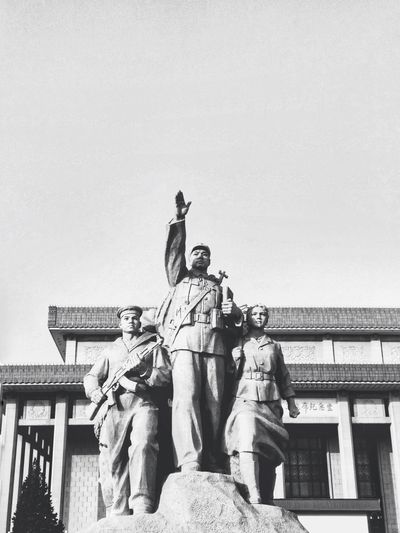
This day in history: May 16 Notification - Mao's Official Justification for the Cultural Revolution
The release of the May 16 Notification marks a significant moment in history, offering insights into Mao Zedong's rationale behind the Cultural Revolution in China. This event matters to the public as it provides a glimpse into a tumultuous period that profoundly shaped the country's political, social, and cultural landscape. As journalists consider coverage of this historical document, there are several compelling story angles to explore, appealing to a broad audience: The historical context and significance of the May 16 Notification in the context of the Cultural Revolution Analysis of Mao Zedong's motivations and objectives for launching the Cultural Revolution Personal narratives and experiences of individuals impacted by the Cultural Revolution The legacy and ongoing repercussions of the Cultural Revolution on contemporary Chinese society Reactions and interpretations of the May 16 Notification from historians and scholars Comparisons between Mao's vision for the Cultural Revolution and its actual outcomes As we reflect on the release of the May 16 Notification, journalists have an opportunity to delve into these complex narratives, shedding light on a pivotal chapter in China's history and its enduring ramifications. Connect with an Expert about China and the May 16 Notification : Wang Feng Professor of Sociology · UC Irvine Xuefei Ren Associate Professor · Michigan State University Linjie Chou Zanadu Founder of Global Foundation for Culture and Peace · Linjie Chou Zanadu Carrie Liu Currier Associate Professor and Department Chair · Texas Christian University To search our full list of experts visit www.expertfile.com Photo Credit: shark ovski

New research shines a light on how expert mapmakers at Ordnance Survey see the world differently
OS Remote Sensing Services survey team updating OS MasterMap using the latest aerial imagery (Image credit: OS) Aston University psychologists worked with Ordnance Survey to assess how surveyors use 3D aerial images when making maps Humans naturally assume light comes from above, but experienced surveyors can interpret visual cues to assess topography regardless of the light direction It is the first time it has been shown that experience can radically alter natural human assumptions about lighting and could improve surveyor training. Researchers at Aston University have found differences between experienced Ordnance Survey (OS) mapmakers and novices in the way that they interpret aerial images for mapmaking, which could lead to improved training processes for new recruits. OS is well known for its travel and walking maps, but is also responsible for maintaining Great Britain’s national geographic database. Every time a building is demolished or developed, or a new road and path built, the map must be updated. Aerial photographs are taken of the area that has changed, either from a plane or using drones, and expert mapmakers, known as remote sensing surveyors, will examine the images to identify change and accurately redraw the map of the area. Image pairs are presented stereoscopically, one to each eye, allowing the remote sensing surveyors to see in 3D and correctly assess the topography, such as ditches, hills and hedges. Led by Professor Andrew Schofield, a team from Aston University’s College of Health and Life Sciences, together with Dr Isabel Sargent, previously at OS, carried out a study to understand how remote sensing surveyors interpret the shadows and highlights in images. The researchers asked six trained remote sensing surveyors and six novices to assess 10,000 stereoscopic aerial images of hedges and ditches, which had been heavily masked with image distortions. The stereoscopic images the aerial surveyors use for mapmaking are usually taken on sunny days. The human brain is naturally wired to interpret light as coming from above. However, the light does not come from above in the OS aerial images, it depends on the position of the sun. In the UK, north of the equator, light comes slightly from the south, thus appearing to come from below in images viewed by the surveyors. The researchers wanted to see how manipulating the direction of the light would affect the surveyors. Professor Schofield and the team swapped the image pairs between the eyes in half of the trials, so that hedges might look like ditches, and ditches look like hedges. The images were also flipped vertically on half the trials, changing the direction of the light source. Expert surveyors were found to rely on the stereoscopic cues – the difference in images seen by the two eyes – when performing the task. Novices were more likely to rely on lighting cues – highlights and shadows – to judge the shape and relief of an object, and assumed, as is natural, that the lighting came from above. With the manipulated images, this meant that novices frequently made mistakes. Experts were more accurate, even when the images had been turned upside down, and some had learnt to assume that the light source came from the south, or below. This is the first time anyone has shown that the natural assumption that light comes from above, which is common amongst many animal species, can be changed through long term experience. The researchers say that it could be used to develop new visual training techniques for remote sensing surveyors. For example, intensive exposure to repeated, difficult images can improve performance via a process called perceptual learning. Professor Schofield said: “This is a very exciting result. Others have shown that the light-from-above assumption can be altered by a few degrees, but no one has ever found complete reversals following long term experience. Dr Sargent said: “This result will help Ordnance Survey to understand the expertise of their staff and improve surveyor training and procedures.” Remote sensing surveyor Andy Ormerod, who worked on the study, said: “This research proves that experienced remote sensing surveyors can see the world differently. Whereas non-surveyors are used to seeing the world from one perspective, our brains have learned to view the world as seen from aerial imagery.” Journal of Vision DOI:10.1167/jov.24.4.11


Aston University pharmaceutical spin-out company shortlisted in life sciences industry awards
MESOX is a spin-out from the pharmaceutics group at Aston Pharmacy School The company partners with pharmaceutical and biotechnology companies to bring challenging therapeutics to market It has been shortlisted in the Medilink Midlands Awards 2024. A spin-out company from Aston University’s pharmaceutics research group has been shortlisted for a life sciences industry award. The Medilink Midlands Awards aim to showcase the very best collaborations between industry, academia and the NHS across the Midlands. The company, MESOX, founded by Dr Ali Al-Khattawi, a lecturer in pharmaceutics at Aston Pharmacy School, is competing in the Start-Up category for newly established companies that show a promising future. With in-depth expertise in particle engineering for drug delivery and pharmaceutical spray drying, MESOX uses IP-protected carriers to improve the bioavailability and efficacy of pharmaceuticals, partnering with pharmaceutical and biotechnology companies to bring challenging therapeutics to market. Medilink Midlands provides specialist business support to boost the region’s economic output from the life sciences industry. Working alongside the Midlands Engine and other strategic alliances, it helps stimulate additional and value-added growth of the Midlands as a prosperous community for life sciences. The awards winners will be announced at a ceremony taking place on Thursday 9 May at the Athena in Leicester. To celebrate Medilink Midlands’ 20th year anniversary of delivering business support, one finalist will be announced as the 2024 ‘Winner of all Winners’ and presented with a £5,000 prize for innovation development. Dr Ali Al-Khattawi, founder and CEO of MESOX, said: “We are excited to be nominated as a finalist for this award, which is a testament to the innovative research at Aston University that has led to MESOX and a great way to recognise the efforts of our team. “MESOX is expediting the development of life-saving therapeutics through cutting-edge carrier technologies. Our vision is to be a leading research-based pharmaceutical company in the Midlands one day and we hope this opportunity brings us a step closer to this goal.” Luke Southan, technology transfer manager at Aston University, said: “Aston University’s School of Pharmacy has always been a hotbed of innovation and entrepreneurship. This is most often seen through our many students who end up running their own independent pharmacy stores, but it is also the school that has created the most Aston spinouts. “MESOX is the latest example of this, and it is a company that is on track to be generating significant revenue and region impact over the next five years. This award nomination evidences the potential the company has to offer.”
