
Experts Matter. Find Yours.
Connect for media, speaking, professional opportunities & more.

Unattainably Perfect: Idealized Images of Influencers Negatively Affect Users’ Mental Health
Filters, Adobe Photoshop, and other digital tools are commonly used by social media “influencers.” These celebrities or individuals have a large follower base and “influence” or hold sway over online audiences. This digital enhancement of images is well-documented anecdotally. Instagram, in particular, has come under growing scrutiny by the media in recent years for promoting and popularizing unattainably perfect or unrealistic representations of its influencers. What’s less understood is the appeal and the actual effect that these digitally enhanced images have on followers–particularly in terms of people’s feelings of self-worth and their mental wellbeing. A ground-breaking study by Goizueta Business School’s David Schweidel and Morgan Ward sheds new light on the real-world impact of digital enhancement, and what they find should be cause for significant concern. Downstream Consequences: Impressions Have Lasting Impact Across a series of five studies with a broad sample of participants and using AI-powered deep learning data analysis to parse individuals’ responses, Schweidel and Ward have unearthed a series of insights around the lure of these kinds of idealized images, and the negative “downstream consequences” that they have on other users’ self-esteem. “Going into the research, we hypothesized that micro-influencers who digitally manipulate their images, offering unrealistic versions of themselves, would be more successful at engaging with other users–getting more follows, likes, and comments from them. And we do find this to be the case, but that’s not all,” says Schweidel. He and Ward also discover that when users are exposed to these kinds of images, they make comparisons between themselves and the enhanced influencers; comparisons that leave them feeling lacking, envious, and often inadequate in some way. In terms of mental health and wellbeing, this is alarming, says Ward. Our research shows unequivocally that when followers consume idealized versions of popular figures on social media there is a social comparison process that results in these users experiencing negative feelings and a substantial decline in their state of self-esteem. On the basis of these insights, is Meta–the owner of Facebook and Instagram–likely to take action to limit the use of digital enhancement on its platforms and apps any time soon? Unlikely, say Schweidel and Ward. “Meta seems to be fully aware of the deleterious effects that Instagram has on its users. However, the success of Instagram–and that of the brands and influencers that appear on the app–is fueled by increased consumer engagement: the very engagement that this kind of digital enhancement of images drives. So the incentive is there to maintain the practices that keep users engaged, even if there’s a trade-off in their emotional and mental health.” This is a fascinating and important topic - and if you're a reporter looking to know, then let us help. David A. Schweidel is professor of marketing at Emory University’s Goizueta Business School. He is an expert in the areas of customer relationship management and social media analytics. Morgan Ward is an assistant professor of marketing at Emory University’s Goizueta Business School and is an expert in consumer behavior. Both experts are available to speak with media - simply click on an icon to arrange a discussion today.



Aston University launches community project to promote healthy lives in East Birmingham
The Knowledge Exchange project is led by Aston University with Birmingham Community Healthcare NHS Foundation Trust, in partnership with Citizens UK It aims to identify local barriers that lead to poor health outcomes A total of £6,390 has been awarded to five projects to support local residents. Aston University and Birmingham Community Healthcare NHS Foundation Trust, in partnership with Citizens UK, have launched a community project to identify local barriers that lead to poor health outcomes. Dr Céline Benoit (Sociology and Policy), Dr Alexis Paton (Sociology and Policy), Dr Angela Jeffery (RKE) and Aisha Masood (RKE) have been leading on the Knowledge Exchange project in East Birmingham to help improve health and wellbeing. On 17 March, the team hosted the first community sandpit at Aston University, where a number of community-led organisations and charities came together to identify small-scale projects to support local residents and promote healthy lives. A total of £6,390 was awarded to five projects which will submit a report by 31 July 2022 and meet again in the autumn to share their journeys with each other as well as representatives from the NHS and Birmingham City Council. Dr Céline Benoit, associate dean for public engagement for the College of Business and Social Sciences at Aston University, said: “It was such a privilege to host a community sandpit at Aston University and have the NHS and local organisations talk to one another and come up with joint projects to help promote health and wellbeing in East Birmingham. “It was truly inspiring to see how many brilliant projects were put forward. “It not only helped us get a better understanding of the challenges local residents face when it comes to health and accessing healthcare services, but it was also a great reminder of how much we can achieve when we work collaboratively”.


ChristianaCare MICU becomes first in United States to renew Beacon Award for Excellence for fifth-consecutive three-year cycle ChristianaCare’s Medical Intensive Care Unit (MICU) has earned an unprecedented honor from the American Association of Critical-Care Nurses. Among the thousands of intensive care units in the United States, ChristianaCare’s MICU is the first unit in history to earn a Beacon Award for Excellence from the association, also known as AACN, five times in a row. The Beacon Award is one of the highest achievements in nursing. The recognition lauds hospital units that employ evidence-based practices to improve patient and family outcomes. The award provides gold, silver and bronze levels of recognition to hospital units that exemplify excellence in professional practice, patient care and outcomes. Of the six Beacon Award-winning patient care units currently in the state of Delaware, five are at ChristianaCare: MICU (gold – five-time winner). Cardiovascular Critical Care Complex (gold – three-time winner). Transitional Medical Unit (silver). Surgical Critical Care Complex (silver). Transitional Surgical Unit (silver). ChristianaCare was one of 34 hospitals in the nation in 2021 with multiple units receiving Beacon Awards. Beacon Award designations are active for three years. “Through their relentless and uncompromising pursuit to deliver care that is nonpareil, the nurses of ChristianaCare’s MICU have become the paragon of what our profession can accomplish,” said Ric Cuming, EdD, MSN, RN, NEA-BC, FAAN, ChristianaCare’s chief nurse executive and president of ChristianaCare HomeHealth. “The success of our ChristianaCare MICU, even in the face of this pandemic, also has inspired our health system’s other intensive care units to achieve unprecedented gains in safety and quality that have been recognized with the AACN’s Beacon Award, the touchstone by which all critical care nursing excellence and quality are measured.” Success in caring for patients amidst COVID-19 ChristianaCare’s values of love and excellence are at the heart of the 24-bed MICU at Christiana Hospital, which holds the most Beacon Awards in Delaware. This year’s award is especially meaningful on the heels of yet another difficult surge of COVID-19. “It is a testament to our nurses and the entire care team that we continued to reach milestones in patient safety and satisfaction even during the COVID-19 pandemic,” said Carol Ritter, MSN, RN, CCRN-K, CNML, who has been nurse manager on the MICU for 10 years and a leader on the unit during all of its Beacon Award wins. “Everyone brings a level of expertise to the unit. We truly serve together.” Beacon awards celebrate the professional dedication that a nursing team demonstrates in going above and beyond to provide respectful, expert care. “Meaningful recognition takes on even greater relevance and importance as we continue to meet the challenges of the COVID-19 pandemic,” said AACN President Beth Wathen, MSN, RN, CCRN-K. “Being recognized as a Beacon unit underscores these teams’ ongoing commitment to providing safe, patient-centered and evidence-based care to patients and families. This achievement is a tremendous honor to those who have worked so hard to achieve excellence in patient care and positive patient outcomes.” ChristianaCare is one of only 152 health care institutions in the nation and the only in Delaware to have gold-level units. In 2008, the MICU was the first unit in the state to receive the Beacon Award. MICU’s culture of continuous improvement The MICU’s commitment to data-driven, evidence-based care proved especially valuable during the pandemic’s early days. Prone positioning, a technique to help patients with acute respiratory distress syndrome (ARDS) to breathe better, had been a longtime practice in ChristianaCare’s ICU. ChristianaCare critical care nurses Maureen Seckel, MSN, APRN, ACNS-BC, CCNS, FCCM, FCNS, and Dannette Mitchell, MSN, APRN, ACNS-BC, CCRN, published an article in AACN Advanced Critical Care that described ChristianaCare’s pioneering adoption of this technique, which ultimately became standard practice nationally in the treatment of patients with COVID-19 and ARDS. “On our unit, we empower the team to provide evidence-based care and have the tools to guide the practice,” Seckel said. “Because of this we were able to incorporate a highly effective, life-saving measure into COVID-19 care early in the pandemic.” Continuous improvement is a hallmark of the unit. The MICU has seven Comprehensive Unit-based Safety Program teams that follow data-collection processes to view trends and compare them to national standards to improve care and outcomes. “The whole unit is involved in collecting data to assess and make changes,” said MICU nurse Olivia Ross, BSN, RN, CCRN. Among the MICU’s accomplishments are excellent outcomes in preventing common hospital-acquired infections, even during the pandemic: Zero instances of catheter-associated urinary tract infections in three years. Zero instances of central line bloodstream infections in one year. The unit’s dedication to being exceptional today and even better tomorrow also focused inward during the pandemic. During a time of constant change, the team recognized the need for support to handle the unprecedented stress and strain of the pandemic. “To give the most vulnerable patients the highest levels of care on a consistent basis, we needed to take care of ourselves and one another too,” Ritter said. Ritter and team leaders committed to open-door policies throughout the pandemic, and they partnered with ChristianaCare’s Center for WorkLife Wellbeing to enable licensed psychologists to round on the unit, offering real-time check-ins with caregivers to provide support. The Beacon Award has been a resounding lift and reward for the MICU team members. “Having this recognition, especially during times of distress in the community and the world, signifies excellent nursing care,” said MICU nurse Paige Merring, MSN, RN, CCRN. “And to me it signifies an amazing team and great outcomes, which is the primary purpose of why we are all here.”



Dr. Janice Nevin named among Modern Healthcare’s 2022 ‘Top 25 Women in Health Care’
Nevin praised for her work expanding ChristianaCare’s efforts in health equity, value-based care and emerging technology ChristianaCare President and CEO Janice E. Nevin, M.D., MPH, has been named one of Modern Healthcare’s Top 25 Women in Healthcare for 2022. This is the second time Dr. Nevin has received this distinction. Modern Healthcare chose awardees – female executives from different sectors of the health care industry – who are guiding health care improvement by influencing policy and care delivery models across the country. A panel of judges and the top editors of Modern Healthcare made the selections. The publication focused on Dr. Nevin’s leadership in ChristianaCare’s use of innovation and technology to aid in the battle against COVID-19 and improve health equity. It also called attention to her leadership in ChristianaCare’s collaboration with Highmark Health; through a new joint venture company, ChristianaCare and Highmark are combining their expertise and capabilities to create better health and to make health care more affordable for everyone by taking costs out of the system. “I am deeply gratified by this award, but it is even more so a recognition of the incredible work all of ChristianaCare’s caregivers do every day to create better health,” said Dr. Nevin. “Living our values of love and excellence, we are transforming care and becoming not just a health system—but a system that truly impacts health.” Dr. Nevin has overseen growth at ChristianaCare during the past year that includes a joint venture with AccentCare (formerly Seasons Hospice & Palliative Care) to expand in-home hospice and palliative care services throughout Delaware and a recently announced letter of intent to acquire Crozer Health, as well as the continued integration into the health system of Union Hospital in Cecil County, Maryland, which joined ChristianaCare in January 2020. At the same time, she has worked tirelessly to ensure the system continued its tradition of clinical excellence while maintaining financial health and stability. This year, ChristianaCare was recognized for the second consecutive year by Healthgrades as one of America’s 50 Best Hospitals and by Forbes as one of the best health systems to work for in the United States. Dr. Nevin continues to promote caregiver wellbeing and health equity. For the work of ChristianaCare’s Center for WorkLife Wellbeing to support its caregivers, ChristianaCare earned a 2021 Joy in Medicine recognition from the American Medical Association. The American Hospital Association’s Institute for Diversity and Health Equity named ChristianaCare a 2021 Carolyn Boone Lewis Equity of Care Award honoree for demonstrating health equity as a priority across the organization. “ChristianaCare is lucky to have Dr. Nevin’s leadership,” said Nicholas M. Marsini, Jr., chair of the ChristianaCare board of directors. “Having Modern Healthcare recognize her extraordinary efforts and passion is a wonderful acknowledgement of what we see on an ongoing basis. Dr. Nevin is incredibly invested in the wellbeing of ChristianaCare’s workforce, the communities we serve and the future of the U.S. healthcare system.” The recognition also highlighted Dr. Nevin’s work in promoting gender equity – from building an executive cabinet evenly split between women and men to the creation of ChristianaCare’s Gender Equity Taskforce, which focuses on issues like pay equity and leadership access. The profiles of all the winners were featured in the February 21 issue of Modern Healthcare.

(WILMINGTON, Del. – March 15, 2022) For the second consecutive year, Forbes magazine has ranked ChristianaCare as one of the best large health systems to work for in the United States. ChristianaCare ranked as the 29th best health system overall, within Forbes’ list of the 500 best large employers in the United States. ChristianaCare was the only health system in Delaware to make Forbes’ list. “At ChristianaCare, we anticipate the needs of others, help with compassion and generosity, and show respect to everyone,” said Neil Jasani, M.D., MBA, FACEP, chief people officer at ChristianaCare. “These values and behaviors start with our workforce, as we create a supportive environment that enables our caregivers to find joy in their work and provide consistently excellent care to everyone we serve.” While the pandemic has taken a significant toll on the health care workforce nationally, ChristianaCare has been recognized for its success in supporting its caregivers. The American Medical Association recently recognized ChristianaCare with the highest honor in its Joy in Medicine program, which recognizes health systems that demonstrate a commitment to preserving the wellbeing of health care team members by engaging in proven efforts to combat work-related stress and burnout. This work has been largely driven by ChristianaCare’s innovative Center for WorkLife Wellbeing, which was founded in 2016 to tackle the growing national problem of burnout in health care and help caregivers to reconnect with joy and meaning in their work. All employees at ChristianaCare are referred to as “caregivers.” Other highlights of how ChristianaCare creates a great place to work include: Benefits that include medical, dental and vision coverage, as well as a wellness incentive program and free healthy lifestyle coaching and care management, as well as access to ChristianaCare’s innovative and always-on virtual primary care, which makes health care options for busy caregivers more convenient than ever. Twelve weeks of paid parental leave for the birth or adoption of a child. An organizational commitment to anti-racism and a robust Inclusion and Diversity program that includes 10 employee resource groups (ERGs). Forbes ranks ChristianaCare as the No. 1 overall employer for diversity and inclusion in Delaware and No. 14 among U.S. health systems nationwide. A caregiver recognition program that supports a culture of gratitude and rewards caregivers who exemplify the core values of ChristianaCare. Care@Work, which provides backup care services when working families are faced with a disruption in regular childcare or other dependent care coverage. Free medical plan option for caregivers under certain income thresholds. Competitive pay at all levels. ChristianaCare was the first health system in Delaware to adopt a $15 minimum wage, in 2018. To create the list of America’s Best Large Employers, Forbes partnered with the market research firm Statista, which surveyed 60,000 Americans working for businesses with at least 1,000 employees. All responses were anonymous. Using a scale of zero to 10, the respondents rated how likely they were to recommend their employer to others. The participants also nominated organizations other than their own. The final ranking features companies with the most recommendations.

Aston Institute of Health and Neurodevelopment launches livestreamed public lecture series
The Aston Institute of Health and Neurodevelopment (IHN) are to host their first livestreamed public lecture in a new series: Molecules to Minds on Aston University’s digital channel - Aston Originals on Wednesday 16 February 2022. The livestream will see Dr Rachel Shaw present her lecture ‘Understanding and improving staff wellbeing in paediatric intensive care: A partnership between Birmingham Women’s & Children’s NHS Foundation NHS Trust & Aston University to prioritise workplace wellbeing’. Dr Shaw will present the findings of a project in which she investigated the wellbeing of staff working in the Paediatric Intensive Care Unit (PICU) at Birmingham Children’s Hospital. The research was funded by Birmingham Women’s & Children’s NHS Foundation NHS Trust Paediatric Intensive Care Charities. She said: “There is a lot of evidence finding that levels of stress, burnout and symptoms of post-traumatic stress are higher among staff working in paediatric intensive care than in groups of other healthcare professionals. “The Covid-19 pandemic has only further highlighted the need to care for our healthcare staff to improve their own wellbeing, but also, so that they are able to better care for their patients.” Dr Shaw will present her findings of what wellbeing means to PICU staff, the kinds of challenges to their wellbeing they experience at work and at home, the things that hinder their wellbeing in those situations and the things that can help. The one hour livestream will include a Q&A and a roundtable discussion with clinical colleagues from Birmingham Children’s Hospital, looking at key learnings taken both professionally & personally from the project, concluding with next steps and hopes for the future. Dr Shaw added: “We plan to use staff wish lists, together with psychological evidence about what is likely to be successful, to make proposals for what might create working environments that are conducive to workforce wellbeing to create better, sustainable support for PICU staff in the future.” The live stream will take place at 16:00 – 17:00 GMT on Wednesday 16 February, you can register for the event on Eventbrite.


UConn expert explains how to get the best from this holiday season
While this holiday season might feel a little more like the good 'ole times for a lot of families, others are scaling back plans amidst a COVID resurgence. Regardless of how we choose to celebrate, for many this season also brings stress, pressure, and family drama alongside merriment and holiday cheer. But UConn's experts are here to help you get the best out of the holidays this year -- educational psychologist Dr. Sandra Chafouleas offers some tips in a recent interview with CNN: Whenever and however you celebrate, having a holiday season is important for wellbeing, Chafouleas said. Holidays set aside time for relaxation, reflection and reliable traditions -- a trio that has become increasingly important as the world has gotten more chaotic and less predictable, Chafouleas said. Whether you approach them from a spiritual, social or cultural perspective, celebrating holidays can offer a "super big dose" of positive emotions like joy, gratitude, serenity, hope, pride and love, she added. Holiday gatherings can also be a mixed bag of emotions. "The way I do things versus the way we've always done things -- that's just a concoction for some disagreements," Chafouleas said. .................... Small changes can make a big difference, both experts said. For Chafouleas, it can look like identifying which part of the traditions feel like obligations rather than celebrations. "I used to make a million cookies with my kids, especially when they were younger, and I just don't enjoy that anymore, but my girls really like to do that," Chafouleas said. The work and the mess afterward started to take away from the joy of the traditions. "So, I stepped away from that. I keep it simple," Chafouleas said. "They do it, and I get to eat them and participate in the experience of that ritual without have to be the one responsible." Sandra Chafouleas is a UConn Board of Trustees Distinguished Professor of Educational Psychology and an expert on social-emotional well-being. She's available to lend her holiday ritual expertise to your reporting -- just click her icon to arrange an interview today.


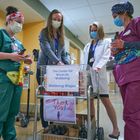
ChristianaCare recognized by American Medical Association with 2021 Joy in Medicine distinction
ChristianaCare one of only 44 nationwide to receive the distinction; one of only five to receive the highest level – Gold Recognition (WILMINGTON, Del. – Oct. 7, 2021) ChristianaCare has been named a recipient of the American Medical Association’s Joy in MedicineTM Health System Recognition Program. The distinction recognizes health systems that demonstrate a commitment to preserving the wellbeing of health care team members by engaging in proven efforts to combat work-related stress and burnout. The American Medical Association awarded ChristianaCare a “Gold Recognition” – the highest level within the program. Only 44 health systems nationwide received the Joy in Medicine distinction, with only four other health systems along with ChristianaCare achieving the Gold Recognition. “When caregivers feel supported and fulfilled in their work, the quality of both their experience and their patient’s experience improves,” said Heather Farley, M.D., MHCDS, chief wellness officer and head of ChristianaCare’s Center for WorkLife Wellbeing. “That’s why, when the COVID-19 pandemic struck, we deepened our investment of resources to support our caregivers. While there’s still a long way to go, we are grateful to receive this recognition as it affirms our commitment to helping our caregivers foster meaning, connection and joy in work and in life.” ChristianaCare received the “Gold Recognition” for achieving six criteria: An organization-wide commitment to improving physician wellbeing. An assessment of the costs of physician burnout. Evidence-based interventions to reduce and eliminate burnout. Leadership commitment to address areas for improvement. Interventions to improve teamwork. Structured programs that actively engage doctors to cultivate community at work. These criteria align with ChristianaCare’s commitment to support its caregivers in alignment with the organization’s core values of love and excellence. ChristianaCare has implemented structured ways of working that encourages leaders to create environments where their workers feel safe asking questions and feel empowered to identify and solve problems. ChristianaCare also uses numerous surveys and assessments to track progress in improving the wellbeing and experience of caregivers. ChristianaCare’s Unique Center for WorkLife Wellbeing ChristianaCare established the Center for WorkLife Wellbeing in 2016 to develop support systems to enable clinicians to reconnect with the joy and meaning in medicine. “We recognized the growing problem of stress and burnout in health care, and we made a decision to tackle it head-on,” said Janice E. Nevin, M.D., MPH, ChristianaCare president and CEO. “The work of our psychologists, researchers, clinicians and peer supporters in the Center for WorkLife Wellbeing is built on the understanding that when we care for ourselves, we are better able to care for others, resulting in decreased medical errors and a better experience of care for everyone involved.” The Center soon expanded its mission to support all of ChristianaCare’s caregivers, including those who don’t work in clinical roles. The Center also has received national recognition for its expertise and leadership in the field of workplace wellbeing. Throughout the pandemic, the Center for WorkLife Wellbeing has proactively shared a variety of resources to support caregivers as they work to provide safe, effective care and reduce the spread of COVID-19. This includes: The Care for the Caregiver program, which provides confidential individual peer support and group support to caregivers when they experience stress related to patient care or the workplace. Peer supporters and organizational leaders receive training so they can provide psychological first aid to caregivers whom they recognize are struggling as well as connect them to helpful resources if needed. Emotional support through mindfulness resources and regular rounds where the Center’s experts can check on staff wellbeing. OASIS Rooms, which are quiet sanctuaries inside the hospital where caregivers can go to take a break, de-stress, meditate or enjoy a chair massage. 24/7 mental health services and programs to help caregivers maintain healthy habits including proper exercise, sleep and nutrition. Fitness centers that are free for all caregivers to use and provide easy access to exercise and fitness programs. “I always use the analogy, you can’t take the canary out of the coal mine and teach it to be more resilient and then put it back in the same coal mine and expect it to survive,” Dr. Farley said. “You actually have to change the coal mine – the environment surrounding our caregivers and clinicians. That’s what we’re doing in the Center for WorkLife Wellbeing.” Solutions to a National Problem A national study examining the experiences of physicians and other health care workers who worked in health systems during the COVID-19 pandemic found that 38% self-reported experiencing anxiety or depression, while 43% suffered from work overload and 49% had burnout. “The COVID-19 pandemic has placed extraordinary stress on physicians and other health care professionals,” said American Medical Association President Gerald E. Harmon, M.D. “While it is always important for health systems to focus on the wellbeing of care teams, the imperative is greater than ever as acute stress from combatting the COVID-19 pandemic has contributed to higher rates of work overload, anxiety and depression. The health systems we recognize today are true leaders in promoting an organizational response that makes a difference in the lives of the health care workforce.” Launched in 2019, the Joy in Medicine Health System Recognition Program is a component of the American Medical Association’s practice transformation efforts, an ambitious initiative to advance evidence-based solutions to address the physician burnout crisis. Candidates for the program were evaluated according to their documented efforts to reduce work-related burnout through system-level drivers. Scoring criteria were based on demonstrated competencies in commitment, assessment, leadership, efficiency of practice environment, teamwork and support. About ChristianaCare Headquartered in Wilmington, Delaware, ChristianaCare is one of the country’s most dynamic health care organizations, centered on improving health outcomes, making high-quality care more accessible and lowering health care costs. ChristianaCare includes an extensive network of primary care and outpatient services, home health care, urgent care centers, three hospitals (1,299 beds), a freestanding emergency department, a Level I trauma center and a Level III neonatal intensive care unit, a comprehensive stroke center and regional centers of excellence in heart and vascular care, cancer care and women’s health. It also includes the pioneering Gene Editing Institute. ChristianaCare is nationally recognized as a great place to work, rated by Forbes as the 5th best health system to work for in the United States and by IDG Computerworld as one of the nation’s Best Places to Work in IT. ChristianaCare is rated by HealthGrades as one of America’s 50 Best Hospitals and continually ranked among the nation’s best by Newsweek and other national quality ratings. ChristianaCare is a nonprofit teaching health system with more than 260 residents and fellows. With its groundbreaking Center for Virtual Health and a focus on population health and value-based care, ChristianaCare is shaping the future of health care. #####

Timpson CEO joins Aston University as visiting professor
• James Timpson OBE has been the chief executive of Timpson since 2011 • He will work within Aston University’s College of Business and Social Sciences to develop connections in personal financial wellbeing and tax • Professor Timpson will engage with students about values in leadership and will deliver a public lecture on corporate kindness. The CEO of retail chain Timpson has joined Aston University as a visiting professor within the College of Business and Social Sciences. James Timpson will work closely with Aston University’s head of accounting to develop connections between Aston Business School and the tax and financial wellbeing industry over the next three years. In his first 12 months he will engage with both first year and pre-University students about University life, running a business and values in leadership and corporate kindness, delivering a public lecture around the latter reflecting Timpson’s work with ex offenders. He will also have the opportunity to talk to Masters students who have interests in corporate cultural development alongside Aston University’s Work and Organizations and Strategy departments and its MBA programme. Professor Timpson will also work with colleagues at Aston Business School to develop connections on his interests related to the University’s research agenda, such as TaxWatch, and connect Timpson with the student placements team to explore possible opportunities for student third year placements on MSc and MBA project work. Professor Timpson said: “I am excited to join Aston University as a visiting professor and to pass on some of the knowledge and connections I have built over the last 27 years in business. “I am looking forward to discussing the mechanisms of business with the business leaders of tomorrow at Aston University and about culture and corporate kindness at the University and its activity and plans in this area. “The Timpson Foundation specialises in the recruitment of marginalised groups within society as well as supporting numerous other socially minded projects. Approximately 10 per cent of our workforce is made up of people who have criminal convictions. We believe in giving people a second chance.” Professor Andy Lymer, head of accounting at Aston Business School, said: “I am really looking forward to working with James. “This well-deserved award recognises the distinguished contribution that he has made and continues to make to the business community. We are privileged to have a business leader of James' stature join our faculty. “As a university that values highly practical experience, his wide and varied track record at boardroom level will provide invaluable stimulus and advice for our students and staff alike.”

Covering World Breastfeeding Week? Our experts are here to help
August 1-7 is World Breastfeeding Week, and the University of Mary Washington has the ideal expert for any journalist looking to learn more or cover this important topic. Did you know that breastfeeding is one of the top maternal priorities for many organizations, including the World Health Organization (WHO), the American Academy of Pediatrics (AAP) and the Centers for Disease Control and Prevention (CDC)? Assistant Professor of Communication Elizabeth Johnson-Young has done extensive research on women’s intentions to breastfeed and how the communication they receive during pregnancy and postpartum from various sources such as doctors, lactation consultants, friends and family, magazines, books and parenting groups can impact the decision to breastfeed. She's also explored the connections between breastfeeding and body satisfaction. Dr. Elizabeth Johnson-Young is a published expert on health communication, especially maternal and family health. She is ready to help if you are looking to cover this topic - simply click on her icon now to arrange an interview today.

