Experts Matter. Find Yours.
Connect for media, speaking, professional opportunities & more.

Online Dating in 2025: Are Apps Bringing Us Closer or Just Keeping Us Swiping?
In 2025, “We met on an app” is the most ordinary love story in the world. Swiping has replaced setups and chance encounters as the primary way couples connect in many countries. But as online dating becomes normal, a new question is emerging: Are app-born relationships actually as happy and secure as we think? Licensed Marriage & Family Therapist Gaea Woods, an expert in the Offline.now digital wellness directory, sees both sides in her practice. “Online dating is just a tool,” she says. “It can absolutely bring people together who would never have met otherwise. But the way we use it — the constant options, the ghosting, the parallel conversations — can quietly undermine trust even after you’ve deleted the app.” Woods says that she hears tension from from clients: “Singles tell me, ‘I hate the apps, but I don’t know another way to meet people.’ Couples tell me, ‘We met on an app, and I’m grateful — but there’s this low-level anxiety: Would you still be with me if you kept swiping?’ The technology amplifies questions that were always there about choice, commitment and comparison.” She emphasizes that how couples talk about their “app origin story” matters more than where they met. Unspoken assumptions — about whether exes stay in your DMs, if profiles stay active “just in case,” or how much flirting online is acceptable — often fuel insecurity more than the apps themselves. “Online dating is here to stay,” Woods says. “The question isn’t ‘Is it bad?’ It’s, ‘How do we use it in a way that supports real intimacy instead of keeping us one foot in and one foot out?’” Featured Expert Gaea Woods, MA, LMFT – Licensed Marriage & Family Therapist specializing in digital dependency, intimacy and communication in modern relationships. She can speak to app fatigue, the “online dating effect,” how apps change expectations around choice and commitment, and the kinds of conversations couples need to have once the swipe turns into something serious. Expert interviews can be arranged through the Offline.now media team.


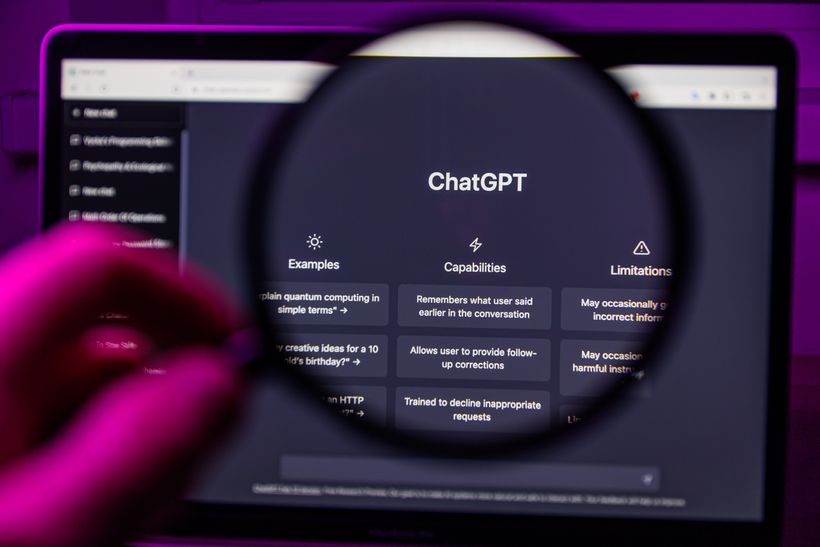
With OpenAI’s latest release, GPT-5.2, AI has crossed an important threshold in performance on professional knowledge-work benchmarks. Peter Evans, Co-Founder & CEO of ExpertFile, outlines how these technologies will fundamentally improve research communications and shares tips and prompts for PR pros. OpenAI has just launched GPT-5.2, describing it as its most capable AI model yet for professional knowledge work — with significantly improved accuracy on tasks like creating spreadsheets, building presentations, interpreting images, and handling complex multistep workflows. And based on our internal testing, we're really impressed. For communications professionals in higher education, non-profits, and R&D-focused industries, this isn’t just another tech upgrade — it’s a meaningful step forward in addressing the “research translation gap” that can slow storytelling and media outreach. According to OpenAI, GPT-5.2 represents measurable gains on benchmarks designed to mirror real work tasks. In many evaluations, it matches or exceeds the performance of human professionals. Also, before you hit reply with “Actually, the best model is…” — yes, we know. ChatGPT-5.2 isn’t the only game in town, and it’s definitely not the only tool we use. Our ExpertFile platform uses AI throughout, and I personally bounce between Claude 4.5, Gemini, Perplexity, NotebookLM, and more specialized models depending on the job to be done. LLM performance right now is a full-contact horserace — today’s winner can be tomorrow’s “remember when,” so we’re not trying to boil the ocean with endless comparisons. We’re spotlighting GPT-5.2 because it marks a meaningful step forward in the exact areas research comms teams care about: reliability, long-document work, multi-step tasks, and interpreting visuals and data. Most importantly, we want this info in your hands because a surprising number of comms pros we meet still carry real fear about AI — and long term, that’s not a good thing. Used responsibly, these tools can help you translate research faster, find stronger story angles, and ship more high-quality work without burning out. When "Too Much" AI Power Might Be Exactly What You Need AI expert Allie K. Miller's candid but positive review of an early testing version of ChatGPT 5.2 highlights what she sees as drawbacks for casual users: "outputs that are too long, too structured, and too exhaustive." She goes on to say that in her tests, she observed that ChatGPT-5,2 "stays with a line of thought longer and pushes into edge cases instead of skating on the surface." Fair enough. All good points that Allie Miller makes (see above). However, for communications professionals, these so-called "downsides" for casual users are precisely the capabilities we need. When you're assessing complex research and developing strategic messaging for a variety of important audiences, you want an AI that fits Miller's observation that GPT-5.2 feels like "AI as a serious analyst" rather than "a friendly companion." That's not a critique of our world—it's a job description for comms pros working in sectors like higher education and healthcare. Deep research tools that refuse to take shortcuts are exactly what research communicators need. So let's talk more specifically about how comms pros can think about these new capabilities: 1. AI is Your New Speed-Reading Superpower for Research That means you can upload an entire NIH grant, a full clinical trial protocol, or a complex environmental impact study and ask the model to highlight where key insights — like an unexpected finding — are discussed. It can do this in a fraction of the time it would take a human reader. This isn’t about being lazy. It’s about using AI to assemble a lot of tedious information you need to craft compelling stories while teams still parse dense text manually. 2. The Chart Whisperer You’ve Been Waiting For We’ve all been there — squinting at a graph of scientific data that looks like abstract art, waiting for the lead researcher to clarify what those error bars actually mean. Recent improvements in how GPT-5.2 handles scientific figures and charts show stronger performance on multimodal reasoning tasks, indicating better ability to interpret and describe visual information like graphs and diagrams. With these capabilities, you can unlock the data behind visuals and turn them into narrative elements that resonate with audiences. 3. A Connection Machine That Finds Stories Where Others See Statistics Great science communication isn’t about dumbing things down — it’s about building bridges between technical ideas and the broader public. GPT-5.2 shows notable improvements in abstract reasoning compared with earlier versions, based on internal evaluations on academic reasoning benchmarks. For example, teams working on novel materials science or emerging health technologies can use this reasoning capability to highlight connections between technical results and real-world impact — something that previously required hours of interpretive work. These gains help the AI spot patterns and relationships that can form the basis of compelling storytelling. 4. Accuracy That Gives You More Peace of Mind...When Coupled With Human Oversight Let’s address the elephant in the room: AI hallucinations. You’ve probably heard the horror stories — press releases that cited a study that didn’t exist, or a “quote” that was never said by an expert. GPT-5.2 has meaningfully reduced error rates compared with its predecessor, by a substantial margin, according to OpenAI Even with all these improvements, human review with your experts and careful editing remain essential, especially for anything that will be published or shared externally. 5. The Speed Factor: When “Urgent” Actually Means Urgent With the speed of media today, being second often means being irrelevant. GPT-5.2’s performance on workflow-oriented evaluations suggests it can synthesize information far more quickly than manual review, freeing up a lot more time for strategic work. While deeper reasoning and longer contexts — the kinds of tasks that matter most in research translation — require more processing time and costs continue to improve. Savvy communications teams will adopt a tiered approach: using faster models of AI for simple tasks such as social posts and routine responses, and using reasoning-optimized settings for deep research. Your Action Plan: The GPT-5.2 Playbook for Comms Pros Here’s a tactical checklist to help your team capitalize on these advances. #1 Select the Right AI Model for the Job: Lowers time and costs • Use fast, general configurations for routine content • Use reasoning-optimized configurations for complex synthesis and deep document understanding • Use higher-accuracy configurations for high-stakes projects #2 Find Hidden Ideas Beyond the Abstract: Deeper Reasoning Models do the Heavy Work • Upload complete PDFs — not just the 2-page summary you were given • Use deeper reasoning configurations to let the model work through the material Try these prompts in ChatGPT5.2 “What exactly did the researchers say about this unexpected discovery that would be of interest to my <target audience>? Provide quotes and page references where possible.” “Identify and explain the research methodology used in this study, with references to specific sections.” “Identify where the authors discuss limitations of the study.” “Explain how this research may lead to further studies or real-world benefits, in terms relatable to a general audience.” #3 Unlock Your Story Leverage improvements in pattern recognition and reasoning. Try these prompts: “Using abstract reasoning, find three unexpected analogies that explain this complex concept to a general audience.” “What questions could the researchers answer in an interview that would help us develop richer story angles?” #4 Change the Way You Write Captions Take advantage of the way ChatGPT-5.2 translates processes and reasons about images, charts, diagrams, and other visuals far more effectively. Try these prompts: Clinical Trial Graphs: “Analyze this uploaded trial results graph upload image. Identify key trends, and comparisons to controls, then draft a 150-word donor summary with plain-language explanations and suggested captions suitable for donor communications.” Medical Diagrams: “Interpret these uploaded images. Extract diagnostic insights, highlight innovations, and generate a patient-friendly explainer: bullet points plus one visual caption.” A Word of Caution: Keep Experts in the Loop to Verify Information Even with improved reliability, outputs should be treated as drafts. If your team does not yet have formal AI use policies, it's time to get started, because governance will be critical as AI use scales in 2026 and beyond. A trust-but-verify policy with experts treats AI as a co-pilot — helpful for heavy lifting — while humans remain accountable for approval and publication. The Importance of Humans (aka The Good News) Remember: the future of research communication isn’t about AI taking over — it’s about AI empowering us to do the strategic, human work that machines cannot. That includes: • Building relationships across your institution • Engaging researchers in storytelling • Discovering narrative opportunities • Turning discoveries into compelling narratives that influence audiences With improvements in speed, reasoning, and reliability, the question isn’t whether AI can help — it’s what research stories you’ll uncover next to shape public understanding and impact. FAQ How is AI changing expectations for accuracy in research and institutional communications? AI is shifting expectations from “fast output” to defensible accuracy. Better reasoning means fewer errors in research summaries, policy briefs, and expert content—especially when you’re working from long PDFs, complex methods, or dense results. The new baseline is: clear claims, traceable sources, and human review before publishing. ⸻ Why does deeper AI reasoning matter for communications teams working with experts and research content? Comms teams translate multi-disciplinary research into messaging that must withstand scrutiny. Deeper reasoning helps AI connect findings to real-world relevance, flag uncertainty, and maintain nuance instead of flattening meaning. The result is work that’s easier to defend with media, leadership, donors, and the public—when paired with expert verification. ⸻ When should communications professionals use advanced AI instead of lightweight AI tools? Use lightweight tools for brainstorming, social drafts, headlines, and quick rewrites. Use advanced, reasoning-optimized AI for high-stakes deliverables: executive briefings, research positioning, policy-sensitive messaging, media statements, and anything where a mistake could create reputational, compliance, or scientific credibility risk. Treat advanced AI as your “analyst,” not your autopilot. ⸻ How can media relations teams use AI to find stronger story angles beyond the abstract? AI can scan full papers, grants, protocols, and appendices to surface where the real story lives: unexpected findings, practical implications, limitations, and unanswered questions that prompt great interviews. Ask it to map angles by audience (public, policy, donors, clinicians) and to point to the exact sections that support each angle. ⸻ How should higher-ed comms teams use AI without breaking embargoes or media timing? AI can speed prep work—backgrounders, Q&A, lay summaries, caption drafts—before embargo lifts. The rule is simple: treat embargoed material like any sensitive document. Use approved tools, restrict sharing, and avoid pasting embargoed text into unapproved systems. Use AI to build assets early, then finalize post-approval at release time. ⸻ What’s the best way to keep faculty “in the loop” while still moving fast with AI? Use AI to produce review-friendly drafts that reduce load on researchers: short summaries, suggested quotes clearly marked as drafts, and a checklist of claims needing verification (numbers, methods, limitations). Then route to the expert with specific questions, not a wall of text. This keeps approvals faster while protecting scientific accuracy and trust. ⸻ How should teams handle charts, figures, and visual data in research communications? AI can turn “chart confusion” into narrative—if you prompt for precision. Ask it to identify trends, group comparisons, and what the figure does not show (limitations, missing context). Then verify with the researcher, especially anything involving significance, controls, effect size, or causality. Use the output to write captions that are accurate and accessible. ⸻ Do we need an AI Use policy in comms and media relations—and what should it include? Yes—because adoption scales faster than risk awareness. A practical policy should define: approved tools, what data is restricted, required human review steps, standards for citing sources/page references, rules for drafting quotes, and escalation paths for sensitive topics (health, legal, crisis). Clear guardrails reduce fear and prevent preventable reputational mistakes. If you’re using AI to move faster on research translation, the next bottleneck is usually the same one for many PR and Comm Pros: making your experts more discoverable in Generative Search, your website, and other media. ExpertFile helps media relations and digital teams organize their expert content by topics, keep detailed profiles current, and respond faster to source requests—so you can boost your AI citations and land more coverage with less work. For more information visit us at www.expertfile.com



At Texas Christian University, Dr. Andrew Ledbetter, Chair of the Communication Studies Department, is turning his scholarly attention to one of pop culture’s biggest phenomena: Taylor Swift. His research uses data-driven analysis to reveal how Swift’s albums and songs build an interconnected narrative universe — what he calls her “Taylorverse.” Ledbetter ran lyrics across ten albums through semantic-network software to show how certain songs act as linchpins connecting themes of fame, womanhood, love and storytelling. “I was interested in interconnections among the song lyrics,” says Ledbetter. “The songs that are most central have a lot of overlap with other songs, might tend to be songs that are the most popular.” November 03 0 NBC News The work stands out not just for its pop-culture relevance, but for its academic innovation: combining computational text-analysis with narrative theory to unlock why certain tracks resonate more deeply than others. For journalists, cultural commentators or anyone covering the evolving intersection of music, identity and media, Dr. Ledbetter is a go-to expert. He can speak to how storytelling in music shapes audience engagement, how media fandom becomes scholarship, and why Swift’s songwriting continues to spark new research just as much as chart-topping hits. Andrew Ledbetter is available for interviews - Simply click on his icon now to arrange an interview today.


Stress-Free Holiday Gatherings Made Simple
Holiday gatherings often bring a mix of joy and challenges, especially when navigating complex family dynamics. Anticipating potential hurdles, such as sensitive topics or interpersonal tensions, can help family members approach these events with confidence and clarity. Baylor University communication expert Allison M. Alford, Ph.D., researches adult daughtering, invisible labor and family relationships and emphasizes the importance of preparation to ensure a more relaxed and enjoyable experience for everyone over the holidays. She shares five practical tips to help families navigate the holidays with ease: Dr. Allison Alford’s Five Family Tips for a Stress-free Holiday 1.Work out known hurdles before you arrive to the holiday event. Family dynamics often have predictable friction points – whether it’s a difference in political views, sibling rivalries or unresolved conflicts. Identify these hurdles in advance and decide how to approach them. “For instance, if you anticipate a certain topic will come up, plan a calm response or rehearse setting a boundary,” Alford said. “If you’re traveling with a partner or children, discuss how you’ll handle challenging moments as a team. The goal is to minimize surprises and feel equipped to manage potential stressors.” 2.Come prepared with a list of topics you’re ready and willing to talk about (and off-limits subjects, too!). Having a mental (or physical!) list of neutral or positive conversation topics can keep the mood light and engaging, Alford said. “Think about shared hobbies, family memories or recent accomplishments,” she said. “At the same time, identify subjects that are off-limits for you – like contentious debates or sensitive personal matters – and practice polite ways to redirect or deflect those conversations. For example, you could say, ‘I’d rather not get into that today. Tell me about your new garden!’ Preparation is key to feeling in control of the dialogue.” 3.Set a mantra for your intention. Repeat often. Alford suggests anchoring yourself with a phrase or saying that aligns with your values and goals for the event. For example, “I will stay calm and kind,” or “I am here to connect, not to control.” Repeat this mantra to yourself whenever you feel stress creeping in. “It acts as a mental reset and helps you respond intentionally rather than react impulsively. Over time, this practice can shift your mindset and create a buffer against family tension,” Alford said. View her profile 4.Take breaks when you feel things going off the rails. Recognizing when you’re overwhelmed is a vital skill. If emotions are running high, excuse yourself for a breather. A short walk, stepping outside for fresh air, or even taking an extended “bathroom break” can provide the time you need to decompress and regroup. “Use this break to practice deep breathing, text a supportive friend or simply enjoy a few moments of solitude. Returning with a clearer head can prevent escalation and help you maintain your composure,” Alford said. 5.Stand up for your needs. Don’t abandon yourself! While family gatherings often involve compromise, Alford said it’s important not to sacrifice your emotional well-being. If a situation feels uncomfortable or hurtful, express your needs calmly but firmly, she said. For example, “I feel uncomfortable when this is discussed. Let’s talk about something else.” “Prioritize your mental health and remember that it’s okay to say no, step away or leave early if necessary. Standing up for yourself sends a clear message that your feelings matter and reinforces healthy boundaries,” Alford said. By addressing known hurdles in advance, curating conversation topics, setting personal intentions and taking mindful breaks when needed, Alford said family members can create a buffer against tension and foster meaningful connections. “At the same time, standing up for your needs and setting boundaries helps preserve your emotional well-being,” she said. “With these strategies, you’ll be better equipped to approach holiday events with confidence and calm.”



Trim the Clutter, Keep the Cheer
The holiday season brings warmth, joy and a touch of magic into our homes, but it also can bring excess clutter, waste and energy consumption, making it hard to feel festive. However, there are simple and creative ways to decorate sustainably without sacrificing the festive spirit. Baylor University human sciences and design professor Elise King, M.I.D., M.A., an expert in interior design and built environments, says embracing sustainable decorations, changing to energy-efficient lights, eliminating clutter and reducing waste can help maintain a tidy, eco-friendly home – and create a holiday atmosphere that resonates with joy and meaning. “The holidays can often feel busy and stressful, so it’s helpful to focus on traditions and decorations that bring joy and add meaning to the season,” King said. By taking simple steps to reuse materials, reduce energy consumption and focus on what matters most, families can celebrate the season with both heart and mindfulness, King said. Decorating sustainably One of the easiest ways to approach sustainable decorating is by reusing or repurposing materials you already have or finding decorations at resale shops. "Upcycling items from thrift stores or turning last year’s Christmas cards into garlands are simple and creative ideas," King said. “Beyond thriftiness, these practices add a personal and nostalgic touch to decorations.” King also said that it is important to consider the lifecycle of a product, beyond just being recyclable. "Also consider elements such as durability/longevity, manufacturing processes, transportation, energy consumption and disposal,” she said. “I recommend people make the best-informed decisions they can, while also remembering not to let it become overwhelming. Switch to LED Christmas lights Changing from incandescent to LED Christmas lights is good for both style and sustainability. LED lights reduce energy usage, are more durable and typically last longer than incandescent. Plus, they have come a long way over the past few years. “The criticism used to be that LEDs had a blue hue and were ‘cold’ compared to incandescent,” King said. “That isn’t really the case anymore. You have to be particular about what you purchase, but several companies offer lights that are virtually indistinguishable from vintage lights.” A clutter-free peaceful mindset While holiday decorations create a festive touch around the house, they can add to the clutter and busyness, which ultimately takes away the joy, King said. Decluttering and organization can help create a peaceful environment. “Most people enjoy Christmas decorations, but over the years we tend to accumulate a lot of them,” King said. “Sadly, for many, the thought of decorating for Christmas no longer brings feelings of excitement and joy. Instead, we dread going into the attic, dragging out the tree and boxes of ornaments, checking strands of lights, fixing broken bulbs, etc., only to know that we’ll have to put it all back in about a month. "Keep decorations that bring joy and let go of what no longer feels fulfilling can make a big difference in decreasing the excess while emphasizing what is important to you and your family," she said. By clearing both physical and mental space, families can better prioritize the activities and moments that truly matter. Reducing paper use It can be difficult to go fully paperless because of gift wrapping, but there are ways to reduce paper in the holidays from reusing materials or gifting experiences. “You can reuse paper shopping bags or even cut up the bags or other paper you have around the house and wrap gifts,” King said. Gifting experiences rather than physical items is another growing trend. “I find that many people are interested in receiving or gifting experiences, which can also reduce wrapping needs,” King said. “Not only does this minimize waste, but it also emphasizes shared moments over material possessions.” King noted that since COVID, there has been a trend to go paperless and people tend to be more comfortable with virtual communication and remote collaboration in general, which can also eliminate the need for Christmas cards and other paper products.


One AI-based advancement at a time, UF leaders are transforming the sports industry
As emerging technologies like AI reshape sport industries and professional demands evolve, it is essential for students to graduate with the expertise to thrive in their future careers. To ensure that these students are set up for success, the UF College of Health & Human Performance has launched a new sports analytics program. Led by Scott Nestler, Ph.D., CAP, PStat, a professor of practice in the Department of Sport Management and a national analytics and data science expert, the program ties back to the UF & Sport Collaborative – a five-part project intended to elevate UF’s presence on the global stage in sports performance, healthcare and communication. “Tools and insights that previously were only available to professional sports teams are now coming to the college level, and it makes sense for universities to begin using these data, technologies and new analytic methods,” Nestler said. The sports analytics program fosters collaboration between academic units, such as the Warrington College of Business and the University Athletic Association, helping bridge the gap between sport research and innovation and empowering students to address real-world challenges through data and AI. For example, the program offers opportunities to leverage technology and analytics for strategic decision making in player acquisition, team formation and in-game decisions. Beyond performance metrics, the program also explores marketing strategies and revenue analytics, providing a well-rounded understanding of the field. “When you have enough data and a large enough sample of individuals, AI can help make predictions that otherwise would take prohibitively longer for a human to accomplish with traditional methods,” said Garrett Beatty, Ph.D., the assistant dean for innovation and entrepreneurship and an instructional associate professor in the College of Health & Human Performance’s Department of Applied Physiology and Kinesiology. “Because those data volumes are getting so large, AI models, machine learning, deep learning and other strategies can be leveraged to make sense and glean insights from sport and human performance data in ways that have never been done before.” The program seeks to offer several educational opportunities, such as individual courses, certificate programs and potentially a full degree program. In the long term, Nestler envisions the program evolving into a center or institute, beginning with establishing a research lab in the spring. Additionally, the program will leverage the university’s supercomputer, HiPerGator, to analyze larger data sets and use newer predictive modeling machine learning algorithms. “As faculty and staff move from working with box score and play-by-play data to using tracking data, which contains coordinates of all players and the ball on the field or court tens of times per second, the size of data files in sports analytics has grown tremendously,” Nestler said. “HiPerGator, with its large storage capacity and multiple central processing units/graphic processing units, is ideal for using in sports analytics work in 2025.” Nestler also aims to increase student involvement by enhancing UF’s Sport Analytics Club and hiring research assistants to work on projects for the University Athletic Association. “We need to take a broader view of what AI is and realize that it incorporates a lot of what we’ve been calling data science and analytics in the form of machine learning models, which came more out of statistics and computer science. Those are types of AI and those that I think will largely continue to be used in the coming years within the sports space,” Nestler said. “Also, we’re continuing to see growth in the number of people interested in working in this space, and I don’t foresee that changing. Fortunately, we are also seeing the number of opportunities available to those with the appropriate skills increase as well.”



“See a gap, fill a gap.” That’s how Jeffrey Klibert, Ph.D., associate director of clinical training in Georgia Southern University’s Doctor of Psychology (PsyD), described the inspiration behind a project designed to extend behavioral health services in rural areas. Filling gaps is something Klibert said has always been a challenge in behavioral health care. This challenge became steeper in the aftermath of the COVID-19 pandemic. “When COVID hit, we saw some really alarming rates of people seeking services, and there just weren’t enough providers to meet that need,” Klibert said. “We saw waitlists that were six months, eight months, sometimes a year long.” Waitlists of this length are a common occurrence in Georgia’s rural areas, where resources are scarce and reported health outcomes are among the worst in the state. Klibert, along with colleagues Lindsey Stone, Ph.D., and Thresha Yancey, Ph.D., and students, is working to improve the situation across 14 rural counties in Georgia, thanks to the renewal of a research and training grant from the Health Resources and Services Administration. Stone and Yancey will supervise the trainees, while Klibert will oversee the entire program. The grant enables quantitative and qualitative research to increase access to behavioral health care in rural areas, while also providing Georgia Southern’s fourth-year PsyD students with hands-on training through local care providers. The ultimate goal is to develop more efficient and effective models for interprofessional, team-based care in areas of the state where it is most needed. “Everybody sees the need. We just need the glue to link everybody together,” Klibert said. “That’s what the program is trying to be. It’s trying to build those bridges to create a more comprehensive system of care.” Students will provide a range of services in collaboration with local care providers, including psychological assessments and therapy for individuals and families. Alex Cudd, a fourth-year PsyD student who joined the program in August, calls the experience “invaluable” and hopes to join the 94% of program alumni who currently provide care in rural settings. “In just a few months, I’ve learned so much about providing well-rounded care,” Cudd said. “I know I’ll carry this training into my career.” CarePartners of Georgia (CPGA), a resiliency- and recovery-based behavioral health agency serving Bulloch, Candler and Emanuel counties, is among the local providers partnering with Georgia Southern. “All the interns we’ve had from Georgia Southern understand the concept of recovery, are trauma-informed and very effective at delivering services,” said CPGA CEO David Crooke. “It’s been mutually beneficial. We are helping them further their education, and they quickly become important members of our team due to the breadth and depth of their knowledge.” Klibert notes that the grant’s initial four-year term brought significant improvements in local healthcare networks and enhanced communication between providers, something he sees as an investment in lasting success. “We’re doing some exciting stuff, but at the end of the day, we are very aware of making sure what we’re doing sticks and that we have the resources to continue care after the grant ends,” Klibert said. Looking to know more about Georgia Southern University's Doctor of Psychology Program or arrange an interview with Jeffrey Klibert — simply contact Georgia Southern's Director of Communications Jennifer Wise at jwise@georgiasouthern.edu to arrange an interview today.


Newsrooms’ Editing Decisions Under a Microscope
Mark Lukasiewicz, dean of The Lawrence Herbert School of Communication, is featured in the Associated Press article, “In Trump-dominated media world, editing video takes on new significance — as BBC uproar shows.” The article is about high level resignations at the BBC, after filmmakers behind the documentary, Trump: A Second Chance, admitted they spliced together quotes from different sections of the speech Trump made before the Jan. 6, 2021, U.S. Capitol riot to make it seem like he was directly urging violence. Dean Lukasiewicz noted that “every editing decision taken in a newsroom is now under a microscope and can be weaponized for political purposes.”


Is Your Phone About to Ruin Thanksgiving Dinner?
Thanksgiving is supposed to be about connection. But for a lot of families, the quiet guest at the table is everyone’s phone. Licensed marriage and family therapist Gaea Woods says the damage rarely comes from one big fight about tech. It’s the drip of small moments: someone telling a story while another person scrolls, a partner checking notifications mid-sentence, a teen disappearing into their screen. “Every time that happens, the signal is: my phone has part of my attention right now,” Woods explains. “Over the course of a holiday, that can add up to people feeling unseen or unimportant.” Instead of laying down hard-and-fast “phone rules” for the whole family, Woods suggests starting with your own intentions and leading by example. One simple move: say it out loud. “I’m going to leave my phone in the other room so I can focus on being present and spending time with you all. I invite you to do the same.” “There’s no pressure, no shaming,” Woods says. “You’re naming what matters to you and opening the door for others to join you.” Woods emphasizes that the goal isn’t perfection. It’s micro-moments of presence: a few minutes of eye contact, one conversation where everyone’s really listening, a shared laugh that isn’t about something on a screen. “Most families don’t need another rule,” she says. “They need a way to say: I care about you, and I want more of you here with me right now. Thanksgiving is a beautiful time to practice that.” About the Expert Gaea Woods is a licensed marriage and family therapist who helps couples and families navigate communication breakdowns, digital “third-wheel” dynamics, and everyday phone habits that quietly erode intimacy - especially during high-stress times like the holidays. Gaea is part of the Offline.now Relationship Stress expert community.
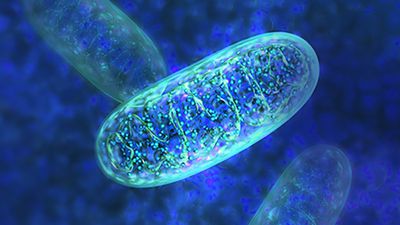
How mitochondria shape brain health from childhood to old age
From the first spark of neural development to the challenges of ageing, Dr Lissette Sánchez Aranguren is uncovering how the cell’s powerhouses — mitochondria — hold the key to a healthy brain across the human lifespan. Her pioneering research at Aston University explores how these microscopic energy generators safeguard the brain’s communication network and how their dysfunction may underlie conditions such as dementia, stroke, and neurodevelopmental disorders. Mapping the brain’s energy defence system Dr Sánchez Aranguren’s work focuses on the partnership between brain cells and the blood vessels that nourish them — a relationship maintained by the blood–brain barrier. When mitochondria fail, that protective interface can weaken, allowing harmful molecules to penetrate and trigger inflammation or cell loss. Her team’s studies show that mitochondrial malfunction disrupts the dialogue between neurons and vascular cells, an imbalance seen both in the developing and ageing brain. To counter this, she and her collaborators have engineered a mitochondria-targeted liposome, a nanoscale “bubble” that delivers restorative molecules directly where they are needed most. By re-balancing cellular energy and communication, this innovation could one day reduce brain injury or slow neurodegenerative decline. From heart cells to the human mind Originally trained in cardiovascular science, Dr Sánchez Aranguren became fascinated by how mitochondria regulate energy and stress in blood-vessel cells — insights that ultimately led her toward neuroscience. View her profile here “Mitochondria do much more than produce energy. They send signals that determine how cells communicate and survive.” That realisation inspired her to trace mitochondrial signalling across the continuum of life — linking early brain development to later-life vulnerability. Her research now bridges traditionally separate fields of developmental biology, vascular physiology, and ageing neuroscience, helping identify shared molecular pathways that influence lifelong brain resilience. Global collaboration for a healthier brain Her work thrives on multidisciplinary and international partnerships. At Aston, she collaborates with scientists from Coventry University, Queen’s University Belfast, and the University of Lincoln, alongside research partners in the Netherlands, Italy, Malaysia, and China. Together they integrate chemistry, biology, and computational modelling to understand mitochondrial function from molecule to organism — and translate discoveries into practical therapies. Towards mitochondria-targeted brain therapies The next frontier is refining these mitochondria-targeted nanocarriers to enhance precision and efficacy in preclinical models, while exploring how mitochondrial signals shape the brain’s vascular and neural architecture from infancy through adulthood. Dr Sánchez Aranguren envisions a future where protecting mitochondrial health becomes central to preventing brain disease, shifting medicine from managing symptoms to preserving the brain’s natural defence and repair systems. “If we can protect the cell’s own energy engines,” she says, “we can give the brain its best chance to stay healthy for life.”