Experts Matter. Find Yours.
Connect for media, speaking, professional opportunities & more.
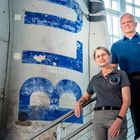
One year after his pioneering flight aboard Blue Origin’s New Shepard rocket, University of Florida space biologist Rob Ferl, Ph.D., is still processing what it meant — not just for his career, but for science itself. “What stands out the most is just the overwhelming gratitude,” Ferl said. “It was such an amazing opportunity for a scientist to go to space and actually do science.” Ferl, a professor in UF’s Horticultural Sciences Department, Director of the Astraeus Space Institute, and Assistant Vice President of Research, became one of the first space biologists to fly alongside his own experiment — a moment that marked a new era in researcher-led missions. His suborbital journey provided a rare opportunity to study how terrestrial biology responds to the very first moments of spaceflight. “For decades, space biology has relied on professional astronauts to carry out experiments designed by scientists on Earth,” Ferl explained. “But to truly understand how biology works in space, I believe you - as the scientist - have to be there. You have to feel the environment.” This September, Ferl and longtime collaborator Anna-Lisa Paul, Ph.D., will be back at Blue Origin’s West Texas launch site, continuing their work with a new series of plant experiments. Ferl and Paul, who directs UF’s Interdisciplinary Center for Biotechnology Research and is a professor in Horticultural Sciences, are tracking fluorescently tagged genes in Arabidopsis plants to study how gene expression changes during the rapid shift from Earth’s gravity to the microgravity of spaceflight and back again. It’s a full-circle moment for Ferl, who remains deeply engaged in the same questions that sent him to space a year ago. Unpacking the Transition from Earth to Space Ferl’s experiment focused on the early metabolic responses of plants during the critical transition from Earth’s gravity to the weightlessness of space. “The scientific community has accumulated plenty of data comparing biology in orbit with that on Earth,” he said. “But we’ve known almost nothing about what happens in those first few minutes as organisms enter space and are exposed to microgravity.” Initial results from the flight reveal intense metabolic changes in the early moments of spaceflight. These changes are distinct from, but connected to, the long-term adaptations seen in orbit. Early Findings, Future Impact While the data from Ferl’s experiment are still on the way to being published, the findings are already shaping the direction of ongoing research. The work contributes to a growing understanding of how terrestrial life, from plants to humans, shares fundamental pathways in responding to the space environment. “This has real implications for the future of space missions,” Ferl noted. “As we send more people and more biology into space in support of exploration, we need a comprehensive understanding of how living systems adapt — right from the start.” Ferl and his team will return to Blue Origin’s launch site in Texas in September to continue their research, sending an uncrewed payload of plants into suborbital space. The flight carries no humans—but it does carry an automated experiment designed to advance their understanding of plant biology in space. It’s part of a broader effort to refine what Ferl calls “researcher-tended missions.” A New Course for UF Space Science The mission has not only shaped the trajectory of Ferl’s research, it has also energized Astraeus and the university’s space biology efforts. “This is about building a new kind of science culture,” Ferl said. “One where the scientists are embedded in every part of the mission, from experiment design to the moment of launch.” As the one-year anniversary of his flight approaches, Ferl remains focused on pushing the boundaries of what science in space can be. But he hasn’t forgotten the magnitude of the moment. “Even a year later,” he said, “the most powerful thing I feel is just: thank you. Thank you for the chance to go, to see it for myself, and to bring that knowledge back to Earth.”


MCG scientists investigate arthritis drug’s impact on Alzheimer’s disease
According to the Alzheimer’s Association, more than 7 million Americans are living with Alzheimer’s disease, and one in nine of those people is 65 or older. Although that number is expected to grow, researchers at the Medical College of Georgia at Augusta University are making progress on studies that could turn into life-saving treatments. Qin Wang, MD, PhD, professor in the Department of Neuroscience and Regenerative Medicine at MCG and Georgia Research Alliance Eminent Scholar in neuropharmacology, recently published a study titled “The PKCι‑β‑arrestin2 axis disrupts SORLA retrograde trafficking, driving its degradation and amyloid pathology in Alzheimer’s disease,” in Molecular Degeneration, a leading journal in neurodegeneration. In the study, Wang and her team explored how certain proteins and enzymes interact in the brains of Alzheimer’s patients. Key players include the SORL1 gene, the PKCι enzyme and proteins SORLA, β‑arrestin2 and amyloid. SORL1 encodes SORLA, which helps regulate amyloid. Amyloid can form plaque in the brain, contributing to Alzheimer’s. People with the disease often have lower SORLA levels, which amplifies plaque production. “The goal is to increase SORLA levels in patients with AD. If we can boost it up, that would be great,” Wang said. “But if you want to know how to boost it up, you have to know how it is degraded, so that’s what our work is about – we’re trying to understand how its stability is regulated.” Wang’s research team found that PKCι can add a phosphate group to SORLA, which helps SORLA interact with β‑arrestin2. The PKCι‑β‑arrestin2 axis leads to SORLA degradation, reducing its levels and allowing amyloid plaques to grow unchecked, thereby worsening the disease condition. They discovered this by using biochemical methods and a mass spectrometer managed by Wenbo Zhi, PhD, at the Proteomics and Mass Spectrometry core lab at AU. “We conducted biochemical studies and found that SORLA can be phosphorylated. We identified the phosphorylation site and the interacting enzymes,” Wang explained. “Using the mass spectrometer with PKCι, we saw increased phosphorylation of SORLA at certain sites. Preventing that could stop SORLA degradation.” That’s where a rheumatoid arthritis drug called auranofin comes into play. “While it is an arthritis drug, it can also inhibit the PKCι enzyme,” Wang explained. The team conducted tests using Alzheimer’s mouse models and human iPS cells developed into neurons. For the mouse models, they treated the mice with auranofin for eight weeks, resulting in decreased amyloid levels, reduced neuroinflammation and improved cognitive function. Similar results were seen in human cells with increased SORLA levels and decreased amyloid levels. “A good thing about this is, because this is an FDA-approved drug, it’s ready to be tested in Alzheimer’s patients,” Wang said. “People often worry about drug safety because of long-term use in chronic diseases like Alzheimer’s, but, in this case, existing safety data for chronic use gives a good starting point for testing in Alzheimer’s patients. “I hope a drug company can pick that up for a trial with Alzheimer’s patients because we are trying to translate our bench work all the way to the bedside for treatment,” she continued. The study wraps up a five-year National Institute on Aging grant, a collaborative effort between Wang’s lab and the Kai Jiao, MD, PhD, lab in AU’s Center of Biotechnology and Genomic Medicine. Wang’s team is also working on other grant-funded Alzheimer’s-related projects and hopes to continue making advancements toward finding a cure for this debilitating disease. “All of our projects share the goal of finding a better treatment,” Wang said. “Related to this project in particular, we want to know how the SORLA protein works in different types of brain cells, given the brain’s complexity. Then we can determine how to specifically target that protein to develop more effective therapies.” Qin Wang, MD, PhD, researches the neuropharmacology and signaling mechanisms underlying neurological and psychiatric disorders. If you're interested in learning more about her work or booking an interview, simply click on her icon now to arrange a time to talk.


Could China Beat America in the Race to Get Boots Back on the Moon?
Call it a matter of pride, national security or a desire for astronomical dominance; there's a sense of urgency within the U.S. government to return to the moon, sparked by China's team of taikonauts, who could land there before American astronauts get back to the lunar surface. The latest space race is a topic that is making national news. Florida Tech's experts are lending their opinions and insights about the likelihood of a lunar return, and what it might mean. NASA, with the urging of many politicians, has been racing to get astronauts back to the moon — before the Chinese land taikonauts on the lunar surface. But what’s the rush to return to a place the United States has already been and left 53 years ago? Especially when Mars looms as an enticing option for interplanetary travel. Space experts say there’s plenty of reasons for the urgency: national pride and national security. But also returning to the moon and building habitats would mean long term dominance in space and ensure access to resources that NASA didn’t know where there when the Apollo missions flew. Now with the Chinese making significant progress in human space exploration, the clock is ticking. “The Chinese in the last 20 years have made amazing strides in all aspects of space. They’re sending robots to the moon on a very regular basis. Now they’re doing some pretty amazing activities even on the far side of the moon, and they have a Chinese space station now in Earth orbit,” said Don Platt, associate professor of space systems at Florida Tech. Can China beat NASA to the moon? “The Chinese have really caught up,” said Platt. “I do believe that the Chinese are definitely advancing their efforts on the moon, and are identifying it as a critical aspect of their strategic future in space." When asked about the prospect of Chinese astronauts making it to the moon before NASA's planned Artemis III mission, Platt said he believes it’s a possibility and he cited the efforts China is making to highlight the importance of the nation's space efforts to its own populace. “They have some amazing videos. They’re really engaging the Chinese public, and really using it to do what what we’ve always done in space, and that is to inspire the next generation and to show the world the technical abilities of the Chinese,” said Platt. May 21 - USA Today The race is on, and it's getting a lot of attention. If you're a journalist following this ongoing story, let us help with your coverage. Dr. Don Platt's work has involved developing, testing and flying different types of avionics, communications and rocket propulsion systems. He also studies astrobiology and biotechnology systems and human deep space exploration tools. Don is available to speak with media anytime. Simply click on the icon below to arrange an interview today.


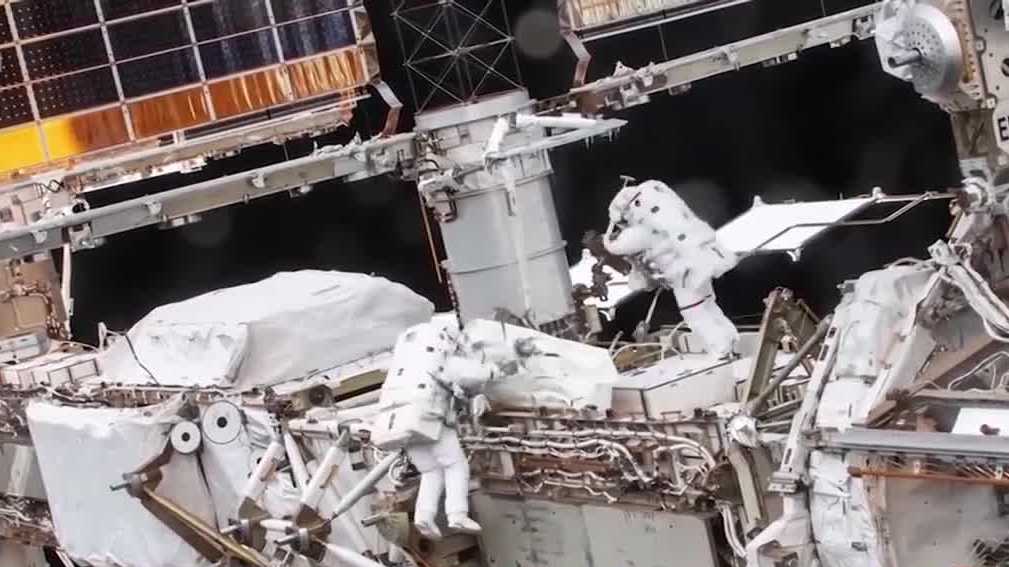
The ISS is Leaking! What Happens Now? Florida Tech's Don Platt Can Explain
There's an issue on the International Space Station (ISS) that is becoming a growing concern for both the Russian and American space programs. The ISS is leaking, and the matter is rightfully getting attention from media around the world. The reporters looking for answers are connecting with Florida Tech's Don Platt to explain what exactly is happening and what it means for the future of this $100 billion facility. Dr. Platt's work has involved developing, testing and flying different types of avionics, communications and rocket propulsion systems. He teaches about space systems. The problem exemplifies how NASA is contending with aging but critical space infrastructure: The orbiting laboratory, with a living area larger than a six-bedroom house, is the agency's only way to learn about health impacts to astronauts, develop or test life support systems for future missions, and advance a plethora of space technologies. NASA wants to keep it running until 2030 — but doing so will require constant surveillance and, literally, patching. "It's an old station, and it has done some amazing things," Don Platt, an associate professor of space systems at Florida Tech, told Mashable. Mashable, Nov. 19 Local television and national networks like NPR were also seeking Platt's expert insights. NASA and Russian space officials are at odds over the significance of a long-standing air leak aboard the International Space Station. The leak, originating from a Russian module, has reportedly persisted for about five years. Don Platt, an associate professor at the Florida Institute of Technology, explained the potential risks. “There’s definitely concerns about this leak and the potential for it to get worse over time,” Platt said. While NASA views the issue as a serious safety concern, Moscow insists the situation is under control and the module is safe. “NASA is quite concerned about it, and the Russians are more or less saying, ‘We have it under control. Don’t worry about it,’” Platt said. The affected module is one of the oldest on the station, having been operational for more than 20 years. “One of the Russian modules on the space station, one of the oldest, is starting to lose some of the air that astronauts need to breathe,” he said. November 18 - NBC News The coverage featuring Platt's insight is also being carried by Russian media and news sites. Are you following this developing story? Let us help with your coverage. Dr. Don Platt's work has involved developing, testing and flying different types of avionics, communications, rocket propulsion systems as well as astrobiology/biotechnology systems and human deep space exploration tools. Don is available to speak with media. Simply click on the icon below to arrange an interview today.

Industry and researchers call for action to tackle climate impact of organic, carbon-based chemicals
Call led by members of Supergen Bioenergy Hub, based at Aston University They highlight that carbon-based chemicals cannot be decarbonised but can be defossilised They want a transition to renewable carbon sources such as biomass, recycled carbon, and carbon dioxide. Director of Supergen Bioenergy Hub, Professor Patricia Thornley Industry experts and university researchers have joined together to ask the government to address the climate impact of organic, carbon-based chemicals. While demand for fossil fuels as energy is expected to fall in the coming decades, the petrochemicals sector is set to grow significantly according to experts and is set out in a 2018 report by the International Energy Agency. Members of the Supergen Bioenergy Hub which is based at Aston University and the Biomass Biorefinery Network believe the issue has yet to receive proper attention and is calling for a strategy that addresses this key component of our greenhouse gas emissions. They want a move to a more circular economy, managing supply and demand levels and transitioning away from fossil feedstocks which are raw materials required for some industrial processes. In their paper Carbon for chemicals How can biomass contribute to the defossilisation of the chemicals sector? they highlight that carbon-based chemicals cannot be decarbonised but can be defossilised through a transition to renewable carbon sources such as biomass, recycled carbon and carbon dioxide. Many products in modern society contain carbon such as pharmaceuticals, plastics, textiles, food additives, cosmetics, and cleaning products. These chemicals are derived from fossil feedstocks, so they are classed as petrochemicals. As a result, they contribute to global greenhouse gas emissions and climate change. Carbon is embedded in organic chemical products and released when they break down at end-of-life, for example through incineration. To address the emissions from carbon in chemicals and accelerate the development of bio-based chemicals, the group want a cross-party consensus to support a sustainable chemical system. Director of Supergen Bioenergy Hub, Professor Patricia Thornley, said: “We need to consider the UK’s future feedstock and chemicals production and use, and how it relates to net zero, agriculture, environment, economy, trade, and just transition policy objectives. There are opportunities here for the UK to lead the way on sustainable chemical production, but we need to carefully plan a roadmap for the transition, that delivers opportunities around jobs and the economy as well as sustainable greenhouse gas reductions. “There is a definite role for biomass here. But it is essential that any future use of biomass in the chemicals sector is underpinned by rigorous, trusted, and enforceable sustainability governance to build confidence, deliver sustainability benefits, and minimise negative impacts. That requires improvements in sustainability governance and regulation. “We think there are real economic and trade opportunities by the UK accelerating sustainable chemicals. At the moment bio-based chemicals, and chemicals derived from other renewable carbon sources, are not being expanded in the UK because there are no explicit incentives that prioritise them over fossil-based production.” The group argues that the UK has significant academic and industrial research expertise to underpin the development of sustainable bio-based products and could be a global leader in bio-based products and sustainability governance. They believe that to date little of this has manifested as UK-based scale-up and manufacturing, whilst there are numerous examples of UK-led research being scaled up elsewhere. The paper was delivered at a webinar on 7 August. Notes to Editors Carbon for chemicals How can biomass contribute to the defossilisation of the chemicals sector? https://www.supergen-bioenergy.net/output/carbon-for-chemicals-how-can-biomass-contribute-to-the-defossilisation-of-the-chemicals-sector-policy-briefing/ Author: Joanna Sparks (formerly Aston University) With contributions from: Cristiane Scaldaferri (formerly Aston University), Andrew Welfle (University of Manchester), Patricia Thornley (Aston University), Ashley Victoria (University of Leeds), Caspar Donnison (Lawrence Livermore National Laboratory), Jason Hallett (Imperial College London), Nilay Shah (Imperial College London), Mirjam Rӧder (Aston University), Paul Mines (Biome Bioplastics), David Bott (Society of Chemical Industry), Adrian Higson (NNFCC), Neil Bruce (University of York) 2018 International Energy Agency report https://www.iea.org/reports/the-future-of-petrochemicals https://www.supergen-bioenergy.net/ The Supergen Bioenergy Hub works with academia, industry, government, and societal stakeholders to develop sustainable bioenergy systems that support the UK’s transition to an affordable, resilient, low-carbon energy future. The Hub is funded jointly by the Engineering and Physical Sciences Research Council (EPSRC) and the Biotechnology and Biological Sciences Research Council (BBSRC) under grant EP/Y016300/1 and is part of the wider Supergen Programme. www.bbnet-nibb.co.uk The Biomass Biorefinery Network (BBNet), a phase II Network in Industrial Biotechnology & Bioenergy funded by the Biotechnology and Biological Sciences Research Council (BBSRC-NIBB) under grant BB/S009779/1. The aim of the Biomass Biorefinery Network is to act as a focal point to build and sustain a dynamic community of industrial and academic practitioners who work together to develop new and improved processes for the conversion of non-food biomass into sustainable fuels, chemicals and materials. About Aston University For over a century, Aston University’s enduring purpose has been to make our world a better place through education, research and innovation, by enabling our students to succeed in work and life, and by supporting our communities to thrive economically, socially and culturally. Aston University’s history has been intertwined with the history of Birmingham, a remarkable city that once was the heartland of the Industrial Revolution and the manufacturing powerhouse of the world. Born out of the First Industrial Revolution, Aston University has a proud and distinct heritage dating back to our formation as the School of Metallurgy in 1875, the first UK College of Technology in 1951, gaining university status by Royal Charter in 1966, and becoming the Guardian University of the Year in 2020. Building on our outstanding past, we are now defining our place and role in the Fourth Industrial Revolution (and beyond) within a rapidly changing world. For media inquiries in relation to this release, contact Nicola Jones, Press and Communications Manager, on (+44) 7825 342091 or email: n.jones6@aston.ac.uk


Astronauts Butch Wilmore and Suni Williams '95 M.S. took the trip of a lifetime in June, traveling to the International Space Station (ISS) on Boeing's Starliner spacecraft. Not long after their arrival to the ISS, however, the spacecraft began having mechanical issues. Since then, the pair have been left stranded in space with no return flight booked to come home. As the scientific world, public and international media watch, experts like Don Platt from Florida Tech are supporting ongoing media coverage until the two astronauts return to Earth. To return Starliner to Earth, the thrusters need to fire correctly at the right time to get the crew safely out of orbit. "Clearly, you need to have thrusters to be able to position your spacecraft, to move away from the space station, to get into the position to safely reenter the Earth's atmosphere," said Don Platt, associate professor of space systems at Florida Tech. "They claim just doing a rocket burn, they can probably make it home, but they don't know where'd they land," said Platt. The problem lies with the propulsion system inside the service module. "It sounds as if they've experienced a different amount of heating than expected with some of these thrusters, and had some affected things like valves that control the flow of propellant to the thrusters. So sometimes those valves will leak or not open all the way based on the amount of heat they are experiencing," said Platt. Platt explained that the valves for these thrusters are comparable to fuel injectors in a car. They simply open and close to feed the propellant into the combustion chamber − the end result being thrust (power). Part of the challenge for Boeing teams is that they can't exactly replicate what the spacecraft is experiencing in space. Platt said that heat is not just created from the thruster itself, but from the Sun. August 11 - Florida Today Don Platt, the director of Florida Tech’s Spaceport Education Center in Titusville and an associate professor of space systems, explained that Boeing is currently trying to figure out what went wrong with Starliner and to see if there is still a chance to use the thrusters. "There's probably very little they can do to fix them at this point," Platt said. "What they can do is they can look at what thrusters are working properly, and how can we then use those thrusters to efficiently get the vehicle back into the atmosphere and then to the surface of the Earth." While Starliner has been having extensive issues and now Boeing has some tough decisions to make about what's next, Platt said we need to remember that this was a test mission. "I think that we've had a lot of success in space over the last decade or so, and we've probably gotten used to things going perfectly," Platt said. "Although space is not that easy, and we can see problems, problems do pop up from time to time. Even back in the days of the shuttle program, there used to be issues with the orbiter, even on orbit, and they'd have to think about, 'can we keep flying this mission, or do we need to return to the Earth?'" August 13 - Central Florida Public Media For now, all we can do is watch and wait. But if you're a journalist following this ongoing story, then let us help with your coverage. Dr. Don Platt's work has involved developing, testing and flying different types of avionics, communications, rocket propulsion systems as well as astrobiology/biotechnology systems and human deep space exploration tools. Don is available to speak with media anytime. Simply click on the icon below to arrange an interview today.

Higher education, biotech and innovation - will the future be part of the 2024 campaign?
As the RNC brings national attention to Milwaukee, discussions are expected to cover pivotal topics such as biotechnology, innovation, and higher education. And as the Republican National Convention 2024 begins, journalists from across the nation and the world will converge on Milwaukee, not only to cover the political spectacle but also to dig deeper on the key issues that may decide the election. To help visiting journalists navigate and understand these issues and how and where the Republican policies are taking on these topics our MSOE experts are available to offer insights. Dr. Wujie Zhang, Dr. Jung Lee, Dr. Eric Baumgartner, Dr. Candela Marini, and Dr. John Walz are leading voices nationally on these important subjects and are ready to assist with any stories during the convention. Dr. John Walz President Expertise: Thought leadership on higher education, relevancy and value of higher ed View Profile “Engineering is not a very diverse field,” Walz said. “I want to continue to push those boundaries and make our programs open, to see more and more under-represented students come here and succeed here, and do well here.” MSOE president John Walz works to make 'hidden gem' not so hidden. Milwaukee Journal Sentinel May 17, 2023 Dr. Wujie Zhang Professor, Chemical and Biomolecular Engineering Expertise: Biomaterials; Regenerative Medicine and Tissue Engineering; Micro/Nano-technology; Drug Delivery; Stem Cell Research; Cancer Treatment; Cryobiology; Food Science and Engineering (Fluent in Chinese and English) View Profile “We accidentally noticed that we can make the hydrogel particle red blood cell shaped,” he explains. “We started then to make artificial red blood cells to mimic pretty much all aspects of red blood cells.” You're Somebody's Type MKE Lifestyle January 24, 2020 Dr. Jung Lee Professor, Chemical and Biomolecular Engineering Expertise: Bioinformatics, drug design and molecular modeling. View Profile Dr. Eric Baumgartner Executive Vice President of Academics Expertise: Thought leadership on higher education, relevancy and value of higher ed, role of A.I. in future degrees and workforce development. View Profile MSOE serves as an educational resource to Wisconsin companies is building an A.I.-ready workforce. In 2018 MSOE was the first in the nation to launch a B.S. in Computer Science with a sole focus on A.I. and machine learning. Wisconsin Governor’s Task Force on Workforce and Artificial Intelligence December, 2023 Dr. Candela Marini Assistant Professor Expertise: Latin American Studies and Visual Culture View Profile “Contrary to stereotypical images of Native Americans trying to stop ‘progress’ by fighting against mines and pipelines projects, the Menominees’ sustainable forestry stands out as a clear example of resource management that actually thinks about, and works for, the future,” said Marini. The MSOE Mindset visits the Menominee Indian Reservation MSOE Online April 11, 2019 . . . Media Relations Contact To schedule an interview or for more information, please contact: JoEllen Burdue Senior Director of Communications and Media Relations Phone: (414) 839-0906 Email: burdue@msoe.edu . . . About Milwaukee School of Engineering (MSOE) Milwaukee School of Engineering is the university of choice for those seeking an inclusive community of experiential learners driven to solve the complex challenges of today and tomorrow. The independent, non-profit university has about 2,800 students and was founded in 1903. MSOE offers bachelor's and master's degrees in engineering, business and nursing. Faculty are student-focused experts who bring real-world experience into the classroom. This approach to learning makes students ready now as well as prepared for the future. Longstanding partnerships with business and industry leaders enable students to learn alongside professional mentors, and challenge them to go beyond what's possible. MSOE graduates are leaders of character, responsible professionals, passionate learners and value creators.





Milwaukee-Based Experts Available During 2024 Republican National Convention
Journalists attending the Republican National Convention (RNC) are invited to engage with leading Milwaukee School of Engineering (MSOE) experts in a range of fields, including artificial intelligence (AI), machine learning, cybersecurity, urban studies, biotechnology, population health, water resources, and higher education. MSOE media relations are available to identify key experts and assist in setting up interviews (See contact details below). As the RNC brings national attention to Milwaukee, discussions are expected to cover pivotal topics such as national security, technological innovation, urban development, and higher education. MSOE's experts are well-positioned to provide research and insights, as well as local context for your coverage. Artificial Intelligence, Machine Learning, Cybersecurity Dr. Jeremy Kedziora Associate Professor, PieperPower Endowed Chair in Artificial Intelligence Expertise: AI, machine learning, ChatGPT, ethics of AI, global technology revolution, using these tools to solve business problems or advance business objectives, political science. View Profile Dr. Derek Riley Professor, B.S. in Computer Science Program Director Expertise: AI, machine learning, facial recognition, deep learning, high performance computing, mobile computing, artificial intelligence View Profile Dr. Walter Schilling Professor Expertise: Cybersecurity and the latest technological advancements in automobiles and home automation systems; how individuals can protect their business operations and personal networks. View Profile Milwaukee and Wisconsin: Culture, Architecture & Urban Planning, Design Dr. Michael Carriere Professor, Honors Program Director Expertise: an urban historian, with expertise in American history, urban studies and sustainability; growth of Milwaukee's neighborhoods, the challenges many of them are facing, and some of the solutions that are being implemented. Dr. Carriere is an expert in Milwaukee and Wisconsin history and politics, urban agriculture, creative placemaking, and the Milwaukee music scene. View Profile Kurt Zimmerman Assistant Professor Expertise: Architectural history of Milwaukee, architecture, urban planning and sustainable design. View Profile Biotechnology Dr. Wujie Zhang Professor, Chemical and Biomolecular Engineering Expertise: Biomaterials; Regenerative Medicine and Tissue Engineering; Micro/Nano-technology; Drug Delivery; Stem Cell Research; Cancer Treatment; Cryobiology; Food Science and Engineering (Fluent in Chinese and English) View Profile Dr. Jung Lee Professor, Chemical and Biomolecular Engineering Expertise: Bioinformatics, drug design and molecular modeling. View Profile Population Health Robin Gates Assistant Professor, Nursing Expertise: Population health expert: understanding and addressing the diverse factors that influence health outcomes across different populations. View Profile Water Resources Dr. William Gonwa Professor, Civil Engineering Expertise: Water Resources, Sewers, Storm Water, Civil Engineering education View Profile Higher Education Dr. Eric Baumgartner Executive Vice President of Academics Expertise: Thought leadership on higher education, relevancy and value of higher ed, role of A.I. in future degrees and workforce development. View Profile Dr. Candela Marini Assistant Professor Expertise: Latin American Studies and Visual Culture View Profile Dr. John Walz President Expertise: Thought leadership on higher education, relevancy and value of higher ed View Profile Media Relations Contact To schedule an interview or for more information, please contact: JoEllen Burdue Senior Director of Communications and Media Relations Phone: (414) 839-0906 Email: burdue@msoe.edu About Milwaukee School of Engineering (MSOE) Milwaukee School of Engineering is the university of choice for those seeking an inclusive community of experiential learners driven to solve the complex challenges of today and tomorrow. The independent, non-profit university has about 2,800 students and was founded in 1903. MSOE offers bachelor's and master's degrees in engineering, business and nursing. Faculty are student-focused experts who bring real-world experience into the classroom. This approach to learning makes students ready now as well as prepared for the future. Longstanding partnerships with business and industry leaders enable students to learn alongside professional mentors, and challenge them to go beyond what's possible. MSOE graduates are leaders of character, responsible professionals, passionate learners and value creators.

MESOX, a spin-out from the pharmaceutics group at Aston Pharmacy School, develops drug carrier technology to improve medicine formulations The company won the Start-Up prize at the Medilink Midlands Awards 2024 The prize is awarded to a new company that shows a promising future. A spin-out company from Aston University’s pharmaceutics research group has won a medical technology and life sciences industry award. MESOX, which was founded by Aston University pharmaceutics lecturer Dr Ali Al-Khattawi, won the Medilink Midlands Start-Up Award, which is presented to a newly established company that shows a promising future. The Medilink Midlands Business Awards showcase the best collaborations between industry, academia and the NHS across the Midlands. This year’s ceremony was held at the Athena in Leicester on 9 May. The awards were established by Medilink Midlands, which provides specialist business support to boost the region’s economic output from the life sciences industry. Working alongside the Midlands Engine and other strategic alliances, it helps stimulate additional and value-added growth of the Midlands as a prosperous community for life sciences. With in-depth expertise in particle engineering for drug delivery and pharmaceutical spray drying, MESOX uses IP-protected carriers to improve the bioavailability and efficacy of pharmaceuticals, partnering with pharmaceutical and biotechnology companies to bring challenging therapeutics to market. In its citation, Medilink Midlands described MESOX as “transforming pharmaceutical formulation with its game-changing carrier technologies.” As a winner of a Medilink Midlands award, MESOX will now be entered into the UK National Awards, the ceremony of which takes place on 11 July 2024 in London. Dr Al-Khattawi said: “We are delighted to have won this prestigious award, which highlights the outstanding research and development work being done by the MESOX team and the immense potential of our company to transform the medicine formulation development landscape. Through collaboration with other pharmaceutical companies, clinicians, academic researchers, and by engaging directly with patients to understand their needs, we aim to innovate and advance drug delivery science into life-saving therapeutics. “At MESOX, our ambition is to be a global, research-based pharmaceutical company rooted in the Midlands, dedicated to developing life-saving therapeutics at speed and resource-efficiency. Our ultimate goal is to enable healthier lives for patients worldwide and ensure better global access to essential medicines.”


Aston Institute of Membrane Excellence’s Dr Matt Derry was joined by Dr Alan Goddard and France-based research partner Dr Mona Semsarilar They discussed the BIOMEM project, which received £3m from the European Innovation Council (EIC) Pathfinder programme BIOMEM will develop a bioinspired membrane to selectively extract compounds from water (like finding a favourite chocolate in a box) In the latest Aston Institute for Membrane Excellence (AIME) podcast, three researchers discuss the international BIOmimetic selective extraction MEMbranes (BIOMEM) project and how it will feed into AIME’s work. BIOMEM will develop a bioinspired membrane technology to selectively extract compounds from water, using 50-75% less energy than current state-of-the-art nanofiltration technologies. The membranes will work at low pressures and at low concentration of the target molecule. Podcast host Dr Matt Derry was joined by fellow AIME researcher Dr Alan Goddard and Dr Mona Semsarilar from the French National Centre for Scientific Research (Centre national de la recherche scientifique (CNRS)). The BIOMEM project, which involves collaborators from across Europe, is being led by Dr Torsten Bak from Danish company Aquaporin, with Dr Goddard the research lead at Aston University. Dr Goddard explained: “You might want to work on a biotechnology process where you've made a high value chemical that you want to extract from a complex mix, and at the moment you might have to concentrate your solution up, and you might have to do six or seven filtration steps. We want a filter that does it in a single step using a biological transporter. “And if you can do that in a single step in a platform technology, you'll make all these brilliant biotech processes more commercialisable, reduce your reliance on petrochemicals, and to maybe oversell what we can do, save the planet.” Dr Derry likened it to a quick way to find your favourite chocolate in a box at Christmas. Rather than scrabbling through, taking out one type at a time until you find your favourite, the process can immediately separate it out with minimal effort. Aquaporin has developed a membrane that can selectively transport only water molecules to quickly purify water, which is already in use across the world, and even out of this world, for space missions. Dr Bak and the team will bring their membrane expertise to the project. The team at CNRS, led by polymer scientist Dr Semsarilar, is working on a number of projects for BIOMEM, including developing a type of crystalline material called trianglamine, which they can modify through chemical processes to be hydrophobic or hydrophilic to make things like water channels or adsorption sites, which can be embedded in polymer network for purification processes. Other researchers at AIME, including Dr Derry and Professor Paul Topham, will work on the ‘glue’ to stick the biological elements of the membranes to the non-biological polymer matrix. BIOMEM will also benefit from the input of partners across Europe including dsm-firmenich, University of Copenhagen and Tampere University. The podcast was recorded just after the project kick-off meeting with all the project partners, which was held at Aston University in May 2024. Listen to the full podcast on the Aston Originals YouTube page.