
Experts Matter. Find Yours.
Connect for media, speaking, professional opportunities & more.

COVID-19 has raised the stakes for boards, argues Brunswick’s Paddy McGuinness, former UK Deputy National Security Adviser. We now live with COVID-19. Fewer business leaders are making the mistake of talking about “post-COVID” or “when this is over.” The better of them have factored in COVID-19 related constraints to their medium-term plans and are even thinking about how the world may change in the long-term. They are building capacity to take advantage of an early recovery within months, yet they are modeling and encouraging grit for current and indeed harder conditions to last much longer. In the past, when health emergencies—say the Spanish Flu pandemic of a century ago—subsided, there was a greater return to economic normality than had been expected during the crisis. Extreme events often heighten or even distort our perception of wider risks. That old journalistic cliché “one thing is certain, nothing will be the same again” is rarely true. But the pandemic has created the expectation that businesses will be resilient—that they will be able to respond to an event and recover to the state prior to the event, incorporating the lessons learned into business practice. Many business leaders feel they have not done too badly responding to a once-in-a-hundred-years event. Business Continuity Plans (BCPs), which were understandably sketchy for pandemics, were pulled out of second-line risk management and owned and improved in real-time by executive committees. The transition to remote working and, at least in Asia and some of Europe, the gradual return to offices again, has been managed. Services and even vital production have been maintained. Leaders have absorbed the personal and collective strain of this. Good reason then for some satisfaction as they delegate certain COVID-19 responses and focus on the economic tsunami that follows the pandemic. The public seems to largely agree with business leaders’ assessments. While many national and scientific leaders find themselves beset by “blamestorming,” corporate executives have been given more slack. They weren’t expected to have foreseen a pandemic. Their sometimes scrabbling responses are understood. However, behind this lucky pass lurks an expectation that businesses will now be more prepared for crises and foreseeable risks. Resilience cannot be relegated to BCPs and traditional risk-management structures. It is categorically a board issue—regulators, lawyers, politicians and the public say so. The reputations of individual board members and the collective are at stake. Think how fast leaders have been expected to respond to the issues raised by the Black Lives Matter movement. Alacrity will be required. The speed and scale of decisions in response to the pandemic leaves board committees playing catch up to assure themselves that risks have been managed. The move to working from home has been rapid, so too the digitization of the business. Some see these as new, streamlined ways of working, yet the negative consequences are not yet fully apparent. Working from home, for instance, is attractive to some employees as well as chief financial officers, who may relish the chance to reduce fixed costs. Concerns about the impact on the coherence of the business’s culture, its productivity and innovation, the security of data held at home, hardships for those in difficult home conditions, and, indeed, the needs of the younger demographic who seem to favor a return to the office, need to be given due consideration. It may be a case of “decide in haste, repent at leisure.” Resilience is categorically a board issue—regulators, lawyers, politicians and the public say so. The reputations of individual board members and the collective are at stake. Boards also need assurance that the business has regained its balance and can manage parallel or interrelated crises. In recent weeks we have been helping several clients respond to major cyber events unrelated to the COVID-19 outbreak. They have probably needed more external support than otherwise because their leadership capacity was inevitably denuded by pandemic response. And they have benefitted from us already knowing each other and having experience of how to work together in crisis. After the Great Financial Crash there was a heavy focus on balance-sheet resilience and having the requisite finance skills on boards. Business leaders are now beset by advice on the heightened obligation to be resilient in much a broader sense of the word. Regulators, lawyers and risk consultants are sharing checklists of factors for executive committees to take into account when managing risks and for boards to oversee. The challenge here is defining what changes your specific business needs and how to actually bring those about. Shareholders will be expecting a judicious move away from “just in time” systems to ones that can endure foreseeable risks. This isn’t just about potential legal liability or reputational risk. This is about setting your business culture for success. Undermanage risks and the business is wide open to damage from foreseeable shocks with all the loss of confidence and capability that follows. Overmanage and the business losses its competitive edge just when there is opportunity in the recovery. In order to track broader resilience, boards and their committees will need access to a wider set of skills and insight. Board membership emerges as an obvious area of focus. Yet each board will take more time and belonging to too many—“over boarding”—may well be unacceptable. Risk methodology and information flows will also have to be reviewed, alongside how to strengthen board members’ awareness and skills. Before the pandemic, chairs and CEOs were already wrestling with this for their difficult-to-price risks, such as data, technology risks and cyber. Individual experts on boards created siloed responsibility for what should have been a shared risk. A focus on process and method often led to a focus on the management, rather than genuine oversight of, risks. External advice didn’t always help (as we have learned from the plethora of competing advice around COVID-19). No single intervention will meet the new standard for resilience. Nor will simple prescription. A broader and more articulated approach is required if governance is to maintain stakeholder confidence and corporate reputation.



Want to save on home loans? Just talk to your peers!
For most of us, finance is complex. Yet making financial decisions is part of day-to-day life. Take mortgages. Around 60 percent of U.S. households have a home mortgage, but how many actually understand its real value? Calculating things like interest rate trade-offs or closing costs is not easy, and research finds that a majority of families make financial mistakes because they fail to understand benefits or savings that might be open to them in refinancing. There are ways to overcome this kind of “information friction”—the obstacles to understanding that make it hard for people to process complex financial ideas and concepts. One of these is education. Ensuring that people have direct access to clear information can help inform household decisions. That seems pretty basic. Another, perhaps less understood, mechanism is the “peer effect”—the way we learn from and are influenced by what our peers or colleagues say or do. A new paper published in the Review of Financial Studies by Gonzalo Maturana, associate professor of finance, takes a fresh look at how the peer effect can help households make better decisions about their mortgages. And he finds that work colleagues and associates can actually have a far greater positive impact on our financial outcomes than we might expect. Together with Jordan Nickerson from MIT’s Sloan School of Management, Maturana ran a large-scale study of a particular U.S. peer group: public school teachers employed by the state of Texas. Here’s what the study found: Where there was a lot of mortgage refinancing going on among teachers in a particular school, individuals were a stunning 20.7 percent more likely to refinance their own mortgage. In other words, they were far more disposed to investigate alternatives and take advantage of the better deals on offer. The peer effect was also a critical factor in their subsequent choice of mortgage lender. Maturana and Nickerson also found that the more savings a particular peer group was making in mortgage repayments, the more refinancing activity there was in that school or teacher network. It is clear. With financial decisions, the network effect can create a positive feedback loop, said Maturana. Household finance and mortgages are top of mind and play a part in most American families – and if you are a journalist looking to cover this topic – then let our experts help. Gonzalo Maturana is an Associate Professor of Finance at the Goizueta Business School. He is an expert in the areas of corporate, household and real estate finance. Gonzalo is available to speak to media regarding this topic – simply click on his icon now to arrange an interview today.



People with outgoing personalities get noticed. Heads turn toward those with charismatic voices, emotional speech, high energy, empathetic gestures, and engaging smiles, but on the corporate front, how do these traits come to bear on executive compensation, hiring, and firm outcomes? “The short answer is that extraversion is associated with positive career and firm outcomes,” said T. Clifton Green, professor of finance at Emory’s Goizueta Business School, whose published work Executive Extraversion: Career Firm and Outcomes (The Accounting Review, 2019), explores this phenomenon. The study, with coauthors Russell Jame 10PhD, University of Kentucky’s Gatton College of Business and Economics, and Brandon Lock 12BBA Baruch College’s Zicklin School of Business, City University of New York, highlights the role of personality traits in explaining executive promotions, job tenure, and outside board service. Green also finds evidence that having an extraverted CEO bodes well for investor recognition, sales growth, and acquisitions. The study goes on to explain the personality trait of Extraversion, which is often described as “the single most important aspect of an individual’s personality,” according to Green, with the other of the Big Five traits being Agreeableness, Openness, Emotional Stability, and Conscientiousness. Extraverts tend to be outgoing and gain energy from being around others, whereas introverts tend to be more reserved and recharge through solitude. Psychology research identifies extraversion as the personality trait most closely associated with leadership emergence. The study linked above is available for reading – and if you are a journalist looking to learn more or cover this very interesting topic, then let our experts help. T. Clifton Green is a Professor of Finance at the Goizueta Business School. He is an expert in the areas of market microstructure, with an emphasis on behavioral finance and his research has been featured in the Wall Street Journal, Barrons, Financial Times, and on CNBC.


Digital Media Consumption in Canada is Being Dramatically Impacted by the Coronavirus Crisis
A Canadian perspective on Comscore’s ongoing special investigation into how the COVID-19 pandemic is leading to significant audience and consumer behaviour changes across digital platforms. Insights from our Analysis: News, news and more news: Canadians are consuming news at a record pace Social media and messaging: Canadians are staying ultra-connected with their communities Entertainment, music, and spirituality content: increased consumption seen as behaviours change Government: information from government websites are becoming top-of-mind Finance: increased focus on investments and payments Analysis of News & Information Category We have seen an explosion on engagement with news and information sites. In looking at the news categories and its subcategories, the week of Mar 9-15, 2020 saw big increases in engagement over the benchmark week of Dec 30, 2019 - Jan 5, 2020. As a trend, news consumption in general is also on the rise in Canada in terms of aggregate daily unique visitors and visits over time. Analysis of Social Media and Messaging Category As Canadians respond to the Coronavirus reality, we are seeing that their engagement with digital communication channels has increased significantly. When comparing daily engagement with email, instant messengers and social networking sites between the week of March 9-15, 2020 and the benchmark week of Dec 30, 2019 -Jan 5, 2020 as it relates to the % change in usage, we saw large increase in activity. The raw increase in numbers in social media provides greater detailsof the growth in usage: Analysis of Entertainment, Misc and Religious / Spiritual Category Content is Queen, King, Prince, and Princess – between the weeks of Dec 30– January 5 and March 9-15, greater amounts of time at home and the associated increased screen time drove incremental usage of the Entertainment category and the Religious/Spiritual subcategory. Driving the growth is the explosion of Entertainment – Music, which saw an increase of 32% in aggregate daily UV, a 33% increase in visits, and a 31% increase in minutes during this time. Analysis of Government Category Another category that has seen an explosion of visitation and engagement is government sites. Overall there has been huge audience and time spent with government-related content. Here is the build of visits and aggregate Daily UV over the past 10 weeks: We reviewed the Government category between week of Dec 30, 2019 – January 5, 2020 to March 9 – March 15, 2020 and looked at the % change in usage, which really showed a large increase in activity by Canadians. Based on this trend and growing global cases of Coronavirus, it is expected that Canadian audiences will continue to flock to the content from the government in these uncertain times. Analysis of Finance Category There is a saying that we hear in society – “Follow the Money”. The digital behavior of Canadians has been analogous in recent weeks as we have seen increased measures taken relating to the Coronavirus. Overall the Business/Finance category has seen some increased usage over the time period reviewed. Banking, Payments, Investments, and especially Taxes have seen high visitation. Between the week of Dec 30, 2019 – January 5, 2020 to March 9 – March 15, 2020 we saw an increase of +19% and +59%, respectively, in visits in the Investments and Payments subcategories. Additional insights from Comscore’s initial COVID-19 insights for Canada show that: Overall Digital Consumption across the Total Internet has increased. During the time period of this review visits have increased by 10% and time spent has increased by 14% In a time of crisis, people turn to News/Information Websites There have been significant increases in activity by Canadians on Social Media, Email, and Messaging pointing to the need for communication. Social distancing is safe on the internet. Interest soars for government information sources – where we see an explosion of usage. Increases in certain content Categories like Entertainment, Games, Music, Dating, and Religion/Spirituality have spiked Spikes in traffic are occurring for the e-commerce giants as social distancing and local restrictions impact in-store retail – with specific focus on Food and Supermarket Global movement restrictions lead to tumultuous traffic for travel sites



Canadian's Digital Behavioral Shifts in Relation to the The Coronavirus Pandemic
This article is part of a series of insights that reveal a Canadian perspective on the impact of the COVID-19 pandemic on consumer behavior and significant audience shifts across digital platforms. Things are moving fast. Following our last update regarding digital media consumption during the Coronavirus pandemic, this article will highlight some of the major category changes reflected as of the week March 16 - 22, 2020. Key Insights from Our Analysis Digital consumption continues to grow: the visits and minutes curve is not flattening Key content categories such as news, social media, and government are being driven by higher engagement: metrics include visits and duration More engagement with news sites: sites categorized as local, business/finance, and general news are main drivers Categories that focus on entertaining, kids, food, financial advice, and children’s education are also seeing growth: growth comes from increases in aggregate unique visitors, visits and minutes Automotive manufacturers, real estate, sports and travel entities have seen decreases: however, they are poised for major increases and a bounce back. Mobile platforms are driving growth: some differences between desktop and mobile engagement Canadian's total digital consumption continues to grow When we analyzed Canadian total digital media consumption to compare the percentage change between the week of March 16, 2020 and the first weeks of January 2020, February 2020, and March 2020, we found that overall digital engagement is not flattening. Even comparing the beginning of March against mid-March, we can see visitation, visits, and engagement continuing to grow. Looking at the total digital consumption trend over time, we can see growth in total minutes spent online while total visits have remained relatively flat. Media Consumption Growth by Category There are several content categories that we are seeing major growth in each of the time periods: These digital categories of news/information, social media, entertainment, government and games are showing continuous growth. The need for ongoing news and information updates, government information, flocking to social media to bring community together and message, and the need to be entertained with visitation and engagement on Entertainment and Games Entities. News and Information Category Insights To look at the news/information category a bit closer – it is amazing to see the category growth over the past few weeks of Canadians going to news entities to get updates. The hockey stick growth from the start of March 2020 is very evident. The news and information growth is being driven by local news, general news, and business/finance news. That being said – technology, politics, and weather are also seeing growth. Through these time periods, we are also seeing some other categories that are showing significant growth. Many of the categories are a result of many Canadians being home bound and isolated, and with families with kids having the kids at home. Platform Variance for Media Consumption One of the areas that we have been asked most about is whether we find any variances between desktop and mobile platforms. When reviewing the data, there is greater engagement with mobile platforms in the week of March 16 compared to other weeks. Amidst the global COVID-19 pandemic, we are seeing a significant increase in digital consumption amongst Canadian consumers. The data trends show Canadians are flocking online with significant growth in news entities, instant messaging, social media, government resources, entertainment, music destinations, video, and financial websites. What this means for marketers and advertisers is a significant opportunity to reach Canadians who are highly engaged and are looking for relevant and timely content. It comes down to delivering the right message, at the right time, in front of the right audience, in brand safe environments.
With an economy on life support – is inflation inevitable?
As countries around the globe are flooding their respective economies with enough cash to hold back the financial tsunami that could be felt by COVID-19 … will all that cash inevitably come with an unfortunate consequence like inflation? Those who work the markets and do their best to see into the future … think so. With the world economy forecast to shrink 6% this year, it may seem like a strange time to fret about inflation. And sure enough, market-based gauges suggest an uptrend in prices may not trouble investors for years. U.S. and euro zone inflation gauges indicate that annual price growth will be running at barely over 1% even a decade from now. So if inflation really is, as the IMF put it in 2013, “the dog that didn’t bark”, failing to respond to all the central bank money-printing unleashed in the wake of the 2008-9 crisis, why should investors prepare for it now, especially as demographics and technology are also conspiring to tamp down inflation across the developed world? The answer is that some think the dog really will bark this time, partly because - unlike in the post-2008 years - governments around the world have also been rolling out massive spending packages, in a bid to limit the impact of the coronavirus pandemic. “We will be pushing, pushing, pushing on the string and dropping our guard, then 3-5 years from now...that’s when the (inflation) dog will start barking,” said PineBridge Investments’ head of multi-asset Mike Kelly, who has been buying gold on that view. “Gold worries about such things long in advance. It has risen through this coronavirus with that down-the-road-risk top of mind,” he added. June 22 - Reuters It’s a daunting and stressful scenario. How much inflation could America expect and what would it mean to household incomes and spending? What industries would be further devastated by this? Is there any way to reverse inflation or is there an upside to it for some? If you are a reporter covering this topic – then let our experts help. Jeff Haymond, Ph.D. is Dean, School of Business Administration and a Professor of Economics at Cedarville and is an expert in finance and trade. Dr. Haymond is available to speak with media regarding this topic – simply click on his icon to arrange an interview.



FAU College of Business Experts Available to Discuss May Unemployment Numbers
Professors in Florida Atlantic University’s College of Business are available to discuss U.S. unemployment figures that are scheduled to be released by the Bureau of Labor Statistics on Friday, June 5. The U.S. unemployment rate jumped to 14.7 percent in April in response to the coronavirus pandemic. It’s the highest level since the Great Depression, and analysts fear it could be years before the economy fully recovers. If you are a journalist covering this important story about employment and the economy of Florida and America – let our experts help. Rebel Cole, Ph.D., a Lynn Eminent Scholar Chaired Professor of Finance, has expertise in financial institutions, commercial banking and small business finance. He spent 10 years working in the Federal Reserve System. Cole has been interviewed by numerous national media outlets, such as The Wall Street Journal and The Palm Beach Post. William Luther, Ph.D., an assistant professor in FAU’s Economics Department, has expertise in economic growth, monetary policies, business cycles and cryptocurrencies. He has authored more than two dozen articles. Luther’s research has obtained media interest across the nation, including recent coverage by Politico and Florida Trend. Both Professor Cole and Luther are available to speak with media – simply click on either expert’s icon to arrange an interview today.


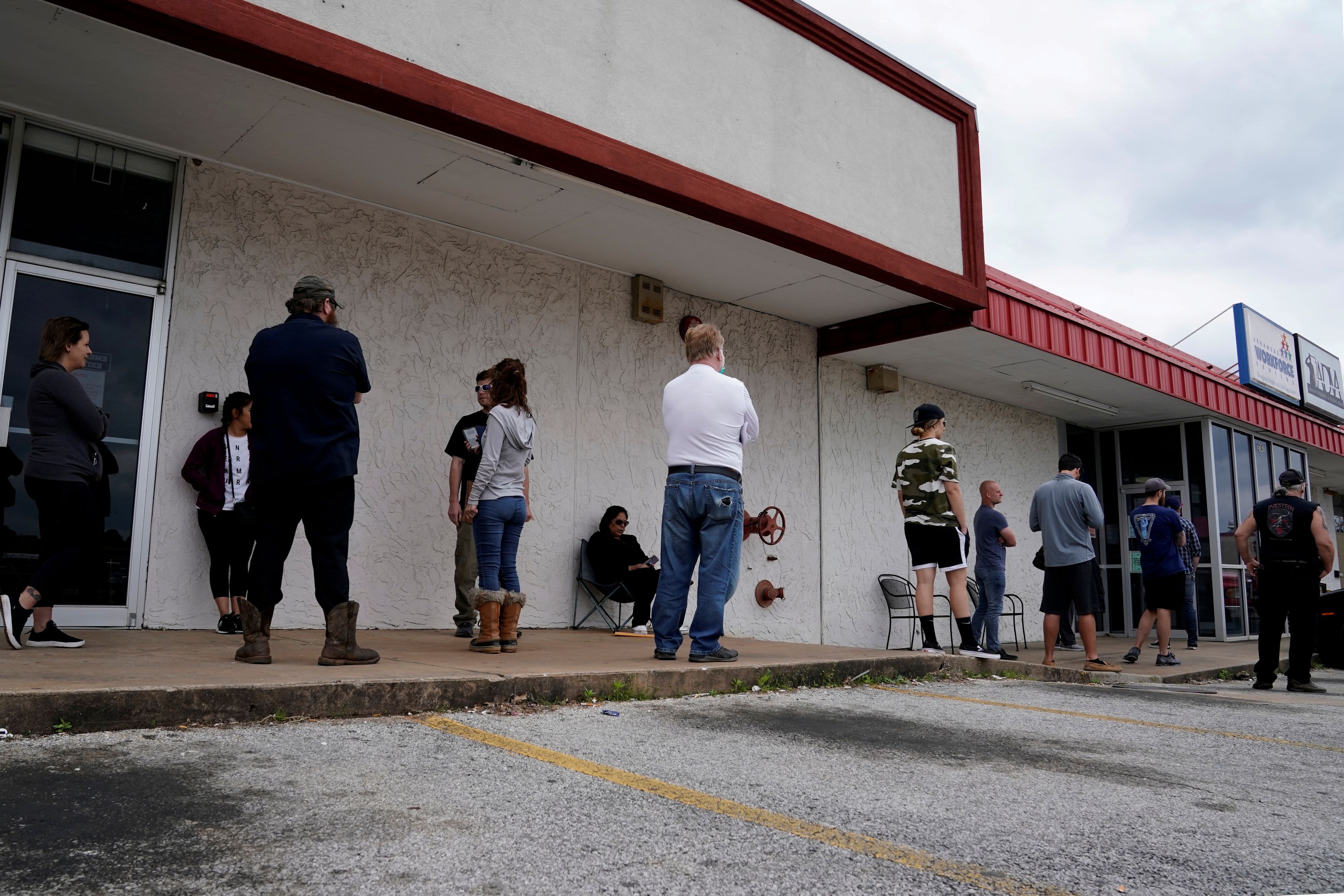
The road back – how long will it take for America’s economy to recover?
With unemployment at a staggering 14 percent, America’s economy looks as if it is in freefall. With COVID-19 forcing factories to shut down, small businesses to shutter and restaurants to close their doors, there is anxiety at every level of government about when the country’s economy will get back in motion. Economists surveyed by Dow Jones had been expecting payrolls to shed 21.5 million and the unemployment rate to go to 16%. April’s unemployment rate topped the post-war record 10.8% but was short of the Great Depression high estimated at 24.9%. The financial crisis peak was 10% in October 2009. The bleak numbers paint a “pretty dismal picture, but April may be it for job losses going forward with the country starting to reopen,” said Chris Rupkey, chief financial economist at MUFG Union Bank. “If there is a silver-lining in today’s dismal jobs report, it is in the realization that the economy cannot possibly get any worse than it is right now.” CNBC – May 08 Bleak indeed, but there are still many questions to be answered. How long will it take until people are back to work? What industries and businesses are impacted or lost forever? Is there a safe way to get back to work? Are there worries of inflation? And who is paying for all this stimulus funding and bailouts. If you are a journalist covering the economy, let one of our experts help. Jeff Haymond, Ph.D. is Dean, School of Business Administration and a Professor of Economics at Cedarville and is an expert in finance and trade. Dr. Haymond is available to speak with media regarding this topic – simply click on his icon to arrange an interview.

As the world still isolates, social distances and stays at home – the concerns about the economy are always top of mind. Jobs, investments and paying bills are a daily topic at home and in the media. The initial spin that there’s nothing to worry about as whatever was lost is bound to bounce back once we’re back to normal is starting to fade. No one knows when that bounce back will start and the idea of back to normal, what it will look like and when is at best a guess for anyone. Public health experts are beginning to make predictions about when coronavirus infection rates will peak. Economists are calculating when the cost of continuing to shutter restaurants, shopping malls and other businesses — a move that has already pushed some 10 million Americans into unemployment, with millions more on the way — will outweigh the savings from further efforts to slow the virus once the infection curve has flattened out. Government officials are setting competing targets. President Trump has pushed his expected date of reopening the economy to the end of April. “We have to get back to work,” he said in a briefing on Saturday. “We have to open our country again. We don’t want to be doing this for months and months and months. We’re going to open our country again. This country wasn’t meant for this.” Some governors have set much more conservative targets, like Ralph Northam of Virginia, who canceled the remainder of the school year and imposed a shelter-at-home order through June 10. Other states, like Florida, only recently agreed to shut activity down but have set more aggressive targets — April 30, in the case of the Sunshine State — to restart it. April 06 – New York Times So when will it be back, what’s lost forever and how long to recover are the million-dollar questions. And if you are a journalist covering America’s economy through the COVID-19 pandemic – then let us help with your stories. Jeff Haymond, Ph.D. is Dean, School of Business Administration and a Professor of Economics at Cedarville and is an expert in finance and trade. Dr. Haymond is available to speak with media regarding this topic – simply click on his icon to arrange an interview.

It truly has been a roller coaster of a month for those working in, invested in, or keeping a close eye on the financial markets this past month. It’s been the perfect winter storm of plunging oil prices, jittery investors and even a much over-due market correction. And now, with a pandemic declared, it looks like financial markets will continue on their wild ride due in part to COVID-19. If you are a journalist covering the markets and have questions about what possibly lies ahead – then let us help. W. Todd Roberson, Indiana University Kelley School of Business senior lecturer in finance, can discuss changes to financial markets, including stock markets, bond markets, interest rates and Fed policy changes. Professor Roberson can also give his thoughts and perspectives on what it means for investors and what investors should know and do in response to changing market conditions. Professor Roberson is available to speak with media, and if you would like to arrange an interview contact Teresa Mackin at tmackin@iu.edu or 317-274-2233.
