
Experts Matter. Find Yours.
Connect for media, speaking, professional opportunities & more.

Public lecture: how can we have a good future with artificial intelligence?
Public lecture: how can we have a good future with artificial intelligence?AI expert and educator Professor Anikó Ekárt to discuss one of today’s most provocative topics Lecture will take place on 28 February at Aston University Talk to explore artificial intelligence’s capabilities, benefits and pitfalls. The potential impact of artificial intelligence (AI) on our daily lives will be explored in a public lecture at Aston University. The University is inviting the public onto its campus on Tuesday 28 February to hear Professor Anikó Ekárt discuss one of today’s most provocative topics. Research into AI began in the1950s and since then it has played an increasing role in daily lives, such as chatbots and digital assistants. As an AI researcher and educator, Professor Ekárt will take a pragmatic view of the technology, arguing that society will benefit from it – but only if it is used responsibly. She said: “Digital assistants based on speech recognition are now broadly accepted and successfully embedded in many business services. “However, the most recent release of a chatbot with amazing writing capabilities has divided the world; some are relieved that their job may now become substantially easier, but others have questioned the impact of this on education. “In the lecture, I’ll suggest three key directions; responsible use of AI, exploring many AI techniques rather than focusing on just one, and educating the public about AI’s capabilities, benefits and pitfalls.” She will illustrate the success and further potential of less well-known AI techniques, such as evolutionary computation, genetic programming and symbolic regression, based on her 25 years of research. Anikó who is a professor of artificial intelligence, joined Aston University in 2006 as a lecturer. She leads the artificial intelligence research theme within the School of Informatics and Digital Engineering. Her research interests are centred around AI methods and their application, focusing on evolutionary algorithms and genetic programming. She has successfully contributed to applications of AI techniques to health, engineering, transport, and art. In 2022 she was the winner of the Evo* Award for Outstanding Contribution to Evolutionary Computation in Europe. The free event will be taking place on 28 February from 6 pm to 8 pm and will be followed by a drinks reception. To sign up for a place visit https://www.eventbrite.co.uk/e/an-inaugural-lecture-by-professor-aniko-ekart-tickets-516518760517


Aston University professor elected Fellow of Royal Microscopical Society
Professor Igor Meglinski is a physicist, scientist and biomedical engineer He pioneered the application of circularly polarised light for cancer detection His research is at the interface of physics, optics and imaging modalities. Igor Meglinski, professor of mechanical, biomedical and design engineering in the College of Engineering and Physical Sciences at Aston University, has been elected as a Fellow of the Royal Microscopical Society (RMS). Professor Meglinski is a physicist, scientist, and biomedical engineer whose research interests are at the interface between modern physics, optics and imaging modalities, focusing on the exploration of novel photonics-based phenomena and their implementation to practical applications in medicine, biology, life sciences and health care industries. Among other achievements, Professor Meglinski pioneered the application of circularly polarised light for cancer detection. best known for his development of fundamental studies and translation research dedicated to imaging of cells and biological tissues utilising polarised light, dynamic light scattering and computational imitation of light propagation within complex tissue-like scattering medium. His current research projects include the application of coherent polarised light for cancer diagnosis, functional imaging of blood and lymph flows, neuroimaging and brain malformation studies. He is also exploring human visual perception of polarised light and helical wave fronts, the fundamentals of shaped light with orbital angular momentum and quantum entanglements transfer in turbid tissue-like scattering medium, screening of cells, cell’s organelles and cells interaction. He has authored and co-authored more than 400 scientific papers and presented over 800 presentations at major international conferences in the field, including over 200 keynote and plenary talks and invited lectures. The Royal Microscopical Society is a learned society dedicated to the promotion and development of microscopy and imaging. Its members come from a wide range of backgrounds, including undergraduates, research students, users of microscopy in industry and academia, microscopy manufacturers and suppliers and research leaders in their various fields within the biological and physical sciences. Professor Igor Meglinski said: “I was delighted to be invited to become a Fellow of the Royal Microscopical Society. “It is always a pleasure to be recognised for your work, such as my recent research which could provide a more accurate method of blood flow diagnosis in skin to help people with diabetes.”
Aston University gears up to celebrate 50 years of transport education
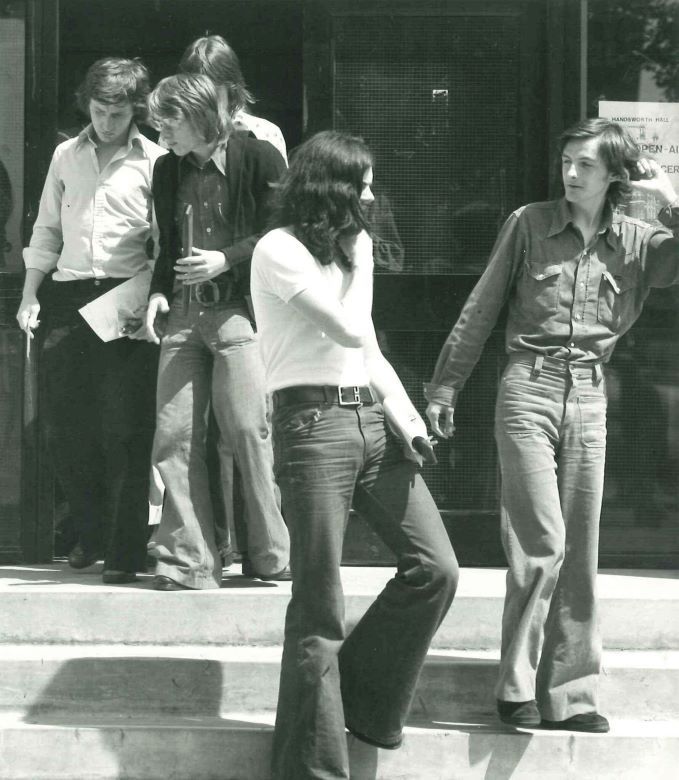
Aston University calls for former transport students to get in touch 2023 marks half a century of transport studies at the University First transport course ran in 1973. Aston University is asking former students to get in contact to help celebrate 50 years of transport education. This year marks half a century of transport studies at Aston University, dating back to 1973 when the subject first appeared as part of a combined honours degree course, with the first transport graduates completing in 1976. In 1982-3 the course became a degree in its own right and 40 years later is still teaching the transport professionals of the future. Aston University is currently the only UK institution to offer a dedicated transport management degree, BSc Transport Management, and a BSc Transport Planning degree apprenticeship. During the past five decades the course has produced graduates equipped with the skills, knowledge and experience needed across the transport sector. Dr Lucy Rackliff, programme director and head of the department of Engineering Systems & Supply Chain Management, said: “Generations of our students have contributed no end to the UK’s skills in this sector. From rail and road, consultancy and government, there are few areas in the transport sphere that have not been improved by our graduates. “If you studied transport at Aston University, we would love to hear from you with any stories and memories from your student days. And of course, we would love to hear about where your transport career has taken you.” Aston University started life in 1875, and in 1895 become the Birmingham Municipal Technical School, teaching chemistry, physics, metallurgy and electrical engineering. In 1966 it received its royal charter to become a university. If you would like to share where your transport career has taken you please get in touch via LinkedIn https://www.linkedin.com/groups/13582956/ or contact the University’s alumni team at alumni@aston.ac.uk
Public lecture: Be kind - effective design of software with and for real people
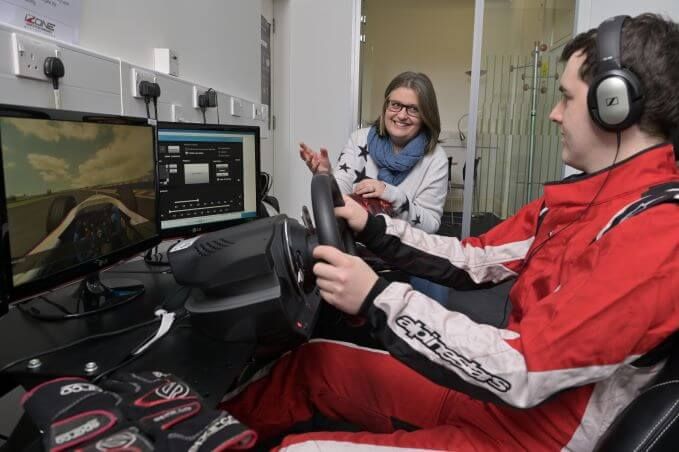
Public lecture: Be kind - effective design of software with and for real people Professor Jo Lumsden to give inaugural lecture on 9 March Will discuss need to approach software design with basic kindness. How software can be designed with kindness at its core is to be explored in a public lecture at Aston University. Professor Jo Lumsden is to give her inaugural lecture Be kind - effective design of software with and for real people on 9 March, which will be open to the public. Professor Lumsden said: “The approach to software development, however admirable, is often dominated by either the domain expert or the engineer who builds the software. “All too often, the voices of the real people who are destined to use the software are overlooked, or age-old techniques are adopted that do not support inclusive design or evaluation of such technologies.” Professor Lumsden will reflect on a wide range of examples which demonstrate novelty, or innovation. These could be in terms of designing with and interaction for end users, and evaluation to ensure feasibility and usability of technology that will be acceptable to end users. Professor Lumsden added: “Technology should be developed to help solve our problems or to improve our lives. “I am passionate about the fundamental need to approach software design with basic kindness. “I hope that the examples I will share in my lecture will inspire others to embrace empathetic approaches to future software design, so that collectively we can realise an effective and acceptable technological future.” Jo Lumsden is professor of human computer interaction in the College of Engineering & Physical Sciences at Aston University where she is also pro vice-chancellor (research integrity), head of the Computer Science Department and director of the Aston Interactive Media Lab. She has worked in research for more than 25 years and her recent work has centred on design and development of mobile assistive technologies which enhance the quality of life of those with special, typically healthcare-related, needs. Her multidisciplinary research brings together technologists, domain experts, and most importantly end users, to co-design technology, empowering end users to ensure their needs are met via the introduction of technology. The free event will be taking place on 9 March from 6 pm to 8 pm and will be followed by a drinks reception. To sign up for a place visit https://www.eventbrite.co.uk/e/an-inaugural-lecture-by-professor-jo-lumsden-tickets-530625183207

Georgia Southern recognized as top 100 degree producer for diverse students
Georgia Southern University has ranked in the top providers nationally for degrees conferred to diverse students among higher education institutions. For several years, Diverse Issues In Higher Education has produced the Top 100 Degree Producers rankings of the institutions that confer the most degrees to diverse students. The data was reported at the end of 2022 for the previous year of 2020-2021. Georgia Southern ranked highly in the following categories: #2 for international (temporary resident) students receiving doctoral degrees in public health #3 for African American and total minority students receiving doctoral degrees in public health #5 for African American students receiving bachelor’s degrees in the physical sciences #6 for African American students receiving bachelor’s degrees in communications disorder sciences #6 for African American students receiving bachelor’s degrees in parks and recreation “We are proud to be ranked in the top 20 in a variety of disciplines and categories,” said Dominique A. Quarles, Ph.D., associate vice president for inclusive excellence and chief diversity officer. "Along with our designations as a First-gen Forward Institution and Military Friendly School, this highlights the University’s success in providing education to students in our diverse state and region, and it reaffirms the importance of inclusion as a value at Georgia Southern.” The number of combined bachelor’s, master’s and doctoral degrees awarded increased by over 55,000 degrees from 2019-2021 to 2021-2022 for diverse students nationwide. Underrepresented students of color received 35% of the combined degrees. The data comes from the Integrated Postsecondary Education Data system survey known as IPEDS, which are collected by the U.S. Department of Education. Georgia Southern detailed diversity rankings: Rank Category Degree Level Discipline #2 Temporary Resident Doctorate Public Health #3 African American Doctorate Public Health #3 Total Minority Doctorate Public Health #5 African American Bachelor’s Physical Sciences #6 African American Bachelor’s Communication Disorders Sciences #6 African American Bachelor’s Parks, Recreation, Leisure #8 African American Bachelor’s Engineering #9 African American Bachelor’s Marketing #10 African American Bachelor’s Rehabilitation and Therapeutic Sciences #13 African American Bachelor’s Finance #13 African American Master’s Parks, Recreation, Leisure #14 African American Bachelor’s Family And Consumer Sciences #14 Two or More Races Bachelor’s Communication Disorders #15 African American Bachelor’s Education #19 African American Bachelor’s All Disciplines Combined View the Top 100 Diverse Report Here For more information about the Top 100 Diverse Report or to speak with Dominique A. Quarles — simply reach out to Georgia Southern Director of Communications Jennifer Wise at jwise@georgiasouthern.edu to arrange an interview today.


Craig M. Harvey, Ph.D., has been selected to serve as the new dean of the Allen E. Paulson College of Engineering and Computing beginning July 1. “I am excited to welcome Dean Craig Harvey to Georgia Southern University as the next generation of leadership for the College of Engineering and Computing,” said Carl L. Reiber, Ph.D., provost and vice president for academic affairs. “Dean Harvey brings with him an understanding of what a vibrant and growing research university will need to move to the next level as our region expands in its engineering and computing needs.” Harvey comes to Georgia Southern University from Louisiana State University, where he serves as the associate dean for academic affairs of the College of Engineering, professor of Industrial Engineering and is the holder of the Donald W. Clayton University Professorship. He brings to Georgia Southern a wealth of knowledge in leadership, student growth and expansion and advanced engineering studies. “It will be a great honor to serve as the next dean of the Allen E. Paulson College of Engineering and Computing, a college that prepares graduates in engineering, construction and computing to be ready to take on the challenges facing Georgia and the country in the 21st century,” Harvey said. “I look forward to working with faculty, staff, students, alumni and industry to position the college to meet the future demands in both education and research in the state where my engineering career began.” His research interests include human computer interaction, usability engineering, human collaboration within complex environments, human factors engineering and safety engineering. Harvey worked full time as a maintenance engineer and captain at Grand Forks Air Base in North Dakota and served in the United States Air Force Reserves while earning a Ph.D. in industrial engineering from Purdue University. He holds a bachelor's in industrial engineering from Georgia Institute of Technology and a master's in industrial engineering degree from Purdue University in West Lafayette, Indiana. For more information — simply reach out to Georgia Southern Director of Communications Jennifer Wise at jwise@georgiasouthern.edu to arrange an interview today.

Expert Comment - the humanitarian use of drones in the current Turkish/Syrian earthquake disaster
Dr Muhammad Azmat, Assistant Professor in Logistics and Supply Chain Management at Aston University, Birmingham, is available to provide comment on the humanitarian use of drones in the current Turkish/Syrian earthquake disaster, and why they should be used more. “There are several examples from the recent past that suggest autonomous drones and drone swarms could be an effective tool to speed up search and rescue operations. “I believe there is a need for more awareness of drones and humanitarian organisations should be encouraged in using this new technology.” Dr Azmat has previously written for The Conversation about the potential use of humanitarian drones during the Ukraine war Dr Azmat’s profile: Dr Muhammad Azmat Assistant Professor in Logistics and SCM - Expert with Aston University | ExpertFile If you have any queries, please contact Dr Azmat or Nicola Jones Mobile: (+44)7825 342091 n.jones6@aston.ac.uk Press and Communications Manager, College of Engineering and Physical Sciences, Aston University, Aston Triangle Birmingham, B4 7ET, UK


Researchers find mechanical stimulation could be used to help improve balance control The findings provide new information on whole-body vibration applications Paves the way for research on the interaction between the central nervous system and peripheral muscles. Mechanical vibrations could help improve our muscles and our balance control, according to research at Aston University. Researchers in the College of Engineering and Physical Sciences have examined the effect of stimulation on muscle spindles which ‘speak’ to the central nervous system to help keep us upright and walk straight. Their results provide new perspectives on whole-body vibration applications, paving the way for future research on the interaction between the central nervous system and the peripheral muscles. The research could in future be applied to improve balance in older people and help reduce falls, this could be applied through either wearable devices or with a daily session of stimulation. Hip fractures alone account for 1.8 million hospital bed days and £1.1 billion in hospital costs every year, excluding the high cost of social care. Another potential benefit of the research is that this type of stimulation could be applied to athletes to decrease their muscle reaction times. The goal of the study was to find out if mechanical vibrations can improve the way our bodies process and react to small body oscillations. Seventeen young male and female adult volunteers aged between 20 and 28 years old stood individually on platforms, similar to vibrating plates found in gyms, which caused leg muscle contractions. Calf muscles were targeted as the muscles whose action contribute the most to maintaining a stable upright posture. The researchers stimulated their calves with a frequency of 30Hz and recorded four one-minute trials of undisturbed balance to take a baseline measure and compared the readings to measurements taken after the stimulation. After conducting the experiment, they found that their balance seemed to have improved. The research, Sensorimotor recalibration of postural control strategies occurs after whole body vibration, was led by Dr Antonio Fratini, senior lecturer in mechanical, biomedical & design engineering, and PhD student Isotta Rigoni, and has been published in Scientific Reports – Nature. Dr Fratini said: “We’re excited by our results as they could have a beneficial effect on the health and quality of life of a large number of people. “Our results indicate that whole body vibration challenges balance at first, triggering a bigger effort to control the upright stance and shifting muscle modulation toward supraspinal control, resulting in a recalibration of muscle recruitment. The neuromuscular system seems to recover from such disruption and regain control over a longer time interval.” “Indeed, while muscle recruitment and cortical effort appear unaltered over the long term, the balance seems not only restored but also improved, besides the still clearly affected calf muscles.” For more information about our research or studying in the College of Engineering and Physical Sciences please visit our website.


Birmingham City Council Cabinet Member Cllr Majid Mahmood met with sustainability experts from across Aston University Cllr Mahmood is responsible for the city’s sustainable waste strategy Knowledge exchange projects between the city council and Aston University were discussed. Birmingham City Council’s Cabinet Member for Environment visited Aston University on 30 November to meet with academics working on sustainability challenges. Cllr Majid Mahmood is responsible for developing a financially and environmentally sustainable waste strategy for the city and engaging in citywide and national policy development to tackle the causes and consequences of climate change, among other accountabilities. Cllr Mahmood’s visit included seeing the chemical engineering and applied chemistry labs run by Dr Jiawei Wang and Dr Matthew Derry who are investigating methods for generating energy from waste and creating new, more sustainable materials. He also met with Professor Patricia Thornley, director of the Energy Bioproducts Research Institute (EBRI) along with other colleagues including Dr Katie Chong, who showcased EBRI’s world-leading research into bioenergy and bioproducts and heard from Dr Luciano Batista on the work he is leading at the Centre for Circular Economy and Advanced Sustainability which provides practical answers to tackle world-critical sustainability challenges. During the visit, Cllr Mahmood was able to share some of the challenges and opportunities facing Birmingham City Council, particularly around sustainability, the environment and waste management. He discussed with academics how Aston University’s research could feed into Birmingham City Council’s future waste and energy management plans and how the lived experience of the city should shape the direction of research. A number of knowledge exchange opportunities were also discussed, including using the city council’s experience to develop undergraduate student projects and academics being invited to visit Birmingham’s waste management depots. Cllr Majid Mahmood said: “It has been brilliant to visit Aston University today and to learn about the innovative ways that different academics are tackling the sustainability challenges facing the world. “As the largest metropolitan local authority in the UK, Birmingham is uniquely placed to develop sector leading waste and energy management processes. Working closely with universities like Aston University will help us to achieve this. “I look forward to developing our working relationship and combining our practical experience and research excellence to drive innovation in the sector.”

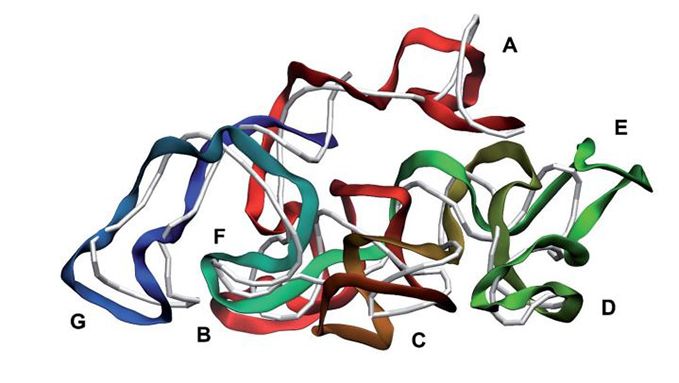
First ever computer reconstruction of a virus, including its complete native genome Will open way for investigating biological processes which can’t currently be fully examined because the genome is missing Could lead the way to research into an alternative to antibiotics. An Aston University researcher has created the first ever computer reconstruction of a virus, including its complete native genome. Although other researchers have created similar reconstructions, this is the first to replicate the exact chemical and 3D structure of a ‘live’ virus. The breakthrough could lead the way to research into an alternative to antibiotics, reducing the threat of anti-bacterial resistance. The research Reconstruction and validation of entire virus model with complete genome from mixed resolution cryo-EM density by Dr Dmitry Nerukh, from the Department of Mathematics in the College of Engineering and Physical Sciences at Aston University is published in the journal Faraday Discussions. The research was conducted using existing data of virus structures measured via cryo-Electron Microscopy (cryo-EM), and computational modelling which took almost three years despite using supercomputers in the UK and Japan. The breakthrough will open the way for biologists to investigate biological processes which can’t currently be fully examined because the genome is missing in the virus model. This includes finding out how a bacteriophage, which is a type of virus that infects bacteria, kills a specific disease-causing bacterium. At the moment it is not known how this happens, but this new method of creating more accurate models will open up further research into using bacteriophage to kill specific life-threatening bacteria. This could lead to more targeted treatment of illnesses which are currently treated by antibiotics, and therefore help to tackle the increasing threat to humans of antibiotic resistance. Dr Nerukh said: “Up till now no one else had been able to build a native genome model of an entire virus at such detailed (atomistic) level. “The ability to study the genome within a virus more clearly is incredibly important. Without the genome it has been impossible to know exactly how a bacteriophage infects a bacterium. “This development will now allow help virologists answer questions which previously they couldn’t answer. “This could lead to targeted treatments to kill bacteria which are dangerous to humans, and to reduce the global problem of antibiotic-resistant bacteria which are over time becoming more and more serious.” The team’s approach to the modelling has many other potential applications. One of these is creating computational reconstructions to assist cryo-Electron Microscopy – a technique used to examine life-forms cooled to an extreme temperature.