
Experts Matter. Find Yours.
Connect for media, speaking, professional opportunities & more.

Understanding economic development and its environmental impact
While fears about the environmental impact of economic development remains under discussion, the number of proenvironmental international non-governmental organizations (INGOs) continues to grow. But little is known about their influence on countries to create more eco-friendly industrial processes and technologies. In new research from Wesley Longhofer, assistant professor of organization & management, and coauthor Andrew Jorgenson (Boston College), the pair determined which nations they believed were “more embedded in the proenvironmental world society,” determining the level of influence of INGOs, as well as global treaties and professionals, on the countries they studied. The data took into account GDP per capita to find the effect of economic development on carbon emissions. The research examined whether countries that were more likely to feel this global pressure to “enact pro-environmental policies or invest in cleaner technologies” subsequently experienced a drop in rates of carbon emissions. Longhofer and Jorgenson created a measure to analyze the effects of development over time on carbon emissions in 79 countries, using data from 1970 to 2009. They found that “nations that are the most embedded in the environmental world society experienced a moderate decrease” in the impact of economic development on carbon emissions. Essentially, larger and more developed nations were more likely to feel the influence of proenvironmental INGOs than less developed countries, ultimately showing a small drop in carbon emissions. Source:



U.S. isn't equipped to bust fake news - but Europe is
The U.S. has been rocked over the last two years by claims that the Russian government directly attempted to meddle in the 2016 presidential election. Thomas Holt argues the current campaign being waged against the U.S. is serious. He says it merits a response from a trusted source. Although there are fact-checking websites in the U.S. like Snopes, a threat of this magnitude requires more than just citizen-run or private organization-operated programs. "A government effort to combat fake news would provide citizens with information about the scope of information warfare. It would also create a clearinghouse about fake news that can inform not only the public, but also government agencies and policy-makers. There is no current effort of this sort in the United States." "It may seem odd to propose that the government run its own campaign to clarify what is real and fake online. But I believe it is necessary in an era where individuals may not be able to fully separate fact from fiction, and legitimate news sources from the disreputable. An effort like this is not government censorship of the news – or even of fake news. It is government fighting false information by providing context, analysis and facts." Source:


The Struggle for DREAMers in Utah - Explore DACA
On Tuesday, April 24, 2018, a third federal judge ruled against the Trump administration’s push to end Deferred Action for Childhood Arrivals (DACA). U.S. District Judge John Bates called the administration’s attempts to end DACA “arbitrary,” “virtually unexplained,” and “unlawful.” He put a hold on the decision, allowing the Department of Homeland Security 90 days to give better reasoning to cancel the program or it would be fully reinstated. Dr. Stephen Allen, associate provost of International Affairs at Southern Utah University and expert on American immigration policy, sees the struggle for “DREAMers” in Utah and across the nation. “In March, the Supreme Court refused to hear a challenge to DACA,” said Dr. Allen. “That decision, along with the April 24 federal court ruling, has taken pressure off of Congress to act on the issue. The result is a great deal of uncertainty for DREAMers, families, and employers.” Originally enacted by President Obama, DACA is an immigration policy that shields undocumented immigrants that were brought to the United States as children. The youth apply to obtain a renewable two-year deferred action from deportation and to be eligible for a work permit. DACA has helped hundreds of thousands obtain driver’s licenses, social security numbers and attend school. Steps to eliminate DACA were initiated by the Trump administration in late 2017, but previous federal rulings have stalled the efforts. “Rescinding DACA would have a tremendous impact on Utah,” said Dr. Allen. “The program has allowed nearly 10,000 young people in Utah to come forward and pass background checks and live legally in the United States. There is strong evidence that the majority of these young people are productive citizens who are gainfully employed and/or enrolled in school. According to the non-profit and non-partisan organization Interfaith Worker Justice (IWJ), ending DACA would cost Utah alone nearly $476.5 million in annual GDP losses.” Dr. Allen believes that in general, Utahan’s have a strong commitment to keeping families together. “The United States is the only country most DREAMers have known. Deporting nearly 700,000 individuals would result in separation from families and losing the ability to legally work in the United States.” Dr. Allen specializes in international enrollment and admissions, developing global partnerships, and international education. He is familiar with the media and available for an interview. Source:


#NeverAgain - Students Taking Matters Into Their Own Hands
On April 20, 2018, the 19th anniversary of the Columbine High School shooting, students across the nation will walk out of their classrooms in protest of their leaders’ failure to pass laws protecting them from gun violence. Just last month, hundreds of thousands of students, teachers, and supporters rallied in Washington DC, for March for Our Lives, led by a group of students from Marjory Stoneman Douglas High School. These students, some of the latest to be affected by gun violence in schools, are using their voices to inspire change. John Meisner, Assistant Professor of Education at Southern Utah University and advocate for students on and off campus, recently voiced his concerns and support. “As a voting adult, I’m horrified that this problem has only been getting worse since the Columbine High School tragedy, and our elected leaders pretend that there is nothing that can be done. We have countless laws that have been enacted regarding public safety, and yet for this one, we do nothing.” Meisner recommends that as parents, mentors, and peers, we should support the efforts of these students. “I’m hugely proud of these students for refusing to accept this inaction and taking matters into their own hands. I don’t know that we’ve ever seen such organization and movement by high school and junior high school students. They’re often disrespected as ‘entitled’ and ‘lazy,’ but this latest tragedy has mobilized this population into action. We’re seeing youthfulness and enthusiasm combined with a social media savvy that is a powerful force. I think that as adults we should be proud of these efforts and support them fully.” Students crave relevance in their school work and lives. According to Meisner, the walkout is a perfect example of this. “I’m hopeful that they will not relent on the pressure until something is done. Maybe with this new movement, the Parkland tragedy will be the last.” “As educators, we should not only be concerned about the physical well-being of our students but should also see that their academic wellbeing is important too. They will be fully invested in topics that matter to them.” John Meisner has a deep love of education and a passion for teaching. Meisner also serves on the Allies on Campus committee working to support LBGTQ+ students and faculty through social events and educational outreach. He is familiar with the media and available for an interview. Simply visit his profile. Source:

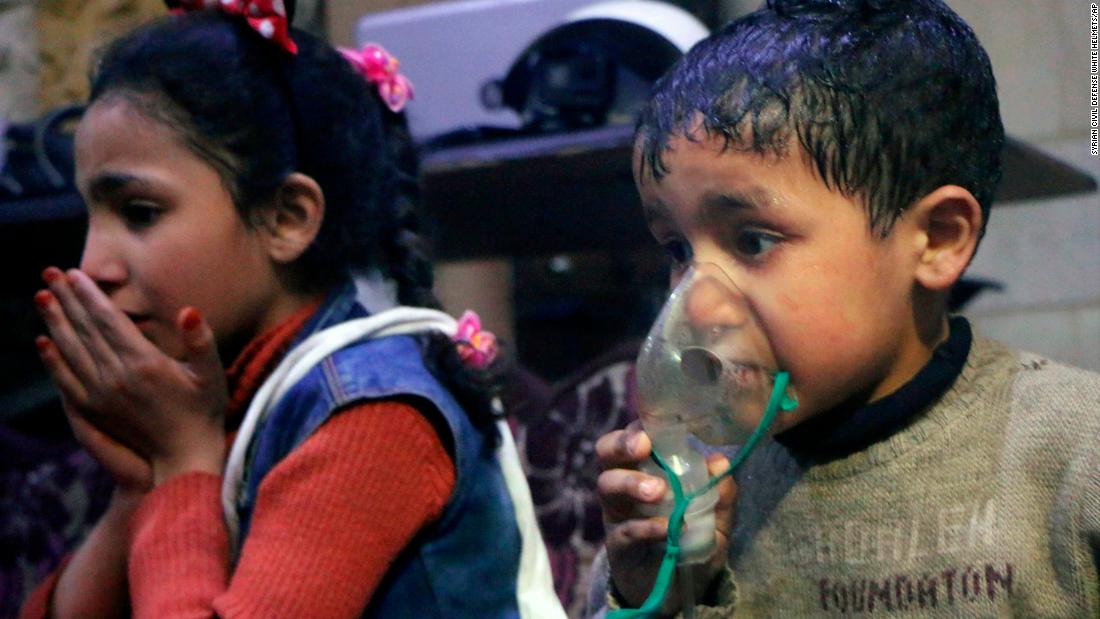
How serious is the sabre-rattling over Syria?
Last Saturday, though not ‘officially confirmed,’ a poisonous gas attack happened in the besieged Syrian town of Douma. The World Health Organization has confirmed that 500 people showed symptoms of being exposed to "toxic chemicals". This act of aggression supposedly by the Assad government has opened a Pandora’s Box. President Donald Trump is threatening missile strikes. Russian officials are threatening retaliation for any American aggression. Many world leaders are on edge and watching closely – Syria has become a powder keg and what happens next could have global implications. What are President Trump’s options? What could happen if the Russians counter? Is there a diplomatic option? There is an enormous amount at stake and a lot of scenarios to consider. That’s where experts from Missouri State University can help. Dr. David Romano, political science professor at Missouri State University, researches Middle Eastern politics and government. He's an expert in theories of peace and conflict, and foreign policy. He's available to speak about the escalating tensions, potential outcomes and consequences regarding any action in Syria. Click on his icon to arrange an interview. Source:


Millennials who are pursuing careers in public relations do not feel prepared to offer advice on ethics to their companies — and in fact, they do not expect to face ethical dilemmas at work, according to a Baylor University study. Millennials or Generation Y — generally identified as people born between 1981 or 1982 through 2000 — are projected to make up one third to one half of the country’s workforce by 2025. They will shift from being “doers” to being “deciders” in businesses, and their ethical compass will set the course for subsequent generations of public relations professionals, said study author Marlene Neill, Ph.D., assistant professor of journalism, public relations and new media in Baylor’s College of Arts & Sciences. “The study findings about lack of ethical readiness are a cause for concern,” Neill said. “If Millennials don’t feel equipped, they may be misled by their superiors or used as instruments of unethical behavior.” Without mentoring or training, they must learn by trial and error. Researchers found that factors that have a positive impact on Millennials readiness to face ethics issues include ethics training in college, workplace training, training through professional associations and mentoring by someone inside or outside their organization. But while the majority (74 percent) had received ethics training in college, most had not received training in the workplace through such methods as videos, handbooks and learning modules; or through a professional organization such as PRSA. Besides lacking confidence, most appear to be overly optimistic that they will not have to confront such common dilemmas as truthfulness in communication, altering researching results, working with questionable clients or blurring of personal and professional speech online, Neill said. Source:


This column by The Atlanta Journal-Constitution columnist Matt Kempner quotes business expert Peter Klein, Ph.D., professor of entrepreneurship in Baylor’s Hankamer School of Business and Senior Research Fellow with Baylor's Baugh Center for Entrepreneurship and Free Enterprise. Kempner asked several business and management professors to discuss President Trump’s management style. Klein said Trump's "style and manner is the dramatic departure from predecessors, not so much his policy." And regarding the differences in government versus business? “I understand the wish to make agencies more efficient,” Klein said. “But at the end of the day, government organizations are not like businesses.” ABOUT PETER KLEIN Peter G. Klein is Professor of Entrepreneurship at the Hankamer School of Business, Baylor University, and Senior Research Fellow with Baylor's Baugh Center for Entrepreneurship and Free Enterprise. His research focuses on the links between entrepreneurship, strategy, and organization, with application to innovation, diversification, vertical coordination, health care, and public policy. Source:


One Child Dies Every Two Minutes from Malaria – VCU Experts Are Working to Stop Statistics Like This
Did you know 91 countries reported ongoing malaria transmission in 2015? In fact, in that year, according the World Health Organization there were 429,000 malaria deaths and 212 million new cases. While the numbers are astounding – some progress is being made. In fact, according to the World Malaria Report 2016, the rate of new malaria cases fell by 21% globally between 2010 and 2015. Malaria death rates fell by 29% in the same period. However, malaria still claims one child every two minutes. At the Virginia Commonwealth University School of Engineering, the Medicines for All Initiative is helping address the crisis of diseases like malaria by increasing global access to lifesaving medications. Medicines for All develops processes that reduce the cost of active pharmaceutical ingredients (APIs) - a major cost driver in treating infectious diseases in the developing world. VCU is helping find solutions that utilize the lowest-cost raw materials and most efficient tools available. Medicines for All is bringing essential drugs to patients who need them most. VCU’s experts are available to speak regarding the devastating consequence of disease around the world and how VCU's Medicines for All Initiative is saving lives, promoting health and transforming pharmaceutical engineering. B. Frank Gupton, Ph.D., is a professor and the chair of the Department of Chemical and Life Science Engineering at the VCU School of Engineering. He leads the Medicines for All project and is an award-winning researcher and an expert in his field. Simply click on his icon to arrange an interview. Source:

