Experts Matter. Find Yours.
Connect for media, speaking, professional opportunities & more.

Machiavellianism boosts CEO pay, study finds
In an extensive study examining the relationship between personality traits and executive pay, CEOs who exhibit more Machiavellianism, characterized by motivation to achieve personal goals and 'win' social interactions, are more likely to have higher total pay and severance pay and to secure higher pay for those on their top management team. Aaron Hill, Ph.D., an associate professor at the University of Florida Warrington College of Business, and his co-authors determined that CEO's who scored higher on Machiavellianism were more motivated and successful in their negotiations. The team used a longitudinal sample of S&P 500 firms to compare compensation data with the executives' personality traits collected by expert clinical psychologists’ analyses of public video recordings. “Broadly, we find that CEO Machiavellianism positively relates to their own pay, their severance pay and the pay of their C-Suite or top management team,” Hill said. “The latter effect – on top management team pay – we find then predicts CEO pay raises. Our findings suggest that in this way, CEOs higher in Machiavellianism may pay their top management team members more to set up their own pay raises.” The team’s research highlights an underlying bias in how this trait can affect pay decisions. In response, those who set pay, such as boards of directors, should work on policies that reinforce the behaviors they want in their executives. They should also place leaders in a position to succeed and accentuate the positive aspects of their innate tendencies. “We all have tendencies that present tradeoffs in terms of having some positive aspects and some negative aspects,” Hill said. “Hopefully, as managers, we can acknowledge those and work to accentuate the positives and limit the potential downsides – in effect, take advantage of the positives and work to mitigate the negatives.” This research is published in the Journal of Applied Psychology.

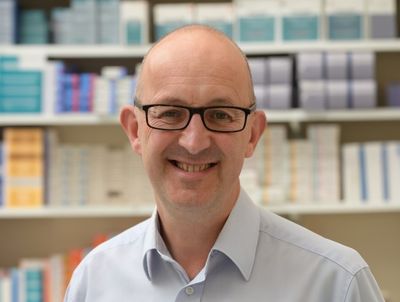
Professor Ian Maidment is a professor in clinical pharmacy at Aston Pharmacy School His inaugural lecture will explain why patients struggle with taking medication and present possible solutions to the problem Professor Maidment is a former practising pharmacist and an expert in medication optimisation and management in mental health and dementia. Professor Ian Maidment, professor in clinical pharmacy at Aston Pharmacy School, will give a public lecture about his life’s work on 5 February 2025. In his inaugural lecture, Professor Maidment will reflect on his journey from a childhood in Kent to becoming a leading researcher in clinical pharmacy. After more than two decades working in the NHS, in community pharmacy, mental health, dementia care, and leadership roles, he joined Aston University in 2012. His research focuses on the real-world challenges of medication optimisation for patients, carers, and healthcare professionals. The title of Professor Maidment’s lecture is ‘Medication adherence: Why it matters and how we can improve it’. Every year, the UK spends nearly £21 billion on medicines. Yet up to half of people with long-term conditions do not take their medication as prescribed—a problem known as non-adherence. This has profound clinical consequences and significant financial implications for the NHS. Professor Maidment will draw on his experience to explore how factors such as medication burden and side-effects influence adherence, the challenges posed by conditions such as dementia and severe mental illness, the role of pharmacy in supporting adherence and why tackling non-adherence requires a system-wide approach. He will also offer practical solutions to one of healthcare’s most persistent problems. Professor Maidment said: “We need to understand why patients struggle to take their medication and then develop and test solutions that work well.” The lecture on Thursday 5 February 2026 will take place at Aston Business School. In-person tickets are available from Eventbrite. The public lecture will begin at 18:00 GMT with refreshments served from 17:30 GMT. It is free of charge and will be followed by a drinks reception. The lecture will also be streamed online.


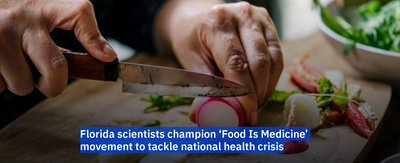
Florida scientists champion ‘Food Is Medicine’ movement to tackle national health crisis
University of Florida researchers are calling for a national transformation in how we address the ongoing epidemic of obesity and Type 2 diabetes, starting with a fundamental shift in how we approach health, agriculture and food. Published recently in the Proceedings of the National Academy of Sciences, the article argues that fruits and vegetables must be treated not just as food — but as medicine. With 73% of U.S. adults and 35% of children classified as overweight or obese, the authors warn that the crisis is not only an individual health issue but a national economic and security threat. Andrew Hanson, Ph.D., a co-author and professor of horticultural sciences at UF/IFAS, emphasized a sense of urgency and collective responsibility toward solving this health crisis. “This isn’t business as usual. We’re taking a public-interest view. This is the kind of thing we all need to be talking about. It’s too important not to,” he said. The article proposes a roadmap for change, including creating five National Institutes of Health-supported “Food Is Medicine” centers across the U.S., with Florida as a leading candidate; scaling up domestic fruit and vegetable production to meet national dietary needs; partnering with food producer and processors to make healthy foods more accessible, affordable and appealing; and reforming medical and nutrition education to include horticultural sciences and vice versa. The article highlights that only 1 in 10 adults meets the recommended daily intake of fruits and vegetables, and that U.S. production falls far short of what’s needed to support a healthy population. The authors call for a dramatic expansion of fruit and vegetable production, especially high-impact crops like berries, leafy greens and carrots. Christopher Gunter, Ph.D., professor and chair of the UF/IFAS Department of Horticultural Sciences, said the team’s goal is to push the role fruit and vegetables crops can play in improving human health into the national consciousness. “As a discipline, horticulture and the science of fruit and vegetables have been largely ignored in this conversation,” Gunter said. “Our goal is to move the needle on health with fruit and vegetables.” Hanson said about 80% of the nation’s cropland is used to grow soybeans, corn and wheat — most of which are processed into products with low nutritional value that contribute to the obesity and Type 2 diabetes epidemic. Mike Jaffee, M.D., a co-author and professor of neurology in the UF College of Medicine, stressed the broader implications of a high-vegetable diet on brain health. “Obesity and insulin resistance are linked to inflammation and neurodegeneration. We’re living longer, but our brains aren’t keeping up. That’s where the real cost to individuals and the health care system comes in,” he said. Gunter agreed, adding, “This epidemic reduces the longevity and productivity of our citizens. It limits the momentum communities need to grow healthy and resilient families.” Hanson pointed out that higher socioeconomic groups are better positioned to meet dietary recommendations, making this not just a health issue, but a deeply embedded social and economic one. “This crisis takes an unduly large toll on people with lower incomes and less time. To eat enough fruits and vegetables in the current system, you need substantial income and time to prepare food. That’s a luxury many don’t have,” he said. The authors argue that farmers bring essential knowledge to the table. “They understand how environmental factors impact nutritional quality,” Gunter said.

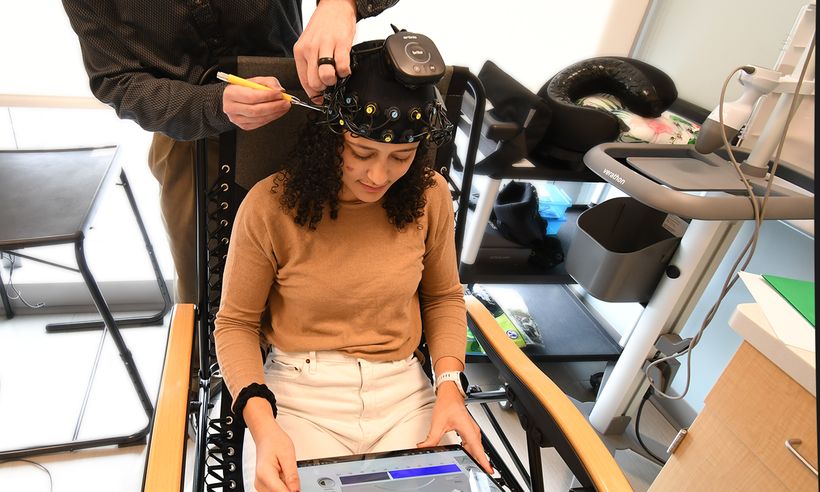
The year was 2003, and John Speich, Ph.D., professor in the Department of Mechanical & Nuclear Engineering, felt like he had a clear sense of the direction his burgeoning career was heading in. Speich had recently completed his doctorate in mechanical engineering from Vanderbilt University, where he concentrated on robotics. Following Vanderbilt, Speich went on to become an associate professor at the Virginia Commonwealth University (VCU) College of Engineering, working with students in the Department of Mechanical & Nuclear Engineering. Leveraging his robotics expertise, Speich planned to continue his work developing robotics for medical surgery and rehabilitation. Then Speich got a call from Paul Ratz, Ph.D., a professor at the VCU School of Medicine, asking for assistance that would change the entire focus of Speich’s career. Ratz used a small robotic lever that moved up and down just a few millimeters to stretch tiny strips of bladder muscle and rings of artery, trying to determine how different chemical compounds changed the mechanical properties of the muscle. Speich was intrigued—this was a form of mechanical engineering. “In mechanical engineering, we pull on things to determine the mechanical properties,” says Speich. “Here, Dr. Ratz was pulling on pieces of bladder instead of the typical substances mechanical engineers are known to work with, like steel, aluminum or plastic.” Speich and Ratz began working together in 2003, and now, because of that unique partnership, nearly all of the research Speich does is about the bladder. “Before I started working with Dr. Ratz, I had never even heard the words neurourology or urodynamics,” says Speich. “Now, Neurourology and Urodynamics is the name of the journal I publish in the most.” Today, Speich collaborates on bladder biomechanics with two doctors at VCU Health. Adam Klausner, MD is a urologist and the interim chair of the new Department of Urology at VCU. Linda Burkett, MD is a urogynecologist from the Department of Obstetrics and Gynecology; prior to medical school, Burkett completed her bachelor’s degree in Biomedical Engineering from the VCU College of Engineering. Together, Speich, Klausner and Burkett aim to find non-invasive methods to characterize and diagnose overactive bladder, with the goal of allowing doctors to precisely match patients with the most effective treatments. A number of students across the VCU College of Engineering and VCU School of Medicine have aided in their research, including recent Biomedical Engineering graduate Mariam William. Speich’s primary methods of research involve Near-Infrared Spectroscopy (NIRS)—a non-invasive technology that uses light to measure tissue oxygenation and brain activity—and ultrasound imaging. By using NIRS to study the brain activity associated with the sudden urge to urinate, Speich and his team are working to pinpoint the brain’s role and determine whether it or the bladder is the primary cause of an individual’s condition. “There are a lot of potential causes of overactive bladder,” says Speich. “Some people may have more than one cause. Individual responses to these treatments vary; what works well for one patient may not work at all for the next. We want to give doctors better tools for quantifying information about their patients so they can make better decisions and more optimized treatments.” Thanks to research grants, including a National Institutes of Health (NIH) grant from 2015-2025, Speich has been able to make a number of important findings in his bladder research. His team has closely examined the bladder’s dynamic elasticity, investigating the biomechanical mechanisms that allow the bladder muscle to fill and expand. Another recent focus asks, “Bladder or Brain. Which is it?” Speich and his team developed a tool called a sensation meter that they use to help determine what an individual is feeling as their bladder is filling over time. All this groundbreaking research and medical school collaboration, and to think—Speich nearly missed the opportunity to enter this field entirely. “When I tell students about how I came to be involved in bladder biomechanics, I tell them, you will always keep learning throughout your entire career,” says Speich. “You never know where you’re going to end up. If you’re an engineer, you’re a problem solver, and there are all kinds of problems in areas like business and medicine—beyond the traditional areas people think of when they think of mechanical engineering.”

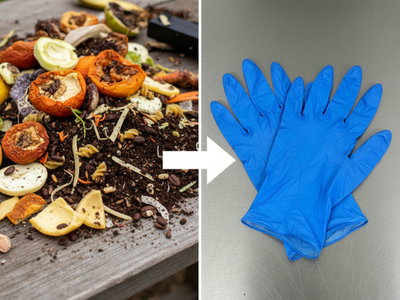
New research partnership to develop biodegradable gloves from food waste for healthcare sector
Knowledge Transfer Partnership between Aston University and PFE Medical to develop a biodegradable clinical glove from food waste The gloves will provide a low-cost, convenient and sustainable alternative to the 1.4bn disposable gloves used in the NHS each year The innovation will reduce clinical waste and costs and help the NHS reach its net zero goals. Aston University and Midlands-based company PFE Medical are teaming up to create biodegradable gloves made from food waste for use in the NHS. They will offer a low-cost, convenient alternative to disposable gloves without compromising patient safety. More than 1.4bn disposable gloves are used by the NHS each year. They create large volumes of clinical waste which has both an environmental and economic cost. The Knowledge Transfer Partnership (KTP) project will develop a more sustainable alternative made from polymers derived from food waste such as orange peel, able to degrade naturally. The gloves will initially be for use during low-risk tasks such as ultrasound scans, rather than in more critical situations such as operating theatres. The gloves would be designed to not only reduce clinical waste and costs in the NHS, but also carbon emissions, helping the NHS reach its goal to be the world’s first net-zero health service. With most personal protective equipment (PPE) currently sourced from Chinese manufacturers, the goal is to develop a biodegradable glove that can be manufactured using a UK supply chain. The challenging project draws on Aston University’s expertise in sustainable polymer chemistry, centred at Aston Institute for Membrane Excellence (AIME). Aston University has one of the largest research groups of polymer chemists in the UK. The project will be led at the University by Professor Paul Topham, director of AIME, and Dr James Wilson, AIME associate member. The research team have chosen to focus on polymers from food waste in order to ensure that the final product can be manufactured sustainably. Most polymers are currently made from petroleum. Polymers made from food waste, ranging from fruit waste to corn or dairy products, have the potential for antioxidant and antibacterial properties if designed appropriately. The team will manipulate the polymer molecules so that they include the right monomers (the smaller units which make up the molecules) in the right location to achieve the properties they require. Critical to the success of the project will be PFE Medical’s commercial and clinical experience of taking new innovations into medical use. It will be the third KTP between Aston University and PFE, following on from successful projects to develop an automated endoscope cleaner, now in use across University Hospitals Birmingham NHS Foundation Trust (UHB). Professor Topham said: “At Aston University, we have a long history of working with industry, of translating fundamental research into solutions for real world problems. This project with PFE Medical provides us with that route, to take our science and engineering and make a difference to peoples’ lives. That’s exactly where, as researchers, we want to be.” Rob Hartley, CEO of PFE Medical, said: “Our previous KTP with Aston University was a phenomenal success, thanks to the brilliant team we had on board. I’m just as excited by this project, which is looking to solve an equally long-standing problem. If we can achieve our goal, then the implications are huge, going far beyond the NHS to all the other situations where people are wearing disposable gloves.” KTPs, funded by Innovate UK, are collaborations between a business, a university and a highly qualified research associate. The UK-wide programme helps businesses to improve their competitiveness and productivity through the better use of knowledge, technology and skills. Aston University is a sector-leading KTP provider, ranked first for project quality, and joint first for the volume of active projects. For further details about this KTP, visit the webpage: www.aston.ac.uk/business/collaborate-with-us/knowledge-transfer-partnership/at-work/pfe-medical.

“Designing Her Own Future: A Georgia Southern MBA Story”
After earning her Master of Business Administration from Georgia Southern University, one graduate is charting a path that blends creativity with business discipline. With a background in dressmaking, she entered the MBA program already skilled in her craft, but looking to strengthen the operational side of her work. “So much goes into dressmaking,” she explained. “From developing the pattern to the fabric you use, getting the right measurements, and so on. You have to make sure your stitches are clean, that the zipper is sitting properly.” While her technical skills were well developed, she quickly recognized that sustaining and growing her work required more than creative talent alone. “I didn’t have that business background,” she explained. “So I wanted to find a university program that could teach me how to structure and operate my business efficiently. So I started doing my research.” That search led her to Georgia Southern’s MBA program, where she immersed herself in coursework focused on strategy, leadership, and practical decision-making. Through the program, she gained the tools to think more systematically about her business—learning how to plan, organize, and scale her operations with confidence. Her experience reflects how graduate business education can empower entrepreneurs and creatives alike, transforming passion into sustainable practice and helping graduates design futures that work both artistically and professionally. Want to learn more about Georgia Southern's Master of Business Administration program? Simply contact Georgia Southern's Director of Communications Jennifer Wise at jwise@georgiasouthern.edu to arrange an interview today.

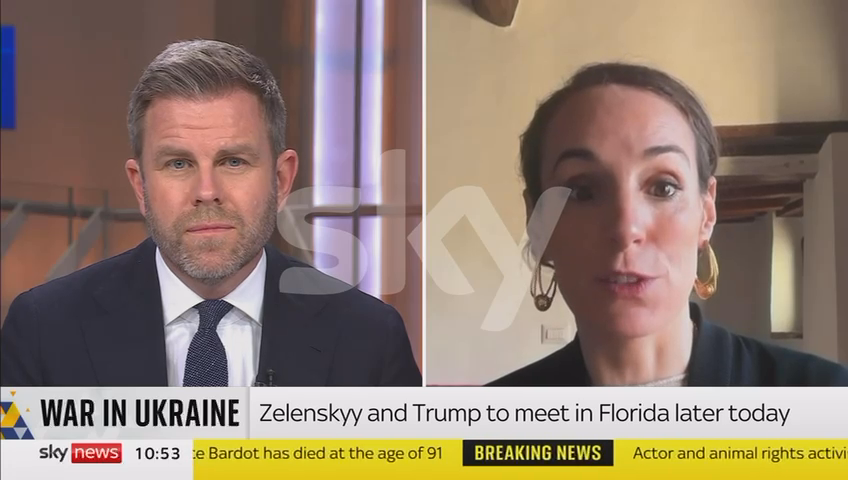
In a recent interview, Livia Paggi of J.S. Held discussed the implications of reported discussions between President Donald Trump and President Volodymyr Zelensky about a potential peace plan aimed at ending the war in Ukraine. The conversation focused on what these talks signal politically, what pressure points may be shaping each leader’s approach, and why the timing and framing of any “peace plan” matters as much as the details themselves. Paggi emphasized that peace-plan conversations at this level often have multiple audiences at once: domestic political constituencies, international allies, and adversaries assessing resolve and leverage. She explored how diplomatic positioning can influence the credibility of negotiations and how public messaging, even before formal agreements exist, can shift perceptions on the battlefield, at the negotiating table, and across NATO-aligned capitals. The interview also examined the risks embedded in any peace-plan narrative. Paggi highlighted that negotiation efforts can introduce uncertainty for markets, governments, and populations when expectations outpace realities. She discussed how the mechanics of ending a war extend beyond a headline announcement, including enforcement, guarantees, verification, and the long-term stability of whatever framework is proposed. When we look at what Trump is likely to do, he's going to try to go back and forth, favor different political actors and see what he can do to unlock the situation. A copy of the full interview is below: For journalists following the Ukraine war, shifting diplomatic strategies, or the real-world consequences of peace negotiations, Livia Paggi offers a clear, practical lens on what these discussions could mean next. Her perspective helps reporters move beyond political theatre and toward the key questions: what’s being signaled, who gains leverage, what conditions would make an agreement durable, and what risks emerge if the process breaks down. Looking to connect with Livia Paggi? Livia is a sought-after speaker and regularly provides commentary on global political trends for the media, including for the BBC, Bloomberg TV, CNN, and the Financial Times. Livia is the recipient of numerous awards for her work. Most recently, she was named by Management Today as one of Britain’s top women in business under 35 and Bloomberg TV named her as one of the top female foreign policy commentators. Click on her profile icon to arrange an interview or get deeper insights into geopolitical risk, government relations, and business impacts.


A Snapshot of the Local Economy: Simon Medcalfe on Growth, Risk, and What Comes Next
At Augusta University’s annual Economic Forecast Breakfast hosted by the James M. Hull College of Business, Simon Medcalfe, PhD, offered a grounded, data-driven look at how the local economy is performing — and what lies ahead. Speaking to business leaders, students and community stakeholders, Medcalfe emphasized the importance of distinguishing real economic growth from inflation-driven gains, noting that while the Augusta region continues to grow, it does so at a measured pace compared to national averages. His presentation framed the local economy as stable and resilient, but not immune to broader forces shaping the U.S. outlook. A key theme of Medcalfe’s remarks was the role of research, innovation and education in sustaining long-term economic health. He pointed to strong gains in research and development across Georgia and highlighted how university-based research directly contributes to regional economic output. According to Medcalfe, investment in knowledge creation remains one of the most reliable drivers of growth, reinforcing the value of higher education institutions as economic anchors. Simon Medcalfe, PhD, is an economist with an emphasis on sports economics, social determinants of health, and the local economy. View his profile At the same time, Medcalfe cautioned against complacency. While regional fundamentals remain solid, he stressed that uncertainty at the national level continues to pose risks. “However, uncertainty abounds in national macroeconomic policy that could negatively impact growth next year,” Medcalfe said, underscoring how unresolved fiscal decisions and policy shifts can ripple down to local economies. Still, his overall outlook balanced realism with optimism. Medcalfe concluded that the Augusta region — and Georgia more broadly — is positioned to weather uncertainty thanks to diversification, investment in early education, and continued research activity. “Overall, Augusta and Georgia are positioned well for economic growth in 2026 with a strong commitment to early childhood education, a diversified labor market and strong research and development,” he said. View the full article 'Annual Economic Forecast Breakfast offers snapshot of the local economy' here: For journalists covering regional economics, workforce development, higher education, or policy-driven growth trends, Simon Medcalfe, PhD, offers clear-eyed analysis rooted in data — and an ability to translate complex economic signals into insight that matters locally. Simon is available to speak with media - simply click on his icon now to arrange an interview today.


My MBA Journey at 69: Because Apparently, Climbing Everest Base Camp Wasn't Enough
If you watched CBS 60-Minutes host, Cecilia Vega set out on a challenging 10-day trek to Everest Base Camp (EBC) in the Himalayas, for last week's episode, you couldn't help but marvel at the gruelling physical demands and the profound experience of being at the foot of Mount Everest. Her journey, which involved intense training, navigating dangerous suspension bridges, and dealing with extreme altitude, also highlighted the massive industry around Everest and the vital, underappreciated role of the Sherpa community. Her journey is an inspiring look at how we can push our own boundaries. Bravo Cecilia! Vega described hiking Everest Base Camp as "the hardest thing I've ever done physically," battling low oxygen (like breathing through a straw) and fatigue, despite months of training. She experienced sub-freezing temperatures, crossed dizzying suspension bridges, and even witnessed close calls with avalanches, with trusty Sherpas conducting nightly tent checks to ensure her safety. Hiking to Everest Base Camp is hard. I know. Because I did it. At 60 Let me explain. I have a tradition of celebrating milestone birthdays with a bang. When I turned 60, I gave myself six physical challenges — one for each decade lived. The grand finale? Climbing to Everest Base Camp. It was epic, exhausting, and left me with both altitude sickness and lifetime bragging rights. But as I approached 69, I craved something different. Not hiking boots this time — just highlighters. Not mountain peaks — mental peaks. I wanted an intellectual challenge that would prove my brain still had some miles left on it. No oxygen tanks required this time. Just caffeine, reliable Wi-Fi, and an iron will. How I Got Here (And Why I'm Questioning My Sanity) I've always wanted an MBA — partly for the knowledge, but let's be honest, mostly for the prestige. There's something irresistible about joining that club of spreadsheet-loving scholars. For years, I've imagined myself casually tossing around terms like "synergy" and "stakeholder engagement" while sipping something expensive in a sleek business lounge. What I didn't imagine was attempting this after a 46-year hiatus from university. Spoiler alert: It's harder than I thought. Like, significantly harder. Enter the MBA: Twenty-four courses. Two years or so, and approximately one hundred "What was I thinking?" moments. I enrolled at the Sprott School of Business at Carleton University, which offers a generous seniors' discount. I briefly debated whether to ask for the student discount or the seniors' discount — then thought, why not request both? I've earned these wrinkles and this tuition bill. Bonus perks: I qualify for the student medical and dental plans. My classmates use them for wisdom tooth extractions. I'm eyeing the denture clause. Term One: The Tech Tsunami Let's talk about the software situation. Brightspace. Turnitin. eProctor. Excel (the betrayer). Word. APA 7th Edition. And about a dozen other platforms that might as well have been written in Klingon. I expected a gentle introduction — maybe some academic foreplay before diving into heavy coursework. Instead, I was shoved into the deep end with weights tied to my ankles. Each assignment came with a forest's worth of readings, PowerPoint slides, and discussion board posts. I was up at 5 a.m., trying to squeeze in extra hours in the day. (Spoiler: you can't.) Despite decades spent managing teams, I was barely scraping 60% on quizzes — the open-book ones. How is that even possible? Accounting became my personal Everest. People kept telling me, "Excel is your friend." That's a lie. Excel is that friend who borrows your car, crashes it, returns it on empty, and then asks if you've bothered reading the manual. Casualties of War: Family, Friends, and Dottie My family was neglected. My friends assumed I'd entered witness protection. Even my little dog Dottie stopped talking to me. She'd give me this look — a devastating combination of pity and disappointment — every time I said, "Sorry, no walk today. Mommy has to study debits and credits." You haven't experienced true shame until you've been judged by a 10-pound dog wearing a sweater. The Breaking Point (And the Breakthrough) I'll admit it — I had serious moments where quitting felt like the only rational option. The workload was relentless. The jargon was endless. The pressure was overwhelming. I contacted teaching assistants, professors, and even the university librarian, desperately searching for a lifeline. They were all kind and patient. But ultimately, I had to figure it out myself. And somewhere between the caffeine highs and APA citation lows, something clicked. Even Cs get Degrees! By midterm, I began to suspect something radical: perhaps the large amount of work was the real test. Not the material itself, but the sheer volume. Maybe this was the school's way of differentiating dedicated students from curious ones, the serious from the casual observers. Was it possible that the secret to MBA success was learning what not to do? After all, the passing grade is a B- (70%). At this point in my life, I'd be happy with a 71% and a full night's sleep. Hence the title, Even Cs get Degrees! Working Smarter, Not Harder Somewhere between week three and mild hysteria, I made a radical decision: stop trying to do everything. I focused on lectures and study notes instead of drowning in supplementary readings. I prioritized assignments strategically. I stopped pretending perfection was achievable — or necessary. The results were immediate: • My grades improved • My panic attacks decreased • Dottie started making eye contact again I also began scheduling regular Zoom calls with professors and TAs — not just for assistance, but to foster genuine relationships (my lifelong superpower). Once I stopped pretending, I had everything under control; everything truly improved. School life has improved. Home life has also improved. I was finally able to brush my hair again. Slowing Down to Soak It In Next term, I'm taking just one course. Because honestly, what's the rush? I'm not chasing a promotion or striving for a corner office. I'm doing this for myself — for the simple joy of learning and the satisfaction of knowing I still can. I want to enjoy the journey, not rush through it gasping. I want to look forward to lectures rather than fear them. I want my sleep score (and my sanity) restored. The goal isn't speed. It's savouring. What I've Learned So Far Here's what these first two courses have taught me: ✓ I can still learn — even when my brain occasionally reboots mid-sentence ✓ I can focus — especially with enough coffee ✓ I'm still gloriously, endlessly curious ✓ I need sleep (The 5 a.m. club can keep their membership) ✓ I need fun (Revolutionary concept, I know) ✓ I love to learn (Turns out, I always have) ✓ I make mistakes — and they're not terminal ✓ I need help — and I must ask for it ✓ APA 7th Edition is real — and I finally understand what it means (Sort of. Mostly. Sometimes.) ✓ Even Cs or, in my case, a B- get a Degree — consistent, sustainable B- work will win most every race Looking Ahead: The Big 7-0 By the time I graduate, I'll be at least 70 years old. And honestly? I can't think of a better birthday gift for myself. When most people talk about slowing down, I'm actually ramping up. While others are downsizing, I'm uploading assignments at 11:58 p.m. When my friends ask why I do this, I smile and say: "Because I still want to know what I'm capable of." To Be Continued... This is just the beginning of my MBA adventure. I've completed two courses out of twenty-four. Twenty-two more to go — one term at a time, one course at a time, one small victory at a time. I'll update this blog periodically with new stories, fresh insights, and probably more tales of Dottie's disappointment. As We Start the New Year Here's a toast to all of us who refuse to act our age. To everyone starting something new — whether it's an MBA, a marathon, or a pottery class. To everyone who believes it's never too late to learn, to laugh, or to start again. Because learning doesn't stop when you retire. Sometimes, it's only just beginning. Stay tuned for Term Two updates, where I'll tackle another course, hopefully retain my sanity, and continue proving that 69 is just a number (and so is 70, 71, 72...). All the best to you in 2026 and beyond! Sue Don’t Retire… ReWire! Want to become an expert on serving the senior demographic? Just message me to be notified about the next opportunity to become a "Certified Equity Advocate" — mastering solution-based advising that transforms how you work with Canada's fastest-growing client segment. Here's the link to sign up.



Chasing followers makes crypto traders perform worse on social investment sites
Whether excited about gaining new followers or desperate to win back lost subscribers, investors who saw changes to their subscriber count performed worse than before their subscribers changed, according to a new study. The research tracked performance on social investment sites, where individuals can trade assets like cryptocurrency while attracting audiences based on their performance — like YouTube, but for investments. Both gaining and losing followers led investors to make more frequent, riskier trades. The upshot is that traders performed about 10% worse in the weeks after their subscriber counts changed. “If the number of followers increases a lot, it creates an overconfidence effect. You are more aggressive in trading, and your future trading performance will be worse,” said Liangfei Qiu, Ph.D., a professor in the University of Florida’s Warrington College of Business and co-author of the new study. “So logically we thought that if more followers leads to worse performance, then if we reduce the number of followers, it will reverse the effect, reduce overconfidence and lead to higher trading performance,” Qiu said. “But that’s not what we found. If we reduce the number of followers, they trade even more aggressively and their trading performance becomes even worse.” Qiu and his collaborators at the University of Maryland and University of Washington worked directly with an anonymous social trading platform to examine the impact of gaining or losing followers on traders’ cryptocurrency trading behavior and performance. The research revealed the power of social pressure. This study was focused on cryptocurrency, which is highly volatile and may exacerbate the risk of social trading. But social trading also exists for traditional investments like stocks and bonds, and chasing followers could hurt these types of investments, too. The researchers say that both platforms and investors should guard against the downsides. “If platforms emphasize the social functions too much, it might backfire. Eventually it will hurt the long run performance of the platform,” he said. “The investors should realize their inherent bias and make sure their trading strategies are not too affected by social attention.”