
Experts Matter. Find Yours.
Connect for media, speaking, professional opportunities & more.
It’s all eyes on Africa as the UN looks to find ways to ensure universal health care for all
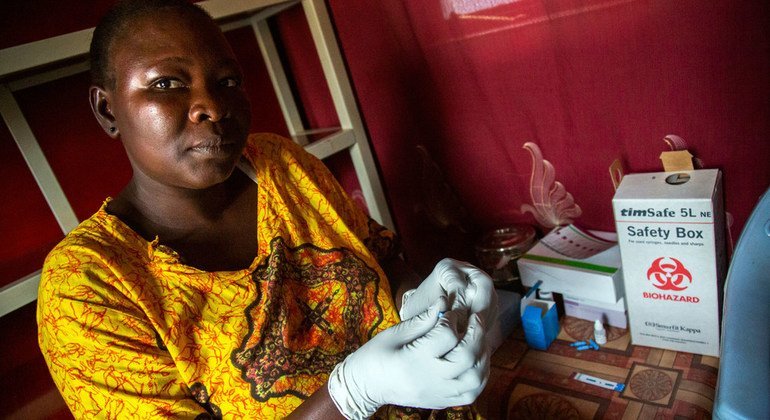
It was a historic moment earlier this month as the United Nations and African Union pledged to pursue bolds goals that will strengthen global health and provide health care to all across Africa. “The Memorandum of Understanding we have signed today is an important step towards formalizing the cooperation between WHO and the African Union and to implementing the Addis Ababa Call to Action,” said the WHO chief. “The Addis Ababa Call to Action is a powerful commitment from African Union leaders to increase domestic financing for health, and to hold themselves accountable for that commitment”, he added. Following a political declaration on universal health coverage, which was approved in September by all UN Member States, the General Assembly adopted a global resolution to translate that commitment into reality by legislators in 140 countries. November 18 - UN News It’s indeed a bold declaration and one that will require prevention, infection control and affordable delivery of care. Key UN-AU collaboration specifics Provide technical expertise to the African Medicines Agency and create an environment to foster local production of medicines. Strengthen collaboration between WHO and the Africa Centers for Disease Control and Prevention – with a particular focus on emergency preparedness, to build defenses against epidemics and other health emergencies. Support the implementation of the Addis Ababa Call to Action on universal health coverage and the AU Declaration on Domestic Financing. The prospects are positive, but delivery will be a challenge, and if you are a journalist covering this topic and need an expert source for insight and perspective – let us help. Dr. Saad Bhamla is an Assistant Professor of Chemical & Biomolecular Engineering at the Georgia Tech College of Engineering where he also runs the Bhamla Lab that develops low cost tools for science education and global health. Saad is available to speak to media regarding this topic, simply click on his icon to arrange an interview.



CRISPR is the genetic game changer – but are we ready?
CRISPR is here to stay – and the daily advances of this technology and stem cell therapy seem to be moving at a near exponential speed. “CRISPR Therapeutics of Zug, Switzerland, reported that one patient with sickle cell anemia and another with beta thalassemia appear to have benefited from the same CRISPR-based intervention for up to 9 months, STAT reports. (The company gave STAT an early look at the data but did not allow outside commenters to see the results.) Before the treatment, both patients required multiple infusions each year of red blood cells. CRISPR Therapeutics, collaborating with Vertex Pharmaceuticals, removed blood stem cells from their bodies and modified them with CRISPR to knock out a gene that shuts down production of fetal hemoglobin. When the edited cells were put back in each patient’s body through a stem cell transplant—which required a toxic chemotherapy to kill their own stem cells—both people produced high levels of fetal hemoglobin and no longer needed transfusions.” November 19 – Science Mag CRISPR and how it will shape the future of genetics, health care and society are the subject of great debate, hope and concern and if you are a journalist covering this topic and need an expert source for insight and perspective – let us help. Dr. Michael Davis researches cardiac regeneration, stem cell therapy and preservation at the Georgia Tech College of Engineering where he also is the Associate Chair for Graduate Studies in Biomedical Engineering. Michael is available to speak to media regarding this topic, simply click on his icon to arrange an interview.


A Lego-Like Approach to Improve Nature’s Own Ability to Kill Dangerous Bacteria
The Centers for Disease Control and Prevention considers antibiotic resistance one of the most urgent public health threats, one that affects communities worldwide. The ramifications of bacteria’s ability to become resistant to antibiotics can be seen in hospitals, public places, our food supply, and our water. In their search for solutions, researchers at Rensselaer Polytechnic Institute have been looking to nature. In a paper recently published in Biomacromolecules, the team demonstrated how it could improve upon the ability of nature’s exquisitely selective collection of antimicrobial enzymes to attack bacteria in a way that’s much less likely to cause bacterial resistance. “The idea is that we could take nature’s approach and just make it better,” said Jonathan Dordick, a chaired professor of chemical and biological engineering and a member of the Center for Biotechnology and Interdisciplinary Studies (CBIS). In order for bacteria to grow and live, they naturally produce autolysin enzymes that can break down their own cell walls, allowing those cells to divide and multiply. In attacking one another, bacteria take advantage of a similar process, using an antibacterial protein known as a bacteriocin to kill a bacterium. Bacteria can also be attacked by bacteriophages, which are viruses that infect bacteria. They produce phage endolysin enzymes, which attack the bacterial cell from the inside. All three types of enzymes are broadly known as cell lytic enzymes, as they catalyze the breakdown of the bacterial cell wall. “It’s very difficult for bacteria to become resistant to the action of these enzymes,” Dordick said. “For example, if they became resistant to an autolysin, they wouldn’t divide.” Like building blocks, most cell lytic enzymes are modular. They’re made up of one binding domain which attaches to the cell wall, and a catalytic domain that breaks holes in the cell wall — effectively destroying the targeted bacteria. “The idea was: Could we use a Lego-like approach here? Could we take a binding domain from one enzyme and can we mix it with a binding domain or catalytic domain of another one?” Dordick said. The issue of antibiotic resistant bacteria and disease is a serious one and of great concern to the medical community. If you’re a journalist covering this topic or are looking to know more about the ongoing research into this field – let our experts help. Jonathan S. Dordick is the Howard P. Isermann Professor of Chemical and Biological Engineering at Rensselaer Polytechnic Institute where he is also the Senior Advisor to the President for Strategic Initiatives. Dr. Dordick is available to speak with media regarding this topic - simply click on his icon to arrange an interview.


D. Tyler McQuade, Ph.D., professor in the Department of Chemical and Life Science Engineering at Virginia Commonwealth University College of Engineering, is principal investigator of a multi-university project seeking to use artificial intelligence to help scientists come up with the perfect molecule for everything from a better shampoo to coatings on advanced microchips. The project is one of the first in the U.S. to be selected for $994,433 in funding as part of a new pilot project of the National Science Foundation (NSF) called the Convergence Accelerator (C-Accel). McQuade and his collaborators will pitch their prototype in March 2020 in a bid for additional funding of up to $5 million over five years. Adam Luxon, a Ph.D. student in the Department of Chemical and Life Science Engineering who has been involved from the beginning, explained it this way: “We want to essentially make the Alexa of chemistry.” Just as Amazon, Google and Netflix use data algorithms to suggest customized predictions, the team plans to build a platform and open knowledge network that can combine and help users make sense of molecular sciences data pulled from a wide range of sources including academia, industry and government. The idea is right in line with the goal of the NSF program: to speed up the transition of convergence research into practice in nationally critical areas such as “Harnessing the Data Revolution.” The team itself reflects expertise across several specialties. Working with McQuade are James K. Ferri, Ph.D., professor in the Department of Chemical and Life Science Engineering; Carol A. Parish, Ph.D., professor of chemistry and the Floyd D. and Elisabeth S. Gottwald Chair in the Department of Chemistry at the University of Richmond; and Adrian E. Roitberg, Ph.D., professor in the Department of Chemistry at University of Florida. Two companies are also involved with the project: Two Six Labs, based in Arlington, Virginia, and Fathom Information Design, based in Boston, Massachusetts. Currently, there is no shared network or central portal where molecular scientists and engineers can harness artificial intelligence and data science tools to build models to support their needs. What’s more, while scientists have been able to depict what elements make up a molecule, how the atoms are arranged in space and what the properties of that molecule are (such as its melting point), there is no standard way to represent — or predict — molecular performance. The team aims to fill these gaps by advancing the concept of a “molecular imprint.” The collaborators will create a new system that represents molecules by combining line-drawing, geometry and quantum chemical calculations into a single, machine-learnable format. They will develop a central platform for collecting data, creating these molecular imprints and developing algorithms for mining the data, and will develop machine learning tools to create performance prediction models. Parish said, “The ability to compute molecular properties using computational techniques, and to dovetail that data with experimental measurements, will generate databases that will produce the most comprehensive results in the molecular sciences. “There are many laboratories around the world working in this space; however, there are few organizational structures available that encourage open sharing of these data for the benefit of the community and the common good. We seek to collaborate with others to provide this structure; an open knowledge network or repository where scientists can deposit their molecular-level experimental and computational data in exchange for user-friendly tools to help manage and query the data.” The initial response to their idea has been strong from potential partners. Ferri and the others have already collected more than a dozen letters from major corporations such as Dow and Merck expressing interest in participating. Also on board are Idaho National Laboratory and Argonne National Laboratory, as well as national chemical engineering and chemistry organizations. McQuade said that chemical engineers in major industries including consumer products and oil and gas producers expend a lot of effort running experiments to determine the molecule they want to use, such as finding the best shampoo additive that doesn’t make babies cry. “The ability to design the properties you want is still more art than science.” The team also plans to develop a toolkit for processing and visualizing the data. Roitberg, whose research focuses include advanced visualization, said this could take the form of a virtual reality realm in which a user could find materials that are soluble in water but not oil, for instance, and then be able to browse for similar materials nearby. “We envision a very interactive platform where the user can explore relations between data and desired material properties,” he said.


Pharmaceutical aerosols are painless, fast-acting and less likely to cause side effects than medicines delivered via pills or injections. Yet inhaled therapies are often avoided because of the challenges associated with targeting how aerosol particles are deposited within the lung. “Current inhalers produce fairly large particles, so approximately 90 percent of the medication gets lost in the mouth and throat. It’s swallowed and wasted. This prevents many medications from being delivered through the inhalation route, even though there are a number of advantages to be gained, such as improved efficacy and reduced side effects,” said Worth Longest, Ph.D., the Louis S. and Ruth S. Harris Exceptional Scholar Professor in the Department of Mechanical and Nuclear Engineering in the VCU College of Engineering. Simply making the particles smaller isn’t a solution. “The problem with making the particles smaller is that they go in really well — but they also come straight back out during exhalation,” said Michael Hindle, Ph.D., the Peter R. Byron Distinguished Professor in the VCU School of Pharmacy. With three National Institutes of Health R01 grants totaling more than $7 million, Longest and Hindle are applying a combined engineering and pharmaceutical approach to make inhaled medications more effective and available. In “High-Efficiency Aerosol Delivery Using the Excipient Enhanced Growth Concept: A Human Proof of Concept Study,” Longest and Hindle have created a novel platform that produces particles that are tiny when they enter the lungs — but grow in size as they travel down the warm, humid airways. This platform comprises a device that uses a mixer-heater to produce tiny particles, about one-fifth the size of those from conventional inhalers. With this delivery concept, a pharmaceutical powder or liquid is enhanced with a hygroscopic excipient, essentially a substance that attracts water. “Your lungs are full of water,” Hindle said. “So if you put something inside your lungs that likes water, it’s going to swell and grow in size and not be expelled.” Using sodium chloride — salt — as the hygroscopic excipient, they have tested their system in vitro. The results have been promising. “We’ve flipped the needle,” Longest said. “Previously, only 10 percent of the initial dose would reach the lung, and that 10 percent was poorly targeted within different lung regions. With our approach, you can get 90 percent in and distribute that 90 percent evenly, or target a specific lung region.” The researchers will begin testing their method on adults in two human proof-of-concept trials beginning in late 2019 and early 2020. In two separate, but related, NIH studies, Longest and Hindle are adapting this concept for patients ranging in age from newborn to six. Each project proposes a device approximately the size of a lipstick tube that contains a pediatric formulation (liquid or powder) enhanced with a hygroscopic excipient. There are currently no inhalers on the market specifically designed for children or infants, even though their inhaling patterns and volumes differ from those of adults. Pediatric patients therefore must use adult-sized devices. One study focuses on targeted lung delivery of the antibiotic tobramycin to children with cystic fibrosis, a population prone to respiratory infection because of overproduction of mucus in the lungs. Pediatric cystic fibrosis patients with lung infections usually receive the medication via, 20-minute nebulizer treatments daily, sometimes up to four per day. Longest and Hindle’s proposed alternative is a pediatric dry powder inhaler that is fast and easy to use. Because its particles are engineered to reach the deep lung, it is expected to eradicate infection more efficiently because there is less risk of resistant strains of bacteria forming in undertreated regions of the lung. The other study focuses on delivery of surfactant aerosols to premature infants. Surfactant is a substance found in healthy lungs that keeps the tissue supple enough to expand and contract properly. The respiratory system is among the last to develop in utero, so in newborns and preemies, this substance is sometimes not fully developed — or not present at all. When these infants experience severe respiratory distress, the current protocol is to intubate and administer large doses of liquid surfactant to the lung by way of the throat. This highly invasive and potentially dangerous procedure causes distress and blood pressure fluctuations. In this third NIH-funded study, the researchers are also developing a tiny, small volume nebulizer and a dry powder inhaler for efficient, noninvasive respiratory support for infants.

As director of engineering at the Virginia Commonwealth University College of Engineering, Supathorn Phongikaroon, Ph.D., leads Virginia's only nuclear engineering education program offering bachelor's, master's and doctoral degrees. VCU Engineering is also home to the nation's only hybrid doctorate in mechanical and nuclear engineering. Phongikaroon is a nationally recognized expert on nuclear waste minimization. He has developed novel ways to process and store used nuclear fuel. He has also developed new techniques to ensure safeguard special nuclear materials. Prior joining the Virginia Commonwealth University (VCU) in January 2014, he held academic and research positions at University of Idaho in Idaho Falls, Idaho; the Idaho National Laboratory in Idaho Falls, Idaho; and the U.S. Naval Research Laboratory in Washington, D.C. Phongikaroon grew up in a restaurant family. While working at the Idaho National Laboratory, he authored "Thaidaho," a cookbook for creating Thai cuisine in American kitchens.

2020 is the goal for launching 5G, a collection of technologies that is expected to increase cellular technology worldwide by 1,000 times the capacity, 100 times more devices and 10 times less delay. “5G is about connecting everything everywhere, anything you can imagine,” says Mojtaba Vaezi, PhD, assistant professor of electrical and computer engineering at Villanova’s College of Engineering, whose area of expertise is wireless communication, signal processing and information and communication technology. Partly because of our changing habits there are applications that will need higher speed, and 5G will increase their capacity. “We’re consuming more and more data these days, so we need higher volume of data. The new generation watches TV online and plays games online. They want to select whatever they like and download it when they want it,” says Dr. Vaezi. “The speed of communication is going to increase about 10 to 20 times, so if it takes one minute to download a movie in your cell phone today, in a few years we’ll be able to download a movie in three to six seconds.” 4G technology has mostly been about connecting cell phones, but 5G will be about connecting all kinds of devices: Cars will be able to connect to other cars, traffic lights and cell phones; customers ordering online will be able to track their package as it travels across the ocean; trucks will connect to each other, sharing information such as if a route needs to be changed. There are many applications, from driverless cars to surgeries on a patient in one country done remotely by a doctor in another country, connecting thousands of miles away in just a fraction of seconds. There are always challenges associated with new technology, however. In particular, 5G researchers worldwide have been working for a decade to increase the capacity and number of connections foreseen for 5G networks. In 4G and previous generations, each cell phone would transmit in distance frequencies, otherwise they’d interfere with each other. In 5G and beyond, cell phones may share their frequencies with other cell phones or devices, or we wouldn’t be able to accommodate the exploding number of new devices. This will introduce inter-device interference which is a challenge. Now, we have two or four antennas packed inside the phone. Soon, mobile towers and cell phones will have tens of antennas, further increasing capacity.


Gene therapy and the next frontier of medicine
Genetic testing today is mainstream, marketing to consumers who want to know where in Europe they came from or what types of hereditary diseases they could develop. For around $200 you can trace your family tree to learn your origins or identify genetic abnormalities that could signal disease. James Dahlman, assistant professor in the College of Engineering’s biomedical engineering department, specializes in genetics and believes these genotyping services can be helpful, as long as they are used responsibly. “If you’re going to start making medical predictions, you have to be careful,” said Dahlman. “Most people are not equipped to interpret statistics correctly, which can lead to negative predicting and ethical dilemmas. In a few years, genetic counselors will be in high demand so folks can make better decisions about their health.” Dahlman is fascinated by genetics, citing gene therapy as the most interesting field in the world. And it’s a field that he is revolutionizing through his research. Gene therapy is an experimental technique that uses genes to treat or prevent diseases, including hemophilia, Parkinson’s, cancer and HIV. It can help manage a number of diseases by leveraging genes instead of drugs or surgery. Although gene therapy shows promise, there are still risks involved, including unwanted immune system reactions or the risk of the wrong cells being targeted. That’s where Dahlman’s research comes in. Dahlman’s lab focuses on drug delivery vehicles, which are nanoparticles. The nanoparticle delivers gene therapies to the right place in the body to fight disease. It’s critical that the gene therapies only target the unhealthy cells to avoid damaging healthy ones. Dahlman is laser focused on ensuring the nanoparticles know what paths to take to reach the correct organ to start the healing process. “The issue with genetically-engineered drugs is that they don’t work unless they get to the right cell in the body,” said Dahlman. “You can have the world’s best genetic drug that's going to fix a tumor or eradicate plaque, but it’s not going to be effective unless it travels to the right organ. In my lab, we design different nanoparticles to deliver the genetically-engineered drugs to the correct location.” The field of genetic therapy is fascinating – and if you are a journalist looking to cover this topic or have questions for upcoming stories – let our experts help. James Dahlman is an Assistant Professor in the Georgia Tech BME Department. He is an expert in the area of biomedical engineering and uses molecular biology to rationally design the genetic drugs he delivers. This research is redefining the field of genetic therapy. Dr. Dahlman is available to speak with media – simply click on his icon to arrange an interview.


Experts available to discuss vaping and new tobacco products
A host of new tobacco products, including e-cigarettes like JUULs, have entered the market in recent years, bringing new public health concerns with them. Researchers at the University of North Carolina at Chapel Hill are studying the health and societal impacts of emerging tobacco products. UNC-Chapel Hill experts are available to discuss topics including e-cigarettes’ health impacts, their failure as smoking cessation tools, the differences in how smoking and vaping affect the body, and e-cigarette explosions and the resulting chemical burn injuries. If you’d like to speak with an expert, call (919) 445-8555 or email mediarelations@unc.edu. Dr. M. Bradley Drummond is an associate professor of medicine at UNC School of Medicine and the director of the Obstructive Lung Diseases Clinical and Translational Research Center. He can discuss the health consequences of these new tobacco products and how they vary from traditional cigarettes. He can also discuss how these products exacerbate other conditions like chronic obstructive pulmonary disease, asthma and other chronic lung diseases. Dr. Adam Goldstein is a professor in the UNC department of family medicine, the director of tobacco intervention programs at UNC School of Medicine, and a member of UNC Lineberger Comprehensive Cancer Center. He can discuss the potential drawbacks versus any potential benefit of using these products as smoking cessation tools and can share evidence-based strategies to stop smoking. He can also speak to trends in teen tobacco use. Dr. Ilona Jaspers is a professor of pediatrics and microbiology & immunology, director of the Curriculum in Toxicology, and deputy director of the Center for Environmental Medicine, Asthma and Lung Biology all at the UNC School of Medicine, and professor of Environmental Sciences and Engineering at the UNC Gillings School of Global Public Health. She can discuss the current scientific understanding of the health effects of vaping or juuling, a subject on which she has published widely. Kurt Ribisl is a professor and chair of the department of health behavior at UNC Gillings School of Global Public Health and the program leader for Cancer Prevention and Control at UNC Lineberger Comprehensive Cancer Center. Ribisl specializes in tobacco policy and regulation and can speak to taxation, advertising and marketing of new tobacco products and recommendations for preventing youth access. Robert Tarran is a professor of cell biology and physiology at UNC School of Medicine, a member of UNC Marsico Lung Institute, and a member of UNC Lineberger Comprehensive Cancer Center. He can discuss the science of vaping, including how e-cigarettes impact a person’s lungs, including their genes and what happens to the lung’s immune system. He can also speak to the varying toxic effects of different e-cigarette flavors. Rebecca Williams is a research associate at UNC Lineberger Comprehensive Cancer Center. She is a leading expert on internet tobacco sales, age verification, technology and emerging tobacco products, including the wide variety of vaping devices available today. Her research has shown that online e-cigarette vendors routinely sold to minors, a finding that underscores the need for regulations requiring and enforcing age verification for the online sale of e-cigarettes. She can discuss the sales and marketing practices of websites that sell emerging tobacco products, and underage access to these online products.


Did you know? 18.8 million women and girls are living with HIV AIDS-related illnesses are the leading cause of death among females between the age of 15 and 49 1.8 million children are born with HIV, contracted from their mothers In sub-Saharan Africa, 3 in 4 new HIV infections in teenagers are among girls There are 5,000 new HIV infections per day Women continue to be disproportionally affected by HIV around the world, but particularly in sub-Saharan Africa, where three in four new HIV infections are among young girls. For women seeking care in developing countries, preventing and managing HIV is an expensive proposition. Truvada, the pre-exposure HIV treatment drug commonly known as PrEP, costs about $1,500 a month and must be taken daily for continual HIV protection. Likewise, the antiretroviral therapies that attempt to control HIV infection are costly at nearly $20,000 a year. These oral medications as therapy are a non-starter in developing nations like Africa, where nearly 30 million people are infected with HIV. But Phil Santangelo, biomedical engineering professor at Georgia Tech, has another approach in mind. He’s working on an aerosolized RNA-based HIV preventative that eventually could protect women against the disease. It’s applied vaginally and, currently, the aerosol has been tested in pre-clinical trials. The early results are promising; it’s been shown to create HIV antibodies that ward off the infection. It also has the potential to protect against genital herpes and other pathogens, depending on what protein the RNA encodes for. “A single administration of this aerosol is showing expression of antibodies against HIV for up to three months in pre-clinical trials,” said Santangelo. “Our hope is that this will be more affordable, granting easier access to women in developing countries, especially. With women’s health at the forefront of many conversations today, this has the potential to revolutionize disease prevention.” Eventually, Santangelo says RNA could be used for contraception as well – the RNA would express antibodies that inhibit sperm. Again, if birth control can’t be accessed in developing countries, a self-administered, inexpensive aerosol could change the lives of many women. Are you a journalist covering this very important topic? If you have questions or would like to know more about the research being conducted at the Georgia Tech College of Engineering – then let our experts help. Dr. Philip J. Santangelo is an Assistant Professor in the Wallace H. Coulter Department of Biomedical Engineering. Dr. Santangelo is an expert in the areas of therapeutics and vaccines and HIV/SIV and hRSV. He is available to speak with media regarding this emerging discovery - simply click on his icon to arrange an interview.
